Tech News Weekly 444 Transcript
Please be advised that this transcript is AI-generated and may not be word-for-word. Time codes refer to the approximate times in the ad-free version of the show.
Mikah Sargent [00:00:00]:
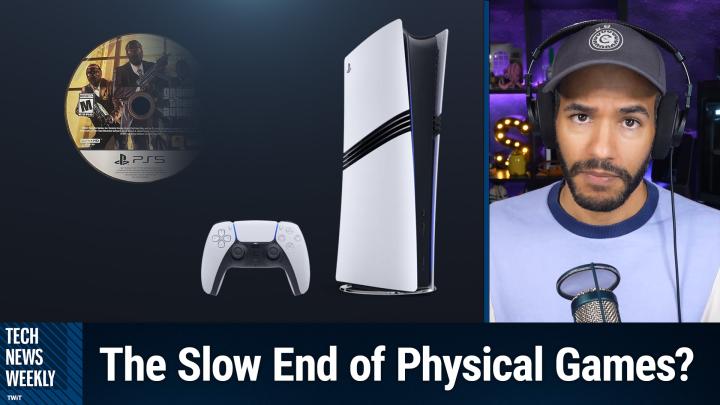
Coming up on Tech News Weekly, Abrar Al-Heeti of CNET joins us. We talk about driverless cars and the current state of, well, folks who've ridden in them, folks who like them, folks who don't. Then we talk about how a new report claims that many of the social media tools meant to protect kids just aren't working. Afterwards, we talk about PlayStation discs going the way of the dodo as Sony announces the end of physical discs in 2028. And I round things out with latest ruling from the Supreme Court regarding location data and geofence war. It's all of that coming up on Tech News Weekly
Mikah Sargent [00:00:46]:
This is Tech News Weekly, Episode 444 with Abrar Al-Heeti and me, Mikah Sargent. Recorded Thursday, July 2, 2026: The End of the PlayStation Disc. Hello and welcome to Tech News Weekly, the show where every week we talk to and about the people making and breaking that tech news. I am your host Mikah Sargent and I am joined this week by the wonderful Abrar Al-Heeti. Welcome back to the show, Abrar.
Abrar Al-Heeti [00:01:18]:
Thank you so much. Thanks for having me. Happy almost 4th of July.
Mikah Sargent [00:01:21]:
Happy almost 4th to you as well. The fireworks are going off.
Abrar Al-Heeti [00:01:25]:
Yeah, right.
Mikah Sargent [00:01:26]:
Cheers. It's just that the noise cancellation of Zoom is, you know, stopping it from. Yeah, very handy.
Abrar Al-Heeti [00:01:32]:
Look at that technology.
Mikah Sargent [00:01:33]:
Love that, love that, love that for us. Well, speaking of loving things, there are some Americans who love driverless cars. Okay. I don't know. That segue was terrible.
Abrar Al-Heeti [00:01:48]:
You tried, you tried and that's what matters. Yeah.
Mikah Sargent [00:01:51]:
Tell us about your story of the week this week.
Abrar Al-Heeti [00:01:54]:
Yes, I wanted to talk about this new Pew Research survey about how people feel about driverless cars. And this is just something that we are going to continue to hear more about as the, these, these operations continue to scale. So according to this survey, only 5% of adults in the US say they've been in a driverless car. And that's not surprising because these are, you know, available in very, very limited cities. Waymo is kind of the leader here and only available to the public truly in, in about a dozen cities. And they're planning to scale in the coming year. But as a connection to that statistic, 71% of people say that they would not be comfortable in a self driving car. So those two things are very connected.
Abrar Al-Heeti [00:02:38]:
It is a lot. And it's not surprising because if you haven't experienced being in one of these cars, what you know about is the headlines. Right. So the Waymo Driving into a construction zone or not navigating highways, maybe the ways that it should be, or not legally maneuvering around school buses and launching investigations into how these vehicles operate. Operate. Little things, all just those little details, you know. So, so, so it's not surprising to hear that statistic. And given the limited availability of these vehicles from companies like Waymo and Zoox, for example, just 7% of people, according to the survey say that they would be extremely or very comfortable in a driverless car.
Abrar Al-Heeti [00:03:24]:
And about 16% say they're somewhat comfortable. So there's some people on the fence here. I have the, the opportunity, I think privilege is too strong a word. The opportunity to live in a city where there are self driving cars. And so I remember the first time I got in one and I was like, this is a very strange thing. And then literally within 60 seconds it was like, oh, this is just a car. This is just a car that navigates roads in a way that is assuring, at least in my experience so far. And so I fully understand that if you have not had the opportunity to be in one, you might not understand that.
Abrar Al-Heeti [00:04:01]:
It feels secure. You look like you've questioned.
Mikah Sargent [00:04:03]:
Yeah, because I want to. That's the interesting aspect of this, because this is one of the things I was going to say for is that I consider you one of the people that I know I can go to when I'm asking about driverless cars. Because you have had many more experiences. Even if you've had two experiences, you've had many more experiences than I have. But I also love that you said opportunity and not privilege because. Yeah, it's, you know, I agree. Too strong a word there. Let's talk about though, because you said you got into the car and you felt assured.
Mikah Sargent [00:04:43]:
Yes, I think is the word that you use. Yes, let's talk about the psychology because I do think this is a big aspect of it. From the moment first, maybe you could share what anxieties you had about driverless cars beforehand and if there's anything that these vehicles are doing to mitigate those anxieties directly. Yeah, you just felt that indirectly as you were getting signals of, of things happening. That's what dealt with your anxieties.
Abrar Al-Heeti [00:05:13]:
Absolutely. So for context, the first time I got in a self driving car, it's when Waymo had first opened up to the public in San Francisco. So I think that was 2023, I think is about the year. It's all a blur at this point, but I think that's right. And around that time. So I didn't know a lot of people who had gotten one these vehicles. I didn't know what it would be like to get inside one. And the thing about these cars is like you're seeing a steering wheel move, but there's nobody sitting in the driver's seat.
Abrar Al-Heeti [00:05:37]:
So it's just like cognitively very disorienting. Then it starts moving and you're like, oh, it stopped at the stop sign and it like waited and this other car tried to go and it stopped and it just navigated these things, these unpredictable variables of like a pedestrian trying to cross the street. And over the years I've noticed Waymo vehicles get a lot more assertive and aggressive isn't the word. I think assertive is the word where it can, it sees a yellow light, it's going to turn at that yellow light because it needs to get you where you're going and it doesn't want to wait in the middle of the intersection, you know, so it's, it's navigating that, that line pretty well. Again, in my experience, I know people who've had negative experiences and that's all very valid as well. And I think in terms of what the self driving companies are doing, you know, they, the thing that they're always pitching is like if you need assistance, there are several buttons within the vehicle that you could call, you know, emergency services. And it really like I've, I've experienced and seen videos of any time something seems to be a little bit off, people really do immediately chime in. There's a lot of cameras in these vehicles, a lot of cameras outside of them as well.
Abrar Al-Heeti [00:06:42]:
So I think that's kind of what they're leaning on. And then as they continue to partner with companies like Uber and Lyft, that sense of familiarity of like, if I hail this vehicle on an Uber app that I use all the time, maybe there is a sense of assurance of like, this is familiar territory and I can, I know how to tap for help in the Uber app and Uber wouldn't put me in a situation that is unsafe ideally. Which again could also lead to conversations about, well, maybe that's not true. But yeah, I think that's kind of where they're headed of like making this just feel like a run of the mill experience where you hop in a vehicle, be on your way and, and then I think why it feels so normal is because you, you really do forget that there's nobody in control. I think Zoox is a perfect example of this because Zoox is the Vehicles where there's no driver's seat, there's no steering wheel, there's no pedals and you think I'm driving around in a toaster is basically what it look. And you just kind of forget that. It's weird because you're facing each other. You have two, two people facing each other and, and you just, you're just navigating the streets and it's wild.
Abrar Al-Heeti [00:07:44]:
Yeah.
Mikah Sargent [00:07:44]:
Did you find yourself when you first did it, hovering your finger over whatever buttons there were in the car? Like ready? You know, were there any abrupt. What? Not even just in your first time, but in these times, did anything ever feel abrupt? Did it feel, you know. Yeah. How was, how was that part of it?
Abrar Al-Heeti [00:08:05]:
Yeah.
Mikah Sargent [00:08:06]:
Did you find yourself in the flow at some point? You know, you're doing things and then suddenly the vehicle does something strange and you.
Abrar Al-Heeti [00:08:10]:
Yeah, that's the thing is because it's such an unpredictable, the roads are so unpredictable that there are times where a robotaxi has to suddenly hit the brakes. I remember when we were in Vegas a couple of years ago in a zoo vehicle. We were driving and it was smooth and then somebody decided to do a U turn in the middle of the street and so robo taxi slams the brakes. Right. And you know, we were fine. It wasn't like a dramatic like aggressive thing, but it's like, okay, something just stop. Stopped here. This is.
Abrar Al-Heeti [00:08:34]:
And then it'll. Yeah. Like I never, but I never found myself kind of instinctively reaching for a help button because I'm like, I, I think it's, it, it's just gauging the situation.
Mikah Sargent [00:08:44]:
Nice.
Abrar Al-Heeti [00:08:45]:
So, so, yeah. So hopeful. Like thankfully that's been the case so far and, and hopefully that remains to be the case. But, but also speaking of partnerships, there's also the, the latest news in the world of Waymo and Uber is that they, they had a partnership in Phoenix where people could either hail a ride on the way Uber app and they recently kind of wound down that partnership. It was a three year situation and so that makes me think about. Apparently Uber says that they're going to. They have a new self driving partner in the area that it'll be announcing soon.
Mikah Sargent [00:09:18]:
Wow. This is very much like if Facebook status complicated. It really is soft launching a new partner.
Abrar Al-Heeti [00:09:25]:
That's literally the best way to put it.
Mikah Sargent [00:09:27]:
The drama.
Abrar Al-Heeti [00:09:28]:
It's a drama and I'm so here for it. So it's just so interesting seeing these companies which you may recall kind of had a contentious relationship back when there was a lawsuit that they ended up settling. They were kind of, Uber was trying to create its own self driving and Waymo was kind of, you know, taking off at that time. But, but it's interesting to see how these partnerships will evolve because I, I, you can kind of tell that these traditional ride hailing platforms like Uber and Lyft, even though they are no longer developing their own self driving platforms, they want in on this. I mean this is not going away. So how relationships evolve. Uber's partnered with other companies like, like Zeu and like Volvo and, and, and other kind of smaller companies like Neuro. So it's interesting to see kind of where that's going.
Abrar Al-Heeti [00:10:16]:
And then in the same vein, Tesla is apparently starting to test at Cyber Cab without pedals or a steering wheel in Austin. So again all these things are happening at the same time. And then you have the survey that talks about how, how comfortable people may or may not be with it. But I think that'll likely change as these vehicles had to more cities. Again, Waymo's expanding to more than two dozen cities and so we'll see how those, how those numbers change this.
Mikah Sargent [00:10:44]:
I find it interesting to the you almost at first it seemed when they were trying to get the early adopters to try out driverless cars.
Abrar Al-Heeti [00:10:55]:
Yeah.
Mikah Sargent [00:10:56]:
At that point it was like let's make it, let's make it a little bit more cool, a little bit more interesting. You know, you can choose your music before you get in the car. You can do this, you do that. And it feels like as they are getting more toward the general public from even what you're talking about.
Abrar Al-Heeti [00:11:14]:
Yeah.
Mikah Sargent [00:11:15]:
The idea is for it to disappear. Don't make someone sit there and think about the fact that this is some high tech super computer car, you know, doing all this fancy stuff. Let's just have it be an appliance, a toaster as you said.
Abrar Al-Heeti [00:11:28]:
Yeah, yeah.
Mikah Sargent [00:11:28]:
That's just doing its thing like a train in a way. Like they just run on their tracks and it's fine. But I also think that it's fascinating to me the so much of what we as humans sort of base our behaviors around is like how our nervous system is communicated with and the patterns that get formed. And you talking about how you did have to have those moments where something a little bit different happened and you saw the vehicle do what it needed to do. And I just, I'm thinking about how there will be people whose fear keeps them from, you know, trying this out and trying it out is the only, is one of the only ways I think to, to understand and to feel more comfortable doing it. So it's just a really interesting sort of adoption period right now where I don't know how long it's going to take and I wouldn't be surprised if pretty soon we'll have way, if it isn't already the case, we'll have Waymo and others posting like, you know, before you go get an MRI or something, you can go on YouTube and see this is what it's like to be.
Abrar Al-Heeti [00:12:43]:
Yeah, exactly.
Mikah Sargent [00:12:44]:
I bet that that's going to be the. If it isn't already. That's going to be the. I mean you've already done some of that for people. In a way they can go and watch you talk about being in a driverless car and videos and so they can prepare for that. But it's all very, very fascinating. But I guess I was surprised to see. Were you surprised to see the numbers where they were will be my last question for you?
Abrar Al-Heeti [00:13:07]:
I think so. I think you know, it's, I, I know it's available on such a limited scale and to, and to then see that number of only 5% have been in a driverless car. And like, I guess that makes sense. It's a very big country and this is only available in kind of like very large metro areas at this time. And I. But I think the number that is a little bit more surprising is the 71% saying that they're not comfortable being in one of these cars because we have this, you know, we have this idea of like, oh, the future is cool and like self driving cars and we've seen it in sci fi movies and like people aren't even a little bit curious like.
Mikah Sargent [00:13:39]:
Right.
Abrar Al-Heeti [00:13:39]:
You know, like I think, I think there, there could be some. A little bit more. I would have expected a little bit more openness there of like, you know what, I'd be willing to try it once. Like an amusement park ride. You know, like it's just, you don't even have to think about it as your everyday commute. But like you're not even a little bit curious.
Mikah Sargent [00:13:54]:
I was, I was surprised by that as well.
Abrar Al-Heeti [00:13:55]:
Yeah. Yeah, absolutely. And I think I like your idea of like the video before you write it could be like, like a Disneyland. Like you know, before you get on and you get like an actor to like steps. Yeah, that's what they should be doing. So if they want to hire me for that, I'm down.
Mikah Sargent [00:14:14]:
Yeah, there you go.
Abrar Al-Heeti [00:14:15]:
Yes.
Mikah Sargent [00:14:15]:
Hire a bra for that. That'd be great.
Abrar Al-Heeti [00:14:17]:
Yeah.
Mikah Sargent [00:14:18]:
And then I'LL be the voice that ridicules them when they take the chicken exit.
Abrar Al-Heeti [00:14:22]:
We'll do the audition tape after this. It's great.
Mikah Sargent [00:14:24]:
Absol. All right. Let's take a quick break before we come back with my story of the week. All right. We are back from the break and joined this week by Abrar Alheati. My story of the week here is for parents, guardians and more. If you are a parent or a guardian, you may have asked yourself whether social media is actually safe for your child. And you may have even said, you know what, I'll take these companies at their word.
Mikah Sargent [00:14:52]:
They say it's safe where we're doing what we need to do. We're seeing parental controls. Surely it's fine. Well, exactly. A new report out of the Cybersecurity Research center at NYU and Northeastern went looking to see whether those promises hold up. This report is called Broken, Buried or Missing and as you can imagine, describes many of the tools that are out there. It's builds the first independent audit of the advertised child safety tools on the four biggest platforms. That's Instagram, Snap, Snapchat, TikTok and YouTube.
Mikah Sargent [00:15:31]:
The researchers took the same approach you'd use to crash test a car. So they built real teen and adult test accounts and then used the safety features exactly the way that they expected that a child would. What they found is that nearly 60% of the features they tested, so that's 51 out of 86 of the features that they tested failed. Some didn't work, some were buried where no teen would ever find them, and some didn't exist at all. So let's get into it first. That headline number, the top line is the thing, you know, to focus here, that of 86 of the advertised safety features across those four platforms, 51 of them failed by the researchers criteria. So the team and I like this because I think this is important. Yes, it's very easy to see the headlines and to see what tools are being put out there.
Mikah Sargent [00:16:31]:
But we didn't start, we didn't stop there. They didn't rely on the company's descriptions, instead actually created these accounts and interacted with each of the tools in the real environment, not in a blog post environment where you're just seeing the things spelled out. And then what they did was they judged every feature against two questions. Does it work as described? And can a child actually reach it? Because again, these are the child safety features. So the features that a child could go, oh, this is, this is upsetting or oh, I need help. Those kinds of things the goal was to answer does the essentially like if we go back to that airbag metaphor, that car metaphor, does the airbag go off when the car hits the wall? And unfortunately things seem to fall down into those three buckets. The broken where it surfaced to the user, but it didn't work as expected. Buried.
Mikah Sargent [00:17:26]:
It works, but it's hidden so deep and missing. It's advertised but the researchers went spelunking and could find no evidence that it existed at all. In fact, nine features were within that bucket. Abrar, you are. I remember one of the first times I had you on was in regard to a talk a social media story. And so you're at the very least social media aware. I'm sure that you've gotten many a PR email from Meta and others about their latest safety tools. And I have to say in reading through this report, I kind of had a realization of how much I have relied on these, these.
Mikah Sargent [00:18:15]:
What am I trying to say? Press releases is the word press releases as a means of understanding what tools are available. So I was really appreciative to see this go further and in particular with those nine features that researchers couldn't even find.
Abrar Al-Heeti [00:18:28]:
Yeah, absolutely. You know, I love the idea of somebody saying, well, let's find out for ourselves how effective these things are. So major kudos to that. It's, it's not surprising, but it is disappointing the results that that are surfaced here. And I think, you know, they kind of show how many of these things are missing or buried. And I think that's what really throws me off too is like there are some features that these companies have touted about hiding sensitive posts or removing or filtering unwanted messages or comments. And to see things like that not being implemented in the ways that we're told they're being implemented or what's really scary because there's this disconnect between the amount of times that companies have talked about the amount the safety features that they're. That they're adding and the concerns that we still hear about.
Abrar Al-Heeti [00:19:22]:
So I do wonder what difference are these things making? Where are they really being rolled out? And I feel like I don't. The amount of complaints from parents and the amount of distress from young users does not seem to be declining. And so there is just this, this, this gap here. And this seems to kind of shine a light on that which I think is really important that this exists. But now what? Right. So now what will the companies do to, to really patch up those, those deficiencies. But it's also just the question of like, what can be done? And that's the problem is what's the solution? You know, if like will these companies really add these features? Clearly they're not really rolling them out the way that they say they will. And then there's always the idea of like, who's to blame? Like how much should parents be responsible for this? And that's the conversation that I think will never die down.
Abrar Al-Heeti [00:20:16]:
So I don't know. That's the question of like, where do we go from here with this kind of information?
Mikah Sargent [00:20:21]:
Yeah, I mean you've touched on the, I think the feelings part of it really well, which is that yeah, you get a report like this and you go right, what's next? How do we. And I think of course somebody had to shine a light on this. And I think that. But right now those companies are in the spotlight legally and are having to answer for choices all the time. So it is good that this report is coming out now because it's more evidence and fuel for the, the, the lawmakers who are holding these companies accountable or attempting at the very least to hold these companies accountable. The one thing that really stuck out in the complete and utter failure of some of these tools was search. Because every single one of these platforms promise that kids aren't able to search for dangerous content. Harmful queries are going to get intercepted, they're going to get blocked, they're going to get redirected immediately to crisis resources.
Mikah Sargent [00:21:32]:
But, but the researchers documented what really amounts to being the like all nearly the opposite of, of what was said on a TikTok account registered to a minor. Once the account had searched for disordered eating and self harm material. Guess what? I'm sure you can. TikTok search stopped blocking that content and started suggesting it.
Abrar Al-Heeti [00:21:57]:
Oh God.
Mikah Sargent [00:21:59]:
So before because it was an account for a minor, the basic tools that TikTok has in place are supposed to and did keep disordered eating content, self harm content from showing up. That's the default. But upon searching for it, the algorithm changed. It recommended that the teen account look up terms like quote Anna food tips and quote how to pretend to eat your food. These were both drawn from pro anorexia communities plus quote losing. Actually I won't read those. Yeah, there are some things that involve self harm and the report is careful to note that these were the products, these were the products own recommendations that were served to the child. To be clear, these were not phrases that the researchers went hunting for.
Mikah Sargent [00:22:57]:
So what, what the heck. Yeah, it is, it's, it's it's not good. And in fact failed entirely. And then one more that I want to mention. Adult to child messaging on Snapchat. So Snapchat advertises that adults cannot find or start conversations with underage accounts. But the researchers created an adult profile. I just love that this.
Mikah Sargent [00:23:23]:
All they're doing is the thing that it says that it's supposed to stop. By love, I do mean I very much dislike this. But yeah, I'm glad that the com like that these folks are going, okay, you're saying this thing. Let's just. Because I'm again, I'm frustrated that I. Yeah, look, we. Are we supposed to take these. Clearly you're not supposed to take these companies at their words.
Mikah Sargent [00:23:46]:
So the researchers created an adult profile, a child profile. And from the adult account, they were able to directly search for, find and message the child account with zero respect restrictions.
Abrar Al-Heeti [00:23:57]:
The child all the time of like, oh, don't worry, this can't happen.
Mikah Sargent [00:24:01]:
Yeah, yeah. And that's, I think maybe that's the more egregious thing here is that you can't. They're asserting, they're asserting that this is the thing that won't happen. And so then people are going, I feel like what's happening here is that often we. And security researchers and stuff are going, okay, so we know that those things don't happen. The company's got that figured out. You're testing the edge cases. Normally this group decided, let's not test the edge cases, let's just test the assertions.
Mikah Sargent [00:24:31]:
Yeah, let me talk about then a couple of positives because there are some, there are some bright spots. The report is deliberate about showing what works. And so two patterns accounted for most of what succeeded. First, defaulting to the safest path. So Instagram automatically sets new teen accounts to private. So the protection is in place before the kid makes any choice. And the one that the researchers were like, this is the most instructive was that it removes the risk instead of trying to filter it after the fact. So on TikTok for younger users, that's a separate experience.
Mikah Sargent [00:25:08]:
For under 13 accounts, they get auto enrolled into it. There's no open search at all. There's no messaging, no algorithmic feed at all. And so your content is manually curated. If you have this in place, then it protects. And so there are some ways of getting those protections in place on some of the services. And that's the problem. So.
Mikah Sargent [00:25:36]:
All right, to round things out, I would be curious to hear if you have any sort of tips or Suggestions about, like, have you ever made adjustments to your own algorithm, even as an adult, or, you know, looked for ways of. Of. Of helping to limit exposure to certain content?
Abrar Al-Heeti [00:26:03]:
Absolutely. I listen. Social media is not, Is not good for me. I'll start with that in general. But there are ways that I try to make it less bad for me, and I do tend to leave feedback if I see something that just doesn't. Really. Doesn't make me feel good. I always mark, not interested.
Abrar Al-Heeti [00:26:20]:
And I do feel like the algorithms listen because they want you to stay on the platform. Right. You can scare them into compliance there. And so, so I, I try to try to be mindful of that, but it's. It's hard because you kind of have to, like, game the system where you're like, I can't even hover over this thing or it's going to think I like it.
Mikah Sargent [00:26:39]:
And I've always been a while. Yes. I'm like, oh, no, don't. Don't spend too long.
Abrar Al-Heeti [00:26:43]:
Yeah, exactly. Even if I'm curious, I'm like, I can't be. I can't be.
Mikah Sargent [00:26:46]:
Yeah, I can't be curious. It's gonna get going because I. Yeah, yeah, exactly.
Abrar Al-Heeti [00:26:53]:
So that's kind of what I. What I try to do and just kind of curious who I even follow. Even if it seems like something that's not toxic, like, it's not necessarily as harmful as what you would think is blatantly harmful. But if I see something and like, social media is a place where you compare yourself to other people and feel worse about yourself. So even if I find myself looking at other people and I'm like, why isn't my life, like, there's. I will unfollow you. Like, I don't want to see anything that makes me feel like I'm less than. So even, like, there's a.
Abrar Al-Heeti [00:27:21]:
There's a scale here. There's a spectrum, and anything that falls within that spectrum, I will. I will try to distance myself from. It seems like you kind of have similar experiences.
Mikah Sargent [00:27:31]:
I love that you said that. Because I will say I used to follow accounts and like, oh, this is so cool. Or especially when I was in one of my fitness stages, like, you know, doing back in California, doing a lot of weightlifting and stuff, and then following accounts for the weightlifting, but then also realizing how much I was doing the comparison thing. Yes. Comparison is a thief of joy. It really is. So I had to. I did.
Mikah Sargent [00:27:59]:
I finally went through and unfollowed a bunch of accounts. But the other part, there about, you know, looking. It's, it's when you understand the algorithm and you understand the algorithmic stuff, you realize how many things could possibly be data points. And so I'll do it in both ways. If there's something that I'm like, oh, I like this, but it's a very specific thing, I will bookmark it, I will share it via a link. I will like it because I'm going, yes, algorithm, show me more of this.
Abrar Al-Heeti [00:28:30]:
Exactly.
Mikah Sargent [00:28:30]:
But I messed up my. This, this is not about this, but algorithm stuff in general. I was upset because I, after the Ren faire, I had done a little bit of cosplay creation stuff. And so I was really into it. And so I started fall. My Instagram was full of wonderful cosplay videos.
Abrar Al-Heeti [00:28:51]:
Yeah.
Mikah Sargent [00:28:51]:
And I was just loving living. And unfortunately I was scrolling through and I saw what was a cool video of this, like barber shaving. And I know this is weird, but it was just like a really interesting thing and I wasn't thinking, I'm watching it. I even like tapped on it so that I could rewind. And then as I was hitting the rewind with my. Hitting the rewind with my finger, I thought, oh, no, what have I done?
Abrar Al-Heeti [00:29:22]:
You're just gonna see all that?
Mikah Sargent [00:29:24]:
Yeah, for the next three days at least. It was almost entirely. And so I just like swiping.
Abrar Al-Heeti [00:29:29]:
Yep.
Mikah Sargent [00:29:30]:
Yeah, I don't like this anymore. I don't like this.
Abrar Al-Heeti [00:29:32]:
Back on track. Yeah. It was a one time thing.
Mikah Sargent [00:29:34]:
Yeah, exactly.
Abrar Al-Heeti [00:29:35]:
Yeah. Yeah.
Mikah Sargent [00:29:36]:
So for us as adults there and, and technological people, there are ways that we know how to address this. But goodness gracious, I feel for parents and guardians, yes, so much because right now it feels very Wild West. I do have some level of. It's odd to feel this way, I think, but I do have some level of hope about where this is going. We are seeing these companies at the very least, having to go in front of the public and say more in, you know, court cases and hearings and stuff. And so I think that's good. I think we're slowly making progress. And I'm glad that this piece was out here as well.
Abrar Al-Heeti [00:30:28]:
100%. I'm glad there's pressure. I'm glad that we have outlets to speak up and hopefully that leads to some change. Because it's time.
Mikah Sargent [00:30:35]:
Exactly. All right, we're going to take a quick break and then we'll come back with one more story of the week and Abrar Alheti, who is here joining us today. All right, we are back from the break joined by CNET's Abrar Al-Heeti. And it is time for our next story. You know, Sony recently put out a short and tidy blog post. By recently, I mean yesterday as we record this show on July 2nd. It was written by Sid Schumann, who is the senior director of Content communications at Sony Interactive Entertainment. And within this post is one of the biggest shifts in buying console gaming in years, frankly, biggest shifts from the company side.
Mikah Sargent [00:31:20]:
I think from the user side, the shift happened a while back, starting in January 2028. So 2ish years from now, Sony is going to stop. I guess a year and a half from now, Sony is going to stop producing physical discs for all new PlayStation games. After that date, if a game comes out fresh, it's going to come out digital only on the PlayStation Store or as a digital purchase at retail. Anything already released or released before the cutoff, that's going to stay on disk. Of course, Sony frames it of course is simply following its customers saying the preference for digital significantly outpaces physical disks. But the announcement landed the same week as the GTA 6 physical edition controversy, and outlets like the Verge and Polygon are already reading it as the moment the PlayStation 6 was quietly confirmed as a digital only machine. First and foremost, I'd love to ask you, Abrar, are you a console or PC gamer? Have you purchased physical gaming discs or cartridges in the past? Have you played Pokemon?
Abrar Al-Heeti [00:32:34]:
Let me tell you the extent of my gaming experience. I so my siblings are about like 10 years older than me, so I would play with my brother Super Nintendo when I was growing up because that was like his prized possession. And then when I was in high school we got a Wii and we would just play like Mario Kart and Rock Band. And that is the extent of my gaming experience. So. So it's more about kind of like, you know, I, I read about something like this and I'm like that's truly the end of an era. And it makes sense. I mean, obviously physical media is a lot less common than it used to be, but in my mind I think about video games because of my experience.
Abrar Al-Heeti [00:33:16]:
This thing you hold in your hand and you put in a machine and I know I'm so outdated, but that just shows you where my brain is stuck in 2008. But this is such an interesting move. I think you are much more of a gamer though.
Mikah Sargent [00:33:28]:
I actually am not. My partner is and I think by osmosis I just know a lot about gaming. I mean I definitely in comparison, more of a gamer. I've played the Sims a lot. And I like those sorts of games, simulation games and building games and stuff. And so in that way, yes, this is to me, this I worry fits into the area of. So Meta recently announced that one of its pairs of glasses is going to have a subscription service tied to it. But it's technically for a feature that is part of the physical glasses we saw.
Mikah Sargent [00:34:14]:
I think it was BMW try to charge a subscription for the heated seats that are already in the vehicle. I worry about how this falls into that. That area because if I don't have a physical disc, then I'm paying for a license for digital content that at some, some point could be taken away from me.
Abrar Al-Heeti [00:34:38]:
Yeah.
Mikah Sargent [00:34:39]:
And that is troublesome. That's what other people are, are, you know, finding ways to try to get away from this is. But, but this is interesting. According to Sony's own 2025 corporate report, physical software was just 3% of PlayStation sales. And that's in 2024.
Abrar Al-Heeti [00:34:59]:
Yeah.
Mikah Sargent [00:35:00]:
Analysts that were cited by Polygon put Full Game put Full Game digital at around 80% of PlayStation software sales. And that's 90% on Xbox. So even more Comcat or not Comcast. Capcom said in its latest earnings that digital is 93% of its sales heading toward 94.5. So honestly, the argument is airtight tight. Nobody's actually buying discs. And I think also not only are people not buying discs, but so many people are just getting things digitally. So it kind of makes sense.
Mikah Sargent [00:35:42]:
It does make sense.
Abrar Al-Heeti [00:35:43]:
It does. And there's a disconnect between our sense of nostalgia and the reality. And I think I have to call myself out on it where I'm like, the death of physical media is so sad. But I'm like, when was the last time I bought a DVD or a cd? Like, let's be so honest with ourselves here. You know what I mean? Like, I want it to stay, but I'm not going to contribute to it. I don't know.
Mikah Sargent [00:36:00]:
Yeah, exactly. Yeah. I can't complain if you don't have a dog in this hunt.
Abrar Al-Heeti [00:36:04]:
Exactly.
Mikah Sargent [00:36:06]:
I think that's also why this is point of mind for me is because again, my partner is. Has been building out a physical DVD collection based almost squarely on one instance of a show we were watching no longer being available on it takes.
Abrar Al-Heeti [00:36:23]:
Yeah.
Mikah Sargent [00:36:23]:
And he was like, never again.
Abrar Al-Heeti [00:36:26]:
And I respect it.
Mikah Sargent [00:36:27]:
And I respect it too. I was like, honestly. And you've held to it. This is also part of an interesting conversation surrounding a game that gamers really can't wait for. Which is GTA 6. Rockstar confirmed that GTA 6's physical edition is actually just a download code in a box.
Abrar Al-Heeti [00:36:47]:
Oh, my gosh.
Mikah Sargent [00:36:49]:
It did result in people being rather upset about that. I bet Polygon, in talking about it, raised the question that Sony didn't really answer, which is that will PlayStation abandon physical retail entirely, or is it going to also do what Rockstar is doing and just sell these boxes in stores with a little code inside?
Abrar Al-Heeti [00:37:10]:
That's so interesting. Is that just so that you can have the aesthetic of like, having games on. On a shelf.
Mikah Sargent [00:37:15]:
And then that's what I'm wondering. Because I will be honest, when I have purchased for. For specific artists that I very much love, I will buy an album like a. Like a vinyl record, and I love to take it out, to flip through the book and, yeah, look at lyrics. And so there is that experience. And I wonder if that might be part of it here is. Is assuming that we have graphic designers actually working at these companies these days. There's a lot of work that can go into this and a lot of cool stuff to see.
Mikah Sargent [00:37:55]:
Absolutely. I like a little bit of a physical thing to just mark almost as like a totem, if you will, of the thing that I'm interested in.
Abrar Al-Heeti [00:38:09]:
Absolutely. And maybe that's a good middle ground where it's like you're going to play the digital version of the game anyway, but you still want to have that physical thing. So maybe that's like, it in between.
Mikah Sargent [00:38:17]:
And I wonder, there could be that there is some psychology involved here with, with ownership and with purchasing and with exchange that, you know, is tied up in this. But I think for me, the bigger part is the fact that it does make these licensing agreements a little bit more tenuous. And you may feel like you don't have as much ownership over something that you once did. And we've already got Internet archivists fighting for, you know, old games to stay online and be available. And yeah, it's that aspect that makes me a little bit worried about the. The loss of physical media. But at the same time, as you said, I'm not. I'm not contributing to it directly.
Mikah Sargent [00:39:13]:
I don't have a dog in this hunt. And ultimately, when they show us those numbers, it's like, okay, yeah, I can't argue with that.
Abrar Al-Heeti [00:39:21]:
How do you argue with that? For sure? And I think games are particularly. This could be particularly sensitive territory because not finding a movie on a streaming platform is sad. But imagine losing a game that you had made so much progress in. That would Hurt.
Mikah Sargent [00:39:35]:
Yeah, that's a good point. Well, I don't see this changing. Despite any blowback that Sony has, has received, they've already pushed it out until, I mean, I should be clear, it is already set for 2028 as opposed to being any sooner. I don't want to give the impression that they pushed it out in response. That's not what I mean there. But yeah, I, this makes sense. Ultimately, there's a, there's a little bit of a, a bummer there. And I know there will be some people who are very upset about this, including yesterday when my partner discovered this news and was like, they're doing this.
Mikah Sargent [00:40:19]:
And then I think that he went and snuggled all of his DVDs now
Abrar Al-Heeti [00:40:23]:
just like, fell asleep with them.
Mikah Sargent [00:40:24]:
Yeah, yeah, exactly. It'll be okay. In any case, Abrar Al he. I want to thank you so much for taking the time to be here with us today, for joining us for three stories of the week. It's always a pleasure to get to chat with you.
Abrar Al-Heeti [00:40:37]:
My pleasure. Absolutely. Thanks for having me. I'll absolutely.
Mikah Sargent [00:40:40]:
If people would like to keep up to date with all the great work that you're doing, where are the places they should go to do that?
Abrar Al-Heeti [00:40:46]:
Yes. You can find me on cnet.com or you can follow me on Instagram @abraralheeti. No spaces. Occasionally on X @alheati_3.
Mikah Sargent [00:40:54]:
Awesome. Thank you, Abrar.
Abrar Al-Heeti [00:40:56]:
Thank you. I appreciate it. Take care.
Mikah Sargent [00:40:58]:
All right, we are back from the break, and I've got a story that I have been wanting to get to. Very important. This one week, the Supreme Court handed down a ruling that changes how police can use your phone's location data to track you down. You may have heard about this if you haven't. Very important. It centers on a service that most people have never thought twice about. Ashley Bellinger at Ars Technica broke this down. The case in question is called, I believe, Chatrie versus the United States.
Mikah Sargent [00:41:27]:
It's about something called a geofence warrant. If you haven't heard about geofence warrants, it's when police don't have a suspect, so they draw a virtual circle around a crime scene scene. And then they go to Google, the company. They don't go in Google, they go to Google and they say, hey, Google. Oh, goodness, I'm so sorry. Hey, tell us every. Again, the company, not their smart speakers, okay? They say, tell us every phone that was within this geofence circle. In this case, it was used to catch a bank robber.
Mikah Sargent [00:42:00]:
But here's the bigger question that the Court took up the question was whether pulling that location data counts as a search under the fourth Amendment, the part of the Constitution that of course protects you from unreasonable government searches. In a 6, 3 decision, the justices said yes, it does, and police now need a warrant. So again warrantless, they could go to Google and ask the company who all was here and Google could choose to provide that data. Now it is a, it requires a warrant to do so. In May of 2019, there was a guy who robbed a credit union in Virginia. He walked out of that credit union with $195,000 after he threatened to tell her and also brandished a five firearm. Police had surveillance footage, they had witness accounts. And the robber approached from a corner of an adjacent church that was there, seemed to be talking on a cell phone, but they weren't sure who it was.
Mikah Sargent [00:43:09]:
They didn't have the suspect yet as far as knowledge of who they were. So they said, hey, can we get a geofence warrant and can we get it from Google? This was a circle circle with a 150 meter radius around the credit union covering the hour around the robbery. Then through a three step narrowing process, Google did eventually hand over three names. One was Okelo Chatri, whose data showed he had entered the geofence about 10 minutes before the robbery. Shatri was sentenced to 12 years in prison. And then he challenged the geofence warrant as an unconstitutional search. And that challenge went all the way to the Supreme Court. So what, what exactly is involved here? Right, because, because are we talking about just a geofence as, as a protection? Are we talking about geolocation in general? Well, it actually talks about location history.
Mikah Sargent [00:44:12]:
The service at the center of this is Google's location history. It's this sort of timestamped record of everywhere that your phone has been and it logs your location roughly every two minutes if you have it on. So that's an average of about 720 times a day and it is accurate within around 20 meters. It can even estimate elevation. So it can, if the detail is there, tell which floor of a building that you're on. And here's the big number. More than 500 million users worldwide have this location history turned on Google repeatedly. I've seen this.
Mikah Sargent [00:44:53]:
It prompts people to enable it. It does so when you set up your account. It does so if you set up an Android phone, it does so if you download and make use of the Google app. And here's one of the justices, Kagan who's writing with the majority, quoted some specifics saying Google warns the devices won't work correctly without it, while not disclosing in that prompt how frequently users loc information will be recorded, how precise it would be or how it might be given to the government. Now it's important to note that Chatry's data was pulled back in 2019, but as of July 2025 this is years after that 2019 warrant. Google did change the service to store location history on individual devices instead of its own servers, so it actually cannot respond to these geofence warnings, warrants, warrants at all. That's an important aspect to understand here. So Google saw this happen likely and made changes therein in much in the same way that we've seen Apple do so in the past.
Mikah Sargent [00:46:04]:
The vote was 6:3. The majority held that accessing this location data is a fourth Amendment search, so police need a warrant and probable cause. The court leaned heavily on a 2018 case case which is Carpenter and it said the same thing about cell tower location data, which of course is a little bit different from your phone tracking versus cell tower location where they're pinging. Kagan's line said no good reason exists to reach a different result for location history. Meaning the rules that we have in place for cell tower tracking needs to be the same for location history. Again, again part of the ruling surrounded our law surrounding I've said surrounding twice there surrounding our law on the previous forms of location tracking cell tower location data and says this is the same thing location history. There's no reason why it should be a separate ruling. Kagan wrote in this an individual has a reasonable expectation of privacy in records about his cell phone's location and police intru on that constitutionally protected interest when they demand the information, even though for only a limited time and from a third party tech company.
Mikah Sargent [00:47:24]:
So to mayor's point, which is quoted in the article, said even short term monitoring can reveal a wealth of detail about a person's familial, political, professional, religious and sexual associations, especially for example trips to a clinic, an attorney's office or a strip club club. So yes, there's a lot of data that is built into the data that is your location history. Let's talk about the government and by that I mean not the Supreme Court but the government that is attempting to maintain or improve upon these these the ability to access this data. The government made three main pitches and then that's where the Supreme Court kind of rejected them all from. First they said look, we only grabbed a little bit of data, two hours worth. So it's too small to count. Kagan said it doesn't matter how much a search is a search is a search is a search, regardless of the duration. Then Shatri did voluntarily share his location data with Google.
Mikah Sargent [00:48:26]:
And so the argument that the government had was that he gave up his privacy because again, he shared his location with Google. This is actually called, called the third party doctrine. What did the court say in response? Well, turning on location history isn't a meaningful choice given how Google pushes it. That's fascinating because it does make you wonder if Google only asks you once, would that result in a different ruling? Is it, is that what makes it not a meaningful choice is that Google has, you know, has been heavy handed with trying to get you to it on. I'm not sure, but the Supreme Court is. And then lastly, the argument was his movements were just out in public. The majority then pushed back, saying that this data follows people into homes, into doctor's offices and into other private places. So even if that portion of the data that you grabbed was for was, was in a public place, the Supreme Court is obviously ruling all on the entirety of this.
Mikah Sargent [00:49:29]:
And so they're saying, look, if we say yes, then data that does involve someone's home might be involved, might be involved to other private places. Kagan's framing was this. The point of carrying a smartphone is to use what is on them and a user isn't, quote, sharing private information with third parties which then can be freely passed on to the government just by doing the ordinary things cell phone users do do. The Electronic Frontier foundation very happy about this. Their surveillance. Litigation director, Andrew Crocker noted that the court, quote, stopped short of striking down these warrants as inherently unconstitutional, but reaffirmed that short term location surveillance is a search. Tech companies also backed the ruling. The CEO of the Computer and Communications Industry association, which is a trade group that counts Google and Apple as members, celebrated it for clarifying that the Fourth Amendment fully protects people's right to privacy from government intrusion.
Mikah Sargent [00:50:29]:
So it's not just the privacy groups, it's also big techs like trade bodies that are also doing it as well. You may be wondering though, because it wasn't everyone who agreed, right? Who, who dissented? Well, Justice Alito wrote a sharp dissent arguing that the majority destabilized long standing Fourth Amendment jurisprudence. Apparently he would have preferred an app by app approach where you treat different phone features differently rather than one blanket rule. He said, here's my warning about the new rule. Police now need a warrant every time they access any cell phone location information from a third party, however brief the duration, however innocuous the request, and however voluntarily that information was disclosed by the user and and then he also had a footnote. That said, one is left wondering on which side of the line location data from a mobile payment service like Apple Pay falls. So interesting if you pay for something somewhere and it, you know, logs that location, is that part of it as well? Alito also argued that the court never should have taken the case in the first plate called the opinion advisory since it doesn't actually change the outcome for Chatrie, who made still lose on other grounds. The majority though disagreed and sent the reasonableness question back to the lower court.
Mikah Sargent [00:51:57]:
So why does this matter going forward? Well, geofence warrants exploded in use. Google went from one in 2016 to more than 11,000 just a couple of years ago. This ruling sets a nationwide standard. Of course police need a warrant for this kind of location data, period. But of course a wrinkle worth not noting, the specific Google service at issue, it's already changed, so it can't even answer these warrants anymore. The practical fight may shift to other data types instead and of course will shift to other companies instead. And that's exactly the open question that Alito flagged. What about your Amazon history, your Google searches, your Venmo log, your Apple pay? There's all sorts of stuff.
Mikah Sargent [00:52:39]:
The court said the ruling is about location information, but we don't know where that line lands in terms of what will be counted going forward. It's unresolved. Fascinating, fascinating story. Really interesting to see the way that different justices made decisions on this with the understanding of tech that they have or the lack of understanding of tech that they have in some cases. And overall I think a really it's a win as far as I'm concerned for these protections. So definitely check out the rest of the ruling there and I believe it is time to say goodbye to all of you for this week. This show, Tech News Weekly publishes every Thursday, twit.tv/tnw. It's where you go to subscribe to the show in audio and video formats.
Mikah Sargent [00:53:34]:
Also, if you would like to check out my other shows, well I've got Hands-On Apple, I've got Hands-On Tech, I've got iOS today all here on the network, so be sure to check those out and you can follow me online at @mikahsargent or head to chihuahua.coffee" C H I H U A H U A.coffee where I've got links to the places I'm most active online. I'll be back next week for another episode of Tech News Weekly. Goodbye, everyone.