Tech News Weekly 443 Transcript
Please be advised that this transcript is AI-generated and may not be word-for-word. Time codes refer to the approximate times in the ad-free version of the show.
Mikah Sargent [00:00:00]:
Coming up on Tech News Weekly, Jennifer Pattison Tuohy of the Verge is here and she tells us what's new in matter 1.6 as our fabrics become more interoperable than a Tesla crash which has led to a federal probe after the death of a 76 year old, Scott Stein from CNET stops by. We kick off the conversation by talking about Meta and Snap's new glasses, but round things out with a frank discussion about the cost of tech right now and, well, the ongoing all of that. Coming up on Tech News Weekly. This is Tech News Weekly episode 443 with Jennifer Pattison Tuohy and me, Mikah Sargent. Recorded Thursday, June 25, 2026: $2,000 Specs $299 Meta Glasses. Hello and welcome to Tech News Weekly the show wherever we talk to and about the people making and breaking the tech news. I am your host Mikah Sargent and I am joined across the Internet today as I promised by Jennifer Patterson Tuohy.
Mikah Sargent [00:01:15]:
Welcome back, Jen.
Jennifer Pattison Tuohy [00:01:16]:
Hello Mikah. Happy to be here. Sorry, sorry to have been late. Like I wasn't here last week. A week late, A week late.
Mikah Sargent [00:01:23]:
But you still came and that's what matters. We're so happy that you're here. Always a good time to chat with you. For people who are tuning in for the first time, welcome. This is the part of the show where we share our stories of the week. These are the stories that we find interesting and think all of you should know all about. So without further ado, let's kick things off with your story Jen.
Jennifer Pattison Tuohy [00:01:47]:
Sure. Yeah. So the reason I wasn't here last week is because I was at a big event in Austin, Texas for the Connectivity Standards alliance, which is the group behind matter, the smart home interoperability protocol. And they had some big news to announce. Lots of news to announce in fact. But the main sort of takeaway is what I wanted to just run down for everyone today because I've spent a lot of time chatting with you guys about matter and thread and this is a an interesting update and basically they've released the 1.6 spec of matter, which doesn't have anything exciting like new camera device. Well, camera Device Types was the most recent big exciting new device type coming to the standard. So the standard basically manages what types of devices can work in your smart home and it promises the concept is to be able to use your smart home device with any smart home platform you like, be interoperable.
Jennifer Pattison Tuohy [00:02:48]:
So you buy a smart plug A smart light and you can set it up and it will work with Amazon's a Google's Gemini, Apple Home, Samsung SmartThings Home Assistant should all work seamlessly. Anyway, so what, they announced this with this launch, so no new device types, which always seems a bit disappointing, but this actually was quite exciting and I'm burying the lead. Sorry. Or I'm just building the tension. It's called joint fabric and isn't that a great name? I think I said in my piece that it belongs in a 1970s road trip movie more than in a smart home protocol. But, but you know, tech companies naming not ever really the best solutions that come out of that. But anyway, what the whole. The whole idea behind joint fabric is that now matter devices will join one single matter network in your home, which can then be controlled by any ecosystem you want.
Jennifer Pattison Tuohy [00:03:58]:
Multiple ecosystems if you want. So you can create a single smart home network and Amazon's a. Google's G. Apple home can control it. This one network. What do you mean, Jennifer? Isn't this the way it always worked?
Mikah Sargent [00:04:18]:
Right? I thought so,
Jennifer Pattison Tuohy [00:04:22]:
yes. This, this is. This was the first question my editor asked me when I handed the piece. And I was like, no, no, no, no, no. Previously and still currently, because this is a spec and it will be a while until it actually shows up in. Until it actually shows up in our homes. The way it worked is when you got a device and added it to Apple Home, Apple Home set up its own network called a fabric, hence joint fabric. Amazon A would set up its own fabric, Google would set up its own fabric.
Jennifer Pattison Tuohy [00:04:53]:
So you would have separate fabrics working in your home and each device would be on that fabric three times or on three fabrics. And that's why when you set up a device in Apple Home and then wanted to share it with Google Home, you had to go in, get a pairing code and send that code over to Google Home. And it was always a process. Now in theory, with joint fabric, you will be able to set up your device once on one platform and with prior authorization, it will just populate to all the other platforms you want it to. So it's just going to. It should make the whole setup process, which has been one of the biggest frustrations with matter, much easier. And it means that you're in control of your network. Not, I mean, it's not Apple Homes network, it's not Google Homes network.
Jennifer Pattison Tuohy [00:05:40]:
It's your home's matter fabric that you then choose who gets to control. And you can also revoke that control from say, Apple or Google and not have to reset up all your devices. So it really does just make this a much. Well, I guess it should have been like this from the beginning, but there were many political reasons I think would be the nicest way of saying it that it didn't happen that way. But I think, you know, people have seen the light and finally this is the solution to all of the many issues we've seen with matter devices, trying to set them up with multiple platforms. So yeah, there's a few other nice sort of quality of life updates in the spec and one other really kind of neat thing is NFC setup which will again goes to simplicity. Instead of having to scan a code, you should now just be able to tap your phone on the device. So the idea here is you buy your light bulb, you screw it in.
Jennifer Pattison Tuohy [00:06:37]:
So you tap it and then you screw it in so you don't need power in order to set up the device initially. And I have, as someone who's blinded themselves trying to scan matter codes with powered on light bulbs, I realize there are solutions there that I didn't take. But it has happened. The idea now is that all the information for setting it up will be stored in the NFC chip tap and go. And then you can screw in your light bulbs or set up your wire in your light switches following the setup process. So yeah, these are. But again, word of caution, these are in the spec and it will take a while until we see it, especially the nfc because that actually requires a hardware update for several devices devices. Most a lot of smart home devices don't already have NFC in, but some do like smart locks and such.
Jennifer Pattison Tuohy [00:07:29]:
So yeah, so it was exciting news for me. The big thing that this kind of indicated is that the platforms are still really working together to try and make matter successful. I had always had a slight concern that the longer we got into this collaboration between Apple, Google, Amazon, SmartThings, Samsung, that things might start to fray as companies work towards their own interests and which those interests can be competing. But this is sort of a step towards more unification. And I've been told that all the platforms are fully on board with this, but I did not get a timeline from anyone of when they're going to implement it.
Mikah Sargent [00:08:16]:
So watch this space figures, no timeline. I, you know, this has been promised for a long time from different, from different companies, from different groups. This idea like finally, finally, this is the time that they will finally all talk to each other finally. And it's always something that results in it getting pushed out farther and farther and farther. You with this one fabric, this one quilt joint fabric. This joint fabric. Thank you. If we have to say it that way, sure.
Mikah Sargent [00:08:53]:
I mean, that is what it's called.
Jennifer Pattison Tuohy [00:08:56]:
Why.
Mikah Sargent [00:08:58]:
Why should people or should they put their sort of faith in this as the solution? Is it like, I feel like there has to be a value proposition for everyone involved, the companies and the people. What is the benefit for the companies when it comes to this? We're looking at faster speeds because the joint fabric, you know, doesn't need to make as many hops. Are we looking at less troubleshooting that needs to take place? What makes this better?
Jennifer Pattison Tuohy [00:09:34]:
I think simplicity, that's. And that was one of the key promises of matter. You know, you just buy something, set it up, and it will be easy. Easy to set up, plug it in and it'll be easy to set up. And that has not been the case. And that has seen matter adoption slow because of frustrations and confusion. You know, the IKEA incidents that we talked about a few episodes ago when IKEA had a lot of setup problems with some of their new products matter over thread products. You know, simplicity has not shone through the matter standard to date.
Jennifer Pattison Tuohy [00:10:08]:
And this update is really all about focusing on simplicity, making it much easier. And if it is easier to use, more people will use it. And if more people are using it, the platforms will benefit. I think that's also that platforms, you know, they work closely with the partners like Ikea and Acara and all the other smart home manufacturers, and they are seeing so much pushback from users saying, this isn't working, this is complicated, this is difficult. And so, you know, for the smart home ecosystems to continue operating, they need the partners to create the devices. And so it's in their interest to make things work simpler and more easy for the consumer so that we're more likely to buy the products and use their platform. So it's a bit of a roundabout there. It's not a direct like, oh, this is going to make everything work faster.
Jennifer Pattison Tuohy [00:11:05]:
It's possible that we will see some speed increase, but you're generally using one platform at a time. So that's not necessarily slowing that process down when you're using the devices in your home, but it's much more about getting them onto your home network. And I think ultimately, and this is something I did see at this conference, that we, we may one day get to the point where we have in our home one matter fabric, one matter network, one thread network, and one WI FI network. And they are all managed from our main modem or ISP router. Like we don't need anything else. It'll all just coalesce into one space in our home. You can have more border routers if you want them because they're everywhere. I have like seven in my room because that's the promise of border routers.
Jennifer Pattison Tuohy [00:11:59]:
It's not a boring hub, it has other use cases. But yeah, I think the idea of just having one network for each element, thread, matter, WI fi, controllable from one device could make again this a lot easier for people.
Mikah Sargent [00:12:16]:
Well, we have to. Yes, as you said, watch this space. We will continue to. We will take a quick break but I do want to quickly mention I saw an article fly by of yours and it was the Thread app.
Jennifer Pattison Tuohy [00:12:30]:
Ooh, Thread tools.
Mikah Sargent [00:12:31]:
Yes. I have been waiting for that for so long just because I wanted more. I know a lot of people don't want, you know, insight into it and they're just like let it work how it does. But I'm a nerd and love that stuff and loved reading about your experience with it, getting it myself and looking at. It's just fun seeing like all of the different lines between all of your different thread nodes and children and all that. It's so cool.
Jennifer Pattison Tuohy [00:12:58]:
It's like your children in your home.
Mikah Sargent [00:13:00]:
Everything's connected to everything. It's what it said it's supposed to be and is actually doing it. I love that.
Jennifer Pattison Tuohy [00:13:06]:
It's so cool to see. I know. And again, it's about simplicity and when you see that, you realize how not simple it all actually is behind the scenes.
Mikah Sargent [00:13:15]:
Yeah, it's really impressive.
Jennifer Pattison Tuohy [00:13:17]:
Did you see anything fun or learn? Like were you able to fix anything from it? Did you find it useful?
Mikah Sargent [00:13:22]:
I'm actually. I was going to email you and be like, can you share me with me the prompt that you made for Claude? Because I haven't done that yet, but I'm planning on doing that. Off of the start. I was able to confirm that one of the thread networks that I intended to be turned off was turned off. So I was happy about that. Like I didn't see it show up anywhere and couldn't get it, you know, couldn't find it. And that was because, you know, the stuff that I do is thread over Apple Home and HomeKit. Yeah, yeah, over HomeKit.
Mikah Sargent [00:13:56]:
And so I didn't want it to be via this other third party method. And yeah, anyway, it seemed like the network was shut off because that was a problem that I had nanoleaf had connected via. It was my router. It was at the Time. And so I had a bunch of trouble with that in the initial stages and was able to fix it. And I was just like, did I actually fix it? And from what I could tell, yeah, everything was, was better. So I plan on popping it in with a little bit more and having it kind of look through and see is there anything here that you know, I should know about? There were some lower quality signals.
Jennifer Pattison Tuohy [00:14:33]:
Yeah, that's what I noticed. Yeah, that was surprising. And I've been hearing that that can be to do with the manufacturers implementation. So it's, it can, you may find like you might have two thread smart plugs from two different companies near each other that have less, you know, one is stronger radio than the other. So that, that is, that's one kind of fun thing to do if you are looking to troubleshoot your network. Is that, that what one man, one engineer called me is, it's our cell signal. It's like showing you like, you know, how close, how much closer you need to get because the signal will get stronger as you move it closer or move a border route router in between it and the device. So yeah, I think that will be useful.
Jennifer Pattison Tuohy [00:15:17]:
I think it's a lot of information for most people. But if you are interested, if you have no thread and you're thinking about getting a thread device like a smart lock would be my primary recommendation at this stage because it battery life, that it can be used, you can just download it and it will just tell you if you have a thread border router, which is a really simple solution to that problem. Because people often ask me, can I use this? And I'm like, I have to go through a list like do you have
Mikah Sargent [00:15:46]:
this, do you have one of these,
Jennifer Pattison Tuohy [00:15:47]:
this version of this? Because that version won't work, but this version will. And if you just download this app, it will immediately, if you give access to your network, say oh, here's your border routers, if you have one. So that's a great solution if you're thinking about getting a thread device.
Mikah Sargent [00:16:04]:
All right, we're going to take a quick break before we come back with my story of the week. We are joined this week by Jennifer Pattison Tuohy. And my story is this because this week federal regulators opened a new investigation into Tesla after one of its cars killed someone in a residential neighborhood. The story comes from CNBC's Laura Kolodni, who reports that the National Highway Traffic Safety Administration is now looking into a crash in Katy, Texas, a suburb of Houston, where A Tesla Model 3 barreled out of its lane and slammed into a home, killing 76 year old Martha Avia. The driver told local authorities he had been using Tesla's partially automated driving systems at the time. Tesla for its part says the opposite, that the driver had floored the accelerator. Now, Elon Musk publicly called the crash one that quote makes no sense. None of these claims have been independently verified yet, which is exactly what makes this one worth digging into.
Mikah Sargent [00:17:05]:
So first and foremost, here's kind of what we know right now. There's a Tesla Model 3 that left its lane in a Houston suburb and drove into a house that did kill 76 year old Martha Avia. The driver, who's Michael Butler, was on the scene and was cooperating with Harris county authorities. He told them he had been using Tesla's partially automated driving systems when the car barreled out of its lane. And that is kind of the foundational facts there. This is what we do know. There's a residential street, there's a fatality, and there is a driver who is pointing to the software. But everything else has been contested.
Mikah Sargent [00:17:44]:
You know, I was watching a show called Hacks the other day and in it one of the characters was walking along and ended up getting hit by a self driving car. And it made me think about how many protections are in place when it comes to self driving vehicles in terms of how much recording is happening, how many human beings are involved in the process, all of the regulations and things like that that are in place and how that same thing doesn't apply. Self driving. Plus with self driving you have people who may be using it in ways that are contrary to what the programming suggests. Now, Musk did say on X that the crash made no sense, saying that FSD full self driving drives slowly through neighborhood streets and this was a high speed crash. Tesla's VP of Autopilot got more specific. He said the driver quote, manually overrode self driving by pressing the accelerator all the way to 100% of the Accel pedal, which reached 73 miles and had the accelerator pressed even after the crash. Now I find it interesting, Jen, that this is being said in the first place.
Mikah Sargent [00:19:05]:
How do we know that that's true? Like how do they know that? Are they able to view the cars?
Jennifer Pattison Tuohy [00:19:11]:
I mean, you assume they are, right? They have access to all of this. It does. I think in our article about this it talked about how, how there are being the Verge, sorry, how Tesla has traditionally been quite reticent to give law enforcement or legal lawyers and such access to its data, but it's from what he said, it sounds like they exactly know what happened. Like the fact that they know his foot was still technically on the accelerator after the crash indicates they know exactly what happened and that if that's the case that sort of exonerates them. So you would have thought they probably would release this information because this unfortunately in is a somewhat common occurrence for people to accelerate by mistake into buildings. It like seems to happen a lot. Yes, I mean, I don't mean just for self driving.
Mikah Sargent [00:20:01]:
Yeah, it's not even just self driving,
Jennifer Pattison Tuohy [00:20:02]:
just in general it seems to be something that happens as it's a bizarre accident that you see happen quite regularly. You know, I guess people are mistaking and the fact that he, if he did, if this is right and they can verify it, if he did have his foot still on the accelerator, then he, it would would. You would assume he mistook the brake and the accelerator. But yeah, that's. So whether it's human error or full self driving error is obviously something they're still trying to work out. But to your point is that fully autonomous vehicles seem to have more restrictions. And you know, that's if, if you're going to have any autonomy in a vehicle having more of these restrictions, obviously it seems like this the safer solution rather than especially because honestly the real problem when it comes to vehicles I don't think is technology, it's people.
Mikah Sargent [00:20:58]:
I mean, yes, I agree, we're not
Jennifer Pattison Tuohy [00:21:00]:
great, we're not great at driving.
Mikah Sargent [00:21:02]:
We aren't great at driving. We're not great at focusing on more than one thing. Even though everybody wants to believe they are. We're all great multitaskers. No, we're not. And I was just learning about. There's, there's some studies that have looked at. When you're on the phone, when you're driving, your brain has a.
Mikah Sargent [00:21:25]:
It's sort of like designed to put you into the scene of the person that is on the phone with you. And so you end up kind of imagining yourself not where you are, but where they are and they're doing the same thing. And so you're sort of concept of space even changes whenever you're on the phone with someone. And so yes, I agree, humans are a big part of that issue. I think even though in this case it is, let's say this, if it ends up being that this person did just simply confuse the brake for the gas and they did try to use full self driving as an excuse for why this happened and it wasn't true, then it's Good that we've got the proof there for that.
Mikah Sargent [00:22:09]:
That said, I do find it a little bit troubling that, like, why. Why did Tesla have access to this data? Do all Tesla drivers. Are all Tesla drivers aware that at any time Tesla, like, the company could maybe hop into someone's car and check that data? Like, are those records constantly being set? You know what I mean? We need to know that data stuff in the first place, because I know. I think I covered it on the show before Mozilla. The Mozilla foundation did a big study on vehicles and collecting data.
Jennifer Pattison Tuohy [00:22:45]:
Yes.
Mikah Sargent [00:22:45]:
And there's a lot that's collected, and I think that's. That's kind of troubling that. I mean, we. I don't know the full details of kind of behind the scenes, but I'm like, did Tesla even contact this driver to be able to put this out there? Or is it technically that Tesla sees that it owns this vehicle's software? Because it. It technically does and can just pull that because it wants to and share that with the world? And because. Yeah, it's not. They didn't just share it with the police. It's a quote that we're able to see as well.
Mikah Sargent [00:23:17]:
And in a way that is in that privacy area where I can't imagine if someone, if I drive a Subaru, if Subaru talked to the local, you know, the local news and was like, well, Mikah was drinking some coffee while he was driving the other day, like, just whatever that happens to be. I find it a little odd that they've got that much access to this person's vehicle to be able to say the pedal was pressed for this long and this and that. It's just kind of wild.
Jennifer Pattison Tuohy [00:23:50]:
Yeah, well, I mean, when I'm testing smart home devices and I have an issue and I'll call the company or message the company and they'll say, can you send us your logs? Can we access your logs? So, you know, I think it's. There's. With. There's no doubt that the data was there. And the question is, how easy is it for Tesla to access, or does it require your authorization? My guess is it probably doesn't require your authorization, but they should ask for it to make it look like there's some kind of. Some kind of acknowledgement here that this is your data, not theirs. But in this instance, and maybe they have exposed that now that they are, I wouldn't be surprised to learn that they can easily access that data whenever they want. Though I think in general, you would assume it would be either disaggregated or anonymized.
Jennifer Pattison Tuohy [00:24:43]:
But in this case, they clearly wanted to exonerate the technology here. So. But yeah, it's, this is true of anything that you, you know, we've, we've, me, we've definitely said this on the show before, but if it's connected to the Internet, someone else can access it and most, and definitely the company. So yeah, it's something to be aware of for sure.
Mikah Sargent [00:25:06]:
And it's also, you know, we have to, we have to trust that the company is telling the truth about that, given that in the past the company, when faced with lawsuits, has lost data, has withheld data, has made it difficult for parties to get. Like attorneys had trouble getting some of the comprehensive electronic data that the cars generated. So how is it that normally this is hard to get, but the moment that it works in your favor, you're able to just quote that out that I, again, I don't, I find that troubling.
Jennifer Pattison Tuohy [00:25:42]:
Very fishy.
Mikah Sargent [00:25:43]:
Yes. And just to be 100% clear, it is as an aside to this sad story where this woman was killed. Obviously if it is true that that is what happened, that this person just accelerated in and did this, then yes, it's good in this instance that we can know what, know what happened. But it is still trouble.
Jennifer Pattison Tuohy [00:26:04]:
I don't, I've never driven either in a full self driving or an autonomous vehicle. Although when I was in Austin, one of those Zoox things came past and I did think about trying it, but I'm still, Would this be possible? Like, I didn't think they could accelerate like that with, Isn't, isn't that one of the right protections?
Mikah Sargent [00:26:25]:
Yeah, they don't do sudden like, right.
Jennifer Pattison Tuohy [00:26:29]:
So if that, if this was because of the full self driving, you would assume there was some kind of malfunction that happened. Which if that's the case, then we definitely would want to learn because potentially this could happen elsewhere. And there have been quite a few other instances of Teslas driving into things. Right. I think someone posted something in the chat, driving into a pool or. Yeah, so there, there's, if there's a malfunction there, you would hope that this is something that Tesla's going to fix, but right now it seems like they're mainly concerned with making it clear that it wasn't the car's fault. So yeah, hopefully there'll be further investigation.
Mikah Sargent [00:27:05]:
That is the hope and that is the expectation that we are seeing a full probe from NITSA to figure out what's going on here. And I think to add to the ongoing cases regarding full self driving and the promises and what we've got, there's a site, tesladeths.com that has been tracking fatalities for some time between 2013 and now. And we also, of course, have the. Yeah. The false advertising claims that are going on as well.
Jennifer Pattison Tuohy [00:27:46]:
So I wonder if I'd be interested if that site, does it compare incidences of Tesla fatalities with other vehicles? Like.
Mikah Sargent [00:27:55]:
Good question. Let me see.
Jennifer Pattison Tuohy [00:27:56]:
Because, you know, with the number of safety elements to some of these autonomous or partially autonomous vehicles, you would wonder if. If they're actually on balance, safer. But it's probably hard to tell just because of the critical mass. There aren't. I mean, there are a lot of testers out there, but there aren't a lot of people using the full self driving. Right. Because that. You now have to pay a subscription for that.
Jennifer Pattison Tuohy [00:28:21]:
Is that.
Mikah Sargent [00:28:22]:
Yes, I think so, yeah.
Jennifer Pattison Tuohy [00:28:23]:
Huh.
Mikah Sargent [00:28:25]:
At least for the like, robust model. Right. I don't see it in comparison to other. It just seems to be fully Tesla.
Jennifer Pattison Tuohy [00:28:36]:
Tesla bad.
Mikah Sargent [00:28:38]:
Yeah. 65. Oh, wait, okay, that doesn't make sense. Oh, I see. There's a. They do separate between Tesla deaths and Tesla autopilot deaths. So sometimes it's just accidents involving a driver, occupant, cyclist, motorcyclist, pedestrian, and it
Jennifer Pattison Tuohy [00:29:00]:
could have been any vehicle and.
Mikah Sargent [00:29:01]:
Yeah, exactly. Versus the autopilot deaths where they specifically are mentioning FSD as part of the issue.
Jennifer Pattison Tuohy [00:29:09]:
Yeah. Or part of the issue. Potentially. The issue.
Mikah Sargent [00:29:12]:
Potentially. There you go. Potentially. Oh, and it's not just the us it also has the uk, Canada, Germany. Interesting. Anyway, this is another thing that we'll have to keep our eye on, particularly as we have these ongoing probes and lawsuits. Jennifer Patterson too. It has been a pleasure getting to chat with you today.
Mikah Sargent [00:29:31]:
Always a pleasure. If people would like to keep up with the great work that you're doing. I just saw a video of you showing a certain Roomba video.
Jennifer Pattison Tuohy [00:29:40]:
Was it the Roomba? So fun.
Mikah Sargent [00:29:45]:
So fun. I love seeing you as. As. Yeah, as Roomba guy was like, yeah, we didn't get a call about this,
Jennifer Pattison Tuohy [00:29:53]:
but yeah, that was. That was the latest ish episode of Version History, which is the Verge's history tech podcast. We did an episode on the Roomba which is available now to view or listen on podcast or YouTube. And this is actually the second in the series. This is the fourth season of version History and it is all smart home. So there's a few more coming up that I'll be on including one about Philips Hue and one about the nest thermostat and a couple other really fun ones. We, we did. We did the Clapper, so tune in for that.
Jennifer Pattison Tuohy [00:30:30]:
Go subscribe to the Virgin History podcast if you want to catch those. And also you can find all my work on the verge.com where I'm covering. There's a big story about matter that'll go out this week and also the Google Home Smart SPE speaker that I've been reviewing, that should be, that should be on the site soon too. So, yeah, keep up with me there. And good, good to chat again, Mikah. I won't be gone too long next week.
Mikah Sargent [00:30:55]:
Yeah, we'll see you again in July.
Jennifer Pattison Tuohy [00:30:57]:
Okay. Oh, you might see me this weekend, actually.
Mikah Sargent [00:30:59]:
Oh, that's true.
Jennifer Pattison Tuohy [00:31:00]:
Yes. I think, I think I might be on Twitter this Sunday.
Mikah Sargent [00:31:03]:
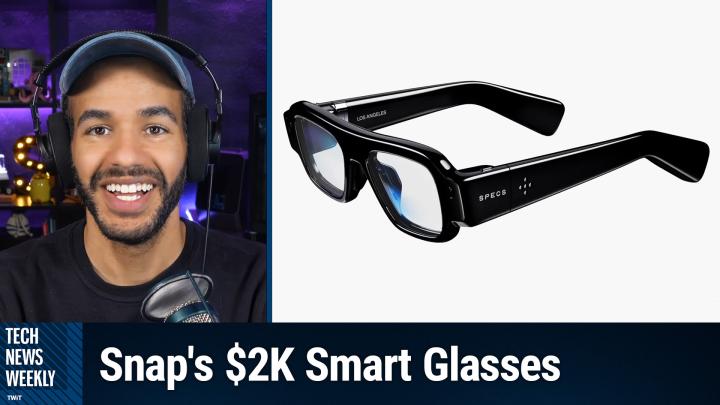
I think you may. That's what I heard. Anyway, rumors suggest that you might be. All right, thank you. All right, we are back from the break, and this year is shaping up to be quite a wild one for smart glasses, with just about every major tech company racing to put a computer right there on your face. In the span of a single week, two of the biggest players made their moves, and the contrast between them says a lot about where this whole category might be headed. One is going big and bold and, well, frankly expensive, and the other is going broad and affordable and a little bit Hollywood. Our guest has been covering wearables, VR and AR for more than 15 years and has been right in the thick of it.
Mikah Sargent [00:31:46]:
Joining us to break it all down, you know him, you love him at CNET Zone, Scott Stein. How you doing, Scott?
Scott Stein [00:31:53]:
Hey, good. It's good to talk to you, Mikah. Last week I was hoping to talk about Snap, and then I was flying back from, from AWE in Long beach, which is where that announcement happened.
Mikah Sargent [00:32:03]:
Very exciting stuff. I mean, yeah, I, I want to kind of get into the sort of whole perspective. Taking a step back now that you've, you've been to some of these events and, and all the stuff that's rolled out, I mean, covering this stuff for a while now. What do you think, if you do think makes this particular moment in smart glasses feel different maybe compared to, I don't know, the Google Glass of yesteryear?
Scott Stein [00:32:30]:
Well, I'm starting to get a headache from all of it, but it's also that I haven't, like, eat. I feel like I have a stomach bug today. So. So it's also that. But like, but I'm, it's, it's a lot It's a lot for me and it's definitely a lot for anyone who hasn't followed it. So I'm taking that into consideration a lot. But yeah, in this Google last days, that was Google just being like, we're, we thought of an idea, but nobody else was really touching it outside of VR was still floating around here and there. But now everybody's in this.
Scott Stein [00:32:58]:
And the number of types of glasses that are out there have tremendously different functions and prices and it's not very clear from the outside that what the differences are. And so, you know, a lot of the messaging on that gets super strange. But yeah, at the top end you have things that, aside from VR, which is still out there, kind of you have at the top end like these augmented reality mixed reality devices that are putting things in the world with you that you're using your hands with. And it's. And it's like the full Marvel, Tony Stark type of a thing as best people can do it. And that was like the magic leaps of the past. The Microsoft hololens.
Mikah Sargent [00:33:44]:
Oh my goodness. Hololens.
Scott Stein [00:33:46]:
Yeah. So those were all kind of going for that stuff. And then Vision Pro does it, but in a VR technology form, but is mixed reality. Samsung Galaxy xr. But that gets me to Snap, which is. Snap is doing augmented reality glasses for your face. But to me they're a very different beast. They're fully standalone, they have unnamed processors that.
Scott Stein [00:34:06]:
I'm very curious about what they are, but I've tried the developer versions and they put 3D things in the world with you. And the criticism is that they don't do it as well as you might hope. Or the viewing area is narrow. The viewing area on the new one's supposed to be bigger. Battery life is supposed to be significantly better, meaning like four hours of mixed use, which means, who knows, it could be like an hour or two. But the big thing to me is that we didn't get a chance to demo it and so Snap was not ready to show what it was like. The only person who wore the glasses was CEO Evan Spiegel, who I talked with and saw after the event briefly and took a photo of him wearing them. But yeah, I'm super curious about that.
Scott Stein [00:34:50]:
Without knowing that, it's really hard to say how good they are even at that price, although everyone was totally kicking them on the design, the way they seem to crunch his ears and, and the price, which I get. But I don't think these are designed at all for the mainstream. Even though he did Say that these are, you know, main consumer devices. Although he also couched it in the. The first Mac was very expensive. And they can say it was like the vision, almost the Vision Pro. No justification on price. I'm more interested to see where they pop up in theme parks and concerts and things like that.
Scott Stein [00:35:27]:
You know, I saw a play back in February at the Shed in New York that was an augmented reality play with Ian McKellen and some others called an arc. And you had to wear magic Leap glasses with it. It was really cool, but it was like older tech, didn't work with my prescription. And I'm thinking, is Snap gonna have experiences with people where you could, you know, you go to like a immersive lunar experience or like future sleep no mores and you put on those. And that may be how you experience it more than buying it. Because I think that's a. That makes more sense in the current moment. But that's why I think about Snap.
Scott Stein [00:36:05]:
And then like you said, we've got all of the other companies doing things too. Why is.
Mikah Sargent [00:36:12]:
Because. Why is Snap one of the companies? What do you think? Have you thought about why any level of. What is the word I'm looking for, any level of innovation in this space happened at that company? I remember the old Snap spectacles with a little spinning icon and it took video that was sort of like in a circle. They've been doing this for a long time. Is it just like, like Spiegel's interest or. Because, you know, when I think of Snapchat, I think of it being a back and forth, we send photos that disappear thing. But yet this is the company that's making kind of cool AR stuff.
Scott Stein [00:36:55]:
Yeah. You know, I was hanging out with my family and my cousin, my niece and nephew were like, Snap. I use them as my messaging thing. And I was like, yeah, they're making glasses. And they were like, what? So they really. I was like, yeah, I met the CEO. They were confused as well. So I know there is that question.
Scott Stein [00:37:12]:
It's clearly a big passion for him. He is one of those original founder type of creative people that you can see the spirit of what he wants to do. There's also the question of, I think, span of time. Niantic going way back with Pokemon Go, Evan Hanke, he wanted to do glasses. It still wants to work on, on smart glasses and AR in a similar way. That company split its. Its pieces up somewhat and is still working on some things. But, you know, the focus has shifted.
Scott Stein [00:37:46]:
AI, but that's still going to Kind of be glasses, but I think also about Facebook, you know, like Meta, why Mark Zuckerberg has been so interested in part of it, I think is personal curiosity. But obviously there's a business. And I think this is also about companies trying to make a platform for themselves that can try to beat the phone or stand apart from the phone. And it's like this endless game that doesn't succeed. Well, because we all have our phones with us, you know, that is. And Snap is a company that became successful off phones. So I'm not saying that they're trying to ignore the phone, but they are definitely building something that is trying to work, work without a phone, but could connect with a phone. And I think that's part of it because phones also, they're very restrictive.
Scott Stein [00:38:37]:
You know, the amount of freedom an app developer has is kind of limited by what the OS maker gives you. So, you know, even with Google's glasses that are coming out, which is the other, another player in the space, they're using Gemini first. Eventually they might introduce other AI that are at the price, primary ones. But, you know, you, you, you have limits in terms of how much you. There's more freedom there for sure than Apple. But then the same thing on, on an Apple side, that Apple doesn't have glasses yet, but they have Vision Pro, they have watches, and everyone talks about, you know, it, you have restrictions in terms of like, even Meta glasses, like, you can't go that deep into the os. And so, yeah, so a lot of times, even going back to the Humane page which I reviewed, you know, like, that was a failure. A lot of these things are trying to leap out and be like, we want to live beyond.
Scott Stein [00:39:29]:
It might be we want to live beyond the tyranny of the phone, but it's also we want to make a business, I think, that has freedom from the phone. But I also think Snap is, I saw this too, that I think Snap is putting all its cards on the table because they've been doing this for so long and now a lot of companies really are coming out with smart glasses. And Snap had spectacles way before Meta had ray bans.
Mikah Sargent [00:39:53]:
Yep.
Scott Stein [00:39:54]:
But Meta was the one that succeeded with it on a larger scale. So I think that they're like, you know what, maybe, maybe they want the stuff to get incorporated by another company. Maybe they're. Maybe they just want to make sure they mention patents a lot. You know, it's hard to tell.
Mikah Sargent [00:40:11]:
I didn't think about that aspect of it.
Scott Stein [00:40:14]:
Yeah, there's. I'm sure there's chess going on with this. But I think it's a very like, people go, oh, is it real? Or whatever. But they have very real developer specs that I've tried a bunch of times and they're making a lot of real apps with creators. You know, that's where I give them a benefit of the doubt that it's not like when I first saw Magic Leap in Florida and nobody had seen their stuff before and you were like, is it real? Snapshot Been showing a lot of that stuff. But then it's the question of everyone's going, well, wait, how does that work? Meta is totally on the flip side now, like you said, which is that Meta is going for a very mainstream approach and kind of similar to Meta Quest. They're pricing things one way or the other to get to be very accessible. And so that's the most important thing I think for Meta.
Scott Stein [00:41:03]:
And so it's like the quest got to, to, you know, kind of an artificial price of like 300, which now they've started putting the price back. Nobody could match that. It was like impossible. And the Ray Bans are hitting, you know, now they're not Ray Bans now. They're, they're unbranded glasses still made by Slr Luxottica, which is interesting, but they're skipping the Ray Ban and Oakley branding and they had the whole Meta group out there. It was a small but big announcement in that I hadn't seen Meta have this big a presence in New York for an event in a long time or ever. And Andrew Bosworth was talking about them and being pretty straightforward. He said it's about price, it's about, you know, the, the Ray Ban comes at a premium.
Scott Stein [00:41:50]:
So whatever deal they were striking with, those was, was driving the price up. They're cutting it more and they're getting the $300, which is lower than they had ones at 300. But they were creeping up to like. The ones I'm wearing now are Ray Ban Blazer optics, which are like more prescription friendly ones that I really like these as a design, but they start at $500. And so yeah, these new ones are 300 and there's a Kylie Jenner model that's 400, which is like okay. And, but they, they want them like in stores, easy to buy, easy to work with a prescription. They haven't changed anything about the tech though, so that's interesting. And the, the thing I'm not okay with especially is they haven't changed anything about the privacy or AI concerns.
Mikah Sargent [00:42:43]:
We Definitely, yeah.
Scott Stein [00:42:45]:
I mean apparently the Verges Victoria Song Alexamel who I also spoke with, he apparently had said there are going to be changes coming with that. He did not say that to me when I was bringing it up to him exactly as far as I can remember. But I would imagine there are going to have to be changes. And then even how their AI to me is a lot more limited than the AI that already exists that people are using, let's say in a Claude or ChatGPT.
Mikah Sargent [00:43:13]:
Got it. Is it local? You mean metas? Got it.
Scott Stein [00:43:17]:
Meta's AI. Meta's AI doesn't have have any of the hook ins or other things. Maybe people would be thankful about that that it can't do as many things. They mentioned agentic stuff that they were like, oh yeah, we think that's important and I'm sure they'll announce more hook ins and partnerships. But the problem is Google and Meta seem to be kind of a little bit. It's like a, like a quiet war, you know, they're, they are. Google didn't want to do any app store on Meta's quest and Meta has not had a lot of Google apps stuff. And so that the point is like which, which OS will allow hook ins that or what apps, you know, will it be OpenAI or would it be Claude or would it be something else or would it be fitness apps? I think and even accessibility.
Scott Stein [00:44:11]:
These things are actually serving a real purpose for people's vision. And they mentioned giving away, I think it was like 130,000 pairs to like the two veterans who are legally blind.
Mikah Sargent [00:44:22]:
Oh wow.
Scott Stein [00:44:24]:
Yeah. I mean that's a great, it's a great effort to do that. And I know people who use them because they're the biggest, biggest and best ones out there now that can do that. But the now is the thing is Google's going to have ones that hook better into your I'll get to Google in a moment because that's like the one we haven't discussed. But Meta, they also, I mean this is just a fashion event, you know, they didn't talk about how they could improve assistance for people with other assistive purposes. I think that will also be coming. They have their developer conference in September but it's also like kind of a smart time to launch them because they mentioned that glasses are a good thing to buy for the summer. That's when sales go up.
Scott Stein [00:45:04]:
And I kind of thought Google was going to announce its smart glasses now. So it's the right time to have glasses for the summer. But it's also interesting that they're trying to probably get a leg up on Google and also have this time right after Snap. And Snap is a more peripheral company, but they definitely made waves for good and bad with their announcement that I think Met is aware of.
Mikah Sargent [00:45:31]:
Something that's always been interesting to me about, about Snap's handling of things is there seems to be. They have drawn in. It's like a mix. It's a hybrid sort of individual that is part developer, engineer, part artist. Like a lot of the lenses and the other creative stuff that's been added to Snap over time in that space. And then they do have these developer kits. They do focus on that aspect and that's interesting but. But again it doesn't quite then reach the consumer in the way that I've seen Meta.
Mikah Sargent [00:46:13]:
So I guess when you were seeing the Snap stuff be announced, when you were kind of got to take the photo, who did they say it was actually for? Because I know we talked about sort of who you think it could be for, but how are they? Are they marketing these? Are they like. I'm so confused about it. A great idea what you said about perhaps they show up in theaters or in these special. But don't they need to make money off of this?
Scott Stein [00:46:46]:
How does this work? Yes, I think so. I totally agree. And also first of all, priced at 2195, I think the price is so I mean they're not going to sell.
Mikah Sargent [00:46:57]:
No.
Scott Stein [00:46:58]:
Even if it was like the most amazing thing that we knew for sure,
Mikah Sargent [00:47:03]:
that price that's still going to. Yeah, yeah, right.
Scott Stein [00:47:06]:
That's an impossible price and. But then in addition, we don't even know how it functions. And then I kind of think about like the way a lot of these things launch like Meta Ray band displays last year, which were met as one with the neural band and they were incredibly hard to buy and didn't work with a lot of prescriptions and kind of almost felt like a phantom product launch. Like they were definitely. They definitely were out there but nobody saw them and not a lot of people got to get their eyes in the them.
Mikah Sargent [00:47:33]:
Yeah, I didn't hear much about them.
Scott Stein [00:47:35]:
No. And they're kind of. I'm sure they'll upgrade them this year and kind of. It's almost like a first beta product. I would imagine that's what's going to have to happen with with specs, which is that even though they're saying this, the first they mentioned, I mean early adopter is the answer. They kept saying that over and over. Again, early adopters, this is people like kind of dev kit, you know, nobody wants to say dev kit but, but something that could last. The big difference that caught my eye was battery life because the other ones, the only reported numbers were like 30 and 45 minutes of battery life, which is nothing.
Scott Stein [00:48:10]:
You know, like that's so little battery life.
Mikah Sargent [00:48:13]:
That's ridiculous.
Scott Stein [00:48:14]:
It's so. Because they're, they have no external battery. It's all on the glasses, which is why the arms are thick. And I mean it could go to a battery pack and they probably would make sense. But they said this one will go for like, like up to 4 hours plus can recharge in the battery case and the, in the glasses case. The reason I'm saying that is because like even if it's just a real an hour to two hour functioning, that's enough to get you through an experience. And so like if it's like a ticketed event or something, I could, that's where I could. Like that's what I'm saying.
Scott Stein [00:48:43]:
Like the other ones could not have lasted even to do a thing, but this could be done to do things. And maybe that's their way to test it. And dot, dot, dot. It's like the underwear gnome thing. I know it's like profit, you know, I don't know what happens after that. But, but the, but I think that I imagine that the, the reality of them will kind of roll out over the course of the year after because you know, who knows when they're specifically launching and when they'll even be demos. So. And we're already in almost July, so I hope I get to see them soon and talk about them.
Scott Stein [00:49:23]:
But it's weird.
Mikah Sargent [00:49:24]:
Kind of sick of company of tech companies charging me money to test their products. I, I can understand testing something for either a reduced rate or for you. You send it to me and I test it and I give you my feedback because it's my time, which I think yes, I am allowed to say I am. There's like a little device from the folks who make pebble and little ring that you. It's basically like a little memo ring and I'm going to be testing that and I'm allowed to say that I'm testing and I'm allowed to like post a photo. But that's basically the extent of it and that is chill because they are just sending it to me. I mean it is, it's probably the reason why I'm also part of the testing is because I pre ordered one. But see that feels okay, right? But I think Amazon really popularized this with all of its Day one products and everything in that space.
Mikah Sargent [00:50:26]:
And then all of the echo stuff they used to come out with. I still have a twerking bear somewhere. And it's like this fee, you're. You're saying it's $4,000, whatever, 3,000, 2,000. All these prices are ridiculous.
Scott Stein [00:50:41]:
I just let you go, oh, all
Mikah Sargent [00:50:43]:
of these prices are ridiculous. And I don't know why. Like, that doesn't seem like an early adopter to me. That's like an early foster parent.
Scott Stein [00:50:56]:
Yeah, yeah, you're right. Like, this is like, yeah, that's a lot of money. This is not a small thing. Well, that's why they may need to charge that to make it a reality. Like, I don't think that they're. I think a lot of these things are, like, trying to eat eek out the door as a. As a product. But, yeah, I agree with you.
Scott Stein [00:51:14]:
I also feel like this is where these types of products. That's why I think about the location based experiences. It's like, best. You're best testing these things by just going to a little no commitment or lower commitment, ticketed entertainment thing or event that uses them. And then it's like, that's why I like immersive theater and immersive experiences. Because I go, that's a way to look at something. Like the smartest thing that, that. That Oculus before, you know, did in the.
Scott Stein [00:51:40]:
In the early days, before Meta Quest days, was those headsets kept popping up at art festivals. You know, they would be at Tribeca, and we had Sundance all those early days. I was looking at it in these cool pieces that they had made with people. And you'd, like, look at a film, you look at this, and sometimes they'd be out there like little exhibits, and you kind of pop your head in and go, oh, that was cool. And think about it. And I think that's exactly where this tech is right now, where it's like, I think you just want to kind of see it and go, oh, that was cool. All right, back to my life and just let people have it on that level. Because, like, what the heck are you going to do for $2,000 around your life? Like, you're not probably going to be figuring out what to do with it.
Scott Stein [00:52:27]:
But I do think that if you build experiences that could use it, then I think those would be really fascinating. And then down the road, you know, you keep saying down the road, but, like, the smart glasses that are Coming out right now, for the most part are not augmented reality. They are not trying to really blend with the real world. And that's because the tech and the real world connections just aren't fully there yet. Not on a main. Not on a real mainstream. Like, you know, millions of people.
Mikah Sargent [00:52:58]:
Right. It passes enough that, yeah, millions of people are going to use it and that they're going to feel comfortable with it and then it's not going to seem safe. Yeah, exactly. Safe. And it's. It's early days and there's a lot of forget like grace that you have to give this stuff and that and like troubleshooting. You just have to do yourself a lot of the times too. And that.
Mikah Sargent [00:53:17]:
I think that plays a part in that now.
Scott Stein [00:53:20]:
Oh, yeah, go ahead. You.
Mikah Sargent [00:53:23]:
You've worn the developer spectacles over the top over time with. Let's actually expand this out a little bit further than just snaps specs. What is your kind of. What do you desire? Where do you think that AR glasses are going? That would make them a more mainstream thing. Is it? Yeah, that, that's, that's the question.
Scott Stein [00:53:49]:
No, that's helpful. I was about to bridge into Google too, and so that actually incorporates both. Because they're a big part of what's coming that I have tried a lot of, and their products are mostly coming this fall. But it gets to kind of. There's an evolutionary tree which is like the last thing people want when they figure they're like trying to understand a product. I'm like, it's gonna have branches on it. But it's. I, I think I referred to the Vision Pro as like an archaeopteryx the other day, which is like the dinosaur bird of like, not the thing Apple would want to hear it compared to, but like you eventually had birds and then like you had this archaeopteryx and it was like the in between.
Scott Stein [00:54:28]:
Like you're.
Mikah Sargent [00:54:30]:
You know, I love this metaphor because that's sort of what I did said about it. I said it was an early spacesuit. We're redesigning spacesuits now to make them smaller, slimmer, better. Uh, and so at the time you were looking at the f. The stinking moon, you were looking at the doggone moon. But you had to do so in this sort of big bulky space.
Scott Stein [00:54:50]:
Yes, right.
Mikah Sargent [00:54:51]:
Yeah. Yes, I get that message.
Scott Stein [00:54:52]:
And it's exactly. So you're getting into these like both like parallel evolution and like other things branching off. The reason I'm saying is because like VR. VR got pretty understandable For a while, even if you didn't want to buy it, you were like, okay, it's that thing that looks like the big thing they put on your head. You got the controllers, it does that thing. You move around. They all pretty much did that. Then came smart glasses which were like bubbling up and things like hololens magically were kind of like popping in there.
Scott Stein [00:55:18]:
Now it's, but now it's getting weird like because they're all, it's all kind of melting. Like I saw, I saw Vision Pro is like this where it's like Apple will not refer to it as a VR headset. It is a, it is a spatial computer. Now they're right. But it's also technically a VR headset. But you know, know it, it ended as a spatial computer and it uses pass through, mixed reality, wherever you want to call it. But those types of things are getting smaller. I saw one from unseen realities on the show floor that was as small as a pair of glasses.
Scott Stein [00:55:46]:
Like, like almost visor. Like. Yeah. And you could see through, but see through, through the camera. And you know, it's like you plug it into your computer. It's not standalone. It's like, it's like. But that was like, oh, this is another weird evolutionary form.
Scott Stein [00:56:00]:
Like this is a visor but VR but kind of its own thing. And then getting to Google. So Google has smart glasses like metas that do audio camera, you know, with or without display. Which is basically. Display is like a pop up kind of smartwatch for your eye. You know, basic notifications and some things. But then they have this other pair called xreal Aura that was called Project Aura that I've now tried three times games versus zero for the, for the, for the snap specs not keeping count. But you know, it's like that's where it's like I'm talking about real.
Scott Stein [00:56:36]:
Like the things I've actually, they're both real. But it's like the things I've actually demoed versus the things I've not demoed. So xreal Aura is fascinating because it plugs into a little processing puck like a phone. It, it's a pair of glasses like the xreal xreal display glasses that are out there. But it runs all the apps of Samsung Galaxy xr. So it runs like a Vision Pro, one of those things on it. So you see all these floating apps and it can run 3D VR type apps and it can use hand tracking. So I could do like, I could run Google Maps and stretch the maps
Mikah Sargent [00:57:15]:
out and it's very Android phone with. Or it's like a, it's like, it's almost like it was a VR headset that got turned into an Android phone. But then the Android phone became the primary and it's just. And I also do VR. I can also play games and I can. Okay, interesting.
Scott Stein [00:57:30]:
So the glasses are really cool. They are once again pretty amazing technology. Probably under $1,500 according to Xreal. Still going to be expensive but again kind of a developer kit but also a real product but they're going to work with everyday devices and like you could use it as a plug in display. You could also use it with the Puck and run a lot of apps that are out there and actually use it to do work or other things. Kind of take it on the go with you. Basically to me it's like the Vision Pro on the go that I couldn't get. Although Apple's been supporting Google has not been supporting its Android XR ecosystem with apps that I can see as much as Apple has been doing with Vision Pro.
Scott Stein [00:58:19]:
For as much as I'd like to Vision Pro to do more there are a lot of apps on it and you know, Google needs to catch up. But it's fascinating and it's again a different evolutionary branch like that is more of a plug in. You don't wear it all the time. You can see the world through them but it's got like projected displays that kind of sit in the middle there. So it's like not, they're not like real glasses. They're not really fully see through. They're. They're semi see through and whereas you know, the, the ones that Snap is making are really see through except they're really big.
Scott Stein [00:58:58]:
And so yeah, so then you, and then snaps, you know, and then you have, you have where. What's going on with Meta. And then you have some out there that only have displays and don't have cameras. And I don't even want to confuse it but, but it's like there are so many little smaller players in the space. I mean even reality, this is the interesting one that has, that doesn't have a camera but does have a display and has a ring. And so I think you're going to see lots of companies, Qualcomm was talking about making chipsets that are easier for eyewear makers to make these and bypass the big tech companies. So I think you're going to start seeing even more companies jump in and suddenly just to say ah, we're making smart glass and kind of like, when smartwatches and wearable tech had like an explosion and you suddenly had like a million random smartwatches flying around and like, Amazon would be full of them and you'd just be like, what the heck is this one? And I think we're gonna. We're gonna get to that point.
Mikah Sargent [00:59:55]:
Yeah.
Scott Stein [00:59:56]:
And see how it all shakes out.
Mikah Sargent [01:00:00]:
The last thing I'll ask you about AR is where do you be? And then I know we're gonna talk just a moment about the price hike stuff going on right now, but where do you think we are, are culturally on wearables? Because sort of in a microcosm, anecdotally, I know that there's some fear and concern that people have if you are seen wearing some sort of like, electronic pendant that is that thing recording me. The AI stuff has people a little bit on edge right now. And then I can imagine that glasses you. If you start to see like a weird. That's got a weird little jewel, right? That's not a jewel, that's a camera. Where do you think things are culturally right now? And do you think that companies are considering that in the same way that we saw when the Apple Watch first launched, Apple brought in fashion icons and things, and now we've seen, you know, the Kylie, Jackson Jenner of it all. Is that helping? Is that changing the culture? Are people going to be more comfortable? Because we all hold our phones out and record things all the time all around us. And so in that way, it's not that different, but we see it as different.
Scott Stein [01:01:15]:
Yeah, I agree with you on that. And it's. It's also interesting because that is the argument that Bosworth was saying on stage, which was that, you know, it's also kind of a duck on the privacy discussion. But, like, you know, we're already doing this without privacy lights on phones. We're at least putting a privacy light on glasses. I actually agree with.
Mikah Sargent [01:01:33]:
I don't want the leaders of the tech companies saying that, but I can say it.
Scott Stein [01:01:37]:
Exactly, exactly.
Mikah Sargent [01:01:38]:
You need to be more focused on. But. But, yeah, no, sorry, go ahead.
Scott Stein [01:01:41]:
No, it's like, not exactly. It's like not a great. I want to hear something more, more productive than that. But then I also agree with it, but I'm also like, okay, but what are you doing to be aware of it? What can you do to kind of push things. Things forward more? And Meta, Meredith, Meta's like a terrible first ambassador for this because they are their privacy questions and concerns, their history with that over the years, over Decades or decade, you know, and you know, and right now there have been a whole bunch of problems that have been popping up in the, in the past year from them. And you know, the privacy questions, you know, they'll lay it out and go, well this is what's happening. It should be very clear. But it's still fuzzy to me and it's obviously been fuzzy enough that there have been reports of problems popping up with third party moderators and things.
Scott Stein [01:02:27]:
And so. And then where do they go further as people want to rely on these more? So like I think people also have a lot of AI weariness. That's like an understatement. But like that's like the understatement, you know, like yes, yes, they have AI awareness. Like everyone's kind of freaking fed up about everything and, and AI. AI glasses are an ambassador of AI. You know, like they're all connected to AI. So it's kind of like, oh, more of this.
Scott Stein [01:02:54]:
And so that is a problem. But then also I think the number of things we want to wear on us and charge gets exhausting and the amount of money that people have to spend, it's like we're in a, we're in a. It feels like the beginning of a collapse with like the economic situation. Speaking of like getting into prices and like, and so where does an extra device fit into this? I mean meta smart to go cheap. This is a year to try to try to bring prices down if you can. But, but to, you know, and their FSA and other stuff, you know, like you could use health stuff to get the lenses and so it's kind of a unique item in that it, it rolls into kind of a sort of health area.
Mikah Sargent [01:03:34]:
Yeah. The way people been so successful too.
Scott Stein [01:03:38]:
Yeah. Aura and smartwatches, I think that they're going to eventually get more assistive functions and more health functions, especially as Apple enters the space and Google, I'm waiting for Google to fold in Fitbit stuff but they're saying like it'll come. But I'm like, you know, move fast because Apple's going to be right on your heels.
Mikah Sargent [01:03:56]:
Yeah. And they should be motivated to do that because people especially at the end of the year, like, oh, I've got all this FSA I need to do something with. That's how I got my OURA ring the first time.
Scott Stein [01:04:05]:
It seems like the number one killer app for the glasses, even though you wouldn't be using them for fitness tracking but to work, use them with your Fitbit. But I know that'll Come. It's just, I think they're trying to get out the door with like the first wave of things, but, like, there's fun stuff you can do with them, but there's also functional stuff and there's also, everyone's got their phone. So, like, the other thing is that these all have to work with your phone. They all have to assume you're going to work with your phone. They have to do something that's not annoying, not stupid, not creepy. And. And as far as AI goes.
Scott Stein [01:04:33]:
Yeah. So like Apple has now got Siri. It's clearly being designed for glasses and other things. Like, it's. Yes, it's more like the others and the way it's built, but you know which one is the best option. Also, how expensive do they all get? Is like, is Siri going to be free if you get a phone is not going to be fully free? Are. You know, I think that's going to factor in too, because subscriptions might start kicking in for these, like, as. As AIs models kind of crumble and these artificially low tiers for access become unsustainable.
Scott Stein [01:05:07]:
Then I imagine you see a kick up, right? You're going to see a combination of hardware prices going up and the subscriptions for AI going up. And that's where I'm like 20, 27, where it all collapses. I'm like, I don't know. That's the concern I see now, getting into the Apple thing, because they're like the canary. They're one of the biggest canaries in the coal mine and that canary just. Just croaked a little.
Mikah Sargent [01:05:32]:
All right, to round things out here. Yes, let's talk about that. We. We were warned. Good morning. I have some bad news for you. Tim Cook said that the prices would be going up across a lot of Apple's products. And as of this morning, they have.
Mikah Sargent [01:05:51]:
Whoa. I hit my microphone with the drama of the situation. And I have to admit, you know, I knew it was coming, but it was a little depressing, particularly right after I saw the price for the steam machine. And I've been thinking about just how expensive everything is right now and how it's only getting more expensive. And goodness gracious, what were your thoughts when you saw the price hike for even the beautiful darling, the master MacBook Neo, go up by a hundred?
Scott Stein [01:06:20]:
I know. And speaking of Steam Machine. Yeah. Like that those reviews popped up. I'm actually about to dive into looking at one myself. But, you know, it's true. It's like at these prices, it's like who's going to be buying it? And then MacBook Neo. Well, that whole price story just disappeared.
Scott Stein [01:06:37]:
You know like the whole like 500, 599. Nope, it's a $700 and up laptop which doesn't quite have the same ring to it. That is not. No, I think that story has just kind of vanished because Apple had $700 M1 MacBooks and stuff. You know it's a cute, it's a pretty device but I mean I got really fed up this morning and we were all tracking these stories and figuring out part of the really annoying part was that Apple did not put out a clear public facing story or guide as to what prices went up, which is becoming the trend. I mean Valve just kind of dumps the prices out there. I mean Xbox did put out a statement that the prices are going up on Xboxes today so that starting August 1st. So actually that's a nice heads up.
Scott Stein [01:07:20]:
You've got till August 1st before the Xbox is all get $100 more expensive. But Apple just flipped the switch and you could be gaslit. You go up this morning and you go wait, what was the price of an iPad again? Wait, was it 449, was it 349? Oh, it's 449 now. And like 1299 for the MacBook Air with a Vision Pro is now 3699 and and like not everything but Macs, iPads, HomePods, Apple TV. Yeah, these all got price jacked and Apple passed on that, that, that pain to us and it is being blamed on data centers. I think this is the point where I want to, I feel like I, I'm getting all network in my mind where I want to like, you know, I'm just like, I want to like scream because I was talking about this on the radio Chicago and everyone should be furious about this because at this point not only are the data centers and Apple is also pointing the finger. So I don't want to go where they're pointing the finger either. But it is like there's so much reckless building, there is so much that AI is being overblown with and now the prices on things that we have are getting ramped up.
Scott Stein [01:08:28]:
Probably the AI costs are going to ramp up too. And what the hell, like what, what is going on and why aren't companies, you imagine that a big company like Apple is able to negotiate a price for this. How are they not able to get a say in this? And are these prices for ram? Are the prices for RAM the Same for the servers. Or are they getting a special deal? Or was that deal locked in before? I haven't been following that. But it's like, what, what is going on? Exactly. Because if Apple, Apple can't withstand this, right? Then everyone else, everyone else is following suit. Prices on everything are going to go. They already have been.
Scott Stein [01:09:05]:
But like, everything feels like it's going up 15, 20%.
Mikah Sargent [01:09:08]:
And now so many more companies have permission right now that Apple has done it. It's like, well, okay, we can do it without feeling. And it's like, no, what if we all just held?
Scott Stein [01:09:18]:
And it's crazy. And it's like whatever inflation rates are being claimed, like this is, these are increases of 15, 20% on things. And then I feel the prices rising in supermarkets. And it's like, are we just in like a 15 to 20% increase on everything? Because like, that's not. That is the end. That's. I think that's this system. This is where I feel like I'm a network point.
Scott Stein [01:09:43]:
It's the end. The system doesn't work anymore because I don't think anyone will be able to sustain buying stuff. My advice now is to wait. But if you wait on an Apple product, the price could go up even further, right? Like Microsoft apparently said today that, like, they expect the RAM prices to double again in 2020, in fall 2027, right? And I go, well, that's when the collapse happens. I'm sorry. It's like, it's not just going to be a solely simmering pot. Everything will fall apart with this. Because, like, people can't afford it.
Scott Stein [01:10:13]:
People already can't afford it. Gaming's a luxury. All these, all these products will start being seen as maybe I'll get one in five, five years, or I'll just kind of stick around with what I have. And then that fun thing of like, oh, buy a fun thing for the holidays. You're like, no, it won't. No, sorry, but I'm buying eggs for the holiday.
Mikah Sargent [01:10:31]:
I'm buying a cake mix for the holidays. That's what I'm buying. Like, I can't, can't do the rest of it.
Scott Stein [01:10:38]:
Learn some magic tricks, do some improv, do board games.
Mikah Sargent [01:10:42]:
I remember even like two, three years ago. So we, this, now we're getting off topic. So we'll end it soon. But just even related to that, like, regularly doing gift giving amongst everyone in the immediate family, even though we live far apart, you know, and so like, they would send stuff our way, we'd send stuff their way. And the last few times, like, no, we did a. We did a Secret Santa. So you had one other person that you were, you know, doing this with. And as this stuff gets more and more expensive, I'm like, I can't even afford that.
Scott Stein [01:11:15]:
I know, it's scary. Yeah. With prices going up like this, if it's because of AI, my feeling is like, I'm good with that AI. You know, that's. I don't. No, thank you. And I think that's how everybody kind of feels about this. That, you know, AI better be really goddamn good to cause all of this pain and suffering.
Scott Stein [01:11:37]:
And Apple still has to prove itself with Siri and. And I think they wanted to pull the band aid off. Plus, are prices of iPhones going to go up this fall? Probably. And I think this is only half the band aid being pulled off for Apple.
Mikah Sargent [01:11:51]:
Yeah, I think so. Well, Scott Stein, it is always a pleasure to chat with you about all the latest and greatest stuff that's going on. If people would like to keep up to date with you, of course they can head to cnet.com is there anywhere else they should go to stay up?
Scott Stein [01:12:06]:
You can follow me through CNET, you can follow me on Bluesky, LinkedIn and you can also check me out on Beehive on the Intertwixt.
Mikah Sargent [01:12:14]:
That was perfect. That got everything. Thank you, Scott, and we'll see you again soon. Alrighty, folks. That brings us to the end of this episode of Tech News Weekly. The show publishes every Thursday at twit.tv/tnw, which is where you can go to subscribe to the show in audio and video formats. If you'd like to follow me online, I'm @mikasargent on many social media network. Or you can head to chihuahua.coffee which has links to the places I'm most active online.
Mikah Sargent [01:12:35]:
Be sure to check out my other shows including iOS today, Hands-On Apple, Hands-On Tech, and so much more that they all publish here on the network. I will see you next time for another episode of Tech News Weekly. Bye bye.