Trump's AI Action Plan
AI-generated, human-reviewed.
The tech world is buzzing about the Trump administration's newly released "America's AI Action Plan," and the conversation on This Week in Tech reveals why industry insiders are both intrigued and concerned about what this means for the future of artificial intelligence in America.
The Plan: Revolutionary or Reckless?
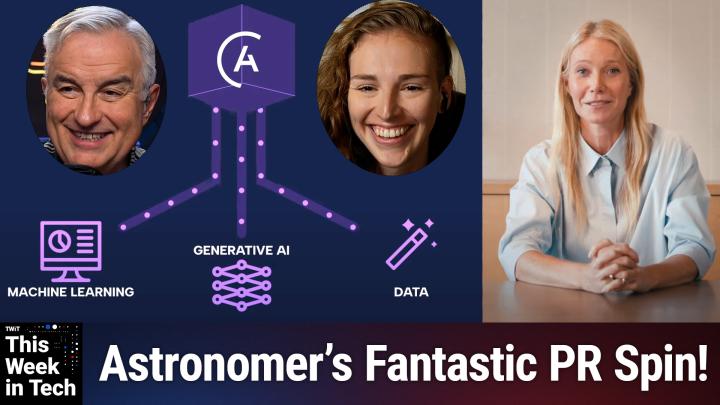
During a recent episode of This Week in Tech, host Leo Laporte and his expert panel, including Web3 critic Molly White, AI author Jacob Ward, and tech journalist Janko Roettgers, dissected the administration's 28-point AI strategy that promises to accelerate American leadership in artificial intelligence.
The plan's first pillar focuses on removing what it calls "red tape and onerous regulation," with an ambitious goal of eliminating half of all government regulations using AI itself. But as the panel realized, the devil is in the details… and the potential unintended consequences.
A Double-Edged Sword for AI Companies
Jacob Ward, author of "The Loop," offered a particularly striking observation about the administration's approach. Despite promising deregulation, Ward noted the inherent contradiction in Trump's simultaneous call for "a new spirit of patriotism and national loyalty in Silicon Valley" while demanding the elimination of "woke AI."
"The crazy part is one of the arguments that these companies have always made about China is this idea that China has these incredibly onerous regulations for AI companies," Ward explained. "China requires that large language models incorporate party doctrine—and that is exactly what's happening now with Trump."
This parallel to authoritarian oversight wasn't lost on the panel, who recognized that what appears to be deregulation might actually become a different form of ideological control.
The "Woke AI" Problem
Janko Roettgers raised a crucial concern that many in the industry are quietly discussing: the administration's crusade against "woke AI" could become a Trojan horse for content manipulation. The fear is that factual information might be suppressed if it's deemed too "woke," potentially forcing AI systems to present false equivalencies or misinformation.
"If you mention the truth, it's woke, so you have to have the other part in there too," Roettgers warned, highlighting how this could lead to even heavier government interference than what the plan supposedly aims to eliminate.
Missing the Infrastructure Foundation
Molly White, known for her sharp analysis of tech industry trends, pointed out a fundamental flaw in the administration's approach. While the plan talks about building a skilled workforce and promoting AI development, it contradicts other policy decisions that undermine these goals.
"If you want to promote a skilled workforce or promote the development of AI, then you probably wouldn't be making cuts to the Department of Education or to science research or to libraries," White observed. Her critique highlights the disconnect between AI ambitions and the educational infrastructure needed to support them.
ChatGPT-5 and the Hype Cycle
The discussion also touched on OpenAI CEO Sam Altman's recent claims about ChatGPT-5, with the panel expressing skepticism about the perpetual cycle of AI hype followed by disappointment. Jacob Ward was particularly critical of what he called "prophylactic crisis management"—the strategy of CEOs warning about their own products' dangers as a form of reverse psychology marketing.
"I feel like somebody is going to write a good book someday about the moment that the heads of these companies figured out the PR strategy of saying the bad thing out loud first," Ward noted, highlighting how doom-and-gloom predictions often serve as sophisticated marketing tactics.
The Bigger Picture: America's AI Future
While the AI Action Plan includes seemingly positive elements, such as promoting open-source AI development, increasing government research funding, and building secure data centers, the panel's analysis reveals deeper concerns about the administration's understanding of what actually drives technological innovation.
The conversation illuminated a key tension in current AI policy: the desire to lead globally while potentially hamstringing the very conditions that enable innovation to flourish. As these tech experts make clear, true AI leadership requires more than just removing regulations - it demands a comprehensive understanding of how technology, education, and society intersect.
Whether you're a tech professional, investor, or simply someone concerned about AI's role in society, this conversation offers crucial insights into the policy decisions that will shape our technological future. The Trump administration's AI Action Plan isn't just about artificial intelligence. It's about fundamental questions of innovation, regulation, and American competitiveness in the 21st century.
Want to hear the full discussion? Don't miss this enlightening conversation on This Week in Tech, where Leo Laporte and his expert guests take a peek at the implications of global AI happenings, as well as other technology topics. Listen to the complete episode to get all the insights, analysis, and predictions from some of tech's sharpest minds.