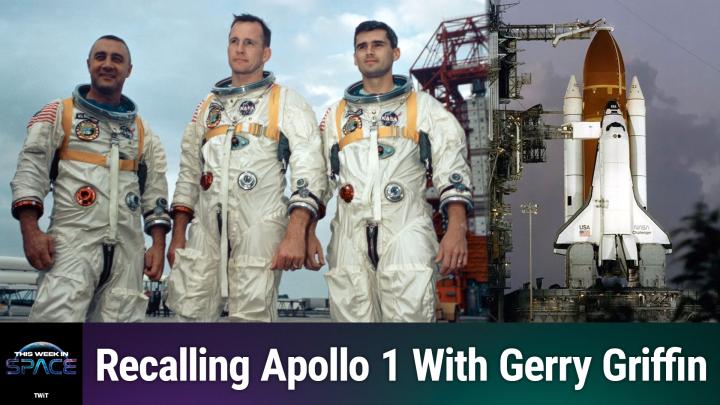
Remembering NASA's Saddest Moments: What Apollo 1, Challenger, and Columbia Taught Us
AI-generated, human-reviewed.
The hard-won lessons from Apollo 1, Challenger, and Columbia have fundamentally transformed how NASA approaches risk, safety, and operational decisions—even shaping the Artemis missions of today. On This Week in Space, Apollo flight director and former Johnson Space Center Director Jerry Griffin offered a rare, firsthand perspective on enduring some of the space program's darkest days, and explained how teams respond, recover, and innovate after heartbreak.
What Happened During NASA's Most Notorious Accidents?
NASA has endured three major in-flight disasters: the Apollo 1 fire (1967), the Challenger explosion (1986), and the Columbia reentry breakup (2003). Each incident claimed the lives of dedicated astronauts, shocked the nation, and halted space operations for months or years.
According to Jerry Griffin on This Week in Space, these accidents were unforeseen in their severity—and each exposed critical blind spots in NASA's rapidly advancing technology and operational culture. The Apollo 1 crew was lost in a capsule fire during a routine ground test. Challenger was destroyed shortly after launch by a solid rocket booster joint failure on an unusually cold day. Columbia broke apart during reentry, after insulation foam struck its wing on ascent.
How Did NASA's Team Respond After Tragedy?
Griffin emphasized that every crisis triggers three distinct reactions among NASA teams: deep sadness, initial shock, and then a surge of resolve. Engineers, controllers, and managers come together not just to mourn but to meticulously analyze every aspect of what went wrong.
Importantly, as Griffin explained on This Week in Space, the drive is not simply to fix the failure, but to make operations safer than ever before. For example, after Apollo 1, the program underwent an intense overhaul: spacecraft wiring was re-engineered, flammable materials were eliminated, and the inward-opening hatch was replaced with a rapid egress design.
What Changed in Operations and Safety After Each Accident?
Each tragedy led to system-wide changes with effects reaching decades into the future:
- Apollo 1 – Prompted a comprehensive redesign of the spacecraft interior, use of less flammable materials, elimination of a pure oxygen environment on the ground, and overall, deepened NASA's safety protocols.
- Challenger – Exposed problems with engineering decision chains and brought in major improvements to the shuttle’s booster joint design, along with deeper scrutiny of weather and launch criteria.
- Columbia – Revealed new hazards related to launch debris, leading to in-flight inspections and design updates to minimize potential damage during ascent.
Griffin shared how these painful events led not only to hardware and protocol changes, but to shifts in how NASA values team input, handles dissenting voices, and keeps decision-making close to the operational experts.
Lessons for Artemis and the Future
With Artemis II preparing for the next phase of human lunar missions, Griffin was clear: NASA's safety culture is stronger now because of these past events. Today’s teams are encouraged to speak up, hold a launch if uncertain, and implement thorough checks—from fueling tests to in-depth simulations.
Griffin supports moving ahead with Artemis when the teams are ready, trusting in the current generation’s rigorous preparation and hard-earned wisdom. He stressed the importance of learning from every mission—success or failure—so that crews are never lost in vain.
Key Takeaways
- NASA suffered three major crewed mission losses, each revealing unique vulnerabilities in spacecraft design and decision-making.
- After every accident, NASA paused operations to investigate, redesign, and improve both hardware and organizational culture.
- The famous "tough and competent" ethos emerged post-Apollo 1 and continues to shape NASA's approach to risk.
- Subsequent generations of leaders—including Artemis mission teams—are called upon to maintain high standards, learn continuously, and never let expedience sideline safety.
The Bottom Line
On This Week in Space, Jerry Griffin described how the pain of NASA's worst tragedies forged a culture of resilience, humility, and ever-improving operations that help protect today's astronauts—especially as spaceflight enters a new era with the Artemis program. These lessons are deeply embedded in every launch checklist, every simulation, and every "go/no-go" decision.
Stay up to date with more expert interviews and deep space coverage:
https://twit.tv/shows/this-week-in-space/episodes/195