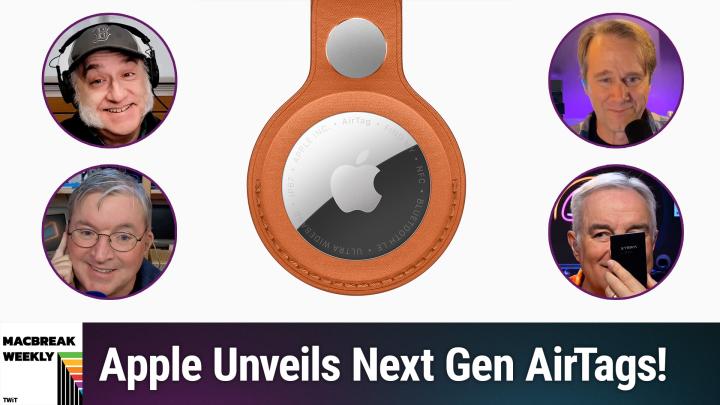
Is the New Apple AirTag Worth Upgrading To?
AI-generated, human-reviewed.
Apple has released the AirTag 2—its first major update in five years. Should current AirTag owners rush to upgrade? The MacBreak Weekly team weighs in with practical advice and behind-the-scenes context, sorting what’s useful from what’s just marketing.
What’s New With AirTag 2?
Apple’s AirTag 2 introduces several improvements, but the changes are evolutionary rather than transformational. According to insights from Leo Laporte, Jason Snell, Andy Ihnatko, and guest Dave Hamilton on MacBreak Weekly, the biggest updates include:
- Longer-range tracking thanks to the second-generation Ultra Wideband (UWB) chip.
- A louder alert sound, making it easier to hear and find lost items.
- Improved tracking precision—putting you closer to your lost item, rather than just “warmer/colder” Bluetooth hints.
Crucially, AirTag 2 maintains the same physical design and price point as the original: $29 for one, $99 for four.
How Does the New UWB Technology Work?
The UWB chip in AirTag 2 enhances location accuracy, so your iPhone can guide you with on-screen directions like “It’s right over there.” Previous AirTags used Bluetooth, which offered less precision.
Andy Ihnatko explained that UWB also helps with “drive-by” tracking—if your lost item is out of Bluetooth range, any passing iPhone user becomes part of the worldwide ‘Find My’ network, anonymously helping you spot your item. The second gen chipset increases the detection distance, making recovery likelier than before.
Apple did not add a built-in keyring hole, so your accessories (and annoyances) remain unchanged.
Will AirTag 2 Make Traveling with Luggage Easier?
Yes—especially in airports. The MacBreak Weekly panel highlighted that AirTags are now part of many airlines’ lost luggage workflows. Apple claims using AirTags (via Find My network) has reduced baggage delays by 26% and “unrecoverable” lost bags by 90%. Dave Hamilton shared a real story of arriving at the airport, knowing his bag hadn’t boarded the plane because of AirTag tracking—saving hours of waiting in line.
Most notable: Airlines are integrating AirTag results into their own customer service tools, even if some lag behind, as Andy Ihnatko explained. Adoption is likely to be global in the coming years.
Should Current AirTag Owners Upgrade?
For most users, AirTag 2 upgrades are “nice to have,” not essential. If you already own AirTags and are satisfied, you likely don’t need to replace them. The fit and function remain the same. If you travel frequently, need maximum range, or often lose items in noisy environments—or just appreciate the latest tech—AirTag 2 may be worthwhile.
If you’re buying new tags, get the latest model. But double-check packaging and descriptions, since the new and old versions look nearly identical. The tell-tale sign: AirTag 2’s text mentions “Find My NFC,” whereas AirTag 1 lists manufacturing info.
Are Other Trackers (Like Chipolo) as Good as AirTag 2?
Alternatives like Chipolo use Apple’s Find My network but do not have UWB—meaning less precise, shorter-range tracking. For users outside the U.S., in areas with more Android phones than iPhones, Chipolo might perform better because of broader Bluetooth compatibility, Jason Snell explained. But for North America and Europe, AirTags remain the gold standard.
What About Privacy and Security?
Apple addressed earlier criticisms by adding industry-leading protections against unwanted tracking, such as cross-platform alerts and random Bluetooth identifiers. Jason Snell noted these features now help prevent unauthorized tracking, but users should remain aware of these settings.
Key Takeaways
- AirTag 2 is an incremental upgrade: Main changes are UWB range and louder alerts.
- Best for travelers and heavy users: Airlines increasingly rely on AirTag tracking for lost luggage.
- Not essential if you already have AirTags: Most users can skip this model unless replacing or adding more.
- Physical design unchanged: Make sure you’re purchasing the right version—differences are hard to spot.
- Privacy protections are stronger in this generation.
- Alternatives exist, but lack some features: Non-UWB trackers are less accurate with Apple devices.
The Bottom Line
Apple AirTag 2 improves tracking with longer range and better alerts, but for most users the upgrade is optional. If you travel frequently or value precision locating, it's a smart buy. Otherwise, your original AirTags remain effective—especially within the expanding Find My network. With enhanced airline support and steady privacy upgrades, AirTag 2 is evolutionary, not revolutionary.
For more insights, tips, and in-depth Apple coverage, subscribe to MacBreak Weekly:
https://twit.tv/shows/macbreak-weekly/episodes/1009