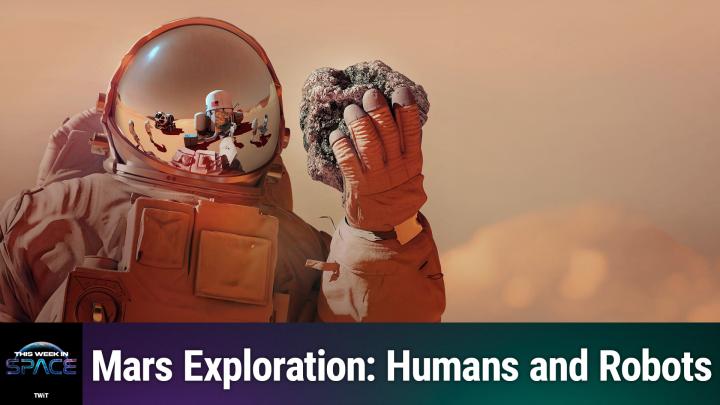
The Future of Human Mars Exploration
AI-generated, human-reviewed.
The number one scientific priority for human missions to Mars is clear: searching for signs of life tops the list according to the National Academies’ new report, as discussed by Dr. Pascal Lee on This Week in Space. This insight shapes the way future Mars expeditions should be planned, influencing everything from landing sites to mission structure, and from lab design to planetary protection protocols.
Why Is Searching for Life on Mars So Important?
Finding life—or evidence of past life—on Mars remains one of humanity’s most profound scientific and philosophical quests.
On This Week in Space, Dr. Pascal Lee explained that the discovery of Martian life would reshape how scientists approach every subsequent mission. Beyond uncovering Mars’ secrets, it would fundamentally change our understanding of biology, planetary evolution, and humanity’s place in the universe.
If astronauts discover living or extinct organisms, it could directly affect how Mars is explored, from handling samples to operating surface labs and even setting rules for planetary protection.
The National Academies’ Report: What Are the Science Priorities?
According to Dr. Pascal Lee, NASA commissioned the National Academies to define science priorities for human missions to Mars, focusing on scenarios involving multiple short stays or a mix of brief and extended missions.
The report identifies four main recommendations for Mars exploration:
- Planetary Protection: Mission teams must clarify protocols to minimize risk of contaminating Martian environments, especially when seeking life.
- Surface Lab Requirements: Crew time, equipment choices, and the balance between analyzing samples onsite versus returning them to Earth are critical planning elements.
- Sample Return Strategy: Determining the safest and most scientifically valuable methods for collecting and returning Martian samples is a crucial challenge.
- AI and Robotics Integration: Ongoing collaboration between robotics and planetary science experts will ensure future missions leverage new technology for safer, smarter exploration.
How Will These Priorities Shape Astronaut Activities on Mars?
Rather than focusing on sweeping settlement plans, Dr. Lee advocates for scientific research bases—much like those in Antarctica. He sees Mars first as a target for exploration, not immediate colonization.
This means astronauts will focus on activities like:
- Conducting fieldwork and sample collection, especially near water-rich sites where life is more likely to be found.
- Operating surface labs to study rocks, soil, and potential biological matter.
- Applying rigorous planetary protection standards to prevent contamination.
Long-term settlement is viewed skeptically, due to Mars’ harsh conditions. Instead, the scientific outpost model could pave the way for responsible exploration, possible tourism, and measured technological advancements—including a future with humanoid robots handling much of the risky work.
But… Should Astronauts Be There at All?
Dr. Lee then ventures the question: with the rise of AI and advances in robotics tech, do we really need to send people on dangerous journeys to places like Mars? Humans are inherently frail, and space is an extremely hostile environment. The more “anthropic” robots become, with the ability to define, organize, and execute complex tasks, the less obvious is the need for human explorers and researchers. However, he explains, there are still philosophical reasons to make the journey.
Key Takeaways
- The search for life is the top scientific priority for human Mars missions.
- Discovery of life (especially living organisms) would drastically change future exploration strategies.
- Planetary protection, surface lab setup, sample return, and ongoing AI/robotics summits are the National Academies’ main recommendations.
- Dr. Pascal Lee emphasizes research bases over settlements, highlighting Mars’ danger for biological humans.
- Advances in robotics and AI will likely shift the balance of human versus robotic explorers, easing some challenges and risks.
- For general readers, “planetary protection” refers to efforts that prevent contaminating Mars with Earth microbes during exploration.
- Humanoid robots are already being developed for lunar and Mars missions, accelerating changes in space exploration.
- While robots will eventually make great explorers, humans will still want to take these journeys of discovery in person.
The Bottom Line
According to Dr. Pascal Lee on This Week in Space, building strategy around the search for life will guide NASA’s human Mars missions for decades. Missions should be focused, safe, and science-driven, with careful consideration of planetary protection and technological changes. The key: prioritize the most meaningful discoveries, making Mars exploration a truly transformative endeavor. And Dr. Lee’s own additional but important question is: should humans go to Mars, or leave it to ever more capable robots?
Want more deep dives into space science? Subscribe to This Week in Space for expert interviews and analysis:
https://twit.tv/shows/this-week-in-space/episodes/199