Choosing a Center Channel Speaker Setup for Clearer Dialogue
AI-generated, human-reviewed.
If you're struggling to hear movie dialogue or wondering which center channel speaker is best for your home theater, getting your speaker selection and placement right is crucial. On Home Theater Geeks, Scott Wilkinson explains why your center speaker must match your front left and right speakers, shares essential setup tips, and offers real-world solutions to common home theater challenges.
Why Matching Your Center Channel Speaker Matters
The center channel speaker handles the bulk of dialogue and on-screen action in both movies and TV. If it doesn't have a similar tonal quality to your front left and right speakers, you'll notice dialogue that sounds unnatural or disconnected from the picture. Scott Wilkinson emphasizes that matching your center to your main fronts, ideally from the same brand and series, leads to a seamless “soundstage” where voices and effects are anchored to the screen.
Speaker Example: B&W HTM6 S3
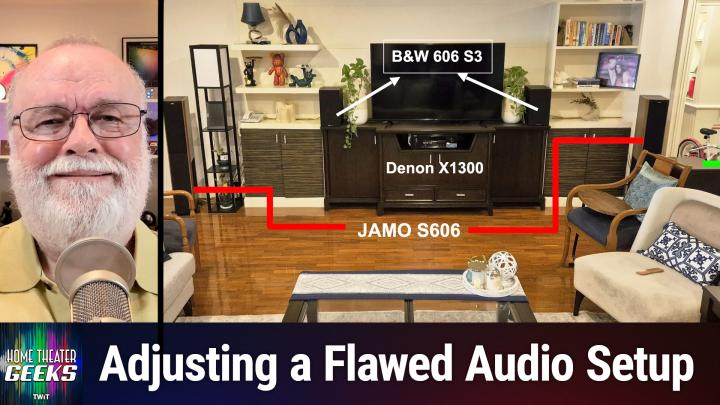
If your main speakers are Bowers & Wilkins 606 S3 bookshelf models, the ideal center match is the B&W HTM6 S3. This ensures not just color and design consistency but, more importantly, that dialogue and effects flow smoothly between your speakers, preventing distractions.
Setting Up Your Speakers for the Best Experience
- Front left/right placement: Put your main left and right speakers as close to the screen as possible. Avoid spreading them too far apart, which can break the illusion of audio coming from the screen.
- Center speaker position: Place it directly below or above the TV, aimed at ear level. If necessary, use sturdy risers (like yoga blocks) to slightly elevate the TV and fit the center underneath.
- Surround speaker location: For true surround effects, surrounds need to be to the sides and slightly behind your main listening seat instead of clustered at the front.
Troubleshooting Common Home Theater Problems
1. Poor Dialogue Clarity
If dialogue is hard to hear, especially during movies, the problem usually lies with either (a) no center speaker or (b) the center not properly matched to the left/right fronts.
Solution:
- Use a dedicated center speaker that matches your mains.
- Adjust your AV receiver’s settings to set speaker size (“small”) and crossover around 80Hz as recommended for efficient bass management.
2. Difficulty Balancing Volume
When you’re constantly reaching for the remote between action scenes and dialogue, dynamic range is likely to blame.
- Enable the “dynamic volume” feature in your AV receiver's room correction menu (such as Audyssey on Denon receivers). Set it to low, medium, or high, and see which works best for your space. This keeps sound levels within a comfortable range and prevents dramatic jumps between quiet and loud scenes.
3. Inconvenient or Suboptimal Speaker Placement
Open floor plans and lifestyle factors (like avoiding cable runs) make ideal placement tough.
- Use compact surround speakers on end tables with short stands if floorstanders don't fit or are too large.
- If cable runs are an issue, look into wireless surround speaker options, but check compatibility with your receiver model first (Denon's HEOS system is an example for newer models).
Listen Up!
- Match your center speaker to your front left and right for best voice and effects continuity.
- Proper speaker placement dramatically improves both surround sound immersion and dialogue intelligibility.
- Use AV receiver features like dynamic volume to make the listening experience smoother without constant adjustments.
- If you move frequently or can’t run wires, prioritize portable, compatible speakers and wireless solutions where possible.
Upgrading your home theater’s dialogue clarity and overall surround sound starts with matching your center speaker to your left/right mains and placing your speakers in the right spots. Even with furniture and room layout challenges, thoughtful setup—combined with smart use of receiver features—yields massive improvements. For B&W 606 S3 owners, the HTM6 S3 is the clear center speaker match. Fine-tune your placement and settings, and you’ll enjoy crystal-clear voices and a more immersive experience every movie night.
Subscribe for weekly tips: https://twit.tv/shows/home-theater-geeks/episodes/531