Can You Trust Anything on the Internet Anymore?
AI-generated, human-reviewed.
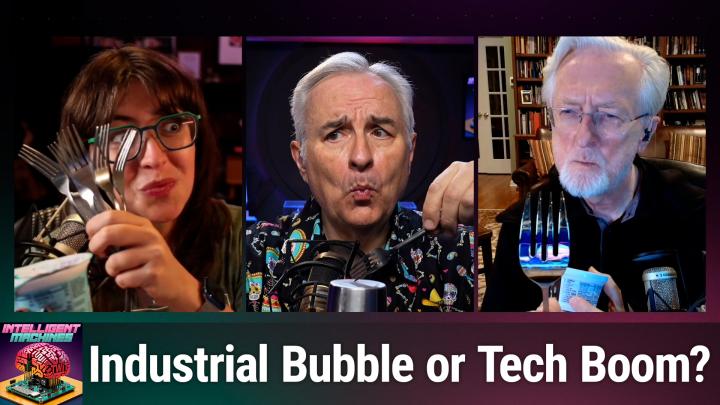
The recent surge in artificial intelligence investment has made OpenAI the world’s most valuable startup, drawing comparisons to past "bubble" cycles in tech history. On Intelligent Machines, hosts Leo Laporte, Paris Martineau, and Jeff Jarvis discussed whether the stunning growth in AI is sustainable—or if a crash is looming.
Why Are Experts Calling AI an "Industrial Bubble"?
The AI sector is experiencing skyrocketing valuation and relentless investor interest, with OpenAI’s Sora app and similar generative AI products driving both mainstream popularity and fervent speculation. According to the hosts of Intelligent Machines, venture capital is flooding into AI companies, replicating patterns seen during previous tech bubbles such as the dot-com era.
As highlighted by the panel, industry veterans like Jeff Bezos have described the current AI boom as an "industrial bubble." Unlike purely financial bubbles (such as the 2008 banking crisis), industrial bubbles spark real technological changes—even if many startups and investors ultimately lose money along the way.
Key insight: While many companies might fail, the infrastructure and innovations created during these boom cycles (such as railroads, fiber-optic networks, or efficient data centers) can have a lasting, positive impact for society.
Are Current AI Business Models Sustainable?
The episode explored the staggering costs behind AI platforms like OpenAI’s Sora, with rumors of up to $5 per generated video and the major players (Google, Microsoft, Amazon) subsidizing usage just to build market share. These firms are reliant on massive venture capital infusions and continue losing money to outpace competitors.
The hosts argued that, much like Uber and similar disruptors, AI companies are prioritizing user growth and ecosystem dominance over reliable profit models. This means burn rates are high and profitability is, for many, still hypothetical.
Prediction from the hosts: Only a handful of AI platforms may ultimately succeed, but the race will leave behind new infrastructure, large datasets, and potentially more resilient tech companies.
How Is AI Changing Digital Trust and Content?
One of the most alarming trends discussed was the proliferation of AI-generated media ("AI slop") and deepfakes that make it increasingly difficult to trust digital content. From videos where celebrities are inserted into fake scenarios to leaders fabricated saying things they never said, the line between real and fake is blurring fast.
On Intelligent Machines, Leo Laporte highlighted how easy it is to create convincing AI videos using just a simple facial scan and a few spoken words. Co-hosts noted the growing threat to not only day-to-day communication but also to journalism, political authenticity, and historical record.
For everyday users, this means skepticism is now warranted for anything seen online. The show’s panel pointed to the need for new tools, norms, and verification strategies to maintain trust in media and democracy.
What About AI's Impact on Jobs?
With some political reports warning that up to 100 million jobs could be at risk over the next decade, the panel sought to separate hype from reality. Recent Yale research cited on the episode finds that actual job loss attributable to AI so far has been negligible. However, hosts warned that perception can lead to job cuts when executives believe AI solutions are ready—regardless of whether they really are.
Customer service, fast food, and administrative roles are frequently cited as the most vulnerable, but the hosts cautioned that automation may not be as simple as promised. In fact, the episode raised doubts about AI’s ability to replace blue-collar positions and even executive roles, despite some doomsaying.
Key Takeaways
- AI startups like OpenAI are valued at unprecedented levels but may not be profitable for years—if ever.
- The "industrial bubble" pattern means this boom will likely leave behind useful infrastructure, even as many companies fail.
- AI-generated content is eroding trust in online media, making verification more important than ever.
- Sensational predictions about job losses from AI are not supported by recent research, but misperceptions can still drive layoffs.
- Major tech companies are racing to integrate and monetize AI, but sustainable business models remain an open question.
The Bottom Line
On Intelligent Machines, the consensus is that AI’s current growth is unsustainable and likely represents an "industrial bubble." However, this cycle will accelerate technological change, reshape the information landscape, and force both businesses and users to get smarter about digital trust. The future of AI is full of opportunity—but also risk for investors, media consumers, and workers alike.
Stay informed and be wary of overhyped claims, but don’t overlook the real innovations happening in artificial intelligence.
Want more in-depth analysis like this? Subscribe to Intelligent Machines:
https://twit.tv/shows/intelligent-machines/episodes/840