Building Ethical, User-Aligned AI: What Nous Research Is Doing Differently
AI-generated, human-reviewed.
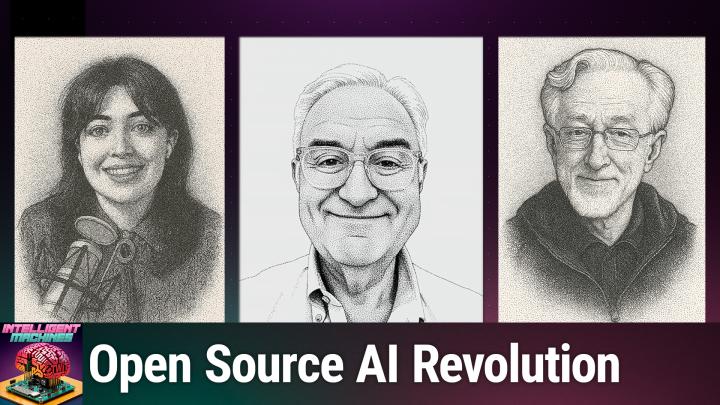
Can Open-Source AI Dethrone Big Tech? Nous Research CEO Jeffrey Quesnelle Explains
Open-source, user-aligned AI is challenging the dominance of Silicon Valley and China, aiming to put real control in the hands of researchers and end users. On this week’s episode of Intelligent Machines, Nous Research CEO Jeffrey Quesnelle shares why his team is doubling down on transparency, democratization, and open collaboration—and how that could fundamentally change who shapes the future of artificial intelligence.
How Nous Research Is Building User-Aligned, Open-Source AI
On Intelligent Machines, Jeffrey Quesnelle described Nous Research as a “research collective turned company” formed to provide an alternative to the world’s most powerful, closed AI models. Instead of enforcing corporate or political guardrails, Quesnelle’s approach centers on “neutrally aligned” AI—meaning models that can be tuned and controlled by the user, not dictated by opaque policies.
All core components of Nous’s AI stack—including their Hermes language models, datasets, and training methods—are fully open-source and publicly available. Quesnelle emphasized this is more than open weights: it includes publishing breakthrough research in academic journals and fostering a worldwide, collaborative Discord community.
What "Alignment" Really Means—and Why It Matters
Quesnelle challenged the industry’s buzzword “alignment,” noting that corporate giants often claim neutrality or “balance,” while still hard-coding viewpoints or restricting responses. According to Quesnelle, Nous’s definition of alignment means:
- The end user, not the AI company, decides the values and personality of the model.
- Anyone can use "system prompts" to deeply customize AI behavior—whether for creativity, research, or productivity.
- Alignment shouldn’t become a mechanism for a hidden agenda or censorship, but a tool for personal empowerment.
The ultimate goal: AI should make you a better, more capable version of yourself—not steer your attention for someone else’s benefit.
Democratizing AI Training: Not Just Open Weights, but Open Access
A key challenge in AI innovation is access to massive “compute” resources. Quesnelle explained that training leading-edge models usually requires immense clusters of GPUs—hardware only available to the world’s largest tech corporations or teams with enormous funding.
Nous Research is tackling this in two ways:
- Distributed GPU Sharing: Their “Psyche” infrastructure pools idle GPUs from around the globe, allowing volunteer contributors to lend unused computational power to open-source model training.
- Open Data Science: By publishing not just weights but data curation, synthetic data generation, and training methodologies, Nous makes it possible for more organizations to innovate transparently.
The Stakes: Preventing a New AI Oligarchy
The episode highlighted that large language models and other AI tools are quickly consolidating under a few companies—threatening to repeat the mistakes of past centralized platforms like Twitter and closed operating systems. Nous’s vision, Quesnelle said, is to build a “commons nirvana”:
- A genuine open-source AI ecosystem, where researchers don’t have to choose between corporate labs or underfunded academia.
- Infrastructure and financial flows that naturally incentivize openness and technical excellence.
- Community-driven governance to ensure cultural diversity and global inclusivity.
Can Open-Source AI Keep Up with Big Tech?
Quesnelle was frank: philosophical or ethical arguments alone won’t win mass adoption. Open models must also match or exceed the technical capabilities of closed counterparts. Nous’s breakthroughs—including major advances in long-context reasoning and scalable training—show that open, global collaboration can beat the odds, even against resource-rich private companies.
The episode referenced successes like DeepSeek in China and the collaborative spirit that propels Nous’s own Discord-based origins, where volunteers and professionals across continents now push the boundaries together.
What You Need to Know
- Nous Research’s Hermes AI models are fully open-source, including data and methods—not just the final output.
- Users, not corporations, control alignment through powerful system prompts and post-training tools.
- AI model training bottlenecks are being overcome by distributed compute pooling (such as the Psyche network).
- Transparency, global access, and technical superiority are key to open AI’s future—not just ideology.
- Financial and research structures are needed outside big tech and traditional academia to sustain open innovation.
- The risk of closed, corporate-controlled AI is real, and the window for open alternatives is closing fast.
- Community involvement is welcomed: anyone can join Nous’s Discord to contribute data, compute, or research direction.
The Bottom Line
As highlighted by Jeffrey Quesnelle on Intelligent Machines, the next leap in AI doesn’t have to be owned or dictated by the biggest companies. By making the entire stack—from data to deployment—intensely open, Nous Research aims to democratize not just AI usage, but its creation and alignment. The biggest threat isn’t rogue superintelligence, Quesnelle suggests, but the risk that a tiny elite controls what billions see and hear. Open-source breakthroughs, global communities, and user-aligned models may be our best defense.
Want more on the future of ethical, open AI? Subscribe to the podcast and listen to the full episode: https://twit.tv/shows/intelligent-machines/episodes/841