Windows Weekly 894 Transcript
Please be advised this transcript is AI-generated and may not be word for word. Time codes refer to the approximate times in the ad-supported version of the show.
00:00 - Leo Laporte (Host)
It's time for Windows Weekly. Paul Thorat's here. Richard Campbell, microsoft is a $4 trillion company. We'll tell the story of how they got there. We'll also talk about Microsoft's vision for Windows in 2030, plus a little AI news, xbox news and some whiskey. You shouldn't buy all that. Coming up next on windows weekly podcasts you love from people you trust this is twit.
00:39
This is windows weekly with paul thurada and richard campbell, episode 944, recorded wednesday, august 6th 2025. Shaking the treats. It's time for windows weekly. Hello all you winners, hello all you dozers. Good to see both of you. Uh, not, not, not all two of you, all of you. This is the show where we talk about the latest from microsoft and, my golly, my gosh, it's a wonderful time to say hello to paul thurott thurottcom and wonderful life.
01:13 - Paul Thurrott (Host)
It's a wonderful life.
01:14 - Leo Laporte (Host)
Are you back in pennsylvania? Yeah how does that happen? Delighted it doesn't seem so.
01:21 - Paul Thurrott (Host)
How did that happen? I don't know. It was a 20 hour a day of terribleness why come? Back is what I'm saying because my daughter is graduating from college. This week.
01:31 - Leo Laporte (Host)
Oh, that's exciting. That's this week, yeah, oh, congratulations it only happens once in theory and there is uh, next to paul, shoulder to shoulder, rubbing elbows, even though he's in canadia, mr richard richard campbell from madeira park, british columbia.
01:48 - Richard Campbell (Host)
Hello, richard where it's a dark. It's kind of a misty rainy.
01:52 - Paul Thurrott (Host)
Oh yeah, richard, thank you for mentioning that sorry thanks for all the dust and orange sun that I'm experiencing pennsylvania oh yeah, I asked my wife why it was so freaking weird outside and she said not us, canada no, yeah, canada, could you stop burning please?
02:08 - Richard Campbell (Host)
we got a lot of forests and actually canada. I checked the numbers for bc alone, and it was 135 forest fires running right now.
02:17 - Paul Thurrott (Host)
Jeez are you going for the guinness book of world records? What are we doing?
02:21 - Leo Laporte (Host)
we got a lot of trees, okay, well, now you do I mean yeah but it's raining today, so I fear that this will be headed our way soon, because you know we're coming into the if it gets to mexico, it's all over man. Then you're out of the continent, like I don't know, but mexico city is in a swamp that might protect it if it was two thousand years ago.
02:43 - Paul Thurrott (Host)
Now it's an. It's all filled in. I don't know what do you call it?
02:46 - Leo Laporte (Host)
it's landfill?
02:48 - Paul Thurrott (Host)
which is a solid solid. Let's build something on top of a hole.
02:54 - Leo Laporte (Host)
So microsoft became the second company in the history of all mankind to become a four trillion dollar enterprise yeah and it was all thanks to windows and xbox, baby, oh wait you know we were talking about uh yesterday on macbook weekly apple's earnings and I said you know, if apple could just get ai together, they might make some money hey, speaking which I don't know why, this isn't kind of a bigger story, but google's earnings, or revenues, were almost actually were they more than they?
03:24 - Paul Thurrott (Host)
they might have exceeded Apple's. They had an incredible quarter.
03:27 - Leo Laporte (Host)
They did exceed Apple's by several billion.
03:29 - Paul Thurrott (Host)
Okay so I'm not saying that has never happened before, but I mean in recent years, if you look at revenues, they've been kind of competing with Microsoft. They're both Apple and Google now like $20 billion above Microsoft in revenues. I believe Google was more, and that's actually pretty unusual. You know they don't have a lot of relatively low margin hardware products to worry about. You know at least none of the sell well. So I mean I don't know there's an interesting case to be made that Google might have, at least for now, dodged the bullet in a way which is kind of interesting, but I think AI is coming in late.
04:11 - Richard Campbell (Host)
This is smart, However unintentional it was. Everybody else has rushed and it's getting more results.
04:19 - Leo Laporte (Host)
That was smart on Apple's part.
04:21 - Richard Campbell (Host)
Well, I think they were trying.
04:22 - Paul Thurrott (Host)
They just did yeah the question is whether apple's historical model for success will play out here as well.
04:30 - Richard Campbell (Host)
I guess right they were trying to be a fast mover and and they did not, to apple's credit, where they didn't do a ship, a bad product it's like who's done this best?
04:40 - Paul Thurrott (Host)
uh, the guys that made duke nukem forever. Yeah, let's try that, um, we'll just. Yeah, that was a mistake anyway, but yeah, this is going to come up, um I think apple's gonna be okay.
04:51 - Leo Laporte (Host)
I think apple's gonna be okay yeah I think maybe, who knows, I don't think it hurts them actually to be a little behind in ai well, honest, I mean, we'll see nobody's not gonna buy, buy it well. Well, here's the question you think somebody will not buy an iphone and will buy a google phone instead, because listen, people have been buying iphones for decades, almost, despite the fact that sirius sirius has always been a joke.
05:17 - Paul Thurrott (Host)
So how is this any different? It's like this is you know? If anything, the ai capabilities that they have now in apple intelligence are at least okay, they work, or whatever, so it's no big deal. It's not like Apple's ever harmed other app makers that they compete with or anything. Don't worry about it, it'll be fine. It'll be fine.
05:41 - Leo Laporte (Host)
Anyhow, they'll be all right. Now let's talk about Microsoft.
05:45 - Paul Thurrott (Host)
Yeah, at least for a little while. So last week, right at the end of the show, microsoft reported their quarterly earnings and then after that they had an earnings call, like they do every quarter. And man, this was one for the ages. So just to start with the earnings, no huge surprises here. Made a lot of money. Made a lot of money in the quarter. Made a lot of money in the fiscal year which ended June 30. The revenue number is quarterly almost $282 billion. I'm sorry, is that the right?
06:23 - Richard Campbell (Host)
That seems wrong, yeah, $282 for the year For the year.
06:29 - Paul Thurrott (Host)
I'm mixing up numbers all over the place With a net of over 100. Sorry, 100 billion dollars. Net for the year 101, yeah, almost 102 billion, sorry. I was looking at the annual there and then, yeah, so the quarter was 27.2 billion of net income on revenues of 76.4 billion. These are double digit increases year over year. It's big. I don't remember when this was. Actually.
06:58
They probably said they were going to do this before the beginning of this past fiscal year, but they at some point last fiscal year moved all of the revenues that are from Windows. They at some point last fiscal year moved all of the revenues that are from Windows 10 through Microsoft I'm sorry, windows anything through Microsoft 365 into productivity and business processes, which is where the rest of Microsoft 365 was. So that has been their biggest business since then and it still is right. So 33.1 billion. But intelligent cloud, which is Azure huge growth, 26% year over year. Almost the same number, 29.9 billion. And we've got some interesting numbers there which we'll discuss in a moment for the first time ever, which I think is amazing. And then more personal computing, which is where everything else kind of falls. So the rest of Windows Xbox, I think Search might be. Yeah, search is in there. It's still stuck in that 13 billion range, so 13.5 billion A mere 13.
08:01
Yeah, Well, it's been there for a long time, though there was a period of time time where the three businesses were each about 10 to 11 billion, and they were kind of neck and neck each quarter. And then the clouds. You know this, the clouds rocketed is what just broke out like big time, and for a long time. It was um intelligent cloud, which is azure, and then, more recently, it's been the microsoft 365 bit.
08:23 - Richard Campbell (Host)
Because of that revenue shift and to be clear underneath of 365 is also Azure, so not from a revenue perspective, but in the end, Microsoft has become a cloud company.
08:38 - Paul Thurrott (Host)
Oh, 100%, and the revenues reflect it. Yeah, I was going to say 100%, but it's more like 75%, 85%, but yeah, I mean, yes, obviously that's the focus, yeah, so, okay. So, without knowing any of those numbers, I mean I think we all knew the quarter was going to be pretty good and one of the questions was what was their CapEx spend, which is their AI infrastructure spending? They were talking about how they were going to spend 80 billion in this fiscal year. That fiscal year is concluded. I at one point, had pointed out that this number was actually going up and they did end closer. I think it was about 85 billion for the year. But one of the big bits they brought out in that post-earnings conference call was that that number is actually going to go up dramatically for this fiscal year. So for this current quarter, it's going to be at least $30 billion. Wow, yeah, it's crazy, isn't that nice?
09:31 - Leo Laporte (Host)
to just know, you've made more than a billion dollars a week.
09:36 - Paul Thurrott (Host)
Yeah.
09:39 - Leo Laporte (Host)
What do you do with that?
09:40 - Paul Thurrott (Host)
money. Well, you invest it in AI, leo, oh, that's true. And the thing is it's like, you know, big tech, uh, in apple we don't. They don't really. Well, apple, it does actually give a capex now we're going to talk about that a little while but apple has always been, and still is, far behind the other companies when it comes to things like r&d and, in this case, investing in ai infrastructure. But they are spending on that stuff. But, um, google and amazon and microsoft, especially like the, the, the three combined is like the net worth of every company, every country on earth except for the united states or something like it's, it's, it's an incredible sum that they're spending we are starting to become that sort of william gibson-esque.
10:21 - Richard Campbell (Host)
You know, corporate world where yeah? These are, that's right. This is, this is country money.
10:26 - Paul Thurrott (Host)
Yep, what was the company from the alien movies? Uh, not knock knock. Oh yeah, uh, something with an n. Uh, not chat room will do it nori.
10:36 - Leo Laporte (Host)
I confuse it with the one in die hard. That's exactly right. So nakatomi, nakatomi is die hard nakatomi.
10:43 - Paul Thurrott (Host)
Yeah, that's what's the alien one. Now that I hear that, I can't wail in your tanny wail in your tanny kev brewer nailed it okay. Wail in your tanny. Oh, I thought it was going to be different.
10:51 - Richard Campbell (Host)
Um, okay but, yes, that's that is it?
10:54 - Paul Thurrott (Host)
um, yeah, so yeah, we're living in, yeah, are better this like. Is that better than skynet? Yeah, probably a little bit, but is anything better than skynet Nothing's better.
11:04
Is anything not better, I don't know, anyway. So, yeah, these companies are spending a lot, but the big thing for me heading into this call was how, or if they would address the layoffs. And I got the vibe from all of the unprecedented hard numbers that Microsoft provided literally for the first time in many cases ever, that it was like a hand-waving thing, like there are no layoffs, these are not the layoffs you're looking for. Look at all these other things. And it wasn't until I think it was the very last question in the Q&A, at the very end, where someone finally asked about it.
11:39
But basically, microsoft, first of all under Satya Nadella, has been laying off employees from the beginning. This is actually something that's been fairly consistent. I only went back a little while, but looking at my own stories from Theratacom, I mean there were at least three. Well, so far this year there've been three rounds of layoffs, big round, you know, meaningful rounds. Last, last year, there were three. Um, in the previous year they laid off 10 000 employees all at one time. I mean, so it's, you know, it's kind of it's not unprecedented. Of course, the way they've gone about it is a little tough right, we've talked about this and uh, you know, first, the first wave, were all allegedly performance-based. Um, it still caught people by surprise in some cases, because there were employees who had been warned ahead of time that they were on the line here and maybe, yeah, and it turned a corner and yep, but it was.
12:37
they had looked back over a wider period of time, yeah, and still got laid off, so they're. You know that was deflating, obviously. And then there was the May layoffs, which were incredible and terrible and we talked about that at length in the experiences we had in Seattle. And then, of course, what were going to be the June layoffs, which turned into the July layoffs, in part because Microsoft wanted to announce this Xbox portable gaming platform without undermining it with news of layoffs, but several thousand more layoffs Because that's fine for build, but not fine for Xbox.
13:11
Well, you learn. You learn your lesson. You would hope, but also, they never should have done what they did in May, but okay.
13:21 - Richard Campbell (Host)
One of the themes I hear over and over again, especially lately, is that this was not about reducing headcount or saving money. This is about changing the culture of. We want to be number one. The company has made a very comfortable business of being number two in everything, and now Statua wants something different.
13:41 - Paul Thurrott (Host)
Now they're getting aggressive. All right, I mean, look, theoretically that sounds great and as does something like well, we're reducing layers of management, you're like excellent, that is a good goal. But again it's been kind of brutal. And, by the way, you know, I think the number so far this year is 17,000 employees, right, which in a company the size of Microsoft, right, 250, whatever the number is, they have now employees. You know, it's a meaningful number, it's percentage-wise it's small, and Microsoft made the point in that conference call that they are essentially the same size from headcount today as they were a year ago, which is kind of like a weird moment that's interesting.
14:27
Yeah, it's not what you expect, right, and some of this, obviously some layoffs are going to result in maybe employees finding obviously positions in other companies, but also I suppose they could get positions elsewhere in Microsoft or be doing something different.
14:44 - Richard Campbell (Host)
I mean yeah, I've seen a lot of hire backs, yeah I.
14:48 - Paul Thurrott (Host)
You know it's a big, complex company. If they can reduce some of that complexity, yes, that makes sense.
14:53 - Richard Campbell (Host)
But I gotta tell you I ran across one lady, who will remain nameless, who was let go in may and rehired within a couple of weeks and it was let go again in july yes yes and has been rehired again, uh
15:09 - Paul Thurrott (Host)
boy. Well, I just wonder what her mental state is like like yeah, how horrible you feel.
15:16 - Leo Laporte (Host)
Like a ping pong ball yeah, no kidding, you know, I have two minds because, on the one hand, uh, it's horrible for the people who experience it, yep, but on the one hand, it's horrible for the people who experience it Yep, but on the other hand, is it Microsoft's responsibility to? I mean, it's ultimately their responsibility to be a well-run, profitable enterprise.
15:34 - Richard Campbell (Host)
The question is does this make it a more well-run company or not?
15:37 - Leo Laporte (Host)
If it doesn't, then they're failing their stakeholders and they should stop.
15:42 - Paul Thurrott (Host)
But, given that they've had a pretty successful quarter. That's the thing. When you hear like Intel is laying people off and they're streamlining, you're like yep, this totally makes sense, you guys-.
15:52 - Leo Laporte (Host)
Yeah, because they're failing. You're failing. Maybe you want to do it before you fail.
15:56 - Paul Thurrott (Host)
That's still the tough one. Look, this company has been around for a long time. A lot of these employees have still been around for a long time, a lot of these employees have still been around for a long time. It's possible that a lot of these people are in parts of the company that aren't the way forward. You know that they're part of the past and um which I mean it's always horrible.
16:14 - Leo Laporte (Host)
I've been laid off. It's not a.
16:15 - Richard Campbell (Host)
It's not a no no, I've had to lay people off.
16:18 - Leo Laporte (Host)
By the way, it's never a happy thing for anybody involved, so the quite.
16:24 - Richard Campbell (Host)
You know. You rephrase the question, which is how much more money have they made if they hadn't demoralized the whole company?
16:29 - Leo Laporte (Host)
the demoralization is a big. That's a very good point. Yeah, there is a there is a company morale issue as well yeah, there is.
16:36 - Paul Thurrott (Host)
Yes, I'm not sure we could measure that explicitly, but um, when we've had to, when we've had to cut back and lay people off.
16:45 - Leo Laporte (Host)
It's terrible for morale, but the the alternative in our case, not microsoft's case was laying everybody off and going home.
16:54 - Richard Campbell (Host)
So yeah, it's not something you ever want to do, and I've done this as well and also seen that the folks that were left stepped up that, because we were clear why we were doing it and what we, what the goal was and how we did our selections.
17:08 - Paul Thurrott (Host)
You know it's so hard, okay, so which is not what just happened and which? Is not at all what microsoft needs right now?
17:14 - Richard Campbell (Host)
I would say pretty badly, um and again there's no suffering but that you put out that letter that said nothing other than I acknowledge that some of you are upset.
17:22 - Paul Thurrott (Host)
I might have said this when you were gone um.
17:25 - Richard Campbell (Host)
I guess I probably did because I should not be speaking when I'm not here.
17:28 - Paul Thurrott (Host)
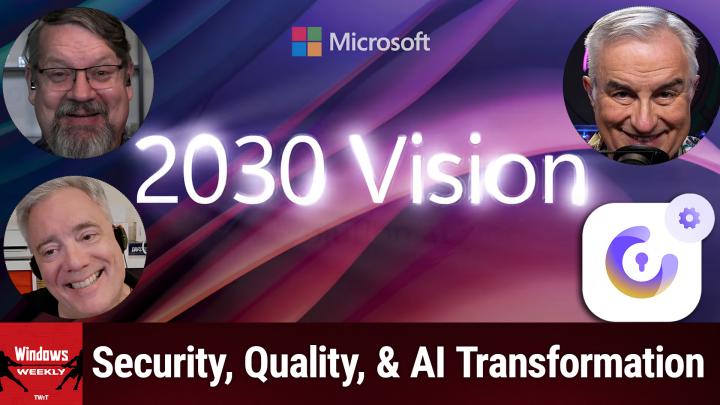
Well, I've said this about satchin adela a lot, but I that that uh memo is a great example. Um, put it into word, ask it to generate a summary, and it just says this page intentionally left blank, like there's no it. It boils down to no words. You, you know it starts off with like hearts and prayers and kind of thoughts and prayers or whatever, and kind of goes from there and it's like it's just not it, it. It just doesn't say much. Yeah, although I did get that the three. They've said it before, but succinctly put, you know, microsoft's focus going forward is and in this order, hilariously security quality and the first time I said this out loud I couldn't get through it, I was laughing too hard and AI transformation. So yeah, Okay.
18:15
Again, viable goals, I guess, if you're into generalities, but okay, but let's get specific, because this is what made this earnings call fun. Microsoft, for the first time in history, told us what the revenues of azure were so is that because they were finally more than amazon?
18:33 - Richard Campbell (Host)
is that what this is?
18:34 - Paul Thurrott (Host)
I think so, but well, I think it was more like layoffs, uh, azure revenues and everyone, because you know, like like analysts probably went into this call with whatever questions, and then they just started talking and they were like wait what? And sure enough, the next eight got the first eight people, or whatever, just talked about this. It was like, are you kidding me? So it worked. So I have a question for you. Uh, more math, uh, centric folks 42, oh sorry, uh, you're pretty close actually. Um, so the number for the fiscal year that just ended was $75 billion in revenues. Now we know that this is a certain percentage more than the previous year, which means we can compute what that is. So, for example, I figured out a 34% jump in revenues means that Azure made $56 billion in revenues in fiscal year 2024. Now they have been reporting that number forever, so someone, if they wanted to and they didn't value their time, could keep going back and saying what's 40% of this? What's 70% of this? And now, because it's revenues, we're never going to get to zero. Right, it will be 0.000 something at some point, but we're never going below zero. But we could kind of figure out like when Azure actually became a meaningful business, revenue wise, and then compare it to when they were talking about it, like it was, you know, and I bet you'd find there's a five to eight year gap, you know. So I think that's kind of that. That alone is fascinating, because there is no, there, there was no stated reason for saying it. Now, if you kind of just look at their earnings and compare them to, you know, a year ago, two quarters ago, whatever, there's no big difference. It's like why now we don't know? No-transcript more, right. So Sachin Adele is talking. He did the Azure bit, I think up top, in fact, I think it's like 12 seconds into his talk, like it's very quick, like hey Azure, something, something. As I was like, you know, it was just just like everyone lost their minds and forgot, didn't hear the next 10 minutes, right. So there's been a lot of news lately.
21:10
Copilot also ran in the market, compared to ChatGPT especially, but also to Gemini and other AI chatbots. True consumer sides, seems to be true on the business side, et cetera, et cetera. And um satchin adela, who referred to copilot, microsoft 365, cobot as essentially a, a new tier of microsoft 365, which is the way I sort of describe it because it's like a significant added cost. Um said that he called it the family of copilot apps, but has surpassed over 100 million monthly active users across commercial and consumer. Now, wow, consumer users do not pay by and large, um, commercial users all do. I think he was mostly talking about microsoft 365 co-pilot, based on the way he was talking.
21:58
From then on, he specifically talked about, uh, certain features that were part of that, et cetera, et cetera. But, um, you know, a hundred million is not, you know, insignificant. It's, it's not as many, it's not even close to what um chat GPT has and that's growing faster, et cetera, et cetera. But but those are all paid users, right? I mean by and large, I'm there. I would say 90 something percent are paid um on the, you know, for the, the meaningful part of it. So that's, you know, not horrible.
22:30
No not bad.
22:31 - Richard Campbell (Host)
Not bad, github over compared to chat GPT. Which is what?
22:38 - Paul Thurrott (Host)
800 million, Although I can't remember yeah, Right this most of those are not paid right, but then again they do have in the world of consumer paid AI. I bet they're number one, I mean you would hope, actually paying. I would think they are. I would think they are. Github Copilot has over 20 million users. That's significant, because I think it was April when they said it was 15 million. Now, previous December, they made a free tier of that and I can say, from having used it ever since in visual studio, that that's good enough for a lot of people. So I wonder I don't what that number is, you know, paid versus non-paid, but um, it's a. I mean, I use it almost every single day and I've never once had it say hey you're getting kind of close to the line there, buddy you know like it's.
23:29 - Richard Campbell (Host)
It's just kind of worked like it's giving the only people I find that pin their token usage are developers. Yeah, like actual professional developers.
23:37 - Paul Thurrott (Host)
Yeah, sure that are really building things and putting it seriously to work yeah, no, I'm, I'm making a ridiculous app that is wasting my time more than anyone else's really. But anyway, all right. So but we love it. And there were also some really good numbers around Xbox and Microsoft gaming, which I'm gonna say for the Xbox segment. But the common thread here is these things are all kind of meaningful numbers. They're all ai related, except for xbox. Um, they're all positive things, obviously, but I I there. The theme is seems to be like look, it's working. You know, if we just spend 80 to I don't know now they're not spending that on 140 billion.
24:30 - Richard Campbell (Host)
Right, yeah, but the there's two things that I think about when I think about that 80 billion dollars. A it was cash not borrowed. That's true, yep, right. Uh, it would have just been stock buybacks otherwise. B it's mostly data centers which you know might be a workloads that might'd be. It's mostly data centers which you know might be a workloads that might not be. It doesn't matter you know in the end.
24:49
They're buying the and I was. It's not even the compute. You know, I've been doing the numbers on data centers and it's like 60 of the data center cost is the infrastructure, not the compute. 40 is what you're doing, right you're. You're concrete your power, your cooling the infrastructure around it. There's 60% of the cost. The machines are going to change out every five years, whatever you put in them one way or the other, and that's sort of the diminishing cost. The argument is that they're building them too quickly right now for utilization, which doesn't seem to be the case because we're having utilization problems. So build it as case because we're having utilization problems. So the building as fast as you can, but even if the demand dies off, a lot of that money's retained.
25:27 - Paul Thurrott (Host)
A lot of that value stays in place I'm trying to see if I put this in here somewhere, if I can find it, but yeah, so to your point. Um, yeah, four, four, I'm sorry, three of the last four quarters. They made significantly more in profits than they spent on this. Um, this previous, this, this past quarter, that has only gone up Like that's actually, that situation is actually better than it was.
25:52
I don't remember where was this I can't find it in my article here, but there was a point in there about Microsoft back when they spaced out Windows revenues in the Windows 7 and then, 8 time, spaced out windows revenues in the windows seven and then eight time. Well, I guess they stopped during eight, but they would, uh, put revenues aside, so to speak, so that they could smooth it out over time, which is a fun accounting trick. That sounds illegal, but whatever question, and you know, windows would make an exact 20 billion, a quarter, you know, or whatever. The number was right. So, okay, uh, they are actually doing that with some of the cloud stuff as well right now, and so what they showed was that not only do they have, did they make the like revenue and profits to pay for this stuff, but they also have this spend that's coming. So this is like customers that are big companies that are going to spend an enormous amount of money on Azure, essentially, for whatever reason, what might be Microsoft 365, whatever it is and they're actually spacing out the revenues now.
26:50
So what they, what they? They didn't say it exactly like this, but the inference was not only have we paid for this stuff essentially with cash, which is basically what you were saying, but we have the commitments to more, to double or triple, um the the amount we'll need to do the same in the coming year. So, um, the point. I think one of the points they were trying to make in this conference call was look, I know these numbers are big, I know this looks scary, I know you're wondering what are we doing, and it's like this is paying for itself. Don't worry about it. And a lot of.
27:23 - Richard Campbell (Host)
At the same time, they this year at least put a few projects on hold, which makes me wonder if they're not just looking across the gamut of simultaneous projects saying these are the most expensive ones. Why don't we pause these and maybe we can negotiate a better deal while we're moving ahead on the most cost effective ones? Yep, yep.
27:41 - Paul Thurrott (Host)
Yeah, yeah, yeah. And and I again, I don't have these numbers in my brain, but it was Amy hood was talking about the amount of years that you know, like we're spending on this, this stuff, and, like you said, some of it is this, some of it's this, some of this and some, some of the technology bits are more short lived than others, but a lot of the server type things that they're putting in are several year investments, like they're going to be there for a while, sure, and maybe longer than I would have expected in some ways.
28:07 - Richard Campbell (Host)
Well, the infrastructure of a data center. The 60% is 50 years, right, oh jeez, like that's the concrete and then power poles and stuff. That kind of stuff is going to stay Right. The 40% is a five year cycle. Okay, and there's a bunch of stuff they kept in during the pandemic when they when compute pressures went way, way up, that are well aged out and they're starting to roll some of that stuff out. Okay, so they do. You know that five years an arbitrary number. It's not like those machines burst into flames after five years and we were talking about this on the twit on sunday, weren't we?
28:40 - Leo Laporte (Host)
you were there, yeah, I was there, yeah, because uh, people are saying, not just about microsoft, but in general, that the capex spending, uh on ai, in fact it's it's now, as it's moving gdp, it's more than consumer spending, so it's massive. But the point that we were making on sunday and you're, you know, actually filling it out now, richard is that that infrastructure sticks around, maybe the yeah, you know, the computers like, uh, like it has a half-life.
29:10
Well, it does, because I mean the cpus and the computers and the gpus have a half-life. I wonder.
29:15 - Paul Thurrott (Host)
So we in our country, we were big into things like steel, you know, and fossil fuels, and those things are well. Steel is gone basically from the united states for all intents and purposes, and fossil fuels, and those things are well. Steel is gone basically from the united states for all intents and purposes, and fossil fuels are obviously on the way out, right, and so you see the impact of those shifts on these communities that you know, just like the gold boom stuff in california from a couple hundred years ago, where it was huge and then it was gone and there were ghost towns and you know these abandoned places, etc.
29:41
So we're going to build all these data centers and I'm wondering like these will be the, the sets for the post-apocalyptic movies of the future where it's like yeah every big building is going to be like a former data center or amazon warehouse, and they're all like like, that's our whole country.
29:57 - Leo Laporte (Host)
You know, there's actually a precedent for that. Look at the malls, yeah right, that's exactly what happened.
30:02 - Richard Campbell (Host)
I mean, the argument with the malls is that they overbuilt, and so that's what these guys are trying to do. But that's the question here, right?
30:08 - Leo Laporte (Host)
so I mean you know, but there's another analogy which we talked about on on sunday, which is the railroads which in the 1880s overbuilt. Most of those companies went bankrupt, but we didn't lose the infrastructure, no, we just stopped fixing it well and and we had, and it transformed america to have a transcontinental railway. Yeah, yep, uh.
30:27 - Richard Campbell (Host)
You could make the same argument that followed of the dot-com boom was the fiber optic cables laid around the planet. That also largely went bankrupt and were bought back at 10 cents on the dollar.
30:36 - Leo Laporte (Host)
And a reason your tech support comes from india yes, but it's also the reason that you have fiber and high speed. Look at broadband adoption in the United States, except for the most rural areas, is transformation.
30:51 - Richard Campbell (Host)
It's killed cable and television who are finding fiber Like. Their job is to find a piece of dark fiber Like it was put in, but never used and they try and find the other end.
31:01 - Paul Thurrott (Host)
So this is the new copper. Like you go to a new build that was never finished and you strip the copper out now you're sure they want to find the other end, because often they're valid, like they got lays that were hard to get right and and then some of them are really valuable.
31:13 - Richard Campbell (Host)
So it's like, hey, we found this set of fibers sticking out of this building. Where do you think it goes? And then they do this sort of detective work on what permits were pulled when. And then, you know, eventually knock on another building store. It's like, hey, there's a chance in the back corner you've got a pipe that you don't know about, do you mind?
31:31 - Leo Laporte (Host)
there's the other side of the road there are two subjects I'm fascinated by that are kind of little covered but are so important. One is logistics yep, and and, and how deeply that technology is rooted in everything we do. We're learning it kind of now with tariffs. But the other is infrastructure, and you just take it for granted. You know, I walked down my street and all the wires are underground, so I don't see the telephone poles, the fiber, whatever.
31:57 - Paul Thurrott (Host)
You can see every wire in the world, I know.
32:00 - Leo Laporte (Host)
They're all around here too, yeah, but, but it's hidden infrastructure, but it's yet. It's vital and the way it got there is a fascinating story. Anyway, we have to take a break. Speaking of fascinating stories, we will continue with this conversation. You're watching windows weekly, paul theriot, richard campbell. I didn't even get to plug richard's uh website, which is dot net rocks, and that's where he'll find dot net rocks and run it. Actually, it's run his radiocom. You'll find dot net rocks at run his radiocom. They're all there, they're all there and he's there.
32:31
He's back in Canada which is Canada for a week he was on a cruise. He was on a cruise to Alaska, Paul. You remember going to Alaska. You remember getting COVID on the boat.
32:45 - Richard Campbell (Host)
You, you remember getting COVID on the boat. You remember that Several of our friends have come off the boat.
32:47 - Paul Thurrott (Host)
Well, the funny thing, I remember being told I have COVID. I never, I can't say I've gotten COVID twice.
32:53 - Leo Laporte (Host)
Both cases it was on a cruise. There you go, yeah, and we're planning a riverboat trip in a month.
32:58
I'm wondering Nah, it's a smaller boat, you'll be fine and there's lots of fresh air you'll get. You'll get different sicknesses far more quickly than you got. I mean, you might get trichinosis, but that's a different thing. I've always wanted to travel through the southeast of the united states and right now I'm reading histories of the civil war and it's really fast. I can't wait. The history is going to be really incredible. We start in new orleans love new orleans anyway. It's going to be cool. It's's gonna be very exciting if we get to do it.
33:25
But first, the reason it's an if is because we're doing construction on the house and lisa says if they're not done by september 20th, we're not going. And I said, but, but, but we made this reservation in 2021. Wow, we, I really, I really want to go. All right, let's take a break. More to come, more sad tales of luxury trips to come. First, we have to pay for those luxury trips with our fabulous sponsors. No, that's not what pays for my luxury trips. In fact, this thing, we paid for this so long ago. I don't even we forgot that. I even paid for it Four years. Four years. We had to make that reservation.
34:11
I do actually want to talk about something really important if you are a business, and that is SaaS security. We talk about it all the time on all of our shows. This episode of Windows Weekly brought to you by 1Password. Over half of IT professionals say securing SaaS apps is their number one challenge and actually, if you think about it, your employees are using AI. They're using all kinds of SaaS, some of it approved by the company, some of it not. With the growing problems of SaaS sprawl and shadow IT, you can see why this is a growing problem. But there is a solution. Thankfully, trelica by one password T-R-E-L-I-C-A can discover and secure access to all your apps, all of them, managed or not. This is such a good solution. Trelica by one password inventories First thing it does inventories every app in use in your company, every one. Then they know about all the apps, so they have pre-populated app profiles which will assess the SaaS risks, letting you decide. You manage access, optimize spend, enforce security, best practices across every app. Your employees use even Shadow IT. It also helps you securely onboard and off-board employees and, of course, it helps you meet compliance goals. Trellica by 1Password provides a complete solution for SaaS access governance, and it's just one of the ways that extended access management helps teams strengthen compliance and security.
35:46
This is the new thing from 1Password extended access management. You know their password manager right. We've talked about it for years. Many of you still use or have been using it for all that time. 1password's award-winning password manager is trusted now by millions of users, over 150,000 businesses, from IBM to Slack.
36:07
But 1Password's gone beyond securing more than just passwords with this new 1Password extended access management. Now, needless to say, 1password is secure itself ISO 27001 certified, regular third-party audits. By the way, the industry's largest bug bounty. 1password exceeds the standards set by all the various authorities and is a leader in security. You can be confident when you're using 1Password and I think you probably know that right that by reputation. Take the first step to better security for your team by securing credentials and protecting every application, even unmanaged shadow IT. Learn more at 1Passwordcom slash Windows Weekly. That's 1Passwordcom slash Windows Weekly. All lowercase, all right, no caps in there. 1passwordcom slash Windows Weekly. We thank him so much for supporting Paul and Richard and the show and all of us. Thank you 1Password. I'm sorry, I didn't mean to interrupt this conversation. I'm going to step back and let you two continue on conversation.
37:18 - Richard Campbell (Host)
I'm going to step back and let you two continue on. I'm laughing about this windows 2030 thing just because you realize that means the next version of windows 2030.
37:24 - Paul Thurrott (Host)
It's only five years away you know, it's been a while, though, since we've gotten a windows vision video, yeah, so I'm kind of excited about this, on that sense, I guess.
37:36 - Leo Laporte (Host)
Oh, can I play it, is it?
37:38 - Paul Thurrott (Host)
allowed. Yeah, I mean it's seven minutes long. I wouldn't play the whole thing, but it's David Weston. This guy's in charge of basically.
37:47 - Leo Laporte (Host)
OS security. Oh, so it's more talky-talky.
37:49 - Paul Thurrott (Host)
Well, no, there's some interesting stuff in here.
37:50 - Leo Laporte (Host)
actually, I would say Okay, so everybody should go to th rotcom and uh, take seven minutes and we'll, we'll just wait. Uh, okay, back.
38:01 - Paul Thurrott (Host)
um, yeah, here's david david I won't turn it up, I'll just let you watch. He's talking. What's this? Or the whizzle, or whatever he's called he looks like to whizzle.
38:09 - Richard Campbell (Host)
Look at that he's deleted his linkedin account.
38:12 - Paul Thurrott (Host)
That's interesting huh, yeah, it was probably too professional, so I um who is he?
38:18 - Leo Laporte (Host)
is he?
38:19 - Paul Thurrott (Host)
is he responsible for windows in the future security security security okay, well, he's actually, he's actually pretty great if he can get over there.
38:27 - Leo Laporte (Host)
Yeah, um so no, he really is he doesn't look like a microsoft corporate vice president.
38:33 - Paul Thurrott (Host)
He looks, yeah, I think that might be part of the point of his success. Yeah, so, yeah, I mentioned this earlier. You know the core focus for Microsoft, according to Satya Nadella, is in this order security, quality and AI transformation. Right, and so the first of what they promise will be some series of videos about their vision for how Windows will evolve in the future. Focuses on security thus Dave Weston. Series of videos about their vision for how windows will evolve in the future. Focuses on security thus dave weston, although he talks about just a genic uh, use cases and how natural language will change the way we interact with the computers all the time in this context, right yeah, I mean, look, even in its kind of nascent, ridiculous state today um Copilot and Windows, you can see how it's kind of going to go in this direction.
39:20
I mean a lot of the well. I mean, the first way we interacted with these chatbots was by typing. It was like what are we doing? We're going back to a command line.
39:31 - Richard Campbell (Host)
Right back to Stevie Batiste, right Like that's really when we started talking about Windows.
39:36 - Leo Laporte (Host)
That was such a great talk. We continually refer to it too, which is yeah, all the time, yeah.
39:40 - Paul Thurrott (Host)
Yep, but his kind of take on this. I'm trying to think of the actor whose name I'm zoning on, paulie Neeson.
39:53 - Leo Laporte (Host)
I have certain skills, the.
39:54 - Paul Thurrott (Host)
Paulie Neeson de-wizzle type thing. No, I'm sorry, I didn't mean to go in a serious direction, but he has his own kind of take on it. So you can talk like you're like multi-modal interactions. You're like, okay, and it's like less eyes, more talking. It's like, okay, you know there, you go. Less toil work, right. And this is. Microsoft is doing a lot of hand waving around AI because there are a lot of interested parties who are scared about this, right, and in this case, it's users who are like we're going to lose our jobs because of AI.
40:24
It's like no, no no, it's going to take away the bad work. It's going to You're going to lose your job for other reasons, but it won't be AI. You're still a terrible human being, so that's a problem.
40:33
But, no, he kind of just steps through the different ways that humans will always be necessary and you know, of course, because of course he does. But I do sort of like the, because you can go off the end, the deep end, with technical talk and it's people like what are you talking about? You know, just getting rid of toil, right? Yeah, okay, a lot of what he's talking about is obviously security related, so it's windows resiliency initiative, right, and how it ties into microsoft's broadest stuff. He talks a little bit of uh about, about uh, post quantum hardening of windows, or making windows quantum safe, um, which is interesting because quantum computing has not happened yet, but they're already building, you know, quantum or like encryption that can't be broken by quantum, et cetera et cetera.
41:23 - Richard Campbell (Host)
They're not building, they're starting to deploy.
41:27 - Paul Thurrott (Host)
Sorry, I didn't mean to. I mean like it exists, yeah, so, and then just like the notion of, you know, the shift to agentic systems, et cetera, and, okay, fine, he hits on this thing. That's really interesting. He says this about security, but I would apply this to computing in general. He is saying that computers are going to change a lot and that the way we interact with them will change a lot, but also that customers are looking for dot dot dot, you know. And the way he described it was appliance level security, and he compares it to a, you know, with the understanding of course smart appliances have had problems and all that kind of stuff. But he's like, basically, you have a washing machine or refrigerator. Does this one thing? It just does it. You know, it's not a general purpose device. That, um, you can add anything to and it, you know, sends you notifications and runs apps and stuff, although those absolutely do exist to some degree. But yeah, I mean fair enough, because I I wrote this really long thing about the iPad part partly on the plane ride home yesterday, where, when you think about how computers might evolve, you know, in Microsoft's experience computers might evolve.
42:39
You know, in microsoft's experience they've taken this big complex thing and they've kind of built down to go to different devices and hasn't been super successful. In apple's case they did do that one time, obviously, with os 10, and then they went to the iphone, but ever since then it's been these kind of smaller, lighter, uh, cleaner, more modern systems that are, you know, fine-tuned to whatever the form factor or device type is. And, um, you know, with the ipad, like you get to this point where it does that kind of 80, whatever percent that all computers can do, and our audience is that 15 is like I could never use that because it doesn't have dot, dot, dot, but the 85 is a big, bigger audience. And um, you know, when something like you open it and it just turns on and there are no fans ever and it gets 18 hours of battery life or whatever it is. And now it does all this other stuff too, and if you don't want that you don't have to have it, but if you do you can, and you know it's like this it's solved.
43:31
This kind of matrix of problems that, frankly, I think Apple could done many years ago but didn't. And um, but now have and this is kind of a problem um, for windows, but that that's not tied to this video per se, but I it was interesting because I had just written most of it and when I heard him say that I was like huh, because I don't think microsoft has anything in the works that it that I would call an appliance-like personal computing experience. Right, the best we're going to be able to do at least unless something's going to come out of the woodwork and surprise me is something like Windows 11 on ARM, which has inherent advantages because it's ARM and because they've gotten rid of a lot of cruft which you know the rest of windows hasn't, and it's not x86. Frankly, that's a big part of it.
44:20 - Richard Campbell (Host)
Um, but all of that software is becoming less important because we don't really need software anymore in the gen tech world well, yes, so, but that is also a problem for windows, because if that's the case, you don't really need windows.
44:34 - Paul Thurrott (Host)
Yeah right, you know most of our time is spent with these more personal devices anyway. So, so, but that is also a problem for Windows, because if that's the case, you don't really need Windows. Yeah Right, you know most of our time is spent with these more personal devices anyway. So we're in the browser, yep, and which runs on anything, and so I feel like you know that we all know the Steve Jobs thing, right, cars and trucks and all that.
45:00 - Leo Laporte (Host)
I think in the in computer speak, I would say that computers have become what we used to call workstations, and these other devices are like computers.
45:04 - Paul Thurrott (Host)
You know, it's funny because for a long time you needed the truck. If you want to do coding, yep, you might not even need that anymore. If you do still need it, it's an artificial limitation, because there's absolutely no reason why you couldn't do this on a device right, but obviously well, maybe not obviously.
45:13
I mean, you can run a visual studio code on a chromebook if you install that Linux subsystem, whatever that was called, whatever it's called. There is a Swift Playgrounds thing on the iPad, which is not the full Xcode, obviously, but you can actually use it to make apps. I mean, to some degree. It's not the same, it's not Xcode, I get it. It's not cross-platform and all that, but it could happen.
45:36 - Leo Laporte (Host)
Some say not being Xcode. I get it, it's not cross-platform and all that, but it could happen. Some say not being Xcode is a virtue.
45:40 - Paul Thurrott (Host)
Yes, Well, but that's the thing. That's the thing. So our audience and our group, our people, us, the obvious pushback on this is well, it doesn't do like I said, it doesn't have this. Like I need this. I need this one ancient printer, this one weird esoteric device, or my job is very specific and I do this. I need this one ancient printer, this one weird esoteric device, or my job is very specific and I do this. You're a coder or whatever Like you can. There's always the thing and it's like yeah, yeah, yeah, no, I know, but, but but no one's doing that. You know. Like, like there, all of the major productivity apps are on this thing now. Like all video editors are there. Um, it's all the social media stuff. Uh, all the things I use notion ia, writer, word affinity, photo, photoshop, um, what's it?
46:25 - Richard Campbell (Host)
called davinci. Resolve is on there really it's nuts um anyway.
46:30 - Paul Thurrott (Host)
So things are changing. So sorry, david, it's uh.
46:33 - Richard Campbell (Host)
But it's probably. I'll give you the corollary to that which, which is using the playwright MCP to do testing on a website. Rather than write the tests themselves, I'm writing prompts to generate the tests, which means when the new version of the website came out, I just reuse the prompts to regenerate the tests. I didn't have to go edit all the tests.
46:52 - Paul Thurrott (Host)
Yeah, all the tasks. Yeah, I think the first, the, the first disconnect maybe for me and this is like a developer thing that maybe that audience would kind of understand was when the focus shifted to web development. Um is why visual studio code became a thing. Right it was. It was answering this problem because you didn't have to have this big, huge visual studio thing to do that. In fact, these people were doing something. These people you know developers, web developers, by items by and large are working in a, in, in what I would think of, or maybe other developers might think of, as an almost unstructured way, where it's like the a folder is the project and you're working in an editor and you're deploying to a website maybe, and it's not this build, compile, link kind of heavy process, it's something. And then one day you wake up and you realize 85% of all developers are doing this and what you're doing is the minority, the old school way.
48:02 - Richard Campbell (Host)
Yeah, now the IDE has fallen out of favor with the younger generation. I mean, arguably, visual Studio Code was. We want to build an open source editor, and one of the reasons was there is a generation of developers that have never used an ide because they were expensive yeah, no, right, right, right, I, yeah, yeah, I, um, yeah, I there's.
48:28 - Paul Thurrott (Host)
well, I'm there's a. There's a thing that apple's been doing for a long time that is not a part of my daily life, that I think, now that the iPad is more of a mainstream computer, maybe we'll become more of a thing for more people, right, which is the maybe consumer version of what you just said. Like there's this thing that's happening that we weren't really aware of, right, and that thing on the Apple side is this iCloud thing, where you write apps to work with iCloud and you don't worry about file systems and you don't do file management. And you know, I experienced that in small ways, like by writing an article in IA writer on an iPad or a Mac and there's no save or save as it's just, it's just saved in iCloud and you don't.
49:09 - Richard Campbell (Host)
Those three and a half inch floppy icons don't exist anymore.
49:12 - Paul Thurrott (Host)
Yep, They've saved a lot. They've made the system a lot simpler by not having a floppy disk icon but I work in jupiter notebooks.
49:20 - Richard Campbell (Host)
I just don't save anything. Yeah, oh, like notion is always there, right?
49:24 - Paul Thurrott (Host)
right to be, to be fair to microsoft. This was one. You know. One note from v1 was like this and it was like what do you mean? There are no document files like it. It takes a while to get around that. When you're used to the old way, yeah, um. But once you use it for a little while you realize, oh, like you mean, this is just gonna, it's gonna work like that's. I guess that's one way to do it. I I've been using microsoft products. I didn't know that was an option now my control s reflex is strong.
49:51
Oh my god the smartest thing it can do is just register it and just keep going.
49:56 - Richard Campbell (Host)
You know, just let you do it, make just a little icon pops up the side that says okay, boomer, and it keeps yeah, yes yes, yes, exactly.
50:06 - Paul Thurrott (Host)
Please flip over the floppy so we can finish saving on the other side because I know you off that notch, so you could use both sides of the disc.
50:16 - Leo Laporte (Host)
People are wondering what the hell you're talking about.
50:18 - Paul Thurrott (Host)
But I I've been there I know yep, you know we used to have to spin a tape forward to the right point. You'd write it on the outside so you knew where the program started. You know you're like, oh, you just missed it. Oh, come on, go back. Yeah, it was a good time. Okay, so, all right, so future windows, blah, blah, blah. I guess we'll see what happens anyway, reclaim our lives, et cetera, et cetera. Before we get to the insider stuff, which honestly isn't too big this week.
50:51 - Richard Campbell (Host)
And I'm not unhappy that this is CVP talking about windows, because nobody seniors talked about windows for a long time.
50:58 - Paul Thurrott (Host)
That's a good point. No, I was saying something about David West and he was the guy who had brought. He talked about the windows used of rust for the first time, for example in the kernel and he's been, you know, part of this future.
51:14
What's it called the secure future initiative that microsoft's doing? He's been big during all the every one of the windows resiliency initiative, or whatever that's called, uh, milestones. Um, he came up recently when they announced uh, administrative mode right for windows 11, which is now rolling out in the insider program Some of the new system restore capabilities, et cetera, et cetera. So he's been a presence, he's been out there, but yet, like Richard said, you don't really hear Satya Nadella talking about Windows all that much.
51:53 - Richard Campbell (Host)
Well, I would defy you to even find someone with a title cbp of windows anymore, like who? Who is it right? Is it so?
52:03 - Paul Thurrott (Host)
well, I'm not a big fan of dave weston, because I am, but the guy's in security, yep yeah, yeah, no, no, he's not part of, yeah, windows product development for sure, yep, um, I mean there is, yeah, so that part of the world is technically Well, it's weird because it's split between Microsoft 365 and, you know, more personal computing. But the what's it? Rajesh Jha is the kind of overlord of that part of the world, and then Pavan is Windows, probably in more personal computing side. So that's like engineering and user experience, that kind of stuff, and then the inside of program et cetera. I'm not sure what his title is.
52:46
He might be a corporate vice president. It seems like there's probably thousands of them now.
52:50 - Richard Campbell (Host)
I don't know there's hundreds, but generally speaking the definition of a CVP is they own a revenue stream.
52:57 - Leo Laporte (Host)
Oh, that's interesting. Well, well, that's a pretty important thing, yeah, yeah that's the threshold.
53:03 - Richard Campbell (Host)
The moment that you own income from the for the company, they make you a cvp huh, that's, I didn't know that.
53:12 - Leo Laporte (Host)
That's interesting. I guess I'm a CVP for Twit, that's it, but you guys are. Cvps for Windows Weekly. Oh, that's true, you own this resume stream, nice, nice Right. But Lisa owns us all, so that's really you know. That would make her the EVP.
53:33 - Richard Campbell (Host)
She's the CEO.
53:35 - Paul Thurrott (Host)
Pavan Davaluri is a corporate vice president, so I guess she's the. Yeah, she's the ceo. Yeah, pavon davaluri is a corporate vice president, so I guess that's the guy.
53:39 - Leo Laporte (Host)
So is this all defined at somewhere? Or is this a standard in all corporations? Or is this a mic? This is a microsoft thing, right?
53:46 - Richard Campbell (Host)
this is a way. This is a way I've understood microsoft for a long time, do they publish anything like? They used to, but not anymore yeah, it just becomes uh.
53:54 - Leo Laporte (Host)
It's not like the military, where you know you get your.
53:57 - Richard Campbell (Host)
Well, the thing now is it's been used as an attack factor, right Business compromise, of course. Based on understanding hierarchies.
54:03 - Leo Laporte (Host)
That happened to even little old us. So because if you know who's direct reports Yep and you can send them a message from the CVP saying I own this revenue stream.
54:17 - Paul Thurrott (Host)
So you send cvp saying I own this revenue stream, so you sent it to. Actually I've been thinking russia. It's been a couple of months now, but I think I think kevin might actually be a chinese spy. I'm just saying, oh, he's korean.
54:24 - Leo Laporte (Host)
No no, he's from north korea, gotcha, yeah, yeah yeah, his english is excellent.
54:29 - Richard Campbell (Host)
A bunch of amazon cards, yeah sometimes he slips up, that's all.
54:34 - Paul Thurrott (Host)
We send them amazon cards every week.
54:38 - Leo Laporte (Host)
Just just teasing you. K, just teasing you. If that's your real name, they're iceless.
54:44 - Paul Thurrott (Host)
Then be careful okay, so uh, microsoft this week quietly killed windows 11 se, which most of you probably don't know is a thing oh my god, that's second edition. That was still alive yes, this is the stripped down. What do you call it?
55:03 - Leo Laporte (Host)
education focused version of windows 11 this is the one you could only download from the store, kind of a well no, no, no, it's s mode, but it's part of this that world.
55:13 - Paul Thurrott (Host)
It's like let's take this complex thing and try to make it simpler, in this case to compete with Chromebook. And so I don't remember what year this was, but when Terry Myerson at the time unveiled the original Surface laptop, it was for some reason, even though it was expensive, targeting the education market. It was announced at an education event, at an education event, and the thing I most remember from that event was not the laptop but the fact that they're being Microsoft, meaning the windows teams at the time solution, for we need something that's as simple as all these remote capabilities that Chromebook offers education customers. Um was to put software on a window like a USB key and walk around each computer and plug it in. I was like, yeah, that's not gonna work.
55:59
So since then, they've tried several different things. Windows 11 sc was one of them and I just mentioned. This thing is coincidental, but he talked about this app like what he called it uh, um appliance, like capability, and I mentioned the iPad, et cetera, et cetera. So you know, I would say the Chrome OS and the iPad are kind of examples of these more modern computing platforms that are simpler and, yes, they don't do as much, although you know the gap is closing and the stuff that they don't do. Maybe it's not super important.
56:33 - Richard Campbell (Host)
Is it just me here? Is it every time they put a letter after the number of the windows?
56:37 - Paul Thurrott (Host)
that's a doomed version I mean, this is also. You know, this is also part of the widest story. It's like when you're a hammer, everything's a nail. So when you're microsoft, everything is windows. And then you, you, you repeat the success story over and over again and it works great, until one day it stops working. But you don't notice until seven years later, when the whole world has changed and you're still calling things windows something, and no one cares anymore and we've moved on. But I yes, it's a, I don't know. Anyway, they're not doing it anymore.
57:08
So no again, I don't know, I don't know what. Yeah, I don't know what we're gonna do going forward, but that one's over.
57:13 - Richard Campbell (Host)
So there's that you know, windows for arm cuts away a lot of the craft that the X's and the S's have been trying to do for years.
57:21 - Paul Thurrott (Host)
That's right and I think that's as good as we're going to get it. You know it's a good place to be. It's still windows. I mean you're you know that workstation thing I was talking about, it's still. You know it's a full pc operating system, whatever. But yeah it, it does get rid of the cruft and and whether it's the architecture and or that, right they probably those things probably go hand in hand. But, um, these systems are a lot more reliable and uh, I don't know why I didn't put this in the notes, but I also wrote a big thing about that.
57:51
This week I had gone to mexico with two nearly identical laptops, one running an amd chip and run running intel, and my wife who has not once but maybe a million times wondered if I don't have tourettes noticed me freaking out about this intel based computer because it just stopped working all the time like it was crazy bad.
58:15
And I just looked I didn't do a thorough thing over like every possible metric, but when you look at basic reliability, things like instant on and whether it actually comes on instantly and whether the webcam comes on and actually works, and what happens when you open more than three tabs and what happens when you're on battery power versus a plugged into power, et cetera, et cetera, like there's a clear hierarchy right now and this will play out. You'll see. We'll talk about the earnings. A little bit plays out there, but it's you know, we have this actually really reliable platform that only a few people are using. And then, if you are, if you do look at the X86 world, there's a nightmare of problems. But the AMD stuff is heading. Amd stuff is not even close. It's so far ahead of Intel. I question the need for Intel at this point.
59:08
I don't even understand what the point of this company is they're struggling.
59:11 - Richard Campbell (Host)
Like I said, I think it's going to be parted out. The fabs will go make non-cpu chips that are needed and they'll become arm like. They'll have a design that they license to manufacturers. Yeah, I right.
59:24 - Paul Thurrott (Host)
Unfortunately, there's yeah, I mean there's bad news there too, right, like the 18a, the and then the coming 14a stuff, which is the dream I, these intel nodes, I don't know. They don't seem to be able to make this stuff happen either. So I don't know, they don't seem to be able to make this stuff happen either. So I don't know, I don't know what to say about this. It's, it's kind of scary.
59:42 - Richard Campbell (Host)
I just wonder what would happen if that, if that design team iterated with a tsmc yep and actually like just said look, we're just going to do this.
59:50 - Paul Thurrott (Host)
Yes, exactly, yeah, right.
59:51 - Richard Campbell (Host)
And you work with the engineers that know how to make that the UVLE system work.
59:58 - Paul Thurrott (Host)
I can't say I mean no, I don't know Right. But yeah, the question you're asking really is the hold up here, the desire to do as much in-house manufacturing as possible, which, back in the day, was all of it. Is that the problem? Because you know, lunar Lake has reliability issues for sure, and I mean it helped almost bankrupt the company last year. But um, but yeah, I mean otherwise, like, without that push, what would they still be doing? They'd still be putting out these inefficient desktop processors disguised as mobile processors, with mpus that didn't do anything and you know they're excellent space heaters.
01:00:34
Yeah, they're okay.
01:00:34 - Richard Campbell (Host)
Graphics wise know, but they're excellent space heaters.
01:00:37 - Paul Thurrott (Host)
Yeah, they're. They're okay Graphics wise. Honestly, I mean they're good. I would say even they're good, um, but I mean, in my experience the MD stuff is much better.
01:00:46 - Richard Campbell (Host)
I it's well, I built one of each. Yeah, all right.
01:00:52 - Paul Thurrott (Host)
Well, you did desktop, so I'm not. I don't have any. So the desktop stuff I don't really know where that's at, and are you doing anything with dedicated graphics?
01:01:03 - Richard Campbell (Host)
No, because that would shift that to RTXs and both.
01:01:06 - Paul Thurrott (Host)
Yeah, so I bet I mean assuming it's tracks. I mean I'm sure the AMD graphics stuff is much better. That's my guess, but that I don't know put nvidia in both. Oh, I see, okay, so you did.
01:01:18 - Richard Campbell (Host)
Okay, so you did nvidia graphics yeah, 5080 on the dev machine and 5060 on the streamer. Okay, well then, then it doesn't matter no, that will probably learn nothing and that'll be the same there you go.
01:01:31 - Paul Thurrott (Host)
Well, you're a man, okay, so so not too much happening in the insider space. We had a pair of dev and beta builds, so 25 and 24 H2, same features in both, et cetera. There's a single change to File Explorer that only impacts people who sign in with a work or school account, which is of no significance, and some minor changes to where things are in settings, which we've already talked about. They're kind of putting all the relevant search stuff into privacy. Now, big deal, so not too exciting. Yeah, that's about it. So yeah, I mean, if you look at stuff that's actually happening in the Windows world this week, it's almost nothing. We got rid of something Windows no one was using, and we're talking about the future in vague ways.
01:02:19
So yeah, it's, yeah um yeah, um, microsoft had their earnings last wednesday. Since then we've had apple, amazon, qualcomm and now today amd. So obviously I'll do those in reverse order, um, but the amd one is actually the most interesting to me because a blockbuster quarter, of course, major double digit gains in profits and, uh, revenues. But it's actually the client and gaming segment that's the biggest company.
01:02:48 - Richard Campbell (Host)
There again, not server is that not server data?
01:02:52 - Paul Thurrott (Host)
center because they've been uh, having problems US export restrictions to China and so the growth and the revenues of client and gaming together is bigger than data center for them, right.
01:03:06 - Richard Campbell (Host)
Now, is this trying to get ahead of the tariffs, or is this? I can't buy Intel, so I better buy AMD.
01:03:12 - Paul Thurrott (Host)
Well, if you were buying a PC, you'd have no trouble getting Intel. What's interesting is that the mix of AMD-based PCs has grown dramatically. Obviously, there were no Snapdragon ones before last year, but that also is a small chunk, but the AMD stuff has actually grown. So I just mentioned, I just reviewed that HP in this case sells 14 and 16 inch Omnibook X flip laptops in both AMD and Intel versions. Right, you're starting to see more of that kind of thing. And so that part of the business just PC processors revenues were up 67% year over year. That's what happens when Intel doesn't pay off all the PC makers anymore. Frankly, it's also what happens when you actually make the dramatically better product, which is the case in this part of the world.
01:04:10
So gaming revenue relatively small 1.1 billion. These are dedicated graphics cards, but also what they call what was the term Semi-custom revenue, meaning revenue from game consoles, right, we know that AMD is the chipset under the PlayStation and the Xbox currently, but also will be for the next generations as well. So that's like a good little business for them as well currently, but also will be for the next generations as well. So that's like a good little business for them as well. And then, yeah, I mean data center revenues are at 14%, but they probably would have been up, you know, 50, whatever, 60%. It would have been bigger, you know, but for the export restrictions. So that's cool, I like to see them doing good. Qualcomm reported their earnings. That this is kind of a non-event in a way.
01:04:57
Yeah, it's weird. Like 10.4 billion in revenues, um, it's like again a 10. It's fine, you know, handsets is their big business. They don't just make processors but they make modem chips and other kinds of chips. Right, um, 6.3 of that 10 point, whatever billion, so roughly you know 60 something percent. Um, they're going to start splitting out their revenues to account for apple. So as apple cuts them out of the picture, you'll be able to see how that shifts things. It's kind of an interesting.
01:05:25 - Richard Campbell (Host)
It's smart thing to do, though, because it shows the company overall isn't declining.
01:05:28 - Paul Thurrott (Host)
You just have one contract going on yeah, so, yeah, we know that's going to go down, so it's kind of you know that's kind of interesting. Um, and then we have apple and amazon and these companies are go down, so it's kind of you know that's kind of interesting. And then we have Apple and Amazon and these companies are, you know, unbelievable. So it's kind of hard to say what's going on here exactly. But iPhone is something like it's. It's under 50% of Apple's direct revenues. It's good. You know services is humongous. That's mostly app store. There are questions around that.
01:05:52
I I listened to the post earnings call with Apple for not the first time in my life, but it's been a long time, and it was just one of those timing things. Like I'd written the article and as I'm writing it, I can see on their news site that the live streams happening like in a few minutes. So I was like you know, I could just I could actually listen to this and it was fascinating comparing this to Microsoft's conference calls, cause I've listened to a ton of those and they're different. They're the same and they're different, right? So they're the same in that the CEO gets up and reads off of a script. You can tell in Tim Cook's case he's like reading off a piece of paper, really stiff, not like he is when you see him at public events. The CFO was there with him, just as Amy Hood is with Sacha Nadella in the Microsoft calls, and it's a Q&A and so that part's the same. But, man, you would not expect this because you would think Apple would just cut these guys right off if they got inappropriate in any way. But the analysts on the Apple call were super aggressive, asked them very cutting questions, which were things that they did not discuss at all in their earnings report, whereas the Microsoft one it was all fawning and like oh my God, thank you so much for this. You're doing so much better than we thought. Like that was incredible. Like congratulations on the quarter. Like it was great, you know.
01:07:09
Like there were a lot of sucking up and like just fell for that whole divert with all the numbers, right, but in Apple's case they were. You know they would say yeah, but what about? Like you guys are still behind an A, like what's going on? And they answer like we don't really feel, like we're behind. Like the next guy's like yeah, yeah, but you guys were behind an A. Like what do you think about that Like it was really. They were really kind of aggressive.
01:07:41
And, um, the most boring and arguably non-tech company on earth the most revenues is always the smallest profit slash net income, as always, because a big chunk of Amazon's business is this logistics slash physical goods thing, which is really really high margin and uncertain and you know you have to account for a lot of returns and blah, blah, blah, whatever. It is so like whatever. But the part of the company that we kind of care about there was, I guess it was a couple, but the big one is Amazon web services. Aws was 31 billion in revenue, ish, 18% of Amazon revenues overall, but by far its most profitable business and I think I have the number here Almost because warehousing is an incredibly low margin business.
01:08:23
Yeah.
01:08:23 - Richard Campbell (Host)
Retail in general.
01:08:24 - Paul Thurrott (Host)
Yep, yeah Right, it's like this enormous thing to make this little amount of money at the end. But okay, it's Amazon, right? Also, they talked about CapExpex spending, like all these companies. That was the other thing those guys asked about. Uh, apple. They kept saying, like you know, we know you guys don't like to break out these numbers, but if you had to give it a number, what would you say? You're spending on capex right now. You know that kind of thing. Um, apple actually does divulge capex numbers, by the way.
01:08:49
But, uh, but like they're also not building a bunch of ai data centers yeah, well're building some I mean they're they and they talk about that, but yeah, not to the, not to the way that Apple or Google, Amazon and Microsoft are. So Google, Amazon, sorry is going to spend $100 billion this year on AI and infrastructure, et cetera, et cetera. So you can compare that to what Microsoft did last year, which was about 85, and what they are spending this quarter, which is 30.
01:09:21 - Richard Campbell (Host)
And you know we'll see where that goes. If they maintain that trend, that means 120 for the next fiscal Yep.
01:09:28 - Paul Thurrott (Host)
So yeah, these companies are all competing in AI, but they're also trying to, in a way, competing to see who can outspend each other on.
01:09:35 - Richard Campbell (Host)
AI infrastructure. It's a crazy way to make headlines, yep.
01:09:39 - Leo Laporte (Host)
You got to spend if you want to make.
01:09:41 - Paul Thurrott (Host)
We don't feel like you're serious about AI. Do you think you want to spend a little more money? Oh jeez, I don't know.
01:09:46 - Leo Laporte (Host)
Actually it's interesting because Apple traditionally just does not spend a lot. Their CapEx is way what google spends there are.
01:09:53 - Paul Thurrott (Host)
I don't. I'll never remember these numbers, but I like apple's rnd at the time when they were doing things like the ipod, the iphone, whatever. It was like nothing. Yeah, you know, microsoft is spending tens of billions of dollars on rnd and they're like, yeah, we got like fredo back in a garage and, uh, he's got like it doesn't seem to hurt apple.
01:10:08 - Leo Laporte (Host)
I mean they come, I know it seems to go they there's you.
01:10:11 - Paul Thurrott (Host)
The apple is terrible because no one can ever copy them and be successful doing that.
01:10:15 - Richard Campbell (Host)
You know what I mean. They are definitely their own thing.
01:10:17 - Paul Thurrott (Host)
There's no guy who's like I'm going to think like Steve Jobs and I'm going to do you know. It's like no, you're not. Lots of people who think they can Right, yeah, it's just, you can't duplicate the success. It's bizarre, it's amazing.
01:10:28 - Leo Laporte (Host)
It's interesting. Let's take a break. We have AI development stuff to talk about. We've got Xbox. We've got whiskey, we've got it all.
01:10:38
You're watching Windows Weekly with Paul Thorat and Richard Campbell. So glad you're here today Our show brought to you by US Cloud, the number one Microsoft unified support replacement. You've heard me talk about US Cloud now for a few months. It's starting to sink in. They are the global leader in third party microsoft support for enterprises. Uh, since we started with them, they are now supporting 50 of the fortune 500 companies, and there's a good reason, because switching to us cloud saves them and can save your business 30 to 50 percent over microsoft unified and Premier Support.
01:11:15
Half as expensive, but twice as fast. That's right. Twice as fast average time to resolution versus Microsoft. So you're not just cutting costs, you're cutting hair pulling, which is really good. You know when your network's down, your hair's on fire, you've got a ransomware virus spreading or whatever it is. Speed is of the essence.
01:11:39
But now us cloud's really happy to tell you about something new that they're doing which can save you money on azure. It's their azure cost optimization services. This is probably something Microsoft would not be helping you with if they could avoid it Because, frankly, let's be honest, azure usage just happens, right, azure just happens. If you haven't evaluated your Azure usage in a while, you probably have some Azure sprawl, little spend creep, it's not hard. Yeah, we need to spin up a new VM. We want to do this, but maybe you don't need all of that.
01:12:12
So the good news is, saving on Azure is easier than you think with US Cloud because they offer an eight-week. They call it an Azure engagement. It's powered by VBox. It identifies key opportunities to reduce costs across your entire Azure environment. You're going to get, of course, one of the other things that makes US Cloud so special expert guidance. Access to their senior engineers. One of the other things that makes US Cloud so special expert guidance access to their senior engineers. These folks have an average of over 16 years with Microsoft products, which means they've forgotten more than I will ever know. At the end of the eight weeks, your interactive dashboard will identify, rebuild and downscale opportunities, unused resources, which means you can reallocate your precious IT dollars towards things you need more.
01:12:56
But I've got an even better idea how about let's keep the savings going? Invest those Azure savings in US Cloud's Microsoft support. A few other US Cloud customers have done that and completely eliminated their unified spend, so you keep saving. It's a win all around. Just ask Sam. He's the technical operations manager at Bede Gaming B-E-D-E. He gave US Cloud five stars. He said that's five out of five.
01:13:20
We found some things that have been running for three years which no one was checking. These VMs were, I don't know, 10 grand a month, not a massive chunk in the grand scheme of how much we spent on Azure. Well, once you get to 40 or $50,000 a month, it really starts to add up. Yeah, I bet it's simple. Stop overpaying for Azure. Identify and eliminate Azure creep and boost your performance, all in eight weeks with US Cloud. Visit uscloudcom right now. Book a call today. Find out how much your team can save. That's uscloudcom. Book a call today. Get faster microsoft support for less, a lot less. Uscloudcom love these guys and we thank them so much for supporting windows weekly and all you windows users out there. This is going to be I know we're going to be talking about this on the next show on intelligent machines.
01:14:17
This week, stuff is happening in the ai, it's like, I feel like I don't know we're on the turn of the hockey stick or something. It's just wild, what's going on out there and we still haven't seen chap at gbd5 which is supposed to come out soon.
01:14:33 - Paul Thurrott (Host)
Yeah, that could be as soon as this week, but then today they just announced these, all of these terms like open weight.
01:14:41 - Richard Campbell (Host)
LLMs. It's kind of like they're inventing new terms because they don't have-.
01:14:44 - Leo Laporte (Host)
No, but that's important because traditionally they have not Well, they've been specific.
01:14:48 - Richard Campbell (Host)
They kept those all private.
01:14:49 - Leo Laporte (Host)
Yeah, right, yeah.
01:14:51 - Paul Thurrott (Host)
So that's a big deal. Yeah, so that's a big deal. Yeah, it's interesting. Um, yeah, I'm not sure what to make of this exactly, so this is.
01:14:59 - Leo Laporte (Host)
Uh, they promised this and nobody believed they would do it. To be honest, this means you could, I guess, in theory, run it locally, right?
01:15:06 - Paul Thurrott (Host)
no, not that's the point. Yeah, you could run it locally on on heart like your own hardware, like a pc a mac or maybe even a that's huge yeah yeah, they've never offered that before, right, so I need to look at this more closely.
01:15:14
Like your own hardware, like a PC, a Mac or maybe even a mobile device, that's huge. Yeah, yeah, they've never offered that before, right. So I need to look at this more closely, because I got something from Qualcomm that suggests to me that there's probably an MPU-optimized version of this that would work great on their laptops. But the big thing on the Windows side that I've seen so far is the GPU-optimized versions of this thing.
01:15:37 - Leo Laporte (Host)
You're going to need a lot of Ram yeah, and specifically GPU Ram yeah. One of them is 120 B, which is pretty massive. I don't think I could run that on my any of my system.
01:15:45 - Paul Thurrott (Host)
Well, it requires. It requires 16 gigs, so that that's that's like saying windows requires four gigs. So is that 16 gigs in the?
01:15:55 - Richard Campbell (Host)
yeah, oh, is that 16 gigs in the motherboard or 16 gigs in the video card. Right, right, right Because a 16 gig 50, 80, 50, 90.
01:16:00 - Paul Thurrott (Host)
That's an expensive card, that's a $5,000 card yeah yeah, yeah, so it runs on devices with up to 80 gigs of memory, that's why you want that unified memory right, because then you can access it.
01:16:11 - Leo Laporte (Host)
Yeah, interesting, okay, yeah, then you can access it.
01:16:12 - Paul Thurrott (Host)
Yeah, interesting. Okay, yeah, so I got to spend a little bit of time with this one. This is kind of interesting. We've had, obviously there were local models, but these are, yeah, these are LLMs, like the cloud hosted models, but you can get them in different weights and, and, if you have the appropriate hardware, run them locally, which is like Hmm, interesting, run them locally, which is like hmm, interesting. Yeah, so we'll see. That's kind of big news. And then, of course, you know Microsoft is giving this stuff away for free. So you can, because that's what they do as they do as they do, which is hilarious.
01:16:46
yeah, so for Windows people, there's the Windows. What's it called Azure Foundry? Or whatever? Windows Azure Foundry? That doesn't sound right, just Azure Foundry. What's it called azure foundry or whatever? Windows azure? That doesn't sound right, just azure foundry.
01:17:02
Windows foundry I guess it's windows foundry if it's low. Or is it ai foundry? Yeah, foundry. Okay, yep, you can get them in visual studio code, right? So visual studio code, I think.
01:17:06
Still, it's an extension, but there's an ai toolkit you can get for free. Obviously, it's going to just be built in if it isn't already, and it's available through there as well, and then you can just use that, not even as a developer. You can just use it and interact with it as you would with, like, chat, gpt. It's literally a little text interface. You send it prompts and it answers and you can see for yourself. So I'm going to play with this.
01:17:30
I'm kind of curious with this one, about this one, I should say. So Apple, you know, which has obviously nailed ai I mean I think we can all agree they're leading in this area is, uh, is looking to get rid of their latest partner, uh, open ai, by building their own um chatbot or ai model that will work on device and not need chat GPT right there. They want to have this thing that they own and have themselves and it will be their thing and it's for Siri, is for whatever else is on those devices. And yeah, I mean, if you could just make Siri actually be I. Siri is I don't know. Siri is like everything microsoft makes you know. It's like it's like the one apple thing where you're like what?
01:18:20 - Richard Campbell (Host)
or it comes up when siri is like the internet explorer of apple.
01:18:24 - Paul Thurrott (Host)
Yeah, it's like, you know, it's like, um, like that old meme where you had the browsers, and it was like, you know, the this netscape at the time was doing this. And then, you know, mozilla came around and did this advance, and then, you know, chrome came around and did whatever.
01:18:37 - Leo Laporte (Host)
And then internet explore is like yeah, internet, you know it's like, it's just over there Like we're trying, I don't know.
01:18:45 - Paul Thurrott (Host)
Yeah, it's that.
01:18:47 - Richard Campbell (Host)
So I mean it's the first time we've seen sort of visibility into Apple teams, that they're starting to have stories about the dysfunction within the Siri team. That's right. Alternative teams being put together like that is just not Apple. You never see that.
01:19:01 - Paul Thurrott (Host)
Yeah, I mentioned, you know, this in terms of windows and of course I follow windows super closely compared to, say, apple stuff. But, um, you know, you do this thing that works and it works and it works. And then one day it doesn't work and you're like, you're like wait what? And I feel like apple has maybe has run into that a little bit, right that, um, you know, they divided the company up in a certain way and it was. It always worked great. And and there might be a a call for more of a cross-company thing. You know that maybe they're not doing or something or whatever, but like, whatever they were doing was clearly not working and whatever they were doing over the past year to get Siri more intelligent did not work. And I don't know. This is leaked Apple meeting thing where supposedly this is in great shape now. You know, and I'm sure it is, I don't know. Anyway, I, like everyone, look forward to the day when Apple can tell chat, gpt, we don't need you anymore, but whatever.
01:19:56
And then Alexa, speaking of things that are terrible, um, so, alexa plus, I think, is us only still, it's still fairly limited, but it's now going out to more and more people. I can't say that I've ever seen a report where anyone was overly exuberant about it working well. Um, I've seen a lot of the opposite. I'm never going to use it because amazon, whatever, who cares. But, um, but yeah, you can get it for free with an amazon prime subscription at least, and then if you don't have, that's 20 bucks a month and at that point you should just get an amazon prime subscription, by the way. But, um, yeah, now they're talking about adding advertising to it, right, and so that would be for different. I mean, it's not hard to imagine an ad-supported Alexa Plus tier, I guess, right, yuck. So there's that.
01:20:47
And then just on the dev side, just real quick, I don't want to beat this to death, but I've spent the past year now struggling to make wpf, which microsoft has sort of brought brought back from the grave work, um, with, like a modern app. It's not really possible or easy anyway, so I've switched over to the windows app sdk, which is kind of their more modern native app. Whatever platform I, it's not really a framework, but like, call it a framework. It uses when UI as the when UI. Three is like the UI framework, which is that modern windows 11 look and feel, which I do like, but that's a nightmare too. It's a nightmare, it's. It's a good. I've always looked, I've always complimented Microsoft when it comes to developers, because, even as they move from framework to framework or whatever, even when they moved off of NET and went to WinRT and the Windows Runtime and those modern apps.
01:21:41 - Richard Campbell (Host)
That was still NET.
01:21:43 - Paul Thurrott (Host)
Well, but it okay, but it certainly is now. I mean, I and now you know they went from that to UWP and then, to you know, windows App SDK.
01:21:54 - Richard Campbell (Host)
Yeah, they've kind of left the UWP orphaned. And if you want to talk about Microsoft orphaning, people ask any Silverlight person. Like does happen, but it is an exception? No, no, it does, but my point was like your skills move forward.
01:22:05 - Paul Thurrott (Host)
Like it's still all C-sharp, it's still all NET or NET-like it, whatever it. You know the xamel is, or flavors is xamel? Yeah, well, it's, it's I. But you know what I used to say this. You know, a million years ago I would say this about like c and pascal, where it's like you've got these two languages that are really similar but it's the differences that are really going to kill you. And I found that with um, with this stuff, like it is bizarre. I mean, like I don't know that there is a single feature in the app that I write that is the same in WPF and in Windows App SDK. Like the APIs are all completely different. Like it's crazy and I want to be super clear they're never going to fix this. Like there's no reason to fix this.
01:22:55 - Richard Campbell (Host)
Well, they've been trying for a long time. This is the political battle that became Maui. It's trying to get the WinUI aligned with the WPF, aligned with what was really Xamarin Forms. They're trying to have a unified client story.
01:23:10 - Paul Thurrott (Host)
You probably know more about this than I do and maybe we should well offline. Maybe we should more about this than I do and maybe we should well offline. Maybe we should talk about this like how this is structured. But from the outside it looks like I know there are teams. I know some of the people like there are teams and there are teams working on things. But, like, when it comes to stuff like WPF like, which is not a team at Microsoft, I think it's two guys in Pakistan.
01:23:33
It's something very strange. Even like the Windows app SDK, when I made this switch over, I had at least one guy who said, look, here's a link or three links to these forum things from GitHub where people are freaking out because this thing is never updated and they've missed every schedule imaginable. And you kind of go and look at it, you're like, yeah, actually this is kind of bad, and I experienced this myself, you might. Um, a year ago at build 2024, they announced what was then called the windows copilot runtime and this was the developers going to be able to access the same apis microsoft was using in windows to do local ai stuff in their apps and I was like, great, this is how I will do ai stuff in my app.
01:24:09
You know they didn't ship the first external preview for developers until the following January and it was in a version of the like an experimental version of the Windows app SDK that you could not ship to customers, like you couldn't use it in real apps. And as of today they've changed the name. That's what the AI foundry became and some of the APIs actually are available, but it's still like the whole group of it is still not available and like a shipping version of well and I think the whole thing's been undermined by the ai wave like there was yeah so all these visions were pre chat, gpt and satch's famous letter.
01:24:48 - Richard Campbell (Host)
Yeah, which is only 2023?
01:24:51 - Paul Thurrott (Host)
man, like it's just okay, but that long there is two years of complaining and finally some young woman on this team has finally wrote a post and said we hear you, you're right, we're going to fix it. And their long-term plan is actually to open source the windows app sdk, which is what they did previously, obviously with dot net, but also with frameworks like windows forms and wpf, um. So that's either good or bad, you know, depending on the look at it. I I don't frameworks like Windows Forms and WPF. So that's either good or bad, you know, depending on the look at it. I don't really feel like there's a like a focus team working day to day to get stuff out to make this thing better on a whatever bracelets, quarterly and monthly, whatever Like it's. Yeah, I mean, it's not great.
01:25:30 - Richard Campbell (Host)
There are teams, but there's always there are. There's another part of this, this, which is what are the product makers using? Yeah, you know. The question you always have to ask yourself when, as a dev, when you're looking through the various microsoft stack, is which teams are using this? How many maui apps are there inside of microsoft? I know? Not many I don't think there's any is really the point, yeah.
01:25:58 - Paul Thurrott (Host)
I mean, we've seen this over the years. It's the same thing that happened to WPF?
01:26:01 - Richard Campbell (Host)
WPF went for years until Visual Studio implemented it.
01:26:04 - Paul Thurrott (Host)
And even then it was like part of it, and you know it's. And this is the thing I mean. There were little insights into this. Every once in a while, like when Microsoft brought forward the Windows 10 file explorer into Windows 11 and then started updating it, they ran into some problems and they were like, all right, we're going to have to rewrite parts of this. And the first way they did it was with something called XAML Islands, which was a way to get this kind of more modern code into a classic desktop app, and that was they essentially rewrote it to make it work for their app. And they were like look, this is not a sustainable solution. And you know that was one of the inputs that went into what became the windows app sdk right, the the project reunion thing. But, um, now they've used that right to update parts of the UI. Same thing. They did not rewrite this app from scratch. No, looking at the Windows app SDK, I can see why that would have been. This is a nightmare.
01:27:04 - Richard Campbell (Host)
This is a huge amount of work and there's not a lot of people right, and if it doesn't have an AI in its title, it could be laid off at any time.
01:27:11 - Paul Thurrott (Host)
Some of this is bizarre. Let me give you this one like real simple example that anyone would sort of understand um, windows 11 supports like these, uh, color like themes, like dark mode, light mode, system. Right, so in wpf or in just in the windows sdk, you know you can test for which the setting the user is using it adapts on the fly. So if the user changes from light to dark, your app changes with it, right? So we've added this capability to WPF and so you basically, you know you have a UI in your app, like I do anyway, where you can switch the style, whatever it's called. The theme Works great, and there are three choices. Right, I mean literally as as a developer, you can say I want this thing to be light, I want it to be dark, I want to follow the system. Those are your choices.
01:28:01
And in the windows app sdk, which is newer and more modern, there are two choices you can I want it to be light or I want it to be dark, or I'll just ignore it. And if I ignore it, that means system. No, the answer is no. That is not how you do. That. That's stupid. Like as a developer, you're going to have a switch statement or an if then or whatever you want to call it, where you test for what it is and then you map it to what you have in an API. And what you have in an API if it's system, which is probably 90 something percent of all Windows computers in the world, you ignore it no, no just no, it's I and it just that's one feature in my stupid simple app maybe has 200 features.
01:28:47
That's one in every single freaking one of these things has to be rewritten. That's so stupid. This thing is okay, let's move on. I'm sorry. I'm sorry, I know this isn't my therapy hour, but calm down, god damn it.
01:29:02 - Leo Laporte (Host)
Uh, this is windows weekly, in case you were wondering, not paul's therapy hour.
01:29:07 - Paul Thurrott (Host)
Well it amounts to the same thing, kind of both.
01:29:09 - Leo Laporte (Host)
Yeah richard, and I just sit here on either side of him to keep him from, you know, breaking out of the box. Let him talk get it out.
01:29:17 - Richard Campbell (Host)
Tell me how this really makes you feel you're okay you know what always cheers paul up the xbox segment.
01:29:25 - Leo Laporte (Host)
That's what's coming up next. Thank you for being here, paul thurot, richard campbell, I'm leo laporte. You're watching windows weekly. We do this show, uh, every wednesday, 11 am, pacificm. Well, when my cat's not lost. We were a little late today because I was looking for the kitty. Are there any updates on the cat, by the way? No, in fact, as soon as you begin the Xbox segment, I'm running downstairs to see if I can shake the treats again.
01:29:45 - Richard Campbell (Host)
I'm launching the cameras and I don't see her.
01:29:48 - Leo Laporte (Host)
But you know what? What happens after a while is she sits outside the door saying, okay, you can let me in now.
01:29:55 - Richard Campbell (Host)
Yeah, we'll see, I hope. What is that pay you people for?
01:29:57 - Leo Laporte (Host)
honestly, yeah dogs have masters, cats have servants.
01:30:03 - Richard Campbell (Host)
Well, they both they both have the same thing they bring us food. They must be gods. No, no, they bring us food.
01:30:09 - Paul Thurrott (Host)
I must be god that's a very important distinction like the with the cat's behavior is always like. You have no idea how important I am to your existence and the cat's like.
01:30:19
You're right so while I go shake the treats for the kitty, let's uh shake the treats for paul time for the xbox segment yeah, so I mentioned up top, when we talked about microsoft earnings, there were also some explicit numbers for xbox and microsoft gaming. 100 million is a big number. It is a big number and this is another area where, when we talked about Microsoft earnings, there were also some explicit numbers for Xbox and Microsoft Gaming 500 million is a big number.
01:30:37
It is a big number, and this is another area where we could do some fun math, maybe. So Microsoft Gaming, which is kind of an Uber game publishing company, really right, with everything. Activision Blizzard have everything ZeniMax, slash, bethesda had, including id Software, right, and everything Microsoft already had through its own in-house stuff and the stuff it acquired. So the big franchises like Flight Simulator, halo, gears of War I'm forgetting some for some reason, but there's a bunch of these things anyway. So, 500 million monthly active users. This is interesting to me because, a they've never used this number once ever. B they may never use it again. Awesome, yes, although now I'll be looking for growth, so we have something to work from. But Activision Blizzard used to talk about this, right, and so if you go back and look the last year they were around and would report their earnings normally like a standalone company might. A couple of years ago, Yep, depending on the quarter, it was somewhere between, I want to say, 365 to 385 million monthly active users, right, okay, now you could say, okay, so let's say nothing changed. That's probably not fair, and the bulk of those are going to be World of Warcraft, I imagine. Maybe, maybe not, you know. So Microsoft has contributed some or Microsoft's other gaming studios maybe is the right way to say that have contributed the remaining 100, let's call it 125, 150 million, whatever that number is Okay. And Microsoft's gaming is also a cross-platform publisher, right. And so one of the big deals and this is controversial, I know, but they're now publishing more and more games on PlayStation. They, for the past six months, have had the top whatever it is three to five games on the PlayStation, which is astonishing to the point where Sony is now like, yeah, I think we're going to put stuff on Xbox too, why not? You know, it's like what's happening, like, uh, these two companies that were each other's throats during the all the antitrust stuff around activision blizzard are, like you know, best buddies now. Hilarious, that's nice, uh, by the way, google, microsoft, that's how it can work. I'm just saying, just think about it. Um, so that's interesting.
01:32:48
Um, call of duty has 50 million monthly active users. I don't remember the exact metric of these, but they were describing, maybe by some form of engagement, that the latest version of Call of Duty is like the most successful version thus far and kind of a bid to counter the bad news around layoffs and game shutdowns and studio closings Almost, I think the way they put it was nearly 40 games actively in development for the xbox as a platform, meaning across you know all those end points. And then, um, xbox game pass. I believe this is the first revenue number we've gotten.
01:33:27
I think we used to get like a member account, you know, like member subscriber accounts. We haven't gotten that in a while, but 5 billion in revenue, almost 5 billion or somewhere around 5 billion in revenue for the fiscal year. Um, which I think they described as a rebel Of course it would be a record at this point is still going up. Um, and then, uh, over 500 million hours playing games over game pass in the fiscal year um collected All in games over game pass in the fiscal year.
01:34:01
Um, collected, all right, so yeah, so I mean I, I I think I made this point last week I this must have been when we discussed this but, um, there are these people in the xbox kind of community that are still freaking out over the strategy, yada, yada, yada. But if you pulled the hardware part of this business out and just left the rest of it sitting there, not only would it be one of the most successful parts of microsoft from a profitability perspective, but it's, if it's not, the biggest gaming company in the world.
01:34:25 - Richard Campbell (Host)
It's got to be number two I mean it's right there, it's humongous, sure, so they've bought it there you go they bought the big players and you know and I was presuming world of warcraft. When I'm being a little facetious, I'm presuming call of duty is bigger, overwatch is bigger I'm not I don't know that I mean they're.
01:34:44 - Paul Thurrott (Host)
All those games are new, they're big right, they're temples, yeah, yeah they are temples they're temples, uh, okay, so there, there we go, all right.
01:34:55
So today in the game bar on windows 11, if you're playing a video game, you can hit windows key plus g or, if you're using the controller, that white lit up button in the middle there and you bring up the game bar right. And one of the big additions they made to this thing, oh, sometime in the past six months, was the edge gaming assist feature, where it's like a little, you know, uh, mini version of the browser and the idea there is that so many people are playing a game and get stuck or whatever, they need some help and they switch contacts, go to a browser if using a windows pc, that's not a great experience, um, but whatever, that's what we do. And so now you can just do it like without leaving the game right, because the thing comes up as an overlay. The game, it can be there side by side if you want it. That way, it can, you know, always be on screen, et cetera, et cetera.
01:35:38
But sometime in the past three months or so, they also Microsoft talked about this thing coming down the road which was like co-pilot, like gaming co-pilot, like co-pilot for gaming, which I know a lot of groans. You know a lot of people don't like this kind of things. Yeah, but but same theory. You're going to integrate it into this game, bar right, which is an integral part of windows 11. It comes up on top of the game you're playing. I said it's an overlay and now they're starting to test that.
01:36:09 - Leo Laporte (Host)
What's it going to?
01:36:10 - Paul Thurrott (Host)
do. It's going to say you should turn left here. Yeah, it's going to say that. That that's no, I mean no, I mean, I'm not joking, I'm sorry. Like literally it is gonna say that, like the, the point of it is what ai does for you when you're in word or visual studio or whatever.
01:36:26 - Richard Campbell (Host)
I need another.
01:36:26 - Leo Laporte (Host)
Your mama joke look I, oh yeah, it could teach you how to taunt that. That would be good.
01:36:33 - Paul Thurrott (Host)
Yeah, I, by the way, I, I wouldn't be surprised if we go there Like I. I, if you think, like back in the day, like when multiplayer gaming was expensive or harder, you know, whatever you had, maybe sometimes you had a special hardware or whatever it was you know, I used to shoehorn like a phone in my shoulder and my friend and I would be, cause we were playing with both hands on, like the keyboard right, but over probably a cable modem by that point in Phoenix, uh, playing like a quake world together or whatever, right, and you know we could talk to each other and we weren't doing it in the game Like you would now, cause that was coming or whatever, but like at the time we were on the phone, you know, and like we're doing that thing and, um, it looks like you're trying to trash talk him.
01:37:12 - Leo Laporte (Host)
Can I help?
01:37:14 - Paul Thurrott (Host)
Well, I hope it's not like that clippy-like. But we talked about David West had mentioned this this notion that we're going to have these more natural user interfaces, meaning you're going to speak to it and it's going to speak to you and you could imagine in the same way you might call out today for one of these assistants. You might, in the heat of the game, say, hey, how do I get by this thing?
01:37:34 - Leo Laporte (Host)
or whatever it is.
01:37:35 - Paul Thurrott (Host)
Yeah, and I. So this is the natural evolution, or it could do my mapping, like make a map of this as I move around. Yeah, like what's the right or what's the most lucrative side quest I can do right now.
01:37:48 - Leo Laporte (Host)
So I can move you know whatever Right yeah. So what do you want to do right now?
01:37:54 - Richard Campbell (Host)
Get someone else to play for you.
01:38:03 - Paul Thurrott (Host)
Oh yeah, that's it. I wouldn't go there. But anyway, look, this is a feature that knee jerk this audience is going to kind of make fun of. But honestly, I think this makes as much sense as anything else. Some people will want this thing to talk to them, to coach them to get through something. Some people will want that. Some people will want to just ask it a question or say I need help right now. Like, just give me the answer right now. And what you don't want in that instance is okay. It seems like what you're asking me to do is tell you how to get by the troll. You're like oh, and I get killed by the thing. Like no, just give me the answer you know, so I can move on Run run.
01:38:40 - Richard Campbell (Host)
Hopefully that will be the experiment.
01:38:41 - Paul Thurrott (Host)
You're exactly right, you're good. Must run, must run faster. Yeah, and you'll have, like mine will be Jeff Goldblum.
01:38:49 - Richard Campbell (Host)
you know, whatever finds a way.
01:38:52 - Paul Thurrott (Host)
Yeah, so I'm not. Look, this is not something AI will find a way and this we, I don't know, we'll see I'm going to. This is something I'm kind of curious about, but I don't in the same way that I I don't often need to go to a. I mean, I've done it obviously over time, but, like recently, not a lot of questions, um, so I don't really. You know, it's fine, it's fine the way it is, but, um, but I am curious about I think it's- kind of an interesting idea, and then I have the wrong link for this story.
01:39:21
Of course I do, because what else is going on in my life? Um, that's okay. So we have some game pass stuff happening, as we do every month, and the big news for this next batch of games coming to game pass is assassin's cre. Creed Mirage is one of those titles, and let me look to see.
01:39:39 - Leo Laporte (Host)
Is that where you go to a Vegas hotel and try to find your way out of the casino?
01:39:42 - Richard Campbell (Host)
Is that no, but that would be kind of fun yeah.
01:39:48 - Paul Thurrott (Host)
So that's, let's say it's coming tomorrow, august 7th, so Thursday. This week. Game Pass, ultimate and PC Game Pass across across cloud, console and PC. And then other things, you know Aliens, firestorm, elite at least I've heard of. Orcs Must Die, Deathtrap, mech, warrior 5 I couldn't agree more. Lonely Mountain Snow Riders, which, sadly, is not something to do with the Hobbit, but is instead's instead.
01:40:14 - Leo Laporte (Host)
It looks like you're skiing.
01:40:15 - Paul Thurrott (Host)
It looks like yeah, like something else.
01:40:19 - Leo Laporte (Host)
Yeah, okay, orcs must die Orcs must die Death trap. Warrior. It's so funny. I remember when I first started gaming with my Atari, you'd go to a store that was this kind of dusty flea bit, an old store that didn't really wasn't well organized. The shelves, things were falling off the shelves and it could be selling porn, could be selling video games like what it was all video games and they all have lurid covers much like these, yes, and they were all by small kind of indie teams and oh, they were most of them.
01:40:52 - Paul Thurrott (Host)
I bought some in bags like oh yeah, there was someone in ziplocs, a lot of them.
01:40:56 - Leo Laporte (Host)
Yeah, yep, when the instructions were mimeographed, sorry.
01:41:00 - Richard Campbell (Host)
Yeah, I made, I made up game packs for games for the terrorist, 80 on cassette tape with cards in I had a game for 12.
01:41:09 - Paul Thurrott (Host)
I had a game on the commodore 64 that was on tape and at one point I just I did I think I did it by mistake, but it was like whatever, the Commodore key plus C or something or break, counter, break, whatever and I got into the source code and I was like huh it's been in basic Interesting. I'm going to write it's time for me to learn this language. I'm going to give myself a bag of infinite holding.
01:41:36 - Richard Campbell (Host)
People of people of a certain generation probably did get into computing through gaming right oh yeah, it's a burger type games in from the magazine. Yeah, exactly, I learned to debug before I learned to code.
01:41:42 - Leo Laporte (Host)
Exactly well, I also learned how to read hex. Because I was removing, I was going to say yeah, they would to say to make it shorter.
01:41:50 - Paul Thurrott (Host)
They would put them in hex and you'd have to.
01:41:52 - Leo Laporte (Host)
I used to have my sister read it to me in run magazine and I type it in nine, yeah, because there was a time I didn't have I didn't have a a way to save it.
01:42:03 - Paul Thurrott (Host)
You didn't have a drive no, I had to go back and type it the next day.
01:42:06 - Leo Laporte (Host)
Yeah, you know so if you thought, things loaded slow, now let me tell you something it feels like a flashback to that era where these were just kind of like whoever heard of these? Yeah, I mean a few, obviously assassin's creed, but yeah, warrior, yeah orcs must die.
01:42:22 - Paul Thurrott (Host)
Death trap I mean orcs must die, as I've that one I've heard of, because there is, there's several of those at least um snow riders I mean yeah, who's developing these Are? These like it's no lawnmower simulator, but is this all some Belgian game company?
01:42:40 - Leo Laporte (Host)
or the guys are speaking Flemish and saying, hey, listen we're going to look.
01:42:45 - Paul Thurrott (Host)
this is going to be the golden age in a couple of months, cause in not so far from now. It's all going to be AI generated games and these are human created making the game.
01:42:56 - Leo Laporte (Host)
And as you play it, there is a cutoff between uh and that's what uh, our friend john graham, coming from cloudflare, was doing, was trying to like. Let's preserve stuff that was created in the days before there was ai slop, that we know a human made yep, because pretty soon you won't know.
01:43:12 - Paul Thurrott (Host)
It's just like saying, hey, uh, this is thing on the cave wall over. You think we should save this, and it's like yeah, we'll just paint another one someday.
01:43:21 - Leo Laporte (Host)
Yeah, wow yeah anyway, anyway.
01:43:27 - Paul Thurrott (Host)
and then just real quick, um, you know, nintendo came out with switch 2 gangbusters going great. It's the launch, I think, of any video game, console, et cetera, et cetera. We'll see how it does over time.
01:43:37
But, um, I, if I remember correctly, they I don't know if they held off on the price because of tariffs, they weren't sure and then went with whatever, if they announced this that we might have to change it and maybe they're doing in the wake of that is they're going to actually start raising prices on the original Switch models, which should help drive sales to the new ones, I guess, but based on what they call market conditions, which I think is Nintendo speak for tariffs. So you know, we'll see what the long term impact of this is. But Switch 2 is doing okay.
01:44:19 - Richard Campbell (Host)
I guess that's what I'm saying, and then, of course, quietly nintendo, you know, knocking it out.
01:44:23 - Leo Laporte (Host)
Still, yeah, still playing mario well, remember when they announced the switch, the new switch, they the price was much higher and everybody thought, oh no, and I think they built in the terror. They presumed, okay, okay, that the tariffs would be there. They put them on the accessories because maybe they didn't. This is and everybody thought, oh no, and I think they built in the tear. They presumed, okay, okay, that the tariffs would be there. They put them on the accessories because maybe they didn't.
01:44:39 - Paul Thurrott (Host)
This is all you know this is another area like that. We see this in the windows community a lot, but like in the in this space, where it's like, oh, I'm not spending 450 bucks on a nintendo, it's ridiculous. It's like, yeah, no, I mean, who would want like something simple, with great battery life, that looks great and plays great? I'm like, yeah, you're right now, you're smart, you should do whatever.
01:44:55 - Leo Laporte (Host)
The stupid complex thing you're doing is like you know, I, I'm sorry, but it's, it's probably gonna do pretty good like I think now you I don't know if you can walk into a store and buy it, but I think it's getting close. Right the supplies yeah kind of filling out, which is good.
01:45:08 - Paul Thurrott (Host)
I don't know if I said this, but like he just went out in the world that day and walked into some retailer and they had one and he's like, oh, can I buy this?
01:45:17 - Richard Campbell (Host)
and they're like yeah, sure, yeah, it was like nice I have a couple of friends who did exactly that just walked in, having got not not on the lines or anything you know I got one.
01:45:26 - Leo Laporte (Host)
Yeah, I'm lazy so I'd be like, yeah, they're not gonna have it, I wouldn't even try yeah but maybe next time I drive by a target I'll I'll pop my head in just see, yeah, see what they got. Uh, we're gonna take a little break and then it's uh, tips of the week. The back of the book is here. Yay, a couple of a couple of apps, uh, and then a lick, a pick whiskey lessons.
01:45:51
I learned something new okay, the whiskey segment lives on. All of that coming up just a bit, but I do want to at this point remind all of you that this show exists. Yes, we have advertisers. We love our advertisers, but primarily thanks to the support of our club members, 25 of our operating costs comes out of the club. Thank you, club. Uh that we'd have to lay off people, we'd have to cancel shows.
01:46:16
With the club membership, we are able to do more and that makes me really happy because I want to do more. I think what we're doing is great, certainly fun for us, and I hope you're getting some value out of it. If you are, there's a way to support it. Visit twittv slash club twit. It's 10 a month, 100 what is that? 120 a year. We do have a yearly plan so you don't have to keep getting charged every month. I have people asked for that. We also have a two-week free trial. We have family membership. We have corporate membership. The benefits include access to the club twit discord, which is a lovely place to hang out with smart, interesting people who are not only talking about the shows we're doing right now, but uh are talking about anything geeks are interested in. Uh all sorts of stuff, including gaming. We have a pretty active minecraft server. People who are in the club can play there. Apparently, we have Wordle and Bracket City players. We also have special events. In fact, there's some coming up this week Very excited.
01:47:20
Stacey's Book Club is Friday at 1 pm Pacific, 4 pm Eastern. The book is this Is how you Lose the Time War. It is a novella, so you still have time to read it and I recommend it. Jason Snell agrees it's a fantastic, fantastic, fascinating book. Uh, I'm glad we picked it. We have a vote among the club members. We have usually two or three choices from stacy and this was the one we picked for august 8th, 1 pm pacific. Right after that, uh, it's our photo segment. Chris markward every month comes by, looks at, uh, your pictures, gives you a new assignment. The current assignment is classic and then gives you a new assignment for the following month.
01:48:01
We tape a lot of the shows. Tape, listen to me. We digitally record. We save the bits for a lot of shows in the club, including home theater geeks, ios today. Uh, coming up the the Google Pixel 10 announcement is August 20th. That's right before Windows Weekly. Guys, we might be a little late. I don't think we will be, but Micah and I will be talking about that. We do those now only in the club so we don't get taken down off YouTube and other places. So join us in the club for that Micah's Crafting Corner is club for that. Micah's crafting corners coming up. I micah's doing lego. I'm gonna do some uh, button sewing. Wow, yeah, I need to, I. I I brought him to my tailor and I tailored my dry cleaner and he said can you fix the buttons? I said yeah, and then he didn't, so I have to put some buttons on these weird shirts that I wear in the show. Anyway, that's kind of some of the stuff that happens in the club. I built a PC.
01:49:01
Huh, I built a PC. Oh that, by the way, after we do the shows live in the club, they go up on the TwitPlus feed in the club and you spent three and a half hours building that PC. Richard, I'm so grateful to you for doing that. That was incredible. Just a patient guy. Watch Richard take the motherboard out, put it back in, put it back in.
01:49:23 - Richard Campbell (Host)
Take it out again.
01:49:24 - Paul Thurrott (Host)
How many scarred knuckles did you end up with?
01:49:28 - Richard Campbell (Host)
I didn't draw any blood, but I was very close to sacrificing a chicken. It's an irony.
01:49:33 - Leo Laporte (Host)
It was exactly why we started. The club is for stuff like that. So thank you for uh doing.
01:49:38 - Richard Campbell (Host)
I gotta find another project because I'm not going to build another pc. For a while I was thinking about putting leds on this uh cube wall behind me. Oh, that'd be fun.
01:49:46 - Leo Laporte (Host)
Wire that up on anytime you want to put a project on the uh in the club, please do. I'm going to start doing a little after hours thing, after twit on sunday nights, uh, because people have been asking. I don't have any shows where it's just me talking, so we're going to do that kind of like the old radio show. Uh, anyway, there's lots of stuff going on. I think it's worth 10 bucks. You, I didn't even mention that you get ad free versions of all the shows. You wouldn't even hear this harangue. So please, if you will support us, support what we do, uh, we can't do it without you. Twittv, slash, club twit, and thank you in advance for your support. Thanks to all the club members also who make all of this possible. Now to the back of the book. Paul thurott starts us off with his tip of the week I didn't do it.
01:50:32 - Paul Thurrott (Host)
What oh?
01:50:35
I'm not guilty uh, people probably remember that, starting in windows vista, microsoft had something called the windows experience index score which was a series of score across cpu, gpu I think it was, disk ram etc. That went away pretty quick but the idea was you could look at those scores and determine which part of your PC you might want to upgrade. But actually the technology that's behind or was behind WEI, the Windows Experience Index, is still available in Windows 11 today. It's just a command line utility, it's called the Windows System Assessment Tool and the command line is WINSAT or more specifically, winsat Formal Formal, I almost said formal. I'm still in, still in mexico, which has a form, good old command line type in winsat formal. Let it do its thing. It will open another command line, runs all these tests uh text, your cpu, your graphics, etc. Etc. I think it dumps five uh files into a which is basically C, windows Performance, winsat Datastore in the file system and you should actually look at all these things. Actually I guess it's six files, if you're interested. But the biggest of those is the one that I'm referring to, where you get the modern version of that WEI score, and so if you open that the biggest of those XML files, it will open in Edge by default, unless you've changed that, and scroll down, you'll see in brackets it's when SPR is the section, it's to the top, so it's easy, and you'll see it's score number. So it's from zero to 10.
01:52:13
And on this particular laptop, which is a lunar lake, you know, core ultra 7, series 2, blah, blah, blah, integrated, you know graphics which are pretty good actually, um, overall system score 8.5. Uh, memory score 9.9, cpu is 9.2. So this is all out of 10, obviously right. And so, uh, video and code score really high. But intel's done a good job actually of optimizing that. That kind of makes sense. Um, and then graphic score overall is 8.5. I bet if I had. And then it says that's funny gaming score 9.9.
01:52:46
I'm not sure where that comes from, because yeah, I don't know, dx9, dx10 pretty high too, but overall graphics 8.5. So so there's no GUI for this, it's just uh yeah, not anymore, it's just yeah, well, so they're okay.
01:53:01
So they don't have a a GUI for this per se, but they are updating that page and settings which is system about. And they do call out in cards at the top like storage, graphics card, uh, ram and processor, so you can at least identify the middle game scores. But at least you, you know it's easier to find than it used to be. But yeah, they used to have in the equivalent dialogue at the time in um, windows vista. It was, yeah, very, you know it was called it on purpose. The idea was you were going to look at this and maybe upgrade. But um, it's, it's interesting to look at it. Excuse me, it's the um like this is actually a pretty mainstream system, it's like pretty good. But if you look through the other uh xml files you get you'll have more. Some of them are related directly to, you know, gaming metrics, etc. Etc. So there's some, there's some good information um throughout those files. But the one that is most interesting to me is this thing um, because it's um, it is, it's, it is literally what they were doing before. But, you know, still available um, and then this must have happened. Yeah, it was last thursday.
01:54:05
So proton, my kind of favorite little tech company, obviously has a password manager, really an identity manager called proton pass. That does 2FA codes if you want it to. But I've always taken the stance that you want to do that within a separate app and now they have a standalone authenticator app. So I took the time to see if I could switch over to fully, because I had been using a combination of Google Authenticator and Microsoft Authenticator and Google Authenticator the big draw for me was that it would sync these codes, or these accounts and codes, between all the machines through the cloud, right. And the little niggling problem there was that it wasn't end-to-end encrypted. So there was a possibility I suppose there was a possibility that something could happen to that, but you know whatever, they're supposedly going to fix that. So protons does exactly the same thing, except it is N10 encrypted, plus it's proton at Google, so great.
01:54:58
So I did switch over everything that I use Um, google authenticator. That's seamless. Google supports export easy. Uh, microsoft does not. So if you're using Microsoft authenticator, you can't actually export those codes and um, and you can't import anything. Well, I think there is actually a way to do like a column or what do you call it A comma, a delimited file or something like that? But anyway, you cannot import it from that into Proton.
01:55:27
So if you are going to switch, there's going to be a little bit of work there and, based on what I've seen so far, you're going to want to actually stick with the Microsoft authenticator app for Microsoft accounts because it has that really nice experience. You know, you sign in, you just put in your, your, your username, your email address, hit enter. It asks you to prompt, you know, gives you a number or send you a number. You get a number and send it back, whatever it is, but you don't have to ever type in your password and it's just kind of a nice interface. And all the other the third-party authenticators don't really do that with a microsoft account. So most people probably have like one or two, right, like you can have one for work, one for home maybe at most. So it's not a big deal.
01:56:03
But if you are using all of your microsoft or all of your accounts, uh, doing 2fa through microsoft authenticator, that's a weekend project. So but, but, um, I really but I like I said I really like, I love proton, I I actually really like the interface of this app I like, just like. Even like. The fonts they chose are really nice. It's got a. It's got a nice vibe to it. So, um, switching from google was really seamless and um, it's no big deal keeping. Um, you know microsoft authenticator around. I was doing it anyway, so are you keeping?
01:56:35 - Richard Campbell (Host)
it around because it's just hard to migrate off of.
01:56:37 - Paul Thurrott (Host)
Yeah, if Proton did what Microsoft does, I would just use Proton 100% right. Like I don't know that they can't. I'm not really sure. I mean I don't know. You know it's open source, right. So I don't. I guess I don't know, I don't know what the secret sauce Microsoft uses here. I, I guess I don't know, I don't know what the secret sauce Microsoft uses here. I mean, it's fair to say it's possible. I just didn't stay.
01:56:58
Like you are trying to authenticate against your Google account and you get different choices. It's like choose passkey and there's no passkey on this device or whatever it is. You're like, okay, well, or for some reason it doesn't work with the one it wants you to do with the phone and it's like your phone doesn't, whatever, whatever it is. So you get different choices and one of them is with an app and if you have, like the Google app on your iPhone or like Gmail or whatever, you can actually just launch the app and when you do, a UI comes up and it says is this you? And you're like yep, and usually that's all there is to it.
01:57:27
But today, for maybe the first time, it actually gave me a choice of three numbers, like Microsoft does, and I was like, oh, that's there you go, that's a. That's not bad, you know, it's a good system. Um, so, yeah, I the microsoft thing. The thing that bugs me, the reason I wouldn't use that full-time, is just a, the sync thing. I know you can back up but it doesn't do sync and uh, and now that I know you can't like like export it, normally it's like guys like I mean, I don't know you want to have a, you know back door if you need it, uh, yeah, get out, and they have backdoor mechanisms.
01:57:54 - Richard Campbell (Host)
They're a pain in the butt, right. Yeah, like, yes, that's what you could do. A recovery, the, the. I've done the trial now of okay, I dropped my phone in the ocean. I need to set up a new phone without migrating. How bad is this? And it's bad, yep yeah it's.
01:58:13 - Paul Thurrott (Host)
I feel like it was architected almost for a different world and they kind of made it, you know, work and it works. It works Okay, it works fine, Like in use. Honestly, it's fine and.
01:58:21 - Richard Campbell (Host)
I'm right on the edge now, especially setting up these machines and going. Do I just have to go down the pass key wave now?
01:58:33 - Paul Thurrott (Host)
you're using Bitwarden, right. I'm not really sure like how that works, but hopefully what it can do is prompt you and say, hey, look, you have this list of accounts and here's the 13 accounts that could have pass keys but don't might want to look at that. Or here are the two or three or whatever it is. They have some two FA that's better than a text message and you're not using that. Maybe you should do that Like that, that kind of proactive help from like a you know a proactive help from like a, you know, a password manager can be really useful.
01:59:02 - Richard Campbell (Host)
Yeah, I still.
01:59:02 - Paul Thurrott (Host)
I mean, I would happily put all my pass keys in bitwarden, but I still have other things popping up at me saying gonna do that passkey for you. Yes, the god there's. There are so many problems with passkeys. I mean, passkeys are great, um, portability is one of them. But it's not just that, it's. There's a user experience problem and and it's actually tied to the thing I just said, the I don't remember what device.
01:59:19
So I open a laptop I've not used in a month because I've been away, and it's like oh, you gotta sign into your google account again. You're like right, I have a google pasci on this computer. I have a google pasci in my password manager. So obviously, when I choose yep, reauthenticate, it's going to give me one of those things. And it's like do you want to use pasky? You're like you bet I do, baby. And then it comes up. It's like all right, take a picture of your iphone. You're like wait, what? And then so I'm like okay, I mean I can do that. So I'm like okay, it's made a choice about where it's going to get the passkey. Just do it like I have it's on here, I it's protected with windows. Hello, like this should be fine. And right now it's it's.
01:59:58
It just varies it, even when there's a company like google that honestly does a pretty good job with this. Usually it will do that something. It's like it's doing different types each time and maybe that's good security, I don't know. But um, it more happened to. It's happened a bunch this year. Right, it's like your phone. You're like okay, and you like take a picture of the qr code. It's like nope, there's no passkey. And you're like come on, guys. Like guys, you were supposed to make my life easier. What are you doing?
02:00:23 - Leo Laporte (Host)
I don't know so what are you? What were?
02:00:25 - Paul Thurrott (Host)
you were using microsoft's authenticator before this, so I was using a combination of google and microsoft, and microsoft specifically for the microsoft accounts, because it's great for that, and google for everything else, because it syncs. But now proton does that as well, but it does it with an encryption and you know it's proton yeah, I use two fas which they don't I notice put in this chart because it checks all the same boxes.
02:00:49 - Leo Laporte (Host)
Oh, does it well.
02:00:50 - Paul Thurrott (Host)
But then okay, but I mean, yeah, I don't. I mean I'm not sure like how you make that list right? If I mean I, maybe it's because it's these are the most popular, you know.
02:01:00 - Leo Laporte (Host)
In fact, often, when you are suggested at one time authenticator, uh, they say just. They just say Google authenticator or Microsoft authenticator. They don't even mention the other ones. I used Authy for a long time, but I like too fast actually google's great.
02:01:15 - Paul Thurrott (Host)
It's just yeah, you know lately I've been.
02:01:17 - Leo Laporte (Host)
The only thing I didn't like about google was every time I set up a new phone. It was kind of a pain. I think now google will export right and no, it just syncs you just it will sync.
02:01:27 - Paul Thurrott (Host)
Okay, it's just there and that's so yeah if you're, if you're using the same account, it's just there oh, that's what I love. That's what I love about it's safe to the account.
02:01:34 - Leo Laporte (Host)
Yeah, uh, now I just store everything in bitwarden. I give it gave up on it.
02:01:38 - Paul Thurrott (Host)
Yeah, two, two different yeah, so, and, by the way, if you do switch to proton authenticator, anybody from any uh other authenticator app, um, it will prompt you. Google at the end, when you export, says hey, do you want us to delete all this data? Um, I didn't do that at the time because I wanted to make sure it worked, but now it's like, yeah, you know like you should do that too, just like you should get rid of your passwords and whatever password manager you were using if you switch to a new one. It's a tough step, but it's uh, you know it's one of those things. You don't want this stuff just floating around out there yeah, yeah, when I migrated out of LastPass onto Bitwarden.
02:02:17 - Richard Campbell (Host)
There's a moment where I have an exchange file of all of my passwords.
02:02:21 - Leo Laporte (Host)
Yeah, that in plain text. Yeah, it's a scary moment.
02:02:25 - Richard Campbell (Host)
Yeah, that's a scary moment. Couldn't wait to delete that one, yep.
02:02:28 - Leo Laporte (Host)
Don't leave that in your download folder, folks. It's a giant CSV.
02:02:35 - Paul Thurrott (Host)
That's one of the. I mean that's right. I mean, when I exported the google thing, it was like do you want to export a file version? I'm like sure, because I'm like I can put this in like a private vault or whatever it's called, one drive, but then it's sitting there in my, like you said, the download folder in your phone. You're like is there a more insecure place on earth than the download folder? My phone let me, me think uh, that's tough, you don't want to leave it there no, actually that's one.
02:02:58 - Leo Laporte (Host)
Our sponsor is, uh, trellica.
02:03:00 - Paul Thurrott (Host)
That's one of the things it does, is says uh, let me just look if there's anything in the clear in your download folder all of your passwords, yeah, or all of your the codes, or whatever it is, yeah, yeah I guess it's so common that they actually check for that.
02:03:15 - Richard Campbell (Host)
All right time for run as radio, mr richard campbell yeah, I brought back my friend, christina wheeler, who's now a microsoft employee, and in in the theme side of this I've been looking for case studies around successful m365 deployments. I have 365 co-pilot deployments, specifically because there's lots of people telling me I got to use M360 co-pilot and every time I talk to system men's about it they're like dude, I have to get my quote unquote data estate in order and nobody's data estate is in order. But that's not true. The financial services industry, because of its regulatory requirements, has pretty good controls over their data estate, so to speak. They are big on purview and data loss prevention and all of these kinds of tools, and so Christina has been part of the consulting teams that have been helping these financial services move ahead with these things, and they're having substantial success, and it's because they are just a little bit more organized, because they're required to be so you know nothing wrong with regulation folks.
02:04:25 - Leo Laporte (Host)
Well, the five side effect of regulation is these pieces, this.
02:04:29 - Richard Campbell (Host)
you have tagged your data sets and you're big on archiving because it's the law and you've like, you've got all these sorts of things in place so that when they aim co-pilot at certain areas of data, it pulls up good results and you don't have this security by obscurity effect, which is not allowed for uh, for um, for financial services, they can't do that. So that, to me, was exciting. Like indian, I can't teach you how to do this per se. Christina, certainly run down certain elements, but it's like look, there are places where they're having success and the place where they're having success is where they've taken data security really seriously, isn't?
02:05:03 - Leo Laporte (Host)
that interesting, yeah, very cool.
02:05:07 - Richard Campbell (Host)
You know you're trying to just trying to lift the bar up a little bit more and help people be successful with these tools you know they're and help people be successful with these tools. They're keen to use them. They're just trying to figure out what's the right way to go about it.
02:05:18 - Leo Laporte (Host)
Now this is the part of the program, like in the Wizard of Oz where it goes from black and white to color our whiskey segment.
02:05:28 - Richard Campbell (Host)
So the cruise. I was just on and missed the show, although I had a couple of fans of the show on there and said are you going to do the show from the boat? I'm like, oh nice, no, I'm not. That's awesome. Maybe I could have, maybe not, I don't know. So it was, it was. If it's a cruise ship, like, everything's questionable there yeah, but I've done shows from a cruise ship.
02:05:46
It's not funny yeah, there was there was about 20 of us that all went for our friend's 50th birthday and one of the activities was a whiskey tasting. So everybody was on me to go to the whiskey tasting. I'm like, listen, I'm not going to whiskey I've tasted whiskey I know they're like no, no, no, you have to go, you have to go. It's like you people just want me to torment the whiskey guy that's there yeah, you would be, wouldn't you?
02:06:10 - Leo Laporte (Host)
because this is just some guy who got nominated to do this, right yeah.
02:06:13 - Paul Thurrott (Host)
He's not. Yeah, yeah, so brown color. I think it's alcoholic.
02:06:19 - Richard Campbell (Host)
He had a very good script, it was just wrong. Oh no, Anyway, I got bullied, I got bullied into it and then, they were tasting was the McAllen color collection the 12, the 15 and the 18. Well, that's not bad, yeah, I mean funny. And the 12, the 15 and the 18? Well, that's not bad, yeah, I mean funny, we've already did.
02:06:39
We just did a mccallan 18 just a few weeks ago, because I'd gotten one as a thank you present for from a conference that I'd helped to mc and uh, and so I'm kind of sad to go back to mccallan so quickly, but I thought it was an interesting story and I've ended up writing to the fellow my notes on this particular.
02:06:56
That's a collection of whiskeys not in front of the rest of the people now I may have said a few things while we were in front of them, but that's fine, you know what are you going to do. And then I ended up in a huddle with a bunch of the other tasters not just my friends asking questions about whiskey so you became the the expert.
02:07:10 - Leo Laporte (Host)
Love it, love it.
02:07:12 - Richard Campbell (Host)
Well, you are the expert yeah, you know, I put the time in it. So we've always we've talked about McAllen. I mean, right off the bat, it's like why, you know, when Alexander Reed sets it up in 1824 and that's the number they always use why 1824? Because the excise tax goes in in 1823, it becomes illegal to make whiskey if you don't have a license. So he gots the license in 1824. The reality, of course he leased the land in 1819 and it was always barley farms. In fact, through archaeology on the site, there's been barley grown in that place for three or four millennia. So they make whiskey for a long time. In fact, the um and of course he didn't call it the McAllen distillery, he called it the Eichel's distillery. After Easter, the Easter Eichel's distillery, after easter, the easter eichel's house, which goes back to the 1500s. So more or less you're talking about this area been growing barley and when you have excess barley you make it into booze and you have for ages, um, what else you're gonna do with it? Yeah, of course, and so, and. But it becomes mccallan when robert kemp takes it over in 1892. But it becomes McAllen when Roderick Kemp takes it over in 1892. And he actually renames it to McAllen Glenlivet. The name Glenlivet doesn't get dropped off until the 1980s and it's Roderick Kemp who had previously run Talisker and Talisker. He'd gotten into the sherry casking thing and that's what McAllen is known for. Is sherry casking right? That's the big deal. So I thought we'd better revisit sherry, because what they're doing here in the color collection is a little bit different and we've talked about this in various parts before. But I want to get into some brass tacks about what it really means to be a sherry cast whiskey. But I want to get into some brass tacks about what it really means to be a sherry cast whiskey.
02:08:57
So sherry is a wine made in Spain, a particular set of regions. They call it the triangle. There's really two kinds there's dry sherry and there's sort of sweet sherry. The dry sherry is considered the high end stuff made with the Palomino grape. It was originally fermented in barrels going back hundreds of years. Today it's mostly large facilities that are making them, so it's all in stainless steel tanks. It's considered dry sherry because they fully ferment it and, as I say, they consume all of the sugar from the grape. In the sweeter versions and there's generally two species, the Moscatel and the Pedro Jimenez they stop fermentation to leave sugar in the wine by adding fortification to it which kills the bacteria, and so you get a sweeter product. And why fortification? Well, one is to knock out the yeast, but the other is to knock out bacteria.
02:09:42
In general, ports and sherrys were invented largely as fortified wine because otherwise the wine would spoil. By raising the alcohol level to about 15 to 18%, you keep the bacteria out so it can be stored for longer, I mean before the era of refrigeration and so forth. This is how you kept your alcohol from going bad. Uh, you know, typically wine. Now sherry gets a little weird right because sherry?
02:10:09
They actually discovered that there is different ways to age sherry. If you just age it in barrels, it tends to lose color. As it ages it gets paler and paler, and that's what they call the Oloroso aging. But if you age it, if you allow a bacterial film to grow over top of the sherry they call flore, it'll actually anaerobically age, and so it'll keep its color while still getting that smooth flavor. And so the pheno style of sherry uses floor where the oloroso it doesn't. And so if they know they're going to make oloroso, they'll raise the alcohol level to the point where it kills all bacteria around 18 and that and it will lose color over time, where the phenos they only raise to about 15%, which is strong enough to kill a lot of the bad bacteria but not so much to kill the flora, and the flora is maintained. And where this flora hangs out is in the solera.
02:11:05
So the process of making sherry and we've talked about this before is this bodega-style barreling where they have three layers of these large 600 liter barrels.
02:11:18
Now, in the very early days it was European oak, but as soon as American oak was available in the early 1800s, as the United States began to form and started trading with Europe, of course they were using barrels for storing everything.
02:11:31
Right, that was the way barrels were done and it would take very long before folks found out that the species of oak, what we know as American oak today, tasted better than European oak. And so long before the whiskey industry used American oak barrels, the sherry industry used American oak. They paint their barrels matte black so they can see if they're leaking, because they keep them for decades. And this three-layer stacking the bottom layer is the most mature, it's been around the longest, and then there's a second layer and a top layer and again, we've talked about this before when they're going to go do a bottling, they only take about half of the sherry out of the bottom out of each bottom cast to go into bottling and then the middle tier gets partially drained down to the lower tier and then the upper tier gets partially drained in the middle tier and then the top tier gets the new make added this is a sherry uh, aging barn.
02:12:26 - Leo Laporte (Host)
We visited in spain and khadif and uh, these were. This is what they made all over. So it was incredible, you see how big those barrels are.
02:12:34 - Richard Campbell (Host)
Right there they're instead of the typically 250 liter that we see with, uh, with bourbon and with whiskey, you're seeing five and six hundred liter barrels. They're very large, they're heavy, yeah, but also sherry is not supposed to taste oaky, right, and so they don't look a. The alcohol level is low enough that you're not having the same solvent effects. You're not pulling the phenols out of the wood the same way you will would with a grain spirit, uh, and they also keep the wood for really long. Most sherry makers will tell you 20 year old barrels are still too young. That barrels aren't don't get really good in the Solera until 50 years old.
02:13:14 - Leo Laporte (Host)
Look how ancient these barrels look. Yeah, Just they look middle ages.
02:13:19 - Richard Campbell (Host)
Yeah, they want 50 plus year old barrels in there.
02:13:22
These were which brings us back to this whole conversation about Sherry aging whiskey, because the, the Sherry guys are not letting their old barrels go. That's just not a thing. They never have Good point. So what is sherry aging actually about? It's about shipping the barrels. So these bodega casks were never made available to whiskey makers, ever, ever. But back in the day in the 1800s, the way you shipped sherry was in transport casks, also 500 liters, also American oak, but they were new make barrels and you only put it in there to ship them, and typically they were only in there for six months to maybe two years. Some of the time they get made up in batches, so they sit for a while, then they get loaded on ships and they travel for a while. Then they get unloaded into warehouse and they sit for a while and they go out to distributors where they sit for a while, and typically they were.
02:14:15
You again would send your servant down to the whiskey or the sherry purveyor with your decanter to fill a few bottles, because glass was so valuable back in those days, and so everything was moved around by barrel, and if you were big in a place, maybe you bought a whole barrel yourself, and who knows how long it would take to use it. So it would age to some degree in those barrels, in these storage barrels. But once the barrel was empty, what do you do with it? And so the first records we have of the scots using x transport casks is like 1814, so this has been going on a really long time. These transport casts were being used to age whiskey. Because what else to do with the barrels? They would just use them, and people like the flavor right. However, whiskey gets way more popular than sherry and bottles start becoming less expensive once you get to the industrial age in the early 1900s, when we have five and seven year olds helping them make glass bottles, and so those barrels start to get harder and harder to come by. They these just don't use transport casks, and by 1986 the spanish simply said you cannot ship in barrels anymore, you must ship in bottles. But long before that you already had the crisis. By the end of the 1800s you're already in trouble with. It's just not enough sherry cast to grow around, and so people innovate.
02:15:37
In the 1920s, a guy named William Lowry who figured out that he could take a, a bare wooden cask typically American oak, but didn't have to be and he put about maybe you know it's a, it's a 250 or 300 liter barrel he put about 30 liters of sherry into it and then he'd use steam to pressurize it over a few weeks and it would force the sherry into the wood and that got pretty much the same effect. And so for many years that's how they did it. And then they went even a step further. There was a very thick wine syrup used in the sherry business called Paxeret, and so if when they started buying that stuff and you'd literally put a scoop of this into the barrel before you prep the barrel, and it would give you the sherry flavor as well, although that got banned in the 1990s because it was a bit more of just a treatment or a flavorant rather than actually coming from the barrel. So here's since the 1970s this is largely what they've been doing, and now it's the only way since the 80s, when they basically made it impossible to do it any other way.
02:16:41
Seasoning sherry casks is what's going on. So the whiskey maker specifies the barrel, the type of wood, the size, how much the inside of the barrel is toasted all of the specifications. The sherry maker makes that barrel on their behalf and then fills it with sherry wine, probably not fortified at all, and lets it sit for six months, up to maybe 30 months. It obviously costs more the longer you let it sit and in fact if you only let it sit for six months, they'll likely take that liquid out of the barrel and put it into another barrel. They'll do it several times. But this liquid does not become fine sherry. It typically only becomes sherry vinegar. So the quality of the sherry is nowhere near the same, but this has been the reality for 50 years. This is what they call sherry seasoned casks.
02:17:31
So virtually every sherry cask whiskey I've ever tasted comes from this era of how they actually made these barrels. Well, a, it was never the fictional story of fine sherry barrels being taken from the sherry distillery and used for whiskey. It was always just a transport cask. It was only a year or two, ever. And now it's even more specialized in exactly that way, and the whiskey, the barrel, might be reused several times. So it's just a flavor. You know I'm really getting back to what the Canadians were doing with their 111th rule, where they just put sherry in the bottle, you know, under like four or 5%, and call it that's still whiskey close enough, because kind of that's what you're doing anyway. It is interesting to think in terms that all of these casts were American oak, because the utilization of American oak from bourbon cast doesn't come until after World War II. Right, that's as the American industry explodes post-World War II, with Bretton Woods and the whole export model, that's when you start seeing these ex-bourbon casks appearing in whiskey production. But long before that, sherry casks were made with American oak and had those flavors, and that's one of the things that people like Now.
02:18:50
Mcallen has been a very successful brand In many ways. I think I said this when we were talking about the original 18 Sherry Cask. This is the first expensive whiskey you typically buy Because they've done such a good job of maintaining this sense of brand and quality and so forth. But it also created some tremendous problem for them too, because it did. I mean they sold far more whiskey than they could possibly produce. And so where, where they originally, you know, going back to roderick kemp in 1892, like for a hundred years, they just made cherry cast whiskey.
02:19:23
But as the sherry cast got harder and harder to get and they needed more and more, you know it's a real problem when you're selling a lot of mcallen 12. They didn't lay up enough 12 years ago. I don't think you can rush this that fast, right, like you can't catch up. And so, in the early 2000s, mcallen started experimenting with ways to try and age more quickly and to make other versions, and so the fine oak series that got introduced which is in 2004, was actually aging in bourbon casks. They're far less expensive, they're far more plentiful and they would do a year of finishing in these sherry casks.
02:19:57
The real crisis came in 2012. In 2012, uh, they produced a line they called the original, the color series. They actually called the 1824 collection, but everybody else referred to as color series because they had no age statements on them. They were just colors based on the color of the liquid. I know that these are marked travel versions yes, because they're all for duty-free but this, and you've told us never to buy anything at the duty and I'm going to tell you it again, and I'll tell you why in just a second.
02:20:28
Okay, but before this color series, this earlier one that they called the 1824 collection, they didn't have age statements on it. They were, were just called gold, amber, sienna and ruby, and they were this is in 2012, $57, $71, $103, and $184. They were not that popular, because the other thing that the industry has done is convinced you that age matters, right? You that age matters, right, that we've they've pitched this idea so hard about aging whiskey that a 12 year old is better than a 10 year old and a 15 year old is better than a 12 year old, which may or may not be true. You know these, these are marketing tactics. And so McAllen, in their effort when they just couldn't actually use the age declarations because there's rules around them, tried these no age statements ones and they didn't go particularly well. Well, this one's browner, well, just talking about aging in general, this whole idea of there has a minimum requirement for aging is only barely 100 years old. Oh, interesting, scott's got to this first.
02:21:36
The original act was called the Immature Spirits Restriction Act of 1950. And it said that whiskey had to be aged at least two years. In 1916, they raised it to three years. Now, why did they do that? Well, think of the name Immature Spirits Restriction Act. What they were actually fighting was cheap Irish whiskey, the whiskey with an E, because remember the coffee still the coffee still invented in 1870 in ireland and it made making alcohol really inexpensive and fast and immature. And as there's more and more cheap alcohol, you have more and more public drunkenness and so forth. And now that stuff gets associated with poverty and low class behavior and so forth. And so the scottish, to differentiate themselves from the irish, they drop the e out of the name whiskey and they go in with these rules about you gotta age it, you gotta, you know, follow all these rules. Those rules will get advanced even further into the scottish whiskey act as uk law in 1933, which should get advanced even further into the Scottish Whiskey Act as UK law in 1933, which is to get the barley rules and the distillation rules and so on. And then there's been continued updates. There were more updates in the 80s, the current version which they call the Scottish Whiskey Regulations of 2009, big on EU VQA compliance so that they can protect it internationally, but the actual restrict, you know.
02:22:53
We now know that age statements are required to be the youngest thing in the bottle. So if you see a Macallan 12, you know the youngest thing in that bottle is at least 12 years old. There might be something older in it because they got to try to get to a flavor profile, but it's 12. That was only a legal requirement in Scotland in 1989. They've been putting age statements on whiskey for a really long time and in the in the in 1930s, 1940s you wouldn't usually have a year on it. It would say old or well matured and typically they were like in the five to ten year range. It didn't really get to the really old stuff till later. But I just want to remind you that all of this, all of this, is marketing. It's a hundred percent marketing. Sure, we put rules around it after the fact, but it was what will make you pay more for a bottle of whiskey and, believe me, it's worked for mcallen.
02:23:44
Mcallen is one of the largest distillery complexes in the world. They rebuilt their entire distillation. They built it beside. The old distillery is still there, shut down. They're talking about starting it back up again. But they make 15 million year liters a year in the new facility which they started. They took them four years to build 2014 2018. They built this huge new facility. 36 stills like.
02:24:04 - Leo Laporte (Host)
It is a beast it has a great reputation, though right it does the reputation's impeccable and I noticed these color collections are dated. They are they do have years on them.
02:24:17 - Richard Campbell (Host)
Yes, because they've only made them for a couple of years. This particular series only started in 2023. So let me talk about three different lines of whiskey and we'll finish with the color collection. So the classic, which we call the sherry casks. There's lots of different ways, but let's just compare the 12, the 15, and the 18. And I did the 18 a few weeks ago. It was a $400 bottle of whiskey. The 15 is about $155, to 12-year-olds about $85.
02:24:42
Now those are the straight sherry cask additions. They also made the fine oak series, but those are now gone. The current version of the mixed barrelings, where they do both bourbon and sherry, are currently called the double casks, and there's a 12, a 15, and 18 that are $72, $175, and $350 respectively. Slightly cheaper than the sherry cask, but only slightly. In fact, the 15 is more expensive, and I'll tell you why because it tastes the best, and so they've actually upped the price on that. So the color collection.
02:25:15
So what's distinctive about the color collection? Well, as it says, it is aged in sherry-seasoned casks. That's all it's aged in. Now the barrels they've actually used. We've dug in a little deeper, found that it's about 90% American oak, 10% European oak, so they're using a combination of casks, so both of them have been soaked in sherry for a certain amount of time how long we do not know. But the prices at Select Duty Freeze the 12-year-old is $92. The 15-year-old is $186. And the 18-year-old is $390. They cost as much, if not more, than the traditional sherry casks version. Now I tasted all three. The 15 tasted the best by far and none of them are bad, but none of them are great either. And for the money, just buy the sherry cask. Like why you can save a little bit by going to the double cask and arguably it's a better made product. But in general, it just reminds me once again, buying these whiskeys at a duty free is a mistake. They're designed for people who forgot to get someone a gift.
02:26:34 - Leo Laporte (Host)
That's why the bottles are so pretty.
02:26:37 - Richard Campbell (Host)
You know what, if you forgot to get someone a gift in the taxi on the way over, stop at a Total Wine or a BevMo and buy a real bottle. Don't buy. It's a duty-free. You're wasting money.
02:26:52 - Leo Laporte (Host)
Somebody wants to know how much you spend on whiskey.
02:26:57 - Richard Campbell (Host)
Well, I get given a lot of whiskey. Whiskey, yeah, you don't have to spend anymore. Yeah, but admittedly I do. I spend some, and most of the time when I'm spending buying a bottle of whiskey it's a hundred dollars. Right, it's a 12. Yeah, yeah, I don't really time buy, yeah, old whiskey.
02:27:09 - Leo Laporte (Host)
So it's the 30 year old mccallan from the color collection. I mean it's the 30 year old mcallen from the color collection.
02:27:15 - Richard Campbell (Host)
I mean it's a 30 year old which begs the question how, when they've only been making the color edition for two years, yeah, right, yeah. So what I wonder is is this not them going through a set of barrels that wouldn't make it in the sherry cask edition wasn't good enough, and saying let's make something else. You know what? We'll sell them the duty-free.
02:27:36
That's what we'll do that's hysterical, I'm not, I'm not gonna make fun of mccallan. They've done an unbelievable job. Their product is good, you know. Just don't buy into right this branding it. Taste it blind if you can, and see what you like and enjoy that, and don't, you know, and try and resist the 18. It's just too much money.
02:28:03 - Leo Laporte (Host)
Yeah, of course. That's why they sell it on a cruise ship, right? That's the whole point of that.
02:28:11 - Richard Campbell (Host)
And that whole place is a big floating duty free Right, that's what it is.
02:28:21 - Leo Laporte (Host)
It's just floating. That's what it is. It's a whole duty-free uh boat, oh boats.
02:28:25 - Richard Campbell (Host)
Duty-free, yeah, it's a tax avoidance norwalk, that's what a jerusalem is I remember one of the first cruises.
02:28:33 - Leo Laporte (Host)
It might have been the first cruise I ever went on. Uh, in 1981 we went to saint thomas in the virgin islands and everybody gets on the boat with a giant box of booze. Yep, you go into town. The whole downtown is structured to have you buy booze and jewelry and then you get back on the boat with your.
02:28:56
It's like sonoma and they say are you going shopping today? This is the day we're in saint thomas, I don't know if it's still that way, but yeah, yeah, sonoma, there's. There's good stuff to buy in sonoma, sure, uh, all right, kids, you have done your duty to to god and microsoft duty duty uh, not duty free.
02:29:23
You are duty compelled to join us every tuesday, 11 am pacific 2 pm eastern, 1800 utc. We stream it live. If you want to watch it live, you don't have to, but then you can chat with us live and we always have a lot of fun in the chat room. Of course, discord is the first place to go, because if you're a club member, you get behind the velvet rope access, including often a good amount of conversation before and after the show that has nothing to do with the show, like where's my cat, who is still?
02:29:57 - Richard Campbell (Host)
at large. It didn't turn up. You did your, you did your. You know what I?
02:30:00 - Leo Laporte (Host)
realized it might have to do with the fact that I'm wearing a shirt with dogs on it. I forgot she might be scared of me. It's all. There's all animals on my shirt.
02:30:11 - Paul Thurrott (Host)
There you go this is starting out like an episode of dateline. Eventually it's gonna be like leo, we know you did something to the cat uh, I'm just.
02:30:20 - Leo Laporte (Host)
You know, lisa comes home tomorrow. She said it's okay, you can let the cat out. I said if I let the cat out and it gets lost, you're gonna blame me for the rest of my life. She said no, I won't. Well, now we're gonna find out.
02:30:31 - Paul Thurrott (Host)
Yeah I've never known a wife to be vindictive, so no no, anyway, thank you everybody, uh, for joining us.
02:30:40 - Leo Laporte (Host)
Uh, you can watch live. Oh, I didn't mention, not just in the discord, but youtube, tiktok, twitch, xbox no, xcom, not xbox x. You could probably watch this on the xbox, but we don't know how. Uh, facebook linkedin and kick all of those stream us live every wednesday did I say tuesday, wednesday 11 am pacific after the fact, on demand versions of the show available on our website twittv, slash, dub, dub or windows weekly and uh, let's see where else. Oh, there's a youtube channel where you can get the. Actually, that's great if you want to share a little clip, you know, like a whiskey clip, in fact, if, if you want to see all of the whiskey clips up to like, it takes us a while. So maybe, like four weeks ago, just go to what is it? Something from my closet? Yeah, something weird from my closetcom, something weird from my closetcom, and that is the playlist, the youtube playlist, with all the delicious whiskey I mean, you can just find it on youtube as well.
02:31:37
But yes, somebody says we should name the show windows whiskey. I don't know why we didn't think of that yeah, somebody applied ai grotto of that page, 20 year old richard campbell in the background on that one.
02:31:48 - Richard Campbell (Host)
We're up to 94 episodes published.
02:31:51 - Leo Laporte (Host)
People have been wow yeah, that's amazing, that's incredible how far behind are we now?
02:31:58 - Richard Campbell (Host)
not too far no, kevin, how?
02:32:00 - Leo Laporte (Host)
kevin's doing this. He's out in his spare time. You know he's working hard. That's the truth. Yeah, um, there's also the best way probably to get any of our shows is subscribe and your favorite podcast player. It's free to do that. You get it automatically, you don't have to think about it. There's always audio and video for almost everything we do, and if you would leave us a good review, maybe even five stars, that would be nice. That would be nice. We'd appreciate the support. Thanks to our club members, thanks to all of you for joining us. Paul Thurot is at thurotcom. Become a premium member. I am. There's great stuff Great stuff on that website, always. You can also find his books at leanpubcom and you get a free copy of the Field Guide to Windows 11. If you sign up for his newsletter, what is it? Is it still? Have you moved it yet?
02:32:57 - Paul Thurrott (Host)
Not yet.
02:32:57 - Leo Laporte (Host)
A couple of weeks, I think couple weeks. So in fact, this would be a good time to sign up, because you'll you'll get it out. You'll continue to get it, no matter where paul goes I think we're.
02:33:07
We all know where I'm going, but the bad place, the hot place, it obviously it's going to be warm there. Richard Campbell is at runasradiocom. That's where you'll find Run as Radio, his podcast, and NET Rocks, the podcast he does with Carl Franklin, and of course you'll find them both here every Wednesday. Oh yeah, hide us, Hide yourself. I don't know why I'm so low. It doesn't matter. The show's over Paul, Don't even worry about it.
02:33:36 - Paul Thurrott (Host)
I know I've got to fix it now. I've got to sort of vibe on that, not that here we go, it's going to be all right.
02:33:40 - Leo Laporte (Host)
Thanks for joining us everyone. We'll see you next time on Windows Weekly. Bye-bye.