This Week in Space 219 Transcript
Please be advised that this transcript is AI-generated and may not be word-for-word. Time codes refer to the approximate times in the ad-free version of the show.
Tariq Malik [00:00:00]:
Coming up on this week in space, SpaceX's Starship Flight 13 has a last second glitch. And a meteorite that crashed into New Jersey might just have some secrets for how life evolved on Earth. And what's the deal with SpaceX and all its war contracts? And a lot more military space stuff, too. Rod and I are going to get into it on This Week in Space. Tune in and check it out.
Rod Pyle [00:00:32]:
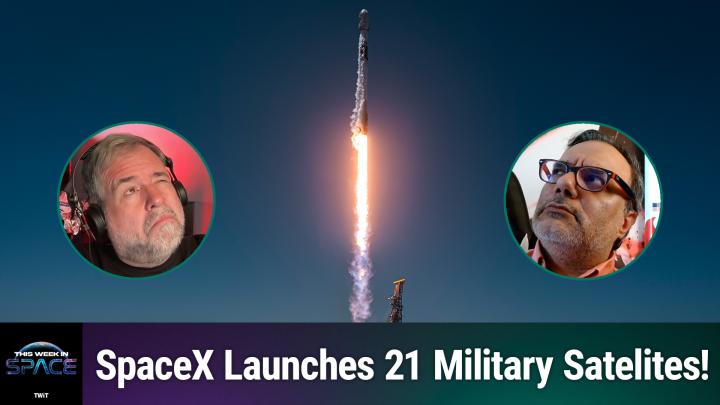
This is This Week in Space. Episode number 219, recorded on July 17th, 2026. SpaceX Goes to War. Hello and welcome to another episode of this Week in space, the SpaceX Goes to War edition. I'm Rod Pyle, editor-in-chief at Aster magazine. I'm here with my pal of all time, Tariq Malik, editor-in-chief of space.com.
Tariq Malik [00:00:57]:
hello, Rod. Hello.
Rod Pyle [00:00:58]:
How are you, buddy?
Tariq Malik [00:00:59]:
I'm doing well. I'm doing well.
Rod Pyle [00:01:00]:
You enjoying all that smoke there in New Jersey?
Tariq Malik [00:01:01]:
Oh, my gosh. Can you hear my voice? How it's gone? You sound like my great grandmother. Gather around, kids. Watch me spit up. It was, it was quite strange. I was actually, I was in the city at the office yesterday for the anniversary of Apollo 11's launch and decided to go for a walkabout town, as one does in the city, to go see the new moon tree that we might talk about later on. And man, like, the skies were thick, so thick and hazy. I've never seen it like that before.
Tariq Malik [00:01:30]:
And it was even like that when I got home to New Jersey where it was all turning orange. You could barely see the sun. That's how dark it was. It was almost like it was like a cloudy day, but it was all smoke and it smelled like smoke. It was. It's like you're at a campfire, but you cannot get away from it, you know, and you had to come home and like, just like detox.
Rod Pyle [00:01:47]:
I can one up you on that?
Tariq Malik [00:01:48]:
Yeah.
Rod Pyle [00:01:49]:
Although it may not be as much of a health threat, Sherry's daughter Samantha lives about three quarters of a mile from that meat packing or that meat transshipment plant.
Tariq Malik [00:02:02]:
Oh, it's on fire.
Rod Pyle [00:02:04]:
Well, the fire's out, but now they've got 85 million with an m pounds of raw meat that's rotting. They have rats, they have flies, they have vapor. So the people, fortunately, Samantha's upwind from it a bit, but the people downwind are just screaming to Governor Newsom, you have to declare this a disaster zone. So we can get some assistance to get out of here. Yeah, because it's not a rich area and people are really suffering because it smells like what you'd expect, you know, hamburger that you left out for a month.
Tariq Malik [00:02:35]:
Can you imagine if that happened in space? Right. And there's like no one can crack a window to like ventilate it all.
Rod Pyle [00:02:40]:
Yeah.
Tariq Malik [00:02:41]:
You know, so I could think of
Rod Pyle [00:02:43]:
all kinds of gaseous things that could happen in space. But let's move on because today it's all headlines all the time. So your hats.
Tariq Malik [00:02:51]:
A lot of news. A lot of news this week.
Rod Pyle [00:02:53]:
But first we have a space joke from Benji Kirk. And this one's been in the hopper for quite a while, so I think. Well, and it ties into my last story. Hey, Tarik.
Tariq Malik [00:03:02]:
Yes, Rod?
Rod Pyle [00:03:03]:
Why was mission control so tense when putting the first cow into space? Ooh.
Tariq Malik [00:03:07]:
Oh, I see the relation. I don't know why.
Rod Pyle [00:03:10]:
It was a high stakes mission.
Tariq Malik [00:03:15]:
That's a good one. That's a good one. Benji. Remember the movie series of Benji the dog, the cocker spaniel dog. He was like, he had apropos nothing. No, no space talking. Good.
Rod Pyle [00:03:26]:
Now I've heard that some people want to send us to the slaughterhouse when it's joke time in this show, but don't do that. Help us out. Send us your best worst or most indifferent space joke at Twistwit TV and we will blame it on you. And now let's get to headline news.
Tariq Malik [00:03:47]:
Headline news. Nailed it. Absolute cinema, right?
Rod Pyle [00:03:55]:
Wow, he's impressed with himself. Okay, first up, Starship. Starship. Starship, that's right. Do we have a test flight coming today?
Tariq Malik [00:04:03]:
Well, no, we don't. No, we don't. Now I'll tell you why. So last night, as we were recording this last night, the night before SpaceX tried to launch their next Starship, Flight 13. So it's the second version, the second edition, what do you call it? The second flight V3. It's the second test flight of the new kind of operational vehicle, the V3 Rocket. They call it version three. And, and they couldn't get off the ground.
Tariq Malik [00:04:30]:
You know, they, they got all the way down to T +0 and the Rocket aborted. And, and so they had to call it for the day because they used the, the, the water suppression system. As soon as that triggers, if they don't get off the ground, they can't launch for the day. And what seems to have happened, according to Elon Musk in a statement afterward on his social media platform, is that a few of the engines, you know, there's 33 engines on the first stage of this 400 foot rocket, size of a 40, a 40 story skyscraper. A few of those engines did not ignite. And because they didn't ignite, it triggered an automatic abortion on the rocket. And it turns out, according to Elon again, that they're going to, for safety's sake, remove at least two of the Raptors and replace them. Which is not a one day turnaround fix.
Tariq Malik [00:05:21]:
So we're looking now at the first flight of Starship Flight 13 no earlier than next week. So hopefully by the time you and I meet again, Rod, we can actually say whether or not this Flight 13 was a success. They're doing some new things on this, but a lot of it is the same. They're dumping ship in the, in the Indian Ocean after a soft water landing. They're going to dump the booster in the Gulf of Mexico after another soft water landing. If they can do that. They lost it on Flight 12 back in May, that it failed during its flip maneuver and wasn't able to re enter properly. And then they're actually for the first time, this is kind of like the big new thing, is that they're flying the first ever version three of the starlings.
Tariq Malik [00:06:03]:
These are larger Starlink satellites. There's like I think 20 of them on board this one, if memory serves, six of them have these really nice HD cameras on them that they're going to use to photograph starship because they had only two of them in the last one. And, and this is going to show them exactly how well the V3 of the starlinks work with the V3 of the starship. But that all waits until maybe next week to see if they can get this. And you know, they need to launch a lot of these so hopefully they can get this cadence up and running. So.
Rod Pyle [00:06:35]:
Yeah, well, lots to say about that. Next up, I've got a meteorite in my attic.
Tariq Malik [00:06:42]:
You like this one by the way? These stories are all from space.com unless we say otherwise.
Rod Pyle [00:06:46]:
Yeah, and by the way, I think you completely replaced the write up I had there. Thank you very much.
Tariq Malik [00:06:50]:
Oh, I'm sorry, what a long paragraph.
Rod Pyle [00:06:54]:
So this guy had a meteorite come smashing into his house fragment. And he had the mental wherewithal, which is extremely rare, to grab a pair of gloves to keep it sterile and to grab a jar to keep it sterile and grab this, this rock that was still, still sizzling, I guess.
Tariq Malik [00:07:14]:
Hillsboro meteorite cold when they come in.
Rod Pyle [00:07:17]:
But, but he said it did smell like sulfur, which Brings up other mental images. But anyway, he put it away, which the scientists that he then turned it over to said, this is fantastic because it's pure. It's not contaminated with oils from your skin or too much exposure to the
Tariq Malik [00:07:33]:
atmosphere, those grubby earthling hands. Right.
Rod Pyle [00:07:37]:
Sea level or whatever. And they were able to do an analysis of the organics on it. And so first of all, they think it came from a meteorite, although I would posit you'd say an asteroid in this case that may have had. It wasn't clear whether they meant salt water frozen on it, or at one point it said in the article liquid water. But that doesn't make a lot of sense on an asteroid. But anyway, there was some kind of frozen brine there which may have interacted with the actual sample that they have. And if you go deeper into the story, they talk about origins of life and some new information there.
Tariq Malik [00:08:16]:
Yeah, it's really interesting. Peter Jenniskin, the meteor astronomer and SETI scientist who's based out of Ames, was talking about this to our writer and basically said that smelling it is like smelling the origins of the universe. That's a direct quote right there.
Rod Pyle [00:08:34]:
Dante's Inferno.
Tariq Malik [00:08:35]:
That. That's right. That's right. And like, the part that you pointed out about the, the, the homeowner getting, like, the protective gloves and the jars, he said that it was really important on the science side because these kind of meteorites, they're. They're from space rocks that are called carbonaceous chondroit. Is that how you're. And, and that they actually absorb a lot of moisture if they're exposed to it, so the moisture from your hands, all of that stuff would get sucked into it, and then that contamination becomes ingrained in the meteorite itself. There was like a whole big kerfuffle about a Mars meteorite, if folks might remember in Paris where people were saying, oh, there's life on it, but it's a meteorite that had been open to the public, touching it for like 30 years, you know, so you can't say that it's not contaminated.
Tariq Malik [00:09:26]:
So it's really great that, that they, that this person thought about that. And if you see a meteorite, maybe you can get some tips from this too, and have a meteorite reaction box in your house.
Rod Pyle [00:09:34]:
Right. Wow. Okay, I'll, I'll, I'll bear that in mind. That'll.
Tariq Malik [00:09:38]:
I'll start selling that. I can bet you can sell that for 30 bucks a box, right? Probably.
Rod Pyle [00:09:42]:
Well, at the rate we're Going, our industry is going. We're going to be need to be selling something. Next up, astronomers discover an atmosphere around a rocky Earth like exoplanet in the habitable zone of its star. And this also completely blew away the much longer write up I had. So it's all yours.
Tariq Malik [00:10:03]:
So I don't know what happened, why this is so, first of all, I'm supposed to do the headlines. And I already. I already complained to Rod because he did the headlines and then I redid them because I'd already.
Rod Pyle [00:10:12]:
Because I know you and I spoke to you this week and everything you told me was, I'm busy, I'm busy, I'm busy, I'm busy. I'm late for a very important date.
Tariq Malik [00:10:20]:
I appreciate it, but it's like this happened like literally three hours after I told him I was gonna do it.
Rod Pyle [00:10:26]:
That shows my level of trust.
Tariq Malik [00:10:28]:
But no, I feel, so I feel it's okay. It's okay. I trust it's earned. Rod, take a deep breath. And that tells me that I have to do a little bit better. In the preparation for this podcast for all you listeners out there, John's giving
Rod Pyle [00:10:42]:
us the move on.
Tariq Malik [00:10:44]:
So anyway, yeah, this is a rocky Earth like planet called LHS 1140 b, and it's about 48 light years away. And what people are really excited about it is because not only is it in the habitable zone, so like that Goldilocks place around a star where we know that the temperature is just right for liquid water to exist, but they detected a thick helium atmosphere around it, and it was the first time that they've ever been able to make this detection directly. So they looked at the planet. So everybody that lives there talks like this, right? Well, if they breathe oxygen, but what if they breathe helium? Then they would probably.
Rod Pyle [00:11:24]:
They'd have the weird little helium face.
Tariq Malik [00:11:26]:
No, I don't. That's. I think that it would sound normal to them, right? Because it wouldn't sound weird.
Rod Pyle [00:11:31]:
Don't mess up my fantasy.
Tariq Malik [00:11:33]:
I'm sorry. I'm sorry. So. So. So it's really interesting because, you know, we've been like, looking for habitable planets for like, decades, right? And theorizing that, you know, these ones might have an atmosphere. They're close enough to have an atmosphere. It seems like they do. We've got different types of indirect readings, you know, of like, light passing through it.
Tariq Malik [00:11:55]:
But no, this is an actual direct signal that they were able to pick up from. From them. In a study led by Colin Shroubham of Harvard University, he Says it feels kind of surreal. So it's really interesting because the planet has been known about since 2017. But like, what this, this new detail about the helium atmosphere is new, and it's one that really kind of proves out that you got a habitable planet, you could have a potentially habitable atmosphere.
Rod Pyle [00:12:23]:
So, so let me just break in here for a second. So what I wasn't clear on this detection was made by the transit method, which means watching the thing pass in front of its host star, right? Yeah, which is why you can get a spectra signal. But the discoveries in 2017, did they do a new transit measurement or were they just looking at old data and said, hey, this looks like it might
Tariq Malik [00:12:45]:
be habitable, as I understand that they were still observing it over time. Right. Because they didn't know that it had the atmosphere back in 2017. And so they were looking at it with, with like some new, either some new eyes or the new data. Right. By looking through that. So, so it could be one or the other. I have to have to admit that I did not speak to these guys.
Tariq Malik [00:13:08]:
Our writer did, you know.
Rod Pyle [00:13:10]:
Well, and although there was more material here to read the notes on it, it's gone now. But I do remember that they said that it was right pretty much smack dab in the middle of the habitable zone for a red dwarf star.
Tariq Malik [00:13:26]:
Yes.
Rod Pyle [00:13:26]:
What it's orbiting.
Tariq Malik [00:13:27]:
Yes.
Rod Pyle [00:13:27]:
And they also said that the red dwarf looked to be about 6 billion years old, which means it should be past its most turbulent time in its youth. Right. So that whatever atmosphere is left on whatever planet X is called may not get blown away, as it doesn't normally would by a red dwarf in many cases, especially at that distance, because the habitable zone for a red dwarf is like 10ft, you know?
Tariq Malik [00:13:52]:
Yeah. And I, I look, I did look closer and it does seem like these were new, These were new observations. Because what they did is the, the, the, the lead author had a theoretical model based on what he thought could be the planet with the atmosphere right around a red dwarf. And then they use that to apply it to some observations of the planet because they knew the planet was there with this Magellan Observatory in Chile. So they are new observations. And there's two planets there, right? A and B and, and one planet didn't have anything. It was like bone dry. So dead rock, maybe.
Tariq Malik [00:14:26]:
But this one, the B planet, had that unmistakable spike or whatever it is that helium looks like, aside from sounding funny to our human ears, to tell them that it was a direct, a direct helium Signature. So very cool. Very cool.
Rod Pyle [00:14:43]:
All right. And let's wrap up with a story I like to call Tarik Gushes at a Little Tree.
Tariq Malik [00:14:48]:
Oh, we're going to talk about it here. Yeah, I met a moon tree this week. I kind of alluded to that earlier and we've got some photos. But back in 2022, NASA launched a bunch of little seeds to, I think they're sweet gum seeds around the moon with the Artemis 1 mission. And last year the city of New York planted one at Madison Square park, which you can see here in the.
Rod Pyle [00:15:11]:
Okay, I thought you had said Apollo 11. And I'm thinking that tree is real small.
Tariq Malik [00:15:16]:
No, no, no. So, so Stu Rusa on Apollo 17 took a bunch of seeds. And those original moon trees have been doled out over time and grown around, you know, so they're, they're, they're a lot older now. Right? They're, they're, they're 40 to 50 years old, you know. Well, they're my age. Yeah. So that is. Which is also 40 to 50 years old.
Tariq Malik [00:15:40]:
But to recreate that, NASA launched a bunch of seeds on Artemis 1. In fact, I think Artemis 2 took some seeds too, so that they can still keep handing them out. And last year they planted this treat and in New York City, the New York Conservancy, I think is what they're called, something like that. And because it's a year old now, it's about 3ft, 4ft tall. They celebrated it on Apollo 11th anniversary with this really, really cute customer like mission patch sticker. It was very shiny and it was a whole.
Rod Pyle [00:16:10]:
Makes it look like it's a marijuana plant.
Tariq Malik [00:16:12]:
I know it does a little bit. But that's the sweet gum leaf right there.
Rod Pyle [00:16:15]:
Is it look like an elm or something?
Tariq Malik [00:16:17]:
Yeah. And, and there's like a whole plaque that talks about Artemis 1 and the mission and also the Apollo 17 trees. There's another plaque that, that just kind of names the tree the moon tree. And I think that New York City actually has two. There's one in the botanical garden, if memory serves. But I could be wrong about that. But there were two. This is the second one they've had because the other one was the Apoll.
Tariq Malik [00:16:39]:
And they had, it was like a whole moon themed day. You know, they had two astrophysicists there that you could talk to. You could go on a cosmic or a celestial scavenger hunt for other little plants around the park. I did some stomp rockets. I didn't show you the video of that because it's silly, but it was fun. All right. And the only kind of drawback. Oh, they had a cake too.
Tariq Malik [00:16:57]:
I should have sent you the picture of the cake because it's a happy birthday to this tree. So the tree can't eat the cake. And. But the only drawback was that you had that smog from the smoke hanging over the city the whole day. So the sky was really kind of weird and orange and they couldn't do solar viewing because you can't see the sun because the smoke was blotting it all out. So they were hoping to do sunspot viewing and stuff like that.
Rod Pyle [00:17:20]:
Okay. Well, speaking of natural disasters, I just had a conversation this morning with friend of the show Jerry Griffin, who you may remember was a flight director for the Apollo missions and later the director of the Johnson Space center, and more recently at the tender age of 91, has been overseeing the flood recovery efforts in Texas. And if you're tracking natural disasters across the US They've had more flooding there. So he's keeping a stiff upper lip and was very good natured about the question, but I said, how much of what you've just done did this reverse? And he said quite a bit.
Tariq Malik [00:17:54]:
So sad to hear. So all the best.
Rod Pyle [00:17:56]:
Everybody that's affected, I mean, luckily he's, he's up on a high bank, so he wasn't too affected directly, but the community he's been trying to, to pull out of the, the rack and ruin of that first set of floods has been set back quite a bit. So our hearts go out to them and let's, let's paddle our way into a break here and we'll be right back. So go nowhere. All right. Starship. Oh, Starship. We're into the hot and heavy headline segment of the show now. And what set of headlines would be complete without moaning about Starship? So my particular angle here, and I want you to, you know, you've kind of already told us about this next test flight, but there's an article and I'd be darned if I could remember what it was in.
Rod Pyle [00:18:37]:
But there's an article recently talking about, you know, when I used to write about Apollo quite a bit, I talked about the lunar module as sort of the foot dragging behind the toboggan of the Apollo program. You know, it was always too heavy late and it really hung them up for a while and we're kind of seeing that again with the new human landing systems for the moon. In this case, though, you know, we know SpaceX is late. Blue Origin is probably about where they ought to be. They're speeding things up, which is great.
Tariq Malik [00:19:07]:
They got a later start though. They, they didn't get the go ahead until after the lawsuit and all of that. Right.
Rod Pyle [00:19:13]:
But my point here is that, or the point of the writer of this article, I think it was in the Economist, was that, you know, NASA is being penalized for choosing a rocket that was really designed for Mars. So this heavy multiple refueling stuff, this tall tippy rocket that may or may not be able to safely land on the moon and all that, I mean, it's obvious if you've ever looked at Starship, what the problems are. But he was talking about the law, the larger problems of the economics of this, of the money that you have to spend to make this work. And the way SpaceX is spending, the substantial funding they've gotten from the feds. Now when I say substantial, it's still what I think less than 3 billion. Right?
Tariq Malik [00:19:52]:
Yeah, something on that.
Rod Pyle [00:19:54]:
So, you know, that's much, it's fixed costs.
Tariq Malik [00:19:57]:
Right. So they get what they get and they don't get upset.
Rod Pyle [00:20:00]:
And I'm not sure that I think the original lunar module may have been close to that in 1960s dollars. So this is a comparative bargain. But we are being penalized by, you know, how much SpaceX is adhering to their broader goals for this vehicle as opposed to just getting us the moon. Because as we've seen in various possibly fantasy oriented YouTube videos, there have been discussions, at least outside of Space X, I don't know about inside Space X of a smaller, shorter, stubbier lunar version.
Tariq Malik [00:20:31]:
I was going to bring that up. Right, Rob, Rob, Bob Zubrin when he was on the show, talked about the Starship Light, I think is what he called it, which was like a third the size or, or something. And, and that's all you really need for the moon to still be able to take the things. And then what you trade off is like a giant fuel tank and whatnot to haul the heavy cargo. But, but if your goal is just to get people on the moon, that's all you need is something that's a lot smaller like that. I think that the, the, the, the big ticket here, and there's another story that we're going to talk about I think later that also hits on this, is that as you said, SpaceX designed Starship to do like one thing which was to go build the city on Mars. A million people on Mars make that happen. And then they, in order to pay for it, you know, they raised a bunch of money.
Tariq Malik [00:21:19]:
They sold a couple of trips to, to, to some billionaires and, and then, and then they got the NASA contact for the moon. But what you see now is even on this, we were talking about it on Starship Flight 13. There's no reason why your moon lander needs a PEZ dispenser door to spit out satellites. And that's why I think that SpaceX is getting a lot of kind of side eye from NASA up until like you, you know, recently with, with the pivot. To say you have to do this faster is because, you know, spending time and effort to put that dispenser into your starship that's supposed to be your moon lander for NASA does not engender. Hey, your eye is on the ball for our moon landing. When you're doing this thing on all your test flights that we don't need at all. We don't even need like that kind of thing.
Tariq Malik [00:22:10]:
And they keep doing that and I think that they, they probably got called on it behind closed doors. Like I haven't seen anything public about that at all. But you know, showing that they have to be focused on all of that and that that's not going to be a showstopper for this Mars thing. And you know, there is an. Yeah. For the, for the, yeah, for the, for the, for the moon. For the moon lander.
Rod Pyle [00:22:29]:
Yeah, yeah.
Tariq Malik [00:22:30]:
Because there's.
Rod Pyle [00:22:31]:
Astronauts are from Flatland. That PEZ dispenser isn't helpful for anything. Lun point.
Tariq Malik [00:22:36]:
Yeah. And, and there was a story many years ago, actually not many. I think it was last year, about how Starship was selected at a time when NASA only had an interim director. Right. There wasn't someone at the helm to say yes or no. This is a really good idea. We can support this. So like it was, it was Duffy, was it? It was in between.
Tariq Malik [00:22:58]:
Yeah, it was selected in between. So.
Rod Pyle [00:23:01]:
But it was selected back before Nelson's time.
Tariq Malik [00:23:04]:
But it was before Nelson, but after.
Rod Pyle [00:23:06]:
Right, but it wasn't Duffy. It was somebody else.
Tariq Malik [00:23:09]:
No, it wasn't Duffy. It was, it was, it was. What's his name? Was it Scalise? I think Scalise was, was in charge interimly before he left the nro. By the way, I heard you just stepped down from the NRO too.
Rod Pyle [00:23:21]:
Learned a new word.
Tariq Malik [00:23:21]:
Intermittent. Intermittent.
Rod Pyle [00:23:23]:
As long as we're speaking, can I move on?
Tariq Malik [00:23:25]:
Yeah.
Rod Pyle [00:23:26]:
Yes, as long as you're talking about SpaceX, let's go to the title story, SpaceX at War.
Tariq Malik [00:23:31]:
Yes.
Rod Pyle [00:23:32]:
So they just launched out of Vandenberg 21 Military data Transport satellites which will be operated by our friends at Space Force, the space agency. And I love Space Development Agency because it doesn't sound like it's for war. It's one of the few things out of the government these days that doesn't have war in the title, which is nice. They're designed to provide global communications access and deliver persistent regional encrypted connectivity in support of war fighter missions around the globe.
Tariq Malik [00:24:00]:
Yeah.
Rod Pyle [00:24:00]:
So their plan is to eventually have 126 of these. And I will note the, we've discussed it before here. The 2027 budget request for Space Force is 71 billion, which is almost triple NASA's. And they don't even have to fly people to run a space station. So clearly they got a lot of big plans. Yeah, you know, and I got very mixed feelings about that. On the one hand, you know, China's civilian and military program is jammed into one thing. Right.
Rod Pyle [00:24:31]:
There's no real separation of church to state there when it comes to space.
Tariq Malik [00:24:35]:
Yeah.
Rod Pyle [00:24:35]:
Even the so called commercial companies that they work with on their space program have military linkage. So, you know, is it such a big deal if we make this move, which isn't conjoining NASA with Space Force, it's just giving Space Force a lot more money than NASA gets? You know, at the same time, when Eisenhower set up NASA, it was very specifically a civilian agency to make the message clear to the world that we're doing this as a civilian thing. It's not to be used for military purposes. Yeah, there's some overlap. You know, all the first rockets that we and the Soviets used were ICBM launchers that were repurposed to carry people. But that was military technology coming into NASA, not the other direction. But we still have the separation of church and state. But the result of it is that NASA gets choked for funding to do arguably very good stuff for humanity writ large.
Rod Pyle [00:25:30]:
And Space Force gets a whole bunch of money to do things that, you know, they do need to update their satellite infrastructure, they need to harden the satellite infrastructure. We're very vulnerable both in military and civilian terms when it comes to orbital assets. But I don't know, it's a mixed bag.
Tariq Malik [00:25:47]:
So I don't, I don't understand though, like the argument that says that NASA technology is being militarized because SpaceX has this contract though. Is it because NASA's saying that funded
Rod Pyle [00:25:59]:
SpaceX, NASA's getting money robbed out of their, their cradle. Yeah, by space, by Space Force needing all this money for military stuff. That said, you know, it is time to modernize our military posture in orbit because both Russia and China are doing the. But man, when you look at the prices and as far as I know these are still mostly cost plus contracts, I don't know that the military is being forced.
Tariq Malik [00:26:25]:
The military, the military does like their own thing and it's all classified because the tractors, these satellites, like these aren't satellites that SpaceX are building for the military. That's their Star Shield program, which is like a militarized version of Starlink, which is like a whole other thing rod, that we could get into about all this because they are building out like a bajillion satellite mega constellation for the military, for starshield.
Rod Pyle [00:26:47]:
And so what's the difference between that and this?
Tariq Malik [00:26:50]:
Well, this, this is a separate kind of hardened global communications delivery system for the, for the US military that is built. It's 126 different satellites. So they're not like the small, like, I don't want to say Dinky because SpaceX has shown that their starlinks are really, you know, like robust and that they can size table. They can do a lot of them. But, but these, these are larger versions, larger satellites, you know, that, that are made and hardened by York Space Systems and Lockheed Martin and Northrop Grumman. You know, 63 of them are already in space on three different Falcon 9 launches out of Vandenberg. You know, so they're in that polar orbit, seems like, you know, and so, so it's a, it's part of this whole thing that the Space Development Agency calls a proliferated War fighter. Space, which is like hundreds, it's a constellation, hundreds of satellites.
Tariq Malik [00:27:47]:
They're small satellites, so they're not abbreviated
Rod Pyle [00:27:49]:
as pusa,
Tariq Malik [00:27:53]:
but they're optically linked. So that's laser communications, you know, delivering high speeds to the war fighter. So it's, it sounds like maybe it's a different type of communication system network than what Starlink and Star Shield are designed to serve, which is like Internet connectivity, interconnectivity, etc. Etc. So it might be for like the fighter pilots talking to the Navy ships talking to the, I don't think people,
Rod Pyle [00:28:14]:
I don't know, you know, tracking troop movements and stuff.
Tariq Malik [00:28:17]:
Yeah, all of that. And they, they call these in these tranche and they want them to have a new generation of these satellites every two years, you know, to be able to have continuous coverage that is up to date. That's what these trenches are. So we're in tranche one, they've got plans for trench two, Trench three, it's a weird word, Trench, trench.
Rod Pyle [00:28:37]:
Well, speaking of which, let's tranch our way into another break and we will fight our way back. So stand by.
Tariq Malik [00:28:43]:
I don't think that's how you use that word, Rod. So.
Rod Pyle [00:28:46]:
So while we're talking about space war, let's talk about death. Race to space. So, a little surprised to read this article about Reflect Orbital. And we had heard about them, but we hear about a lot of space companies that come and go and so forth. But this one actually has now gotten permission from the faa, the fcc, fcc to launch their first set of. Of orbital mirrors, which must unfurl once they get up there. I haven't seen the actual technology.
Tariq Malik [00:29:18]:
They look like. They look like solar sails, but they're extremely, extremely shiny. Right.
Rod Pyle [00:29:25]:
So the idea here is that they will reflect sunlight down on the darkened portions of the planet. Now, this idea has been around since the 30s when the Germans were talking about launching mirrors into space to burn down Manhattan.
Tariq Malik [00:29:40]:
Now, before that, I was going to talk about that.
Rod Pyle [00:29:42]:
The original idea, you know, the way it was originally posited by. It wasn't Sanger. I forget which. Which one of their scientists it was, was, oh, we'll use it to light harbors at night and you know, that kind of thing. And then it became, well, we'll use it to maintain security. And then of course, the Nazis got their clutches in it and said, yeah, we'll use it to melt New York because how hard can it be?
Tariq Malik [00:30:02]:
You forgot. You forgot the Die Another Day, the James Bond movie. No, I didn't get it.
Rod Pyle [00:30:08]:
I didn't mention it because it was a hideous movie. But so, you know, there, there's a sound idea here. If it's used strategically, you know, there are certain.
Tariq Malik [00:30:20]:
Well, strategically sounds military, you mean, like for good purposes, like. Right, right.
Rod Pyle [00:30:25]:
Strategically for the benefit of all mankind. Surgically show plug in there. So, you know, there are places, say you were searching for somebody who was a kid's lost in the cornfields of Iowa. Right. It's nighttime. You want to keep the search going. You redirect these satellites overhead and you get. Because they're in low Earth orbit, you get a limited period of light in that particular spot until the next one picks up.
Rod Pyle [00:30:49]:
Yeah, you know, that makes sense. But there's a lot of concern. Of course, the astronomers who are already suffering with star leaks streaking through their images are pissed off. And now they're going to have these big spots in the sky that look like anything from the moon to 30% of the sun.
Tariq Malik [00:31:05]:
Let's point out this is a prototype satellite, but Reflect Orbital wants to operate 50,000 of these satellites.
Rod Pyle [00:31:15]:
60 foot mirror in the sky.
Tariq Malik [00:31:17]:
50,000 60 foot mirrors in space to provide sunlight wherever anyone needs it. You know, 60ft is like what, two school buses, Rod? Yeah, something like that. Yeah, that's a, that's a space shuttle payload bay is what that is. You know, so twice the diameter of
Rod Pyle [00:31:36]:
the Saturn V. Well, and the biologists are also getting a little. Environmentalists, including biologists are getting a little miffed because it's like, you know, organisms from evolved mammals down to mitochondria, not mitochondria, but microorganisms count on the daylight nighttime cycle to time what they do. Right. And when you start mucking around with it, this is like having a reverse solar eclipse every night. It's not good for things. So, you know, is it going to. It certainly isn't as harmful as climate change, which on the west coast here we're going to be enjoying the summer because we're going to have higher, hotter seas and massive storms and all kinds
Tariq Malik [00:32:20]:
of horrible fires and the worst El Nino ever. Right? Isn't that so?
Rod Pyle [00:32:25]:
Yeah, but, but it's still, you know, it's a little bit of a head scratcher. And in a very indirect way it kind of begins to lead you to thinking about geoengineering.
Tariq Malik [00:32:37]:
Well, that's kind of what it is. Right. The pros that reflect Orbital and the proponents all say is kind of what Rod has really kind of laid out. You can direct sunlight to a search and rescue if they really need it. You can actually create solar energy at night in a place that really needs power by, you know, providing this to solar collectors that are on, on the surface or let's say you've got really fast growing food crops, you can just have it be sunlight all the time so they can just grow faster. And now you've got more growing time for that and you solve like a hunger issue. But at what cost if the night sky is gone? Right. And like you mentioned the, the, the conservationist, that's because animals live on a day night cycle.
Tariq Malik [00:33:23]:
They need that. We need a day night cycle to not go crazy. Right?
Rod Pyle [00:33:28]:
Well, you know, it's interesting, if I were them and you said that to me, I'd say, yeah, well, you know, talk to the Inuit, talk to people living in Norway, talk to people living in Tierra del Fuego. In any of those locations you get six months of continuous, ever shortening daylight and then six months of darkness. So I guess we can adjust, but you know, it's just another example of how we're kind of mucking around with things of the planet that we don't
Tariq Malik [00:33:53]:
know what really fully understand. By the way, if people are wondering what, how bright these are going to be in the sky, four times brighter than a full moon. And I thought the first one was
Rod Pyle [00:34:03]:
going to be about the brightness of the full moon, but later the, well,
Tariq Malik [00:34:06]:
the 50,000, like the final version, like these beams are supposed to be like
Rod Pyle [00:34:12]:
super intense and that's skin cancer at night, right?
Tariq Malik [00:34:15]:
Yeah. And there is actually a response to Reflect Orbital's plan in the conversation. That's like where a lot of scientists weigh in about either like the impact of their science or about the impact of science policy on like the larger world. And what they're saying is that the rise of mega constellations and how it's messing up astronomy and the night sky for observers. The rise of this new kind of unchecked technology with these mirrors and stuff where you're, you're blotting out or having really bright, you know, reflecting things in space is really showing that no one is regulating like the night sky to have that, that it's not a commodity that is valuable or seen as valuable to the point where there is some sort of international regulate and body. You have the international dark sky. You know, agencies like those groups that are trying to promote like dark sky places, but they can only do so much. You can have the darkest place on Earth to look at the sky.
Tariq Malik [00:35:21]:
And if the sky that you're looking at is filled with these giant reflective like satellites, you're not going to see the planets, you're not going to see anything. And so that's the concern right now is that we are at risk of being that dystopian sci fi thing with the glittering rust belt in space and not being able to see past that, you know.
Rod Pyle [00:35:42]:
And here I thought the darkest place on Earth was the inside of my heart.
Tariq Malik [00:35:46]:
All right. You're a big softie at heart and you know it, Rod Pyle.
Rod Pyle [00:35:49]:
It's true. And you want to see what a softy I am? Look at my space Rod.
Tariq Malik [00:35:56]:
And I cannot, we cannot coordinate, we cannot merch.
Rod Pyle [00:36:02]:
John's coming in Corona for next week.
Tariq Malik [00:36:05]:
Gentlemen, that's your assignment for the week. Okay?
Rod Pyle [00:36:08]:
It's all we can do to actually.
Tariq Malik [00:36:09]:
Rod has two shirts. I only have one and so. I didn't know we were going to be twins.
Rod Pyle [00:36:13]:
You're cheap. All right. You pick the next story.
Tariq Malik [00:36:15]:
Well, let's talk a little bit. Let's go back to our human landing system talk because we didn't talk about the new updates about Artemis 3 that came out this week. And I wanted just to kind of briefly touch on those for a couple of things. Number one, we got some new renderings which, John, if it's possible to show, we can go through that while I talk about this. But we learned a couple of things and it's linked to our starship discussion as well. Because the first big thing that we came out this week for Artemis 3 is that it's going to carry two Starlink lasers on it to be able to provide high speed like, like Ultra HD 4K video. So that's one. And that came out during the starship launch and then NASA put out a release.
Tariq Malik [00:36:56]:
But the other, the other kind of key details. And right now we're, if you're watching the video here, you can see that this is a, some new renderings of Boeing, of Blue Origins. Boeing, Boeing. Oh no, Blue Origins. Blue Moon Lander. And if we scroll down a little bit more, you'll actually see, I believe. Oh no, there's like a little toggle there. Let's, let's, let's show them.
Tariq Malik [00:37:19]:
There's like a little arrow. If you click that arrow, you can see like what it will look like when Orion is like docking to the hatch on the lander, which is very interesting. I think we haven't seen this kind of angle yet before. So it tells me two things. Number one, the designs are getting finalized. There is a mock up. Rod has talked about it in the past of the crew compartment of this lander at Building 9 at the Johnson Space center in Houston. Now we're seeing some of these more refined designs.
Tariq Malik [00:37:47]:
And if you scroll down a little bit more, John, you'll be able to show folks the new kind of renderings of what Starship is going to look like with Orion. And it's going to give everyone a sense of scale. Look at that, look at this. So if you're not watching our video and you're listening, we're showing what is essentially like a 240 foot spaceship docked to like the tiny little gumdrop that is Orion at its tippy tip nose right there. And it just shows you just the difference in scale between Orion, the actual crew vehicle, and Starship the lander. It's like four times the size. It's crazy.
Rod Pyle [00:38:24]:
Starship has a pimple.
Tariq Malik [00:38:26]:
It's more than four times the size. It's like, it's, it's like a balancing. How do you even describe it? Like balancing.
Rod Pyle [00:38:35]:
Like a trained SEAL with a tennis ball on it.
Tariq Malik [00:38:39]:
There you go. There you go. That's what it looks like. That's exactly what it looks like. Yeah.
Rod Pyle [00:38:42]:
Okay. Oh, we have the producer's approval for that one. Very good.
Tariq Malik [00:38:49]:
So we've got these kind of new designs. We know where the docking port is going to be now on Starship if we didn't before. We know how the hatches are going to line up for Blue Moon. We also know that they are going to take a, a very rudimentary moon spacesuit mass simulator. Only on the, the Blue Origin mission. They talked about doing this before and they kind of said on the DL that they were thinking about doing it. Now we know they're going to do it for realsies. And this is not going to be the Axiom Space moon suit.
Tariq Malik [00:39:22]:
It's going to be like a, like the shape of that, the weight of that. And then they're gonna probably put some accelerometers in it to see like, like how it shakes around the, like a mannequin. But it's not a true mannequin. You know to that we saw fly on orion during Artemis 1 for example. They had like that space suited person. It's not going to be like that. But they wanted to kind of see I guess how the, how the, the suit takes up space and whatnot. And they call it a low fidelity spacesuit mass simulator.
Tariq Malik [00:39:53]:
Which sounds to me, Rod, like when you go to a science museum and they have the moon suit that you can put on and like walk around and take pictures of it, that to me is a low fidelity.
Rod Pyle [00:40:03]:
Like this one over my shoulder.
Tariq Malik [00:40:05]:
Yeah, exactly, exactly.
Rod Pyle [00:40:07]:
Use it.
Tariq Malik [00:40:08]:
So but SpaceX's Starship lander is actually not going to be much of a lander at all. They're calling it a lander test article and they're building it now with the docking system installed. But, and it's by the way, I think I misspoke. I said 240ft. Starship is 171ft. So you know, I apologize.
Rod Pyle [00:40:27]:
Well, depending on the week you're measuring it.
Tariq Malik [00:40:29]:
I know, I know. So, so it's really designed only to dock with Starship. They, they can actually go inside the Blue Moon. Blue lander, blue moon, blue moon, blue origin origins blue. They can go. They can. The astronauts have the option to go inside if they want to try that. But for Starship they're not going to to it's just kind of a docking port on the.
Rod Pyle [00:40:53]:
Because it's just going to be a big cargo container in space.
Tariq Malik [00:40:56]:
And Elon Musk told me in 2019 that building the, the crew, the crew support, life support was going to be easy.
Rod Pyle [00:41:04]:
Right. Because it's just like Dragon.
Tariq Malik [00:41:06]:
If it's easy, why doesn't it have it already? Right?
Rod Pyle [00:41:08]:
Yeah.
Tariq Malik [00:41:09]:
I don't know.
Rod Pyle [00:41:09]:
Well, I don't know. What's the. The interior Dragon is about 380 cubic feet and Starship is 33,000 cubic feet in pressurized volume. That's a bit of a difference.
Tariq Malik [00:41:21]:
Yeah. But one other thing that. Do we want to take a break or what do you want to do?
Rod Pyle [00:41:27]:
No, you get one other thing and then we'll break.
Tariq Malik [00:41:29]:
All right. So one other thing that did come out this week, and this was actually from Ars Technica is Eric Berger, friend of the show, has a really great story there and I think I have it online. Yeah, it's the Next line. Line 42, John, is that with all this focus of SpaceX on Starship, there is a fear right now that SpaceX is going to abandon or just wind down Crew Dragon once the space station is gone. Right. The only way right now, dependable way I should, I should say of getting astronauts into space from the United States, from, from American soil. And there is, there is a lot of concern because SpaceX has been really pushing the fact that they want to launch a lot of starships. They announced that they've got three launch sites in that they're building in Florida.
Tariq Malik [00:42:18]:
One at PAD 39A, two at 37 that they're building there for eventual like ramping up of launches. They've got two pads now at Boca Chica. They want Starship to be their go to vehicle for everything, launches, deployments, because it's reusable and it's supposed to be super cheap. Once they can get it perfected, what happens to Crew Dragon then? You know, and if NASA doesn't have that, if NASA's customers like Axiom Space that buys them doesn't have it, those people that are building private space stations that needed it, like what happens to
Rod Pyle [00:42:46]:
that, say Starliner your only hope.
Tariq Malik [00:42:49]:
Well, yeah, and there are, there is talk about like SpaceX might get into the commercial lunar commercial LEO destinations contest, if not already with Starship, like you're talking about hollowing it out, then you've
Rod Pyle [00:43:02]:
got three, whatever, already hollow. I mean all you have to do is add an interior and bam, you've got a space station the size of the iss.
Tariq Malik [00:43:09]:
Yeah, exactly. So. So there's a lot of open questions about the future of starship. Right. Right now it sounds like they've got a lot of different flavors, but they still haven't reached orbit yet. And come September, we're 10 years on in this program. And I like, you know, we talk a lot about how fast SpaceX gets things done. However, not this.
Tariq Malik [00:43:27]:
NASA did launch three different crude rockets and land on the moon in eight years. So in less amount of time. So. But that was in the 60s again, different situation. But I pointed out, because this is an example where they didn't get things done fast and NASA's paying for it. Like you said earlier.
Rod Pyle [00:43:45]:
As are we.
Tariq Malik [00:43:46]:
As are we. As are we. Although we get to see the world's largest rocket lift off. I mean, that's pretty cool.
Rod Pyle [00:43:51]:
So, yeah, let's paddle our way into a break, as John says, and we'll be right back. Stand by.
Tariq Malik [00:43:57]:
Well, welcome back, everybody. I almost forgot when we were talking about Artemis 3, by the way, to say that Artemis 3 is a crewed mission to Earth orbit, not to the moon. And that it's going to test like the lander technology and stuff like that. And it's going to be a longer shakedown cruise of Orion. I apologize. Launching in 2027, maybe by the end of it. Jared Isaac and promised. So this just, just to put that out there because I didn't, I didn't talk about dates, but I do want to talk about a lot of science stuff.
Tariq Malik [00:44:24]:
We're talking a lot about spaceflight and there is some science stuff that I wanted to touch on, however quickly. And Rod, guess what's going on in low Earth orbit? What? The Swift Boost mission is now officially underway to rescue the Swift Space Telescope. You might have remember that a few weeks ago I went to go see this Catalyst mission like up close when it was still hanging off the bottom of a Pegasus airplane. Not a Pegas rocket, a Pegasus rocket on, on an L1011 Stargazer airplane. But. But now the mission that's going through all the checkouts, this is a spacecraft that was built in, I think about nine months by Catalyst Space for NASA to test out a way to rendezvous with a space telescope, Swift, that it's never been designed to do, it's never been designed to be rendezvous before and push it into a higher orbit by the fall, before it gets too low, that it's, it falls out. And we got our big update and our first photos of it in space and everything is checking out. They Had a bit, a few glitches with telemetry and a few other things, but they were able to work through it.
Tariq Malik [00:45:30]:
Their spacecraft is called Link. It has three robotic arms and three ION engines and these xenon fueled thrusters and they've been able to test them all. And now it's slowly starting to raise its orbit so that it can start chasing Swift, which is really good. It's really good. Launch July 3rd. And this is kind of the first big deep update that we got. We got some nice photos. So we've got about a few more weeks of commissioning as it fires its engines to try to change its orbit and stuff.
Tariq Malik [00:45:57]:
And then they're going to get ready to do the big chase later to go rescue Swift. That's a big update there. Swift is a gamma ray hunt burst hunting space telescope. It's been in space since 2004. Is that right? 2014. Wait, 2000? 2004, I think 2004, yeah. Long time, long time. 22 years old.
Tariq Malik [00:46:20]:
2004. I keep forgetting to do the math in my head, so. But the spacecraft is in good health, but it doesn't have engines at all. It can just point itself with gyroscopes really, really well. And the puffiness of Earth's atmosphere from increased solar weather, space weather has been dragging it down a lot faster than NASA prepared for. And they want to get more science along with some other space telescopes over time. And so they're going to take a. They're taking a risk.
Tariq Malik [00:46:49]:
Taking a risk. I think it's a $60 million mission, if memory serves, so fairly affordable if they can rescue it.
Rod Pyle [00:46:55]:
So at the scale of things space cost in this country.
Tariq Malik [00:46:59]:
Yeah.
Rod Pyle [00:46:59]:
Although India or China could probably do the whole mission all over again, but more expensive for us. I'm going to jump, if you don't mind, to line 66, which is called Defense Innovation Unit, seeks commercial path to deliver electrical power from orbit.
Tariq Malik [00:47:16]:
Ye. Yeah.
Rod Pyle [00:47:16]:
Because we just got approached by a company that's also a private company that's trying to do pioneering work on space solar power beamed down to the planet's surface, in their case by infrared laser. So it's exciting that people actually.
Tariq Malik [00:47:32]:
When you say we got approached, do you mean this week in space got a approach to that?
Rod Pyle [00:47:36]:
Absolutely, yeah. Everybody wants to be on our show.
Tariq Malik [00:47:40]:
And if you want to do, you got to call Rod and I, everyone out there listening thing.
Rod Pyle [00:47:44]:
Let's go and make your checks out to John.
Tariq Malik [00:47:47]:
This is a good one. This is a really good one. By the way, speaking of really fun names for military stuff that's not, like, scary. Defense Innovation Unit is really fun to say, so.
Rod Pyle [00:47:58]:
Why?
Tariq Malik [00:48:00]:
Because it doesn't sound scary. Like you were saying about.
Rod Pyle [00:48:02]:
So vanilla.
Tariq Malik [00:48:03]:
Okay, well, excuse me. I guess DIU sounds pretty close to dui, so I guess there's that, too.
Rod Pyle [00:48:10]:
So, diu. So is this also part of Space Force?
Tariq Malik [00:48:14]:
No, it's like a whole other thing, man. It's part of the Pentagon, so.
Rod Pyle [00:48:17]:
Oh, so a separate, overly fat budget. Okay, so another big budget item seeking commercial proposals to beam electrical power between two spacecraft, which, you know, that makes a lot of sense, but then from orbit down to the ground, which is a little more challenging. Yeah, but they want the demonstration within two years, so.
Tariq Malik [00:48:37]:
Within two years. By the way, the part that you skipped over is it's. It's space to space, space to Earth and beyond is what they say in there. Well, so meaning.
Rod Pyle [00:48:48]:
Oh, my gosh, there's no reason that I can think of that you would transmit orbital space power anywhere else, because if you're going to send it to somebody in orbit around the moon, you have a solar unit in orbit around the moon. So I'm not quite sure what beyond means, but maybe it was.
Tariq Malik [00:49:02]:
Oh, it can mean anything. It can mean.
Rod Pyle [00:49:04]:
That's why they should hire us to write their press releases, because we get it Right. So what else do you know?
Tariq Malik [00:49:12]:
Well, I mean. Well, I know kind of what you know, which is the. They have, you know, they have put out a call for proposals or for a request for information from companies that might be interested in participating in this. But there's two things that really stand out is that is the time frame. Within two years, they want results. They want, like a demonstration by 2028. Right. That's really, really fast.
Tariq Malik [00:49:36]:
We just talked about how fast Catalyst was able to answer NASA's call to say, Swiss Space Telescope in, like, nine months. Industry can do this. So now this is the Defense Innovation Unit saying, let's see what you can do. This is a technology like you and I have talked about that has been around in terms of concept for a long time, and yet no one's using it in space. You know, and so they're saying, we're going to actually get there and start using it because we see a use case to reduce, you know, you don't need to have, like, really high or heavy solar arrays because you can just keep beaming power on it over and over again and supercharging it that way. If you've got one of these satellites in space, by the Way space to space power beaming. You can also make that a weapon. They're not talking about that in this contract, but you just amp it up and now you've got a space laser that you can shoot down satellites.
Tariq Malik [00:50:26]:
I'm just saying, I'm just saying scaling
Rod Pyle [00:50:28]:
that is more challenging that you're giving it credit for.
Tariq Malik [00:50:30]:
Oh, but they've got budgets that aren't on the, you know, they have dark budgets, Rod. So I'm just putting that out there because I've got the tinfoil hat.
Rod Pyle [00:50:39]:
You have no trust.
Tariq Malik [00:50:41]:
But, but the, the beyond part is what really caught me. So the, the deadline for this, by the way, is July 22nd, as we're recording this. So it's a very short turnaround that they want people to answer to. Send in recommendations and stuff. But, but it'll be interesting.
Rod Pyle [00:50:56]:
We better sharpen our pencils, brother.
Tariq Malik [00:50:58]:
I know it'll be. Mine is a big flashlight on an Estes model rocket. I don't know if that'll, if that'll pass muster. But, but the, the big, the big, the big question is, will it, will it actually lead? And then how can they use it for defense missions? Is it going to be for Golden Dome? Is it going to be for, for just basic space awareness? And I want to know what beyond means. Does that mean cislunar power beaming for something over, you know, in the dark of the pole?
Rod Pyle [00:51:26]:
Beyond means we want another hundred million dollars. Yeah, maybe the beyond part. Well, and the, the company I was talking about is called Cowboy Space Corporation.
Tariq Malik [00:51:37]:
They had a different name before, right? Cowboy.
Rod Pyle [00:51:39]:
That was Ether Flux or something.
Tariq Malik [00:51:42]:
Yeah, Ether. Yeah, that's right.
Rod Pyle [00:51:44]:
Yeah. And it's like, you know, the co founder of the Robin Hood stock trading site. So there's some money there and they've raised a lot more, so they're making progress. And then we've got Pulse Space Pulse actually got a $40 million contract for space Force to work on the space laser power system, which I guess is kind of part of the same idea of networking this stuff, right?
Tariq Malik [00:52:07]:
Yeah. So this is, what do you call it, a contract to divine or divide, devise, devise a solar energy beaming thing that then it goes to solar arrays and then it charges them up. And that way they could either track objects or they can transmit data or.
Rod Pyle [00:52:30]:
I'm sorry, back up a step. So it, it's mirrors to aim solar panels in orbit?
Tariq Malik [00:52:36]:
No, it's lasers. It's like lasers. Right. So it'd be like a laser power beaming system.
Rod Pyle [00:52:41]:
Right. So it's using the Laser to beam the power.
Tariq Malik [00:52:44]:
To beam the power. Exactly. But they're saying that their use case may not be limited just to power beaming.
Rod Pyle [00:52:52]:
That's right. This one can destroy things.
Tariq Malik [00:52:54]:
Yeah, because then they could use it for tracking. So you could do laser ranging. They could do it for data transfer. So you have optical communications. So now you have satellites with it. Well, see, they're not saying that, rod, but my 10 foil hat. I'm just saying if you.
Rod Pyle [00:53:08]:
Hold on. Knocking on my door.
Tariq Malik [00:53:10]:
I didn't mean it. If you build a laser that can beam power, you can beam like a lot of power. More than it can handle. Right. And so we'll see how this evolves. Because this is a new contract. The startup is fairly young. They started in 2022, so they're only four years old.
Tariq Malik [00:53:30]:
And, and this is like a big turning point for them because it's one of their big steps forward to be. There was actually another story this week too about a spin off about another company that has developed an electromagnetic launch system. You know, where you just, you know, there's no motor. Just voomp. With the, with the, with the electromagnetic fields.
Rod Pyle [00:53:50]:
Talk about like a, like a mass driver.
Tariq Malik [00:53:52]:
Basically like a mass driver. And the army wants to use it to shoot down drones, so they're adapting that technology to do that too. So there's like a bunch of different use cases that are going on for like this seemingly benign technology.
Rod Pyle [00:54:06]:
Way better than using a half million dollar.
Tariq Malik [00:54:09]:
But no.
Rod Pyle [00:54:10]:
How much is a Patriot missile?
Tariq Malik [00:54:11]:
Yeah, that's the whole point. That's the whole point. Drones or something. Drones are becoming more prolific, but this pulse spacing is different than that pulse actually got an Air Force contract for about $2 million in the past for laser based military communications. So they've got some. What is that? Some teeth cut on, on the technology in the past. And they were proposing a satellite constellation that would do like this really secure bandwidth for communications that would be something like, you know, like a three foot, a three meter target, 10ft wide target. You know, they'd be 29.7 kilowatts of power, which is less than what you need for your DeLorean.
Tariq Malik [00:54:47]:
But they'd be able to shoot it, you know, from 600 miles away.
Rod Pyle [00:54:50]:
But it sounded pretty good the way you said it.
Tariq Malik [00:54:52]:
That's right.
Rod Pyle [00:54:53]:
So a Patriot missile costs about $5 million. Yeah, I was off by only a factor of 10, which is about right for me, which is why I'm a media guy.
Tariq Malik [00:55:01]:
I'll have to find that other company's name because maybe I'll mention them next week. I found it after I completed like the rundown for this one. But again, about. For Pulse, they've actually, you know, despite only being 4 years old a couple years ago, they were actually selected for a techstar space accelerator program. And then they teamed up with Scout Space for an in orbit thing about, for this laser power. So while they're young, right? While they're young, they've done a lot in that four years. So it sounds like they have a really good handle on this laser communication system that they're adapting now for space based power and that something really useful can come out of this Space Force contract rather than like a test that we never hear of again afterwards.
Rod Pyle [00:55:45]:
So does it ever occur to you as you look at these stories that, that people half our age, and I use that term very generously, have made millions in their various space endeavors in just the time that we've had this podcast?
Tariq Malik [00:55:59]:
I know, right?
Rod Pyle [00:56:00]:
I know, Rhiann, could we have picked a worse business to go into? All right, well, speaking of business, it's time for us to go take a break and support somebody else's business. So stand by.
Tariq Malik [00:56:11]:
Well, we've been talking a lot about military stuff and I've got one more study. Right. That I wanted to talk about this week because it is really, really cool. Space war. Yeah, space war. Right. And, and this actually comes from Nature Astronomy. So our friends over at Space News have this story and I just, I couldn't stop thinking about it when I saw it the other day.
Tariq Malik [00:56:33]:
And so, and it was a, it's a, it's a nature, it's a, it's an astronomy study that was conducted by a nuclear physicist and non proliferation researcher at mit. His name is Eric. And I'm sure I'm going to pronounce this wrong. Dan Gulian. I think I got that right now, so maybe I got it right. I don't know. He can call me Eric if you're listening. We want you on the show because Eric has found a new satellite design that can detect thermonuclear warheads in space.
Tariq Malik [00:57:01]:
And, and it was really something that came out of, of scientific research, you know, and so it's a, it's a way of, of building some sensors into a, a nuclear weapon detection, you know, like thing to prevent the proliferation.
Rod Pyle [00:57:20]:
Don't get so technical. I'm sorry, wait, so is this satellite based?
Tariq Malik [00:57:24]:
It's a satellite based. It's a satellite based detection system on a. That, that he's come up with that, that was informed by like a, It's a, it's a 9U CubeSat. It's like an inspecting satellite, you know, to, with it has a neutron detector. So you know, you develop neutron detectors to look for neutrinos in space. And, and so he figured out a way to have it so that it can find actual, it can find the signals from nuclear explosions and parse that out from like natural stuff.
Rod Pyle [00:57:55]:
No, not from nuclear explosions. Nuclear devices.
Tariq Malik [00:57:58]:
Devices. Devices.
Rod Pyle [00:58:00]:
So this reminds me, there was a story I worked on at JPL in 2018, 2021, somewhere in there about neutron detectors. Oh God, they used Helium 3. Anyway, it was some emerging high end development in the sensors that miniaturized them to, you know, the size of a quarter inside a bigger tube and all that, but basically would accomplish the same thing as this. They were, they were for use terrestrially. But maybe the real development here is what range they could work because you'd have to be, you know, a dozen miles or more away from the device you're measuring. Right. Way further, probably.
Tariq Malik [00:58:41]:
Well, it seems, it seems, it's really, it's really strange. Like I'm not a nuclear scientist. Clearly like you can tell by me trying to explain this to you Also the author of this story is Karthik Vinod over at Space News. He does a much better way of explaining it. And you are right. I kept saying explosions earlier. It's nuclear weapons in space. And the reason this is a big worry is because Russia has been developing, you know, and saber rattling saying that they can put warheads in space and this would be a way, and there is like a whole treaty where you're not going to have proliferation of that in space.
Tariq Malik [00:59:17]:
And this is a way to verify it. And what Daniel Gulian did is build this detector that uses, and I'm going to try to explain this the way that I understand it like, like it uses radiation in Earth's magnetosphere to look for nuclear material in warheads in orbit. So it can, it can, it can track that somehow with it and it's a new thing and apologize, sorry.
Rod Pyle [00:59:45]:
Looks at the existing magnetic field for some kind of interruption by something coming from a thermonuclear device.
Tariq Malik [00:59:54]:
Well, so you know, there's this whole Van Allen radiation belt.
Rod Pyle [00:59:57]:
Yeah.
Tariq Malik [00:59:57]:
And they know how much radiation is in there. And if there is a weapon, as I understand it, that belt traps it. Right. Like from, from, you know, and it can be a buffer from damaging nearby satellites is what like, like this study is suggesting. And so you say that the belt,
Rod Pyle [01:00:19]:
the Van Allen belt traps what? The radiation.
Tariq Malik [01:00:21]:
The radiation from like the fallout or. Yeah, from the bomb itself. So the explosion and, and so not
Rod Pyle [01:00:27]:
from the explosion, from the device.
Tariq Malik [01:00:29]:
Mice. The mice. I keep saying explosions.
Rod Pyle [01:00:30]:
This guy really wants the end of the world there too many James Bond movies.
Tariq Malik [01:00:35]:
So. Again, as I understand it, he's got. I am not a physicist, man. This is why I'm not a scientist.
Rod Pyle [01:00:45]:
You may want to do further reading.
Tariq Malik [01:00:47]:
He's a real smart guy and he built a fancy smart box that could find the fissile material. But it detects the breaking apart of the fissile material from, you know, amidst the background radiation of the belts. They call it spallation. Right. Which is. I'm trying to not use these words, but it's supposed to, it's supposed to pick it all out anyway, so it's a very sensitive device. And the nuclear agency, the United States National Nuclear Security Administration helped fund this study because it's the first one proposed. The first idea proposing any kind of way to try to verify like weapons in space.
Rod Pyle [01:01:31]:
I'm sure there's something they've been looking for for decades.
Tariq Malik [01:01:34]:
Yeah, I mean, I mean, because it
Rod Pyle [01:01:36]:
only takes one blast up there to wipe out our entire electronic infrastructure. Power grid, so.
Tariq Malik [01:01:41]:
Exactly.
Rod Pyle [01:01:42]:
Worrisome.
Tariq Malik [01:01:42]:
By the way, I apologize if things look different. My light just went out because I guess the battery ran out. And I have learned a lesson about how long that battery lasts now.
Rod Pyle [01:01:49]:
So that's okay. You look better. You look a little spooky. All right, let's do one more. Would you like to do landslides on Pluto or ye sugars in.
Tariq Malik [01:02:01]:
But that's a sweet story.
Rod Pyle [01:02:05]:
Well, if you asked, you can do them both.
Tariq Malik [01:02:06]:
I'll do real quick. I'll do really quick. There is a. There's a really fun story that came out this week about. And I think this was from. Who is this from? This was from. Oh, Chelsea code over@space.com. but no, it was, it was from.
Tariq Malik [01:02:23]:
Gosh, it was one of the satellite. One of the. Oh my gosh. I'm very, I'm very. I'm very ill prepared. What I'm trying to say is they detected like, like, like it's a sugar called erythrulos. It's like raspberry flavored sugar that they detected in a gas cloud in the. Near the center of our galaxy.
Rod Pyle [01:02:48]:
So hold, hold on here. I thought this is something they found on a meteorite. This is something they detected remotely.
Tariq Malik [01:02:54]:
Yeah.
Rod Pyle [01:02:54]:
Intergalactic cloud.
Tariq Malik [01:02:56]:
Yeah, yeah. They called it like cosmic candy. So they said, they said that, they said that the, they. It's really interesting that they were able to do this because this type of sugar opens up the potential to find other kinds of sugars like ribose, which is part of rna. So like the building blocks of life is what they're saying that like are now possible to form as a sugar out in these interstellar clouds. And that can inform not just how life might have formed on Earth because we, you know, all, we're all part of a cosmic cloud, but also how it can form elsewhere. And while they have made sugary type detections like the chemical detection of that in the past, they're saying that this is the first true sugar that they found in interstellar space because other ones have been sugar like compounds. And this is an actual sugar.
Tariq Malik [01:03:49]:
Right. You know, it's got the right number of atoms and, and all of that. So it's, it's really, it's really a weird study because it makes you think about like what's out there and like what is it? I want to know, like, could you really taste it? But.
Rod Pyle [01:04:04]:
Well, I was going to say we should, as the show we should start selling space candy.
Tariq Malik [01:04:08]:
Yeah. I tell you. Do you ever make rock candy when you're a kid?
Rod Pyle [01:04:12]:
Oh yeah. Yeah.
Tariq Malik [01:04:13]:
So I don't think Zadie actually has and I feel like I'm like 15 years too late for that. I gotta show her how to do that.
Rod Pyle [01:04:19]:
So not great for your teeth, but.
Tariq Malik [01:04:22]:
Oh, but it's wonderful. It's wonderful. We have a kit somewhere. So. But yeah, let's end with Pluto.
Rod Pyle [01:04:30]:
Yeah.
Tariq Malik [01:04:30]:
Much maligned Pluto. Coming up on 10 years, the former Planet Pluto of not being a planet Pluto. Right. Astronomers have now found landslides on Pluto that are so big they would bury an entire city. And this comes from. This comes from a new study of images taken by the New Horizons spacecraft. Remember I just woke up out on the edge of the, you know, out way out on the edge of the solar system from hibernation. But it flew by Pluto in 2015.
Tariq Malik [01:05:03]:
Zip right on by taking pictures all the way. And it's creating a legacy of science in the years to come. It's our first up close and maybe last. I don't know, hopefully not a view of Pluto. And this geologist, Marco Emmanuel Descenza, like really took a scrutiny microscope to the long, the long range images from him able, you know, they can see things that are about a thousand feet wide.
Rod Pyle [01:05:29]:
If you're talking about new photographs.
Tariq Malik [01:05:31]:
No, these are the ones that it took way back.
Rod Pyle [01:05:34]:
Okay.
Tariq Malik [01:05:34]:
Yeah. It took an up close look look of the western edge of Sputnik Polynesia. That's like where the big plains that the heart was in and that kind of thing. And so what they found was evidence of a landslide that fell something like like one and a half miles, 1.4 miles. You know, excuse me, I thought they
Rod Pyle [01:05:51]:
had seen this quite a while ago.
Tariq Malik [01:05:53]:
No, this, something like it. They've seen similar things like in the past. Right. They know it's covered in ice, it's got that weird kind of composition. But this is like a new, a new landslide that, that seems to have happened near a crater called Coughlin Crater. And and then there were more features that they seen in a different crater and another three and yet another one. So they're seeing a lot of them now. And what it tells them is that there could be a lot of processes that are active there on, on, on the moon to create those land sizes.
Tariq Malik [01:06:23]:
Either some kind of off gassing that then creates instabilities in the ground or maybe tectonics.
Rod Pyle [01:06:29]:
I don't know.
Tariq Malik [01:06:30]:
Probably not. Right. Because it's too small. So but it means that the, the, the, the landslides that they're seeing like the movement of the, the land, of the dirt, what do you call it? Regolith. Regolith. Right. Are they're moving like they're like around the most moving in the solar system because there's such low gravity on Pluto. So it covers like 50 square miles.
Tariq Malik [01:06:53]:
It moves when it really moves. And so that's, that's, that's enough to carry to cover like my town and your town probably maybe someone even even bigger than that.
Rod Pyle [01:07:02]:
My. Given the warnings we're getting about the San Andreas and the Garlock faults, my town may soon be covered.
Tariq Malik [01:07:09]:
Yeah.
Rod Pyle [01:07:10]:
By the San Gabriel Mountains. But to have a huge earthquake soon.
Tariq Malik [01:07:14]:
Yeah. The key question though is what is causing them? Are there Pluto quakes? Is it impacts Right. That are triggering it? Is it, is it the, the off gassing from the temperatures like I talked about earlier?
Rod Pyle [01:07:23]:
Clearly it's aliens.
Tariq Malik [01:07:25]:
They don't. I think it's aliens. Yeah, I'm sure. Right.
Rod Pyle [01:07:27]:
So.
Tariq Malik [01:07:28]:
But we're going to have to wait for maybe like the next Pluto mission to solve it. Right. The orbiter that Alan Stern really wants to send. I think we should send an orbiter and a lander and a rover. Let's send all the things, the thing that drills in the impact or things. Let's do all that stuff. Let's do Europa first Jared Isaacman can afford it, right? So.
Rod Pyle [01:07:48]:
Well, he just gave $500 million to the.
Tariq Malik [01:07:52]:
To the Astronaut Scholarship fund. Yeah. Yeah.
Rod Pyle [01:07:55]:
I mean, what NASA administrator does that? Of course, most don't have the wherewithal, I tell you, but that tells you what kind of guy he is.
Tariq Malik [01:08:01]:
I think it does. I think it really does. You know, so I can see John's impressed. He puts. He puts it. He puts it. He puts the. His money where his mouth is.
Tariq Malik [01:08:12]:
I think in terms of all that
Rod Pyle [01:08:13]:
support for space, which is really delightful. I mean, it is such. You know, people have had issues about. Well, he's too much of a SpaceX insider and all that, but I think he's.
Tariq Malik [01:08:22]:
I don't think we're seeing that at all.
Rod Pyle [01:08:24]:
No, I think he's proven his metal and he's pretty darn good administrator. Well, it's that time to. As Seymour used to say in Los Angeles television, I was a kid to go beyond the slimiest of walls. And to say farewell to everybody for joining us for. And we thank you for joining us for episode 219, that we like to call SpaceX Goes to War.
Tariq Malik [01:08:50]:
And everyone else too, apparently.
Rod Pyle [01:08:52]:
So, Tarik, where's the best place to see you whaling way your future? I mean, building your retirement? On the nearest Xbox?
Tariq Malik [01:08:58]:
Well, you can. I don't have an Xbox, Rod.
Rod Pyle [01:09:00]:
Sorry. What is it, a first game?
Tariq Malik [01:09:02]:
It's a. It's a computer that I built with my own bare hands.
Rod Pyle [01:09:05]:
Oh, my God, you're bleeding fingers.
Tariq Malik [01:09:07]:
Okay, no, you can find me@space.com, as always, you can find me on the Socials at @tariqjmalik, you know, on X and Facebook and Instagram and all that stuff. And. And if you like video games, you can find me playing Starfield and others on @spacetronplays. And I got arrested and sent to Mars for stealing a book and a coffee cup last week, and I've got the PTSD from it because.
Rod Pyle [01:09:34]:
So, wait, Starfield's a new game? I haven't heard about this one.
Tariq Malik [01:09:37]:
No, no, no. Well, it's actually the game came out in 2023, but I'm finally playing it. I built my computer to play that game, and then I took two years to actually start playing the game.
Rod Pyle [01:09:47]:
So this is the guy that can't afford a second this week in space shirt. Okay? We all have to have our priorities. And of course, my priority is that you can always find me at pilebooks.com or@astrimagazine.com that's a hard one to get out. Remember you could always drop us a line at twistwit tv. We welcome your comments, suggestions, ideas, jokes, special requests, insults, plans for our future demise. You know, whatever. You got new episodes. This podcast publish every Friday on your favorite podcatcher, so make sure to subscribe to your friends and give us reviews.
Rod Pyle [01:10:23]:
5 of anything will take whatever units of measure they use. You can also head to our pod, our website at twit.tv/twis. And you could follow the TWiT Tech Podcast Network @TWIT on Twitter and on Facebook, and TWiTTV on Instagram. And don't forget to join Club Twit because it's good for you, it's good for us, it's good for the universe. We will see you next week.