This Week in Space 198 Transcript
Tariq Malik [00:00:00]:
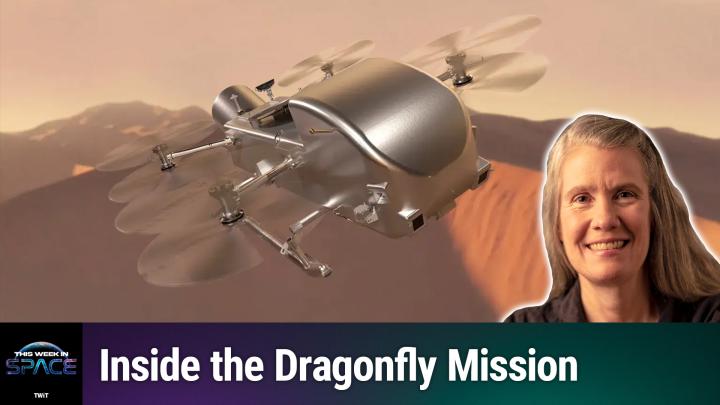
Coming up on This Week in Space, NASA's Artemis II Moon rocket passes a big test, but Boeing Starliner fails another. And we're gonna find out all about NASA's Dragonfly mission to send a flying rotocraft around the skies of Titan, Saturn's cloudy moon, all with Dr. Elizabeth Turtle, planetary scientist of the Johns Hopkins Applied Physics Lab. So tune in, you don't want to miss it.
Rod Pyle [00:00:30]:
This is This Week in Space, episode number 198, recorded on February 20th, 2026: A Dragonfly on Titan. Hello and welcome to another episode of This Week in Space, the dragonflies on Titan edition. This is episode number 198. We're getting dangerously close to 200. I know, think of something to do more. I expect this time you should do something nice for me since I always do special videos and things to embarrass— never, Rod.
Tariq Malik [00:00:59]:
Never. Well said.
Rod Pyle [00:01:02]:
And the story of my life. Uh, and speaking of my life, I'm Rod Pyle, editor-in-chief at Aster Magazine. I'm here with my man, the cruel and indifferent Tarek Malik of space.com. How are you, partner?
Tariq Malik [00:01:13]:
I'm doing well, Rod. I'm doing well, uh, for a lot of reasons. It's going to be pretty exciting. I'm excited about today's interview.
Rod Pyle [00:01:20]:
I'm so happy for you. Um, this week our special treat will be speaking with Dr. Elizabeth 'Zibi' Turtle. Zibi is her nickname. The principal investigator for NASA's Dragonfly mission to Titan, which is about the coolest thing ever. Flying on Titan! You are gonna love this conversation because— and, and she's, she's just a great interview. So, so, but before we start, please don't forget to do us a solid. Make sure to like, subscribe, and support this podcast with all your might because it means the world to us and keeps us in good fettle with the network.
Rod Pyle [00:01:54]:
And now a fresh space joke from Lee Wilson. Are you ready, my friend?
Tariq Malik [00:02:00]:
Yes, Lee, lay it on me.
Rod Pyle [00:02:03]:
Do you know what Alan Shepard did when we told him he couldn't orbit the Earth in his Mercury capsule?
Tariq Malik [00:02:09]:
Uh, no, no, what did he do? He went ballistic! Ah, that's a good one, that's a good one because it's so appropriate today as we're recording. This is the anniversary of John Glenn's first orbital flight for the America— Yay!
Rod Pyle [00:02:22]:
What's the America?
Tariq Malik [00:02:25]:
Well, the United States. I was gonna say— yeah, there you go. Okay, and I defaulted to America.
Rod Pyle [00:02:29]:
I've heard that some folks want to send us into a ballistic trajectory when it's joke time in this show, but you have the power to help. Send us your best space jokes at twistedtwit.tv and we'll blame it on you on the air. That's how we roll.
Tariq Malik [00:02:42]:
I like that one, Lee. Keep them coming. Yeah, good.
Rod Pyle [00:02:46]:
Speaking of blame, Let's go to headline news.
Dr. Elizabeth Turtle [00:02:52]:
Headline news.
Tariq Malik [00:02:52]:
Headline news. Oh, I missed it.
Dr. Elizabeth Turtle [00:02:57]:
I missed it.
Rod Pyle [00:02:57]:
You stepped in it big time.
Tariq Malik [00:02:58]:
I know.
Rod Pyle [00:03:00]:
Wow. All right. Artemis II fueling test.
Tariq Malik [00:03:04]:
It's done. It's done. Yeah, it worked. That's right. That's right. So, um, as, as you and I are speaking, we are just past 24 hours, uh, from NASA's, uh, second— fueling test of the Artemis II moon rocket, the Space Launch System rocket, down over at Pad 39B in Florida. And I was in the press conference today with NASA, and it seems like it all went pretty well. They replaced the seals that were leaky from the last test, uh, for the fuel, and they saw apparently the lowest leak rates they have ever seen, not just for Artemis II but for any Artemis rocket, like from Artemis I, at all times.
Tariq Malik [00:03:41]:
It's crazy. Uh, so That problem now, Rod, seems to be solved. They had a bit of a minor communications glitch during the 12 or so hours of test that they had, uh, but it was pretty solved. It was ground equipment stuff for the team too. So they, they were able to get through all of their backups. And so with this test now in the can, they have officially set a launch date for, uh, for March 6th, in that they are officially aiming now for March 6th that they can see Pending some final work, they're doing some, some, uh, contingency setup work on the launch pad they want to get done so that if they have to do a reset of the flight termination system on the SLS rocket, they can do it there at the pad rather than when they did it for Artemis 1 because of the delays. They had to roll all the way back to the VAB. They want to avoid that, so they're going to try to get that done over the next couple weeks.
Tariq Malik [00:04:32]:
And you know, in 2 weeks, Rod, you and I could be reporting live from Houston, you know, so that could be really exciting. Yeah, yeah.
Rod Pyle [00:04:40]:
All right, uh, next story. We almost had a really terrible day. Jared Isaacman came out and gave us the real stuff about, uh, about Starliner, Boeing Starliner. Poor, poor Starliner. This is the most direct— after a, what, a year and a half?
Tariq Malik [00:05:00]:
It's been 2 years. Some 2 years since this mission flew.
Rod Pyle [00:05:03]:
Muttering and, well, sort of, kinda, and all that from, from NASA and Boeing not showing up to the briefings and so forth. I think we've got the real word now.
Tariq Malik [00:05:11]:
Yeah, yeah, they called it a Type A mishap, which is the worst kind of mishap you can have at NASA. The Challenger accident was a Type A mishap. The Columbia accident was a Type A mishap. They said that this, uh, the level of, of, um, of mistakes or, or, you know, the— what happened, uh, missteps, I'm gonna say, on, um, on the first Starliner crewed mission was at that level, not just on the Boeing side, also on the NASA side too, because NASA should have had more oversight over this thing, and they— in terms of like the testing, and they did not do that. So, so they have said that they will now not fly, uh, the, the next Starliner crew, uh, ship with the astronauts until all of these issues are solved. Solved.
Rod Pyle [00:05:57]:
Not— excuse me, I have a question though. Yes. Was their level of oversight for Boeing any different than the level of oversight they had with Space.com? Because it worked on that side.
Tariq Malik [00:06:07]:
Space.com? You— the NASA's oversight of space.com?
Rod Pyle [00:06:10]:
SpaceX.
Tariq Malik [00:06:11]:
SpaceX. Yes, which would then be non-existent, right? So yeah, no, you know, um, it, it was the testing regime because I, as I understand it, they did their own tests and then NASA just accepted them, right? And they also did a lot of testing where it wasn't integrated. If you'll remember, the reason that the first Starliner had problems reaching orbit was because they tested the flight software in parts, not as an entire package. And when they— the first time they use it the whole package was during the actual test, and it went wrong and didn't, didn't reach the right orbit. And so then they— and then when they, when they finally got the next flight, they tested it without the final parachute design, and then they needed to have different types of parachutes. So, you know, the knotting or whatever it was, and then all of the wiring, you know, wasn't, wasn't vetted, and they had that flammability issue. They had to redo all of that before they could do the, the, the crewed flight. Then the crew flight goes and they have the thruster issues, and they had seen those thruster issues on the first flight and they didn't know, like, what caused them, and then they flew anyway with the rationale.
Tariq Malik [00:07:17]:
And what we heard from Isaacman and, and folks during this briefing yesterday was that they should never have done that. They should never have just accepted that and flown a mission when they did not know what, uh, what happened, why the thruster issue was really happening, uh, and then it happened again and they still didn't know, like, what it really happened. So until they get that solved They're not going to fly again is what he said. They have reduced the number of flights that NASA is going to fly to the space station with, with, with Starliner from 6 to 4 as of last fall that we're recording this in fall of 2025. And NASA still is saying that they're committed to Starliner as a vehicle, if not all the way, you know, for the ISS, at least for future commercial stations too, because they're going to need that. And Isaacman did promise that there will be future commercial space stations.
Rod Pyle [00:08:06]:
So. Boy, you know, I, I mean, we get a little bent at Mr. Musk sometimes for shenanigans, but when you look at, at Starliner and even, uh, Sierra Space and their, their winged vehicle that was supposed to be supplying crew and now just cargo to the space station, it looks now like it won't be flying the space station at all. Well, yeah, you gotta hand it to SpaceX.
Tariq Malik [00:08:29]:
It's interesting because I, I believe that there, you know, there was like a report about this, the failures, uh, during that mission that ended up leaving Sonny Williams and, um, uh, Sonny Williams and, um, oh my gosh, Coach Wilmore and Butch Wilmore, uh, on the space station for 9 months when they were supposed to be there for like, you know, 10 days or so, right? Um, and you know, of that, I mean, it just— there was serious breakdowns in, in, uh, like across the board. I think at one point that report says that the— in meetings devolved into unprofessional behavior, which I assume is like shouting at each other, you know, over what— over what, what, what to— what to do next. And— that's the kind of thing that you do not want to happen in your, your program to fly people in space. You know, everyone should be just on, on the, on, in the right— what do you— like, on the right path together, right? We're all rowing a boat.
Rod Pyle [00:09:21]:
Yeah, but so, you know, I mean, I, I've written a lot about, uh, NASA's inspectors and how they did things back in the space age with Apollo and Gemini and so forth, and, and later with the shuttle. —and I, I watched a guy, a NASA inspector, uh, on, uh, shuttle assembly. I think it was the, the last orbiter standing over the shoulder of the guy who was standing over the shoulder of the guy. There's literally 3 or 4 people there watching him tighten a bolt on the orbiter, how many turns, what the torque measurement was, and so forth, because that's how you have to do it. They don't do that anymore, at least not to that degree. But, you know, it's hard to blame NASA for trusting a contractor that's been flying in space since the 1950s It says they can do it, but it's just not, not the same Boeing.
Tariq Malik [00:10:09]:
Yeah, yeah. What they were saying is that there was concern for the reputation of the Starliner program that was outweighing the actual— that, I mean, that, that's what Isaacman said. Concern for Starliner program's reputation influenced the decision, you know, and that, that, that, that advocacy exceeded reasonable balance, you know. And so it, and it put the, the mission and the crew and the space program at risk is what he was saying. So, um, I mean, what I think the, the one thing— and I know that we're talking a bit longer on this— is that this press conference just finally acknowledged what everyone kind of had knew. Yeah, like, happened. That it was a— it was a— it was a— it was a big— a big kind of failure of its kind, something that never should have happened, and it should have been caught, you know, from the beginning. The whole— the whole point— I mean, ripping out all that wiring before the crewed launch because it was flammable, like, why was it even put in there in the first place, you know? And the thing about not even testing the parachute you're going to use, uh, before the— the crewed flight, like, I, I found those to be just baffling decisions made in, in order to get, uh, to an endpoint.
Tariq Malik [00:11:10]:
And so, you know, we are where we are now, but they've at least acknowledged it at the level that it was, and hopefully everyone will, will learn from it.
Rod Pyle [00:11:20]:
Well, and this is a big gold star for Isaacman. You know, a lot of people were wondering how he was going to do, and could he stand up political pressure and all that. And I'd say, now that's, that's diving into the deep end right there. So I'd say yes. All right, let's go into our last story. Perseverance Rover Mars has its own Mars GPS.
Tariq Malik [00:11:39]:
Yeah, this is a real fast one. You know, we spoke, I think, a few episodes ago about, uh, the first AI, like, modeling where they, they use the AI to plan, uh, a drive. And so now they can cut down the amount of time for planning it takes. And one thing that they— I just found out that happened this week is that they have used a new approach and some existing equipment on Perseverance to allow it to know where it is on Mars basically in 2 minutes. And in the, in the past, what they have done for Perseverance is that the ground people say, okay, this is where you are by comparing, you know, the, the navigation on the rover with orbital maps and stuff. And they say, we know you're at this longitude and this latitude. And then go ahead and do a drive. And then it would drive a little bit, take pictures of its surroundings and say, okay, I'm here, but it doesn't actually know where it is because it slipped a little bit with the wheels.
Tariq Malik [00:12:36]:
And over time, instead of being a few centimeters or inches off, it could be 100 feet off of where it thinks that it is. And then NASA has to say, no, no, no, you're not here, you're here. And that takes like a whole day, maybe 2 days of, of planning time to, to get the rover all reset. What they've done now is they allow the rover to take those pictures of its surroundings, compare them to the elevation and top— top— topographic maps that it has onboard already from the orbiters themselves. And then it also has this, this, like, it's like a little chip thing, that it's the same kind of tech that's in your cell phones for positioning that was originally used for the base of the Mars helicopter Ingenuity. So it was built for the Ingenuity helicopter. And it uses that as like a system to help them co— co— co— correlate? Co— co-op?
Tariq Malik [00:13:32]:
Correlate? Yeah, all of these, these data points of where it was. So now it can say I've driven this, this much. 'Now I look around, the pictures look different than they looked before. I can know exactly where I am within something like 10 inches.' And, and it takes 2 minutes to do. And it seems like that combined with the AI driving, it will allow it to drive a lot faster, a lot farther over time by itself, so that if they're in a boring part or stretch of Mars where they're just trying to get from point A to point B, they can just point and click and then let it go until it gets there. It's really exciting that they're able now 5 years later to find new ways of operating this base— this rover, uh, that make it faster and faster over time. So I'm very excited about that.
Rod Pyle [00:14:14]:
It's especially impressive given that the tech for this rover was probably baselined. I would guess they, they locked it in about 2015. Yeah, yeah, exactly. It's based on the Curiosity rover, which was locked in the mid to late '90s, and the chipset that's flying on that thing is, uh, dates back to about 1997 in terms of its design, because that's the last radiation-hardened chip series up until recent times. So when you look at that— exactly— repurposing that tech on the fly is kind of breathtaking.
Tariq Malik [00:14:46]:
Yeah, and Perseverance was already more advanced than Curiosity. It has an auto nav system like Curiosity have, but it has sharper and, and more powerful cameras, which then allow it to perceive, uh, potential hazards a lot better with all of its cameras. And it also means that they can match topographic details that it sees with the maps that it has on board a lot better too. It has, it has better computers as well, uh, but it also had this little bit of, uh, positioning like chips, uh, stuff, uh, for the helicopter that they weren't using, right? Because the helicopter is dead now, you know, they don't use it anymore, but they've still got the capability there and they figured out how to wire that into this navigation system so that now it knows where it is in 2 minutes, cutting out like, like a, uh, so much travel time just for data alone to say, hey, where am I? Am I where I think I am? So it's very, very cool to see.
Rod Pyle [00:15:37]:
Pretty cool. And speaking of cool, we are going to be back in just a moment to talk with Dr. Elizabeth Zibi Turtle after this break about the Dragonfly mission to Titan. So stay with us. And we are back with Dr. Elizabeth Zibi Turtle, and Zibi is not your middle name, it's your nickname. So thank you for joining us today. And you are a planetary scientist and most importantly, the PI for the Dragonfly mission to Titan, which is just unbearably exciting to us.
Rod Pyle [00:16:06]:
So I want to thank you for joining us today because this is— I've been alive a long time, I've, I've seen everything from Gemini forward, and this has got to be the most exciting thing since the first Viking landing.
Dr. Elizabeth Turtle [00:16:18]:
Thank you, my pleasure to be here. It's something I'm very excited about as well.
Rod Pyle [00:16:21]:
I would hope so. Atarek has a question that he always asks people that he wants to ask you.
Tariq Malik [00:16:27]:
Well, yeah, you know, I always ask folks when they come on the show about what their path was to space. Like, we know you're a planetary scientist, you know, you're, you're the principal investigator for Dragonfly, which, like Rod said, is very, very cool. But how did you get there? Like, was space something that bit you when you were young and that you knew you wanted to get into that field somehow? Or is it something that, as sometimes happens, you found later in life And then it became, I guess, like a found passion, if you will, rather than something that's been innate
Dr. Elizabeth Turtle [00:17:04]:
since childhood. I grew up looking at the sky. My dad had majored in astronomy. He took us out to look for comets and meteor showers and aurora. So, yeah, so we grew up looking, looking at the sky. My grandmother knew all of the mythology of the constellations. I, uh, I don't actually remember learning the names of the planets. It was kind of just part of the geography that we grew up in.
Dr. Elizabeth Turtle [00:17:32]:
My sister and I had a game called Space Hop where you got each of the— you got a card that had you go on a mission, but it said like, go to the planet that has 12 moons, right? And this was in the— this was in the '70s, right? Voyagers were starting to go out through the solar system. So not only did we kind of learn all this interesting stuff about the solar system, but we got to learn about things, the, you know, things that changed, right? Because Jupiter has way more than 12 moons. And we got to see that exploration and, you know, watch the scientific process as spacecraft explored more and more of the, the solar system. So, uh, so yeah, so I've, I've always been interested interested in space and
Tariq Malik [00:18:19]:
the, and the planets. And did you have nice dark skies then growing up, or, or was it like, uh, uh, like I did, like you're in a city where dark skies
Dr. Elizabeth Turtle [00:18:29]:
are hard to come by? Uh, I grew up in Massachusetts, uh, outside of Boston, so, um, the skies were reasonably dark, um, but more dark, you know, uh, if we got to go up to New Hampshire or something like that, up skiing or something like that, got to be able to see darker skies.
Rod Pyle [00:18:47]:
Yeah. Did your dad have a telescope?
Dr. Elizabeth Turtle [00:18:49]:
He did. He had a telescope he built.
Rod Pyle [00:18:51]:
Wow, how big was it?
Dr. Elizabeth Turtle [00:18:54]:
Uh, it was about a 6-inch, uh, 6-inch— perfect— reflecting.
Rod Pyle [00:18:58]:
Yeah, I started building a telescope when I was 12, and it's still sitting in my garage somewhere.
Dr. Elizabeth Turtle [00:19:04]:
Um, yeah, he polished the mirror.
Rod Pyle [00:19:06]:
Yeah, that was what— yeah, yeah, that was a big thing then, when— before they had machines that would do it perfectly. Um, so, uh, can you give us sort of the, the layman's ground-level version of what the Dragonfly mission is and how it came to be? Because I'm sure it's a long, tortured
Dr. Elizabeth Turtle [00:19:24]:
story, as most of these missions are. Yes. Uh, so Dragonfly is a mission to Saturn's moon Titan. Uh, Titan, uh, is a very unique moon. It's the only moon in the solar system that has a dense atmosphere. It's actually denser than Earth's atmosphere. Uh, the density is about 4 times Earth's— the density here on Earth. The surface atmospheric pressure at Titan's about 1.5 times that here on Earth.
Dr. Elizabeth Turtle [00:19:50]:
Um, and the atmosphere is made mostly of nitrogen, actually, like our atmosphere, but then a little bit of methane. It's much colder out at Saturn's orbit, so the next major constituent in Titan's atmosphere is methane. And the methane plays a couple of very interesting roles. One is that it breaks down at the top of the atmosphere, and the, the— remnant molecules, uh, remnants of the molecules combine to form very complex, uh, carbon-rich molecules, and these fall out onto the surface of Titan. Titan being a moon in the outer solar system, the surface is made of water ice, and so at places where the water ice may have melted, there's the opportunity for very complex carbon-rich molecules to have mixed with liquid water, essentially the same kind of chemistry that, may have existed here on the early Earth before life developed here. But Titan may give us a glimpse into the chemistry that occurred before biology, which is really hard to see on the Earth because biology's kind of overprinted everything. So that's really good for us, but, um, it's not so good for trying to understand those early chemical steps. So Titan may be able to give us a view into how that kind of chemical complexity develops and how far it's been able to progress on this moon in the, the outer solar system.
Dr. Elizabeth Turtle [00:21:09]:
Another thing, just— oh, sorry, but what
Rod Pyle [00:21:13]:
were the origins of the, of the mission?
Dr. Elizabeth Turtle [00:21:14]:
Uh, so the origins of the mission. So, um, Titan has this dense atmosphere. It's also got low gravity, about 1/7 that on Earth. And so it is physically easier to fly on Titan than it is here on Earth. So for a few decades now, people have been thinking of different types of concepts for missions that would fly on Titan— balloons or even aeroplanes. Um, and when the, um— so it's part of the NASA New Frontiers program, and when NASA added Titan as one of the possible destinations as part of New Frontiers, uh, just, uh, 10 years ago in 2016, actually, The amount of development that has gone on in terms of autonomous flight and in terms of rotorcraft flight had really progressed. And then we had all this great data from Cassini about Titan. And so all of these things came together and, uh, came together in the form of the idea of a rotorcraft as a, uh, mobile exploration platform on Titan.
Dr. Elizabeth Turtle [00:22:21]:
So instead of driving across, you know, the way we do on Mars with the rovers, on Titan we can actually
Tariq Malik [00:22:26]:
fly from place to place. And of course, because Titan's so far, we're going to send a dinky little drone, right? Like, like, like the Ingenuity helicopter, the little teeny tiny thing.
Dr. Elizabeth Turtle [00:22:36]:
That's what Dragonfly is, right? Well, because, uh, again, it's so much physically easier to fly on Titan, uh, than it is on Mars, especially Mars Mars is a very challenging place to fly. The Ingenuity helicopter is spectacular, uh, in given— especially given the amount of gravity you have at Mars and the low amount of atmosphere.
Tariq Malik [00:22:56]:
But on Titan— I apologize to everyone for calling it
Dr. Elizabeth Turtle [00:23:00]:
dinky. I'm sorry. On Titan, the vehicle we're sending, the Dragonfly rotorcraft, is actually the size of the Curiosity or Perseverance rover. Oh my gosh, that's huge. So that, that gives a sense of physically how much easier it is to fly there because we can to fly that scale vehicle.
Tariq Malik [00:23:14]:
It's the size of a car, everybody listening.
Rod Pyle [00:23:16]:
That's what she's saying. That's interesting, because, you know, when you look at the, at the graphics that are out there, you don't necessarily get that impression because there's, there's no sense of scale. Uh, we're going to take a quick break, so go nowhere, and we'll be right back. Can you tell us a bit about the instrumentation package? Because, uh, you know, we were talking about Ingenuity a little earlier, and admittedly that's flying in a much thinner atmosphere, Umm, didn't carry much. And Dragonfly, I assume, is going to carry a much more robust instrument suite.
Dr. Elizabeth Turtle [00:23:48]:
Right, yeah, so Dragonfly is, is, uh, carrying a full scientific payload to be able to understand the chemistry of the surface materials on Titan and to put that into the context of the Titan environment. So, uh, we have a mass spectrometer, uh, which is actually very similar to the SAM mass spectrometer on the Curiosity rover, uh, and that is fed by a rotary percussive drill. Uh, so we'll be able to break up the, the cold surface materials, uh, and use— it's basically like a vacuum cleaner. We just kind of vacuum them in because we have this great atmosphere into the mass spectrometer, which will measure the details of the, the composition of those, uh, those surface samples. We also have a gamma-ray and neutron spectrometer. So this measures the bulk elemental composition of the materials beneath the lander. We have a suite of a dozen different types of meteorology and geophysical sensors, including a seismometer to listen for Titanquakes. And we have a suite of science cameras as well that range from very high-resolution imaging of the sampling site of the drill to panorama views around the lander as well as aerial imaging during flight.
Rod Pyle [00:25:04]:
Oh wow. See, Tarek, there you go. That's an explanation even you can understand.
Tariq Malik [00:25:09]:
Sorry, go ahead. Well, you know, I, I was very curious. You mentioned earlier that, uh, uh, you had a wealth of data and observations from Cassini on Titan to help you shape what this mission could do to kind understand this weird moon, and what it might mean for how life formed on Earth, how it might form elsewhere, you know, the weird hydrocarbon lakes that you were talking about earlier, and whatnot. But I'm very curious what you, you saw from, from the landing earlier, you know, Cassini had the Huygens probe, it landed, we got those first pictures from the surface, and you're going to be flying over this surface. And I'm curious if you and the team were either surprised, by what you saw originally, you know, or, or did it verify what you had hoped to find, uh, once Dragonfly would get there,
Dr. Elizabeth Turtle [00:25:57]:
uh, once the mission took shape? Um, right, so Cassini really was, uh, the first mission to map the surface of Titan. We had very low-resolution views of the surface before Cassini arrived from, um, uh, from the Hubble Space Telescope and, uh, from Earth-based telescopes, and those just kind of showed darker and lighter areas on the surface. We had no idea really of the geology and the geography on Titan. So that was all mapped by Cassini. And as you say, the Huygens probe, which was designed to descend down through Titan's atmosphere to make measurements of the atmosphere and then hopefully measurements on the surface, which it, which it indeed did. And I'll do a— I'll take a little aside. Because we knew so little of Titan's surface, the Huygens probe was actually designed to be able to make measurements if it landed in a liquid or on a solid surface, which is a pretty impressive feat to design a mission to be able to, to do either of those kinds of things and make scientific measurements in either situation, floating in a liquid or landed on a solid surface. Um, but, uh, Cassini really was the, you know, as I said, the first mission to map out the surface of Titan, to really reveal Reveal what is there, and Titan is a surprisingly Earth-like place.
Dr. Elizabeth Turtle [00:27:15]:
The interactions of the atmosphere with the surface, even though the materials are completely different, right? This is a, a world, uh, where instead of water, uh, raining, uh, onto the surface, we actually have methane clouds and methane rain and methane lakes and rivers and seas. We have sand dunes made of a hydrocarbon material Uh, we don't actually know how the sand grains on Titan form. Um, they're clearly there, uh, 'cause we know— we know there's sand dunes on Titan, so clearly Titan knows how to form sand. We don't know how that forms. But it is a surprisingly Earth-like place even though the materials are very different. Um, and so it's, uh, you know, so that makes it a very, uh, exciting place to explore because it— at some level it's so familiar and yet And yet so alien as, as well. And the Huygens probe, um, landed in kind of a gravel plain with, uh, rocks that we think are made of water ice, um, kind of over that, over that plain. And, uh, it's really exciting to think that with Dragonfly we'll be able to kind of go beyond the horizon, right, to see what's next, what's beyond the, you know, beyond what we can see in, in the scene.
Dr. Elizabeth Turtle [00:28:26]:
Uh, but yeah, the Huygens probe and the Cassini mission really whetted our appetites to, to explore more of Titan.
Tariq Malik [00:28:32]:
I can see the value of having a rotorcraft because you don't— you're not like stuck with whatever the first spot that you pick to land. And you mentioned that you've got this, this drill to collect samples. And I'm curious what other types of things on Dragonfly can, I guess, aside from imaging, can interact with the environment to either get more samples or, or Or does it float? Could you go and, and, and land in, in one of these lakes or seas that we find, uh, for a little bit and then, and then take off again? I— that seems kind of dangerous though,
Dr. Elizabeth Turtle [00:29:02]:
I guess, for a drone. Uh, it's actually really far away. Um, the ti— the season— this— we're— it's, it's actually very convenient. The timing of the New Frontiers program is such that Dragonfly will get to Titan one Saturn year, one Titan year after, uh, Cassini and Huygens arrived. So we actually know from Huygens, what the atmosphere is like at this time of year on Titan. So that's excellent, right? We have that, that atmospheric information for our initial entry into, into the atmosphere. And the downside from a late— from the perspective of exploring lakes and seas is that it will be northern winter and most of the lakes and all of the seas on Titan are at Titan's north pole, and it won't be, uh, it won't be illuminated by the sun because like our winter, um, the, the northern hemisphere is, is in winter darkness in northern winter. Um, also we, unlike Mars, don't have a fleet of relay satellites.
Dr. Elizabeth Turtle [00:30:07]:
Yeah, so Dragonfly does direct-to-Earth communication from the, the surface of Titan, and if the The sun isn't up in the sky, the Earth isn't up in the sky either. So even if we could explore in the dark at Titan, we wouldn't be able to send the data back to Earth. So unfortunately, we can't get to the— get to the lakes and seas. So, the rotorcraft is designed to explore the equatorial region where we'll be exploring dunes and interdunes as well as deposits associated with an impact crater where in the past, liquid water may have had the opportunity to mix with these really complex, uh, carbon-rich molecules, uh, so we can really understand the chemistry and the habitability of Titan.
Tariq Malik [00:30:52]:
That's exciting. You always have to leave something for the sequel.
Rod Pyle [00:30:55]:
Yeah. And the amazing thing to me, I guess— and we're going to go to a break in a second— but it was amazing to me that the maps that Cassini created were all done during flybys. You know, normally we associate that with an orbital mission, but this was done just skimming past the planet and getting the best look you could in short order, right?
Dr. Elizabeth Turtle [00:31:13]:
Oh yeah, well, over the scale of the mission, there were over 120 flybys of Titan, so it really did create a, you know, a global map of, of the surface.
Tariq Malik [00:31:24]:
And imagine— and we got— oh, sorry,
Dr. Elizabeth Turtle [00:31:26]:
go ahead, go ahead. No, and we got to— Cassini, um, was there for 13 years, which is almost half of a Titan year. So we got to watch the weather change and the seasons change on, on Titan as well, which is really exciting.
Tariq Malik [00:31:41]:
Yeah, I'm just thinking about the maps you're gonna make as well now with, with Dragonfly, um, of these areas. It's going to be just— it's amazing. That's great.
Rod Pyle [00:31:50]:
Well, should we go to a break, Rod? Yes, of course. You're going to have to come up with a whole bunch of new names for all— that's right— the
Tariq Malik [00:31:58]:
features you discover.
Rod Pyle [00:32:00]:
Good suggestion. I was gonna say, I missed the days of path Pathfinder back in 1997 when they could name rocks after Hanna-Barbera cartoon characters. And then, you know, copyrights became an issue and that was the end of that. Okay, let's go to a quick break and we'll be right back with more. I'm very curious, when you're working with a rotorcraft, so, you know, this isn't like a rover where you can have it crawl 6 inches and wait for a command, right? You're flying this this thing, and there's obstacles and dangers and probably wind currents and so forth, and it's going to be somewhere between 750 million and a billion miles away. As I read it, you probably— I'm sure you know better than I do— round-trip radio trip can be 1.5 to 2.5 hours. I mean, is AI the enabling tech for this mission, or do you have just enough pre-programming in there that it doesn't need that robust an AI system?
Dr. Elizabeth Turtle [00:32:57]:
Uh, no, I mean, it needs to be autonomous. It needs to be able to operate autonomously. Even Ingenuity, right, much closer at Mars with a much, uh, shorter round-trip light time, uh, everything was operated autonomously. And in fact, it's, it's great to have those, you know, those steps, those pathfinders of Ingenuity, uh, and the, uh, the mobile exploration with Curiosity and Perseverance and other rovers on Mars to inform our operational strategies. But everything— it— so it needs to be autonomous, but we don't have any need for, for AI. We can use this all based on, you know, heritage flight software that, that is on board the lander. A few— a benefit we have, on Titan is time. The Titan timescales are very long, right? The year is 29.5 Earth years.
Dr. Elizabeth Turtle [00:33:55]:
The day is 16 Earth days. Wow. So, uh, we don't, you know, we'll, we'll be able to have that time for ground-in-the-loop communication, uh, to get data back, uh, after a flight to, uh, decide and debate, I'm sure, uh, what —do next on our next flight, what kinds of measurements to make at the landing site we're at. Uh, but we have, uh, you know, about a week of time while Dragonfly is on the surface on the daylight side of Titan to be able to communicate. And almost all the time is actually spent on the surface. Dragonfly will probably fly once or twice a month for about 20 minutes, uh, each time. Oh, okay. And the rest of the time we're sitting on the surface, we're making measurements, uh, communicating with Earth,, uh, recharging the battery.
Dr. Elizabeth Turtle [00:34:41]:
Um, so yeah, so we're mostly sitting on the surface doing, uh, you know, doing other things and, and then flying,
Rod Pyle [00:34:47]:
um, once or twice a month. Uh, th— just to follow up, uh, this is a little off, off mission, uh, so this may be an answer you don't care to go after, but it occurred to me right after I asked that question that when you had to baseline and, and finally lock the technology on this mission, there probably there wasn't such a thing as AI, at least not the way we think of it now. Any, any thoughts on how long it might be before that's going to be
Dr. Elizabeth Turtle [00:35:13]:
something that you could reliably use in the spacecraft? I, I won't, I won't, uh, speculate about, uh, about the use of, of large language models and that kind of capability in, you know, on a, you know, on a, a spacecraft. Um, certainly, you know, tools to analyze data, um, and things like that will become more and more used and quite valuable tools in cases. But I won't speculate about the technology
Rod Pyle [00:35:41]:
development for flight missions. Well, we'll ask Mr. Musk. He'll tell us it's going to happen on Saturday.
Tariq Malik [00:35:46]:
Parekh, to you. Well, that's interesting what you said about, about flying every, I guess, twice a month, every 16 days. That's 1 or 2 Titan days.
Dr. Elizabeth Turtle [00:35:54]:
They're called— are they called tisols?
Tariq Malik [00:35:57]:
We call them, we call them tisols. T-Sols. T-Sols. I was trying to figure out how
Dr. Elizabeth Turtle [00:36:00]:
to pronounce that word. So
Tariq Malik [00:36:04]:
a Titan Sol, that's all. Yeah. And, and I guess the mission itself is— it's, it's about 3 years on, on, on, on Titan itself. So that gives you a good number.
Dr. Elizabeth Turtle [00:36:15]:
It sounds like it's about 74 Titan days.
Tariq Malik [00:36:19]:
74. Wow. Wow. That is crazy. And you mentioned that it has to recharge its batteries. It But is it still nuclear powered using that? How does that power system work to, to keep the suite alive? Because I imagine it's really cold on Titan if they've got methane rain and
Dr. Elizabeth Turtle [00:36:36]:
ice rocks and all sorts of things like that. Yeah, it's very cold at Titan. It's 94 Kelvin. Oh my gosh. Which is -290 Fahrenheit. So that makes the weather we've had here— the weather we've had here in the East Coast look kind of warm. Yeah, it's very cold. We use the, uh, the Multi-Mission Radioisotope Thermoelectric Generator, the MMRTG, uh, for power.
Dr. Elizabeth Turtle [00:36:58]:
This is exactly the same power source as Curiosity and Perseverance on Mars. Um, that puts out about 90 watts of, uh, of, of power. So when we are, um, uh, on the surface of Titan, uh, we use that to charge a battery because a lot of our activities, especially flying, uh, take A lot more power. Yeah. Um, and so, uh, we charge a battery and then we have a, a large battery on board and that's, that's what we use to power all of those activities. But the other benefit of the MMRTG, uh, is it's actually a pretty inefficient process, uh, to generate the electricity. And there's a lot of what's typically called waste heat. Um, but for us on the surface of Titan at 94 Kelvin, there's no such thing as waste heat.
Dr. Elizabeth Turtle [00:37:43]:
Uh, so we use We use all of that, um, and Dragonfly is just a very well-insulated vehicle, and we use the warmth of the MMRTG to keep, uh, all of the elements inside the lander at a, at an appropriate operating temperature.
Rod Pyle [00:37:59]:
Oh, that's awesome. So I guess that's sort of the opposite of the battle that the Soviet Union faced trying to keep the Venera landers cool enough to last more than 15 minutes. Right. Uh, yeah. What would be— Given— so if I understand correctly, you're, you're not going to be encountering large liquid areas, but, but given the dynamics of the mission where you are going to be investigating, what are some of the, quote, sand traps, unquote, that you might encounter, like what foiled
Dr. Elizabeth Turtle [00:38:29]:
Spirit on Mars, for instance? Um, well, one of the benefits of being able to fly is that gives us, um, uh, you know, we don't have to —try to drive on an unknown surface. We're able to, you know, take off and land in another area. The other thing that we can do is actually scout ahead. We don't have the benefit of HiRISE, right, of the Mars Reconnaissance Orbiter's very high-resolution camera, which takes images at, you know, better than, better than meter scale. And we don't have that at Titan.. But we can fly over an area and actually scout it out and evaluate it from the perspective of, is it interesting scientifically and is it a safe place to land? So that actually allows us to try to avoid, right, that kind of, you know, to avoid places that could be more dangerous. And we have a set of criteria for our landing sites, right? And it has to be, you know, a low slope and there can't be blocks, uh, larger than, you know, 25 centimeters, things like that. And so, uh, there are a number of things, and, uh, you know, a lot of work has gone into, uh, assessing the types of hazards that we need to avoid and then building that
Rod Pyle [00:39:47]:
capability into the autonomous system on board the, the lander. And just so it's said for our listeners, I— my, my question may have sounded a little off base. I wasn't saying, ooh, what bad things are going to happen. I just remember sitting up at JPL when I was working on a book about Curiosity, listening to the drivers plan their routes for the following day or days before they're going to send a data package up. And the planning, it makes my head hurt to think about it now. I don't know how they think that far ahead. And I know that you're doing even more than that because this is something that's very, very far away and very cold. I just want to know what the,
Dr. Elizabeth Turtle [00:40:23]:
uh, you know, potential hazards might be. Yeah. And, and literally, right as we go through the development process, one of the things we have to do is try to think of all of the, the risks, all of the dangerous things that could, you know, that could, uh, be encountered and how we would deal with them and design the system to be, uh, to be robust to those. Yeah.
Rod Pyle [00:40:43]:
So we spend a lot of time thinking about risks. I'll bet you do. John, do you want me to go to break or Okay, he's nodding. We'll go to a quick break and
Tariq Malik [00:40:53]:
we'll navigate our way back here. So stand by. Everything, Dr. Terrell, you've been describing is amazing. I'm so excited to see this thing fly. I guess, I guess to see it fly after the fact, once it, once it gets to Titan. But I'm wondering about the flying itself, because you mentioned that it's easier to fly than, than, than it is here on Earth, 1/7, you know, Earth's gravity, like that sort of thing. But the atmosphere is thicker.
Tariq Malik [00:41:20]:
And I would assume that that would make things harder to fly if the pressure is higher, the atmosphere is thicker, and that sort of thing. But, but it sounds like there's some advantages to that. But I'm curious how, how that, how that plays out. And if you can also kind of weigh in about how you're going to know if the weather is okay to
Dr. Elizabeth Turtle [00:41:40]:
fly in the first place. Yeah, absolutely. Um, so, uh, because the atmosphere is denser and the gravity is lower, uh, it— you need a smaller, uh, lifting surface to generate the same amount of lift. Okay. And you don't need as much power, uh, to drive that. And so it's a— it's actually about 40 times easier physically to, to fly because of that combination of the denser atmosphere and the, the lower gravity. Gravity. So, so Titan's doing a lot of the work for us, which is, which is very nice.
Dr. Elizabeth Turtle [00:42:11]:
Um, uh, in terms of the, the weather on Titan, it's actually because the— again, the atmosphere is dense and the, um, the time scales are very long, uh, you know, a 2— a 16-day, uh, day and a 29.5-year year. Um, there's not a lot of, uh, temperature gradient on Titan. The daytime and nighttime temperature are about the same, like, to, to a degree. So we don't have the same kind of temperature, uh, variations that drive the really dynamic weather we're used to here on Ti— on, uh, here on Earth. Um, yeah, so it's actually a pretty sluggish atmosphere. It doesn't mean there isn't weather, um, but it is, um, not as frequent, um, as we see here on Earth, and it tends to follow the subsolar point. So when we arrive, it'll be southern— late southern summer, uh, so the sun will have been up all the time at the south pole of Titan, uh, and when Cassini arrived, it was that same time of, of year, kind of January in Titan's year, if you will, and we saw some clouds and in fact, uh, evidence of rain at Titan's south pole. But we didn't see any, um, you know, large cloud activity or, or rain, uh, evidence of rain at lower latitudes until, um, about 2010.
Dr. Elizabeth Turtle [00:43:37]:
So it's about 6 years after Cassini arrived. Uh, so for, for Dragonfly, that would be, you know, the equivalent of 2040. So that's, you know, 6 years after our arrival. So we wouldn't expect to see, uh, rain at the, the, um, the latitudes that we'll be landing at, um, uh, during, during the, the Dragonfly mission. Also, the winds are pretty, are pretty low. It's kind of, uh, you know, um, a few miles an hour. Um, so again, it's not what we think about as wind. It's, it's kind of a light breeze, um, compared to,
Tariq Malik [00:44:11]:
compared to what we're used to.
Rod Pyle [00:44:13]:
It sounds— it's so cool.
Dr. Elizabeth Turtle [00:44:15]:
It is. We still have to We still have to design Dragonfly to be robust to rain in case, you know, the weather forecasts are wrong. But, um, but we don't expect to, uh, to encounter it. And I, I, I'm sorry, I forgot to— I didn't, um, speak to how we know what the weather is like when we fly, but we do have a suite of meteorology sensors. And like, uh, any flight here on Earth, we would do a pre-flight check, um, of what is the weather, you know, what is the wind, Where's it coming from? What is the, you know, um, you know, is, is there evidence of, you know, methane humidity, or that would it be indicated— indicative of rain or something like that? Um, and we'll be monitoring that. Um, Dragonfly will make all those measurements, send them back to Earth. We'll send a go/no-go. Um, and then an hour and a half later, that signal gets to, to Titan, and there's another check actually of have the conditions changed out of some, you, you know, by some amount, and if so, is it still safe to fly? If not, we don't fly that day.
Dr. Elizabeth Turtle [00:45:12]:
But the last, the last go/no-go on
Rod Pyle [00:45:14]:
a flight is actually Dragonfly on the surface of Titan. Oh, wow. Watching the, the images come back from Huygens was such an amazing thing, just because, you know, it's a surface of another world way, way out beyond the asteroid belt, which is something we hadn't really done before, at least not at that range. And I'm wondering For those of us who are just sort of armchair tourists in the space trade, um, I, I mean, I grew up in Los Angeles in the '60s, so I'm very familiar with what smoggy skies look like. But in terms of the landscape, would it be like Central California without overgrowth, or would it be more like the canyons of Utah, or what Earth environment
Dr. Elizabeth Turtle [00:45:54]:
would you associate what we're likely to see with? Uh, so the region that we're going to is near the equator, and the equatorial region The, the oceans on Titan are almost entirely covered by sand dunes, but it's a very specific kind of sand dune. It's a longitudinal sand dune. And again, the sand is actually a hydrocarbon-type sand, the— forming these dunes. The longitudinal dunes are formed by a kind of long-lived and reasonably specific wind pattern that allows this— or that drives the sand to, um, um, move in the direction parallel to the dune. So the best analog actually on Earth for this type of dune is the Namib Desert, uh, in Southern Africa, in, in Namibia. And the, the terrain there, the scale of the dunes and the spacing of the dunes, is actually very similar to, uh, to that of, of Titan. Um, so the— that in terms of the landscape, the area that we will land in on Titan is most similar
Tariq Malik [00:47:00]:
actually to, to the Namib. I have a real silly question. And forgive me, you know, if it's just like a, like a, like a, like a dum-dum one. But I got asked by some folks a while ago, I'm going to pin it on folks about if you have a moon that's like covered in hydrocarbons. Don't you have to be— Yeah, don't you have to be worried about like, what if there's like a spark on, on the drone or on the, on the rotorcraft that just sets the whole thing on fire? Now, I'm assuming that can't happen. But, but I'm just wondering, from the minute that we heard about methane lakes, if that's something that we should be worried about with a mission like this, where you have, you know, a, like a, like a thermal generator as a power source, that kind of thing.
Rod Pyle [00:47:46]:
And forgive me if it's like a bonehead question.
Dr. Elizabeth Turtle [00:47:51]:
Question AM radio question for sure.
Tariq Malik [00:47:52]:
The, uh, uh, the thing that's missing is oxygen. Oh, okay. Yeah, yeah, that makes sense. So, so that we don't have to worry about it. All right, thanks. Thankfully, Ron, you can smoke your cigars
Rod Pyle [00:48:04]:
to your heart's content, right? There you go. And it wouldn't even contribute to the smog level. So, um, we had another planetary scientist on, oh, probably 9 months ago now, and I got to chatting with him after the call, and we were talking about Titan, and, uh, he was positing that because of the vaguely similar atmospheric pressure and, and so forth, if you dressed up like a very hardy polar explorer and had an oxygen supply, you could live on the surface without a pressure suit. But at the temperatures you're talking, I
Dr. Elizabeth Turtle [00:48:40]:
guess you'd have to be Pretty well protected, yeah? Yeah, you'd need, you'd need a, um, you'd need a really good sweater. You'd need something to keep you really warm. Um, you know, and an oxygen supply. But, you're right, you'd be protected, uh, right? Titan's atmosphere, uh, protects the surface from radiation. The same, you know, the same kind of protection we have here on Earth. So, um, there are a number of aspects of Titan, uh, Titan's environment that make it a very benign place to explore. Uh, one of them being that you're protected from, from radiation. Um, another that there aren't extreme temperatures.
Dr. Elizabeth Turtle [00:49:17]:
It would actually be— it's quite challenging to explore the surface of the moon because the temperature changes dramatically from day to night. And so not only do you have to be able to stay warm enough, you have to be able to stay, to stay cool enough. Um, and on Titan, you, you need to plan to one temperature, which actually from a thermal perspective is definitely, is definitely simpler. So there are a number of things that would make Titan an excellent place to explore if one day we're able
Tariq Malik [00:49:46]:
to send people there.
Dr. Elizabeth Turtle [00:49:48]:
That's where they hid the Starship Enterprise
Tariq Malik [00:49:50]:
in— I know, it was a beautiful scene. Oh, it's so beautiful. That's right, maybe— if you can recreate that with Dragonfly, I think that would be amazing. So, will, will it have a boom to try to take a picture of
Dr. Elizabeth Turtle [00:50:04]:
itself flying over Titan? I know it's gonna have all sorts of other cameras. No, we have, um, there are 7 science cameras and 2 navigation cameras. They're all mounted to the, to the, the body of the lander. So we don't have an extra, uh, mast or boom with, uh, with cameras on it.
Tariq Malik [00:50:20]:
Everything's kind of tucked inside to keep everything warm. To keep it warm. Well, you know, I guess one thing that I did want to make sure I asked before, uh, before we run out of time is just— you mentioned at the start how weird Titan is. We've been talking about how weird it is like this whole, this whole interview. And I'm just wondering if Dragonfly could really help us understand how it even happened, because Titan is like the only moon of its kind in our solar system with this thick atmosphere, not even around the planet. The rest of the other, the other planets, or the other moons around Saturn, do you find that something just like that? And, and, and is there something that Dragonfly can really help us understand about
Dr. Elizabeth Turtle [00:51:04]:
how that can happen in the first place? Yeah, the, the origins and the longevity of the atmosphere, you know, are, are, uh, major questions. Um, especially because the methane breaks down at the top of the atmosphere, which means there's a, actually a, a lifetime. Time of the methane in the atmosphere. So if there isn't resupply, then you, uh, then the atmosphere would, you know, would, would, would eventually go away. And so there must be, uh, we think, a resupply mechanism. Um, Dragonfly, it will, uh, work to understand aspects of the methane cycle and the potential for, you know, at least shallow near-surface reservoirs of liquid methane, but it's not, it's not designed to, you know, to explore the global aspect of Titan's methane cycle and the, you know, the longevity of the atmosphere. So it may give us some insights into aspects of that, but it's not—
Tariq Malik [00:52:07]:
it won't fully answer that question. When I fly across the country, I get very excited usually, like, on the way back, back home, because we come to New York, you can, you can see, you know, where the Statue of Liberty is, you can see, uh, the Empire State Building, or going over to California, you know, I can see the farms and the mountains and whatnot. And I'm wondering if there's one thing on your bucket list that you, as someone that's been with this mission, uh, for so long, that you want to see on Titan from above, and you're going to be like, that's, that's, that's what I wanted. That's my That's my memory that I
Dr. Elizabeth Turtle [00:52:42]:
want to keep when, when all is said and done. I think the aerial views are going to be really, really striking, and I'm definitely looking forward to seeing the views as we're flying over. I think Titan is going to surprise us the way every place does as we explore more and more in depth. And I'm really looking forward to those surprises and the things that we didn't expect to find. Actually, that's sometimes the most exciting part of planetary exploration.
Tariq Malik [00:53:16]:
Ooh, pins and needles for, for a
Dr. Elizabeth Turtle [00:53:19]:
few more years at least, right? Yeah, you have
Rod Pyle [00:53:22]:
to be patient with the outer solar system. It's a long way away.
Dr. Elizabeth Turtle [00:53:26]:
Uh, did we miss any important topics?
Rod Pyle [00:53:30]:
Uh, we didn't talk
Dr. Elizabeth Turtle [00:53:34]:
about the timescale. Okay. Tell us a story. So, uh, uh, so, um, Dragonfly, uh, passed our critical design review. The team passed the critical design review, uh, just under a year ago now, and we are into the integration and test of the lander. And, uh, we'll be working through the integration to test the lander and the flight system over the next few years. We're scheduled to launch in July of 2028, and that gets us to Titan,
Tariq Malik [00:54:03]:
uh, at the end of 2034. Actually, that's a, that's a good point. Is, is the, is, is the, is the, the rotorcraft integrated as its own lander, or it's on a lander platform
Dr. Elizabeth Turtle [00:54:13]:
that it will then take off from? No, it is, uh, an entirely self-contained vehicle. So just like the, just like the rovers, uh, on Mars, uh, it is a, a self- contained rotorcraft that will
Tariq Malik [00:54:25]:
fly everything from place to place on Titan. So then how does it— does it land with a parachute and then it— and then it'll touch down? Or I'm just trying to— or has
Dr. Elizabeth Turtle [00:54:33]:
it— has its own thrusters to slow down to land? I'm very curious. It's super— no, it's super exciting. Um, so we have a, um, uh, so the, the lander is encapsulated in an aeroshell, um, uh, so a heat shield and a back shell that will protect the lander as we go down through the atmosphere. It's about a 2-hour descent. The atmosphere is so extended on Titan,
Tariq Malik [00:54:56]:
it takes about 2 hours.
Dr. Elizabeth Turtle [00:54:58]:
Move over 7 Minutes of Terror, right? Exactly. To get from that entry interface, uh, more than 1,200 kilometers altitude, uh, down to the atmosphere— the, uh, down through the atmosphere. At about a few kilometers altitude, the heat shield will drop off and we actually kind of lower the rotorcraft the back shell and we spin up the
Tariq Malik [00:55:24]:
rotors and Dragonfly drops off and flies to its first— Wow! Oh my gosh, that's amazing! We're just gonna throw like a rotorcraft on, on a moon and it's gonna just land flying.
Rod Pyle [00:55:40]:
That is crazy. Wow. So is some of the technology for the— for the dropping of Dragonfly from the, uh, the back shell or the, the, the mate craft, um, evolved from
Dr. Elizabeth Turtle [00:55:53]:
anything that they did with Skycrane, or is it completely different? It's, it's completely separate. We need to be able to fly from place to place, so we already have the, you know, the capability to fly, uh, as a, as a rotorcraft. And so the simplest thing is to, uh, to not have another element, another system, um, that needs to function at the, the bottom of the descent and to use the, the rotorcraft flight.
Tariq Malik [00:56:18]:
Um, so Dragonfly will fly under its own power from— it doesn't even
Rod Pyle [00:56:24]:
have that background running. That is crazy. Just starts— I think this episode is
Tariq Malik [00:56:28]:
pegged on the, on the cool meter for the show. I can't get my head around how that's going to look like. Can you imagine the first pictures from Dragonfly then are gonna be flying already, right? Yep. That's the first thing that you're gonna see. There's no startup. It's like you wake up in the morning and you're already running down the freeway at 60 miles an hour, you
Rod Pyle [00:56:51]:
know, halfway to work. That's crazy. Wow, I'm excited. One more thing we know about your lifestyle. Uh, so, so, zibi, do you have any, uh, books coming up, talks coming
Dr. Elizabeth Turtle [00:57:08]:
up, articles we should keep an eye out for? Mostly, mostly what I'm working on is,
Tariq Malik [00:57:13]:
uh, is, uh, is Dragonfly is going through our IT process. She's building you a flying probe for Titan.
Rod Pyle [00:57:19]:
What do you want, Rod? So, well, no, but I noticed that you did a couple of TED Talks and other things, so I just wanted to check and see if there's anything good for listeners to check out if
Dr. Elizabeth Turtle [00:57:28]:
they want more, more background on the mission and so forth. Yeah, I, I have kind of local talks at this point, but, and we do have materials on our, on our
Rod Pyle [00:57:40]:
project website as well if people are interested in learning more. All right, well, we're gonna, we're gonna work to change that and start getting these national talks running, although you probably don't have time to do it at this point. But well, I want to thank everybody, and especially you, Zibi. Thank you for joining us for episode 198 that we like to call Dragonflies on Titan. Um, do you have a personal website or should we just look for your
Dr. Elizabeth Turtle [00:58:04]:
NASA website or your, uh, Johns Hopkins website?
Rod Pyle [00:58:07]:
Uh, the, the API website or the Dragonfly website is great. Okay. Tarek, I always have to ask, where should we be looking for you these days?
Tariq Malik [00:58:17]:
Well, you can, you can find me at space.com as always, on the socials at @tariqjmalik, on YouTube @spacetronplays, and apparently March 6th in Florida for the launch of Artemis II, because that is now official in terms of launch dates. So be very exciting.
Rod Pyle [00:58:33]:
And Rod, maybe I will see you in Houston. I hope so. Tick tock. And of course, you can always find me at pylebooks.com or at adastramagazine.com. Remember, you could drop us a line anytime at twist@twit.tv. We do welcome your comments, suggestions, ideas, and we answer each and every email because We love our audience. New episodes of this podcast publish every Friday on your favorite podcatcher, so make sure to subscribe, like us, and do the other things that keep podcasts on the air because we need your love. You can follow the TWiT Tech Podcast Network @TWiT on Twitter and on Facebook @twit.tv and Instagram.
Rod Pyle [00:59:08]:
Zibi, thank you so much for joining us today.
Dr. Elizabeth Turtle [00:59:10]:
It's been a real pleasure and an honor talking to you.
Rod Pyle [00:59:14]:
Thank you. It was really fun. Talking with you today, and we'll see everybody next week. Take care.