This Week in Space 182 Transcript
Please be advised this transcript is AI-generated and may not be word for word. Time codes refer to the approximate times in the ad-supported version of the show.
Tariq Malik [00:00:00]:
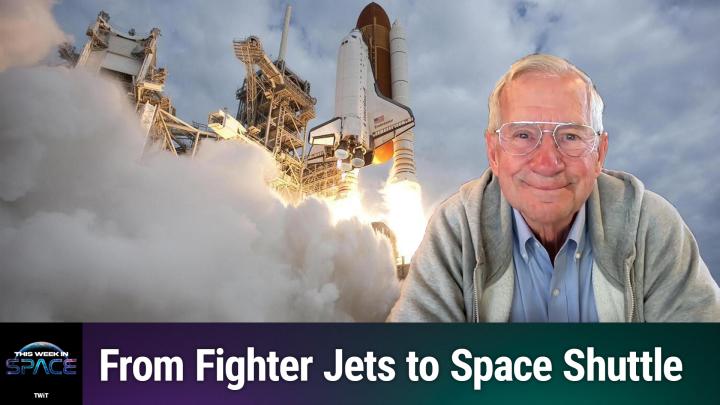
Coming up on This Week in Space. Jared Isaacman was out as NASA chief, but maybe he's back in. Lockheed Martin is thinking about plans to launch Orion on different rockets. So, so long sls. And we're going to talk to astronaut Terry Hart, who flew on STS 41C, a mission that pioneered long duration experiments in space and in flight servicing. Check it out.
Rod Pyle [00:00:24]:
This is This Week in Space, episode number 182, recorded on October 17th, 2025. The dream is alive. Hello and welcome to another episode of This Week in Space, the the Dream is Alive edition. I'm Rod Pyle, editor chief, Badass magazine. And as always, I'm with my preferred pal, Tariq Malik, editor-in-chief at space.com.
Tariq Malik [00:00:57]:
Hello, Rod. Are we gonna get sued for that title from IMAX? Is that what's going to come after us?
Rod Pyle [00:01:03]:
No, because I was personal friends with Graham Ferguson for maybe an hour in my life, started the company which means absolutely nothing. But what does mean something is that this week we're going to be joined by former astronaut and current college professor and program runner, Professor Terry Hart, who.
Tariq Malik [00:01:24]:
Flew on was STS 41C in 1984.
Rod Pyle [00:01:28]:
Yeah. So shuttle astronaut and a pioneer of IMAX shoots on space shuttles, which in itself is an interesting story. But before we get to that story, please don't forget, do us a solid. Make sure to like, subscribe and the other things you can do for podcasts to show the world that you love us. Because we're lonely, insecure people and we thrive on that kind of thing. And now a space joke from Biron. Amen.
Tariq Malik [00:01:53]:
Beer in? Yes.
Rod Pyle [00:01:55]:
Hey, Tariq.
Tariq Malik [00:01:56]:
Hey, Rod.
Rod Pyle [00:01:58]:
Why don't Astro. Why don't scientists trust atoms in space?
Tariq Malik [00:02:02]:
I don't know. Why not?
Rod Pyle [00:02:03]:
Because they make up everything in the universe. And I've heard that some people want to scatter our electrons with us joke time in this show. But you can help by sending us your best, worst or most indifferent space joke at twis@twit.tv. That's twis@twit.tv and we'll appreciate it to the very end of time. And now onward to. Are you ready, Tariq?
Tariq Malik [00:02:31]:
Okay, hold on. Okay, I'm going to try something, everybody. It may not work.
Rod Pyle [00:02:34]:
Okay, onward to headline news.
Tariq Malik [00:02:40]:
Headline news. Did I get it?
Rod Pyle [00:02:46]:
I don't know. We'll see when we get the hate. Finally, Groupies for you at last.
Terry Hart [00:02:53]:
You've been waiting for years.
Rod Pyle [00:02:56]:
Cut.
Tariq Malik [00:02:56]:
Okay, we're gonna see. We're gonna see if I got I'm trying to, trying to nail it because my sister finally explained the lag problem to me and so now I understand it. So I had, I'm sorry, I'm on my end. It was on point.
Rod Pyle [00:03:13]:
Yeah. But for whatever reason when people are listening to it later, they say there is an appreciable lag.
Tariq Malik [00:03:18]:
Well, because I say it in those, those ones when I hear it and like by the time my part gets to John, I guess. Yeah. So yeah, because it's just like if you were talking to Mars.
Rod Pyle [00:03:29]:
All right, and this is so important. So let's, let's get onto our headlines.
Tariq Malik [00:03:33]:
See what I'm talking about.
Rod Pyle [00:03:34]:
Hey, Jared may be back in the game. This is a shocker. Jared Isaacman, who at one point was Trump's nominee for NASA administrator and then rather famously was had that yanked from him. And Jared on his part fell with great grace and was very. What's the word I'm looking for? Graceful in his departure from that potential slot is apparently now back on the list. Yeah, how does that work? This has never happened before that.
Tariq Malik [00:04:06]:
I saw the first report of this, I think it was from Bloomberg on like Friday night. So like after we recorded our last episode, I was like a dinner was like, you know, in the can there's a little blurb from Bloomberg knows it says Jared Isaacman meeting with Trump, meeting with Sean Duffy in talks for a NASA administrator. And it was just like what? You know, so it is a bit of a, of a, of a head turner because as you say, Jared Isaacman, say what you will, you know, very, very level headed person, very accomplished entrepreneur. Every time I go to the diner and I buy my food with a Shift 4 payments device, I'm kind of contributing to I guess his billionaire, billionaire lifestyle. But that's where he made his billions and he has flown in space twice on two week long missions with SpaceX that he has financed himself in a very classy way as fundraisers for cancer, pediatric cancer research. And I think that this is probably a very, I mean I was surprised by the news, but it's like a welcome turn that they're actively looking for someone that has like a vision of what like NASA could be. Not just someone that would be maybe more of a rubber stamp for the administration, you know, overall.
Rod Pyle [00:05:28]:
Oh, like who for instance?
Tariq Malik [00:05:29]:
Well, never mind, never mind, let's not go there. So, so, so it was very interesting to see and what, what I had seen is I'd seen follow up reports with Space Policy Online. Marsha Smith there, very, very talented reporter who did get confirmation from NASA that, that he, that Isaacman had actually been speaking with Sean Duffy, the current, what are they called, Interim. Acting, acting NASA administrator, and then apparently with the Trump administration as well to come back. And what it tells you is two things. Number one, you know, they kind of, it was a bit of a knee jerk to cast him aside after going through all of the process for being confirmed because he had met with the Senate and all of that. And then also it just shows that they're finally trying to find some direction because right now things feel like they're on fire at NASA, at least from the outside, from the layoffs that we're going to get to the stuff that's going on at a lot of the agencies right now and the cancellations that are, you know, proposed by the budget, the, the, the, the 2026 fiscal budget request, but really seem like they're being put in action now. You know, who knows what's going on with the Juno mission, by the way, because that mission was supposed to end last week and we haven't heard anything about it anyway.
Tariq Malik [00:06:49]:
But this is, this is encouraging news that they're actually trying to find a leader before the turn of the year.
Rod Pyle [00:06:55]:
You know, I guess the only potential downside I, I see and I note potential because there's no indication of this at all. But you know, would Jared be more partial to continuing to push for starship as a human landing system for the moon, which isn't turning out like anybody had hoped? It may not have been that great an idea in the first place, as opposed to really putting, putting the gas on at say, Blue Origin together.
Tariq Malik [00:07:22]:
Oh, I, I don't think, I do not think that Jared, if selected and confirmed as NASA administrator, would say, you know What, I love SpaceX and SpaceX is the best, so we're only going to do SpaceX. I think he would take a look, from what he had said in his Senate hearing about taking that, I don't want to say agnostic, but taking that level headed look at where are we at right now, where do we need to be right? And then how do we get there? I think that he would be able to figure that out just as he's been mildly successful in both his business life, his, his professional flying life that he does because he, he has like the largest private air force on the planet or something like that. You know, I mean, everything strikes me as someone that gets things done in a way that, you know, is beneficial to where it's being done at. And I think that he could probably figure all of that out. Now if, let's say he gets confirmed tomorrow, like you and I are recording this, the episode goes out and all of our listeners wake up tomorrow to find out that Jared Isaacman is now the head of NASA. You know, it's a very different NASA that he'd be getting handed than, you know, in the summer of 2025, in May, when he was first meeting with the Senate, right, where they've lost a massive amount of people like their facilities admissions that are on the cusp of being shut down. What you can do with that, I think is the question right now. And like the having someone in charge to say, no, you can't keep firing these people will at least staunch whatever hemorrhaging is going on there right now.
Tariq Malik [00:09:00]:
Because it's hard from the outside to understand what's going on.
Rod Pyle [00:09:03]:
So, yeah, it's pretty brutal. And speaking of executions of a sort TATA sls, Lockheed Martin is said to be looking at how to fly the Orion capsule, which it builds on rockets other than the SLs. And to leverage therefore, its reusability for missions other than lunar stuff and some reusability could cut costs by up to 50%.
Tariq Malik [00:09:29]:
Yeah, this is really interesting, actually. I should point out, by the way, the. While I mentioned Bloomberg News for our last story about Jared Isaacman, I think Reuters was the core source for that. So I should let people know because I know that we're still working@spare.com on our story about that, but this one comes from Arstatica and I think it was from. Was it Stephen Clark or was it Eric Berger? It was Eric Berger show. Yeah. So, yeah, this was fun because when we were at the Artemis 2 standups, which I've talked about a couple of times, they noted that some of the avionics and stuff that, you know, they're re flying from Artemis 1 on Artemis 2, and they're hoping, at least they had said during the press briefing, to gradually scale up what they're able to reuse on Orion over time just to lower the costs. Because that's been one of the big criticisms by the government and the White House and the OMB to NASA is that everything is just too expensive.
Tariq Malik [00:10:22]:
Which, by the way, spoiler alert, sls, yes, it's like a bajillion dollar rocket right now.
Rod Pyle [00:10:28]:
Although I have to say this feels a little bit like the whole conversation 15 years ago about, oh, we'll recycle our space shuttle engines and save money and it's done anything.
Tariq Malik [00:10:38]:
But, yeah, yeah, well, because you only have X amount of space shuttle engines, you know, and now they're just going to pitch them into the sea. That's a whole other thing, don't get me started on that. But, but what is interesting is that this is a change in approach from the classic aerospace companies. They build vehicles as one offs, you use them one time and then that's the end of it. They have seen the success that SpaceX has been having with their Dragons. I think that their Dragons have flown, including the cargo missions, on numbers on par with the space shuttle problem. They're getting close. They're getting close.
Tariq Malik [00:11:19]:
I'd have to go back and double check how many they've flown in terms of like the pace per year. And so, so they've seen that, they see what the need is going to be and I think honestly like Lockheed is looking beyond just the Artemis program with Orion. You know, they may not have anything fixed yet, but if SLS is only going to fly how many times? Once a year, every year when it's operational, you know, if that. And there might be other folks that need a different way to get to space or another destination. Talked about in the past we've had, you know, vast and other companies on the show talking about commercial destinations. They might need to go somewhere and not have that rocket. So preparing their vehicle to be booster agnostic at least so that it has a different option to get on to get to orbit is very prudent. Plus they're building a new space or new rocket anyway along with Boeing with their Vulcan rocket, you know, and having a crew rated vehicle for that could open some avenues of business, you know, in addition to giving, making it more affordable for NASA to use that, that maybe they weren't initially thinking about because we've seen like we just want.
Tariq Malik [00:12:30]:
Jared Isaacman, the man has bought two flights with I think at least two more from SpaceX private flights. And SpaceX has flown a few other private ones as well by this point. They could, they could look for that business eventually, you know, and, and try to find that too if they can get this to work and have some more options so that they're not locked to sls. So that will be very interesting. And it also brings to mind a pivotal speech that we got from Mike Pence about like if one company can't do it, they'll find a way by any means necessary to get to the moon back in. What was that? 2011, something like that. 20 2011, 2028, 19 or something.
Rod Pyle [00:13:12]:
So still a whole different NASA then.
Terry Hart [00:13:15]:
Yeah, yeah.
Tariq Malik [00:13:16]:
And so, so it's, it just, it does show a bit more flexible thinking about what their spacecraft could do, what other types of use cases could you find for it over time and how can you make it more affordable over and over again instead of just taking the deal and saying this is what it costs. And I think that that'll be very interesting to see because it'll be a service now and not a product and that comes with a lot of other obligations, but also maybe other opportunities for your vehicle.
Rod Pyle [00:13:44]:
You know, there's a joke in here somewhere about competing with Starliner and I have quotes around the word competing, but I won't go there. Looks like SpaceX has flown VAR iterations of the Dragon about 60 times. Just, just so you know. Yeah.
Tariq Malik [00:13:58]:
So almost half the 130.
Rod Pyle [00:14:00]:
Yeah.
Tariq Malik [00:14:00]:
In, in, in, what is it, in four years? Is it in five years? In five years. Well, no, they have flown.
Rod Pyle [00:14:09]:
That's how long they've been flying crews. But if you include the cargo runs, it was prior to that.
Tariq Malik [00:14:14]:
Yeah, yeah.
Rod Pyle [00:14:15]:
But still, you know, it's a lot.
Tariq Malik [00:14:17]:
It took 30, it took 30 years to fly 135 missions for NASA, for the space shuttle.
Rod Pyle [00:14:22]:
Just for the shuttle. Yeah, yeah. And. Whoa. To Jet Propulsion Laboratory. Yeah. And it's the only field center at this point that I have any direct view into. But the place is downright funeral as they watch yet another 550 people be escorted, escorted out the door with their file boxes by JPL security.
Rod Pyle [00:14:44]:
Because that's how they do it. So that's another 11% of the remaining workforce, which puts us down by somewhere between 22 and 28% total.
Tariq Malik [00:14:53]:
Yeah, very close to 30%.
Rod Pyle [00:14:56]:
And according to some folks there, they feel that they'll basically be able to fly out the missions they already have in space, maybe complete a few more like Dragonfly. And that's kind of the end of the pipeline at this current level of funding and reduction in force. Now that said, they've had reductions in forces before and then bulk back up as missions allowed, but this is the largest one that I can remember since I've been tracking them, which is a long time.
Tariq Malik [00:15:24]:
Yeah.
Rod Pyle [00:15:24]:
And the most judgment call here, the most ham handed and kind of random because, you know, as, as Alan Stern said when he was on here for flight, for missions that are out there doing their thing, they're paid for. These are tax dollars spent. They're out there running a mission is a lot cheaper than building or launching a mission. And it's just a total Head scratcher. Now admittedly, JPL stuff tends to outlive its warranty and it can get long and expensive. Look at Voyager. It's not very expensive anymore, but it's been going for 45 years.
Leo Laporte [00:16:00]:
Ish.
Rod Pyle [00:16:02]:
So, you know, there may be a point at which you do start turning off some things, but when they're, you know, let's, let's look at for instance the Mars rovers. I haven't heard anything about them being directly threatened, but it can't be far away if we continue on the trajectory we are and they're still doing good work.
Tariq Malik [00:16:18]:
Yeah.
Rod Pyle [00:16:18]:
And if you shut those down, we got nothing going on. When the Chinese make their next landing and go over and grab our, we at least want to have the cameras on so we can see their drone come and pick up the samples that.
Tariq Malik [00:16:30]:
Perseverance drilled and take Perseverance pocket. Is that what you're saying?
Rod Pyle [00:16:35]:
Yeah, kind of sort of.
Tariq Malik [00:16:38]:
This is, it is really sad and say I think this happened on Monday if memory serves, as we're recording this on a Friday. Tuesday. Yeah. So. And this, this was one that, that Space.com did did. We've got a lot of, a lot of history covering jpl just as I think Rod used to work there like as well. So you've got a lot of friends there too. A lot of friends of the show are at JPL and our hearts are, are with those folks for sure.
Tariq Malik [00:17:05]:
But 550 people, that's 11% right? Is what you said there, roughly. And so the big question in our minds is.
Rod Pyle [00:17:14]:
Oh, excuse me, that does not include the contractors that were like myself, who were allowed to just have their contracts run out and not be renewed, which is another way of firing people. It's just not one you could point a finger at.
Tariq Malik [00:17:28]:
Yeah, yeah. And the, the, the question in my mind, and I think you alluded to this is, you know, the whole tagline, the whole legacy of, of the Jet Propulsion Laboratory in Pasadena is that they dare mighty things. Right. I think we've had friend folks from JPL talking about that on, on the show here with us about how they're able to, to kind of do all of that, how they can land a car, not one, but two cars, nuclear powered cars on Mars, you know, doing all of these crazy things for years upon years at a time. And if they can still do that with these cuts that they're doing because it, from the outside it feels like it must be impossible to try to get anything working and together because you don't know what's going to happen in the near future. And that just sounds like nerve wracking to be able to get through to say the least. So, you know, hopefully we get some clarity. But this is all going on in the middle of a government shutdown.
Tariq Malik [00:18:24]:
We're in week three right now as we're recording this. And so it's really hard to understand like where the end games are for all of that. But it does seem like this was separate. And I have one question for you, Rod, and maybe, you know, you might have some insight. But you know, when Laurie Leshin, the former director at JPL left, you know, I'm wondering, is it because she was told to make these cuts then and said no, do you think that that could be a case, you know, for that? Or is this just another example of, you know, they're just trying to make NASA, I guess feel it to try to cut, cut, cut people where they can cut people.
Rod Pyle [00:19:03]:
There is some scuttlebutt about that. But I had also heard that she perhaps a slight variation of I'm not going to do it, just didn't want to oversee that and said, okay, it's time to go. So I don't know. And the gentleman that took her place had the unenviable job of coming in, having to execute or orchestrate and execute such cuts. Yeah, but you know, somebody has to do it if the labs to survive. And then of course there's, you know, the Caltech role is playing the intermediary. But yeah, it's just bad, bad mojo all around. And you know, it's worth reminding folks when you work at jpl, you're not being paid the highest retail rate for anything.
Rod Pyle [00:19:47]:
I wasn't. And the other people there I know aren't. Some people make pretty good living, but it's nothing compared to what you'd get. You know, like people have left JPL and gone to Apple and Amazon and other places where you get shares and you get bonuses and you get all this stuff and you go from making, you know, 150 to $250,000 a year with no bonus structure or anything into like the millions. So they're not there for the money. They're there because they love it and they're the best at what they do. And these losses are permanent. These folks can't come back.
Tariq Malik [00:20:18]:
Yeah.
Rod Pyle [00:20:19]:
All right.
Tariq Malik [00:20:20]:
Don't expect, don't expect the, the famed JPL Halloween pumpkin contest this year. You know, we're not going to see that. So.
Rod Pyle [00:20:29]:
All right, but let's pivot to A more positive note, we will be back here with TJ Hart, Terry Hart, former astronaut, current university professor and all around great guy. So hang in there, we'll be right back.
Leo Laporte [00:20:42]:
Hey everybody, Leo Laporte here and I'm going to bug you one more time to join Club Twit if you're not already a member. I want to encourage you to support what we do here at Twitter. You know, 25% of our operating costs comes from membership in the club. That's a huge portion and it's growing all the time. That means we can do more, we can have more fun. You get a lot of benefits ad free versions of all the shows. You get access to the Club Twit discord and special programming like the keynotes from Apple and Google and Microsoft and others that we don't stream otherwise in public. Please join the club.
Leo Laporte [00:21:22]:
If you haven't done it yet, we'd love to have you find out more at TWIT TV Club Twit. And thank you so much.
Rod Pyle [00:21:30]:
And we are back with Terry Hart, as promised. Terry, thank you for joining us today. Really appreciate it.
Terry Hart [00:21:36]:
Great to be with you, Rod. Thanks.
Rod Pyle [00:21:38]:
And although I go into this more detail later, I feel like I first met you in 1982 when the dream is Alive came out, which was a long standing favorite, but unfortunately that was a brief one way relationship there. But you've had a multifaceted career. So I thought rather than me rattling off the usual resume, maybe you could kind of tell us your trajectory from the point that you graduated high school forward because you've done an awful lot of really fascinating things.
Terry Hart [00:22:07]:
Yeah, I really have been in the right place at the right time and very fortunate. Yeah, so I was, I'm a Pittsburgher. I grew up in the South Hills, went to school of Mount Lebanon, off to Lehigh. You know, graduated from Lehigh in the same department I'm teaching in right now, Mechanical engineering. You know, way back in 68 and then hired on with Bell Laboratories in New Jersey. We were working on the anti ballistic missile system at a time safeguard and they sent me up to MIT for a master's. Then I finished that in nine months, enlisted in the Air Force, flew fighters for four years on active duty, another 17 years on the National Guard back to Bell Labs, worked in power and cellular and eventually was hired here by NASA. I was still flying with the National Guard on the weekends.
Terry Hart [00:22:54]:
So I was in that first group, the 35 new guys, 1978 that they brought in and then six years in NASA back to Bell Labs as The head of engineering for the satellite division. The telstar Skynet satellites AT&T spun that off. 96, 97. I became the president in the Laurel Skynet. I worked for Bernard Schwartz, a wonderful man who headed Laurel back then. And then retired from that in 2004. Yeah, 2006. And then I started teaching at Lehigh.
Terry Hart [00:23:26]:
So I'm coming up on 20 years of teaching and I love it.
Tariq Malik [00:23:30]:
I think, I think that Terry just said that for all those Terminator fans out there that we have him to thank for Skynet and our AI driven future. Is that what that is?
Terry Hart [00:23:41]:
Yeah, yeah, yeah. People often come up to me about. I guess there was a kind of niche movie about title Skynet or something for the bad guy. Yeah, we thought of ourselves as a good guy.
Tariq Malik [00:23:51]:
So Skynet, you know, I have a question that I ask all of our guests, Terry. And it's just kind of what the path to space looks like. Because it's interesting that it's been different for everyone that we have on Some folks, you know, it's been a lifelong interest or a draw or a passion where they were just trying to find a way in the door whatever way they could. Other folks found out about it, like even after graduate school, you know, once they're in the workforce and they're like, oh, there's stuff up in space, that's great. I'm gonna go there, you know. What was your path like to space? Was it something that was always there, that interest? Or did you find it through the work and your experience with the National Guard?
Terry Hart [00:24:37]:
Yeah, well, Tariq, it was totally unplanned. When I was a young lad, the word astronaut didn't exist yet. And I remember I was 11 years old when Sputnik launched. And growing up in Pittsburgh, as I said earlier, and it was in the newspaper that it was going to be visible a week or two after launch. I think it was right after sunset. So all the neighbors and I were on the street of our home, home there. And sure enough, it came tumbling. It was blinking like it was tumbling.
Terry Hart [00:25:08]:
And everyone was kind of aghast at the time. The Russians had taken control of outer space and we were going to become their minions or whatever. But that, you know, I fell in love with the whole idea of, you know, exploring and all. And I kind of wanted to fly, but never really planned on being an astronaut. I was just in the right place at the right time with my Bell Labs engineering experience, experience in my. In flying fighters with the New Jersey Guard, you know, on the weekends. I was Kind of in a nice, nice position there in 1978 when. When NASA hired that first class.
Tariq Malik [00:25:37]:
Oh, wow, that's good timing. Good timing.
Rod Pyle [00:25:39]:
That's pretty cool. What, what kind of. What was your plane?
Terry Hart [00:25:43]:
The airplanes I flew.
Rod Pyle [00:25:44]:
Yeah, yeah.
Terry Hart [00:25:45]:
Well, I started off with the F106. We were the first lieutenants in the Air Force to fly that Delta wing fighter. And it was a wonderful airplane. And I had a deployment up in Maine, so I was escorting Russian bombers down to Cuba. That was our mission, the TU95s going back and forth. And then, then I got off active duty at the end of 72, I guess it was, and joined the National Guard where I flew both with the New Jersey Guard F106s. Then when I was with NASA, I actually flew with a Texas Guard and they're out of Houston, the ones and F4s, you know. So I had quite a nice Air Force career as well as my time at NASA.
Tariq Malik [00:26:23]:
Of course, I feel obligated as a fellow. What do we call ourselves? New Jerseyans? Is that what we are? To ask if there's something in the water? Because there are so many astronauts like yourself from New Jersey. I mean, just where I am. We've got the Kelly brothers from West Orange. We've got Buzz from. Yeah. And then like, it's like you throw a rock, you find a house where Washington slept and the hometown of an astronaut. I'm just curious if.
Tariq Malik [00:26:59]:
If there's like a New Jersey club that was coming up while you were in, while you were at NASA there.
Terry Hart [00:27:04]:
Yeah, I guess I would never made a connection. I've met some of those people, but they're all in different generations. I guess our we New Jerseyans are kind of spread, you know, across national groups. But, but you know, Buzz, I last saw was back in 2017. I guess there's a collection of MIT graduate astronauts. I think it's up around 20 or something now. It's quite, quite large.
Rod Pyle [00:27:23]:
Wow.
Terry Hart [00:27:23]:
Last time I was at that group, Buzz was there back in 2017 and. But yeah, the collection of astronauts now, I'm not sure how the association of Space Explorers has gotten pretty big now. That's all the astronauts and cosmonauts and other people must be up around 500 members now or so.
Tariq Malik [00:27:40]:
Well, I. If it's not in the water, I think my hopes are getting dim. So often look elsewhere.
Terry Hart [00:27:48]:
You could run with me the lottery and buy a ticket on SpaceX there.
Tariq Malik [00:27:53]:
Oh, he's getting ahead. I have a question for you on that. But that's for Later.
Rod Pyle [00:27:55]:
So Tariq and I often lament our inability to master higher mathematics. That kept us from being the engineering geniuses we know we should have been. So, of course, what we're most interested in is. Is your spaceflight career. And could you tell us a little bit about how you sort of ramped up to that? I know you were in. In the guard and so forth, but that doesn't automatically equate to becoming an astronaut. That was something you did on your own.
Terry Hart [00:28:25]:
Yeah, yeah. When I applied, I actually saw the advertisement NASA put out. Must have been early in 1977. They were saying, we're getting ready to hire a new group of astronauts. They hadn't hired anybody since Apollo. And. And I looked at that and said, geez, you know, I got a background, I fly and I'm an engineer, and I'll put an application. And I kind of thought I'd make the first cut.
Terry Hart [00:28:48]:
There were over 8,000 applicants. I thought I'd make the first cut, and I did. That was 200 and some that they tested down in Houston for an entire week. Like 21 weeks. I'm sorry. Yeah. 10 weeks over the summer of 77. And when I met the people that.
Terry Hart [00:29:07]:
Well, Sally Ride was one of the 20 in my particular week there, you know, and I meet all these people, test pilots with PhDs, and Sally. And it was really quite a group. And I said, no way they're going to pick me. And then they did. And I found one of the key things that I think helped me in that selection process was coming from Bell Laboratories, because Bell Labs, a lot of people don't remember, but they were instrumental in the Apollo program. Back in the very. When President Kennedy said, let's go. One of the first things NASA did is they turned to Bell Labs and they asked them for about 200 scientists and engineers that left New Jersey and went down to Washington and formed bellcom.
Terry Hart [00:29:46]:
And the bellcom organization was actually led by the president of Lehigh when I was a student here at W. Deming Lewis. And NASA had such high regard for those people, and I didn't really appreciate it until I walked into the selection interview during my week down there in George Abbey and John Young, and all these people were asking me questions, and I think it was George. It said, you're from Bell Labs, huh? Yeah. I thought, wow. So, yeah, talk about being lucky and being in the right place at the right time.
Rod Pyle [00:30:14]:
But.
Terry Hart [00:30:15]:
So, yeah, but even at that, I still didn't think they were going to pick me up. And it was such a. When I got the call from George that morning. It was quite a, you know, quite a nice surprise to. To be in that first group of shuttle astronauts.
Tariq Malik [00:30:26]:
He said, George Abbey and John Young, you know, not, not small names at all, Rod. Right. I mean, as.
Rod Pyle [00:30:33]:
As are the level of people that are in rooms we stroll into regularly.
Terry Hart [00:30:37]:
Yeah, yeah. Just wonderful people. I mean, George and, And John, they're just great leaders and fun to be to, To. To. To work with.
Rod Pyle [00:30:46]:
Well, I'll note if you're ever writing about NASA history, when you're plowing back into things in the space age and before you see bellcom come up all the time, because they were commissioned to do one study after another after another, and these were an inexpensive. So obviously the regard for their work was very high. Speaking of high regard, we're going to go to a break with a sponsor for which we have high regard, and then we'll be right back. So don't go anywhere. Hey, Everybody, it's Leo Laporte.
Leo Laporte [00:31:12]:
You know about MacBreak Weekly, right?
Rod Pyle [00:31:13]:
You don't. Oh.
Leo Laporte [00:31:14]:
If you're a Macintosh fan or you just want to keep up what's going on with Apple, this is the show for you. Every Tuesday, Andy Inocco, Alex Lindsey, Jason Snell and I get together and talk about the week's Apple news. It's an easy subscription. Just go to your favorite podcast client and search for Mac Break Weekly or visit our website, Twitt TV mbw. You don't want to miss a week of Mac Break Weekly.
Tariq Malik [00:31:38]:
Well, Terry, you know, I think Rod let the cat out of the bag when he was talking about his first exposure, I guess, to your career through the Dream Is Alive, because that was actually one of my first. Actually, I guess it was. I found out after the fact when I. When I learned that. That you were coming on the show, that that was my first introduction to you as well, because that was a. A. I think I was 15 and I don't want to date myself at all, but I think I have. When I saw that, actually I saw that.
Tariq Malik [00:32:05]:
I saw that film at Space Camp in Huntsville, and it was like one of those, like those core moments, you know, where you realize that something that you're interested in is not just like an abstract concept, but it's. It's a whole industry and career path unto itself, which, along with many other things you mentioned, being in the right place at the right time, you know, led to. Is very similar, you know, to finding a spot@spare.com which has been great for the last quarter century. But I'm just kind of curious how, you know, how you approached becoming, you know, being an astronaut from an engineer status. You know, you apply, you get in what that process was like for you. And then what it's like when they said, hey, it's great now you're going to ride a rocket. Here's a IMAX camera you're going to.
Rod Pyle [00:32:59]:
Which, by the way, is a robot arm.
Tariq Malik [00:33:03]:
There's a. There's a photo of it. There's a photo of it. John. John. Line. Yeah, Line. What is this, 37? There it is.
Terry Hart [00:33:11]:
Wow. Yeah.
Rod Pyle [00:33:13]:
And as I recall, because the film, 70 millimeter, those things torqued up when they were. When they started, right?
Terry Hart [00:33:19]:
Yep, yep. Yeah, we were. We were the first crew to fly the IMAX camera. So we worked very closely with. Graham Ferguson was the lead developer, the head of IMAX at that time up in Toronto. So we had two reasons to go Toronto, that and the mechanical arm, the rms. But we had fun training with them. But it was very clear that they were really nervous.
Terry Hart [00:33:40]:
Not all these amateurs taking this. This film in space. You know, it turned out it was kind of hard on the ground, actually, to handle that camera because it was so big and heavy, and you had to change the film out. The film was in big canisters like this, sealed, of course, and you had to. You had to take the can, you had to go inside a black bag, you know, and that was, like, really hard to do on the ground because the camera was pretty heavy. But you had to take you blindly. And then you had to take one roll out of the can and. And put it in the camera and put the one you just shot in the can and seal it so it didn't get exposed, you know, so it was tricky.
Terry Hart [00:34:13]:
And if you mess it up, you. You'd blow the whole six minutes of film, I think was. Was on each one. So they were really nervous about it. But we trained, and that was one thing we found out that was easier to do in space. Both things are tougher. Yeah, but that one was easier because you're weightless. Of course, the back was much easier to handle.
Terry Hart [00:34:32]:
And actually, Rod is right. One thing that did kind of surprise us a little bit is that the first time I triggered the camera, you hold it and there's a pistol grip and you turn the trigger and this thing spins up, you know, So I hit the trigger and it spun this way and I spun that way. So I learned I had to get my feet stabilized somewhere before I hit the trigger on the camera. Otherwise, the first 10 seconds of the film would be blurred, you know, but we had fun. And we shot about 20 minutes, I guess, of film. And then the two missions that followed us shot likewise, about 20 minutes each. And that was enough for them to put together the feature. The dream is a lot.
Rod Pyle [00:35:12]:
Wow. So not to get too sidetracked on this because we're here to talk about you and not that film. But I think what was so transformational for a lot of us is seeing that, I mean, besides being the first large aspect ratio motion picture. I mean, you can't go to an IMAX film without having some kind of emotional involvement. But just the. It was beautifully done work you guys did was sensational. But having Walter Cronkite as a narrator, and for those of us who grew up during the space race, Walter Cronkite was the guy, right?
Terry Hart [00:35:46]:
Very special.
Rod Pyle [00:35:46]:
Yeah, he really was. And his almost loving, I mean, you could tell how, how embarrassing engaged he was with the subject matter, his almost loving handling of the, the voiceover for the film. But I think, and this is what makes it almost quaint today, it was such an optimistic look at the program. This is very early days with the shuttle. And, you know, they didn't say specifically, okay, we're going to fly once a week or anything, but he said, frequent access to space, it's reusable, we'll be able to deliver more stuff than we ever have before and all that. And the shuttle was a wonderful machine. It just didn't live up to those early predictions. But I watch that film now from time to time, and I guess it's almost a guilty pleasure because it was, it was this era of great promise that we've only now started to come back into.
Rod Pyle [00:36:39]:
Do you have any thoughts on that? Because that was really your, that was your era.
Terry Hart [00:36:43]:
Yeah, I mean, it was interesting. About maybe three weeks after we got back from our mission, the, the film, the raw film that we shot was available and we, our crew hopped in some T38s and we flew up to Fort Worth to the IMAX theater there. And they just had a special viewing for us of the film. We all sat there, we thought we were back in space again when that. It was the. There's a couple different kinds of IMAX, but this is the one that kind of wraps all the way around Omni Max. Yeah, yeah, the OmnIMAX. Yeah.
Terry Hart [00:37:12]:
And. And we sat in those chairs, leaned back, and we, you know, we felt like we were weightless again. It was really dramatic. And then, of course, like you said, that was the easy part. Putting the film, shooting the film, the people that put that feature together. And then of course, Walter Cronkite, like you mentioned, there was a point in the film where I think after I captured the Solar max or whatever Mr. Cronkite says, and TJ captured the satellite or something like that, I thought my mother was going to have a coronary because he was. Well, even for me, my generation growing up, he was, he was a real role model in journalism.
Terry Hart [00:37:54]:
And for my mother's generation in particular, it was very special. I have a little side story about Walter Cronkite, if you want to.
Tariq Malik [00:38:02]:
Oh, yes.
Terry Hart [00:38:04]:
Very shortly after I left NASA, I got a phone call and they asked me to be on a committee to select the first journalist to fly in space. And this was just at the beginning of the program where they were going to start looking at civilians going into space and all. So I met a couple times and there were editorial people, senior people in journalism, and I was the token astronaut. So NASA had asked us to pick five from the hundreds, maybe thousands, I can't remember how many, and he was among them. He was among the five. And. And unfortunately the program hall got canceled, of course, after Kristen McAuliffe was killed on the Challenger. But.
Terry Hart [00:38:46]:
But I think in all likelihood NEONASA would have picked him. He would have had a chance to.
Rod Pyle [00:38:51]:
Go, oh yeah, well, he would have. He would have just knocked it out of the park. I just wanted to add, and you already kind of alluded to this, but I. I had the pleasure of meeting Graham Ferguson once and I was already completely in awe of his work. And I was kind of stumbling over my words and kind of half asking for a job and not quite getting around to it. But he was very kind and sympathetic to my plight of being tongue tied and just a real gentleman. And I thought the work that they did, especially in that era, I mean, these were not casual undertakings. IMAX was a really expensive format to shoot in.
Rod Pyle [00:39:27]:
And even where you've seen the theaters, I'm sure where they have these platens of film, they're four feet across and then the film has to fly up 40ft into a projector and come back down. The projector's water cooled so it doesn't burn these expensive prints. I mean, it's just. It was an insane format that I'm sure nobody misses today with, with true high definition video. But it was quite a reach at the time and a real accomplishment by those guys. Okay, Tariq, I'm sorry I jumped in on you.
Tariq Malik [00:39:53]:
That's all right. Well, you know, one of the things we wanted to talk about was the, the mission, right. Terry's, Terry's flight in space in 1984. STS41 see of which the most visual part, obviously a moving experience for Rod and I was, was seeing the mission as it debuted. But in, in, in the Dream is Alive actually I have that on, on DVD and the, and the soundtrack, it's, it's amazing. So, but, but, but, you know, I think that a lot of folks, a lot of our listeners and, and a lot of young people now, you know, the engineers that would design the missions of the future, you know, may not be familiar with. I think some of the. More I want to say, like milestone moments of that mission.
Tariq Malik [00:40:46]:
So sts, just as a reminder for folks, it was a mission in 1984. It deployed the Long Duration Exposure facility and there was a repair of a satellite, the Solar Max satellite. And you were instru. And both of those things. And on film. On film. Yeah. And so, so, so I, you know, I want to ask kind of how you approach and train for that mission and where you see it as in terms of like the science that.
Tariq Malik [00:41:16]:
An operational knowledge that came out of it. But if you can kind of give our listeners a synopsis kind of of what the mission like, the primary goals were and then we can start from there to talk about it.
Rod Pyle [00:41:27]:
Yeah.
Terry Hart [00:41:27]:
At that time, this was the, we were the 11th flight of the program. So we had checked out the Manned Maneuvering Unit a couple flights before and we were ready to go. Now almost two years of training for this because it was the first rendezvous. That was one of my duties. I was a rendezvous officer for Bob Crippen, our commander, of course, and Dick Scoby, our pilot. We were doing the first rendezvous of the program. We deployed the Long Duration Exposure to Closure facility as a NASA Langley experiment. About as big as a school bus, actually.
Terry Hart [00:42:00]:
And it had 85 trays on it, 150 scientists from all around the world had contributed these experiments for micrometeorite collection and cosmic rays and all that stuff. It stayed up for six years and then Bonnie Dunbar captured it and brought it back. So that was day two. Then, then we were in the process of doing the rendezvous and we caught up the Solar Max, which had been launched in 1980 on a delta. Ironically, it was the first satellite that Goddard designed to be repaired by the shuttle. About three months after it was on orbit, it actually blew some fuses. It had a thermal hotspot in the attitude control system and the fuses derated, basically, and they lost control of it. So it was spinning slowly, but spinning sort of pointed at the sun to keep its batteries charged.
Terry Hart [00:42:47]:
But for years, it was waiting for us to get there in 1984, then. So the stage was set to do all that, and we had decided to use the maneuvering unit that George Nelson, Pinky, or Jim Van Hoft and Ochs. So Pinky and Ox were our two spacewalkers. So they were outside, ready to go. We just finished the rendezvous. I had the arm ready to go, and Pinky was going to dock to the. The solar max, stop the rotation. And then I could grapple, because the grapple fixture was right underneath one of the solar panels.
Terry Hart [00:43:22]:
So it was kind of hard to get at if it was spinning. And we're all set for that to work. And Crippen did a beautiful job of bringing the Challenger in, like, real close. And Pinky flew over and he went to dock, and he bounced right off the satellite. And. And so what was that? You know, we could figure out why the jaws didn't grab the pin on the satellite. So he did it again. I think he did it a third time.
Terry Hart [00:43:46]:
Each time he hit the satellite, he imparted energy on it. So now the satellite, instead of just spinning slowly, it's tumbling. So we were beside ourselves not knowing what happened there. So we didn't want to get dangerous. So we brought Pinky back into the payload bay. And I tried a couple times to get that fixture, but every time I was getting close, I would reach one of the limits, limits of the arm, you know. So it was a real mess, and Mission Control didn't have any ideas. So we backed away several miles behind the satellite then, and parked in the same orbit for a day.
Terry Hart [00:44:23]:
And then, fortunately, the Goddard people had some control. They had a program called B dot, which reacts the torquers against the Earth's magnetic field. And they managed to get the energy out of the spinning satellite, the tumbling satellite. And they were fortunate because the batteries were almost dead on it. And it stopped finally, and it was pointed roughly at the sun when it stopped. So the batteries recharged. And then we thought about what we had to do. We were really kind of low on fuel at that point, and Mission Control said, we'll take another shot at it, but you can't spend much fuel on this rendezvous because we got to save something to get home.
Terry Hart [00:45:00]:
So again, cripping and scratching, Scobie did such a great job, they brought it back in again, and now it's spinning Slow enough that I could capture it with a mechanical arm. So when I had it on board, then Pinky and Ox went back out again the next day and did the repair work. So it was quite a good demonstration of how our training pays off so much between the crews and the mission control engineers and Goddard too. Everyone was involved, hundreds of people trying to, to make this work, you know, and we pulled it off, you know, so it was quite a nice accomplishment.
Rod Pyle [00:45:33]:
Wow, that really is an amazing achievement. We'll be right back after the short break, so go nowhere.
Tariq Malik [00:45:39]:
Well, that, I mean that, that is amazing, Terry. Should we be calling you T.J. by the way? We forgot to even ask at the start of this.
Terry Hart [00:45:47]:
Oh, no, that's okay. I answered. Terry, TJ, Professor Hart, Dr. Hart. Winner. But yeah, I picked up that handle. As they say it in the Air Force. You know, everyone has a nickname or whatever in the air call sign in the Air Force.
Terry Hart [00:46:00]:
I picked up TJ and it's stuck.
Rod Pyle [00:46:01]:
At NASA, I think Tariq, since we're not astronauts, we don't have the right.
Tariq Malik [00:46:06]:
Yeah, well, you know that my initials are also T.J. that's right. People would get confused. Right. That was better than Pinky, I suppose.
Rod Pyle [00:46:14]:
Move along, move along.
Tariq Malik [00:46:17]:
No, you know, that whole scenario that you described not only sounds like, like nail biting overall about what to do with this satellite nearby, but it seems that when combined with the deployment of the long duration exposure facility, which really had all of the experiments like you mentioned, about different materials and how they react to space, that really set up like the long duration, like living in space. What we've seen 25 years now with the International Space Station, but, but the solar Max part of it also adds that servicing requirement. One of the hallmarks, the selling points that Rod mentioned of the shuttle. And I'm just very curious how you see those moments, I mean, looking back now as really demonstrating that use case for having not just robots in space that are able to do things, but having people up there to, to conduct the science, to be able to troubleshoot issues and, and then ultimately, because this, this repair was successful, you know, show what life and living and maintenance in space would look like.
Terry Hart [00:47:30]:
Yeah, yeah. I think it's a whole new industry for the future. These satellites are so expensive. Like take our geostationary satellites like our Telstars and all. They typically regene the life, you know, 12, 15 years. They don't have enough fuel left to, to maintain their orbital positions anymore. And yet usually 3/4 or maybe more of the transponders are still Working. So if you can find an economic way to refuel those very expensive satellites and keep them going, that's a whole industry in itself.
Terry Hart [00:48:04]:
And Goddard does a lot of that. Frank Cepellini was the father of our Goddard. He was the father of our mission in the sense that he, he proposed the Solar Max rescue to Congress way back when. And even a few years ago, I think he still hadn't retired. Maybe he's not retired now, but he's still working. Satellite servicing. So we used to call it satellite repair. We don't want to do that because it's broader to think of it as a servicing.
Terry Hart [00:48:33]:
You know, Hubble, for example, I think we. If I'm not mistaken, there were four servicing visits after we deployed one to fix it. Of course, the major flaw in the mirror they fixed, but they can. Went back a couple more times and it wasn't repairing things. It was taking up new technology, new gyros and new instruments and putting them on the spacecraft. So once you have the main bus up there and it's working, if you can find economic ways to service them, that's well worth doing.
Rod Pyle [00:49:06]:
That's. It's an amazing story. Now, of course, we can't really avoid talking about it, but, you know, a certain generation or generations, a couple of generations, when you hear the name Challenger, of course, you get a little hitch in your throat because of that terrible accident. And I imagine, I mean, it's bad enough for, you know, those of us that were just watching the program from afar, but having been a part of the program, being a fellow astronaut's got to be tougher. And having flown on that spacecraft, I. I can't imagine how that must have struck when that happened to you. And of course, those people were your friends and your associates, you know, five.
Terry Hart [00:49:42]:
Five good friends lost that day. And Dick Scoby, of course, was our pilot on our mission. That was his first mission as a. As a commander. Yeah, you know, obviously a national tragedy. And, yeah, I think those of us that were close to the program, I think most of us felt, you know, we're going to lose one someday. You know, we're not going to fly. The original shuttle manifest was supposed to be 500 missions.
Terry Hart [00:50:03]:
You know, the thought of having that kind of reliability and something that moves that fast with all that energy is a stretch, you know, so we figure. But we always kind of thought it would be some bolt out of the blue. You know, you'd have a turbine blade come off and there was no way to predict it or whatever, that what did happen, though, you know, sadly, should have been avoided. And the same for Columbia. We should not have had any failures in the 138 missions or whatever it was that we flew the shuttle. And yeah, it's a tough situation. You need two things to make a human space program as safe as you can make it. You need leadership at the top that constantly reinforces the quality and safety.
Terry Hart [00:50:54]:
And people like Chris Kraft and Gene Krantz and the legendary people at NASA, they did that. And it's not easy to do over a long period of time because there's a tendency, not so much during Apollo because there are so few missions, but during shuttle, when you start to get rolling, you think, well, this is an airline.
Rod Pyle [00:51:10]:
Right? Right.
Terry Hart [00:51:11]:
It's not an airline. You know, it's much more. It's much more dangerous than. And they understood that. And they keep their foot on the pedal in that way. And then you need the team, the teamwork, mission control, but much bigger than that, the whole assembly of contractors and NASA oversight that have to work together as a team. And by team, I mean attention to detail, communication. You don't hide problems.
Terry Hart [00:51:40]:
If you make a mistake, you. You surface that so everyone can learn from it. That's the aviation culture in our country. You know, when, when a pilot makes a mistake, you tend to want to share that with your fellow pilots so they don't make that mistake, you know, and that kind of culture is not easy to produce, you know, in an organization. But those two things, the leadership and the people that know how to listen to that and do the right thing, you can run. It's not going to be entirely safe, you know, because we're talking about, I mean, a spacecraft's 100 times faster than a typical airplane, right? And the energy goes up with a square, you know, so there's 10,000 times more energy to get in space than there is to get airborne on an airplane. So just the physics of it's always going to have some level of danger. But I think the right management, team leadership and the right teamwork, you know, you can manage it safely.
Rod Pyle [00:52:32]:
Well, and I think just as a follow up to what you were saying, I mean, this was a big, complicated machine. This is not a single purpose, single use machine like the Apollo system. And NASA was proceeding on a grossly reduced budget at that point. Way less it was getting during the height of the Apollo mission. So on the one hand, you're trying to do something big and complex, and on the other hand, you're doing it on just a tiny percentage of what you had flowing in the mid-60s. And at the same time, I think the shock for a lot of people was, if you look back, the Apollo program, there weren't a lot of people around standing around saying, oh, it's really safe, no problem, you know, because it was risky. Every mission was incredibly risky. And they're very fortunate and of course, by design that they didn't have any losses other than the Apollo 1 fire.
Rod Pyle [00:53:23]:
But here came the shuttle. And I think there was a public perception, somewhat derived from the NASA outreach efforts, that this was routine, it was reliable, it was pretty safe. And I remember when I was going to ucla, I audited a couple of engineering classes, and one of them, at least one of the blocks, they were studying the turbines you mentioned on the shuttle, main engines. And the professor was saying, you know, these things spin up from zero to whatever it was, 70,000 RPMs like that. That's slinging a lot of metal around really fast. And you just got to realize that that blade isn't perfect. That's all it takes. And I thought, how can this ever work? So when you look at it in toto, I guess it's not surprising that we lost a couple.
Rod Pyle [00:54:08]:
But again, as you said, probably shouldn't have happened. And it was as much an institutional involvement as it was a technological one, I guess, when you look at the whole picture. But I just want to get your take on that, because it was such a seminal moment for so many of us. Tariq, over to you.
Tariq Malik [00:54:26]:
Yeah, you know. Yeah, I'm very. It's a real heavy subject to follow up on. Rod, sorry.
Rod Pyle [00:54:35]:
Why do you think I handed it off?
Tariq Malik [00:54:36]:
Well, you know, I'm very. One of the thoughts that comes to mind, though, like, I've been thinking about this a lot when I learned that you were interested in joining us, is to kind of see what you like, what your take is on kind of the current state of that risk assessment. Because we are now, I mean, very. You know, when you joined NASA as an astronaut, you know, the shuttle hadn't flown yet, but you knew there was a new vehicle coming, a new mission coming, if you will. Right. With a type of vehicle. And we're at a point now where there's. We just got this brand new astronaut class just last month, and they are coming in where NASA has a new vehicle flying and it's got a new mission going to the moon, hopefully next year.
Tariq Malik [00:55:26]:
Right. With its own set of new risks and tantalizing new rewards. And I'm curious about where you see that Commonality about what, what is important. With you mentioned leadership and like right now, NASA has an interim, you know, leader, like, not even a permanent one, as they approach this big milestone. What where, like, is. Is the tone the same or do you see it as a wholly unique one? Just because it's a different generation, it's a different, a fully different mission, we're leaving orbit to go to the moon? Or are the root, is the root risk the same for the astronauts involved?
Terry Hart [00:56:05]:
I think the root risk is the same just because of the physics of it all. What the culture is inside of NASA right now, I don't know. I mean, I don't work there, but I think the people on the ground there are very focused on what they're trying to do. And we're in the middle of this evolution that you two understand better than I do. I think we're moving from the big NASA programs where they build the rockets to SpaceX and Blue Origin. We're transitioning those kinds of programs to be more and more run by companies because they now have a revenue model, they have a, they have a business model that works. And that transition's gone pretty well. And I think with that, if we can carry that safety culture along, there's no reason that the private corporations can't have the same because they also have a profit motive.
Terry Hart [00:56:54]:
They don't want to have any. Like the airlines, you don't want to have an accident because of the same thing in space here. So I think hopefully those cultures will come along through this transition more to private world. And NASA needs to continue its focus because it always has to do the things that are hard, the things that there's no business model for yet. You know, you're developing new kinds of propulsion systems, nuclear power in space, helium 3 on the moon or whatever future technologies that we're trying to develop. You know, there's no business model for those now. So that's what NASA needs to do those things and then hand them over as soon as there's a chance that someone can perfect the business model and continue the process to companies like SpaceX and Blue Origin.
Rod Pyle [00:57:43]:
Well, speaking of handing over, we're going to hand over to our very last break, so stay with us. We'll be right back.
Tariq Malik [00:57:51]:
Terry, I just thought of a really silly question. I apologize if it's going to seem rudimentary, but we mentioned your mission as you know, STS41C and for our Eagle eared listeners, they'll know that STS is space transportation system and they know that missions have Numbers, and that's great, but there was a time during your flying period at NASA where NASA put like letters at the end. And I'm just curious what the C stands for. If you could let our readers know. Or was it just a weird nomenclature thing that NASA did? Because they sure don't do it anymore.
Terry Hart [00:58:31]:
This is an interesting story. Okay, so we started off with STS 1, 2, 3, 4, 5. We were numbering the missions and then my mission was assigned, Bob Crippen, our commander, and the five us all put together and started training. We were STS 13. So NASA didn't like that too much. And ironically the manifest showed us, I think it was, we were launching on April 13, 1984, which happened to be a Friday.
Tariq Malik [00:59:02]:
Oh my gosh.
Terry Hart [00:59:04]:
So, so I think again there were never any discussions and meetings or anything about this, but all of a sudden the edict came down from, from headquarters that, yeah, we're going to go to this other system. And I think what was the Last number was 7899, you know, 41A. Here's the system. So four meant 1984. So the, the missions that start with a five or 1985 and so forth. And then the one meant Cape Canaveral, Kennedy Space Launch. A two would have been Vandenberg, which we never did. We were going to take military payloads or high inclination payloads, you know, out of, of Vandenberg on the shuttle, which never happened.
Terry Hart [00:59:49]:
And then the ABC was to be the progressive. So there was a 41A and a 41B and 41C. So we were 41C. But it turned out that two missions, well, one was canceled in front of us and then the other one was delayed. So we actually ended up being the 11th flight and we ended up launching on April 6th and they had it scheduled for one week. So we're going to land on April 12th, which was a Thursday. You see what's happening, right?
Rod Pyle [01:00:18]:
Carefully orchestrated.
Terry Hart [01:00:19]:
We needed one extra day because of the problem with Silver Vac. So we extended and we landed on Friday the 13th.
Tariq Malik [01:00:25]:
That's so strange.
Terry Hart [01:00:26]:
But we had, in the meantime, while all this was going on, we couldn't help ourselves. I don't have my space shuttle mission cup here, but it's a cup like this with our normal approved patch was on the front with our crew. And the one that went public, public on the back was the one that Dick Scoby made. And it was a black cat with a light bolt and a big 13 on it. The black cat. Yeah. So that one we couldn't go Public with, you know, but it was a lot of fun at that time. And then I think eventually, then they went back to the numbers again after Challenger was lost, you know, they went back to STS 25 or whatever at that point, you know.
Rod Pyle [01:01:04]:
Yeah, yeah, well, so to kind of touch back on this, not so much the topic of superstition, but of risk, I'd like to know if. If you could tell us, you know, when you look back at things like Apollo 8, right, you're going out to the moon, you got this one service propulsion system engine to get you into lunar orbit. More critically, to get you out of lunar orbit. Because at that point, your whole free return trajectory thing is out the window. So this is a big risk point. And then you had, of course, some of the more complicated landings. The Skylab repair, when you really look into it, was very risky. The things that Conrad and I think it was Kirwan were doing up there, that they didn't really tell mission control while they were doing some of it and other missions.
Rod Pyle [01:01:50]:
And then just the design of the shuttle not having a true abort capability, at least not during the ascent phase. You know, how should a modern NASA and, you know, all organizations change, all organizations evolve. They sometimes become a little more rigid than they were in the early days. And in NASA's case, at least in the estimation of some of the people I've interviewed, they feel that a lot of decision making has sort of been moving up the tree towards headquarters. So not pointing fingers, I'm just wondering how you feel about this idea of risk. You know, what's an exception, an acceptable level of risk now that we're getting ready to leave Earth orbit again? When you've got these long voyages home, is there any way to put some kind of a thought to that?
Terry Hart [01:02:38]:
I think it's difficult. I mean, it's such a hard number to get a handle on, in a sense, but clearly it needs a discussion. And as to what's acceptable levels of risk, you look at the airline business today. You know, if we have one airplane crash a year in this country, commercial, that's too many in space. Of course, again, because of the physics, we're going to accept something more than that. During the 1960s, we're willing to accept a lot more because we were in a race against the Russians to get there. So it all depends on that. But it certainly should involve thoughtful people that have these leadership qualities that I was talking about earlier.
Terry Hart [01:03:24]:
And the people that are going to do it, you need to include them. And a lot of Times the astronauts that might fly on that mission maybe aren't even hired yet. But there's the astronaut office there, of course, to represent the future missions and talk about what they think is a reasonable level. So it's a hard decision. Will go on and on. You know, as long as we're exploring, it's going to go on. And you know, once we figure out how to safely operate back and forth to the moon, it's going to be another question for Mars because it's going to be an order of magnitude more difficult again, you know.
Tariq Malik [01:03:57]:
You know, you know, I was very, you know, curious about looking ahead to the next, I guess, generation of engineers and scientists that are going to be that. And of course, like your current role at Lehigh, you're instrumental in shaping those minds and hopefully, I guess, their drives, you know, maybe there was an astronaut or seven coming out of, out of the programs that you were there. And I was hoping that you can kind of walk us through the new programs that you've stood up there. Before we started here, you were mentioning one that my daughter might be interested in that you had helped shape in the past. But I know that you've got some new stuff going on there.
Terry Hart [01:04:34]:
Yeah, there's so much happening now, mostly on the space side, but also in aviation. There's so many good things happening. The industry is bright, bright and growing and lively and there's a demand, you know, for, for engineers that have the skills to help that business move along and. Yeah, so for, so it's become strategic, you know, for Lehigh. So we started, we always had some level. I was in the same department, you know, 60 some years ago, graduating Mechanical engineering. We had aerodynamics then, that's all we had. And now we've got, in our aerospace minor, we've got all the courses, propulsion and astrodynamics and flight control and everything.
Terry Hart [01:05:11]:
All the courses you would need to enter as a bachelor's level. But we think usually students, especially if they want to do R and D in aerospace, you really need to get at least a master's to be competitive in the R and D hiring. So we just announced this past year and started this semester a full blown graduate program for master's in aerospace, which is interdisciplinary. Actually it's already mechanical Engineering department hosting it. But it's electrical engineering, industrial systems engineering, materials physics department, environmental. They're all involved in the program to help us offer a broad selection of courses. So you don't even have to be like a mechanical engineer or aerospace engineer from undergraduate to start you could be a physics major and you can come into this program and get a master's in aerospace engineering. So it's the future, I think, of education being.
Terry Hart [01:06:01]:
Being adaptable, you know, to what's going on in industry to make. Make sure the students are prepared for careers there.
Tariq Malik [01:06:08]:
I'm asking for a friend, but do you have to have. Do you have to have passed differential equations to apply for this master's program?
Terry Hart [01:06:18]:
Yes. Yes, you do.
Rod Pyle [01:06:19]:
Oh, no, I was gonna say Tariq. He's making it easier, but he's not making it easy for some kids. Sorry.
Tariq Malik [01:06:27]:
Turkish. Really, for like a hot minute, I just. I was really thinking that's something I could apply to then the way that you described it.
Rod Pyle [01:06:33]:
No, we need to go. We need to enroll in one of those, you know, soft programs like Space Policy or something, where we could just sit, there you go, have opinions instead of having to have actual correct answers. Yeah. So, Terry, you know, you've been a professor for decades. You've now set up this new program. I'm feeling this slight vacuum for a book, either a text or some kind of a life experience book that would help illustrate these concepts for your students. Anything planned?
Terry Hart [01:07:03]:
Nothing planned. I'm fully immersed with my students. My wife refers to my students as my oxygen. I dedicate everything, all my time. And every time I start a new course, I've introduced maybe five new courses the last 20 years in propulsion and astrodynamics, spacecraft design, aircraft design. I've introduced all these. And every time you start a new course, it's like writing a book. You have to go out and find a good textbook, but we have to kind of put everything together in terms of your presentations and the projects for the students.
Terry Hart [01:07:37]:
It's about as much work as writing a book. So I think I'm out of time, but thank you for asking.
Tariq Malik [01:07:44]:
Well, I would be very curious. I mean, on 41C, you had 168 hours in space. Over that. Over that week or so.
Terry Hart [01:07:53]:
Yeah, exactly.
Rod Pyle [01:07:54]:
Week.
Terry Hart [01:07:54]:
I think almost exactly a week.
Tariq Malik [01:07:56]:
And, you know, I'm curious if it left you, like, wanting more. You know, you mentioned Blue Origin and SpaceX and the like. They're offering at least Blue Origin, you know, has flown twice in the last two months. Would you want to go back? Is there something you didn't get to see from space? You know, Lehigh maybe, or. Or somewhere that you'd want to go back and take another look at?
Terry Hart [01:08:21]:
Now, when I answer the calling, I mean, maybe there's a scientific experiment in geriatrics or Something I could participate in. But I still fly, though, you know, not too much anymore, but I still fly with some partners in our twin engine Piper Navajo here in Allentown. But I think, I think space is for the younger crowd here.
Tariq Malik [01:08:41]:
Well, and I had one other kind of question just about your career overall, because you mentioned about starting at Bell Labs and like the space kind of connections that Bell had. I was, you know, I had the privilege of going down to the Holmdel site many years ago, you know, before I guess Nokia sold off a lot of the bits there. But I did see the horn that they detected, the big bang signal with the little green men, if you want.
Terry Hart [01:09:08]:
The Nobel Prize for that.
Tariq Malik [01:09:09]:
Yeah. And your work, you know, with Telstar and with Laurel, I mean, it really kind of follows the, this, do I call it the space Ification rod of like our lives, you know, where a lot of the underpinning technologies or the things that we rely on for space were pivotal parts of your career with Bell Labs and the telecommunications, we all take that for granted. Now we're talking over the systems that you help pioneer over your work. And then now in space, we're seeing a lot of the fruits of those early demonstrations and those early tests. And I'm just curious if the legacy that New Jersey has on space exploration is undersung in your, in your opinion. Because I feel it is. I think that as a state, we have had a bigger imprint on, on the industry overall. But I'm just curious your thoughts there.
Terry Hart [01:10:11]:
Yeah, a lot. I mean, you mentioned Holmdale. Crawford Hill was where the horn was there. So the early space work was done bouncing signals off a balloon. I think that was called Echo. They tried that and then they, and Hughes was instrumental too, in the syncom, the early communication satellites. But we built Telstar one at Murray Hill, New Jersey. And in fact, the one engineer was with me still.
Terry Hart [01:10:37]:
He had done the batteries and the solar panels on Telstar one. His name was Dean Maurer. He was one of our Bell Labs engineers, even on Telstar four decades later. And it was a wonderful heritage from all the engineering people, people that were in that part of New Jersey. They're both central New Jersey and northern New Jersey. That, that got us started in telecom and space.
Tariq Malik [01:10:58]:
Telstar One Everybody launched in 1962, the world's first active communication satellite. You are welcome from New Jersey there. Right. And thank you very much, Terry.
Rod Pyle [01:11:08]:
Whenever you're done, Tariq. So my last question, Terry, is I believe your flight was the one that took up the Beehive. Is that Right.
Terry Hart [01:11:15]:
Yes. We had 3,000 some honeybees on board with us.
Tariq Malik [01:11:20]:
That sounds horrifying.
Rod Pyle [01:11:22]:
I'm sure they were well encased. But was there ever any conversation about what do we do if these things get loose?
Terry Hart [01:11:27]:
Yeah, we joked about it quite a bit. In fact, Pinky and Ox were in charge of inspecting them every day and we would take them out. There's some IMAX video, I think, of them. It was interesting. They did better than the control group on the ground, which surprised us. But like.
Rod Pyle [01:11:43]:
Of building the honeycomb and so forth.
Terry Hart [01:11:45]:
Exactly. Yeah. The honeycomb people weren't sure whether the shape of the honeycomb was gonna be the same way. It was like perfect. And the. They were all like us. The first two or three days. They're like a little disorganized what this weightless thing is all about.
Terry Hart [01:11:58]:
And then they got the hang of it and they did fine. You know, just like people adjust, it is an adjustment. It takes two or three days to kind of get used to moving around when you're weightless.
Rod Pyle [01:12:07]:
That's interesting because if I recall correctly, spiderwebs did not have that kind of good fortune in zero G. Right?
Terry Hart [01:12:13]:
Yeah, I don't remember that. After our mission, they tried some other things, of course, on the space station now they do a lot. There's a lot going on there. But that was a high school student from Tennessee, as I recall, that proposed that to NASA to do the bees.
Tariq Malik [01:12:27]:
Wow. Space honey.
Rod Pyle [01:12:29]:
Sorry, that wasn't my last question. My last question is, I had a chance to board a real honest to God shuttle once briefly when it was in turnaround out in the Lancaster area.
Tariq Malik [01:12:41]:
Lucky.
Rod Pyle [01:12:42]:
Yeah, it was. And I remember going on to the mid deck and thinking, this probably seems a lot larger when you're weightless. But it wasn't as big as people thought. I mean, most that machine was payload bay and engines. And the space you guys had for a week or two up in orbit was actually pretty small.
Terry Hart [01:13:02]:
Yeah, it, it's. We do get in our way a little bit on training on the ground with five and with seven, you definitely get in your. In your way a little bit. Once you're in space of five is very comfortable. You don't bump into each other much at all because of the ability to use the full volume. But 7 does get a little crowded unless you have this when you. We used to have the space lab on board and you had more room back there for. For that many people.
Terry Hart [01:13:27]:
But yes, it's just a wonderful place to work when you're weightless. And yeah, I think a lot more people will be doing in the future. We're going to find manufacturing starting up here. I think they're starting to get hints of scientific breakthroughs on the space station where the future for manufacturing things and weightlessness is going to be significant, I think.
Rod Pyle [01:13:48]:
Well, I like your idea about geriatric research in space and you get my vote for going up. Not because you're elderly, but because you've already had a mission and you're staying incredibly engaged. And you know, for people who haven't tried it, higher education is not an easy thing. It can be very challenging. There's a lot more to deal with than just strutting around in front of the students. You have committee assignments and deans and provosts and fundraising and other social events. So it's, it's a whole world unto itself.
Terry Hart [01:14:18]:
So it's fun though. The kids, the kids are just great these days, Ron. They're really wonderful kids. We get coming to Lehigh and all, all across the country. I think we have a great generation coming.
Rod Pyle [01:14:29]:
Seitarek, he says the kids of today are great up and coming workers.
Tariq Malik [01:14:35]:
That means they have the right stuff, right? See how I added the space thing?
Rod Pyle [01:14:39]:
Wow.
Tariq Malik [01:14:39]:
There you go.
Rod Pyle [01:14:40]:
Very clever. Well, I want to thank everybody, especially you, Terry, for joining us today for episode number 182, which we're calling the Dream is Alive. Where can we learn more about your new graduate program?
Terry Hart [01:14:53]:
Well, you can go to aerospace.lehigh.com that's our front page, if I recall, right. I hope I got that right. And there's lots of good stories in there about our students. We've got all kinds of. We have a rocket club, we have a spacecraft club, we have an airplane club that all do, Roy. And these kids, they have great passion for what they do and it's fun to watch them and help them along.
Rod Pyle [01:15:15]:
Great. Do you have a personal website?
Terry Hart [01:15:18]:
Yeah, it's on Lehigh. I guess if you go to lehigh.edu and then search my name, I'll pop up there with, with the kind of work I'm doing right now, besides teaching a little bit of spacecraft trajectory optimization kind of problems, he doesn't even have his own.
Tariq Malik [01:15:32]:
He doesn't only have his own website. He's got a TikTok and Instagram all the things that I heart Aerospace. He's being modded. Terry, you're being modest, right? You can see all the awesome stuff there. So.
Rod Pyle [01:15:44]:
And speaking of awesome stuff, Tariq, how about you? Where do we find you?
Tariq Malik [01:15:47]:
Well, you can find me@space.com as always on X and everywhere else at Tariq J. Malik this weekend we don't have a lot of spacey things, so it's really nice. We've got some SpaceX stuff launches and I'll be watching those. But you can also find me on, on YouTube. YouTube @SpaceTronPlays playing video games about space.
Rod Pyle [01:16:08]:
So. And we will have a dazzling new episode of This Week in Space on your front page over the weekend. So don't undersell that.
Tariq Malik [01:16:15]:
That's right.
Rod Pyle [01:16:16]:
And of course, you could always find me at pilebooks.com or@astromagazine.com Please remember, you're free to drop us a line at twis@twit.tv. We always welcome your comments, suggestions and ideas and we answer each and every email with love and care. New episodes of this podcast publish every Friday and your favorite podcaster, so please make sure to subscribe, tell your friends and give us reviews. We'll take whatever denomination of thumbs up or stars or eyeballs or whatever it is they they give you to give us 5 of, but please give us those because we live and die by your reviews. And you can follow the Twit Tech Podcast Network at TWiT on Twitter and a Facebook @twit.tv on Instagram. Gentlemen, thank you for joining us today. It's been a real pleasure. And Terry, it's been great meeting you beyond the IMAX screen.
Rod Pyle [01:17:03]:
So appreciate you coming in today.
Terry Hart [01:17:04]:
My pleasure. Thanks.
Tariq Malik [01:17:06]:
Thank you.