This Week in Space 181 Transcript
Please be advised this transcript is AI-generated and may not be word for word. Time codes refer to the approximate times in the ad-supported version of the show.
Tariq Malik [00:00:00]:
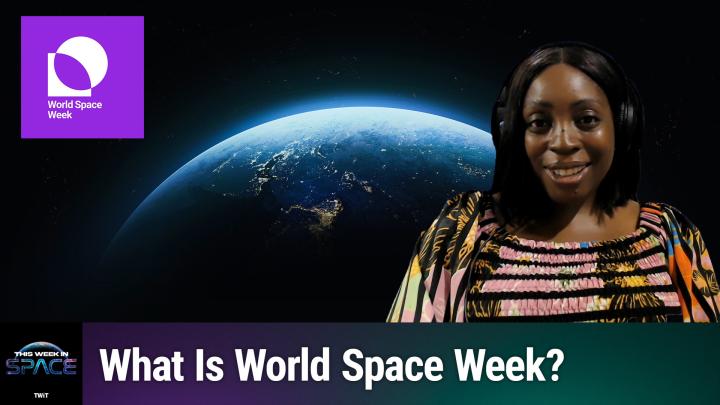
Coming up on this Week in space, we've found 6,000 alien planets. So when are we gonna find that Earth twin? SpaceX's Starship Flight 11 is ready to launch. And we just wrapped up World Space Week 2025. And with us to explain it is Alma Okpalefe, the executive director of the World Space Week Association. Tune in.
Rod Pyle [00:00:27]:
This is this Week in space, episode number 181, recorded on October 2025. World Space Week. Hello, and welcome to another episode of this week of Space the World Space Week edition. This one's a big one. I'm Rod Pilot, editor chief, Ad Astra magazine. I'm here with my preferred pal, Tariq Malik, editor-in-chief for Space.com.
Tariq Malik [00:00:51]:
That's so sweet, Rod.
Rod Pyle [00:00:52]:
My favorite. Don't call me sweet. Just call me Shirley. This week we'll be talking with the executive director of World Space Week, Alma Okpalefe. And I am pronunciation Challenge. But I think that's pretty close. Before we start, as I always say, please don't forget to do us a solid. Make sure to, like, subscribe and do all the other podcast things to let the world know that you love us, because we're counting on you.
Rod Pyle [00:01:18]:
And now a space joke from Simon Cranmer.
Tariq Malik [00:01:23]:
Simon.
Rod Pyle [00:01:24]:
Hey, Tarik.
Tariq Malik [00:01:25]:
Hey, Rod. Yes?
Rod Pyle [00:01:26]:
What did the black hole say to the galaxy?
Tariq Malik [00:01:28]:
I don't know. What did it say?
Rod Pyle [00:01:30]:
Yo, baby, I am so drawn to you.
Tariq Malik [00:01:33]:
Oh, I like it. I like it.
Rod Pyle [00:01:37]:
Okay, Simon, you got laughs instead of crickets. Congrats.
Tariq Malik [00:01:40]:
That joke did not suck because black holes don't suck. They attract, right
Tariq Malik [00:01:44]:
Get it? Get it.
Rod Pyle [00:01:47]:
Sounds like you're out there as a salesman hawking some radiation. Now, I've heard that some people want to roast us with Hawking radiation.
Tariq Malik [00:01:59]:
You got the jeers, but you can help.
Rod Pyle [00:02:01]:
I always get the jeers. You ought to see how I get treated in the household.
Tariq Malik [00:02:07]:
No respect.
Rod Pyle [00:02:07]:
Worse or mostly different space joke to us at twis@twit.tv. That's twis@twit.tv, just like he did. And we'll get you on the air with an attribution and hope that we pronounce your name right. And now it's time for headline news.
VO [00:02:29]:
Headline news.
Tariq Malik [00:02:29]:
Headline news. Somewhere out there, like, I totally like. That's not. That's disconnected and it's. I'm gonna. I'm gonna look all great. But then I want to tell you.
Rod Pyle [00:02:41]:
I was at a function that vast space the space station company hosted last week at the Pacific Air Show. They bought a floor of the Hyatt Regency. It was fantastic. It was great food. I'm not used to being invited these kind of things.
Tariq Malik [00:02:58]:
Wait, where in Huntington Beach? I used to work there. Remember where?
Rod Pyle [00:03:02]:
The Hyatt Regency, Huntington Beach. Down on the. On the shore.
Tariq Malik [00:03:07]:
Oh, right down there. Yeah. I remember when they were. I mean, they.
Rod Pyle [00:03:10]:
They took the whole patio and the convention side of the ground floor. It was. It was amazing because, you know, we. We go to NASA stuff, and it's not quite like that especially, but it was really sensational. And I met a couple of people that are fans of the show. They're very effusive. And both of them said, hey, tell Tariq he misses it every time. And I said, look, there's a delay.
Rod Pyle [00:03:34]:
It's not his fault. And they said, yeah, but he misses it every time, so.
Tariq Malik [00:03:37]:
Well, when is the delay? Is the delay before or after? Like, should I wait?
Rod Pyle [00:03:40]:
No. All right, hold on.
Tariq Malik [00:03:42]:
Solve this.
John Ashley [00:03:43]:
Ready?
Rod Pyle [00:03:43]:
Yeah.
VO [00:03:47]:
Headline News.
John Ashley [00:03:49]:
I was ready for you to do it.
Rod Pyle [00:03:50]:
Oh, wait, I think he asked.
Tariq Malik [00:03:53]:
I thought that was. I thought you were doing this. It's time for Headline News.
Rod Pyle [00:03:57]:
So I think do it early.
Tariq Malik [00:04:00]:
Headline News. You were a little early that time. Oh, man, I'm going to.
Rod Pyle [00:04:07]:
But I think. I think that's the point. They're saying that he needs to be earlier because somehow when it says Headline News, Right.
Tariq Malik [00:04:13]:
As it says Headline News, you go Headline News afterwards. Oh, okay.
Rod Pyle [00:04:18]:
Yeah. All right.
Tariq Malik [00:04:19]:
All right. Well, I'll keep that in mind. Okay, so listen.
Rod Pyle [00:04:22]:
Listen to the jingle and count the beats, and then you'll be right there. This is like on Apollo 17 when they were trying to get the camera on the rover to track the lunar module taking off. And the guy had to do it, like, 2.5 seconds early. He had to hit the joystick, and he nailed it.
Tariq Malik [00:04:39]:
Nice. Okay. All right. Just like Apollo, everybody. That's how important this is for me to get.
Rod Pyle [00:04:46]:
That's right, Tariq, you have homework for the next week. That's right. The world is waiting. Hey, we can do some stories while we're here, couldn't we? Because we're doing Headline News.
Tariq Malik [00:04:57]:
There you go.
Rod Pyle [00:04:58]:
So Starship Flight 11 is coming, as you expect.
Tariq Malik [00:05:02]:
That's right. So as of now, you know, as of recording, SpaceX is on track for their next big starship launch. So I guess that's the first starship launch of the fiscal year, and it is flight 11. And so we are expecting a couple of things right now. The. No earlier than Launch time is 7:15 Eastern. Time 6:15 Central Time on Monday, October 13th. So it is a holiday launch for SpaceX and they'll have a webcast about a half an hour before.
Tariq Malik [00:05:31]:
So it'll be an evening launch from Starbase in South Texas. Where is that? It's in just outside of Bronze. Starbase is actually, it's called that now. Right. So it's its own little town and, and it's going to be interesting to watch because as we all remember Flight 10, they kind of ironed out a lot of the kinks that they were seeing in starship with all the explosions. You know, this year that was their, a big success for them. They were able to get the, the ship to get all the way to the Indian Ocean, do a landing burn and then, and then just kind of ditch it in the sea. Same thing for the, the super heavy bo.
Tariq Malik [00:06:06]:
On this flight they're going to reuse another super heavy booster. This was the one that they used on Flight 8, which I think they also flew earlier in the year. And, and they're going to use about 24 of the engines from that flight too. So they're going to, they're steadily reusing more and more engines and so they're pretty excited about that. And then they will also try to do a bit more of an, not so much aggressive landing for ship, but more of a simulation of what it would take for it to reenter the Earth's atmosphere. And they've done some jiggering of the heat shield tiles and stuff again to kind of test where they need to put them on the ship itself. And they'll try to pop out eight simulated Starlink satellites for the new version of Starlink. And what they said is that a lot of the tests that they're doing now on this flight are geared towards, we're on kind of like the version 2 for Starship, they're geared towards the version 3 for Super Heavy, which will use more engines to land, I believe five engines for that, for the, the fine tuning on the way back down and that sort of thing.
Tariq Malik [00:07:13]:
So they're going to do a lot of the similar tasks that we saw on Flight 10, but also a few more that are geared towards recovery of the ship, recovery of the next version of the booster, which Elon Musk has said SpaceX CEO and founder is supposed to even be more capable than what they've got now. So a little bit bigger, a little bit more payload, more engines that are more. Actually, yeah, they said more engines too on that one too.
Rod Pyle [00:07:37]:
So that's all Lovely. And I'm so glad. They're working on deploying more of their satellites and trying to get their ships back in one piece, but we're not hearing much about anything leading to a solid test of the Starship Lunar Lander HLS version, which is supposed to be ready in about 18 months. Yeah, including a test flight.
Tariq Malik [00:07:59]:
Yeah, we heard, we heard some hints from Elon musk after flight 10 things like they're looking at the first orbital flight in 2026. The first kind of, I guess, early docking tests and by the end of the year, maybe even a refueling test as well. But they're really trying to ramp a lot of that up now. They have built a second pad in Starbase. They're also building the pad in Florida too, so they can have a Starbase launch out of 39A there too. And so, you know, I think we are, you know, we've. What? This is going to be the fifth launch of Starbase Star, Starbase of Starship this year. It's probably safe to say that they have to launch more next year and they're getting the clearances they need from the FAA to be able to do that.
Rod Pyle [00:08:46]:
And oh yes, orbital refueling.
Tariq Malik [00:08:49]:
Yeah, and it's, by the way, it's October, so there's, there's room for a flight 12 if this goes well, maybe even a flight 13. One a month. You know.
Rod Pyle [00:09:01]:
Sorry, we have some construction going on outside and I don't think that's going to change anytime soon, so let's just live with it and move on. 6,000 exoplanets. So because we're all tired of living here, we're looking for more options. And it looks like we may have found a few. Although we still don't know how many of them are Earth. Like, do we? No.
Tariq Malik [00:09:21]:
Well, the anniversary, just to be clear, is 6,000 exoplanets around sun, like stars. So it's, you know, over the last 30 years we've racked up quite the tally. And, and if you ever are wondering like, what are the planets that we've found, it is, you can go over to NASA's Exoplanet Archive over at the Caltech. That's where they have a whole list that you can survey and see, you know, everything from the Keplers of the world to those ones that, the really weird numbers like Tess and, and like, was it Cheops? Cheops is another one that has a bunch of stuff there too. So. But you know, the, the, the holy grail of this whole thing since the 90s when they made, the first detection has been that Earth 2.0, you know that analog. Analog, no, that, that twin to our own planet where it's got the same gravity and the same atmosphere and you know, maybe even aliens that are like us, except I don't know what, maybe they're green. Right.
Tariq Malik [00:10:20]:
If science fiction is going to tell us anything, and we haven't found that yet. Now there are, there are some missions on the horizon that are supposed to really supercharge that. The James Webb Space Telescope, most powerful telescope right now in space. Really, you know, supercharging a lot of what we can find out there. That's finding things like baby planets in the act of forming, which is pretty cool. And of course I guess hot because it's an infrared space telescope. But there's even larger space telescopes planned things like the Habitable Worlds Observatory, which is on NASA's plan to build this massive space telescope bigger than Hubble, that will be able to look and actual direct photos of these planets is the hope for things like that. The Terrestrial Planet Finder.
Tariq Malik [00:11:06]:
Another, another goal to find rocky planets, to really find that other planet, that other Earth where we might want to send a probe. It'll take eons to get there, but at least we will eventually try to get the answer if we're alone out here or not.
Rod Pyle [00:11:23]:
So pardon me because I have some very large, large woodpeckers working outside. And finally, not all alphas. So those of us who grew up in the golden age of science fiction movies are used to seeing lantern jawed, mostly white American men with military braids on their shoulders heading off to Mars and beyond. Because that's the kind of thing. Somebody just posted a woodpecker on Discord because that's the kind of thing we're used to seeing in science fiction. But now we have a paper that came out and said, you know, all those alpha males may not be the best way to go.
Tariq Malik [00:11:58]:
Yeah, this actually was a study in nature. I always get excited when a human spaceflight shows up in the science journals because you know that it means that someone's got something to say. And what they found is that just like you don't want everyone in your family to be just like you, you don't want everyone on your Mars crew to be just like you. Man, if I had to like go to Mars with like five other me's, that would be awful, right? Because I'm like the worst.
Rod Pyle [00:12:25]:
I don't want any more of me's in this world than necessary. One's plenty.
Tariq Malik [00:12:29]:
Yeah, and so, so it was, it was in the journal PLOS One is what it was. So not nature. I misspoke earlier. And what they found is that crews that have a wider range of personality types tend to perform better under pressure and they suspect that this will help them build a better makeup of a crew when they eventually do go on that mission. Because the mission to Mars longer than an ISS mission, which is about six months, up to a year. Mission to Mars can take at least six months to get there, six months to get back. Sometime on the surface, maybe it's two years, you know, depending on how long they're going to stay there. And they used the 500 day Mars mission mock up, which I suspect because of the, the makeup that that would be the Russian Mars500 mission, but it might have been a different analog because there have been many of them.
Rod Pyle [00:13:22]:
Well, I think that's the profile for the long mission, which I can't remember if it's opposition or the other one, but yeah, that's the time it takes.
Tariq Malik [00:13:30]:
And they found that they tracked, quote, unquote, interactions between individual agents with different traits and different roles in that shared environment, which let them kind of measure the large scale effects on the team as a whole. And they found that there's like five different personality traits. So maybe we want to use this on the podcast. Right. So that we can have the most effective team, Rod. There's openness, conscientiousness, neuroticism. I don't think we want that. Right.
Tariq Malik [00:13:56]:
Extroversion.
Rod Pyle [00:13:57]:
You're telling me you don't want neuroticism?
Tariq Malik [00:13:59]:
I don't know. And agreeableness, right?
Rod Pyle [00:14:03]:
Oh, it's all me.
Tariq Malik [00:14:05]:
Yeah. So they were measuring John across different roles like medic, pilot and engineer. And the ones with the most mixed personality types seem to have a better balance in terms of cooperation and, and kind of personality meshing and lower stress levels and all that than the ones that were more weighted towards one type or another. So very interesting to see how that's going to work out over time.
Rod Pyle [00:14:30]:
I think I could safely say I wouldn't want to spend 500 days with me. Yeah, no, it's, it's hard enough being me in general, so, you know, that's probably not, not best. Okay.
Tariq Malik [00:14:40]:
I spend 500 days with you, Rod, as long as there's coffee.
Rod Pyle [00:14:43]:
But would, well, I'll bring the Nescafe for you. But would you spend 500 days with yourself?
Tariq Malik [00:14:50]:
I don't know. I don't know because then I have to talk to myself. Because there is no one to talk to.
Rod Pyle [00:14:56]:
Right? But who's more interesting to talk to than you? All right, we'll be back in just a moment with Alma Okpalefe, who is the executive director of World Space Week. Don't go anywhere because this show's just gonna get better.
Leo Laporte [00:15:10]:
Hi there. Leo Laporte here. I just wanted to let you know about some of the other shows we do on this network you probably already know about. This Week on Tech. Every Sunday I bring together some of the top journalists in the tech field to talk about the tech stories. It's a wonderful chance for you to keep up on what's going on with tech, plus be entertained by some very bright and fun minds. I hope you'll tune in every Sunday for this Week in Tech. Just go to your favorite podcast client and subscribe.
Alma Okpalefe [00:15:38]:
This Week in Tech from the Twit Network. Thank you.
Rod Pyle [00:15:41]:
And we are back with Alma Okpalefe, who's the executive director of World Space Week. Thank you for joining us today, Alma.
Alma Okpalefe [00:15:49]:
Thank you for having me.
Rod Pyle [00:15:52]:
So what we usually do here is ask how you got involved with this and that can include how you got involved in the space trade in general and then how you got involved in the World Space Week. Because it's a grand big venture that, that we're all very proud you put together. And I'm dying to know.
Tariq Malik [00:16:12]:
Hey.
Alma Okpalefe [00:16:13]:
Well, thank you. I would love to say that, you know, it was all planned and I was fascinated with space from a very young age, but that really wasn't the case. I literally took the first job that was offered to me when I, when I moved back to Nigeria from the uk and that was to provide legal counsel on the first communication satellite project in Sub Saharan Africa, Naich Cum Sat. So I served as the legal counsel at that company, which is a government owned company here in Nigeria for a relatively long time, close to two decades. And in that time we were able to launch two satellites and that was basically my introduction to the space sector. Now one thing that was a repeated issue in my time whilst, whilst I was there was the general understanding of space beyond the people working on the projects, beyond the people who were technically considered to be in the space sector. So there was very poor space literacy and of course as a government owned company that affected a lot of things, your budgeting relations, public relations, etc. So I really had a burden to ensure that this bridge between space and society is really crossed as much as possible.
Alma Okpalefe [00:17:48]:
And so when the opportunity came to work at the World Space Week association, of course I jumped at it because it is literally an organization that's been set up to bridge that divide through the use of World Space Week. Which of course I, I will go on to speak on more in more depth in the course of this interview.
Tariq Malik [00:18:14]:
Yeah, yeah, we, you kind of touched on kind of my next question there too. Alma, thank you so much. You know, I usually like to ask folks who come on what their road, their personal road to space was, if it's something that they were really interested in when they were younger, like as kids is if, you know, we've, we've been surprised. There have been some folks that, that discovered it a lot later in life that it was something that was a passion for theirs. And I'm kind of curious where your path falls on that. If it's something that was kind of always there in the background or that really did crystallize, you know, as, as, as, as you're mentioned, with, with your career there.
Alma Okpalefe [00:18:50]:
At the same time, honestly, it was non existent up until the time I took the job. Actually, to be honest, I was offered some money to actually take a course on Space Law whilst I was at King's College. They were offering 50 pounds for anyone, just anybody, to sign up and do the course. And I thought to myself, I had this discussion with my parents and they're like, you don't know anybody in the space sector. This, you know, no, there's nothing, there'll be no jobs waiting for you in Nigeria. Why do you want to do Space law? And besides, it was on a Friday afternoon and I could think of a few more enjoyable things to do on a Friday afternoon than space law. So of course I didn't do the course. And as Murphy's Law would have it, I come back to Nigeria and the first job I'm offered is in an otherwise non existent space sector.
Alma Okpalefe [00:19:49]:
So it really goes to the issue of representation. There were no role models, there was no sector for me to look up to, at least locally. So honestly I had no reference points for the space sector and which is something that I'm really trying to work towards for others, you know, for the younger generation that at least they see a few more people working in the sector on the continent and they are more enthused to actually pursue a career in space.
Tariq Malik [00:20:22]:
That's great. That's great.
Rod Pyle [00:20:23]:
Well, that's a great answer and we welcome everybody to the club. We've been at it for years. So maybe you could tell us about, you know, World Space Week seems to be a pretty big story. But if you could tell us sort of how it got started and what it is, because I think a lot of people don't really understand fully how it works.
Alma Okpalefe [00:20:44]:
Yeah, I get that a lot. A lot of people have heard about World Space Week, but they actually don't understand the fundamentals. Well, it is a UN declared week, so the UN General assembly declared it in December 1999. So we actually celebrated 25 years last year. And it falls between the 4th and 10th October. Now, those two dates are significant because of, you know, 4th of October, Sputnik 1 launch, and the 10th of October is the signing of the outer space treaties or coming into force of those treaties. So the purpose of the week is really to have this global focus on space, to celebrate the achievements, to discuss the challenges, and also to provide a platform to plan our future in space as well. So it is a period that's meant for universal global celebration of space.
Alma Okpalefe [00:21:48]:
So at an association level, we're not apolitical in any way, which allows World Space Week to be celebrated across the board. So when you think of a World Space Week event, for instance, a lot of people feel like, I would say from a Nigerian perspective, when you say an event, we're expecting a band, music, loads of food. But for a World Space Week, however you choose to contextually or culturally celebrate space, we find that World Space Week is actually even celebrated more in some countries that don't have a space program or in the Global south as well. So they interpret it even without having a space program to celebrate. So, so basically, it's a week to focus on space. It's achievements, it's challenges, and to engage widespread stakeholders, whether it be students, space agencies, the industry, planetaria, museums, everybody, or simple enthusiasts to come together and put the spotlight on space.
Tariq Malik [00:23:10]:
That's so great. Like since 1999, that means that we're the same age. Alma. World Space Week and Space.com are the same. That's great. We should have the same parties together. We should.
Alma Okpalefe [00:23:21]:
We should.
Tariq Malik [00:23:22]:
Great. I think it's time for a break, Rod, and then we'll come right back.
Rod Pyle [00:23:26]:
You bet. We'll be right back. So stand by.
Leo Laporte [00:23:29]:
Hey, everybody.
Leo Laporte [00:23:30]:
Leo Laporte here, and I'm gonna bug you one more time to join Club twit. If you're not already a member, I want to encourage you to support what we do here at Twit. You know, 25% of our operating costs comes from membership in the club. That's a huge portion, and it's growing all the time. That means we can do more. We can have more fun. You get a lot of benefits ad free versions of all the shows. You get access to the Club Twit Discord and special programming like the keynote special from Apple and Google and Microsoft and others that we don't stream otherwise in public.
Alma Okpalefe [00:24:07]:
Please join the club. If you haven't done it yet, we'd love to have you find out more at Twit TV Club Twit. And thank you so much.
Tariq Malik [00:24:16]:
So, you know, take us through I guess, the size and the scope then for World Space Week. Obviously it's global in scope, but I'm curious, you know, I'd read that there's something like 95 countries overall that are involved. But like, how, how wide is the breadth? And then how do you synchronize an entire world's worth of events in different countries and everything? Like, what is the. I guess the process? Because I would imagine it's a bit of a planning conundrum.
Alma Okpalefe [00:24:46]:
Yes, well, it definitely is a lot. At the association level we have a board, then we have an executive committee. And then at the national level we have coordinators across the globe. Now these are all volunteer coordinators. So what they do is they replicate what we do at a global level. So they reach out to organizations, individuals within their jurisdiction to encourage them to put on World Space Week events. And then they report through our Global Register, which is on our website, and also in. They also submit their reports to us, which we then send on to the United Nations Committee on the Peaceful Uses of Outer Space.
Alma Okpalefe [00:25:38]:
So that's a whole other process. But basically we work through national coordinators who then coordinate at a national level. There really is, would I say the criteria for participating is number one criteria is really enthusiasm. How enthusiastic are you to coordinate at such a large level? And it's been amazing. We've had some coordinators that have been with us right from the get go. Well, I've been with the association two years and I know a lot of coordinators who have been there 15, 20 years. In Bangladesh we have a coordinator who it's following family lines. So the grandfather was a coordinator and then now the grandson's a national coordinator for Bangladesh.
Alma Okpalefe [00:26:31]:
So you have people who are just generally passionate about space. And you also have some institutional coordinators, like space agencies in, I believe, Azerbaijan, in Pakistan, these are world. World Space Suite is coordinated by their space agency. So that's how we're able to coordinate all that number of events across the globe. And it also helps that we have our website where we are able to actually reg these events so people know what's happening across the globe. So it's like a focal point for all the events to be registered. And they have national pages, so everybody knows what's going on as well.
Rod Pyle [00:27:17]:
So can you give us some examples of what some of these individual efforts are in various countries? I mean, obviously we have some countries that have robust space programs. You have other countries that may have no space programs. But pretty much the organization I work with, National Space Society, runs this large conference every year, and we get young people from all over the world, many from countries that don't have a robust space effort, but they are just vitally interested in getting engaged in some way. And I'm just wondering how you handle those events and some examples of what they are.
Alma Okpalefe [00:27:50]:
Well, they're really vast. What we find is that World Space Week is an excellent tool for students. So you'll find a lot of events in schools. You'll have a lot of companies who engage their staff for outreach activities in schools. A particularly good example of that is Airbus. They utilize World Space Week as their core CSR activity for the year. So their staff are engaged across Europe mainly doing outreach work during World Space Week, going to schools. You also have various establishments, like planetaria, that would put on specific events for World Space Week or museums.
Alma Okpalefe [00:28:36]:
This year we had a really interesting documentary from Arizona State University on being interplanetary. And so they. They released that during World Space Week. And it's an excellent tool for. For outreach because you can plan an event around that using that particular documentary, and you can screen it, and there are questions that come along with it. So you have events that can be planned based on an establishment, like a planetaria or a museum, or you also have materials that an event can be built around, like what I just mentioned, the documentary you also have. We're seeing a lot of crossover activity as well, like this. This.
Alma Okpalefe [00:29:23]:
This year we had some materials provided by Crayola for students to utilize in schools, to use as a backbone for art competitions, for people to do impressions of what they believe. Living in Space, which is the theme for this year, what Living in Space should look like. So. So, yeah, so it's really broad. It's really broad. Very vast, the sort of events that take place.
Tariq Malik [00:29:51]:
Yeah, I wanted to ask about that theme. Like you just mentioned it there, the theme this year is Living in Space. And I know that each year there is a different theme for that. But I'm very curious. Why Living in space for 2025. What is it about that kind of a theme that really stood out for World Space Week to really highlight and celebrate it.
Alma Okpalefe [00:30:18]:
Well, every year we have a theme and that theme is chosen by the board of directors. And a lot of the times, like for instance we we making an announcement about our 2026 theme right after World Space Week this, this week. So the announcement will come out next week. So a lot of people.
Tariq Malik [00:30:41]:
Oh, we got to keep watching.
Alma Okpalefe [00:30:44]:
Exactly. So a lot of people think that, you know, it, it happen Space Week. No, it happens like a year, sometimes more than a year in advance. So we also look at it in terms of what have the other themes been like last year we did space and climate change. Year before we did space and entrepreneurship. So with living in space, it was more about, okay, exploring beyond what, what would it actually feel like to live in space, to actually exists beyond Earth. And you know, with a lot of the activity in, in leo, it's that it's becoming, it's, it's fast becoming a reality. So it's just a phenomenon that we wanted to explore because we, when we look at themes, we look at what is really relatable across board.
Alma Okpalefe [00:31:37]:
What could, what could make sense in the usa? What would make sense in Swatini, what would make sense in Singapore. And so we try to ensure that the themes are as universally applicable as possible. So I think having a discussion about living in space at this time with all the activity space activity going on was really timely in our view.
Rod Pyle [00:32:03]:
All right, let's run to another break and everybody hang on. We'll be right back. So Alma, for this year your chair is Robert Lightfoot, who is a president, currently the president of Lockheed Martin and former NASA Associate Administrator and before that director of the Marshall Space Center. So this is quite a get. How do you select your, your chairs and how do you handle the international angle of that? Well.
Alma Okpalefe [00:32:33]:
Our honorary chairs a lot of the time are related if you check over the past few years, related to the theme, who's which, what sort of figure would be the best representation of any given theme? And given the, the exploits and the innovations from Lockheed Martin, of course they were having Robert was really the, an ideal selection for the Honorary Chair. And in addition to that, Lockheed Martin is actually a core supporter of World Space Week for several years. And not just World Space Week, a lot of space outreach programs, whether it's sjsc, Own Village association, they're always very supportive of all these similar initiatives. So when we select an honorary chair, it's normally in relation to the theme. Just like last year when we Had Peter Platzer from Spire to represent space and climate change with all the work Spires doing in relation to space and climate change. So it's really in relation to the.
Rod Pyle [00:33:43]:
Theme and just a follow up for that theme, Living in Space. The organization I work with, you know, when they say living in space, they think of large settlements either in free space or on other planets, generally Mars. How are you embracing that theme this year? Is it really because I saw on the website, right, you're inclusive of space stations and Mars and moon habitats. Are you looking more at sort of exploratory smaller settlements or really inclusive of everything up to including communities?
Alma Okpalefe [00:34:19]:
Oh, absolutely. Very inclusive of, you know, even communities. Like I said, as much as possible, we try to embrace the whole spectrum of activities related to space. Just very recently, I believe yesterday we had a webinar with the Moon Village association about which was actually titled Living on the Moon. You know, Exploring Lunar Activity and all of that. That's available on our, on our, our YouTube channel. So definitely the whole spectrum.
Tariq Malik [00:34:59]:
You know, I'm curious, Alma, because you mentioned the outreach towards like the young people, the, the, the, the, the next generation, I guess we could say of, of the space pioneers, the people that will follow after the folks that are there today. And I'm curious what the association's message is either for this theme for living in space or just in general to, to really try to galvanize or, or grow that interest in space, space exploration, space science and, and law and business, kind of all of the different parts of, of space, especially as Rod had mentioned in, in, in those countries who are just starting to develop their, their space infrastructure, their space industry.
Alma Okpalefe [00:35:46]:
Well, I'll take myself as a prime example, well, a few decades beforehand. But I would encourage them to believe that there is a space for them in space. That whether you are an engineer, an astronaut, a scientist, an artist, a painter, dreamer, that there is, or even a lawyer like myself, you know, there is a space for you. There is, you know, there is, there is, there are, are possibilities, there are opportunities. More so definitely than, you know, when I started off, that there are opportunities in space. But most importantly, space is providing a lot of answers, a lot of responses to a lot of the issues and challenges that we have here on Earth. So there is the. At some point everyone's going to have to look up for answers and they need to be part of that conversation.
Alma Okpalefe [00:36:50]:
So regardless of, let's say you're in an underserved area of thinking that there might not be any opportunities. Just get Involved. Right. Dare to dream that opportunities will open up.
Rod Pyle [00:37:07]:
I like that answer. And that kind of leads me to my next question, which is I know it's too early for this year since you're today as we're recording this as the last day of 2025, World Space Week. But what kind of outcomes do you generally see from your efforts year to year?
Alma Okpalefe [00:37:25]:
The thing about World Space Week, what we look at is maybe the number of events, but. And I think we may need to rethink how we look at the data that we collect because so much happens in, because of World Space Week events. If you look at for instance the space agency in South Africa that came into existence because World Space Week activities or events were taking place in South Africa far before the, the space agency was actually set up. If you look at the International Space University, how was that established? Two people met during a World Space Week event and thought, you know, it might be a good idea to set up a university of this nature. And there's so many stories. What we have with World Space Week is a lot of stories. We have a lot of tales. Which is why one, one thing I'm very passionate about is improving the storytelling in the space sector generally.
Alma Okpalefe [00:38:28]:
Right. We're very good at speaking to ourselves. Sometimes not so good speaking to people across, across the table.
Rod Pyle [00:38:36]:
So really, and I just add not a problem exclusive to you. I mean we run in this with everything from NASA headquarters down. So I'm really glad you're, you're looking at this.
Alma Okpalefe [00:38:47]:
So. Yeah, so, so really trying to translate those stories and those outcomes in a way that people outside the space sector can appreciate how governments and public, and the public generally can appreciate and support galvanized support for the space sector. So those are really are some of the outcomes that we, we are looking to, to achieve. Of course we want to see more events happen. But then what happens after you have an event? There should be a knock on effect.
Rod Pyle [00:39:19]:
And how many events do you generally have in a given year?
Alma Okpalefe [00:39:23]:
Well, there is a lot of under reporting, I must say, because not everybody is aware that we actually have a website where you can, you can register your events. But last year we did in excess of 15,000 events globally. That's impressive. So hopefully we're hoping to do a little bit more this year. We'll see. And so it's a lot and there's of course, like I said, massive under reporting. So it's a lot more.
Rod Pyle [00:39:54]:
And do you find in some way you have to manage these events or is it really up to the individual group doing it. And then they just report in?
Alma Okpalefe [00:40:02]:
No, they just report in. What we try to do, for instance, for schools is to provide toolkits, educational resources that you can access via a website that helps you put on your events. So we try to make it as hands free as possible for them by providing, presenting or making available as many resources as possible. Of course there's always the language barrier because we have, you have events across the globe somewhere in Arabic, you know, Mongolian, various languages. But to the best of our abilities, we try to provide resources that they can utilize, especially at the school level.
Rod Pyle [00:40:45]:
Well, I'd imagine over the course of the decades the, that you all have been doing this, you probably have learned quite a bit. Speaking of learning, we're gonna, we're gonna go to a break. That one got John. We're gonna go to a break and learn something about a sponsor and then we'll be right back with Tariq's next question. Standby.
Tariq Malik [00:41:03]:
Well, Alma, you know, I, I, I've been thinking this whole week about living in space. We actually, @space.com if folks had missed it, we actually had a series of stories about living in space for World Space Week, which was really fun to put together. And hat tip to my colleague Mona Revisetti who coordinated all that. I was really excited to see those stories. That's the shameless plug rod of this episode is what that is.
Rod Pyle [00:41:27]:
Yeah, it's so subtle.
Tariq Malik [00:41:28]:
I know, right? Kind of hit that one in there. But I was thinking about just the idea about living in space. And as you mentioned, it's been 25 years for World Space Week. 25 years plus, I guess, and also for Space.com, and, and I'm curious, and I think 60 plus years for, for people in space over, over time since, since that first flight in 1961. And, and I'm curious what, what you feel or, or what the association feels that we've learned kind of as, as a world. Right, about either the importance of space or just that human exploration of space, you know, that, that, that has been carried from year to year, event to event.
Alma Okpalefe [00:42:18]:
Well, I, I think I could refer more to what we've learned from people here, the, from actually putting on the events is that space is really an excellent mirror of our own humanity. I believe it's the mirror of what's best in us. Our ability to be resilient, our ability to cooperate. You know, if you look at infrastructure like the ISS teams or people that ordinarily may not get on so well, terrestrially have happened to do so, you know, in outer space. So in that, in that same thread we've seen that in coming together to put on these events, people lay down their swords, everybody cooperates, everybody is of one accord when it comes to putting on these events. And so for us it's not so much about maybe the technology, but the humanity of it and the humanity of coming together to celebrate in this way.
Tariq Malik [00:43:32]:
It's funny you mentioned the ISS because also the ISS has a big 25th anniversary this year too about astronauts continuously living in space. So it seems like a very on, on brand theme for this year. That's, that's pretty great.
Rod Pyle [00:43:47]:
Well, and, and that actually leads me to another question, which is we've had 25 years of continuous habitation operations in the ISS. Prior to that, of course, we had the Soviet Union, smaller space stations, we had the American Skylab and so forth. And the ISS era is coming to an end sooner than we think, about five years if plans stay the way they are, although there are voices asking that it be maintained longer. But I get, you know, we lose this, this big continuous presence when the ISS is deorbited. China of course, will continue operating their stations with some degree of international involvement. But besides what we lose, what do you feel are the next big steps towards achieving the goal that you've laid out this year?
Alma Okpalefe [00:44:39]:
Well, I would say the next steps would be in relation to broader accessibility, right? Ensuring that their, there is broader representation and actually living in space, that more countries are able to participate, more nationalities are able to be represented in these sorts of international programs that involve living in space. And coincidentally, I'm not going to let the cat out of the bag, but that has a lot to do with our theme for 2026. How do we improve accessibility, access, access to space, whether it's in terms of affordability and wider representation. So it would, like I said earlier, wouldn't necessarily be about the, at least in my view, about the technology, the evolution of the technology, but more about the participation and how we engage, how we're able to, to broaden what it means to live in space and to include more of society in that mission.
Tariq Malik [00:45:57]:
That's great. Did you want to ask about plans, Rod, or you want me to jump in there? Yeah, well, you mentioned, you know, those hints about, about next year and I think Rod had had a question too. We were talking about what could happen in 2026. Is there any details or, or I guess, hints and clues for what we should look forward to and what people might want to start planning their events around for 2026.
Alma Okpalefe [00:46:30]:
I'm trying to find a way to say this without saying it.
Tariq Malik [00:46:33]:
That's okay, that's okay.
Rod Pyle [00:46:34]:
Park's always the one with the hard questions.
Alma Okpalefe [00:46:37]:
Exactly. But let's just say we will be aiming for more inclusion, more accessibility, and we will definitely have a theme that resonates with that and making. And also, you know, bridging, continuing to bridge that divide between space and society, ensuring that there are events, there are even more events, you know, and they're more widespread. So those would be in our plans. And I can assure you that the theme also will definitely resonate with plans.
Tariq Malik [00:47:10]:
We can't. We can't catch Alma. She's got, she's got.
Rod Pyle [00:47:13]:
I'm gonna bail. I'm gonna bail her out of that one because I have a. I have a African specific question. So since you're in Nigeria, and presumably no more about that than 99% of anybody else that's involved with this, you know, what we hear mostly about African space efforts, besides satellites and so forth, is about possible launch sites on the east coast. But I wonder what your take is on the other best pathways of involvement. Because we know, you know, over 50 countries have signed up the Artemis Accords. As far as I can tell from the outside looking into NASA, we're still kind of waiting to see what that means in terms of smaller countries and how they can be involved. But beyond that, how do you see Africa getting more engaged in space efforts and what's that going to mean to the population at large?
Alma Okpalefe [00:48:04]:
That's an excellent question. I'm somewhat biased in my response because I worked with the government for almost two decades. And so when I look at space programs, I always look at them from a socioeconomic point of view. Like how does this translate to the average African? How do they benefit from that? So I know you mentioned a lot of the programs are related to satellites, in particular Earth observation satellites. It's almost as if there's a starter pack for involvement in the space sector. Go launch an Earth observation satellite and you know, if you're a step ahead, maybe a communication satellite. But I believe that as far as widespread participation in the space sector for Africa, given that we have the youngest population in the world, I believe like almost 50 odd percent of the entire population of the continent is under the age of 30, 25, thereabout. So we have the workforce, we may not have the infrastructure, which, which is why for me, I believe the focus should be on applications.
Alma Okpalefe [00:49:17]:
Like for instance, if you're looking at communication satellites, you're looking at satellite applications. How do you utilize the services in the downstream? How do you equip the population to be able to utilize these. This, for instance, bandwidth or whatever it may be in the downstream to be able to provide services that are useful for Africans? So I believe, yes, there's a need to have launch access. You're not really in space if you can't get there, but, you know, you don't necessarily have to own it. You can always, you can always procure those services. You don't necessarily have to own the infrastructure, but we can build competence and expertise in the utilization of services and the delivery of services in the downstream.
Tariq Malik [00:50:10]:
You know, I was very curious about, you know, thinking about the theme for this year here.
Rod Pyle [00:50:16]:
It goes well.
Tariq Malik [00:50:18]:
Well, the theme for World Space Week is Living in Space. And so I was really curious where you would want to live in space. You know, if you could pick. If you could pick someplace. Because I. I'm kind of torn between Venus and Titan right now or seeing Valles Marineris. You know, as long as, you know, I wouldn't. I wouldn't, you know, get.
Tariq Malik [00:50:39]:
Get burned to a crisp or whatever, you know, depending on the planet. I'm just wondering, like, if there's a place you'd really love to see out there in the solar system or beyond.
Alma Okpalefe [00:50:51]:
Honestly, I was quite happy to just be like a supporting backup singer in this regard. I'm not so sure if I particularly would want to live there. I'd like to support efforts to get people there, but I don't know if I particularly would want to live in space. Sorry.
Rod Pyle [00:51:11]:
I love that answer because we talk about this a lot on this show and Tariq and I just between us, and I've traveled a fair amount. I've been to some really awful parts of Earth. When I say awful, I mean desolate, bleak. Not a single sign of life anywhere. You know, these arctic deserts and so forth. And you stand there and you think, wow, as. As bleak as this is is still better than anywhere else beyond Earth because we're adapted to live here and we're not getting roasted by radiation or murdered by a hostile atmosphere. Atmosphere.
Rod Pyle [00:51:45]:
So we've kind of wrapped that topic up. I think my next one is what would your. And you've kind of touched on this, but what would your message be? To let me just back up a step. So about a year and a half ago, I went down to Ecuador to do a series of talks. And very small country, very limited space involvement, but the Young people there are just fervent in their, their drive to be engaged in some meaningful way. And they're looking to places like the US and NASA to provide them that guidance. And I think to a large degree that isn't really happening the way we'd like. You know, we're still struggling to get American nationals involved in that way to some extent.
Rod Pyle [00:52:29]:
What would your message be to young people in societies that don't have strong space programs in terms of how they can step in, into this and prepare best?
Alma Okpalefe [00:52:38]:
I would say get involved any way you can. We've seen at the association through World Space Week, people graduate from just holding a World Space Week poster or banner during World Space Week, holding a rally to graduating, to having an actual maybe hackathon. And then eventually a space agency is established. It might not happen overnight, but it is definitely better than doing nothing. If you have a dream or some aspiration to participate in the space sector in some way and it's not readily available in your present environment, dare to dream. Get involved. We have resources online that you can utilize in the meantime whilst things get planted in your region. But, but reach out.
Alma Okpalefe [00:53:35]:
You can reach out to us and we utilize the resources we have available to participate in World Space Week at the level you're able to and grow from there. One thing I, I can say about the space sector, it's, it's, it's very welcoming. I mean, I told you before that I had absolutely no interest in space a couple of decades ago, but I, I've learned on the job, taken one thing at a time and it's been, I've been embraced and it's, I have several testimonies, people who have shared similar experiences. So don't let your environment limit you. It is a global sector and there are resources that you can utilize to take baby steps into the space sector before your environment is ready for you.
Rod Pyle [00:54:28]:
That's a good answer. Okay, and here's my last question, and I'm, I'm pigeonholing you a bit and saying, okay, this is your chance to be a hero for global society, especially because of UN connections and so forth. I worked years ago, I worked quite a bit with Buzz Aldrin on a couple of projects and one of his big messages was we really have to find a way in the west to cooperate with countries like China who are moving ahead and will do so with or without us. And that's been a big challenge for us and is, is not particularly strong orientation right now. If you had a message for the east and the west as to how they might join their efforts. A little better. What might it be?
Alma Okpalefe [00:55:13]:
Oh, can I.
Rod Pyle [00:55:15]:
Sorry, but I just had to ask.
Alma Okpalefe [00:55:18]:
I would. I would say, you know, just get, get.
Rod Pyle [00:55:24]:
Just do it.
Alma Okpalefe [00:55:25]:
Just do it. I mean, like, get over yourselves. Just work together. Just try as much as possible. It's for, you know, space is the province of all mankind. So just, we're not. We'll get so much further together. Right.
Alma Okpalefe [00:55:43]:
It's. It's great to show off your. Your milestones, your expertise, your innovation, but ultimately we will definitely get further together. So we need to find a meeting of minds, the meeting of cultures, a meeting of egos, and find a way to work together.
Rod Pyle [00:56:04]:
That's a fantastic answer. And as an older boomer who grew up during the very nationalistic first space race, I want to congratulate you on that answer because it's one of the best ones we've heard. So I want to thank you for coming on to what we call episode 181, World Space Week. Besides your website, where's the best place that we can keep track of your efforts online? Alma?
Alma Okpalefe [00:56:29]:
Oh, we have accounts across social media on LinkedIn, Instagram, Facebook and X, I believe it's called now. Yes. So this week.
Rod Pyle [00:56:39]:
Yes.
Alma Okpalefe [00:56:41]:
Pronouncement. So, yes, you can follow us on social media and of course, our website remains the primary avenue to liaise with us.
Rod Pyle [00:56:52]:
Excellent. So for our ever increasing global footprint for this show, I want to encourage everybody to get engaged because this is a fantastic effort being run by a fantastic person who you've just met, Tarik, you virtual stormtrooper, you. Where can we keep track of your efforts online?
Tariq Malik [00:57:08]:
Well, you can find me@space.com as always, as well as on the social medias, @tarikjmalik, for the most part, Blue sky and I guess formally Twitter X. Now, this weekend you'll find me at New York Comic Con because there's going to be a big Star Trek celebration there this weekend. I'm really excited for it. And then of course on YouTube @spacetronplays, if you like video games. It's Halloween coming up and a lot of good stuff, stuff coming to Fortnite and the other games, so it's a lot of fun.
Rod Pyle [00:57:39]:
And that's a veiled promo for our Halloween special coming up. And of course, you can always find me at pylebooks.com or at adastramagazine.com or nss.org which are the places where I live online. Also remember, you can always drop us a line at twis@twit.tv. we welcome your comments, suggestions, ideas and criticisms if you must. And one of us will always answer your emails because we love each and every one of us of you. New Episodes this podcast published every Friday on your favorite podcaster. So make sure to subscribe like and give us thumbs up. We'll take whatever you got.
Rod Pyle [00:58:13]:
We're just happy to hear from you. And you can follow the TWiT Tech Podcast Network at Twit on Twitter / X and on Facebook and Twit TV on Instagram. Thank you very much. It's been a pleasure and we'll see everybody next week.