This Week in Space 180 Transcript
Please be advised this transcript is AI-generated and may not be word for word. Time codes refer to the approximate times in the ad-supported version of the show.
Tariq Malik [00:00:00]:
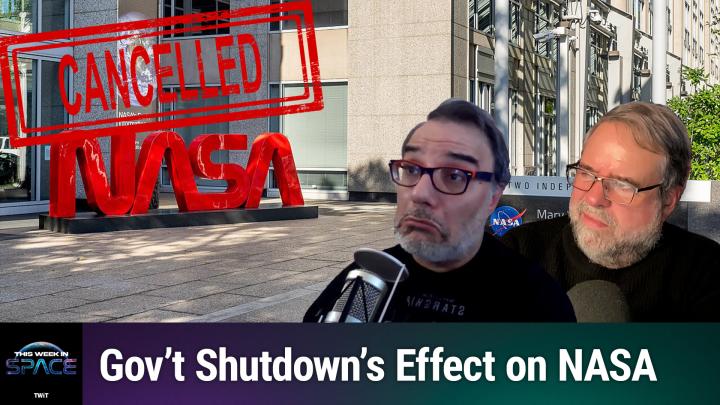
Coming up on This Week in Space, Rod and I bring you all the space headlines all the time as we talk about how the government shutdown is affecting NASA. Yet Artemis 3 plans continue. The interstellar comet is getting its close up at Mars, and Viper runs anew. And that's just a few of the headlines you're going to get on This Week in Space.
Rod Pyle [00:00:19]:
This is This Week in Space. Episode number 180 recorded on October 3, 2020, 2025: NASA is Closed For Business. Hello and welcome to another episode of the one, the only, the inimitable This Week in Space, the NASA's closed for business edition. I'm Rod Pyle, editor in chief at Ad Astra magazine. I'm here with my bestest buddy, the taekwondo sparring, nearly black belt, achieving Tariq Malik, editor in chief for space.
Rod Pyle [00:00:58]:
Come.
Tariq Malik [00:00:59]:
Hello, Rod. How are you? Hello, space people. Hello, everybody.
Rod Pyle [00:01:03]:
I'm okay.
Tariq Malik [00:01:04]:
Yeah.
Rod Pyle [00:01:05]:
Glad to be back from Huntsville. It was a nice trip, but always nice to come home. So this week to bring me a.
Tariq Malik [00:01:11]:
Rocket back from Huntsville.
Rod Pyle [00:01:12]:
No, no comment. This week, you're stuck with the two of us because there was just so many stories to cover. We thought, okay, we got to take a week to just catch up because there's a lot going on. You can only do so much when you have a guest, you know? So this is our chance to kind of backfill the things that we haven't really been getting around to. And before we start, of course, please don't forget to do us a solid and make sure to, like, subscribe. Push all them buttons for all the stars and all the boots and all the rainbows that you can give us because we need it. And as evidence of how much we need your help, here's a space joke.
Tariq Malik [00:01:50]:
Oh, I'm ready. From anybody or for you? Is it you?
Rod Pyle [00:01:54]:
I'm not saying this is probably a little boomer oriented, so I apologize in advance, but we'll see. Hey, Tarek.
Tariq Malik [00:02:01]:
Yes, Rod?
Rod Pyle [00:02:02]:
What did Captain Picard say to Data when he wanted to indulge his model railroading hobby?
Tariq Malik [00:02:09]:
I don't know. What did he say?
Rod Pyle [00:02:11]:
Set a course for the nearest hobby store. N gage.
Tariq Malik [00:02:15]:
I was about to say that I had an N Gage model railroad when I was a kid. It's a small.
Rod Pyle [00:02:22]:
John's furrowing his brow, like, what the heck is an engagement?
Tariq Malik [00:02:26]:
Right? And then John.
Rod Pyle [00:02:28]:
Yeah, there's. There's O gauge, H O gauge and N gauge in. In diminishing proportions.
Tariq Malik [00:02:34]:
Yeah. So N gauge Model trained. Oh, yeah, they're real small.
Rod Pyle [00:02:40]:
They're like the size of your forefinger. Yeah.
Tariq Malik [00:02:42]:
Okay. I never knew. They're actually called N gauge. The gauge is the size. I mean, I've seen these before, obviously. Just. I don't know. They're called.
Tariq Malik [00:02:49]:
Oh, cool. Okay.
Rod Pyle [00:02:49]:
Well, I didn't know if you would have, because I think this has really sort of fallen out of favor, but 100%.
Tariq Malik [00:02:55]:
Yeah.
Rod Pyle [00:02:55]:
What we need now are model rockets at that gauge that work without all the folderol that go with launching them with solid fuel. They just need to go.
Tariq Malik [00:03:05]:
What is folderol? That's a word I've never heard before. Is that like rigor?
Rod Pyle [00:03:10]:
Yeah, just all the drama engaged with.
Tariq Malik [00:03:13]:
How do you.
Rod Pyle [00:03:13]:
Lighting a rocket on folder.
Tariq Malik [00:03:15]:
Yeah. Are you thinking that, John? He made up a word right there.
Rod Pyle [00:03:18]:
No. F O L, D E R alder O L, F O L. Okay. Tick tock, gentlemen. Now, I've heard that some people want to shrink us down to N gage when it's joke time in the show, which would be a challenge for either Tarek or myself. But you can help by sending us your best, worst or most different space joke at TwistWit TV. And we. We will appreciate you forever even more than we do now.
Rod Pyle [00:03:44]:
And now, onward to headline news. Headline news.
Tariq Malik [00:03:51]:
Headline. Wow.
Rod Pyle [00:03:57]:
You almost nailed it.
Tariq Malik [00:03:58]:
I did nail it. What are you talking about?
Rod Pyle [00:04:00]:
Well, our. Our fans tell us there's a delay in the. In the transmission, so apparently. Oh, what causes you to unnail it?
Tariq Malik [00:04:08]:
Oh, look, Jammer B. Actually, he found the def. Definition of fault fold. Folderal fall full trivial.
Rod Pyle [00:04:15]:
Folderal. Trivial, nonsensical fuss.
Tariq Malik [00:04:18]:
Yeah, see, that's rot on a general basis.
Rod Pyle [00:04:21]:
Okay, that's jeopardy. So the story staring us down like a giant dragon that's about to flame you into cinders, of course, is the government shutdown, which means NASA's closed for business.
Tariq Malik [00:04:36]:
That's right.
Rod Pyle [00:04:36]:
85% of their workforce has been furloughed.
Tariq Malik [00:04:40]:
15,000 people.
Rod Pyle [00:04:42]:
People sent home. 3,100 exempted. Now, I don't know if that means that they're working without pay. They'll get later if they're still being paid. It was.
Tariq Malik [00:04:51]:
Oh, no, they're all. They're all working without pay? I think. So when you're allowed to work, you don't get paid.
Rod Pyle [00:04:58]:
I tried to do something for JPL once off hours on the weekend and got my wrist slapped pretty hard because apparently you can't donate time to NASA. But I guess this is an exception. And apparently a fairly large percentage of the Accepted workers are for Artemis, which you know, is not entirely a bad thing. But I wonder if any part of the various missions, especially robotic ones, are put at any risk. Now, as you told me earlier in the week, JPL is apparently not furloughed yet because that's what I heard. Caltech.
Tariq Malik [00:05:34]:
Yeah.
Rod Pyle [00:05:35]:
So that gives me a little confidence there, but it's just, it's, it's not a good thing, you know. And let me just, let me just note, China doesn't take days off, especially in these are days off. Well, but I'm pretty sure they would.
Tariq Malik [00:05:49]:
Love to be still at work, you know.
Rod Pyle [00:05:51]:
Yeah, yeah.
Tariq Malik [00:05:52]:
Being on furlough and being like on vacation on a day off are two very different things. You know, you're getting paid for a day off for the most part. Right. If it's a NASA job or anything. But if it's a enforced furlough because two sides of the government can't agree on like a fundamental basic for like, it's like their job. They have one job, which is to keep the government open. You know, that's like the one basic thing that we have a government for is to, you know, work for the people that elected them there in the first place. But what are you going to do? We don't got to get political.
Tariq Malik [00:06:27]:
But what I, what I'd heard about JPL and this is through the grapevine is that while, because you know, they're, they're, they're, they work for Caltech and managed by Caltech and that's a, on a contact for NASA. Like they can work all the stuff that they, they do, you know, needs decisions from NASA, you know, and, and, and that that whole side of the agency headquarters and if you don't get that, then you really can't do anything. You know, Like I know that on the PR side all the releases have to get approved by headquarters and if there's no one there to approve it, nothing is happening, you know. So there was an interesting side note to this and that was initially on the NASA website. It said the site's not being updated because of the federal government shutdown. We apologize for the inconvenience. And then the little apology disappeared and it just stopped and it just said we're not being updated. And I thought that was kind of interesting that they would at least acknowledge that it was an imposition for the American people.
Tariq Malik [00:07:32]:
And then they removed it. But you know, I don't know how that happens at NASA.
Rod Pyle [00:07:36]:
So. Well, apologies are not a hallmark of our current era. So Perhaps, perhaps they thought, well, that's a little too much. Yeah, it's, you know, if you're working for NASA, which I kind of wish I still was, you've had a hard year. Yeah, I think it's fair to say you've had a very challenging year. And this is just, you know, the.
Tariq Malik [00:08:04]:
And it's not over yet.
Rod Pyle [00:08:05]:
The couple on top of the wedding cake looking very chagrined.
Tariq Malik [00:08:09]:
A couple things about this shutdown, just to let our listeners and viewers know is as Rod mentioned, 85% of the workforce is, is on mandatory furlough, which means that they can't, it's not only that they can't work, it's, they can't actually even open email or anything related to their job at all. And, and so of those 3,100 who are exempted, so of the 18,000 full workforce, there's 3,000 folks that are still, still working. We did get assurances last week at the Artemis II standups that NASA had that Artemis, the Artemis program and the workers on that flow for Artemis 2 are accepted. It's deemed one of those essential services as is, you know, core emission control positions for the international space. Remember there's, there's a full crew of astronauts on the International Space Station right now, government shutdown or no, you know, so those astronauts, their jobs are essential so they get to, you know, continue their job. The same thing for mission control as well, to keep the space station in good shape and any other types of support, cargo launches, that kind of thing will be supported as part of that. Also most military launches and services for like launches for the US economy are deemed essential. So there might be some delays, but NASA and Blue Origin are planning to launch the escapade mission to Mars later this month.
Tariq Malik [00:09:35]:
As we're recording this. That should still continue. We were told about a mid month campaign for that on a new Glenn rocket. So you can, you can expect to see that. Will it be webcast with commentary? Probably not. Those are the types of things those.
Rod Pyle [00:09:50]:
Guys will not see sitting at home.
Tariq Malik [00:09:52]:
But I checked, I checked and you can actually still get live video from the International space station via YouTube. It's just there's no commentary or anything like that that the PAO would normally do.
Rod Pyle [00:10:03]:
So one wonders, I mean, you know, I play devil's advocate here because I'm, I'm glad Artemis isn't getting shut down for reasons we discuss probably every week on this show. But what makes that essential and so many other things non essential other than political desires.
Tariq Malik [00:10:20]:
I think that's that's that that's the curse. Now, in the case of the Internet space station, you get it. There are human lines.
Rod Pyle [00:10:25]:
Yeah, I get that. It was Artemis specifically.
Tariq Malik [00:10:28]:
Artemis, too. I mean, I think there's one thing that you and I can agree on, as well as all of our listeners, is that the agency as well as US Leadership have made it pretty clear where they stand on a U.S. return to the moon and China in particular, and the importance of getting there first in the 21st century. And so they've made it kind of like the priority for NASA as an essential service. And it's that type of an approach, I think that a lot of lawmakers have called it a national security matter. And we heard that echoed in the leadership discussions that we saw. Yes. Last week during the Artemis 2 Stand Up from, from Sean Duffy at the astronaut announcement, too.
Tariq Malik [00:11:10]:
I'll be damned is what he says. Right. So apparently even during a shutdown.
Rod Pyle [00:11:16]:
Well, we don't have the story on here and we got to go to a break, but I, I did notice that somebody, shoot, I can't remember who it was, had introduced the notion of some kind of movement within government circles to move away from SpaceX's lunar lander and probably towards blue origins. But, but let's, let's circle back to that. We'll be right back because we love you after this break. Stand by.
TWiT.tv [00:11:46]:
Hey, everybody.
TWiT.tv [00:11:47]:
Leo Laporte here and I'm going to bug you one more time to join Club Twit. If you're not already a member, I want to encourage you to support what we do here at Twit. You know, 25% of our operating costs comes from membership in the club. That's a huge portion and it's growing all the time. That means we can do more. We can have more fun. You get a lot of benefits ad free versions of all the shows. You get access to the Club Twit discord and special programming like the keynotes from Apple and Google and Microsoft and others that we don't stream otherwise in public.
TWiT.tv [00:12:24]:
Please join the club. If you haven't done it yet, we'd love to have you find out more at twit.tv/clubtwit. And thank you so much.
Rod Pyle [00:12:33]:
Next up, we have a story I like to call Sadly Chopping the Shuttle. So according to our friend Keith Cowing over at NASA Watch, Texas Senators Cruz and Cornyn have instructed that the Space shuttle Discovery should be cut up for the move to Texas, which is a move the Smithsonian sharply disagrees with. This order has come from the Office of Management and Budget. So I guess it advanced one more step, telling the Smithsonian to study how the disassembly, which is a polite word for blowtorches and chisels, might be accomplished. Now, if you've ever seen a shuttle, it's a very big, massive, and yet strangely delicate machine made of soft aluminum and ceramic tiles that will chip and crack if you so much as give them an angry glance. So Smithsonian maintains this would severely compromise Discovery, which is the shuttle we're talking about. And probably more to the point, the Smithsonian maintains that this was purposely kept as pristine as possible as an engineering base for people to study in the future when they're looking at large space planes. Now will we ever build something else like the shuttle? Who knows? It wasn't the most efficient way to approach doing a space plane, but for the time, it was a huge leap forward.
Rod Pyle [00:13:54]:
If you're going to do it again in the future, I'm sure it would be different. But in any case, you know, there is something be said for maintaining the past. That is, we've gone back to study parts of the Saturn 5 as we move forward in our large booster programs. So cutting it up into pieces doesn't seem like the, you know, basically to satisfy the egos of a couple of senators and, and let them have a political victory for their, their tourist trade. Let me just finish real quick. Estimated costs for the move at this point, which are also part of the Smithsonian's job to ascertain, are, are estimated to be between 120 and 150 million, which does not include anything about where it's going. This just gets it to Texas, doesn't cover the cost of a tarp or a tent or a building or anything else. So the 85 million that was set aside in the Big Beautiful is not going to do it.
Tariq Malik [00:14:48]:
Do you think this is true, though? Like, really no one can. I don't know. This is weird. I was talking about the shuttle. Well, no, just like it's the, the save the Shuttle, the keep the Shuttle team. Right, that's, that's, that's because I saw this was on NASA watch, right? At Keith Cowan. Yeah, yeah. And, and that they, they have like the whole statement from the keep the Shuttle group that's trying to preserve it, and they're saying that they've been, they got, they got, they got asked by the omb, but, you know, and it's like their government's closed.
Tariq Malik [00:15:20]:
Right. So when, when do they ask and, and everything, because this is crazy. To like cut it up. I agree. Like that is. And the space total is 120ft long. Is that right about right? Or is it 2, 220? And then it's got 60 foot cargo.
Rod Pyle [00:15:36]:
Bay and then it's another big delicate. It's got a contiguous 120 across the bottom. Now you know, those tiles are somewhat modular. They're all individually shaped. But if you go cutting across the belly of that thing, which is its widest point, you know, you'd have to fabricate replacement tiles. Obviously they wouldn't have to be heat tiles, they could just be look alikes. But it just, you know, it wasn't made to be taken apart. Not that way, you know, it was made to be as strong and as light as possible so it could fly without breaking up.
Tariq Malik [00:16:07]:
I see that it's getting. There have been some TV reports about it as well. I don't know, it's really strange. This is like a, this would be like an escalation I guess on, on Cruise and his ilk to try to get this space shuttle to Houston. I thought that the act, the big beautiful bill. It didn't even say Space shuttle Discovery. Right. It said a flown crew rated spacecraft.
Tariq Malik [00:16:32]:
So they could have, they could have put anything in there like a capsule or something like that too for it. And I don't know, I was just at Space center in Houston and I saw the space shuttle on the carrier plane last week and it's still pretty cool. But I don't see a space to put an actual space shuttle, you know, for anything like that.
Rod Pyle [00:16:51]:
They need a new building.
Tariq Malik [00:16:53]:
Yeah.
Rod Pyle [00:16:53]:
And it's got to be a building because we've, we've done the experiment of hey, let's store these things outside with the Saturn fives in the past and, and you know, these are flight rated, they're not weather rated over the long term. They're made to be as light and as delicate as possible or as light and as structurally sound as possible. But with low mass, so they don't do well sitting outside. So you have to, especially the shuttle because of all the tiles and stuff which are, you know, sensitive to moisture. So you have to have it inside. It's just, you know, I'm sure those senators do many good things for Texas. This seems like a misplaced effort on their part and it feels like grandstanding because I can't stand as a good reason for it because wave the flag.
Tariq Malik [00:17:39]:
And say we want to do the fun thing. And everyone is saying no, no, you can't have the Fun thing. And we're on your side.
Rod Pyle [00:17:46]:
For the kind of people that go to Space Center Houston, which are tourists mostly and kids, you know, many, many busloads of kids from all over the county there, does it really make a difference if the shuttle that they're looking at has been flown or if it's that really nice one they have mounted on the flown carrier plane?
Tariq Malik [00:18:05]:
One of you can go inside that.
Rod Pyle [00:18:06]:
One too, which you can go inside of. And you're not going to be able to do that with a real shuttle unless you start cutting holes in the side, which is even more disgraceful. So while I kind of get, you know, the emotional core of this argument beyond that, it just doesn't make much sense to me.
Tariq Malik [00:18:23]:
Yeah, well, the time to time, the time to make that stink was in, you know, 2010, you know, 2011, when the last shuttle flew, you know, or in Discovery's case. What was that? Yeah. Was it 2010, 2011, they all flew.
Rod Pyle [00:18:38]:
One of the two. Yeah, yeah. I mean, you know, if it was coming for Johnson Space setter, I'd almost get it more because they were very deeply involved with the shuttle program, obviously.
Tariq Malik [00:18:50]:
Yeah.
Rod Pyle [00:18:51]:
These two senators were not and maybe coroner was, Cruz wasn't. So yeah, it's a head scratcher. Again, it just feels like an emotional argument to score points and it feels very wrong headed to me. But you know, we're gonna probably argue.
Tariq Malik [00:19:09]:
About it for another three years and then depending on what happens in an election, we'll see what happens with this push, I suppose.
Rod Pyle [00:19:16]:
So I wanted to circle back to the government shutdown. There was a lot of noise made about what Trump was saying about if, basically if you, if you let the government shut down, you people on the left side of the aisle, like it's entirely their decision. Just wait and see what's going to happen. With my other layoffs, I'm obviously paraphrasing here, I don't remember the exact wording. What do you suppose that means for NASA, if anything?
Tariq Malik [00:19:46]:
Well, I don't know. I mean, I think it really, it really depends. Like I think you were, you were talking about earlier. There are a lot of contract scientists, a lot of contract workers at NASA, you know, a lot of the commercial folks and those kind of contracts we've seen at least in the last two days, a lot of contracts for different states for things that the government currently doesn't like, like clean energy and etc. In California and other, I gu. I guess they're saying Democratic states.
Rod Pyle [00:20:17]:
Anything in California?
Tariq Malik [00:20:19]:
Yeah, essentially. So so, so it's, it sounds, it seems like there's like, millions and billions of contracts that have been canceled. If there's something like that that the administration doesn't like and sees, like a potential pain point in this argument, that could be at risk. Now, we should say that there are things that were already at risk in the, the budget proposal, for example. There were. And we've, we talked about this on the show with Casey Dreier of the Planetary Society. There were like, some 40 missions. Right.
Tariq Malik [00:20:47]:
That were at risk of being canceled.
Rod Pyle [00:20:50]:
More.
Tariq Malik [00:20:51]:
Yeah.
Rod Pyle [00:20:51]:
More than closer to 50.
Tariq Malik [00:20:52]:
Yeah. And in September of 2025, that was like the end date for the genome mission at Jupiter, which is still doing okay, but they just wanted to cancel it to save the money. Right. Even though the spacecraft is still able to do its fundamental science at Jupiter. We're actually looking into that. I don't think it's a spoiler because it has been discussed out there and we talked about it on the show. But, but we don't know what the status of that is. And, you know, if that, if that contract, I think, with the Southwest Research Institute to run that mission is canceled in this whole thing, that's the end.
Tariq Malik [00:21:26]:
Right. And that's not reversible, really, because you let a spacecraft go a few days that could be irrecoverable when, if and when the shutdown ends, even if it's, you know, not, not even that long. The last really long one. What was that, 20. Was it 20? 19? 2017? 2019. It was like 34 days. 34 days long. So, you know, imagine what 34 days of drift would be for a spacecraft that no one can tend to, you know.
Tariq Malik [00:21:53]:
Now, I do feel that a lot of that communication work probably could still fall under, under that Essential Services. But if it's one of these missions that has been earmarked for cancellation in the budget request, you can see that those types of things could be susceptible to just outright contract cancellations and whatnot. But I'm, you know, this is spitballing here because you and I are talking about it. I don't know what the boots on the ground are, and we can't hear about it because we keep getting told, well, you got to wait for NASA to comment. And NASA's like, I can't comment because I'm on furlough, you know.
Rod Pyle [00:22:26]:
Right, right, right. I do remember when we were talking to Alan Stern, actually. He was the one that said, once you shut these things off, you can't bring them back. Now, which I Kind of suspected for anything in space because of, you know, attitude drift and so forth. I wonder if that's as true for Mars and lunar orbiters and especially for anything on the Mars surface where you can essentially park it, you know, leave the dish aimed and call it a day for, I think, a few weeks without risk of loop. But there's always risk of losing contact, of course.
Tariq Malik [00:23:02]:
Yeah. Well, anything that's in orbit has to be able to maintain that orbit, even to adjust for little perturbations over time. And the Moon is a little bit more tricky because it has all those weird gravitational and magnetic anomalies that mess up stuff.
Rod Pyle [00:23:14]:
Mass codes.
Tariq Malik [00:23:15]:
Yeah. And. And so, you know, and even for. For rovers on Mars, again, those can. Because they're active missions, they could fall under that Essential services. Right.
Rod Pyle [00:23:29]:
But it could do you. I don't think so, because the impression I got was once we chop these, they're done.
Tariq Malik [00:23:35]:
Well, if once they're. Once they're axed. Right. But the ones that are, that are still, that are still in, in there, like perseverance, for example, probably even if they park it, it has to track its antenna to make sure that it's in contact and in good health and all of that telemetry, I, I would see that as pretty, pretty essential, you know, to keep their curiosity, too. They're not canceled, those missions. So you want to keep them alive.
Rod Pyle [00:24:01]:
All right, well, let's keep ourselves alive by going to a quick break. We'll be right back.
TWiT.tv [00:24:08]:
Hey, Everybody, it's Leo Laporte. You know about MacBreak Weekly, right?
TWiT.tv [00:24:11]:
You don't?
TWiT.tv [00:24:12]:
Oh, if you're a Macintosh fan or you just want to keep up what's going on with Apple, this is the show for you. Every Tuesday, Andy Ihnatko, Alex Lindsey, Jason Snell and I get together and talk about the week's Apple news.
TWiT.tv [00:24:25]:
It's an easy subscription.
TWiT.tv [00:24:26]:
Just go to your favorite podcast client and search for Mac Break Weekly or visit our website, twit.tv/mbw. You don't want to miss a week of MacBreak Weekly.
Rod Pyle [00:24:36]:
Let's put this one under the heading of sample theft question mark. So, as we all know, Perseverance has been drilling samples right and left on Mars.
Tariq Malik [00:24:46]:
Drill, baby, drill.
Rod Pyle [00:24:47]:
I say that as if it's happening very quickly. It takes a long time. But they've filled over half their sample tubes. Some have been left behind in caches, some are stored on board. But they're all on Mars, which is what we don't want. We want them to come home, and we've talked ad nauseam on this show about Mars Sample return, the drama surrounding that and that story is not at least as of this point, any better than it's been before, which is probably canceled. There is some discussion of private industry, maybe this or that, but as we've seen with the Moon, it's harder than a lot of those guys thought it was. And so, you know, you could put a lot of money into private industry and maybe, or maybe not get the result you want.
Rod Pyle [00:25:33]:
Regardless of that, the Chinese are not sitting around. They've got 1013 which is their next Mars lander scheduled for 2031 and sounds like they might be looking at something like Jezero Crater. They say that they want to land between 17 and 30 degrees north of the equator. Jezero's at 18 degrees. So there's been some conjecture. Might the Chinese send their sampling drone or rover because they've got both over to Perseverance, the Perseverance drill site to grab a sample from there because that's where we think we've seen fossilized remains of possible Martian life. So I don't think they'd go and grab the tube. That would be a little harder.
Rod Pyle [00:26:21]:
But you know there's, there's, there's dust and junk left from the drilling that they've done there. And then of course there's the samples they spotted so at least they're identified. So if you want a guaranteed hit of something, at least with a high probability you go to that site and grab it. Now the one big problem is that at least as it stands as far as we know Tian1 the the lander would need about 9,800ft deep area to land a Jezero Craters floor is at 8350 so that would be a smackaroo. But you know, they're very good at picking up existing technology and evolving it and improving it. And it wouldn't shock me. I don't think they could change at this point 1013 to a perseverance Curiosity sort of sky crane system. But they could change parachutes, they could add landing rockets, breaking rockets.
Rod Pyle [00:27:16]:
They could do a lot of things.
Tariq Malik [00:27:17]:
So why do you, why do you call it theft Mars sample theft?
Rod Pyle [00:27:20]:
Because that's what the article that I cribbed it from implied, which was from.
Tariq Malik [00:27:24]:
Space.Com well I our headline just to make it clear was could China return the Perseverance rovers possible biosignature sample from Mars if we got it? I don't think we're saying they're going to Steal it. However, who went there first? What I wanted to bring up is, you know, we had Jim Green on the show a while ago and will again soon. Yeah. And one of the. One of the things I recall from that discussion was that when they were making the decision on these tubes and everything was that they did want to make it agnostic for return in case NASA decided not to go. Like it's looking like they are.
Rod Pyle [00:28:06]:
But nobody believed it at that point because how could that possibly happen? Right. We wouldn't turn our back on this.
Tariq Malik [00:28:13]:
It's like that whole thing about the Peaceful Uses of Outer Space Treaty and how no one can own the moon. Well, no one's going to test that until someone else gets there. Right.
Rod Pyle [00:28:20]:
Right.
Tariq Malik [00:28:21]:
So it will be interesting to watch because like, everyone is like, this sample is, you know, the probably most valuable sample right now in the solar system.
Rod Pyle [00:28:30]:
Right.
Tariq Malik [00:28:31]:
Whoever gets there first gets it and doesn't have to do the hard work of getting their own sample from the same area. That being said, there is nothing stopping, let's say for giggles, that NASA does get it stuck in a row. Partners with Lockheed Martin or rocket lab or SpaceX to get these samples back.
Rod Pyle [00:28:53]:
Or SpaceX an Optimus. Because Optimus could walk over and pick it up and stick him in his mouth and bring him back. Right. How hard can it be?
Tariq Malik [00:29:01]:
Why would he need to stick it in its mouth? He has hands. Also, if he's a robot, he doesn't.
Rod Pyle [00:29:05]:
Mouth because we're going to send him to pick up John's holding his head. We're going to send to pick up all the samples. You got to stick them somewhere.
Tariq Malik [00:29:11]:
Well, it could just.
Rod Pyle [00:29:12]:
Let's not, let's not continue that part.
Tariq Malik [00:29:14]:
Of the attachment on the body. Wow. Okay. Yeah. I don't think I want to give Rob the belt.
Rod Pyle [00:29:20]:
Belt loops.
Tariq Malik [00:29:21]:
There you go.
Rod Pyle [00:29:21]:
There you go. Or our bandolier Jammer B, incidentally, on Discord weighs in. Friend, old friend of the show and the network. China would be doing us a favor returning those samples. They become historical artifacts. Otherwise, there's some truth to that. I'd like to think that if they grabbed something there, they'd share it perhaps in that moment of triumph. Because Mars Sample Return is going to be yet another big geopolitical win for them.
Rod Pyle [00:29:48]:
Perhaps they would, but they don't have the track record NASA does of being that transparent, that open.
Tariq Malik [00:29:55]:
I'll tell you what I'm expecting for Tian 13. Right. This is a lot.
Rod Pyle [00:29:59]:
Tell me.
Tariq Malik [00:29:59]:
This is a lot of really great supposition. Oh, Our samples are so precious and we left them there, you know, and there's some on the rover too. And, and how are we going to get them back? I think that we will see a little bit more of what we've seen with the Chang' Er missions, for example, where it's, it's very much like we're gonna get there, we're gonna get the stuff and bring it back to show that we can do it. So it will be a lander, it will have a scoop and it will just grab whatever is nearby.
Rod Pyle [00:30:26]:
Right.
Tariq Malik [00:30:26]:
The follow up mission stuff that can come later. But no one has brought that sample back yet from Mars. And in order to do it first you want to do it what works. And they already have that from, from the lunar missions. They'll make. Yeah. From the Chonghui missions and they'll just, they'll adapt that for Mars and then, and then figure out how to do it there because that's what they know works. And if there's anything that we can depend on from the China Space Agency, they take what works and takes the exact next step.
Tariq Malik [00:30:54]:
And they don't usually make the big wild swings for anything. We've seen that with all of their landings. It's, everything is building on the next thing and making it just a little bit more intricate. And what you're suggesting about, in this article, obviously about asking the question, hey.
Rod Pyle [00:31:10]:
This wasn't my suggestion, this was me scraping off of your website. I think another way to, to, to pose what you're saying, Leonard, by the way, I should.
Tariq Malik [00:31:18]:
It was Andrew Jones. Yeah, Andrew Jones and Andrew, Andrew is a veteran of China space news for sure.
Rod Pyle [00:31:28]:
You know, they do tend towards low hanging fruit. So for instance, with their crude landing in 2030 ish, we expect them to land, get some contingency samples, get some nearby samples and then get out of there pretty quick. Now the, the that mission has been baselined at lunar time of 6 hours. However it's not clear whether that 6 hours of EVA or 6 hours on the surface. But in any case it's basically Apollo 11 and they're going to land at a fairly safe place because that's what you do when you're starting off. So you're right, you know, they're going to I think take the easy way. I just thought it was an interesting possibility and I, you know, I love pushing the envelope and that's why I called it theft.
Tariq Malik [00:32:13]:
We'll see.
Rod Pyle [00:32:14]:
Yeah, sour grapes for me.
Tariq Malik [00:32:20]:
I just, I have to ask the question, so. Yes, no, I just, I Just wanted to ask the question just so that we had the discussion about it all. So it'll be very interesting to see that again. You can't test any of the who owns what on these planets and moons until there's a second party there. And that will be very. When that day comes, it's going to be the story of the year, my friends. So you just wait and see.
Rod Pyle [00:32:44]:
So I did think it was interesting that they have a lander, a rover and a drone. And I. Have you seen any indications of. Is this an octocopter or does it look like.
Tariq Malik [00:32:57]:
I think they'll take what works. They know that the ingenuity worked and they'll just build that because NASA's been pretty public about it. Hey, can we skip one and go? There's one thing I forgot to put on here that I think that we really should discuss, and we didn't talk about it last week.
Rod Pyle [00:33:13]:
Are you going to keep us all in mystery?
Tariq Malik [00:33:15]:
Yeah. Can we skip down to line 48? Because I think Rod's going to get a kick out of this.
Rod Pyle [00:33:19]:
We can do whatever you want after we take this next break.
Tariq Malik [00:33:22]:
Stand by. The tension, it mounts.
TWiT.tv [00:33:26]:
Hey, everybody, it's Leo Laporte. Are you trying to keep up with the world of Microsoft? It's moving fast, but we have two of the best experts in the world, Paul Thurrott and Richard Campbell. They join me every Wednesday to talk about the latest from Microsoft on Windows Weekly. It's a lot more than just Windows. I hope you'll listen to the show every Wednesday. Easy enough. Just subscribe in your favorite podcast client to Windows Weekly or visit our website at twit.tv/ww. Microsoft's moving fast, but there's a way to stay ahead.
TWiT.tv [00:33:56]:
That's Windows Weekly. Every Wednesday on TWiT.tv
Tariq Malik [00:33:59]:
So, Rod.
Rod Pyle [00:34:00]:
Yes, Tarek?
Tariq Malik [00:34:01]:
Guess what happened Friday afternoon after we had recorded our last episode.
Rod Pyle [00:34:08]:
It's always. Why is it always on Friday at.
Tariq Malik [00:34:10]:
Like 6:00 Eastern Time?
Rod Pyle [00:34:12]:
Oh, my God.
Tariq Malik [00:34:15]:
Yes, I'm going to quote this now. This is straight from NASA. NASA selects Blue Origin to deliver Viper rover to the moon's south pole.
Rod Pyle [00:34:26]:
Oh, that. Yeah, yeah, yeah, I heard that one.
Tariq Malik [00:34:31]:
You had it there. Did I miss it?
Rod Pyle [00:34:32]:
No, no, no. But I. But I had seen it and forgot to put it in here. But Viper. This is welcome news. Again, this is welcome news. We have bemoaned the fate of the unjust fate of Viper on this show many times. What kind of got me scratching my head is, where the hell did this come from? I know it was Dead.
Rod Pyle [00:34:54]:
It was going to be disassembled. Bits were going to be given away to different companies that might or might not do something with them. And suddenly out of the blue. Unless I miss something. But you never miss anything. Nah, we were just kidding. We'll fly it with blue origin. So is it going on the blue moon mark one?
Tariq Malik [00:35:11]:
Well, no, no, that's, that's a whole different thing. This is actually a separate contract and I have to give all due credit to our spaceflight editor, Mike Wall, because he is the one at like 6:30pm on an Easter.
Rod Pyle [00:35:23]:
A space reporter.
Tariq Malik [00:35:24]:
Yeah, he's like, he's like, ugh, this just happened. And he, I think he was with his son at a baseball game and he's like, I'll get to it as soon as I get back from this baseball game. So, so yeah, to recount for our dear listeners, a couple years ago actually. Was it last year? It was last year, right? Last last year or no, two years. Anyway, like in the last administration, NASA canceled the Viper mission. The volatile, I'm gonna get it wrong. I'm gonna, I gotta pull it up just to make sure I get it.
Rod Pyle [00:35:56]:
Prospecting rover that's supposed to go look.
Tariq Malik [00:35:58]:
For volatiles near the drill to drill for water. The, the volatiles. Investigating Polar Exploration Rover. And it was going to drill? Yeah, it was going to drill into the moon South Pole, look for ice, look for water. The kinds of things that astronauts would need to make air, to make rocket fuel, all of that good stuff. Test Institute, Resource Exploration and Collection. The tldr, is that the rover? Yeah, the rover was just about done. It was built.
Tariq Malik [00:36:33]:
They were doing shakeout tests and all they were waiting for was the Astrobotic Land near lander, basically the delivery system to get it there. And NASA canceled it, canceled the mission because they weren't confident that Astrobotics lander, the Griffin lander would be ready to deliver it to the moon. Now in NASA's defense, they were right. So, so it wasn't, it wasn't ready for the windows that they were going to do. But that's usually not a reason that you cancel like a multi million dollar rover that is built, tested, that works.
Rod Pyle [00:37:09]:
You know, multi million is putting it very politely.
Tariq Malik [00:37:13]:
Yeah, so. So there's a big, there's a big to do about this. What to do about it? Well, maybe NASA could sell it to a commercial company and then they could, they could use it for, for it. Or, or maybe they would sell off the pieces to different people that would fly them and pardon Me for breaking it.
Rod Pyle [00:37:30]:
But that was just like a gut punch because, yeah, you know, not. Not knocking the commercial industry doing what they can, but their success rate has been low so far, on average, and the things they're trying to do are a whole lot simpler than landing a big, heavy rover like that in relative terms.
Tariq Malik [00:37:49]:
So. So, yeah, now, over the last year or so, there were not a lot of takers for the rover mission, right?
Rod Pyle [00:37:57]:
There weren't any, were there?
Tariq Malik [00:37:58]:
There weren't any, no. Like, they put out calls for who wants to use it? And it's like, no, because what we see from these companies is that they're building highly sophisticated machines and delivery systems, which means they want to build their own bespoke machines to use those highly sophisticated machines and delivery systems.
Rod Pyle [00:38:12]:
Well, and NASA, as I recall, wasn't offering any money. They were just offering the tech.
Tariq Malik [00:38:16]:
Yeah, exactly.
Rod Pyle [00:38:17]:
Hey, don't you want to do this? It's like, well, why should I fly your mission for free? That's how it's supposed to work.
Tariq Malik [00:38:22]:
Now they've decided to award a $190 million contract to Blue Origin to deliver this mission and, you know, pluck it from the grave and get it to the moon in 2027. In late 2027. And I'm going to emphasize the word late there because pretty sure that Viper was supposed to already be on the moon by now, right? So, again, depending on the status of Astrobotic's delivery system. So we'll have to see, but this is the second robot lander that Blue Origin will be delivering to the moon. They're already launching, like you mentioned, their Blue Moon Mark one robotic lander, and that's supposed to launch on a new land rocket later this year. And it's supposed to also carry some NASA cameras on it, the stereo cameras for lunar plume surface studies and a laser retroflective array as part of that. That clips that commercial lunar payload services, which this. This Viper thing is.
Tariq Malik [00:39:23]:
But I, to me, like to be a Viper scientist or an engineer that.
Rod Pyle [00:39:28]:
Built it, bruised and battered as they.
Tariq Malik [00:39:31]:
It's like I've. I've come to terms. Maybe I haven't gotten over it, but I have accepted the fact that this thing that I have built, this precious, precious cargo, you know, isn't going to fulfill its purpose. And then you're like, you throw it back into the front row, just dangling.
Rod Pyle [00:39:44]:
This in front of you. Maybe.
Tariq Malik [00:39:46]:
Maybe I'm not even probably. Do I get to be on that mission now? Right? Like, because I've been reassigned.
Rod Pyle [00:39:51]:
Well, not this week. Because you've been furloughed, I tell you.
Tariq Malik [00:39:54]:
Right. So anyway, I just, I wanted to have that discussion because I just. It makes zero sense to me.
Rod Pyle [00:40:02]:
The whole thing is a head scratcher. I will say circle. This is one time that I'm grateful for. For Blue Origin being the slow plotting behemoth that they have been. They're two years older than Space X, they obviously take longer to do things, but they're following the old NASA methodology of make it perfect before you go. So cost more. Yes. Is it slower? Yes.
Rod Pyle [00:40:25]:
Do we see some factory constipation with all these supplies going in the front door and not much coming out the back? Yes. But so far what they've done has worked pretty damn well and we can't say the same for starship yet.
Tariq Malik [00:40:36]:
If Blue Origins Mark one Blue moon like Blue Moon what Mark one lander succeeds, it's game over. There's going to be some discussions about scale up for crude, for crude moon landings.
Rod Pyle [00:40:48]:
I, I guarantee you those discussions already taken place. Yeah, yeah, they've let any contracts yet but it's basically as I understand it effectively a technology pathfinder for the, the upgraded crew version and oh yeah, modifications.
Tariq Malik [00:41:02]:
100 extensive 100 remember. But they were, they were not, not happy when the starship landing was picked for Artemis 3 landing system. They were not happy at all. I mean neither was Draper and North Grumman and those teams either. Right. But, but I, I think that you know, after Blue origin lost pad 39A for example and, and a bunch of the other contracts, this was like they were really, really gunning for this. And then they didn't get it and so, and then of course not, not, not only that but, but they, and, and the Draper and the other teams did manage to get the, the, what is it? The request for proposal. But it reopened for past, for Artemis 4 and beyond for to have some more flexibility at least in US landing systems on the moon.
Tariq Malik [00:41:55]:
And we're still waiting to see how that, how that evolves over time so well.
Rod Pyle [00:42:01]:
And as a non engineer, I always have to put that disclaimer in there.
Tariq Malik [00:42:05]:
The Blue Origin differential equations. Yes we all know.
Rod Pyle [00:42:09]:
Well so many other things, just a brain like a poodle. But Blue Origins lander just looks safer the ground. It's got a wide, you know, widely stanced landing pads, landing legs and you can see how it's going to work when you, when you look at the SpaceX lunar lander. And they still to my knowledge have not put out an engineering grade drawing of what the landing gear is going to be like. But whatever it is, you've got this thing. It's great that it's big because you're basically landing the international space station on the moon in terms of pressurized volume, which could be great because there's your lunar habitat. Knock it on its side, put some dirt on it. Boom, you got Skylab on the moon, which would be fantastic.
Rod Pyle [00:42:55]:
But you wanted. You want it to be put on its side purposefully, right? Not to just go kablam, like, knock it on its side like the intuitive machines did. So you'd have to have a crane and lower it down and, you know, it would be a big involved deal. Let's run to our next break and come back to naughty, naughty Venus. Venus, you naughty, naughty child. You're hiding killer asteroids from us. And I say killer asteroids with quotes. So while any risk is estimated to be a thousand years or more away, of course that's an estimate, that doesn't mean that's the way it will turn out.
Rod Pyle [00:43:34]:
There are a bunch of asteroids orbiting near Venus that could be a threat to Earth. And it's. With current technology, it's very hard to detect them because they're close to the sun. It's hard to see things close to the sun, as any kid has learned. When they went outside and stared at the sun, as you have, which we don't recommend. Well, I did it with a telescope, with a filter. You know, I had an excuse. Yeah, those were the rock and 60s kids.
Rod Pyle [00:43:59]:
They're replaceable eyeballs. They're replaceable. They're replaceable. So until we get something better, probably a space telescope. That's better. I don't know if a coronagraph helps or what. This is kind of a mystery area. There's 20 currently known potentially dangerous near earth objects that are observed because you could see them around dusk and dawn as soon as the.
Rod Pyle [00:44:24]:
The sun's occluded. These are considered to be county killers, up to 1,000ft wide. So they would give you a crater of a few miles and a blast radius of 30 to 50 miles, which is bad enough. Yeah, they're not going to take out the whole country or anything. But if they fall in the ocean near a coastline, you get big tsunamis and things are bad. And just a reminder, this is five to ten times the extent of the Tunguska event back in, I think it was 1908 in Siberia, which flattened 800 square miles of trees and may have killed some people. We don't know.
Tariq Malik [00:44:57]:
That was an Air burst. Right? Isn't. It wasn't.
Rod Pyle [00:44:59]:
Yeah, but it's still a big butt rock coming down and doing nasty things to the planet.
Tariq Malik [00:45:05]:
Or was it an asteroid? Right.
Rod Pyle [00:45:07]:
Well, yeah, so, so what's your take on this story? I mean we know they're there. We don't know how many, but we know there's some.
Tariq Malik [00:45:16]:
Yeah.
Rod Pyle [00:45:17]:
And you know this is another planetary defense issue. This is asking governments either collectively or individually to pool money to do something about a clear and present danger that we know is there. It's just you're rolling the dice on the odds to keep kicking it down the road.
Tariq Malik [00:45:35]:
I think what it does. And you mentioned the 20 like potential ones that they know about, they call them Venus co orbitals. So it's a very specific subgenre or sub population of near Earth asteroids that are in this, this Venus kind of orbit eating where if they get bumped out then they can come and smack us. But what it, what it really to me speaks for is for missions like the Near Earth Ad Astraoid Surveyor, the NEO Near Earth Object Surveyor, the NEO Surveyor Surveyor mission. I think there's a couple of other proposals as well to put a space telescope up specifically to look in the areas that we can't see with our visible and other instruments like in that sun either. Like in an orbit on the other side of the sun looking out so that it's. We. We have a sentinel that's looking for these things or mapping them or otherwise or to track things over time.
Tariq Malik [00:46:31]:
And, and so like this study as well as the pre existing ones really puts another brick in the wall that says we need to have this because as we as we saw, not just with Tunguska like you mentioned, but with, with oh my gosh, chicks a lube. Well not. No, no. Charlie Binks with Charlie Binks in 2014. You know that was again, that was like a, that was just a small SUV size one, you know. And that, that.
Rod Pyle [00:47:01]:
Well 60ft, wasn't it?
Tariq Malik [00:47:03]:
I thought it was 30ft actually like the core rock one. Anyway. You are right. Yeah it was, it wasn't the, this, this size of.
Rod Pyle [00:47:11]:
No, not even close but it, but.
Tariq Malik [00:47:12]:
It caused a whole lot of damage. A lot of injuries with like glass and stuff because it was. And of where it, where it exploded. And if you could imagine if it was one of these sizes it would have obliterated that entire city, you know, let alone the other towns around it within that kind of county area there. I don't know what they call counties in Russia, but blasts or something oblast.
Rod Pyle [00:47:35]:
Yeah, I did think it was interesting, you know, we got so much video from that particular event, mostly from cameras mounted on cars, which I later read is a much more common thing than here because they, I guess have no de facto insurance. So they, they want to know who to blame if they get, you know, if the car gets jammed up while they're parked or something. So apparently everybody has a camera running all the time, which is one of the reasons we got so much good footage of that thing and they were able to triangulate it to some extent. Extent.
Tariq Malik [00:48:06]:
So, so, you know, there, there. I, I, I, I, I, I think that this is just another, another like reason that we need to be looking for this stuff. Because if we're not looking for it, if we can't see it, then, you know, if we're, if we, if we, by the time we detect it, it might be too late to do something about it. And we know that we can do something about it from the DART mission, you know.
Rod Pyle [00:48:30]:
Well, we, however, however, yeah, we know that there's one way of doing it. There's still a lot of tests to be done for asteroid defense. But wasn't there. It's not on the rundown. But wasn't there. I think I read on Space.com a couple of weeks ago, like the closest pass ever of a, of an object that just kind of came out of the blue or the blue.
Tariq Malik [00:48:49]:
Oh yeah, the surprise asteroid flap. It was yesterday. It happened yesterday. 300, 300 miles, I think it came by.
Rod Pyle [00:48:55]:
So that was more than that, but it was still really, really close. Yeah, the, we'll have to see.
Tariq Malik [00:48:59]:
We'll have to see. I think I can even pull that up right now. We were just, we were. Because that story just went so it.
Rod Pyle [00:49:05]:
Was like within satellite orbit range, 250 miles away. Oh really? Yeah, that's the orbit of the space station almost.
Tariq Malik [00:49:13]:
That's right. That's right. 20, 25 TF.
Rod Pyle [00:49:16]:
And we didn't know. And how big was it?
Tariq Malik [00:49:18]:
It was, let's see. It was, it broke a record. Oh, it's not, it's not the closest shape. There was one in 2020 that flew within 230 miles back then. And they found it just, just about in it. But the 20, 250 miles. Not, not, not, not far by any means. It's the size of a couch, but 1.2 to 2.7 meters.
Tariq Malik [00:49:42]:
So that kind of thing, it might burn up. It might burn up. But that'll, that's a real bad day for people on the space station. If it hits the space station, it is.
Rod Pyle [00:49:50]:
You say couch. I saw somebody the other day put up a thing of. Of for three I Atlas how many avi lobes big. It was like 60 avi lobes long or something. I thought, oh, had to be worth.
Tariq Malik [00:50:04]:
Here's a, here's a new medium paper out about that being, I don't know, like bringing like seeding life or something like that. Forget what it was about. It was about, but it was. Assuming it was a craft of some sort of.
Rod Pyle [00:50:18]:
Yeah, again, of course it is. Which one do you want to do next?
Tariq Malik [00:50:24]:
Oh, can we, can we go down, can we go down, can we go down to line 48?
Rod Pyle [00:50:31]:
Please do.
Tariq Malik [00:50:32]:
All right, this is just a really quick one because since we're talking about interstellar comet 3I ATLAS see the segue. You see the segue there?
Rod Pyle [00:50:41]:
That was.
Tariq Malik [00:50:43]:
I know, right. Today is its closest approach to Mars. October 3rd. So as it's coming through and there are spacecraft that are watching it, the European Space Agency's Mars Express as well as Juice Probe at Jupiter are watching as this interstellar comet passes through our solar system. Because they're further out there. They're, you know, they've got a better view and it's still, you know, it's not coming close to Mars, but this is the closest it's going to be there and we have our spacecraft sentinels there already keeping an eye on it. So it's going to be, it's going to be tracked by the spacecraft and you know, NASA was planning to do it. It's not clear to me between the shutdown and like the other issues that are going on, if those observations were loaded in time in order for NASA to get them.
Tariq Malik [00:51:35]:
Because I know they wanted to use some of the, the Mars spacecraft and I thought they wanted to use Juno, but I can't recall now. But the comet's going to be 30 million kilometers from Mars today. As we were recording, it might have already passed that closest approach. And, and these European ones, Mars Express, the ExoMars Trace Gas Orbiter, we're going to be scanning it. And I know that the Juice, they wanted to use Juice to do it and NASA had hoped to use Psyche, that's the one I was thinking of, the psychiatrist, which is on the way. They were going to try to use that Juno.
Rod Pyle [00:52:07]:
I think they were talking Avi anyway was talking about, hey, let's just redirect the Juno spacecraft to rendezvous with it.
Tariq Malik [00:52:14]:
That's right.
Rod Pyle [00:52:14]:
Which I guess is theoretically possible, but not likely.
Tariq Malik [00:52:17]:
Yeah. And NASA has the Mars Reconnaissance or Tianwen. Right. China's orbiter and hope are all there to hope is the UAE orbiter that is still there, you know, and so they have all of these different spacecraft that can be watching this thing for their respective nations as they fly by. So today is Mars Day for interstellar comet 3i atlas and let's hope that they get some good stuff. I would expect any early images, we might be able to get them by maybe Monday, hopefully maybe even before that. But so we're, we're keeping an eye out for that because it should be really fun to see what it looks like.
Rod Pyle [00:52:54]:
Well, good to know that we'll both be working on Sunday. Go to line 48. SpaceX's Chinese connection. A SpaceX insider revealed that Chinese investors, that there had been Chinese investors in the company. It's not clear whether these are wealthy individuals or government proxies, but probably the latter.
Tariq Malik [00:53:15]:
Republica.
Rod Pyle [00:53:16]:
Yeah, yeah. So how much, if any, influence do they have is the question. SpaceX of course, fought the release of the information, which I think rightfully further increases concerns. Yeah, and they, interestingly, SpaceX had it set up so if you're coming from China, possibly some other countries, with China in particular, you had to buy through second parties like the Cayman Islands, which doesn't fill one with a lot of warm fuzzies about what their motivations might have been. I haven't seen an official, so far, as far as I know, they haven't had an official statement on, on why this is okay, in their opinion.
Tariq Malik [00:53:56]:
I don't think that we're going to get one, at least on this matter from, from SpaceX. If we do, it would be just as ProPublica was able to get this through the official documents from these, these, these hearings and these, these testimonies, you know, because this is, this is a story that I think ProPublica first was reported, they had found evidence of this during previous testimony and now they have the unsealed testimony which confirmed it all and means that it's officially disclosed. And the concern for folks here, like, why is it a big deal? SpaceX is a big company. They should be able to get investors from wherever they want. They, they, that's true. Right. They're a private company, they can seek investment from wherever. Virgin Galactic has a lot of investors from like UAE, etc.
Tariq Malik [00:54:43]:
But when it comes to like space technology and whatnot, there's a lot of other restrictions that companies have to abide by. Things like ITAR restrictions to, to protect the sensitive technology from other countries. And, and so the concern as I understand it from this ProPublica piece and from the past coverage is that, you know, you have these companies in China going through third parties to get a stake in a private company, which means that there isn't any public glimpse into who's investing in what.
Rod Pyle [00:55:17]:
Right.
Tariq Malik [00:55:18]:
Meanwhile, this company is also one of the biggest civilian space contractors for NASA, one of the biggest military space contractors for the US Military. And it's not just about rockets, it's about all of the services they provide because they have their Star Shield project, which is to do communications with their starlink technology for the US military. And then they're looking at other types of transportation for point deploy for the, the U.S. air Force and whatnot too. And then of course, all of the NASA contracts too. So all of that is, you know, drawing some concern that if these investors are investing in it, what are they getting back aside from just the financial returns from it?
Rod Pyle [00:56:02]:
Right.
Tariq Malik [00:56:02]:
Is there some kind of technological transfer? Even if it's, you know, like, like a, was it surreptitious, you know. Anyway, that's the concern.
Rod Pyle [00:56:12]:
Secretive.
Tariq Malik [00:56:13]:
Secretive, that's the word. So, you know, like SpaceX doesn't want them to do it, but they might be doing it anyway. We don'. Know, we don't know. So, you know, the, I think that's, that's what we're waiting to see is, is what does make it okay in this regard when they aren't supposed to be having that kind of investment.
Rod Pyle [00:56:27]:
So and speaking of China, and this is a story we've, we've covered before, but we just. I saw a little update on it. China speeding up their lunar landing tests for their human landing system, which is planned for about 2030, although we know it's really going to be 2029 by the end of the year. They are expected to have finished and have already finished some of these. A pad abort test for the Mengjou crew capsule, takeoff and landing test for the Lanyue lunar lander, which was done tethered and two static fires along March 10. Analysts expect to see a low altitude flight of the long March 10, possibly before the end of the year. A Max Q flight abort test for Mengzhou, which means you got to launch it and get it up to the point where it's the speed is putting it under maximum stress and then do your abort test. And also tests apparently of the Long March 12, which is a reusable rocket.
Rod Pyle [00:57:25]:
I'm not sure if that's the one that Looks an awful lot like spaceship starship or not. But a couple of them do. And all this follows tellingly roughly the development of the Apollo program back in the 60s of how we made sure all those things worked before flown, which before they were flown, which a lot of that was, was von Braun's philosophy on testing, although they, they accelerated that quite a bit ultimately. And five semi private operators are also scheduling tests of launch systems, some reusable. And when I say semi private, I mean if you're a private company in space or potentially militarily leverageable things in China, you, you have a percentage of state ownership of control.
Tariq Malik [00:58:10]:
Yeah. Do you get all this from the ARS article? Yeah, Eric put out yesterday? Yeah, yeah, yeah, I added that link there, John, thank you. But yeah, now Eric said a good piece. Eric's piece was about how China pulled ahead because again they were taking this iterative look based on what they knew work worked to build the technology to get back to the moon or I guess for them to get to the moon in.
Rod Pyle [00:58:34]:
Excuse me. Actually, this is from Space News.
Tariq Malik [00:58:35]:
This wasn't. Oh, this is from Space News. So. Yeah, yeah, I didn't see that one because I don't have a subscription. Did you get one, did you get one in Space News?
Rod Pyle [00:58:42]:
Yes, I did.
Tariq Malik [00:58:43]:
You can share your password with me offline later. So actually no, it's a, it's a new, it's a new fiscal year. Maybe I can get my own. Right. So now, now that it is.
Rod Pyle [00:58:52]:
It's not very expensive.
Tariq Malik [00:58:54]:
Yeah, yeah, space. That whole Space News crew is in Sydney, Australia this week, as is Andrew Jones for Space.com as well as some of his other clients.
Rod Pyle [00:59:04]:
As we should be.
Tariq Malik [00:59:06]:
I know.
Rod Pyle [00:59:06]:
But I chose to go to Huntsville.
Tariq Malik [00:59:08]:
Instead for the, the International Astronautical Congress. That's out there right now. And that's where I think a lot of this stuff came from is, is that they got updates on the moon program from that Space News. That, that was Jeff Faust most likely or it could have been Andrew Jones writing because he is like he also writes for them too for that. And it again, it will be very interesting to see how all of these tests, tests evolve because if there's one thing we know is that China wants to, wants everything to work. They're not going to lose emissions. So they want to make sure they get all these tests in hand. And the key question that we're all asking is is there time enough for them to do that and achieve that? I think you were saying 2029.
Tariq Malik [00:59:49]:
Right. Even though they're looking at 2030 to reach that target before necessary.
Rod Pyle [00:59:54]:
After all the bellyaching I've done about that. You think I said 2029.
Tariq Malik [00:59:58]:
Yeah, I know.
Rod Pyle [00:59:59]:
October 2020 anniversary. They're gonna do whatever it takes.
Tariq Malik [01:00:05]:
I was trying to just be a little understated, but okay.
Rod Pyle [01:00:09]:
Yeah, well. But it's me we're talking about. Yeah.
Tariq Malik [01:00:13]:
So I guess we're kind of at the end, right? I think we still have, like, so many more.
Rod Pyle [01:00:19]:
Oh, we got, like, five more. So why don't you. You pick. Pick one, and then we'll call it a day.
Tariq Malik [01:00:23]:
All right, well, I think.
Rod Pyle [01:00:25]:
No pressure, but pick the right one.
Tariq Malik [01:00:28]:
Pick the right one. Well, I. There was. There was this. This new. This is a good story for us. This first rogue exoplanet weather report. That's a fun one.
Tariq Malik [01:00:36]:
That's a science. That was.
Rod Pyle [01:00:38]:
Yeah, we just talked about rogue planets a while back.
Tariq Malik [01:00:41]:
I will point out, too, that from that IAC meeting, both Space News as well as ours, I believe, and Space.com, we all have stories about how the European Space Agency is embracing reusable technology. Finally, at last. And they unveiled, like, a miniature version of starship as part of that. So it's not just China that is seeing what Elon and SpaceX are doing and trying to emulate it through this new. This new program at. At the European Space Agency and in Europe as well as through past ones, because they have a Callisto rocket, too, that looks very similar with, like, the feet that SpaceX has. They're trying to catch up now, but it's going very slow for them.
Rod Pyle [01:01:21]:
But, well, and I think given the challenges Space X, which is funded almost to infinity, have had with. With starship, it's interesting that people are. I can see why two years ago, you know, you say, oh, this is the future. Let's steal that technology and that design. I wonder if somebody now saying, maybe there's an easier way.
Tariq Malik [01:01:41]:
I think it's just there's a lot more red tape because it's not just one nation that is trying to build the whole thing. Issa is a collection of, like, what I think it's like 17, 18, maybe more than that. Now, countries that all have to agree in order to pursue this stuff, and so it takes a long time. But, yes, this planet. This is from the James Webb Space Telescope, the first weather report from a nearby world with no sun. So it's a rogue world out there in deep space called Simp 0136 in the void. Yeah, that's right about 200 million years old, 20 light years away. And it's actually technically classified as a brown dwarf.
Tariq Malik [01:02:21]:
And what they found through these James Webb Space Telescope observations is that it is a stormy world and it is covered in auroras. So it has a lot of storms like a gas giant would, you know, with these belts and stuff. And they can see some, some of the heat differentials because James Webb is an infrared space telescope. But they also saw signals of auroral activity at the poles. And this was in a. The September 26th edition of the Journal of Astronomy and Astrophysics to observe how a brown dwarf atmosphere changes as it spins over time, where you can see the differences in temperature and the chemistry and the clouds and that type of thing. And they're saying that it's like a new capability, a new window or glimpse into understanding the weather of planets beyond our solar system. That they're able to do this with James Webb, which is the most powerful space telescope in space right now.
Tariq Malik [01:03:13]:
We got to be honest about that. And they think that it's, it's really important that they were able to prove this capability out and see these changes in the atmosphere over time directly with James Webb, because now they'll be able to understand the weather of other exoplanets in the future as they try to say, you know, is it habitable for life? Is it something that could be an Earth analog? Is it too big and it's more Jupiter? Ish.
Rod Pyle [01:03:37]:
Yeah.
Tariq Malik [01:03:38]:
And that sort of thing.
Rod Pyle [01:03:39]:
So I think this is an Earth analog. But, but they did make the point that, you know, part of what's so valuable about this is it's a planet that's not next to a blazing bright star. So you can just stare at it. You don't have to sneak a look when it's off to the side using a coronagraph or whatever, you can just stare at as long as you want. What puzzled me is they said that the clouds in the upper atmosphere were, were shown to contain a lot of silica sand structures. Where do you get sand on a gas giant?
Tariq Malik [01:04:11]:
I guess it's from the actual planet itself. Right. So. And this is a, it's, it's a brown dwarf. We should be clear. So it's not like the size of Jupiter or anything like that, but yeah.
Rod Pyle [01:04:20]:
And a brown dwarf wouldn't have a rocky core. That's what I'm getting.
Tariq Malik [01:04:23]:
Well, they, they think, they think that there could be a core diamond inside of Jupiter, you know, and Saturn way back when there was. They were. Let's go get it all That I know. Right.
Rod Pyle [01:04:32]:
We'll show De Beers where to put their diamonds.
Tariq Malik [01:04:34]:
There's more like, like, so it could, it could rain silica and sand on this planet. On this brown dwarf thing, you know, they also found a layer of air like, that's like 570 degrees Fahrenheit warmer than they could have ever thought, suggesting that that warmth is caused by the auroras, which is crazy to me. Also, I don't understand how the auroras are there in the first place if there's no sun to stream particles there. Right. That's the person I want to know.
Rod Pyle [01:05:00]:
So now could that happen if by its own magnetic field being.
Tariq Malik [01:05:07]:
Yeah, it has a much stronger magnetic field that supercharges the any charged particles that are hitting the atmosphere. Right. So, yeah. So space, you know, we talk about the void of space. It's not really empty. There's all sorts of stuff out there. And these, these particles that, that this world is encountering out there in the vast void and blackness of space, you know, it's still running into that stuff. It's why scientists came up with those Bussard ramjet concepts, right, that would just collect hydrogen from interstellar space and then use that to fuel your spacecraft.
Tariq Malik [01:05:39]:
That's why they have that is because that stuff is out there and some of that is charged in terms of particles. And then they will be funneled into this extremely strong magnetic field, which then supercharges their speed as it funnels them to the poles. They interact with the atmosphere, causing the glow. And then, you know, bing, bing, boom, you've got auroras. And so. I know, right? It's just, it's, it's a weird. It's a weird world.
Rod Pyle [01:06:02]:
SimP0136 what's even weirder, A, is that it's named SimP and B, that Jammer B hasn't weighed in yet on why a rogue gas giant would have sand. But until then, I want to say thanks for joining us today for episode 180 that we call NASA's clothes for business. And I say that with a little tear coming out of the corner of my eye because as I've said many times, I'm a child of the space age and we didn't see this kind of stuff then. Tarek, as always, where can we keep up with your adventures of the imagination as augmented by video games portraying you as an unlikely but epic hero?
Tariq Malik [01:06:41]:
Well, you can find me at Tariq J Malik on X as well as Bluesky at space.com, as always, hopefully next week you will find me writing about NASA that has been reopened because the government is open. But this weekend, speaking of NASA, I will be headed down to Washington, D.C. I'm going to test for my black belt in taekwondo. Everyone wish me luck because I've been training for a long time and I'm really nervous about it. So hopefully it'll go well.
Rod Pyle [01:07:09]:
Well, and what could be smarter than going down to take your black belt test when you can barely breathe, but more power to you. You can of course find me at pylebooks.com, adastramagazine.com something I've never said before. While John Ashley is showing us his karate moves, where can we see what you're up to? John?
John Ashley [01:07:29]:
Hang out here at TWiT.tv.
Rod Pyle [01:07:32]:
Well, that's not exactly a website, but okay. And remember, you can always drop us a line at twis@twit.tv. That's twis@twit.tv. We welcome your comments, suggestions, ideas and jokes. Don't fall down the job. We're counting on you. New Episodes this podcast publish every Friday on your favorite podcaster. So make sure to subscribe, tell your friends and give us reviews.
Rod Pyle [01:07:57]:
We'll take whatever currency of reviews they have, whether it's thumbs, stars, tongues, whatever. And you can head to our website at Twit TV Twists. You can, of course also follow the TWiT Podcast Network. That's hard to say. By the way, let's give myself a little pat of the back. The TWiT Tech Podcast Network on Twitter and on Facebook, @TwitTV on Instagram. Thank you gentlemen. It's been fun as always and thanks everybody for listening.
Rod Pyle [01:08:27]:
We'll see you next week.