Tech News Weekly 427 Transcript
Please be advised this transcript is AI-generated and may not be word for word. Time codes refer to the approximate times in the ad-supported version of the show.
Mikah Sargent [00:00:00]:
Coming up on Tech News Weekly, Dan Moren joins us this week. We talk about all of the new Apple hardware that's been coming out all week. Afterwards, I have a brief story about a really important investigation regarding Meta's AI glasses and the humans who are viewing the content on them. Then Leah Nylen, antitrust reporter of Bloomberg, stops by to tell us what's going on with the Google App Store and the changes to Android. All of that coming up on Tech News Weekly.
Mikah Sargent [00:00:45]:
This is Tech News Weekly, episode 427, with Dan Moren and me, Mikah Sargent, recorded Thursday, March 5th, 2026: 'We See Everything': Meta's AI Workers Speak. Hello and welcome to Tech News Weekly, the show where every week we talk to and about the people making and breaking the tech news. I am your host, Mikah Sargent, and this week we are not joined by Abrar Al-Heeti, who is in Barcelona right now for MWC. I believe that's where it is. But we are joined instead by The Wonderful 6 Colors East Bureau Chief, it is Dan Moren. Welcome to the show, Dan.
Dan Moren [00:01:28]:
Hi, Mikah.
Dan Moren [00:01:29]:
It's always a pleasure to be here.
Dan Moren [00:01:30]:
I am nowhere near as interesting a place as Barcelona.
Mikah Sargent [00:01:36]:
Uh, and we're glad because that means you can be here with me and I appreciate it. Now, uh, of course we saw this week the introduction of several, uh, Apple products, a bunch of Apple hardware, and we did talk about it. Earlier this week on MacBreak Weekly, but some of the stuff didn't roll out until after Tuesday. And on top of that, not everybody who watches this show also watches MacBreak Weekly. So we're going to cover, uh, the hardware announcements from the event and kind of go through those and chat about those. Uh, I think it's best if we start kind of at the beginning of the week, uh, with the iPhone 17 E for people who aren't familiar with Apple's sort of, uh, method for releasing iPhones after iPhones have been released. What is, what is this?
Dan Moren [00:02:30]:
That was quite the sentence.
Mikah Sargent [00:02:32]:
Yeah. What is this E phone all about?
Dan Moren [00:02:34]:
Damn. It's the E phone.
Dan Moren [00:02:35]:
Oh, it's the E phone for A.
Mikah Sargent [00:02:38]:
Hey, I'm walking here.
Dan Moren [00:02:39]:
It's not an A, it's an E. Uh, the E phone is Apple's. So I always resist the temptation to call it, it's the low cost iPhone. It's not the low cost iPhone. It's the lower.
Dan Moren [00:02:50]:
Cost iPhone.
Dan Moren [00:02:51]:
So the iPhone 17e, which I believe starts at $599, you know, that's certainly a lot cheaper than I think the $799 that the iPhone 17 starts at.
Dan Moren [00:03:02]:
But it's certainly not the dirt cheap phone because, you know, Apple doesn't make a dirt cheap phone.
Dan Moren [00:03:06]:
What you get for the 17e is you get a little bit of older technology, but with, you know, a little bit of the new injected in there. So the design on this is going to be a slightly older design. It's got the notch instead of that Dynamic Island.
Dan Moren [00:03:19]:
You know, it doesn't have necessarily all of the features that you might get in the iPhone 17 line, like the latest and greatest features, not the latest and greatest cameras, all that. But what you do get in there is one of the latest chips. So Apple has previously, they used to have what they called the SE, which was basically the same idea of like, let's have a, you know, a lower cost phone that has not all the bells and whistles, but is good enough that if you want a modern, decent phone that's going to last you a few years, if you're not somebody who goes out and upgrades their phone every year, this will last last you for a little while. So this one's powered by the A19, which is the same generation that's in the current iPhone 17 line. It has a single camera that has both the, you know, sort of ability to go back and forth between, I believe, 1x and 2x using the 48-megapixel pixel. Even though it's a single lens, it can kind of do that crop for the 2x. And then it has, like I said, the notch rather than Dynamic Island, but it does have Face ID. So, you know, that element modern.
Dan Moren [00:04:25]:
And the biggest addition this time around, which was missing from the 16E that debuted last year, is that this one brings back MagSafe. For whatever reason, Apple decided not to include MagSafe last year when it brought out the 16E. It did support wireless charging via Qi, but it didn't have the nice little alignment magnets on it. So this year features both MagSafe and Qi 2 charging compatibility.
Dan Moren [00:04:49]:
Um, yeah, and then basically, I mean, again, like I said, it's, it's got a lot of the other niceties you might expect from something this line.
Dan Moren [00:04:57]:
It's got that customizable Action Button, it's got a USB-C charger, uh, it has, um, in this case, Apple's newest in-house cellular chip, the C1X, um, as well as, I believe, the N1 chip that handles its newest, uh, Wi-Fi and Bluetooth as well. So most of the stuff you need.
Mikah Sargent [00:05:21]:
Yeah. Yeah. Um, honestly, this is one of the sort of things that I recognized earlier this week as we saw these devices was Apple seems to be kind of perhaps more so than ever blurring the line between, uh, its more expensive, more premium models and its less expensive, uh, less premium models whenever it comes to the feature set. And I think that it easier for us as people who are recommending and, you know, who are often asked what devices to get. Where before you might go, okay, if you don't have the money to spend, then you may want to go for this one, but you're going to be missing out on this and this and this and this and this. Now it's not so much that's getting missed out on. Of course, we do have the one camera as opposed to the multi-camera array, and that's an easy kind of thing to point to, but it's so nice to see MagSafe come to the lineup. It's so nice to see all of those safety features come, uh,, or, you know, be there as part of the lineup.
Mikah Sargent [00:06:23]:
And of course to have that all-day battery life still that, you know, iPhones especially I think are known for. Um, so I've been really happy overall with the, uh, the offering from Apple in this sort of more budget-friendly space.
Dan Moren [00:06:41]:
Uh, although I'm sure some would argue it's not quite budget-friendly, you know, it's not as, you know, Apple doesn't make up $500 phone, at least not a new model.
Dan Moren [00:06:50]:
I'll correct myself also on one previous point— doesn't have the N1 chip, so it's using an earlier version of Wi-Fi and Bluetooth. But, um, you know, it does have that C1X modem chip.
Dan Moren [00:06:59]:
And I will say, it's like—
Dan Moren [00:07:00]:
I don't know, I kind of think of it as having like the, the table stakes for all the stuff that you might want for a modern phone and a phone that you're going to use for a few years. Um, but it doesn't always have all the, the flashiest, nicest, most luxurious features that you get on the the higher-end phones.
Mikah Sargent [00:07:17]:
Uh, moving along to the iPad Air. This of course is the second device that Apple announced on March 2nd as we record this. Uh, the iPad Air is, you know, it's, it's bigger, better, and, and brighter than ever before. Uh, it's kind of hard when it comes to, um, to mostly performance jumps to sort of quantify, or, you know, to, yeah, to figure out sort of what does it actually mean for the end user. Um, one thing that's always stood out to me though, 11-inch iPad Air and 13-inch model, which is kind of nice. Um, what, what should people be looking for in this latest, uh, addition in the iPad Air lineup?
Dan Moren [00:08:08]:
Yeah, yeah, the iPad Air is kind of the bread and butter iPad.
Dan Moren [00:08:11]:
It's the one that's right in the middle, right? If it's not the basic iPad that's sort of really affordable down in that $350-ish range. And it's not the iPad Pro, which is the top of the line, you know, luxury iPad with every single thing that could possibly be on it. So the iPad Air lacks Face ID, you know, it lacks some of the nicer screen display technology that's in the iPad Pro.
Dan Moren [00:08:33]:
But it is a very respectable product.
Dan Moren [00:08:35]:
It uses the, you know, the M4 chip now, which is a generation behind the iPad Pro, but is still, you know, an update over last year's M3 chip. This is kind of a As with many of these releases, it's sort of a keeping up with the Joneses release where it's like we're going to move the things forward a little bit by increasing the processor, increasing some of the wireless connectivity options, but not really tweaking too much else in terms of it. I mean, down to the colors are exactly the same in this year's iPad Air as they were in last year. You're not going to find a lot of significant upgrades across the board here. Everything's like the same size, the same form factor, works with the same accessories and peripherals, comes in the same storage capacities, comes at the same price points, etc. Et cetera, et cetera.
Dan Moren [00:09:19]:
So, you know, again, if this is— this is kind of the iPad that's, you know, for most people.
Dan Moren [00:09:23]:
I think most people are looking for an iPad, they're probably considering something like the iPad Air because it's got that sweet spot of not being the tremendously expensive model of the iPad Pro, but it's a step up from that base level iPad, including things like supporting Apple Intelligence, which is one of the few things that the, uh, the base level iPad is one of the few Apple products that does not currently support Apple intelligence.
Mikah Sargent [00:09:49]:
Now, the— give us a sort of, if you can— I, in fact, I remember asking you about this, talking to you about this yesterday, and it is kind of difficult these days when it comes to the nomenclature. Um, what makes an Air an Air versus a Pro in the iPad space? Is it like— isn't this— isn't Air always supposed to be the thinnest, lightest, right? That was the whole thing. And I'm not saying that it's not, but like, is that all that makes an Air an Air?
Dan Moren [00:10:19]:
Let's call it what it is here, Mikah. It's the magic of branding. I mean, the simple matter is the, the iPad with no adjectives is the base-level iPad now, and so they— this mid-level iPad needs to be called something. Uh, they're not going to call it the iPad Mid. That has bad connotations, probably, these days. Uh, but you know, Air has a lot of, uh, cachet for Apple.
Dan Moren [00:10:45]:
The MacBook Air obviously is the best-selling MacBook in, and therefore the best-selling Mac in Apple's lineup. And I think that the success of the Air as a brand name for the Mac is something that Apple wanted to translate here as being like, this is the iPad for most people. Um, it's gonna, you know, again, do pretty much everything you need to do. It's going to offer most of the capabilities that you want. There's not a lot of sacrifices here. I think these days, honestly, the only thing in there that feels like maybe a little bit of a step down is the lack of Face ID. Um, which is just as an experiential thing is something that I think a lot of people are used to. But because it's, you know, as we just said, the 17e has it, right? So it's basically everything on the iPhone line has Face ID these days, um, and that makes the iPad Air a little bit of an aberration there.
Dan Moren [00:11:34]:
But it still has Touch ID on the, uh, on the little sleep button.
Dan Moren [00:11:38]:
Um, you know, again, it lacks some of the niceties of the screen that iPad Pro has that really impressive, um, ProMotion screen that's like the Ultra Retina XDR display. So it has, you know, it's a great looking screen. It's absolutely gorgeous. I don't think most people buying an iPad Air are going to look at it and be like, this screen is terrible.
Dan Moren [00:11:58]:
I think they're going to find it a great screen that's perfectly fine for it.
Dan Moren [00:12:01]:
It's just that the, the more expensive ones are even better.
Dan Moren [00:12:05]:
So, uh, you know, I think, uh, one thing has remained true largely across the iPad line for the last several years, which is that the hardware tends to outpace the capabilities that most people are using their iPads for.
Dan Moren [00:12:18]:
And I think the iPad Air here is no exception. The M4 is an extremely powerful processor and probably not something that most people using an iPad are taking full advantage of, uh, if for no other reason than there aren't as many applications on the iPad side that can really take full advantage of all these hardware capabilities.
Dan Moren [00:12:37]:
So, you know, again, the iPad Air, it's the mid-level—
Dan Moren [00:12:39]:
it's the mid-level sedan of iPads.
Dan Moren [00:12:42]:
It's not a luxury sedan. It's not an economy sedan.
Dan Moren [00:12:45]:
It's right in the middle there.
Dan Moren [00:12:46]:
It's your Honda Accord.
Mikah Sargent [00:12:48]:
There you go. I like it. I like it. Before we take a break, I want to touch on something that actually didn't release or wasn't announced until the next day. But we've got a lot more to talk about. And so this one will be easy because it's the Studio Display and the Studio Display XDR. Now, you and I both are Studio Display Users, um, and I think happy, right, with our Studio Display.
Leah Nylen [00:13:18]:
Yes.
Mikah Sargent [00:13:18]:
Uh, but there's a new one. So obviously you immediately went and rushed to buy it, right? Because it's got so many new features.
Dan Moren [00:13:25]:
I do love a good new product to replace something that I've been using. I use my Studio Display every day. I'm talking to you on it right now.
Dan Moren [00:13:31]:
I mean, I'm not talking to you on it.
Dan Moren [00:13:33]:
It's a display, but like I can see you on it anyway. Uh, the new Studio Display that Apple is offering.
Dan Moren [00:13:39]:
Is virtually unchanged from the old Studio Display.
Dan Moren [00:13:42]:
It has a couple of small improvements.
Dan Moren [00:13:43]:
It's got a nicer camera supposedly, although we'll wait to see the full reviews of that. That was—
Dan Moren [00:13:48]:
the camera was one of the things that got a lot of criticism in the original Studio Display for just being a lot, uh, not as nice as people expected.
Dan Moren [00:13:56]:
Um, and it also features a Thunderbolt 5 now as its port for connecting to the Mac, as well as offering a downstream Thunderbolt port. That's in comparison to, I believe, Thunderbolt 3 on the existing Studio Display.
Dan Moren [00:14:08]:
Um, and then there's also some talk—
Dan Moren [00:14:10]:
I think there's a little more bass in the speakers, for example.
Dan Moren [00:14:14]:
But that's it. The price remains the same at $1,599.
Dan Moren [00:14:18]:
The panel itself, like resolution, brightness, refresh rate, all of that, exactly the same as the existing panel in the Studio Display.
Dan Moren [00:14:26]:
So from a purely display point of view, this is unchanged.
Dan Moren [00:14:30]:
It's essentially just another little bump to keep it up with the state of the art.
Dan Moren [00:14:35]:
Um, one thing I didn't see, uh, spelled out in the display tech specs is, uh, the Studio Displays have an A-level processor in them, not unlike the iPhones.
Dan Moren [00:14:48]:
Um, and it's there to mainly handle onboard stuff.
Dan Moren [00:14:52]:
Um, I don't remember, I think it's the A19 in it now, and that is compared to, I want to say, the A13 in the older Studio Display. This is not a thing that matters if you use the Studio Display. You don't know what chip's in there, but again, it's just an indication of Apple is ramping down its production of older chips and ramping up its production of the current generation of chips.
Dan Moren [00:15:14]:
Therefore, uh, it's going to sort of bump that up just to keep up with it and to improve its efficiency costs on its end.
Mikah Sargent [00:15:22]:
I remember when I first got the Studio Display, and in fact when everyone first got the Studio Display, and there were some issues with it early on where it needed to be unplugged and plugged back in in order to reboot it. I haven't had any of those issues since, but it does always make me think about the processing chip that's inside versus, you know, I look to my right and I've got this Dell monitor and I'm going, it's almost like I want to tap on it and go, you got anything going on in there? Are you just sort of, you just sort of dumb?
Dan Moren [00:15:52]:
You're just a screen.
Mikah Sargent [00:15:53]:
Just a screen. Are you just a screen?
Dan Moren [00:15:56]:
Uh, we should mention that wasn't the only Studio Display though that they rolled out. They also rolled out the Studio Display XDR. XDR, which is the replacement for the former Pro Display XDR that came out, I want to say, 7 years ago, I think in 2019 with the, the Mac Pro, the latest edition of the Mac Pro.
Dan Moren [00:16:13]:
That was notable for being extremely expensive.
Dan Moren [00:16:16]:
I believe it was $6,000 plus $1,000 for the stand if you wanted to stand along with it.
Dan Moren [00:16:22]:
This one's a little more affordable. It's down at, I want to say, $3,300.
Dan Moren [00:16:27]:
Um, and it comes with its height-adjustable stand, which is an add-on for the Studio Display. The Studio Display, you can pay a couple couple hundred dollars extra to get a display, a stand that not only tilts but also can be raised and lowered. That's standard on the Studio Display XDR.
Dan Moren [00:16:42]:
It also has a much better panel in it.
Dan Moren [00:16:44]:
I mean, it's the same in terms of resolution and size, but it has 120Hz refresh rate and it has this Adaptive Sync technology that can adjust the refresh rate to match whatever content's on there. And more importantly, I think for a lot of people, it features this mini LED backlighting system as opposed to the straight LED backlighting system of the Studio Display. Which has all these local dimming zones that can be adjusted more granularly to provide a better range of brightness. And this one goes up to 1,000 nits in SDR, up to 2,000 nits peak in HDR. So it is a really, really nice display, I think primarily aimed at people who are doing professional graphics work or graphics-sensitive work that really want the highest sort of reproduction quality possible. Other than that, it's largely the same. As I said, same size, Same camera, same studio, or speakers and mics, uh, Thunderbolt 5 ports, etc. It's mainly the better panel and the adjustable stand included there, but at least it's a little bit cheaper than that Pro Display XDR, which is a thing of the past now.
Leah Nylen [00:17:49]:
Yay.
Mikah Sargent [00:17:49]:
I— it's, it's a little disappointing, uh, I, I— but also good because it means that I didn't have the reason— have a reason to buy a new one.
Dan Moren [00:18:01]:
But you continue to amortize the cost of that Studio Display over more years now, right? I mean, the longer that display lasts, the better deal it is.
Mikah Sargent [00:18:10]:
So, damn.
Dan Moren [00:18:11]:
But yeah, there you go.
Dan Moren [00:18:12]:
That's right.
Dan Moren [00:18:13]:
That's for you. Uh, so you— I mean, I'm just saying, you paid $1,600 or something for that, you know, a few years ago.
Dan Moren [00:18:20]:
It's going to keep going to the point where your per-year cost gets nicer and nicer.
Dan Moren [00:18:23]:
And the fact that Apple didn't didn't feel the need to be like, hey, we've got all this brand new technology, we can make an even better display now. Tells you like, hey, my display is still pretty state of the art.
Mikah Sargent [00:18:32]:
True.
Dan Moren [00:18:33]:
That's pretty nice.
Mikah Sargent [00:18:34]:
That's the best. I like that. Look at this thing. It's some— suddenly it's shinier. It's brighter.
Dan Moren [00:18:41]:
Hold on, let me get out my polishing cloth and wipe it off.
Mikah Sargent [00:18:43]:
Oh, it's— oh, you're right, I haven't wiped you off in a while.
Dan Moren [00:18:46]:
I'm so sorry. I feel guilty about that every day.
Mikah Sargent [00:18:49]:
Beautiful. You poor thing. Okay, um, we needed a little bit of therapy here and we got it. Uh, let's take a service I provide before we come back with more, uh, the Apple stuff that was announced after Tuesday. Uh, this episode of Tech News Weekly brought to you by Pebl. I've got a quick question for you: are you hiring in another country right now? Because once you do, you'll learn that things can get complicated fast. But that's where Pebl can help, because you can send offers to anyone in the world in minutes and get them onboarded fast. Pebl is an AI-powered global human resources platform built for founders, HR leaders, and operators who are hiring and supporting teams around the world.
Mikah Sargent [00:19:32]:
Pebl helps you hire, pay, and manage talent in more than 185 countries with fast onboarding that can be done in minutes. Instead of juggling separate tools for contracts, payroll, benefits, compliance, Pebl brings everything together with built-in guidance and local expertise to support you. This is especially helpful if you're managing teams internationally or planning to grow, and of the fastest-growing companies in the world use Pebl to stay organized and reduce risk. Founders use it to scale faster without having to become HR or compliance experts. It's rated number 1 in compliance on G2. The customer testimonials speak for themselves. For example, Paige needed global talents to align with its bold mission as a digital diagnostics company revolutionizing cancer pathology with AI. Paige's VP of Finance and Operations said, quote, over the past year, we've doubled, if not tripled, our global headcount.
Mikah Sargent [00:20:24]:
That growth has been largely thanks to our partnership with Pebl. Bottom line, it simplifies global people operations so you can spend more time growing the business and supporting your team. Pebl's new standard discounted pricing at $399 USD per month per employee helps you contain costs. Go to hipebl.ai to get a free estimate. That's hipebl.ai for a free estimate. Thank you, Pebl, for sponsoring this week's episode of Tech News Weekly. All right, we are back from the break, joined by Dan Moren of sixcolors.com.
Mikah Sargent [00:21:01]:
Uh, we are talking about Apple's hardware announcements this week, and of course that means it's time to talk about the Macs. So first and foremost, before we get into the individual, uh, Macs, Apple always now with its Apple Silicon, um, loves to take a moment to sort of brag about the latest chips. The M5 Pro and the M5 Max are here with that Fusion architecture, um, next generation GPU, and then of course better memory bandwidth so that, uh, it can do better AI compute for all of those times you're using Apple intelligence. Although according to the information, there are unused servers sitting on Apple's shelves because, uh, the Apple intelligence usage is not what was expected. In any case, that's not what this is about. This is about, uh, Apple's new silicon. Uh, anything stand out to you this time around when it comes to just specifically the silicon, or is it all about for you kind of what it does in the hardware?
Dan Moren [00:22:09]:
Yeah. So there's a couple of interesting new things here that are, uh, you mentioned that fusion architecture.
Dan Moren [00:22:15]:
Um, one thing is Apple's use of what are called— we're going to introduce a new vocabulary word here today— chiplets. Chiplets, not giblets.
Mikah Sargent [00:22:26]:
Chiplets.
Dan Moren [00:22:27]:
Chiplets are the giblets of the silicon world, if you will. I don't know if that's true, but it sounds good. So, uh, basically this is a different sort of architecture that's a little more modular in its design and allows them to use these little smaller pieces and kind of connect them in different ways, to provide a more, uh, variable type of hardware. So like being able to think about like having Lego blocks, like you're like putting things together and combining them in slightly different ways. And so it's therefore a little bit more modular if you're building these M5 Pro and M5 Max, uh, you know, architecture processors, um, and you need your GPUs and your neural engines and all this stuff.
Dan Moren [00:23:05]:
This lets you do it in a little bit more of a subdivided and therefore more efficient way.
Dan Moren [00:23:10]:
So that's part 1. Part 2 is a little bit of what I called nominative leisure domain, uh, to throw out some fun.
Dan Moren [00:23:19]:
Uh, I'm gonna brand that.
Dan Moren [00:23:20]:
I'm putting that on a t-shirt. Um, so previously you might remember that most of Apple's processors use 2 types of cores.
Dan Moren [00:23:30]:
One type are called efficiency cores, which are the day-to-day cores that get everything done pretty much.
Dan Moren [00:23:35]:
But then when you need a little bit more juice, when you're doing something a little more intensive, the processor can flip over to the performance cores that are really designed to like get the most out of your hardware.
Dan Moren [00:23:45]:
The efficiency cores are designed to run with like sort of a nice balance between how much they can do and being power efficient.
Dan Moren [00:23:52]:
Now, as my colleague Jason Stiles pointed out, he felt like Apple always was a little, uh, miffed that people didn't appreciate its efficiency cores more and thought that perhaps because they had this efficiency name, they were therefore are, you know, less powerful than the performance cores. So this time around, they've done a little bit of retooling and rebranding. So what were previously performance cores in the M5 line are now called Super Cores, whereas there are a new version of performance cores that are more power efficient but also more powerful than the old efficiency cores. So these M5 Pro and Max chip feature both this Super Core.
Dan Moren [00:24:35]:
That's the core that kicks on when you really need all the horsepower. You're doing video exports, or you're doing something gaming or something like that that requires real processor horsepower. And then these Performance Cores are now what kick on for most everyday tasks where it's like you just need to get stuff done and you want to prolong your battery life as much as possible.
Dan Moren [00:24:54]:
There are no slouches, right?
Dan Moren [00:24:55]:
There's still Performance Cores. But as a result, we now have this slightly different branding.
Dan Moren [00:25:01]:
And what I laughed about a little bit is is that this is retroactive. If you bought one of those MacBook Pros with an M5, you know, vanilla processor last fall, uh, it's got, uh, Super Cores in it now. Uh, if you bought a Vision Pro with M5, it's got Super Cores in it now. It all got renamed.
Dan Moren [00:25:19]:
So everybody takes like a step up and, and gets a little bit more, uh, exciting there. But, um, you know, one of the things that they really are working on doing is making those Power Vision Cores more high performance for multi-threaded tasks, which are the kind of things that people are often doing when they really, you know, need to do more complicated processor-intensive stuff, but not all the way up to like, you know, high-end video editing slash audio editing, all that.
Dan Moren [00:25:46]:
So all of this is good.
Dan Moren [00:25:47]:
I mean, it means those, those cores, those new core designs are really going to provide a bit of a bump in terms of performance as well as still maintaining the power efficiency that Apple Silicon has become known for.
Mikah Sargent [00:26:01]:
Now that, of course, is the underlying hardware, uh, but the most important thing is that it goes into things. It goes into other products, and some of those products include the MacBook Air and the MacBook Pro. Um, with these two devices, have we seen, outside of performance, have we seen any other changes before we just, you know, briefly touch on the performance of it all. Is there anything else that kind of sticks out? Did we finally get this alleged Touch Mac we've been hearing about?
Dan Moren [00:26:35]:
We did not get the alleged Touch Mac. That is not in the offing yet for this.
Dan Moren [00:26:41]:
The changes are kind of on par with what we talked about a little bit earlier in terms of the, you know, upgrades for the iPad Air and the iPhone 17e. These are kind of generational improvements that are moving forward. So mainly, as we mentioned, that that M5 chip, which in some cases offers somewhat more cores. Also, in many of these cases, Apple has improved the wireless connectivity, as we discussed before, going up to the Wi-Fi 7 and Bluetooth 6 standards using that N1 chip that it started to roll out.
Dan Moren [00:27:10]:
One other thing that they've tweaked this time around are a lot of the base storages.
Dan Moren [00:27:15]:
So for example, the 13-inch MacBook Air previously started at 256GB of storage. They've doubled that to 512.
Dan Moren [00:27:22]:
Now that's come with a commensurate, uh, price bump too, so don't think that you're getting necessarily more for less.
Dan Moren [00:27:28]:
The MacBook Air now starts at $1,099 instead of $999, but you are getting double storage, which was probably more than a $100, uh, upgrade previously. That's similarly the case on the MacBook Pro side, where you're seeing some bumps in terms of the base storage available, but there are also some price raises as well. So Um, you know, again, this is kind of keeping up with the state of the art and keeping up with what's, uh, the latest and greatest without really being like an entire refresh of the whole line.
Mikah Sargent [00:28:04]:
Um, so I of course, uh, look— looked at the, the new MacBook Pro, looked at the new MacBook Air, um, looked at the performance jumps and, you know, what we were to kind of try to find where Apple was going in that lineup. And if we could kind of read any, read into anything. And of course, you know, this does feel mostly like this, uh, incremental, incremental. Yeah. But I think for me, one of the most exciting things that happened happened the next day on March 4th. Uh, so yesterday, as we record this on Thursday, March 5th, and that was the introduction of the new MacBook Neo with a price point that's just ridiculous in a good way. $599 for a 13-inch MacBook, uh, with a, you know, aluminum design. What is, uh, what have you heard about these sort of early impressions of the device? Um, and what were your first thoughts upon seeing this?
Dan Moren [00:29:14]:
The impressions I've heard are generally pretty positive. Um, people are, you know, remarking that But yeah, $599 is lower. In fact, it's the second cheapest new Mac ever. Uh, way back when, the Mac Mini started at $499.
Dan Moren [00:29:28]:
I don't think that's been the case for more than a decade, but certainly Apple's never made a laptop starting at $599, anywhere close to it really.
Dan Moren [00:29:38]:
Um, and so people, you know, often trot out like, you know, Steve Jobs talking more than a decade ago about this idea of how are they going to compete with what was then the craze for netbooks. As you might recall, the little tiny cheap computers that PCs were offering. And he said famously, we don't know how to make a $500 laptop that's not a piece of junk. And Apple has a quality threshold that they always consider. And people that have had hands-on with the Neo so far have remarked this does meet that, right? It's like you said, it's all the aluminum design. It still has the build quality. Um, in the same way that we saw with sort of the 17e, where Apple chooses to make trade-offs for certain things but still wants to keep a certain level of experience consistent, right? It doesn't want people to feel like they're using a cut-rate product. Um, you know, this has a great screen in it.
Dan Moren [00:30:29]:
Yeah, it's not as nice as the MacBook Air screen, but it's still a really nice screen.
Dan Moren [00:30:33]:
Um, it has a, uh, most interestingly perhaps, uh, for the first time ever, an A-level processor in it, which is an iPhone processor. But as we've seen Iphones are pretty darn capable these days.
Dan Moren [00:30:45]:
They're pretty powerful. So having an A18 Pro chip in there, uh, is nothing to sneeze at.
Dan Moren [00:30:51]:
Um, and it allows to do, you know, a lot of things that are maybe not comparable or possible on comparable level, you know, Chromebooks or PCs, given the sort of hardware acceleration capabilities, GPU stuff it offers, all of that. Now there are some trade-offs, as always, when you're talking about out, um, you know, something that's cheaper. So that, that cost has to go somewhere, right?
Dan Moren [00:31:15]:
Apple's not just being like, let's throw everything in and just, you know, we'll eat it, we'll eat our profit margins. Apple believes that every product kind of has to stand on its own. It doesn't do loss leaders.
Dan Moren [00:31:27]:
So trade-offs include like, it's only maxes out 8 gigs of RAM, um, it's got either 256 or 512 gigs of storage, um, In an interesting move, that 256 model, uh, has no Touch ID, which is available on the more expensive model, which is the $699 model. Um, you know, it's only got a 1080p FaceTime camera rather than the 12-megapixel Center Stage camera we see on most other devices.
Dan Moren [00:31:54]:
Uh, you know, somewhat fewer speakers, etc., etc. But by all accounts, still a very performative computer.
Dan Moren [00:32:01]:
I will mention one other major, uh, trade-off. There are two USB-C ports on this, but they are not created equal. One of them is a USB 3 port that supports charging as well as the faster USB 3 speeds, as well as connecting an external display. The other one is only a USB 2 port, which does support charging but a slower data transfer and no external display. And my understanding is if you try to plug a display into the wrong one, the computer will let you know 'Psst, move it to the other port.' Um, my— from what I have read between the lines, this is a limitation of the A18 Pro. Um, but if Apple chooses to revamp this product on a yearly basis, which it may very well decide to do, it's possible that could change next year. So it'll be interesting to see what the trajectory of this is.
Dan Moren [00:32:53]:
It's certainly hard to argue with the price.
Dan Moren [00:32:54]:
As you said, $599 is kind of bananas.
Dan Moren [00:32:57]:
And if you're in the education market, you can— this starts at $499, which is a truly outstanding price point.
Mikah Sargent [00:33:05]:
Yeah, I, I think it's pretty amazing, um, as far as that goes. Yeah, we've seen— I've seen now some complaints coming through, uh, from folks and some, some thoughts on this device. But overall, I again find this price point to be, something that could get people who maybe don't need all this extra stuff, uh, into the Apple and especially macOS ecosystem. I just love macOS, to be honest. So same, same.
Dan Moren [00:33:37]:
I think what's interesting to look at here, the perspective that's interesting to look at it is Apple finally decided to make the trade-offs necessary, right?
Dan Moren [00:33:46]:
They never did this before.
Dan Moren [00:33:48]:
They never looked at it and said, what could we do to build a computer that would meet this price point?
Dan Moren [00:33:55]:
Um, that is an interesting strategy in and of itself because it points to something that Apple, I think, doesn't usually do. And to the people who complain about this thing not having this or not having that, there are always going to be trade-offs. Like I said, Apple's gonna— something's gonna have to go.
Dan Moren [00:34:09]:
And the question is, what part of the experience can be sacrificed without feeling like you are using a cut-rate product? And I think they, they chose the ones that they felt like, based on their information, were ones that, that would, would not make as much a difference to the daily use to the people who are going to buy this computer.
Dan Moren [00:34:28]:
And will it get better over time? I think it depends how well it sells, but I wouldn't bet against it.
Mikah Sargent [00:34:34]:
Yeah, I think that's well, well put. Um, anything else that we might have missed in terms of, of all the devices that have been announced or anything? I know you are really good about finding stuff that, you know, may have been missed, uh, during it, but maybe there isn't this time.
Dan Moren [00:34:49]:
I'm not It's a little more sparse this time. I think one thing we didn't note just about the Neo 2, which we of course should mention, is it comes in colors, which is another big change from Apple's laptop line, which has kind of eschewed that for many years now.
Dan Moren [00:35:01]:
You can get this in a blush pink, citrus sort of yellowy green, and a blue indigo that is a little bit lighter than the midnight available on the MacBook Air.
Dan Moren [00:35:13]:
Um, I think it's interesting, as people point out, Apple Apple promoted, uh, basically came out with 3 separate products at that $599 price point. The 17-inch, the iPad Air, and the MacBook Neo are all $599, which are again affordable as far as Apple products go. Um, and they really do feel like they've got a spread. Uh, one thing I, I wrote about a bit on Six Colors yesterday that I think is really interesting is in terms of the Neo as an education device, that $499 price point for education is really solid.
Dan Moren [00:35:42]:
And when you combine it with the fact that Apple's really aggressively priced its new Creator Studio at just $3 a month or $30 a year for education customers, you could do a lot worse than sending a kid off to college with one of these and a Creator Studio subscription at a very affordable price point for a very large degree of power and capability. You can get a lot done with one of these things and a Creator Studio, I think.
Dan Moren [00:36:07]:
And, you know, if at some point you grow out of that, there's room to grow in the Apple lineup, but it doesn't hurt to have a device that's, you know, more of perhaps a starter Mac.
Mikah Sargent [00:36:18]:
Absolutely. Yeah. Um, well, Dan, I want to thank you so much for taking the time to join us today. If people would like to keep up to date with the work you're doing, where should they go to do so?
Dan Moren [00:36:26]:
Well, if you're interested in Apple stuff, go over to sixcolors.com.
Dan Moren [00:36:29]:
That's where we covered all of this week's announcements, and we'll have a lot more to talk about as well.
Dan Moren [00:36:33]:
Uh, of course, I host the Clockwise podcast with Mikah every week on Relay. You can go to relay.fm/clockwise, check that out. Out, uh, and you can go buy my books, including pre-ordering my latest book, which comes out in November called Eternity's Tomb.
Dan Moren [00:36:46]:
Go to dmorrin.com, you can find a list of all my works there.
Mikah Sargent [00:36:51]:
Go get Dan's books, please and thank you. All right, thank you, Dan.
Dan Moren [00:36:54]:
We'll talk to you.
Mikah Sargent [00:36:56]:
Thanks, Mikah. Alrighty, folks, let's take another break so I can tell you about our next sponsor. This time it's OutSystems bringing you this episode of Tech News Weekly. OutSystems, the number one AI development platform. The agentic shift It's happening. We're moving beyond simple chatbots, and OutSystems is leading the agentic conversation. OutSystems helps businesses build AI agents that can actually do work, such as take actions, make decisions, integrate with data, rather than just answer questions. OutSystems is solving the talent gap.
Mikah Sargent [00:37:27]:
There just aren't enough AI engineers in the world. OutSystems empowers the developers that companies already have to build at an elite level. OutSystems is the secret weapon behind the world's most successful companies. They're not just for small apps, they are for the massive complex systems that run banks, insurance companies, government services. OutSystems even helps companies with aging IT environments bridge the gap to the AI future without a rip-and-replace nightmare. For example, they helped a top US bank deploy an app that lets customers open new accounts on any device, delivering 75% faster onboarding times. They We even helped a global insurer accelerate the development of a portal and app for its employees, delivering a 360-degree view of customers and enabling insurance agents to grow policy sales. OutSystems combines the speed of AI with the guardrails of low-code.
Mikah Sargent [00:38:24]:
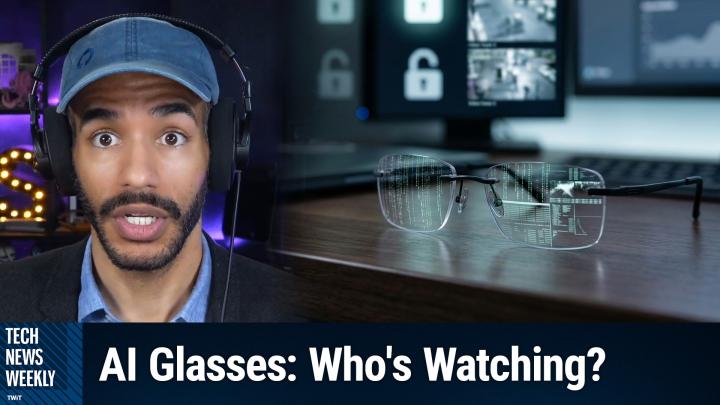
It's the safest and fastest way for an enterprise to go from "we need an AI strategy" to "we have a functioning AI application." Stop wondering how AI will change your business and start building the agents that will lead it. Visit outsystems.com/twit to see how the world's most innovative enterprises are using AI-powered low-code to transform. That's O-U-T-S-Y-S-T-E-M-S.com/twit to book a demo and see the future of software development. Our thanks to OutSystems for sponsoring this week's episode. Of Tech News Weekly. Alrighty, we are back from the break and that means it's time for a quick little story of the week from me. This week, a major investigation from two Swedish newspapers, Svenska Dagbladet and Göteborgs Posten, pulls back the curtain on what's really happening with the data collected by Meta's Ray-Ban smart glasses. Written as a collaborative investigative piece and published in late February of 2026, the report reveals that workers at a Meta subcontractor in Nairobi, Kenya, are being exposed to deeply private video footage, including nudity, sexual content, and sensitive personal information captured by everyday users of the glasses.
Mikah Sargent [00:39:43]:
The investigation, which includes interviews with more than 30 employees at the subcontracting firm Sama, plants a— or excuse me, paints a troubling picture of the gap between how these glasses are marketed and what actually happens to the data they collect. It's a story about privacy, about labor, and the human cost hiding behind the phrase machine learning. So let's kind of talk about real quick the promise versus the reality, because Meta has positioned its Ray-Ban smart glasses as this sort of all-in-one AI assistant. It'll help you translate languages and capture moments and navigate the world hands-free. In Sweden, the glasses are sold at major optical retailers like Cinsam and Synoptic, and sales tripled in 2025, reaching $7 million units globally. There have been celebrity endorsements, including a Swedish hockey player, that have kind of made it so that more people are, you know, jumping on board. But here's the thing: the investigation reveals a significant disconnect between the marketing pitch and what actually happens behind the scenes. When these journalists visited 10 retail stores in Stockholm and Gothenburg, they found that sales staff had wildly inconsistent and frankly flat-out incorrect answers about how user data is handled.
Mikah Sargent [00:41:01]:
There was one employee who said, quote, nothing is shared with them, being Meta. That was a big concern for me as well, but you have full control. Another salesperson said, to be completely honest, I don't know where the data goes or if they take data at all. And then the journalist's own testing revealed the truth, that the AI functions in the glasses require an active internet connection and regular communication with Meta's servers. And so it's nothing— the idea that it's sort of like locally in the app or locally on device is not the case when it comes to these devices. Now, let's talk about what the workers are seeing. It's the workers themselves who, you know, shared what they're seeing. The data annotators employed by Sama, which is a Meta subcontractor, these workers tasked with labeling and interpreting video, image, and audio data to train Meta's AI models., and they described being routinely exposed to intimate content captured by users who likely had no idea they were being recorded or that their footage would end up on screens halfway around the world.
Mikah Sargent [00:42:03]:
One employee described it bluntly, saying, we see everything from living rooms to naked bodies. Meta has that type of content in its databases. People can record themselves in the wrong way and not even know what they are recording. They are real people like you and me. Another one said, someone may have been walking around with the glasses or happened to be wearing them, and then the person's partner was in the bathroom or they had just come out naked. Workers have also reported seeing bank card details, pornography people were watching while wearing the glasses, sex acts that were filmed with the glasses specifically. One worker described the content as material that could trigger enormous scandals if it were leaked. And when it comes to kind of the work that they're doing, the contents can be about any topics, chats where someone talks about crimes or protests, It is not just greetings.
Mikah Sargent [00:42:55]:
It can be very dark things as well, said one of the employees. Now, there's a lot to kind of break down when it comes to what is going on here, what's allowed, what's not, because Meta, of course, needs to be compliant in the EU with the GDPR, General Data Protection Regulation, where companies have to be transparent about how their data is processed. Processed, where it's being processed. And it doesn't seem like, according to what these journalists discovered, that Meta is within the realm of regulation requirements for this data. And so one of the data protection lawyers said this: If this happens in Europe, both transparency and a legal basis for the processing are lacking. Once the material has been fed into the models, the user in practice loses control over how it is used. Overall, I think this is a conversation of needing to understand where the data is going, how it's being used, and just being mindful, I think, of the technology that we're using. I feel like if I bought a pair of, of these glasses, I would, I would be very careful about what they were picking up.
Mikah Sargent [00:44:26]:
But the fact is, not everybody is paying attention to or aware of the, the, the data practices that these companies have. And in particular, what it means when you opt into analytics in some cases, because things can be buried under that term of, oh, help us, help us with the next version of this product by allowing us to, you know, view your data and tag your data and this and that and the other. And then you come to find out what you're actually doing is letting someone somewhere in the world, not an AI, not a robot, not something like that, actually look at this data because it needs to be tagged and understood by a human so that it can then be tagged and understood by an AI system. There's a lot to dig into in this piece. And so I do encourage everyone to go and read this piece, particularly given the investigative work that, that I think is an important aspect of this. So we'll, of course, include a link in the show notes to the article. But we do need to move along because we've got an interview to get to right after we take one more break so I can tell you about TrustedTech. Bringing you this episode of Tech News Weekly.
Mikah Sargent [00:45:41]:
If you're using Microsoft 365, there's a good chance you're paying for licenses you don't need or you're missing ones that you do. In fact, in July, Microsoft is going to implement a significant price increase for M365, and with it, a lot of nuance. And that nuance is where people— we hear that people end up kind of getting things wrong. TrustedTech is there to help businesses of all sizes get the most out of their Microsoft investment by ensuring their M365 environment is well supported and aligned with how the business actually operates. We got to speak with the folks at TrustedTech and kind of learn about— it turns out there are a lot of pitfalls when it comes to this licensing stuff, and you could end up paying a whole lot more money than you would expect because you don't have the understanding of the nuance here. And that's where TrustedTech comes into place. Microsoft licensing, complicated. Options can vary widely.
Mikah Sargent [00:46:36]:
TrustedTech's team helps organizations understand what they have, what they need, and then how to make the most of what they're actually paying for. If you want to make sure you're getting M365 done right, TrustedTech is offering a free Microsoft 365 licensing consultation. Just visit trustedtech.team/twit365 to get a clear data-backed view of your current licenses, optimization opportunities, and next steps. Kevin Turner, former Microsoft COO, Yeah, the former Microsoft COO says, quote, you have an incredible customer reputation. You have to earn that every single day. The relentless focus you guys have on taking care of customers gives them value and differentiates you in the marketplace. TrustedTech also elevates the Microsoft support experience with its certified support services. Enterprises save 32% to 52% compared to the average Microsoft Unified Support Agreement.
Mikah Sargent [00:47:28]:
Whether you're looking to fine-tune your Microsoft 365 licensing, improve the way your organization receives proactive Microsoft support, or both, TrustedTech offers free consultations to help you understand your options. Go to trustedtech.team/twit365 and submit a form to get in contact with TrustedTech's Microsoft licensing engineers. And of course, we thank TrustedTech for sponsoring this week's episode of Tech News Weekly. All right, we are back from the break, and Google just made one of the biggest shakeups to its Android app store in years. It's the result of a long-running antitrust battle that's finally seeming to be coming to a head. The changes could have major implications for developers, rival app stores, and the way you download and pay for apps on your phone. Joining us today to talk about it is Bloomberg's own Leah Nylen. Welcome back to the show, Leah.
Mikah Sargent [00:48:18]:
Thank you guys for having me. Yeah, always a pleasure to get to chat with you. So Google just announced some pretty significant changes to how its Android Android App Store works, lowering fees, opening up access for rival app stores, and more. Can you kind of walk us through what exactly Google is proposing here, and more importantly, what prompted these moves?
Leah Nylen [00:48:38]:
Yeah, so this is a pretty big change for Google. Um, so up to this point, most of the time when people are downloading apps on their phone, they're using the Google Play Store. That is Google's branded own app store. You could always try and download another app store, it was a little bit difficult. So as a result of this litigation, Google is now going to allow other app stores onto the Android platform much more easily. So you will be able to download a Microsoft or an Amazon or an Epic App Store just the same way that you would download any other app. And then from there, you can download apps the same way you would through Google Play. This is, as I said, a pretty major change.
Leah Nylen [00:49:19]:
As Google has for the past, you know, since it invented Android, tried to push people to use its app store, in part because it gets up to 30% of the cost of any download or thing that you buy in an app from the developer. So the other change that they announced is that they are going to lower those fees significantly. So instead of taking 30%, they are now going to be taking 10, 15, or 20%, depending on a couple different things. If it's a subscription, it's only 10%. If it's a developer who agrees to go into like a special program, it's 15%. If you don't want to be a part of their program, it's 20%. But that's still a significant chunk for developers because they have said that this is like a significant tax on them to have to pay 30% of their proceeds to Google.
Mikah Sargent [00:50:08]:
Now, when it comes to the kind of the foundation of this, right? Epic Games versus Google case has been the thing that's been playing out for a few years. Could you give us a little bit of an understanding? How do we get from that 2023, I think it was, jury verdict to where we are today, um, with these changes?
Leah Nylen [00:50:29]:
Yes. So Epic Games, the maker of Fortnite, had sued Google in 2020 alleging that, um, it had monopolized the market for Android app develop, uh, app app downloads. The jury heard the case in the fall of 2023 and sided with Epic. They found that Google had illegally monopolized the Android app distribution market. And then there was this process where Google and Epic both proposed changes to how Google was going to have its App Store. The judge ended up putting in place a remedy that went up on appeal and got affirmed and then came back down, at which point in time Epic and Google had tried to sort of settle the case and they were going to enter into a settlement that was a little less severe than what the judge had imposed before. The judge did not like that at all. He felt that this was a sweetheart deal that Epic was getting because, you know, a lot of these changes were going to apply not just to Epic, but to any developer who uses the Android ecosystem.
Leah Nylen [00:51:35]:
Whereas if Epic did this sort of settlement with Google, all of a sudden it was going to be getting better terms and everybody else was maybe not. So he was disinclined to accept that until it looked like he was going to reject it. And so Epic and Google went back to the table and this is now Google's proposal. It's not official until the judge still signs off, but this is a lot of what he had originally suggested, except that they are also now lowering the fees. So it seems like it's Probably he's going to accept it.
Mikah Sargent [00:52:11]:
Got it. Now the, the catalog sharing then is like sort of the big, uh, aspect there. Um, can— that seems like such an odd term. Is there, is there a reason that it's called that?
Leah Nylen [00:52:23]:
Yeah, that's a term, or, uh, catalog sharing just means that, um, if you wanted to build an app store, um, what you could do is you could say, hey Google, I want you to give me, um, just a copy of what you have in your Play Store right now so I can have have the same apps available for consumers in my Play Store or in my, you know, not Play Store, in my store. So the judge really liked this because it's sort of like giving everybody else when they're building an app store a leg up because all of a sudden they have all the same content. That was one thing that Google said was actually they thought it was going to be difficult to build and like involve a lot of like rights sharing and they didn't like this. So they had scrapped that from the remedy, and then that was one of the main things that he was like really unhappy about. So they have now added it back in. If you are starting up an app store tomorrow, I guess you can ask Google, hey, just give me a list of all the apps you have right now, and I can start from there when I am building my app store.
Mikah Sargent [00:53:26]:
Google's Samir Samat said that these changes go, quote, well, which I mean, you would want to say that go, quote, well beyond what's legally required. In the US and that they're also meant to satisfy regulators in Europe and the UK. How much of what we're seeing here is Google trying to get ahead perhaps of pressure from places like the European Commission and the UK's Competition and Markets Authority, where we've seen in the past those groups know what they're doing.
Leah Nylen [00:53:55]:
Yeah. I mean, to be honest, my take of this whole thing is that this is actually all of the stuff that they're going to be required required to do in Europe anyway, so they might as well just roll it out globally so that they don't end up having like one set of app stores for the US and one elsewhere. So the EU passed this major digital regulation, the Digital Markets Act, earlier this year and not earlier this year, earlier in the 2020s. And it has gone— it went into effect about 2 years ago and Google has already gotten dinged for not opening up its app store enough in Europe. So they're already going to be facing fines for not doing enough there. They were going to be forced to do a bunch more on this. And so this is like their offer. This is, this is them saying, okay, we hear the EU didn't like what we were doing before, so now we're definitely making it easier for there to be other app stores.
Leah Nylen [00:54:43]:
Same thing in the UK. The UK had passed very similar legislation to Europe. It was going to— it gave Google this special designation. It's a strategic market status, which means that they can tell them you have to open this up, you have to make it easier for rivals. So they were going to have to do a bunch of this in Europe anyway. This makes them seem like they're, you know, offering it, makes them seem like they're doing this proactively for one thing. They're not like being dragged into court every single time and it allows them to do it in a global manner. So now we're not going to have like extremely different experience in the US than people in Europe or the UK have.
Mikah Sargent [00:55:23]:
The fee restructuring is an interesting part. Google decoupling billing system, dropping to that flat 5% fee. For developers. Uh, is this a big shift for developers in terms of what they've been paying up to this point? And is it a little bit like the Apple App Store in the sense that we have seen that it's sort of the biggest developers that were impacted by the way that the App Store was set up before, and that smaller developers, um, regardless of the old way of doing things or the new way of doing things, weren't as impacted?
Leah Nylen [00:55:59]:
Yeah, so this is really interesting. As of, you know, today, all developers just pay 30%, unless it's a subscription, and then sometimes you pay 15%. But what Google is doing here is they are sort of decoupling the billing system from the rest of it. So now you can choose to use Google Play billing, in which case it, you know, automatically makes the charge through Google. Or if you're a developer, you can choose to use a different option. So you could use like Stripe, you could use Shop Pay, all of these other options options that we have, like when you're buying something online, you no longer have to use Google. And that developers like because you might be able to get like a cheaper, you know, if you're accepting credit cards, usually the credit card transaction fee is sometimes somewhere between 3% and 5%. So if you do a lot of transactions, you might be able to get it cheaper elsewhere and then you don't have to use Google at all.
Leah Nylen [00:56:52]:
And then so that's the 5%. You you can stop using Google altogether, stop paying that 5%. And then separately, they're going to charge either this 15% or 20%. So the max that you're ever going to have to pay Google, even if you're using their billing, is now 25% instead of 30%. Or if you agree to some of the other restrictions, 20% instead of 30%.
Mikah Sargent [00:57:14]:
And then Epic's Tim Sweeney, which I was just reading that perhaps part of the agreement is that he won't talk poorly about the, uh, Google App Store or something. Maybe you can tell us a little bit about that. I thought that was really fascinating, but that is fascinating. Yeah. He said after the announcement that anyone can now launch a competitive app store. Do you think that's realistic or are there still practical barriers that could keep rival app stores from truly competing with Google Play?
Leah Nylen [00:57:41]:
So the one thing, if you are going through this process to become a registered app store with Google, they are going to drop what had been called like the scare screens. You will no longer have to like keep pressing, okay, okay. I understand that this is like not Google's Play Store and it can do all these horrible things. I think Epic had said before it was going to take like 11 screens to go through if you wanted to like download something through another thing. Google has agreed that it's just going to drop that. It's going to make it the same for you to download an app through an alternate app store as it is when you do it in the Google Play. So yes, it will be a lot easier for you to use an alternative app store. You as a consumer or you as a company to offer an alternative app store.
Leah Nylen [00:58:23]:
So, um, you know, he did say they sort of consider this now the same as Windows. Windows is sort of like considered the, the easiest platform for developers because there aren't a lot of restrictions on, you know, how people download things, where people download things from. Um, and all of these changes that Google is making are supposed to make it a lot easier consumers and developers to sort of have options for how things are paid for and how things are downloaded.
Mikah Sargent [00:58:53]:
Lastly, kind of looking at the bigger picture here, we've got Google making these changes, Apple of course facing its own app store battles, regulators around the world tightening the screws on how these platforms operate. Where do you see all of this heading, uh, especially given your, uh, your domain of knowledge or your knowledge domain? Are we looking at a fundamentally different app economy in the next few years, do we think?
Leah Nylen [00:59:16]:
I think it's definitely changing for Android. Like, this is a pretty big move for anyone who owns an Android device. This applies to both tablets and phones. And outside of the US, that's most people. Most people have an Android phone. It's just in the US, most people have an iPhone. So that's still the one big barrier is Apple has really, really resisted a lot of these changes. It is challenging the DMA and various fines.
Leah Nylen [00:59:42]:
The restrictions that have been imposed on it for not opening up the App Store. It is still litigating with Epic on and on and on that lawsuit about having to open up its App Store. So the Apple world is still very locked in, but now the Android one is a lot more open than it was before.
Mikah Sargent [01:00:01]:
Nice. Well, I think, you know, there's a lot more coming down all of these pipelines. So I'm looking forward to talking to you again soon. Soon. Uh, but I thank you so much for taking the time today to go through where things stand and what's next. If people would like to keep up to date with your great work, where are the places they should go to do so?
Leah Nylen [01:00:21]:
Yeah, I am on Blue Sky at Leah Nyland, and you can also follow me on Bloomberg to get an email whenever I have a new story.
Mikah Sargent [01:00:27]:
Awesome.
Leah Nylen [01:00:28]:
Thank you so much for your time today, Leah.
Mikah Sargent [01:00:31]:
Thanks for having me. Alrighty, folks, that brings us to the end of this episode of Tech News Weekly. Weekly, we publish a show every Thursday at twit.tv/tnw. You can head there to subscribe to the audio and video versions of our show. If you out there would like to get ad-free versions of all of our content, well, join our club. Join the club. Join our club, twit.tv/clubtwit, or you can scan that QR code in the top corner there. When you join the club, you will gain access to some pretty awesome benefits.
Mikah Sargent [01:01:00]:
As I mentioned, ad-free content. You also gain access to our special feeds. That includes our feed for our bits, clips, sort of behind-the-scenes moments. We also have a feed for our live coverage of tech news events and a feed that has all of our club shows in it. That includes My Crafting Corner, Stacy's Book Club, and so much more. If that's not enough for you, well, I understand, I guess, because I'm also going to give you an invite to our wonderful Discord server, a fun place to go to chat with your fellow Club Twit members and those of us here at Twit. If that sounds good to you, I'm sure it does. twit.tv/clubtwit.
Mikah Sargent [01:01:38]:
Plus, we've got great deals all the time, so you can check those out as well. twit.tv/clubtwit.
Mikah Sargent [01:01:46]:
If you would like to follow me online, I'm @mikahsargent on many a social media network, or you can head to chihuahua.coffee, chihuahua.coffee, where I've got links to the places I'm most active online. Be sure to check out my other shows. IOS Today, Hands on Apple, which we'll publish today. And on Sunday, we'll be recording our next set of Hands on Tech episodes. So be sure to tune in then as well. Thank you for being here. I'll catch you again next week for another episode of Tech News Weekly. Bye bye!