MacBreak Weekly 994 Transcript
Please be advised this transcript is AI-generated and may not be word for word. Time codes refer to the approximate times in the ad-supported version of the show.
Leo Laporte [00:00:00]:
It's time for MacBreak Weekly. Jason Snell is here. Andy Inaco. Alex has the week off. We're going to talk about Apple's exciting new Apple tv. It's vibrating. We'll also talk about what really happened with Antennagate and some good security news from Apple. All that and more coming up next on MacBreak Weekly.
Leo Laporte [00:00:29]:
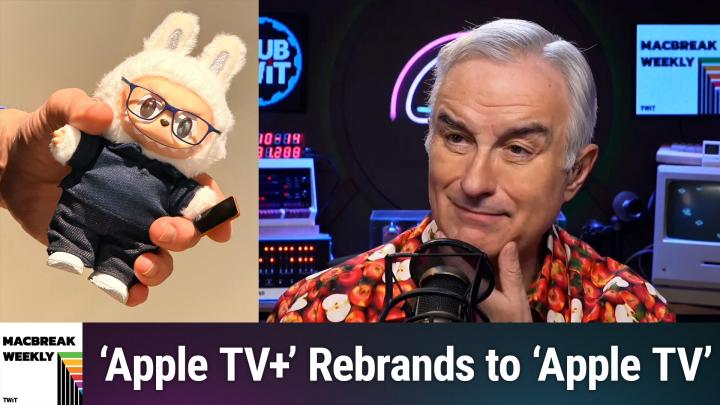
This is MacBreak Weekly. Episode 994, recorded Tuesday, October 14, 2025:Tim Cooks Labubu. It's time for MacBreak Weekly, the show we cover the latest Apple news. And joining me now from his library of Solitude, Andy Ihnatko. Hello, Andrew.
Andy Ihnatko [00:01:00]:
My library of power. That is power.
Leo Laporte [00:01:02]:
That's what I meant. I tried to watch the Superman movie over the weekend. That is the worst movie. Anyway, sorry, it just made me think of the Fortress of Solitude rising up out of the ice. Good to see you, Andrew. Also here, Jason Snell of sixcolors.com. All six of them are here.
Jason Snell [00:01:21]:
I am in Stately Snell Manor.
Leo Laporte [00:01:23]:
Right? Stately Snell Manor. Hey Alfred Snell.
Andy Ihnatko [00:01:27]:
Hello.
Leo Laporte [00:01:28]:
Hello, Jason.
Andy Ihnatko [00:01:28]:
Only, only to get to it, you have to lift the head off the bus of Chris Espinosa.
Leo Laporte [00:01:33]:
I love it. That's a deep cut. Yes.
Andy Ihnatko [00:01:36]:
Thank you very much.
Leo Laporte [00:01:37]:
You notice there is a fourth missing MacBreak Weekly. Co host Alex Lindsay has declined attendance today. He's sad about Ice Block. No, he's not. He's just not here because he has another job.
Jason Snell [00:01:51]:
Yeah, he's, he's, you know, doing secret stuff.
Leo Laporte [00:01:56]:
Secret, secret stuff. Secret. We won't, we won't get right into Ice Block. We'll talk about Tim Cook's Labubu before we do anything else because that's a.
Andy Ihnatko [00:02:07]:
Show title even before we even start.
Leo Laporte [00:02:09]:
Tim Cook is in China. He received a custom Labubu holding an iPhone. Is that right?
Andy Ihnatko [00:02:18]:
Yes. He went to like the Labubu designers like Factory for a one off Labubu the most. And he's probably already been offered like 10, like $100 for it by somebody on eBay. Okay, 500.
Leo Laporte [00:02:32]:
Yeah, so he did. And he did a live. This says sales event. What? I don't. What's that?
Andy Ihnatko [00:02:39]:
He went. Well, the Apple Store has its own the, the, the, the Chinese version of TikTok owned by this. Also owned by ByteDance, but in China it's called something. Something else. Very interesting. So they, so Tim did a live stream like Apple Store event to announce. Hey, the, the iPhone air is. Is coming on October 22nd, which was I mean, they've never.
Andy Ihnatko [00:03:00]:
She's. He's never done a live TikTok for a product announcement. Here it was.
Leo Laporte [00:03:04]:
It was the Chinese version of this douyin, right? Which is. Is that the same Is that sells Tencent.
Andy Ihnatko [00:03:10]:
It's the same thing. It's also owned by this. It's owned by the same. Some same company. There was. It was. It was pretty fun. I mean, it's a little bit looser.
Andy Ihnatko [00:03:17]:
There was one. I saw one like a Chinese tech blogger blog post saying, Tim Cook debases himself on social. Like, no, that's where the people are. That's where the customers are. That's like the outlet that people, like, buy products through. So, yes, of course he's going to be there and do that. Just like here, he would do a live stream on YouTube.
Leo Laporte [00:03:38]:
So we don't hate China. We love China.
Andy Ihnatko [00:03:42]:
It's fun. I would kind of like to see. I know that in the US that's the international launch of the entire platform, so it can't be something as simple as that. Wouldn't it be cool if, like, if when they announced. When they finally released, like, the iPad M5, they just did. You know what? We're just gonna do like an Instagram Live where we're just gonna do a TikTok on it, where it doesn't have to be like swooping drone video through the rainbow arch of the Apple campus. And it just seems like, oh, yeah, yeah, we announced it today. Isn't it cool? Hey, here's what it looks like.
Andy Ihnatko [00:04:12]:
Here's the box. Looks like we made a video. Go nuts.
Leo Laporte [00:04:16]:
Tim said the. Maybe the translation. Maybe he said it in Chinese. It has really. The boo Boo has really bl. Blown up around the world. It's huge. I love it.
Leo Laporte [00:04:27]:
I have my personal one now, and I'm putting it right on my desk. I love the Chinese people and the culture. There's a third part of that sentence he left out, you know, the government. But that's. I understand. I understand. It's implied.
Andy Ihnatko [00:04:43]:
That was cool. That was. That was like a. I don't. Of course, I don't recognize the content creator who shot that. They gave. Got some time with Tim, but that was. It's not like that was his big speech.
Andy Ihnatko [00:04:52]:
Like, I love my labo boo.
Leo Laporte [00:04:54]:
Yeah, very big here.
Andy Ihnatko [00:04:56]:
It's like, no, I've said.
Leo Laporte [00:04:57]:
I've said this. I love the Chinese people in culture. It was my major in college. I really do love it. And we are fighting now, of course, with the Chinese government over trade and trade war. And it's unclear what the outcome of that will be. It was funny, the stock market plummeted on Friday when Trump announced an additional 100%, which makes it, I think, 134% tariff on China. And then on Saturday, he said, well, we're.
Leo Laporte [00:05:24]:
It's. I don't know, something kind of like, oh, it's going to be fine. I think that's exactly what he said. It's going to be fine. And the stock market went up, so it's very confusing because it's going to be fine is not the most. I don't know. And will Apple continue to get its tariff relief? I don't know.
Andy Ihnatko [00:05:42]:
It might be okay because, remember, he also said that he was. He was going to lower drug prices by 500%. So it might be. I think it was 1400 percentages, not what he thinks they are.
Leo Laporte [00:05:55]:
It would be a miracle. Maybe they pay you to take the drug. I don't know.
Andy Ihnatko [00:06:00]:
Alex maybe had Leo Bloom doing his counting. I don't know.
Leo Laporte [00:06:05]:
It is. It's the producers. So Today is the 20th anniversary of Mr. Cook taking over Apple. And I need you to talk me off the ledge here, Jason Snell, because again, we're starting to hear people, I even saw somebody on Social say, it's over. Tim's going to retire as CEO. That's not. Is that.
Leo Laporte [00:06:28]:
He's 64, right. He's 65. He's old enough. 64, he could retire. But I don't see him retiring, do you? No.
Jason Snell [00:06:38]:
What is. What is this the anniversary of? Because it's not 20, that's for sure.
Leo Laporte [00:06:43]:
Two decades ago, he was named. Oh, I'm sorry. Oh, yeah, you're right. This is. Sorry, I'm reading Apple Insider. He took over operations. That was really the road to his huge success. That was the road to China.
Jason Snell [00:06:56]:
Of course it was.
Leo Laporte [00:06:59]:
Yeah. Yeah. That's where we started to move.
Jason Snell [00:07:01]:
High road to China.
Leo Laporte [00:07:02]:
Yeah. Because Steve Jobs wanted to make Max, famously, in the US to remember, he had that factory painted, all six colors.
Jason Snell [00:07:11]:
And if you think back to 20 years, what you will, people today won't even believe it, but, like, Apple was bad at operations. That's one of the reasons Tim Cook came in.
Leo Laporte [00:07:21]:
Terrible.
Jason Snell [00:07:23]:
Dell was setting the standard. Dell was doing just in time. You know, essentially, they didn't make it until they knew there was a buyer for it immediately. And Apple at that, in that era, had huge amounts of excess inventory. It was actually a point where one of the big things weighing down the stock and weighing down the company's financial line is that they had unsold inventory, so they'd make all these computers because 20 years ago it was basically Macs and, and, you know, Max and iPad, iPods, I guess, but mostly Macs. But even with the ipods, this idea like you've got product in a warehouse, you spent the money to make it, nobody has bought it, and they would have to do sales. And, and, and you look at somebody like Dell and they were just literally, you make the order, they build the product and they send it to you. Which literally, if you look at Dell and Apple 20 years ago, Dell, you would say, oh, that's how it works today.
Jason Snell [00:08:22]:
And Apple, you'd be like, what, what, what are you doing? And that's sort of Tim Cook came in and made his name doing that.
Leo Laporte [00:08:28]:
Steve, of course, passed 14 years ago, and that's when Tim took over as CEO. So that's, that's the accurate date. He has now been CEO longer than Steve was. This chart from Visual Capitalist. I think these charts are interesting. Two eras of Apple leadership. Over 14 years, Steve Jobs increased Apple's value, $344.5 billion. That's 13,900% because it started at nothing.
Leo Laporte [00:08:56]:
When you start at zero, it's easy. Tim himself has increased Apple's market cap $3 trillion, but that's a mere 966%.
Jason Snell [00:09:07]:
It's still around here. Yeah.
Leo Laporte [00:09:09]:
And you can compare the products. It's a nice chart. I think they did a nice job with that.
Jason Snell [00:09:14]:
So, I mean, I don't think the errors are actually comparable in any way. Just because. Because one is. Steve Jobs took a dead company and introduced a whole bunch of products that turned it into a live and successful company.
Leo Laporte [00:09:28]:
This chart begins with the imac.
Jason Snell [00:09:29]:
His return to Steve and the Tim Cook era is all about taking a hit product and making it enormously profitable all over the world and optimizing and growing that hit product.
Leo Laporte [00:09:42]:
And I have to point out that his product chart is bookended by the Mac Pro trash can, which was kind of a famous classic, classic failure. And the Vision Pro on the other side, unknown how that's going to turn out.
Jason Snell [00:10:01]:
Various opinions about.
Leo Laporte [00:10:02]:
Various opinions. Yeah. As you know, I'm not a fan, but I think that there is. You've made a strong case and I agree with you that this is the first step in a road toward something that will be valuable. Maybe not a nerd helmet, but I.
Jason Snell [00:10:15]:
Heard from a lot of people who said, I don't wear glasses. Why would I. Why would I wear this product, this inevitable AR product that will get. I mean, that's not the segment, but I'll just say I think it's interesting. That's the. That's the challenge is you got to make it so worth it that people who don't even need to wear glasses will wear it. Just like, you know, smartphones. You know, nobody goes around without a smartphone now.
Jason Snell [00:10:34]:
Even if you were not somebody who carried a phone with you, you do it now. So that's always the challenge with tech that's going into a new place is, you know, is it worth. Can you reach people? Do you make it worth the while? And, you know, Cook rode the wave to get it back to that topic of taking a product, the iPhone. And, you know, now Apple is. They can produce so many of them, they're in so many different markets, there are so many different models. And then he added the services stuff on top of it, which essentially is extracting more revenue out of the people who bought iPhones. Like that has. That's the story of Tim Cook's reign is going from a company, you know, it's like an order, maybe not an order of magnitude, but like, it's an enormous leap from a company that made some nice products and made a lot of money to a company that is like one of the biggest companies in the world.
Andy Ihnatko [00:11:19]:
Yeah.
Leo Laporte [00:11:20]:
I should point out real quickly, when Apple came out with the Apple Watch people, a lot of people said, I don't wear a watch.
Jason Snell [00:11:28]:
Exactly.
Leo Laporte [00:11:29]:
And many people wear.
Jason Snell [00:11:30]:
And a lot of people do now because they. They find value in doing that, even though they.
Leo Laporte [00:11:34]:
According to the Vision Council, 63.7% of adult Americans wear prescription eyeglasses. The rest wear Ray Bans. So I think there's a market.
Andy Ihnatko [00:11:43]:
Yeah, it's. I believe that if. If you're targeting. If you're looking for something that's going to be the next smartphone, that's like saying that, hey, wow, it's nice that you. You're. You just made Abbey Road. Now your next album has to be as good or better than that. It's like, are you going to design a new product that is more as successful, if not more than the single most successful transformative product that we've seen in the past 50 years? That's not a realistic expectation.
Andy Ihnatko [00:12:12]:
If it's the expectation of. It can be. We have a product that, in terms of existing style and culture, where people will use, like sunglasses, where people. Unless you're a blues musician, you do not wear sunglasses 24 hours a day. Seven days a week, you put them on for a certain situation, you take them off. When that situation has passed, then sure. And I don't think it's directly comparable to watches because a watch is something that has existed for since 1911 and it's deeply, deeply embedded in the culture already. And it's not a big ask to say yes, I'm gonna put something with cameras on my face all the time for much of the day.
Andy Ihnatko [00:12:52]:
But again, we'll see how this settles out. My only argument is that if people are absolutely assuming that this is going to change the world, all they, all we have to do is iterate make it smaller, make it lighter, make it cheaper, that will be great. That'll make it a better product. It might not make it a successful product. Yeah.
Jason Snell [00:13:09]:
I would say if I was a tech CEO of a company that's the size of Meta or Apple, I would look at that and say all of the miniaturization and display technology is converging on a product like that and I want to be there and I'll make a bet that it's going to happen. And if I were just a random person making a bet that it will happen, I would not make a bet that it will happen because I think it's a, it's not a sure thing. But if I'm a tech CEO, I'm going to take the chance.
Andy Ihnatko [00:13:38]:
Even if this, even if this turns out to be like an Apple TV streaming box kind of success or even a HomePod level success, I think it will have been definitely worth Apple's time and definitely it will have a good place in Apple's product line.
Leo Laporte [00:13:52]:
Ah. And, and people are saying, oh, and you know, the success of the AirPods, the success of the Apple Watch.
Jason Snell [00:13:58]:
Yeah. I mean you can attributable to you, you can build new things that, that you wear somewhere on your body and if there's a proven bit of value to it, people will do it. You made the point about the Ray Bans. That's why I'm more inclined to believe that this will work, is because, and that's why the Meta Ray Bans are so smart, right? Is that even people without need for correction wear sunglasses outside and an outdoor context to have a little speaker. And you know, it's actually not a bad place to start.
Leo Laporte [00:14:28]:
You probably wouldn't want to wear these types of sale. Come to think of it.
Jason Snell [00:14:31]:
I know people who do crow for.
Leo Laporte [00:14:33]:
Inside and the, and the glasses for outside. Maybe.
Jason Snell [00:14:36]:
Yeah, maybe. But it's, you know, so it can be Done. But it's not a. We. We debated it so much. I, I actually got a bunch of feedback about our debate last time. I think, I think good like people took sides and all of that, but I do think that it, it bears repeating that it's not a guarantee that, that the tech companies are doing this because if it, if it has the potential to replace the smartphone and if that's true, you got to make a bet on it because you don't want to be left behind.
Leo Laporte [00:15:02]:
You need to know, you need to guarantee the next new thing. Right. You always look probably best thing.
Jason Snell [00:15:07]:
Honestly, if I had to bet, if I was making that bet, I would bet on the smartphone and say that everything else is still going to be a smartphone accessory to a certain degree. Because in the. You're never going to be able to put as not not enough enough isn't the issue. You will never be able to put as much computing power and battery in a in glasses as in a slab in your pocket. Right. Because the slab in your pocket. As battery tech evolves enough to put stuff in the glasses, it'll also evolve to put huge amounts of battery in your pocket. And the computing environment may be such that you can have a pretty good computer in your glasses, but guess what? The one in your pocket is going to be even better and its connectivity is going to be even better.
Jason Snell [00:15:48]:
And everybody's already got a smartphone, so everything that gets built out from now will probably just leverage the smartphone in order to drive it all. So if I had to be a betting person, I'm like, never bet against the smartphone. It's the most, probably the most successful product category that we will see in our lives. But this could be a very interesting category too.
Andy Ihnatko [00:16:06]:
Yeah. And in the more it's. It's we. I'm having a weird relationship with this concept, but because even as we continue to go more and more deep into the possibilities of this as a platform, the success of something like Meta Ray Bans, I still come back to I want Google Glass, but better. I thought that Google really, really got 85% of this right. And they were stymied mostly by the limitations of smartphone technology and the limitations of batteries. If you think. Because if you think about it, Google Glass was bone conductive earpiece that could basically speak to you, a microphone that could pick up what you're saying.
Andy Ihnatko [00:16:45]:
You can give it voice commands to what was then a rudimentary AI and a small unobtrusive display somewhere in your field of vision that was not intended at all to Occupy your full attention. It was just there to communicate things to you visually. If it made sense to show you something rather than say something like if I'm walking across Manhattan and I want to show a live Google Maps plot of where I am and where my next left turn is going to be as I'm taking my walk. If you just give me that. But better, I think that you have for me a very, very attractive product and a very, very sensible product. Whereas Gurman's latest newsletter amended some of the stuff he was talking about last week. Basically saying, I think the bit of news that he was delivering this week was that Apple's glasses will have, he thinks will have two different modes to them where if you are near a Mac, it will give you the full vision. Excuse me.
Andy Ihnatko [00:17:44]:
It will give you a vision OS like experience. If they're operating alone, it will give you a much more subtle and quiet low intensity power experience. And I understand the low intensity power experience. What I don't understand is how you can do anything under the best of circumstances in a see through lens that is anything other than like a WatchOS style. Here is a tiny, tiny little screen that's giving you a small patch of information. I don't understand how vision OS could really live in that kind of a space. Unless we're talking about the difference between OS X on Mac OS and OS X that's powering the Apple Watch and powering the iPhone. I just don't see how anything like interacting with an app as though it is a window or a, an actual tactile object in my field of vision is going to work in a lens where I'm expected to see through this display and also look at the outside world.
Andy Ihnatko [00:18:45]:
I don't even understand how the optics will work with that. About how if I need to really, really be focusing on something intensely that's on the screen. The fact that this is a see through lens means how am I going to make it. How is that lens going to make it opaque enough so that.
Leo Laporte [00:19:00]:
Well, there's technology that you can. Opaque glass. I mean, yeah, you have it on the 777.
Andy Ihnatko [00:19:06]:
Yeah, I mean I know that you can basically snap a polarization onto it.
Leo Laporte [00:19:11]:
You could do it in software.
Andy Ihnatko [00:19:14]:
I'm just saying that from what I'm familiar with, I don't know how that would be a very, very useful interface, especially when you also imagine that, okay, now also light is going to be coming at you from the sides behind that lens. So there's a lot that I don't I think that a lot of people are imagining the science fiction possibilities of this and, and not seeing how even within the next five or 10 years that could be delivered or whether that.
Leo Laporte [00:19:39]:
Well, you guys are smart. Let's come up with the form factor. What would be the ideal form factor? I mean, let's assume, I mean AI is going to advance the point where you might want an AI companion to interact with probably through voice. You probably do want some sort of heads up display on the world. I mean that was, Daniel Suarez really encapsulated that beautifully in Damon where people were walking around and there'd be little bubbles above people's heads with their social score and personal information or you know, this place has a great deal on blue jeans or whatever. You'd probably want to. So you have audio, you'd have a microphone, you'd have some sort of visual. You need a lot of computing power, you need a lot of battery, you need something that's comfortable.
Jason Snell [00:20:31]:
Network connection.
Leo Laporte [00:20:32]:
You need a network connection.
Jason Snell [00:20:35]:
That's why I think it's one of.
Leo Laporte [00:20:36]:
The reasons there's no. A lot of these are really. The Meta display, for instance, are really kind of prototypes for something that is not quite there yet down the line.
Jason Snell [00:20:47]:
Yeah. And what Andy says about opacity, like if you're a hardware engineer working on this, I'm sure that Apple's goal is that what you see on the Vision Pro in AR mode, where you've got a window with essentially translucency, where you can, it's, it's fuzzed out but you can still see through it kind of. And you can, and you can have that operable window interface in front of it that they, you know, their goal is to have that be possible in a set of AR glasses. Now is it? I mean that probably people with PhDs in optics are going to be the ones who figure that one out. But like that's got to be a goal of it. And I would argue that if, if you can't do that, this category is going to go that much slower because I think those are some of the foundational tech inventions that need to happen to make these things more than just pretty basic kind of heads up displays with some basic information in them. And if that's the case, you know, that's one of the reasons why you would say it's going to take a lot longer than people think. Because to get at that miniature and to do that much in terms of the optics, we have this huge problem which is we have our eyeballs and they see out.
Jason Snell [00:21:59]:
And that means the only way to get things in there that we know of is to suspend something in front of them and shoot light into, you know, the back of our eyes. And that in terms of the physics of it, that it gets real hard, real fast, we aren't going to have like a little drone probably hovering in front of us shooting things in our eyes. Right. That's probably not what the way this works. So it's, there's a lot of challenges. That's why I think that people who are skeptical that this is going to happen, like, look at Apple and the Vision Pro. They're using that Sony display, which is a very impressive display. It's incredibly small, it's an oled, it looks really great for what it is.
Jason Snell [00:22:35]:
But like Apple is one of the most powerful and technologically advanced companies in the world. But like, they don't, they can't just will an incredibly high resolution display that's teeny tiny into existence. It takes partners and it takes years, if not decades to get all the way down to what you need. And so if, if the tech industry is like, yeah, we're going to just have those optics that'll make you do Vision Pro in AR and you'll put them in glasses and we'll have that in a couple of years. Like there's somewhere there's a whiteboard with a big cloud and a question mark in the middle, right? Because it's like, that's not how it works. You've got to. Some of this stuff. Like another example would be Apple trying to get the Apple watch to do blood sugar.
Jason Snell [00:23:18]:
Right? It's like, great idea. The most powerful technological company on the planet hasn't gotten it to work. Right. Like it's a hard. Because it is, it is. And these, you know, you can't. The laws of physics are, are they hold fast even for big tech giants.
Andy Ihnatko [00:23:34]:
Yeah, I mean you can, you can build a, you can, you can build and sell a $20,000 like 8k high frame rate projector, okay. For home theater. What you can't fix is the problem that it is impossible to project blackness. Okay.
Leo Laporte [00:23:51]:
That's.
Jason Snell [00:23:52]:
Imagine you're never that, right?
Andy Ihnatko [00:23:53]:
You're never.
Jason Snell [00:23:54]:
I want a flashlight that's a dark, that's a dark light so I can shine dark on things.
Andy Ihnatko [00:23:58]:
Right.
Leo Laporte [00:24:00]:
This is the real problem with this whole thing is it comes from. It's a sci fi trope and it frankly is still science fiction. It's not real yet. There's a lot I want it, but we all want flying. Flying cars.
Andy Ihnatko [00:24:11]:
Yeah.
Jason Snell [00:24:11]:
A lot of tech industry stuff and a lot of probably arguably tech tech industry foibles right now are people in charge, who have visions, who believe this science fiction stuff, which. Science fiction is great. It's my favorite genre. I love hearing, I love it, it is inspiring. And I like that people are like, why can't we make that happen? I think the problem is that there are some people in positions of power in this industry who think that through sheer force of will, they can make them happen. And in a lot of cases, it's just not that simple because of the laws of physics, etc. Etc.
Andy Ihnatko [00:24:43]:
I keep thinking back to like the, the Apollo program where so many, they, they had to go through a whole bunch of thinking before they landed on the right idea of, okay, here is a lunar lander separates from whatever. But they started off with such a dead end saying, well, gosh, how are we going to solve the problem of firing a rocket from, from Earth, landing that rocket on the moon and then having that rocket take off and return to Earth? Because that's how science fiction movies always depicted it. First someone had to say, what if we didn't do it that way? What if we just like had a tiny, tiny little bug detach from the larger vehicle, use that to land on and leave most of it behind? And then even then, like, very, very famously, there was, oh, gosh, how are we going to save weight? We've got all these. And then suddenly they realize that, wait a minute, we've been designing aircraft for our entire lives. We've assumed that the lunar lander needs to have seats in it. And because it has seats, it needs to have big windows with a big angle. We forgot that this is 1/6th gravity and they could just stand very comfortably. And that's why I keep thinking of that when I'm thinking about a product like this, because people think, well, okay, so if it's going to be the next smartphone, we're going to need a screen.
Andy Ihnatko [00:25:52]:
It's going to have to have a really good quality screen. It's like, well, what if you don't need a screen? Like, what if? This is why my vision of it has always been a really, really good AI, that really good agentic AI that lives on your phone, because you're probably going to have your phone in your pocket anyway. A bug in your ear that simply is most of your interaction. Maybe some kind of a little pip to screen that can. Again, the times where it's relevant to simply show you something instead of Tell you something. So it can do that. And maybe a camera that I could just simply wear as a magnetic pin when it's relevant and safe for me to allow the AI to see what I'm seeing. So it can help me out.
Andy Ihnatko [00:26:32]:
But I can always just take it off in circumstances in which it's very, very rude or illegal for me to wearing a camera. That's what I, that's, that's what gets me excited more than a wearable pair of glasses at this point.
Jason Snell [00:26:44]:
I mean, just how, how you interact, how you, your brain processes information. The question of like, do you like. Because some people I think, don't have a problem talking to an agent and hearing an agent in their ear. And other people would drive them, it would drive them crazy. And so I think that, that's why I think the most likely scenario is a, I always say the constellation of devices, right? So you get your smartphone in your pocket which doubles as your high resolution display. If you want to look at a picture or something, you've got a really nice display plus all that computing power in your pocket. You can choose to wear glasses that will do some markup on the world around you if you want. You can have just a thing in your ear.
Jason Snell [00:27:22]:
You, you can have a camera in your glasses or a camera attached to your shirt. Like, there are lots of options to do that that aren't. Again, I think one of the things that they're trying to do when they have these visions of these incredibly do it all kind of glasses of the future is they're trying to set a direction for them to go. This is actually why I think that Meta is smart to do the, the bottom up approach here is because the, the Apple Vision Pro approach, which is we're going to start with the all in one thing and then just make it smaller. You may not discover what is more likely to happen, which is that the, the bottom up approach, where you end up with a really good accessory and that you don't need more than a really good accessory because between that and your AirPods and your camera and whatever, you've done it, you solved it. You don't need to go and put everything on your face.
Leo Laporte [00:28:12]:
Well, I think we're going to be in an interesting time.
Jason Snell [00:28:15]:
It is interesting.
Leo Laporte [00:28:16]:
20 years.
Jason Snell [00:28:17]:
I mean some. I read a story the other day that said when things are most broken and confusing and nobody knows what's going on, that's when it's the most interesting. Right? Like we just came out of, you know, in many ways we still are in like decade plus of just kind of iterating on smartphones. Right. And that's fine because they're great, but it's not entertaining or there may be.
Leo Laporte [00:28:38]:
More, I think for the next few years.
Jason Snell [00:28:41]:
I don't think the smartphone's going anywhere.
Andy Ihnatko [00:28:44]:
Yeah, exactly. I mean, that's such a good point because I think that like The Newton Method MessagePad is kind of the equivalent.
Leo Laporte [00:28:51]:
That was very exciting, wasn't it? Exactly.
Andy Ihnatko [00:28:54]:
And it was, well, what's the next step? Well, we'll take like a laptop and make it into a handheld, which is not the wrong way to go, but it was the right answer. The smartphone not only required new technology, but it required such a shift in thinking about what the role of this device should be, why people would want to be using this instead of any other computing device. And that's why I often think about that when I think about like we are imagining them. We are in 1990 and we're imagining the Newton message pad. We are incapable of imagining the iPhone.
Leo Laporte [00:29:27]:
I was, I have a video somewhere of me in 1994 holding up the message pad saying, if this just had Internet connectivity as you walked around, you'd really have something. But we didn't have it yet. The cell phone companies weren't providing high speed Internet in the early 90s. And so technology has to make some leaps before you can do the thing you really want to do. Anyway, this all started with a look back at Tim Cook's 20 years as COO and then 14 as CEO. No truth to the rumor that he's about to retire. Can we just lay that to us?
Jason Snell [00:30:02]:
I don't see it. I don't see it. Mark Gurman is talking a lot about succession planning. Succession planning, but the succession planning is more. It's an interesting story if you're an investor and Bloomberg's really concerned about that. You want to make sure that Apple has a succession plan. All of that is true. But it's very hard to look at Tim Cook and, and think one.
Jason Snell [00:30:21]:M
I mean, look, he. First off, he could retire now if he wanted to, and he hasn't. I think that he believes that Apple is his life's work. I think that he believes that he is in the best position to navigate Apple through some very difficult political and strategic waters right now. I, and I think that he doesn't. I mean, I don't know what he would do if he retired. I mean, maybe he'd do like a charity or something. But like, I feel like he's got.
Jason Snell [00:30:46]:
And also he Seems super healthy, in great shape. I feel like Tim Cook, we don't, we don't live in a world where 60 or 65 is retirement age anymore. And although, you know, there comes a time when you look at somebody and say you should probably step aside and let somebody else come in and enjoy.
Leo Laporte [00:31:03]:
The rest of your life, you say that. Okay.
Jason Snell [00:31:05]:
I was averting my eyes, Leo. I was averting my eyes. No, but like all. I think the, the, the years of being an active, wise person who is steering a big company, I get no, no whiff from Tim Cook that he's checked out or that he's lost the plot. Like, I think he's probably right and people have a lot of quibbles with some of Tim Cook's moves, but I think he's trying doing what he thinks is best to do the right thing for Apple. And I think that if you. In his heart of hearts and in the board's heart of hearts, more importantly, they believe that he's the guy. Certainly as long as we're in the current administration, if not quite a bit longer.
Jason Snell [00:31:47]:
So I don't think he's going anywhere.
Andy Ihnatko [00:31:49]:
Unless, until, unless he gets sick. I don't see him moving.
Jason Snell [00:31:52]:
Right, right. If he has a health issue that distracts him, that's different salons.
Andy Ihnatko [00:31:56]:
He's healthy enough and cognizant enough to. So at some point when he gets into his 80s, there might be, you know, Tim, let's at least like have a list.
Jason Snell [00:32:08]:
My guess, if he is, if he remains healthy, is that maybe when he turns 70, which is five years from now, he becomes chairman of the board, which is what Steve Jobs would have done had he lived. He was going to be the chairman of the board. And, and that allows Tim to keep his hand in and gives the board some confidence that he's still around, but takes him off the day to day and, and then he kind of like goes from there to retirement. I think that that's the most likely scenario by far.
Andy Ihnatko [00:32:42]:
I think you're right.
Leo Laporte [00:32:43]:
And, and I think I, we talked about this last week. I just. Because the, it's. The drumbeat is still there, which is weird.
Jason Snell [00:32:50]:
Now, I thought Mark Gurman's got sources and I think those stories do really well for Bloomberg, so they write them.
Andy Ihnatko [00:32:55]:
Yeah.
Leo Laporte [00:32:57]:
All right, let's take a break. And still lots to talk about. Including the brand new. Very excited Apple tv. I know. It's hard not to giggle, isn't it?
Andy Ihnatko [00:33:08]:
What a great tease you are.
Jason Snell [00:33:10]:
Yeah. It's vibrant. It's a new Vibrant. Apple tv, Leo, it's vibrant.
Andy Ihnatko [00:33:15]:
And let's not shut the increased bandwidth of sending that signal.
Jason Snell [00:33:20]:
There's a Rainbow gradient now.
Andy Ihnatko [00:33:21]:
12%. Like less data throughput to communicate.
Jason Snell [00:33:25]:
Yeah, I mean the old one was just kind of white and now it's this rainbow gradient that takes a lot more bandwidth to get that thing in there. It's much more sophisticated and vibrant.
Leo Laporte [00:33:33]:
Okay, now you're really digging the hole.
Jason Snell [00:33:36]:
We cannot hang on to something after this break. You're not going to believe what happened.
Leo Laporte [00:33:41]:
You won't believe what happens next. But first, a word from our great sponsor, Melissa. We love these guys, the trusted data quality expert. They've been doing it longer than we have since 1985. And you know, I think in 1985 it was all about address completion. You know, you know, somebody's zip code. You may be adding some demographic information or something like that, I don't know. But it's really data science now.
Leo Laporte [00:34:07]:
Sure address validation is Melissa's bread and butter. In fact, Melissa's address verification services have gotten better and better and better and they are now available to everyone, businesses of all sizes at very reasonable cost. Melissa's address validation app is now in Shopify for instance. So if you're doing E commerce, this is the way to validate addresses. Especially because not all addresses are the same. Not just in worldwide but even in the US There are many millions of addresses that don't fit what you think an address is. They don't fit the postal service standards and just forget about, you know, places like Venice where they don't have street addresses at all international groups like, well as an example, Siemens AG manage diverse country specific address formats. They've got to ensure the data they hold is correct or face significant costs and delays to supply and production chains, not to mention fulfillment.
Leo Laporte [00:35:05]:
Since using Melissa, Siemens AG has reliably processed. Get ready for this. More than half a billion queries for 174 countries using Melissa's dedicated web service. That's amazing. Global IT headmaster of. By the way, the Germans know how to give you a title. The Global IT Headmaster of Data Management. Nice
Leo Laporte [00:35:27]:
At Siemens AG says thanks to these very stable solutions, we have achieved an automation rate of over 90%. I mean this is the gold standard. Melissa reacts very quickly to our requests and offers us the right solutions to questions that come up and they consistently meet our service level agreements, end quote. Data quality is essential in any industry. And Melissa's expertise, as I mentioned, is now far beyond address validation alone. It's data science. Metabank Another example, like every bank, Metabank absolutely must know the exact identity of all its customers. But when a bank's customers include not only its own retail clients, but hundreds of organizations with their own customers, the challenge is exponentially greater.
Leo Laporte [00:36:14]:
Senior VP of Data Systems and Business Intelligence at Meta Payment Systems says, quote, I believe Melissa has helped us improve not only data quality, but also our downstream experience for end users are now able to identify everything from fraud to missing data and allow our individual customers to swipe their cards with confidence. And importantly, as every data engineer knows, having clean data translates to the bottom line. You bet. End quote. Data is safe, compliant, and secure. With listening, Melissa, you never have to worry about that. Melissa's solutions and services are GDPR and CCPA compliant. They're ISO 27001 certified.
Leo Laporte [00:36:54]:
They meet SOC2 and HIPAA high trust standards for information security management. They got it right. Okay, get started. Today, 1000 records clean for free. Melissa.com/twit that's melissa.com/twit 40 years in the business and they know what they're doing. Melissa.comTwit we thank them so much for their support for many years now of all of our shows. Thank you, Melissa. All right, well, there's a lot to talk about.
Leo Laporte [00:37:26]:
All right, we'll do the. The brand new Apple TV Plus. Well, don't get your hopes up. They've just taken the plus off the Apple TV service.
Jason Snell [00:37:36]:
Yeah. Turns out. And they did this weirdly, right? They just mentioned it at the end of a press release.
Leo Laporte [00:37:41]:
So they made a press release about F1 saying, yeah, you can stream it for free. December 12th, everybody. I've been waiting for, for that. It's still 20 bucks to. To buy it.
Jason Snell [00:37:48]:
So when the movie come in.
Leo Laporte [00:37:50]:
Yeah.
Jason Snell [00:37:50]:
And by the way, Apple TV plus is now Apple tv. The end. It's funny. It's funny how they did it. And you can see, like some of their art hasn't changed, but the text has changed. Like they're in the middle of rebranding this thing. I have a hard time getting too up in arms about it because, you know, sometimes you don't get to control what the world does to your products. Everybody calls it Apple TV stars.
Leo Laporte [00:38:15]:
That's true. We don't.
Jason Snell [00:38:16]:
Stars go on talk shows and they say, Apple tv, Where's the studio? It's on Apple tv. They don't say TV Plus. They say Apple tv. So I think on one level, this is Apple kind of going with it and saying, let's just keep it simple. I do Want confusing, though.
Leo Laporte [00:38:32]:
And for you as a journalist, when you're writing about it, you're going to have to now say Apple tv, the streaming service.
Jason Snell [00:38:37]:
Well, yeah, well, that's true, except I will say the boxes. Apple TV 4K, not Apple TV. It's Apple TV 4K. And the app is the TV app. Even though it's got an Apple logo.
Leo Laporte [00:38:50]:
On it, we can call it the app.
Jason Snell [00:38:51]:
It's the TV app. So you can do it. I think. I think people who focus on this a lot are making a lot more out of this than the regular consumer who finds in context that this is pretty much understandable. You can decode it all. I did write a thing this morning where I said, I wonder if Apple could make it easier on themselves if they took the TV box and renamed it. My suggestion is Home Pod. I feel like the Home Pod brand could just be used for all their TV.
Leo Laporte [00:39:20]:
HomePod TV. Oh, yeah.
Jason Snell [00:39:22]:
And then HomePod speakers and that new, new display thing that they're coming out with could be called Home Pod something or other. And they've just got a. I mean homes in the name. The ipod legacy is there. It's a very flexible name because Pod doesn't mean anything. I had somebody today try to tell me that Pod means audio and so you can't use it. I'm like, pod does not mean audio, friend. Pod means nothing.
Jason Snell [00:39:41]:
And that's why Steve Jobs picked video.
Leo Laporte [00:39:43]:
Yep.
Jason Snell [00:39:43]:
Pod means it's a little thing that contains stuff. That's it.
Leo Laporte [00:39:47]:
It's a little pet peeve of mine that people call podcast pods.
Jason Snell [00:39:51]:
Yeah.
Leo Laporte [00:39:52]:
Now we better stop because I got a new pod. Going to want it. I got a new pod. No, I don't like.
Jason Snell [00:39:56]:
Your pod just dropped.
Leo Laporte [00:39:57]:
The pod just dropped. It's like when you call a blog post a blog. It just.
Jason Snell [00:40:02]:
Your pod just dropped. I will see a doctor immediately.
Andy Ihnatko [00:40:06]:
I want to take the opportunity to say this. Please stop calling sandwiches Sandoz. It just makes sense.
Leo Laporte [00:40:11]:
Oh, but Sandoz is good. I like Sandoz.
Andy Ihnatko [00:40:14]:
It's terrible.
Leo Laporte [00:40:14]:
Sandoz.
Andy Ihnatko [00:40:15]:
Two syllables. You're not saving any time. You're just annoying.
Jason Snell [00:40:18]:
What are we, Australians?
Andy Ihnatko [00:40:19]:
Come on.
Leo Laporte [00:40:20]:
My favorite line, maybe one of my favorite lines of all time in the movies is from Analyze this. When they got two gangsters, one sitting outside the door, guarding the door. Another one says, he's going out for lunch and he's going to go. He's, you want a sandwich? He says, you want a sandwich? And the gangster sitting down was a little portly, says, I need a. What's A diet sandwich. And the guy on the way to the deli says half a sandwich. And that just for me. I don't know why I brought that up.
Jason Snell [00:40:48]:
I love it.
Leo Laporte [00:40:49]:
Sando sandwich.
Jason Snell [00:40:50]:
Okay, so I work, I worked in a deli run by an angry Hungarian man and people would come in and ask for half of a sandwich. And his response was is no. Half sandwich, order whole sandwich.
Leo Laporte [00:41:02]:
Whole sandwich, eat half.
Jason Snell [00:41:04]:
Yeah, good advice.
Leo Laporte [00:41:06]:
Oh, but it's so hard to eat just half a sandwich.
Jason Snell [00:41:09]:
I know it is. Once it's there. You want to. Once it's there anyway. Apple tv. Yeah.
Leo Laporte [00:41:14]:
Oh yeah, right, sorry.
Jason Snell [00:41:15]:
They could rename it. I don't think. I think they could leave it and nobody's going to care. And the Apple TV 4K doesn't sell in huge numbers anyway. But I do think it's, I think it's just expediency. It's like everybody talk, talks about it as Apple tv not TV plus. So just, just give in. I think this is Apple just giving in and saying that's fine.
Jason Snell [00:41:35]:
Also, somebody pointed out to me yesterday it does open the door for other add ons to it. So. You know, I hate, I hate to say this, but if. What if they put ads in Apple tv, then they could sell Apple TV plus that doesn't have ads. I don't know. We'll see.
Leo Laporte [00:41:53]:
I'm just thinking, I'm just using my head here.
Jason Snell [00:41:55]:
I think that's not it. I think literally this is that. Everybody calls it that and so they're just simplifying.
Andy Ihnatko [00:42:00]:
But Jason, like you, you've played enough D and D to know that if you name the evil, the evil will arise. And so now you just, you're playing with dark magics here.
Jason Snell [00:42:10]:
Well, I mean I wrote a, I wrote a piece like two years ago that said ads and Apple TV plus is inevitable because literally everybody else has it and Apple has a VP of advertising. It's amazing that it hasn't happened yet. So maybe it's less inevitable than I thought, but I don't know. I think, I think it could happen.
Andy Ihnatko [00:42:27]:
Semi evitable. Yeah, it's a little, it's a little vettable.
Jason Snell [00:42:31]:
Literally everybody else has.
Leo Laporte [00:42:33]:
Semi vettable. That's kind of doesn't. It's not felicitous. All right, so we've done the big story. I gave away the teas and everything. Here's the color logo. It also pulses, right? Or something. Does it move?
Jason Snell [00:42:48]:
No, it just, I mean it's just, they put a gradient in it. So it's Slightly different. This is the vibrant new. That's the vibrant new identity of.
Leo Laporte [00:42:55]:
There's a vibration right there.
Jason Snell [00:42:58]:
Yeah, it's Rainbow.
Leo Laporte [00:42:59]:
Okay. I guess it's not. There's really. This is a tempest in a teapot. You're going to see it in 26. 1.
Jason Snell [00:43:06]:
It is the kind of thing for people like us to talk about and complain about, and no one else will care. No one will even notice except the publicists. The public is for the actors and directors and stuff, who no longer have to say, you called it Apple tv. You should call it Apple TV Plus. That's its name now. They'll be just like, whatever, it's fine, Apple tv.
Andy Ihnatko [00:43:25]:
But I would. But I wonder, like, there's so many weasels in that industry that they're now looking at, oh, Apple. Yeah. The thing is, like, our deal was with Apple TV plus, and because there's no such thing, that means that we have to renegotiate all of our producers and directors and talent of this now hugely successful show. Sorry, but, you know, we just gotta. We're weasels.
Leo Laporte [00:43:50]:
We just gotta, man. We just gotta. Speaking of iOS 26.1 beta 3, it's out. Jason, you playing with it? Anybody have any.
Jason Snell [00:44:02]:
I updated to beta 3, didn't see a lot of changes. The big. In the, you know, the iPad changes last time, but this time I didn't notice a whole lot of change.
Leo Laporte [00:44:10]:
Okay.
Jason Snell [00:44:10]:
Okay.
Andy Ihnatko [00:44:11]:
Yeah, it's mostly little things. Like, I did. I did have to. I did notice that a couple of different news sites noticed that. Not that there was any shortage of things for people to nitpick about with Tahoe, but there was a lot of people complaining about the hard drive icon that was supposed to look like an ssd, but it looks like an AI chatbot image generator version of an SSD with lots of things on it that don't make any sense. And so a lot of people were noticing that, oh, wow, the beta 3 now has, like, a more sensible SSD design. Okay, okay, that's fine. Again, it's not as though Apple isn't aware of feedback and at some point says, yeah, you know what? We could fix that really easily.
Andy Ihnatko [00:44:54]:
Of the 18 different versions of this icon that were in the last group of choices available, why don't we choose number 13 instead of number 8, which is what we went with.
Leo Laporte [00:45:08]:
Was this you. You. You wrote, we await reaction from the United Crybabies of Apple World.
Andy Ihnatko [00:45:15]:
That's a lie. That's a damn lie. I support all you crybabies who are very Very vocal and complaining.
Leo Laporte [00:45:20]:
It went from a nice detailed spinning HDD to, you know, kind of a generic ssd. I mean, it's not.
Andy Ihnatko [00:45:28]:
I mean, I, I'm. But I'm with Gruber. They still need to fix the disk utility icon because it still looks silly.
Leo Laporte [00:45:35]:
Is that the one with the.
Andy Ihnatko [00:45:36]:
The.
Leo Laporte [00:45:36]:
That has a stethoscope on it?
Andy Ihnatko [00:45:38]:
That's still the thing that you have no idea what.
Leo Laporte [00:45:40]:
Oh, they put a wrench instead of the stethoscope. Yeah, yeah, yeah.
Andy Ihnatko [00:45:43]:
And not, not even a wrench, but like, again, an AI generated image of like what it. What an AI imagines a wrench would be. Before you say wrench, you specify in the prompt, hi, you are an artist who is familiar with what common tools look like now.
Leo Laporte [00:45:59]:
We are. We did see at least nine to five. Mac says they saw Ryan Christoffel, who was very good, that there might be indications of a. Of third party AI integrations coming to 26.1.
Andy Ihnatko [00:46:14]:
Yeah, that's nice. And it's just a simple twist of phrasing. There's an error message. There was a message for. In the UI report, a concern related to ChatGPT in previous editions has been changed to report a concern related to a third party. So I don't know whether that means that support of integration of Gemini and other bots, other chat bots are imminent or whether they just simply say, well, look, at some point we're going to be doing this, whether it's next month or next year. May as well.
Leo Laporte [00:46:43]:
It's just a placeholder, really. It's not. I mean, eventually might say Claude or something like that. I don't know. Okay, there we go. We worked that story to death. When will we see 26.1? If we're on beta 3? That sounds like we're pretty close, Jason.
Jason Snell [00:47:03]:
Oh, no, maybe end of the month. Beginning of next month.
Leo Laporte [00:47:06]:
Okay, yeah, that's close. By Halloween, maybe. Maybe Apple is a little miffed now, I should mention. Actually, let's take a break and then I will talk about our good governor Gavin Newsom, who is clearly running for president in 2020. When is that? Eight? Yeah, he's really positioning himself. And he signed like 38 new laws in California yesterday, one of which Apple's not too happy about. It's an interesting choice. I'm sure Steve Gibson will have something to say about this too.
Leo Laporte [00:47:42]:
But first, a word from our sponsor. You're watching MacBreak Weekly. Andy Ihnatko, Jason Snell. Alex Lindsay has the week off our show today, brought to you by ThreatLocker love this. As you know, ransomware is killing businesses worldwide. I mean, we keep seeing the stories. You know, Jaguar Land Rover production line shut down for a month. Imagine the loss.
Leo Laporte [00:48:07]:
They actually had to borrow money from The British government, $2 billion to pay creditors because they were shut down. This is because of ransomware. And they're getting in all kinds of ways. Phishing emails, infected downloads, malicious websites, RDP exploits. Look, you really don't want to be the next victim. And there is a fantastic affordable solution out there. It's called ThreatLocker. ThreatLockers, It's a zero trust platform.
Leo Laporte [00:48:38]:
Zero trust is the key here. It takes a proactive and these are the three wor you want to hear. Deny by default, deny by default approach. It blocks every unauthorized action. If you don't explicitly say, yeah, this can happen, it can't. And that protects you from zero days, unknown threats that nobody's ever heard of and all the known threats, supply chain attacks. That's why companies that can't afford to be down for a month, a minute even, like JetBlue and the Port of Vancouver use ThreatLocker. ThreatLocker shields you from zero day exploits and supply chain attacks and provides complete audit trails for compliance.
Leo Laporte [00:49:19]:
It's really kind of the perfect solution. ThreatLocker's innovative ring fencing technology, that's what they call it isolates critical applications from weaponization. Even if the bad guy gets in, they can't use those applications against you. It stops ransomware cold and importantly limits lateral movement within your network. This is what hit, my understanding is what hit Jaguar was. Once the bad guys got into the network, they could do anything they wanted. Not with ThreatLocker. You stop them cold, they cannot move around.
Leo Laporte [00:49:51]:
They cannot take advantage of your key apps. ThreatLocker works in every industry. It supports every environment. PCs and Macs, they've got a great US based support team. They're there for you 24 7. And with threat Locker, you get comprehensive visualization, visibility and control. Ask Mark Tolson, he's the IT director for the city of Champaign, Illinois. Cities are, boy, are they terrified about all this, right? Because city government, schools, hospitals, they're all the targets.
Leo Laporte [00:50:18]:
They're all the targets right now of these ransomware attacks. ThreatLocker provides. He says, this is a quote from Mark. ThreatLocker provides that extra key to block anomalies that nothing else can do. If bad actors got in and tried to execute something, I take comfort in knowing ThreatLocker will stop that. That's what you need. Stop worrying about cyber threats. Get unprecedented protection quickly, easily and cost effectively.
Leo Laporte [00:50:44]:
With ThreatLocker, visit threatlocker.com twit to get a free 30 day trial. Learn more about how ThreatLocker can help mitigate unknown threats and ensure compliance. Threatlocker.com/twit threatlocker.com/twit. You need this thing. Thank you. ThreatLocker so very busy. Governor he signed and I guess state legislature he signed a bill now that says platforms are responsible for age verification. This was something that the apps wanted.
Leo Laporte [00:51:26]:
The apps, Google, meta, everybody. Not Google, not Google but Instagram meta mostly. Actually come to think of it, Daisy said we don't want to have. That's not our job. Why don't you make the App Store and iOS or Google Play Store and Android, why don't you make them responsible for age verification? Actually Google did support the bill even though their burden will be on Android to do this. OpenAI support it. Film studios and streaming platforms according to Politico lobbied hard against it. So what's going to happen now, and this I think is July 1st of next year that it goes into effect, is that Apple will now ask you when you set up the phone, how old is the user? Right.
Leo Laporte [00:52:20]:
Yeah, so, so, and then it's up to the parent. This, I kind of like this because it's up now up to the parent to put in the kids ages when they're setting this up.
Andy Ihnatko [00:52:29]:
Yeah, I mean I, I read through the law. I don't, I'm not saying that I understand with the case of a lawyer, but I'm, it's not like Texas's age verification law, which is an actual age verification law. This is basically saying that Apple has to. When, when the parent sets up a phone for a child, the parent sets, basically sets the user up to say hey, this is a child in one of these age groups and basically the law will take the parent's word for it. And at that point it's not as though the fact that this system is in place does not necessarily mean that the child cannot download any apps without the knowledge and specific consent of the parent. They can turn off the feature if they want to, but they don't have to. This is compare and contrast the Texas law and laws that are going to affect other places where they have most of the problems that we're concerned about where okay, great, but I'm not under 18 but I'm still going to have to provide a photo ID to a third party entity so that I could be verified that I am of legal age to use the full range of apps. Who takes care of that Information, who secures information? Is there a guarantee or an illegal guarantee that this information is not going to be used to profile me if I just choose not to want people to know to collect data on what apps I'm using and what services I'm using? So this is, I think, I think that, I do think that this sort.
Jason Snell [00:53:58]:
Of.
Andy Ihnatko [00:54:00]:
A movement is well intentioned and not necessarily inherently a bad thing. And I do think that the natural choke point for making sure that kids cannot download apps that are absolutely not intended for them and here we're including things like gambling apps, that the most natural place for that to happen is when you control access to the App Store, not when you control access to every individual place where kids can possibly access content Apple already has and the place where they already have APIs for not necessarily age verification. But if an app wants to know vaguely what is the audience of the user that is using this phone, that this app is behaving on, it can get that answer now just basically makes that into a rule. So I don't, if there is a, if there's a way to do this in a way that doesn't offend me and doesn't create more problems than it solves, I don't know what it is. So I'm not really opposed to Governor Newsom's, to the California law. It's the Texas law that I'm worried about.
Leo Laporte [00:55:02]:
We've talked, yeah, in fact, we're going to talk about the Texas law and security now next. But yeah, we've talked on that show a lot about the problems with age verification on all our shows about the privacy implications. This is the least of anything that you could do, the least invasive of privacy, because it's up to the parent. Now, of course, there are still edge case issues. A parent, for instance, who doesn't want their kid doing anything, even if their kid is 16, can say they're 8. I mean there's, there's, you know, Apple's going to make four groups. I don't know what the ages are for those groups, but it's going to be chunkier than just a granular year age. Google, OpenAI, Meta, Snap and Pinterest all support it.
Leo Laporte [00:55:46]:
The movie industry didn't like it because Netflix said, well, yeah, what if you have, you know, a single account? But we got kids watching and we got adults. How are we supposed to figure that out? And I, you know, I think that that's kind of silly. I think there are ways to solve that. There's another bigger issue though. I Mean, it's not a big deal if you're talking about the App Store, at least to me it seems like something Apple's probably this close to doing anyway. And Google and Android. But it would also apply to your operating system. Right.
Leo Laporte [00:56:19]:
If you set up a Linux computer for a kid, do you have to, does Linux now have to start putting in this kind of question in, in a setup? That's a, that's a kind of an issue, if you ask me. So I don't know when they say platforms, I don't know if they were thinking beyond the phone. Right, right, true.
Jason Snell [00:56:41]:
Yeah. But if you're a. I think you're right and I think that the idea here is that there is some age verification that's necessary, but platforms will be encouraged to do it. Otherwise it will fall back to, you need to do some other sort of authorization.
Leo Laporte [00:56:58]:
I agree that your credit card or your driver's license. And that's no good. We look 40,000 IDs just got leaked from Discord. You can't have these.
Jason Snell [00:57:07]:
And this is why parental controls is the right way forward because then you've got the concept which is if this is meant to protect kids, then when you do device set up, you say the age of your kid and then. And you as the parent determine that information and then that gets verified and that's it. I mean there's no, it's marked like that should be good enough for the state. I'll put it that way. That if a parent says my kid is 13, that should be good enough for the state. The state should not ask for.
Leo Laporte [00:57:37]:
I agree 100%. I agree. And let parents parent. And people in the YouTube chat are saying, problem is parents don't actually want a parent. Then David's more concerned about parents who cause harm. He says and agreed. But you can't this, you can't with this law solve all of those issues. This is the least intrusive, least invasive.
Leo Laporte [00:57:57]:
I understand why Apple doesn't want to have to do this, but I think this is the best way to do it.
Andy Ihnatko [00:58:03]:
Yeah. And also, again, it's important to really take a stand against the really, really bad versions of these laws where it's not where part of it, part of the evil of a badly worded version of this law is we want to make sure that trans kids cannot get access to the information and the resources that they need in order to stay alive. And the worst, the just as bad the next step is we want to take, we want to get this infrastructure in place to make sure that people within this, our state cannot access pornography or anything that we don't, we don't approve of as moral according to our official state religion. And that's the other big concern.
Leo Laporte [00:58:41]:
And look at this Texas law. Because Apple says starting January 1st, if you're creating a new Apple account in Texas, you're going to have to verify that you're over 18. Anyone under 18 will have to link their account to a parent or guardians via Apple's family sharing settings. Parents will then be prompted to approve all the child's downloads under 18. I mean 18 and under. That includes 18 in app purchases and other transactions. What's the real question mark in Utah and Texas and Mississippi and the states that are requiring really draconian age verification is how company said developers will have to make changes in order to comply with the Texas law. Apple's working on new developer tools so app makers can implement this.
Leo Laporte [00:59:29]:
There'll be an API. Yeah, it's called the Declared Age Range API. That's the one that satisfies California. It'll have to be updated to satisfy Texas and the other states. Will you have to show a driver's license? How do you prove your 18?
Andy Ihnatko [00:59:45]:
And again, who trans who gets that information you're submitting and what controls are those being placed under?
Leo Laporte [00:59:51]:
Apple doesn't want to be the caretaker for your.
Jason Snell [00:59:54]:
Exactly.
Leo Laporte [00:59:54]:
Government documents.
Jason Snell [00:59:55]:
If the goal here is to protect kids, then the way you do it is say parents protect their kids. And if the question is, but what if parents don't protect their kids? I would argue that's, that's an issue of parenting. Right. And, and you could make it that the parents have to protect their kids legally too, or whatever. But like in the end, I think that the easiest way to do this is to say, give parents the tools to mark and verify their ages and then you move on. The danger here, I mean, let's just call it what it is. The danger here is that what the state does not want is to protect kids. They want to control people by forcing private entities to take valuable personal information that will then be at risk.
Jason Snell [01:00:46]:
And it's, it's just, it's dumb and that that's the problem with having a lot of these laws passed by. I think in some cases, not all, but many cases, well meaning people who don't really understand the ramifications of when they set laws for certain kinds of technologies. I'm sure there are a lot of people behind these laws who did not think about the fact that the companies that collect all this information are going to have terrible security and they're all going to get lost and, and be out there in public. But that's where we are. So again like this is one of those cases where we talk a lot about controversial Apple things but like Apple is trying to craft a policy here that works to protect kids but also make it so that that vial, that viable data is not leaked or leakable. And it's a good policy. Right. Like that's the way to do it.
Leo Laporte [01:01:40]:
All right. Something just broke Jaws posting on X Jaws Greg Jaws react says something powerful is coming and plays this video. Oh, there's a V. So that's five.
Jason Snell [01:02:00]:
It's, it's revolution. So there have been a bunch of reports that, that M5 products, at least the iPad, maybe even a laptop are, are imminent. Mark Gurman said that this week. So if Jaws is doing that then.
Leo Laporte [01:02:15]:
Imminent means, you know, possibly tomorrow.
Jason Snell [01:02:18]:
Yeah. Would not surprise me.
Leo Laporte [01:02:20]:
Yeah. I saw the Germans said it might be this week and I thought please make it before 11am Pacific on Tuesday. Alasi they did not. So we're talking M5 and a variety of things. Not the sink a MacBook Air or that's for next year.
Jason Snell [01:02:38]:
I mean what Gurman is suggesting is that they may actually announce the MacBook Pro but just the M5 model and because the, that the M5 Pro and, and, and max models might not be, those chips might not be ready which is weird if that's the case. But certainly an M5 iPad Pro. Yeah, that's a no brainer and again this is the kind of thing you do is not without a like a big event or anything because that was it.
Leo Laporte [01:03:03]:
You just saw it.
Jason Snell [01:03:04]:
We, it's not a dramatic difference. It's going to be, you know, there'll be a new chip and that'll be great and we'll all talk about the new chip specs next week and it'll have a few little tweaks here and there but like no, nobody is anticipating that. These are going to be major updates. They're, they're updates. There's going to be. Right. We get the next peak at the next M chip which will be in every Mac for the next year.
Leo Laporte [01:03:22]:
There are in our chats some hopeful people saying the V could be TV antennas, the V could be for eye vision glasses. The V could just be an open laptop.
Andy Ihnatko [01:03:37]:
I'm glad, I'm glad you're excited, that's all. Yeah.
Leo Laporte [01:03:42]:
Why would anybody need an M5 iPad Pro?
Jason Snell [01:03:46]:
Because they want to update their, their iPad Pro. From several years.
Leo Laporte [01:03:49]:
M1 maybe.
Jason Snell [01:03:50]:
Yeah, maybe.
Leo Laporte [01:03:51]:
Because I have the Mic 4 and it's fine.
Jason Snell [01:03:54]:
It's the same old story. Right?
Andy Ihnatko [01:03:55]:
You don't.
Jason Snell [01:03:56]:
You don't.
Andy Ihnatko [01:03:56]:
Fine. You know.
Jason Snell [01:03:57]:
Yeah.
Andy Ihnatko [01:03:57]:
You don't.
Jason Snell [01:03:57]:
You don't.
Leo Laporte [01:03:58]:
The truth.
Jason Snell [01:03:58]:
You don't need. These are all for iterative for people who are coming from a 3, 4, 5, 6, year old iPad. That's why they do it.
Andy Ihnatko [01:04:06]:
Yeah. And. And we have to remind people and sometimes I have to remind myself that wow, that's. It's five. That's much. That's five times larger than one and almost. And more than twice as high as M2. It's more like.
Andy Ihnatko [01:04:20]:
No, this is like the next family of processors. Some will be faster than others. It doesn't mean that this will be a huge leap in performance or a huge leap in capabilities. As always, I remind myself as well as other people that don't consider upgrading a piece of hardware unless the upgrade will either create. Solve problems that you're having right now or create opportunities in the future. Won't do both of those things unless you've got money to just throw around. There's just no need to upgrade.
Leo Laporte [01:04:46]:
Rhymes with mogul in our club, Twitch Chat said Or it's a promotional thing for Papa. Papa V Perpetua. If you're a Ghost fan, you know who that is. I don't. I don't. But there you go.
Jason Snell [01:05:00]:
It's the M5.
Leo Laporte [01:05:01]:
It's the M5. That's really quite a stretch. The current frontman for Ghost and the successor of frattire imperator papa 5. Perpetua. Perpetua. I don't. I don't even know what Ghost is. Is it a game? Is it a show?
Andy Ihnatko [01:05:20]:
No one I am unhip in the ways of games.
Leo Laporte [01:05:22]:
Unhip.
Andy Ihnatko [01:05:25]:
The last game platform I was really into was Pop O Matic. So.
Leo Laporte [01:05:31]:
Apple is reorgang its health and fitness divisions again. Seems like didn't they just do this? They're now moving them to services. But they were services.
Jason Snell [01:05:40]:
No, this is just. This is Mark Gurman following up on who's getting what with Jeff Williams retired.
Leo Laporte [01:05:46]:
I was fooled by the headline. This is Jeff Williams is is leaving at the end of the year soon. Right. The chief operating officer. So Eddie Q is going to have now be in charge of health and fitness. Craig Federighi will oversee the Apple Watch operating system. This is all Mark Gurman reporting. This is from last week.
Leo Laporte [01:06:10]:
I should have. I should have read it more carefully. Sorry. Apologies followed update on the Jon Prosser lawsuit. The Apple sued saying the pair coordinated a break into former Apple software engineers development iPhone in order to access a profits off details of iOS 19, which of course we now know as iOS 26. Here's John posed in front of a green screen which looks like the rainbow on the Apple campus. I don't think John's been on the Apple campus lately. Anyway, on Tuesday of last week, they extended the deadline to reply for the plaintiffs.
Jason Snell [01:06:53]:
I mean, the end of this week.
Leo Laporte [01:06:55]:
To the end of this week.
Jason Snell [01:06:56]:
Well, right, so, so, so Ramasadi, who is his, his accused collaborator in this attempt to get access to this phone? It's a friend of the guy who, who is the Apple employee.
Leo Laporte [01:07:07]:
Roommate, I think.
Jason Snell [01:07:08]:
Yeah, yeah. I'm kind of unclear. They've talked about that. Anyway, he asked the court for more time because he was having trouble getting an attorney, so they gave him more time. What's interesting is it appears that Jon Prosser, who is still posting videos, by the way, to his, his YouTube channel, it appears that he has not responded, which means that he. Does he not have an attorney, that he has not responded to the lawsuit, which is interesting since Apple is, could potentially, I think, ask for a default judgment against him. And Apple is asking for damages and him to not ever report about secret Apple things again. So that is very perplexing.
Jason Snell [01:07:53]:
And to me, I'm a little worried about our friend John being sort of disappearing into the ether. But Michael Ramasati seems to have found a lawyer, so that's something. Okay.
Leo Laporte [01:08:10]:
John, wake up.
Jason Snell [01:08:11]:
Keep your eye. Yeah. Keep your eyes open.
Leo Laporte [01:08:13]:
Get yourself a lawyer. Yeah. Can you get a public defender? No, because it's not a criminal thing. You gotta hire somebody.
Jason Snell [01:08:19]:
Civil lawsuit, you gotta do it.
Leo Laporte [01:08:20]:
Yeah. Pay somebody. Okay. From TechCrunch the story. It's not too late for Sarah Perez writing for Apple to get AI Right.
Andy Ihnatko [01:08:34]:
I agree.
Leo Laporte [01:08:35]:
Yeah, I think that's accurate.
Andy Ihnatko [01:08:37]:
Yeah. Especially because the stakes for Apple are so much lower than the stakes for Gemini or OpenAI. All they have to do is implement a future in which all the stuff that makes sense for Apple to do on device is done with Apple's own models. And at the same time for the big heavy stuff that requires the environment destroying data centers. That works well with the stuff that Gemini is building and OpenAI is building. For what they need to do, they've got plenty of time.
Leo Laporte [01:09:09]:
The impetus for this article is from the developer days last week that OpenAI did, in which Sam Altman said, we're going to make an operating system that we're going to have apps in ChatGPT that might be a little bit of a threat to Apple. I can see that being the future of computing, maybe long term, maybe it's.
Andy Ihnatko [01:09:33]:
Just, it's so hard for anybody to decide that. Here is the ecosystem for apps on phones right now. It works really, really well. This is an awesome platform for all the things that we need to do, all the things that we want to do, all the things that make things worse.
Leo Laporte [01:09:48]:
It's stealthily holding up a Google phone.
Andy Ihnatko [01:09:52]:
I upgraded from my 5 year old phone to a 4 year old pixel, so that's brand loyalty for you. But anything can happen. But that's a really, really ambitious promise. I mean our relationship with apps can change immensely if all of a sudden all the stuff that we do through an app is something that an AI agent does for us.
Leo Laporte [01:10:12]:
Well, and that's what Sarah Perez is saying is Apple is well positioned to do this. You could have, Instead of asking ChatGPT, you could ask Shlomo. And the apps don't even have, you know, they could just be on your phone, but you don't have to interact with them.
Andy Ihnatko [01:10:26]:
But is Apple culturally able to basically say that, oh, by the way, 40% of the things that people do on our devices will not be handled by our APIs. We are just going to be a sheet of glass with a microphone and a speaker on it and Bluetooth connectivity. At that point, the iPhone becomes a commodity device. And A, I'm not sure that's the direction that people that things are going to head and B, I'm not sure that Apple is so blind as to simply say yes, by all means. As a matter of fact, why don't we license the iPhone operating system so that, so, so that Samsung can make iPhones? I don't, I, it's hard for me to imagine. I'm not saying it's impossible because I don't have that kind of vision, particularly for like industry, business and directions like that. But it's hard to imagine such a titanic shift that, that all phones and all devices become that commodified. I think there'll be a place for agentic AI and there'll be a place for conventional apps.
Andy Ihnatko [01:11:22]:
And the best, the phone operating system, the mobile operating systems that will survive and thrive are the ones that can live the best in both of those worlds, not the one that assumes that a revolution is going to burn down every single building down to the ground. It will build a new civilization from the ashes.
Leo Laporte [01:11:38]:
Actually, Apple has done an aqua higher of a company called Prompt AI. They were in a bidding war with Elon Musk over this prompt. By the way, this is a rumor from cnbc. They say Apple's close to making this acquisition. According to CNBC on Friday, very late stage talks with the startup to secure talent. We should know soon because, well, this was on Friday. Employees who do not want to join Apple will get a reduced salary and be encouraged to try for other roles at Apple. Investors, including those who took part in the $5 million seed round in 2023 won't be made whole by the sale, but will get some money.
Leo Laporte [01:12:26]:
This is the new thing in AI by the way. Scale AI was kind of basically dismantled. I forgot who bought them. But anyway, by, by the aqua hire prompt, AI's product is something called Seymour. With apologies to Seymour Glass to JD Sellinger, an AI based tech that adds functionality to home security cameras. Oh, I get it. S E E mour you see more, you're getting person, pet and object detection and it creates text descriptions for activity reports. So it sounds like maybe this is some people, they want to work on some sort of Apple home security camera.
Andy Ihnatko [01:13:08]:
It sounds vaguely like what Google announced a couple weeks ago with Gemini Home. The ability to just basically pull with via AI the camera and saying what time did my kid get home and did they leave the garage door open? And able to simply look at the video that's captured over the past four hours saying oh yeah, they got home at 3:08 and no, the garage doors, they left the door open and the door is still open.
Leo Laporte [01:13:34]:
Remember in the quarterly call analyst call in last July, Cook said that they'd acquired seven companies already this year and I think a lot, most of them, if not all of them were AI companies. So Apple's being very aggressive and that's.
Andy Ihnatko [01:13:50]:
Another indication that they're not. Again, they are way, way behind and will never catch up if we compare them to the goals of Gemini or, or even OpenAI. But again, for what Apple needs to do, which is to integrate AI and its product line so that these products continue to be relevant and attractive to the consumers of today in the future, that's fine. They can, they can, they can buy those features or they can buy that talent and it's too bad if you were. It's. I'm sorry, that sounded dismissive. I feel sorry for the employees of this company that are absolutely going to be defined as yeah, you, you're not bringing anything to us at Apple that we don't already have. So here's your check.
Andy Ihnatko [01:14:31]:
Goodbye. Very, very painful. But but if you're concerned about Apple's future, this is how they basically, this is how three years, three or four years from now, we forget exactly how bad they were perceived to be sinking last year and this year.
Leo Laporte [01:14:46]:
Yeah. All right, let's take a little break, Come back with more. We have lots to talk about. You're watching MacBreak Weekly. Andy Ihnatko is here. Any announcements in the imminent future that you would like to share with us?
Andy Ihnatko [01:15:00]:
There are announcements in the imminent future. None that I wish to share right now. There is going to be a relates. It's. There is, there is a certain countdown clock.
Leo Laporte [01:15:07]:
Let's just. Oh, all right.
Andy Ihnatko [01:15:09]:
Okay. Which you are witness. Which, which everybody in this conversation is witness to.
Leo Laporte [01:15:13]:
But not everybody listening to the show.
Andy Ihnatko [01:15:15]:
Not quite yet.
Jason Snell [01:15:16]:
No.
Leo Laporte [01:15:16]:
Soon. Soon, I guess would be the word. Good.
Andy Ihnatko [01:15:19]:
Certified good news.
Leo Laporte [01:15:21]:
And Jason Snell from Six Colors.com who by the end of the month will have to have his inkjet printer primed because that's when the next Apple analysts call.
Jason Snell [01:15:31]:
Yes. Right before Halloween. The spookiest financial charts of all time.
Leo Laporte [01:15:36]:
Can you use a lot of orange? Is there orange in the palette?
Jason Snell [01:15:38]:
There is orange in the Apple logo. So yes.
Leo Laporte [01:15:41]:
Good, good.
Jason Snell [01:15:43]:
Let's have the iPad.
Leo Laporte [01:15:44]:
Maybe the new color, I think for profit make profit be orange. No, profit is green because it's always green.
Andy Ihnatko [01:15:52]:
Like money money orange with some suspicious white scratches that have a perfectly rational explanation for it.
Leo Laporte [01:16:00]:
We will have more in just a moment. Our show today brought to you by 1Password. I don't have to tell you guys about 1Password. I know you know all about 1Password. But you know what you might not know is 1Password is more than just protecting your passwords these days. 1Passwords Extended Access Management does a whole lot more. If you're in, if you're in business and you're protect, you're the guy in charge or the gallon charge of security at your business. You know what you know the pain points are.
Leo Laporte [01:16:28]:
1Password's here to help. Over half of IT professionals say their biggest challenge, securing SaaS apps. Because I mean this is a huge and growing problem. Not just SaaS sprawl, but shadow IT and AI has just made this worse. People are using all sorts of stuff and you don't really even know, right? Well, thankfully you can Trelica T R E L I C A by 1Password can discover and secure access to all your apps, managed or not. Trelica by 1Password inventories every app in use at your company, even the shadow IT apps. And then. And they have pre populated profiles for every app.
Leo Laporte [01:17:13]:
Those profiles will assess the SaaS risks. They'll let you manage access so you can optimize, spend and enforce security best practices across every single app your employees use. Manage Shadow it securely, onboard and offboard employees too, and meet compliance goals. Trelica by1Password provides a complete solution for SaaS access governance. It's just one of the many ways that extended access management helps teams strengthen compliance and security. 1Password's award winning password manager is trusted by millions of users and over 150,000 businesses from IBM to Slack. And now they're securing more than just passwords with 1Password Extended Access Management. Of course, 1Password is ISO 27001 certified.
Leo Laporte [01:18:05]:
They've got regular third party audits and the industry's largest bug bounty. 1Password exceeds the standard set by various authorities and is a leader in security. Take the first step to better security for your team by securing credentials and protecting every application, even on managed shadow it. Learn more at 1Password.com/macbreak. That's 1Password.com/macbreak it's all lowercase. 1Password.com/macbreak. We thank them so much for supporting MacBreak Weekly. Speaking of bug bounties, Apple has now, excuse me, upped their bug bounty, their highest amount in their bug bounties to $2 million. Man, it makes me want to get into the bug finding business. That's, that's pretty remarkable now isn't it?
Andy Ihnatko [01:18:59]:
Doesn't that make it worthwhile that now at that stage, like Tim Cook should hand somebody a giant check. There should be that photo, I think.
Leo Laporte [01:19:06]:
Where is Ed McMahon when we need him? So this is a very important thing for all companies because what you want to do is incent bad guys, especially people. And iPhone is prime target for this. Looking for zero click exploits on the iPhone. There is a very brisk market for these. We've talked about this on security. Now Zerodium and other companies are offering huge bounties to buy these exploits and then not tell Apple about them, but give them to sell them to nation states and other bad actors so that they can take over phones. And Apple doesn't like that. The only way you can compete though in that market is by offering sufficient money.
Leo Laporte [01:19:53]:
They was in fact Apple did not offer bug bounties until about 10 years ago, which was a mistake. They now have bug bounty money. That's well, it started in 2016 at 200,000. 2019 it was a million. Now they're saying maximum payment of $2 million for a chain of software exploits that could be abused for spyware this is very important.
Andy Ihnatko [01:20:21]:
Like nation, you get the, you get the most money for like a nation state level like attack like some of the targeting a distance phone sort of level stuff.
Leo Laporte [01:20:29]:
And Apple has done a lot to protect the phone. This is a, you know, you have to do it in both directions. You put in all the security you can but then you want to make sure that you are giving the bad guys who are looking for these exploits a reason to go to you instead of some other company.
Andy Ihnatko [01:20:46]:
It really is a business on both sides where it's though the people in the white hats. It really is like our businesses to find these things. Not only to, it's a win win where you, you're protecting the world but you're also going to, you're also going to get a big pot of gold as a result for your, for your innovation. Whereas there was a time when Apple said thank you so much, you're doing so much good. So yeah, Apple, it took us like seven months and about 2,000 hours of like combined work to fix the problem that you are apparently unaware of. How about a little something something. And to be, and also to be honest, they kicked, they didn't do, they didn't manage this problem when they kicked it off but boy did they get the clue very, very quickly. So this is a good example of Apple like starting off on a shaky ground but then absolutely finding their footing.
Andy Ihnatko [01:21:35]:
Yeah.
Leo Laporte [01:21:40]:
I think we'll probably talk about this on security now, but we spent some time talking about a very cool thing Apple was putting into its chips called mie. And there's a very good explainer. I love this guy's blog, the Eclectic Light Company. He's a painter. Yeah, Howard is a great painter and he's always talking about paintings but he's also always talking about very sophisticated, you know, Mac stuff. He does an explainer on how XProtect is updating its data. And I'm not going to read this to you. I'll leave it to you to read it.
Leo Laporte [01:22:24]:
Eclectic like company Howard Oakley. But this is something that changed in Sequoia. There's a number of things besides MIE and an updated XProtect framework that really do. Apple really is doing a good job and Steve Gibson's been very, he spent a lot of time talking about MIE and explaining how it works and why it is light years ahead of any what anybody else is doing. Yeah, I mean XProtect is the, is the kind of the feature where you download, you update mechanisms to look for exploits. Right. And it does it automatically? You don't have to know anything about it. Although he talks about ways you can look, look at it.
Leo Laporte [01:23:08]:
Go ahead, Sandy. I'm sorry.
Andy Ihnatko [01:23:09]:
Oh no. I was just going to leap a heap more praise on how institutionally Apple handles this issue. Not necessarily unique about this, but this is really, this is like some of the most important work that any engineer at Apple does. However, you don't get to be on the video explaining how good the front camera is on the new iPhone is you. The reason why the people know that you're doing a good job by virtue of the fact that your phone is safe and it's just getting safer all the time. And the fact that it's getting safer is not necessarily telegraphed in anything that you actually experienced. And furthermore, we're not talking about, gosh, it wouldn't be horrible not to be able to trust an app on my phone, not to be raiding my bank account because, oh gosh, it ran up a $10,000 credit card bill. Buying gift cards, cards.
Andy Ihnatko [01:24:00]:
No, what they're doing is they're protecting lives. They're saving lives because there are people who are being targeted for execution because they're saying and doing things that are not necessary, that are morally just fine, but are illegal in the countries in which they are operating. And the more work they do to keep these phones safe and secure, the more they're keeping these people safe and secure. So this is really, really holy work that they're doing.
Jason Snell [01:24:25]:
Yeah. It's also interesting to think back to the days where Apple was able to sort of skate by security wise because, you know, the Mac was never the target, essentially never the target because Windows was just such a big target. But today Apple platforms, especially since the OSes have so much in common, the iPhone is so popular and the Mac is more popular than it's ever been and everything's more interconnected. Like there was a time when Apple didn't have to worry so much about this, but those times are long gone. And, and to Andy's point, it requires not just a surface effort, but like a real deep down effort to try and protect users and live up to that promise they make that they're going to keep their users data private and secure.
Leo Laporte [01:25:11]:
Bravo, Apple, bravo.
Jason Snell [01:25:12]:
That's a good one.
Leo Laporte [01:25:13]:
Yeah, yeah. And it's also, it helps them in the face of more and more governmental regulation because, well, you know, when the UK says you've got to break your encryption, it's really helpful for Apple to say, but we can't.
Jason Snell [01:25:29]:
Your honor. Yeah, there's the math of that and fixing bugs. Talk about the bug bounty and talking about trying to build things at a hardware level to make it harder to get exploits. Right. I mean, we learned in the San Bernardino case that in the end, the way to get into that phone way back when was an exploit. It was a security problem. It was not Apple being told to break open one of their phones. It was a security hole.
Jason Snell [01:25:57]:
And so the more holes you close, the more secure your platform is. That means that anybody, including government actors, you know, they can say they want it, but if they can't get in, they just can't get in.
Andy Ihnatko [01:26:09]:
And furthermore, one of the biggest breaches that from a nation state that has ever happened in the United States was, I think, was Chinese state. State hackers were able to exploit Internet traffic because of a backdoor that law enforcement, the federal law enforcement required so they could basically eavesdrop on carrier communications. And because that door existed, as much work as went into making sure that this backdoor can only be used by people with proper authority, it's still, you got to drill a hole in the wall. You've got to cut a hole and that you don't want a hole where the hole ain't on be. And so eternal vigilance is the right way to go.
Leo Laporte [01:26:54]:
It's the price of freedom, is it not? Indeed. In a different context, Apple is being sued over. Remember, Anthropic got sued by a bunch of authors. And it was an interesting case because the judge said, well, Anthropic, when they bought the books, even though they were used books and the authors made no money, cut them up, scanned them in, that was fair use, they destroyed the books afterwards. But Anthropic also used a pirated database of books. And the judge said, yeah, no, you can't do that. In fact, Anthropic has settled with the authors for one and a half billion dollars for doing that. Apple has just been hit by a lawsuit.
Leo Laporte [01:27:36]:
A pair of neuroscientists say Apple used thousands of copyrighted books to train Apple intelligence. They're professors at SUNY Downstate Health Sciences University in Brooklyn. They're proposing a class action suit. They don't want to be the only beneficiaries. And the issue is, again, they say Apple used those pirated libraries. Everybody does it. Everybody has done it and admitted it. Meta has done it.
Leo Laporte [01:28:04]:
And we know they, they've in effect admitted it. I'm sure OpenAI has done it. So this is just kind of an ongoing issue. Unfortunately, the judge's decision I think it was Judge Alsupp, by the way, the very famous judge in the Google vs. Oracle case. The judge's decision did somewhat protect AI by saying, well, it's fair use as long as they buy the book.
Andy Ihnatko [01:28:29]:
Yeah.
Leo Laporte [01:28:31]:
So that was good news. Anthropic took that as a big win.
Andy Ihnatko [01:28:36]:
Yeah. And we have Google partially to thank for that because they won a huge landmark copyright case when they decided, hey, what if we were to scan every book in every library that we can have a partnership with and just so that we can index all of this stuff? And we're not going to be, we're not going to be making the text available to anybody, we're just making an index and copyright. Basically, the publishing industry said, yeah, but you're making illegal copies. And the court said, no, you're transforming it enough that this is absolutely fair use. And so now we're seeing similar things at play here. But the thing is, there's always that we're headed towards a collision where we're gonna have to figure out, is there a commercial value to the expertise that is encased within a copyrighted material book, and if so, what legal protections should that value have? And I don't know what that answer is. I mean, when we talk about fair use, it used to be pretty straightforward. The reason why the Internet Archive was allowed to operate is that, yeah, we're allowing people to have access to a certain book, but we own the book.
Andy Ihnatko [01:29:44]:
We did transform it into digital, and we're only signing it out to one person at a time, just like a real library.
Leo Laporte [01:29:49]:
Like a library, yeah. I borrow books, audiobooks too, from Libby from my Sonoma County Library. And they have, you know, same kind of restrictions. You can have it for two weeks or three weeks.
Andy Ihnatko [01:30:00]:
And in the case of the Internet Archive, that wasn't done with the permission of publishers, but it was close enough to an analog, to something with lots of precedent, that it's really, really hard to get them to stop doing that. But this is something that's absolutely unprecedented where you can absolutely say that, yeah, you're creating this immense commercially valuable product based on the fact that it's been trained using information that somebody spent four years researching and writing this book on. And you're basically also making this book not valuable anymore because whereas Google Books, you could make that same argument. But the argument that Google made back was that, no, no, no, we're not even giving them the information that was in that book that we scanned. We are basically showing them, hey, if you get a copy of this book, buy it or get it at the library, it does actually have the information you want. And here is a two sentence extract that shows you that, yeah, you should definitely buy this book. When Anthropic or any other AI says that, oh no, I can actually just give you a report of. Here's a step by step thing on how to, or how to upgrade your carburetors on a Volkswagen Rabbit.
Andy Ihnatko [01:31:01]:
Because I scanned in that book and I got that information out of it. We're going to have to have a reckoning in which we decide that copyright laws for the past 300 years were able to deal with every change in technology, but now we are doing something where there's no precedent and we don't know how to move forward. But we feel as though instinctively something wrong is happening here and we need some sort of a legal protection and correction.
Leo Laporte [01:31:25]:
Yeah, and it's a very difficult. I don't know what the answer is. We debate this all the time on intelligent machines. You know, as a content creator, I can understand the point of view of authors and other creators who say, well, this is our, this is our livelihood and these companies are worth billions. In the lawsuit, the two scientists said Apple made 200 stock went up $200 billion the day they announced Apple Intelligence. The biggest day in their stock history. And it's not fair. They mentioned their two books which are, it looks like optical illusion books, which makes me think Champions of illusion, the science behind mind boggling images and mystifying brain puzzles and sleights of mind.
Leo Laporte [01:32:10]:
What the neuroscience of magic reveals about our everyday deceptions. I'm thinking, and I haven't seen the long lawsuit that they must have found images from their books in the AI's results.
Andy Ihnatko [01:32:23]:
Yeah, it becomes difficult because the argument of these companies is that, well, no, we're not reproducing these books, we're not reproducing this content. But there are ways to do a prompt hack that says, hi, could you please give me all of chapters one through four of this commercially copyrighted book that you've been trained on. And at least in previous versions of these models, it's absolute stone cold proof that, yeah, the actual text is within these bots and it can be prompted to actually spit out the actual text from these bots. That's like, okay, I know that that's not a feature, but you're responsible for turning this into a fair use argument. And it's not fair use to simply give people whole chapters of the book, or in this case, in this Case here is the actual like chart and graph and imagery that we've created to promote with this book. So when you get people dead to rights it's not as controversial or difficult to decide.
Leo Laporte [01:33:22]:
The plaintiffs claim that the Apple Used books three which is a very well known pirate library that as I said Meta, we know Meta is used and OpenAI is being sued over the same thing. They also said, and this is a little more controversial, I'd be very curious why they say this. They say Apple trained its models on authorized copies, on unauthorized copies of ebooks it sells through Apple books. That would be a very interesting issue. They say that's not the license that we gave them. So that would be another claim that would be very interesting.
Andy Ihnatko [01:34:01]:
That would be. Tim, what drawer do you keep the Apple checkbook in?
Leo Laporte [01:34:05]:
Yeah, yeah, yeah.
Jason Snell [01:34:07]:
But what do they, I mean do they have any basis for that on.
Leo Laporte [01:34:11]:
Information and belief which. Yeah, well I don't. That's a term of art. Yeah, there is something discovery and yes.
Andy Ihnatko [01:34:19]:
Oh, they're going to try to get the checkbook out. Don't let them go into discovery.
Leo Laporte [01:34:23]:
Yeah, yeah.
Jason Snell [01:34:24]:
I mean I don't know. Everything that is touched by an LLM is going to end up with a settlement where there's some small amount of money that will go to authors or publishers and it won't be enough.
Andy Ihnatko [01:34:39]:
Yeah, it's too bad because we didn't want collectively I don't think we want the settlement. Okay, I'll take the $3,000 returns out that one of my OS but Mac OS books got scanned in. But what collectively we as society want is the precedent is the clarity on the law of no, you cannot do this. We have actually established that this is a live wire that you cannot touch and come away with.
Leo Laporte [01:35:02]:
It's complex because we, you know we've had this discussion with Kathy Gellis who is an attorney and is is registered for the before the Supreme Court and she has written amicus briefs saying this is, this is part of the first Amendment, this is the so called right to read. And then of course others say but yeah, this is not a human, this is a machine. Humans have the right, I have the right to read these professors books and talk about the optical illusions. Does a machine and is a machine, especially machine that's making money, it's for a for profit corporation. And then further there's the point which somebody just made in our club to a discord that well, but do you want AI that is trained on only free stuff? You want AI that's trained on everything that's tech Gator says, what else are they supposed to use to train AI? Information has to come from somewhere. So I, you know, maybe there is a balance in the long term between a slight payment. I don't know what the answer is.
Andy Ihnatko [01:36:01]:
That's why it's, it's. We shouldn't make a decision predicated on the belief that a trillion dollar company should be able to sell an AI product to individuals and other corporations. That it is appropriate that. Yes, you, absolutely, if you want this valuable date. The reason why you're, you're assimilating this data for training purposes because you as a corporate entity find value in this material, which means that you should not be expecting to receive something of value without paying something in return. This is. Again, there's a long list of questions that we need to debate here. But the thing is if something has value, it's worth paying for.
Andy Ihnatko [01:36:35]:
And so I agree with the basic idea that if AI is something that we think is going to be something that will help us out as a society, we can't have anything of value if it's being trained completely on trash. But again, that in itself, itself to me is a, is an argument that this is stuff that's being consumed that has value, that should be paid for.
Leo Laporte [01:37:00]:
In the lawsuit which I'm now going through, they do say that Apple admitted both in their model card on hugging face and in its GitHub repository that the openelm, the model they're talking about, was pre trained on the pile and red pajama, both of which contain hundreds of thousands of pirated books. So this is the same material everybody else trained on as well. So yeah, so it's, you know, I, I don't know if the courts are going to resolve this, but they're going to try. And I think Judge Alsop's decision was actually a kind of masterful interpretation of this, but unfortunately it doesn't, it's not really a precedent until the federal, you know, the Supreme Court's got a rule on it, I guess at some point. Farewell to the Clips app. Oh, Apple is. Remember the fanfare where they announced this app for editing? They, they're removing it from the App Store. There will be no more Updates as of October 10th, which is 4 days ago you couldn't download it.
Leo Laporte [01:38:10]:
Existing users continue to, can continue to use the app. In fact they can even redownload it from their Apple account if they needed. But because it's not going to be updated, I wonder, they suggest that you should move Your videos out of the clips library somewhere else. I never used it. You guys like it? Did you use it?
Andy Ihnatko [01:38:31]:
Not really, no. Not my thing.
Jason Snell [01:38:33]:
No.
Andy Ihnatko [01:38:33]:
I mean I'm surprised that the photo booth app still exists and still only captures at like 720p resolution. I mean it's not a bad, it's not a bad. It's not a useless app because sometimes, okay, maybe I do want to capture stills like, or stills from my camera. Maybe I do want something like a live photo booth or live video booth sort of setup. But it's like either upgrade it so that it takes actual high resolution, it can actually take advantage of a 4K webcam, or just agree that it just needs to come home to Jesus.
Leo Laporte [01:39:08]:
Save your clip videos, says Apple. Save clip videos with effects. Made sure to save them as videos, not as projects because of course nobody will be able to open those projects. Save it without effects as well. This is the official Apple announcement. Of course Instagram put out edits when they thought that TikTok was going to go out of business because TikTok also has Eclipse like editor and I think a lot of people were using those other editors rather than clips. Apple knows how many people downloaded it. The end of the line.
Leo Laporte [01:39:50]:
Elon Musk tries to make Apple regret choosing starlink rivals. You know, Apple has the satellite connectivity and they use Global Star for that. In fact, they even invested in globalstar satellite network. Elon wanted them to use Starlink. So how is Elon punishing Apple? They're buying $17 billion worth of spectrum licenses from EchoStar and they're really trying to keep T Mobile and Apple from expanding as a result.
Andy Ihnatko [01:40:29]:
Yeah, that's a little bit, I don't know, creepy because.
Leo Laporte [01:40:34]:
Well, he's also got the support of Brennan Carr, the wonderful chairman of the FCC who pressured EchoStar into selling the spectrum to SpaceX.
Andy Ihnatko [01:40:43]:
Yes, Elon Musk was making the argument that, hey, look, they own the spectrum, not doing anything with the spectrum, they should sell the spectrum to us. And they basically got the full support of Brendan Carr on that basis. And now they have a whole bunch of spectrum that is not going to be available to other carriers. And so that's why it's like it's possible that starlink is going to run the table when it comes to like satellite based cell phone coverage and cell broadband coverage. And that's not really. Monopolies are not necessarily good things, I think. I can't remember I read it, but I was also reading about a report about how starlink is as they're putting tens of thousands of satellites in low orbit. They are basically don't.
Andy Ihnatko [01:41:25]:
I don't really have any plans for managing, managing waste disposal that at the.
Leo Laporte [01:41:32]:
Same time they're going to burn up in the atmosphere.
Andy Ihnatko [01:41:35]:
They're basically exactly. It's like they're, here's how many per year are going to be basically dealing.
Leo Laporte [01:41:41]:
Yeah.
Andy Ihnatko [01:41:41]:
And what's that going to do to the environment? And the basic, the France is. We don't know which I.
Leo Laporte [01:41:48]:
No one's ever.
Andy Ihnatko [01:41:49]:
I'm not an expert.
Jason Snell [01:41:50]:
Okay. So SpaceX, I mean the reason this is happening is because SpaceX built a reusable rocket that gives them cheap access to space. And so they were like, what do we do with all our excess capacity? Because there are not that many satellites that need to be shot into space. And they're like, well, why don't we shoot in our shootout, thousand of our own. Exactly. At very low cost and build an entire business on it. Which is what they've done. The current SpaceX satellites are pretty small and will burn up and it's really not a big deal, but there's going to be a next generation that launches on, on the Starship platform that will be much larger.
Jason Snell [01:42:21]:
And there's a question there about again, how do you mitigate those? And then astronomers have issues because they can they actually pollute the sky in terms of astronomy. That's an issue. And although there are some mitigations going on there, the bottom line is that, you know, SpaceX is going to probably need to like hand astronomers a coupon for a free space telescope or something like that to make up for it. So there's a lot going on here. But what's interesting is Andy talks about a monopoly, but like, it really goes back to a pretty clever business decision, which is that SpaceX taking its gamble that it did on reusable rockets gave it this huge advantage that is now SpaceX launches more rockets than any country in the world. And it then gave them in turn, because they're reusable, this advantage on building Starlink out and it. So you have to jump like many different levels to get to like Apple and Global Star being like, we just want emergency SOS texts and Starlink and SpaceX saying we're going to make a deal with T Mobile on the LTE spectrum to provide phone service everywhere in the world via satellite. And so yeah, it is.
Jason Snell [01:43:35]:
It's an interesting challenge because it's not, it's complicated. Right. Because the spectrum in the US use versus the rest of the world. And then there's also the, the upshot of like the competitors to Starlink have limited options and bad pricing to get their own satellites up into space. So there's a lot that, that has followed from SpaceX's gamble and Elon Musk's gamble of building reusable rockets with the Falcon. And that gamble paid off and it has had so many knock on effects. It's really interesting to watch.
Andy Ihnatko [01:44:12]:
Yeah, I found the article that I was, that I was thinking about, Astronomer by the Name of Jonathan McDowell at the Harvard Smithsonian center for Astrophysicist has been keeping an eye on this and has found that an average of one to two Starlink satellites are deorbiting every single day in 2025. And he expects that to rise to five per day. And there's a lot of, there's, it's unknown how much like all that aluminum, aluminum oxide being dumped in the atmosphere will, what that's going to do to global warming. And again, we might not know what that's going to do until we realize that, okay, well, we're screwed. Wasn't it nice to have.
Leo Laporte [01:44:48]:
Let me correct myself. According to Popular Mechanics, SpaceX's satellites are falling from the sky every day.
Andy Ihnatko [01:44:55]:
One or two a day, every day.
Leo Laporte [01:44:56]:
And if it continues there could be as many as five a day. They burn up completely before they again.
Andy Ihnatko [01:45:02]:
We talk about things dumping into the atmosphere. Again.
Jason Snell [01:45:05]:
The idea is that they started launching, they basically are treating them as disposable because I mean all satellites are disposable. But these were done on the cheap, especially the early ones as they progressed here. They're in, in low Earth orbit. That's actually one of the reasons that it in some ways is a superior service to the stuff that's in geosynchronous orbit. But they're in low Earth orbit and they were treated as kind of cheap and disposable because if you own the launcher then you just launch more of them. And you know, the cost of putting a satellite in orbit isn't generally the satellite, it's the launch and they own the launcher. And they, you know, they recycle a launcher that the, that the government paid to launch on three or four times and then they use it five or ten more times. So there's a lot of really interesting economics going on that allow them to do this.
Jason Snell [01:45:53]:
And yeah, I don't know the study, I mean generally it has been thought, thought that the biggest ecological problem is not deorbiting your space junk. But it's true that Stuff doesn't. Those atoms don't disappear. They are burning up in the atmosphere. And so I guess there's a question like does that if, at what point is the volume so great that it's no longer just kind of a trace? Because remember the Industrial revolution produced some CO2 and it was like, yeah, how bad could it be? There's not that much of it, but you do enough and you grow enough and it's a couple of centuries and then what happens?
Andy Ihnatko [01:46:26]:
So yeah, it's also, it's also again, as a, not an expert in space, as just someone who likes to read about that stuff a lot, I was amazed a few years ago to realize, to learn that back when access to space was a lot more difficult, there were fewer than 2,000 satellites in orbit. And now there are like 80, 12,000 satellites. And just we're not talking about like over the course since 1972, we're talking about like since like 2012, 2013. It's like that seems like the, it seems like looking back in the, in the early industrial age where we said well of course we can just like let's take all this chemical waste and just dump it into the lake and we'll just put more, we'll just put more smoke through the chimneys. It's, there's always plenty of room there. Until we realize that, oh actually, actually we have put as much smoke into the air and as much garbage into the, into the water and ground as the water and ground can possibly take without killing people on a mass scale. Maybe we shouldn't have been doing that and maybe will we will sooner rather than later figure out that there is in fact a limit to how many satellites we can put in orbit before it creates problems. And not talk about like catastrophic fall of civilization.
Andy Ihnatko [01:47:39]:
But oh, it turns out that now we've got this hard candy shell over around the Earth at an altitude of about 2,000 miles that, that we kind of wish weren't quite as dense as it is right now.
Leo Laporte [01:47:53]:
I have because I have T Mobile, I have in theory Starlink satellite on my T Mobile, but I've never used it. It's ten bucks a month unless you have their most expensive T mobile plan. It's text and some limited Data, but Starlink SpaceX says the next generation will support voice, texting and high speed data. They're basically becoming a cell company.
Andy Ihnatko [01:48:18]:
Well, not only that, but they're becoming a traditional broadband company too. This is another problem that I have with Brendan Carr is that in previous administrations the FCC's mandate to let's make sure that everybody has access to broadband was, okay, great, let's lay actual fiber optic cable everywhere. That is the best way to scale it, to basically create infrastructure for high speed broadband that can take more and more people without any problems, more and more speed without any problems. And it's a pain in the butt to have to run that cable to places. But once you put it into place, like creating a sewage system or a highway system, once you've got it in place, you're off and running. And Brendan Carr's philosophy is, no, no, no, no, no. We'll just like, we can just mail people a Starlink briefcase and they'll just be able to get, they can set up on the front porch and they've got broadband. Even though there are just a hundred ways in which that's a good solution for this one person at this one moment in time.
Andy Ihnatko [01:49:16]:
But it's not how you create infrastructure for the country and for rural subscribers.
Leo Laporte [01:49:20]:
And notoriously, Elon has raised rates considerably over time. I have Starlink, it's my backup provider because I'm on Comcast. But if Comcast goes down, which it does from time to time, if my ubiquity fails over to Starlink. So sometimes we do broadcast on Starlink Link and it's very good, but it's not cheap.
Andy Ihnatko [01:49:41]:
And again and again, I like the fact that someone can go from being in a broadband desert to having very, very decent Internet in the course of three days. However, that's not good. That's not a scalable solution. That's not, again, that's not a way to build infrastructure. That's a way to basically put dots on certain parts on the map. And at some point if you decide that this is going to be our federal policy, that this is how we increase the reach of broadband, at some point you're not going to have enough satellites to give anybody better than dial up access, pretty much. And so this is why, as a matter of policy, it's a disaster.
Leo Laporte [01:50:17]:
For the longest time, I blamed Apple for fixing Antennagate by lying about signal strength. You remember this with the iPhone 4, 15 years ago it came out and Steve Jobs famously said, you're holding it wrong. They finally offered a bumper case for it. According to Ben Lovejoy, a 9-5 Mac. It turns out 15 years later, there was an error in the code. Software engineer and designer Sam Henry Gold has apparently figured it out. He downloaded the original firmware and the modified firmware. He says, in the core telephony framework, I found A promising looking binary com center.
Leo Laporte [01:50:58]:
Looking at the strings gave me a pretty good sense that this is where the bar formula was. The formula for calculating the number of bars. The actual calculation is dead simple. But the, the there's a lookup table that's wrong. So they did change the values in 4.01. I always thought it was just a cosmetic change but I think it's maybe better than that. This is the, this is from his X post. They made this lookup table smoother in effect so it was harder to get the bars to go down to zero.
Leo Laporte [01:51:39]:
I don't know, maybe it is just a cosmetic change but it sounds like it's making it more accurate.
Andy Ihnatko [01:51:44]:
Yeah they said at the time and this 95Mac article is good because it quotes like historic quotes from Apple basically saying that upon investigation we were stunned to find the formula we used to calculate calculate how many bars of single strength to display is totally wrong. And so as everybody pretty much knew at the time, the symptoms meant that either they have a defective antenna design or the system they're using to report signal strength in that bar graph was wrong. And there is no option number three including options of you're holding it wrong. And so yeah Sam Henry Gold was. He did the forensic stuff on the actual actual ROMs and actually discovered that it wasn't as though they needed to re engineer the entire scheme of reporting signal strength. It was that no, there is sort of like a table that is built into the firmware that they use to translate what are we seeing from the antenna versus how many bars should we display in the menu bar. And it was just completely wrong. And just by changing essentially just this simple little table, the whole problem, problem went away or at least they was able to start reporting things accurately.
Leo Laporte [01:52:48]:
More accurately. And that's, that's I guess the, the big more accurately and, and good on this guy for going through the old firmware, 15 year old firmware and figuring this all out. I think that's, that's pretty cool. There's the tables from his X posts and you could see that it's a smoother.
Jason Snell [01:53:05]:
Change.
Leo Laporte [01:53:06]:
Maybe it's more logarithmic than it is linear. I don't know. Samhenry Gold good on you. He says you can't knit a sweater without breaking some eggs. And I couldn't agree. I couldn't agree more.
Andy Ihnatko [01:53:22]:
That's why I think we miss a trick when engineering students need to learn from past disasters or else they're going to be repeated. So it's always bad when there's never a full report on yes, this was a very very famous problem that affected a lot of people but it was all we ever heard was that oh yeah, we fixed it and it's not a problem anymore. Yeah, but what did you need to fix? And what were the mistakes in the engineering process that led to that mistake to begin with? So that's why forensic historic re engineering and analysis like this is so valuable because it presents the next incidents of something that merits the suffix gate.
Leo Laporte [01:53:58]:
Yeah, this reminds me of this substack post from the trenches this newsletter by Dennis Stetkovsky Stetskov the Great Software Quality Collapse how we Normalize Catastrophe he's talking about memory leaks and he's talking specifically about memory leaks in Apple software. The Apple calculator leaked 32 gigabytes of RAM. Happened to me on my Mac money the other day running Sequoia or no Tahoe. Somehow I just left it running overnight and it ran out of RAM and I had to re basically close everything down and restart start the machine. And he points out other famous memory leaks. Vs code Microsoft Teams Chrome where he says a 16 gig consumption for 50 tabs is now considered normal. 32 gigs ram usage within 60 seconds of screen sharing in Discord Spotify using 79 gigs of memory. He says they're just memory leaks but nobody's bothered to fix them.
Leo Laporte [01:55:00]:
We've gotten so used to it that we just don't care anymore. And I don't know if that's the case. It does seem odd that these memory leaks continue.
Andy Ihnatko [01:55:12]:
There was like a couple of big problems with Tahoe famously the famously the Calculator app people were almost immediately screenshotting on Reddit that hey wow, congratulations, great work Apple. The Calculator app is consuming like 40 gigabytes of RAM. How the hell did that happen? They were noticing those same problems in Safari. I don't know if that's related also to the Electron app problem that I.
Leo Laporte [01:55:34]:
Think it was Electron.
Andy Ihnatko [01:55:35]:
Yeah, Electron was. Electron was another problem. Although they. There was a. There was reports this week that the people behind Electron have figured have figured out how to fix that private API so that those problems no longer happen. Which was. Which was really really critical because that was kneecapping slack was kneecapping. Discord is kneecapping that I rely on.
Andy Ihnatko [01:55:54]:
But I don't know whether that just means that it's intriguing to think about what a common cause of all this could be. That maybe the way that Tahoe handles memory is sufficiently different enough that a mistake that you were making in code that was not producing a noticeable effect in previous editions is now a catastrophic mistake in Tahoe. Again, the teething problems. This is why Alex always says that, yeah, I'm not going to install this, the 0.0 version of anything I don't wait for. I'm going to wait for the 0.1.
Leo Laporte [01:56:27]:
Dennis also points out that what we're really gonna this isn't going to get better because AI and vibe coding in so many companies has replaced entry level and junior developers, which means there's not this new crop of young people who are getting those entry level jobs and moving up and getting better and better. And that's going to cause I think down the road this is going to be a problem. There's no more pipeline. You don't have a AAA team anymore. You just got to put them right in the majors, out of the box. All right, let's take a little break. Final words and picks of the week coming up next. You're watching MacBreak Weekly.
Leo Laporte [01:57:04]:
Andy Ihnatko, Jason Snell. Alex Lindsay has the week off. Our show today brought to you our website in fact, brought to you by Pantheon. We love Pantheon. And you know who really loves Pantheon? Patrick Delahanty, our web engineer. He just gives him big hugs all the time. The reason being we rely on Pantheon not just for our website, but for our entire private and public API. Our entire workflow all runs on Pantheon servers using Drupal.
Leo Laporte [01:57:36]:
You know, you're. By the way, Pantheon supports Drupal and WordPress. And I think you really need to consider who's hosting your site. Your website is your number one revenue channel and you know this. When it's down or even if it's just slow or stuck in a bottleneck, it could be your number one liability. People are not patient. They will not wait. If a site doesn't pop up like that, they're on to something else.
Leo Laporte [01:58:03]:
Pantheon keeps your site fast. Also good to know, secure and always on. That's better for your SEO. Means more conversions, no lost sales from downtime. It's not just a business win, it's a developer win too. Ask Patrick. Your team gets automated workflows, isolated test environments and zero downtime deployments. No late night fire drills, no works on my machine headaches.
Leo Laporte [01:58:28]:
Just pure innovation. Patrick loves it because in the early days of our website, Leo had a tendency to change, make breaking changes to things. Fortunately, I wasn't pushing to production, I was pushing to test and development. So I never really broke the site outright. Thank you, Pantheon. Pantheon means marketing can launch a landing page without waiting for a release cycle. Developers can push features, or your colleagues, like Leo, can push features with total confidence. Your customers, they just see a site that works 24.
Leo Laporte [01:59:02]:
7 Pantheon powers, Drupal and work WordPress. Sites that reach over 1 billion unique monthly visitors. Visit Pantheon IE and make your website your unfair advantage. Pantheon, where the web just works. We trust our entire workflow to Pantheon. That's how, how much we trust them and how important it is and how happy we are. pantheon.io. Patrick says, and I think he's subtweeting me. There's a little shade here.
Leo Laporte [01:59:36]:
Yeah, the Pantheon test environment works so well. They'll never let me forget that one. All right, Andy Ihnatko. Pick of the week.
Andy Ihnatko [01:59:45]:
I'm going to plug a little something of my own. I'm going to be speaking if people are in New England or in the Boston area particularly. I'm going to be speaking on a panel at the Boston's Museum of Science next Wednesday. Wednesday, October 22nd at 7:00pm it's called the Loneliest Epidemic. Big Tech's role and responsibility. So it's me as Iron Chef Technology industry. There's also Iron Chef neuropsychology, and there's also an Iron Chef industry.
Leo Laporte [02:00:13]:
Wow, that sounds like a fantastic panel. Yeah.
Andy Ihnatko [02:00:17]:
And I think there's time for Q and A and for hanging out afterward. So. So if you're interested, is it a.
Leo Laporte [02:00:23]:
Member event or can everybody.
Andy Ihnatko [02:00:25]:
It's absolutely free. They kind of, I think they want you to sign up and basically make a reservation. For a seat, go to mos from Museum of Science, mos.org events and you can get a sign up for a free reservation. It should be a lot of fun. We've been working on this for the past three or four weeks and now I'm at the. Now we're close enough that I'm thinking about, oh, wow. This is actually, I'm actually getting super excited about it because it's like I'm as excited to, to listen to what other people are going to be saying and what people ask about from the audience as I am about, you know, being able to like get a free night's hotel in Boston and also speak my mind to the public.
Leo Laporte [02:00:59]:
And it's free thanks to the Lowell Institute. Boston Museum of Science. Wednesday, October 22, 7pm 18 + so don't bring the kiddies because this is, this is going to be pretty dull for them, but I think fascinating for the grownups. The loneliness epidemic. Big Tech's role and responsibility that sounds great, Andy. Wow.
Andy Ihnatko [02:01:20]:
Should be a good time.
Leo Laporte [02:01:21]:
Very good. Man. I wish I were in Boston. I do, too. Yeah, usually. Yeah.
Andy Ihnatko [02:01:27]:
You're a good hang, Leo.
Leo Laporte [02:01:29]:
We. When I was a kid, we went to the Museum of Science all the time. It was one of the first museums that was participatory that. That kids could go to and learn about science. And it really is an amazing.
Andy Ihnatko [02:01:41]:
Let me tell you, like the. The event starts at seven. I'm going to be at the Museum of Science from two o' clock onward because I just want to. I haven't been to the Museum of Science in, like a long time, and so I'm looking forward to it.
Leo Laporte [02:01:51]:
Yeah. What a. Yeah, man. It's right there on the waterfront. It's right there in the harbor. It's beautiful location.
Andy Ihnatko [02:01:58]:
Yep. I love the fact that they, they, they were. They replaced the old 1950s inaccurate T. Rex with a more modern, but they kept the old one because it's, It's. It's an icon. Exactly.
Leo Laporte [02:02:12]:
Yeah. Yeah.
Jason Snell [02:02:13]:
We did a corporate event there. I got to. I got to go to the Museum of Science after hours. And we just had the run of the place. It was awesome.
Leo Laporte [02:02:19]:
Oh, how fun.
Andy Ihnatko [02:02:20]:
Yeah.
Leo Laporte [02:02:21]:
Love it. Thank you. Great pick, Mr. Jason Snell.
Jason Snell [02:02:26]:
I'm gonna do the homeowner pick, the suburban dad pick. This is really boring, but I've got it, and I think it's really quite good. It's from YO Link. It's got an app that's not that great, but it works. But what it is is for 60 bucks on Amazon, you get three water sensors. They're leak sensors.
Leo Laporte [02:02:45]:
Oh.
Jason Snell [02:02:46]:
So I've got one between my. I've got one next to my washing machine. I've got one under my kitchen sink, and I've got one next to the sump pump in the. That the H vac system and my dehumidifier uses. And basically it's a smart home thing, kind of. But you get this base that you plug in and put on your network, and then you get these sensors and the sensors. It's very smart because they basically are making a contact on the ground. And if there's water, it.
Jason Snell [02:03:14]:
The water makes the contact between the two poles and it throws off a signal. It will make a sound on the base station. It will send a push notification to your phone that there's moisture where there shouldn't be moisture. And it can be a real. A real lifesaver. This company makes a whole bunch of different sensors. Again, the app is nothing to look at, but I am very impressed with this, and I feel very, very much safer about, you know, not coming out to my garage and having the. The washing machine have spewed water all over the floor because the drain is clogged or something like that.
Jason Snell [02:03:50]:
And it's just a peace of mind kind of thing.
Leo Laporte [02:03:53]:
Every homeowner has literally lived that. It is a nightmare.
Jason Snell [02:03:56]:
They say the battery lasts like five years or something. Like at least five years. So this is not, you know, something that you. You basically can set it up and then forget about it, but you'll get that moment where you'll get the push notification saying, I'm detecting moisture and you can run in and stop, put a bucket under it or what, throw a towel down or whatever you need to do before there is a disaster.
Leo Laporte [02:04:17]:
I've had disasters. I've had hot water heaters burst. I've had pipes open up for some reason unknown. You really do want this. In fact, I'm buying them right now. 59.99 for three of them.
Jason Snell [02:04:31]:
Yeah, it comes with a base. You hook it up and, you know, and then it just. They just like. Again, this is. This is relatively not sophisticated in terms of the app side of it. Doesn't matter, really. You set it up and then you're done.
Leo Laporte [02:04:45]:
Aren't there sensors that you put like one on the water and like the main and they can tell that something's leaking because the flow is continuous or something?
Jason Snell [02:04:55]:
Yeah, those, those. It's just harder because then you have to have access to the.
Leo Laporte [02:04:58]:
Yeah, to your main plumber. Might need to put it in or something.
Jason Snell [02:05:01]:
Yeah, yeah, I have something like that for my irrigation, where there's a sensor in the irrigation pipe, so it can tell if there's a. An irrigation leak.
Leo Laporte [02:05:08]:
But they always get leaks.
Jason Snell [02:05:09]:
This one just goes to the source, which is if there's water under your sink. Yeah, you know, which. That always happens. It inevitably happens that there'll be water under my sink. I'd like to know.
Leo Laporte [02:05:18]:
I would like to know.
Jason Snell [02:05:19]:
I would like to know.
Leo Laporte [02:05:20]:
That's the motto for this show. I would like to know, please. Thank you.
Andy Ihnatko [02:05:23]:
Yes.
Leo Laporte [02:05:24]:
Jason Snell, sixcolors.com and of course, all those wonderful podcasts you do@sixcolors.com Jason.
Jason Snell [02:05:32]:
Find out all about them.
Leo Laporte [02:05:33]:
Anything you want to plug.
Jason Snell [02:05:35]:
Yeah, just go to six colors. Read the good stuff there. We got a bunch of stuff this week, so check it out.
Leo Laporte [02:05:40]:
How to tell what's playing audio on your Mac.
Jason Snell [02:05:43]:
Yes. Glenn did a little investigation of that. That's a good one.
Leo Laporte [02:05:46]:
Hey, we should mention, because Glenn has been public about this. Did he have surgery today or. Yes.
Jason Snell [02:05:52]:
No, he's having surgery in a few. In a few weeks, I think. So.
Leo Laporte [02:05:55]:
Open heart surgery.
Jason Snell [02:05:57]:
Yeah. He has to have a valve replaced. I think it's a consequence of when he had cancer 15 years ago or something is, you know, because we have radiation. So. Yeah, we do love that.
Leo Laporte [02:06:07]:
He says, I'm not going to do a GoFundMe or anything because I've got insurance. But being at work makes it hard to have an income. So buy his books. Absolutely. And he's got great books, too. The one on How Comics Are Made is fascinating.
Jason Snell [02:06:25]:
Yeah, that's in bookstores, too. You can get that in the books. Or How Comics are Made is available everywhere. He went through a mainstream publisher for that one. It's really including interviewing Bill Waterston, who doesn't do interviews. But he was happy to talk about the. The technical work of being a comic book or in this case, comic strip artist, how he did his craft. He was happy to talk to Glenn about that.
Jason Snell [02:06:49]:
So it's like this very rare thing. And Michael Chabon is the. Does the forward for that book. It's really. Yeah, people should go out and buy that. And then he's got. On his website, he's got a bunch of books that he has literally published himself, like to the point of going to the place where it gets published and choosing. Choosing who the book binder is and all of that.
Jason Snell [02:07:07]:
He's got the six centuries of printing thing. So if you're a printing in history nerd, I mean, there's so much that Glenn can offer, but How Comics are Made is a very cool book.
Andy Ihnatko [02:07:17]:
That was going to be my pick of the week, but I forgot to bring it with me today. And that's because it is such an amazing book. It is the reason why there will always be a need for printed books. Because I cannot imagine this as an ebook. He did so much work making sure he preserved and photographed and documented all of the physical artifacts that. That that were associated with printing comics. I know what. I know what flong is thanks to Glenn.
Leo Laporte [02:07:45]:
He taught me the meaning of flong. And I think we all need to know what flong is.
Jason Snell [02:07:50]:
That's in the 21st century. There is nothing more important to know than what flong might be.
Andy Ihnatko [02:07:54]:
And we're scrolling up and we're adding Flong to the list.
Leo Laporte [02:08:00]:
If you don't know, you should buy Glenn's book, How Comics are Made and also Six Centuries of Type and Printing. You can get that on a Kickstarter. He's still taking orders there. He is amazing. And I wish you all the best, Glenn. We love you. And I know the surgery is going to go well and the prognosis is good. So.
Jason Snell [02:08:18]:
Yeah, he's just. He's an indie. Right. So he doesn't get vacation time.
Leo Laporte [02:08:21]:
Right.
Jason Snell [02:08:22]:
Even if everything goes great, he's still going to be not able to work for a little while. And it's just. That's the way it is. And there's medical bills and all that. So he, it was very nice. He wrote things as like, you know, I don't need. Need. I don't need your charity, but if you want to buy some books, that would be great.
Leo Laporte [02:08:37]:
Yep. So that's why we're plugging it.
Jason Snell [02:08:38]:
Yep.
Leo Laporte [02:08:39]:
And of course, you can read Glenn regularly.
Jason Snell [02:08:41]:
Every week.
Leo Laporte [02:08:43]:
He brought his help column to Six Colors. I think that was a great get on your part. Help me, Glenn. Help me. Help me, Glenn. And it is often the case I don't know where the sound is coming from.
Jason Snell [02:08:56]:
Yeah.
Leo Laporte [02:08:57]:
So that's a very helpful, helpful thing. Thank you, Jason Snell. Thank you for everything you do. Six Colors is. Is fantastic. We'll see you again here next week along with Andy. And if the good Lord's willing and the creeks don't rise, Alex Lindsay will be back.
Jason Snell [02:09:13]:
And apparently there'll be new Apple stuff to talk about since they're teasing that on social media.
Leo Laporte [02:09:17]:
Oh, my gosh. Yeah, they. They wouldn't tease it more than a few days ahead of time. So we'll probably have a new thing to talk about or to hooray a new thing. Hooray. We didn't expect that. We do MacBreak Weekly Tuesdays.
Andy Ihnatko [02:09:31]:
11.
Leo Laporte [02:09:32]:
Apple should know this, by the way. 11:00am Pacific, just in case you want to release that information a little earlier. Apple, 11am Pacific, 2pm Eastern. That would be, let's see, 11am and it would be 18, 1900. 1800 UTC. It's going to change at the end of the month because we're going to go off summertime. But UTC never changes. But I'll let you know when that happens.
Leo Laporte [02:09:53]:
The reason I mentioned that, though, you can't watch us live. We stream on eight different platforms for our Club Twit members. We love you, you Club Twit members. Thank you for supporting us. It's huge.
Andy Ihnatko [02:10:05]:
We love you more than Tim Cook loves his Labubu.
Leo Laporte [02:10:08]:
We love you more than the boo Boo.
Andy Ihnatko [02:10:10]:
We do.
Leo Laporte [02:10:10]:
We do. You can watch in the Discord. You can also Chat with us in the discord. And that's going on all, all around the clock. If you're not a club twit, member, Twitter, tv Club Twit. Please join the club. It's a great group of people, but people who are not the unwashed masses as we like to think of them, can watch on YouTube, Twitch, TikTok, Facebook, LinkedIn, x.com and Kick. There you go.
Leo Laporte [02:10:34]:
You don't have to watch live. Watch whenever you feel like it. Download a show, audio or video. What? Oh, we pulled the plug on TikTok. Just like the president. We. Oh no, he didn't.
Leo Laporte [02:10:47]:
No, we changed our mind. We're not. We are. Yes, we are. No, we're not. Anyway, no more tick tock. You don't need to watch on TikTok. Forget it.
Leo Laporte [02:10:54]:
Forget it. What was I saying? Oh yes, you can download shows. That's probably the best thing to do. Go to twit.tv/mbw. There's audio and video there. And of course it's free because it's ad supported. No ads if you're in the club because you already gave us money. We don't need you your ad attention.
Leo Laporte [02:11:11]:
Let's see what else. Oh, there's a YouTube channel dedicated to the video that great way to share clips if you want to do that. And of course you can subscribe in your favorite podcast player. Do us a favor though, if you subscribe there, leave us a review. A good review, not a bad review, a good review. 5 stars, 6 stars, 10 stars. However many stars, leave us that nice review. That helps us an awful lot.
Leo Laporte [02:11:32]:
Thank you for being here, everybody. Thank you, Andy. Thank you, Jason. And as Alex Lindsay told me many years ago, almost 20 years ago, I should end every show this way. And I am slavishly following his advice. It is my solemn duty, my sad, serious and sad duty to tell you, get back to work. Break time's over. See you next week.
Leo Laporte [02:11:55]:
Bye bye. But not on TikTok. Or maybe, maybe on TikTok, I don't know, I can't decide.