MacBreak Weekly 987 Transcript
Leo Laporte [00:00:00]:
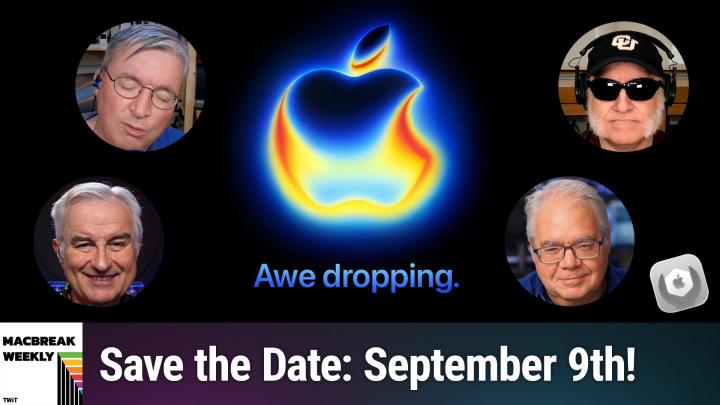
It's time for MacBreak Weekly. Alex, Andy and Jason are all here. And yes, the invites have gone out. We'll talk about Apple's event. We now know the date, the time. We even think we know some of the things Apple will announce. We'll talk about all those rumors. Elon is suing.
Leo Laporte [00:00:16]:
He said he would. And now he's doing it. And the FTC threatens American tech companies. And guess what? They like it. All that more coming up next on MacBreak Weekly. This is MacBreak Weekly.
Leo Laporte [00:00:41]:
Episode 987, recorded Tuesday, August 26, 2025: As Gruber as It Gets. It is time of a Tuesday to talk of things apple. Welcome to MacBreak Weekly. I am your genial host, the avuncular Leo Laporte. Joining us now, my nephews, Jason Snell. I don't think he wants to be that. sixcolors.com.
Leo Laporte [00:01:10]:
Hello, Jason.
Jason Snell [00:01:11]:
Gee, Uncle Leo, what are we gonna talk about today?
Leo Laporte [00:01:14]:
I shall dandle you on my knee as we talk of something very exciting. But first, let's say hello to little Andy and not go at the library. Hello, Andrew.
Andy Ihnatko [00:01:25]:
If we are three nephews, the question is, are we going to be like Donald D. Like Huey, Dewey, Louie? Are we going to be like Popeye Pei, Pepey and Poo Pie?
Leo Laporte [00:01:33]:
Oh, geez, there is a duck. I did not know he had three nephews.
Andy Ihnatko [00:01:37]:
They're identical nephews.
Leo Laporte [00:01:39]:
Identical, of course, like Huey, Dewey and Louie, who aren't identical if you're a duck, but if you're not a duck, they're indistinguishable.
Jason Snell [00:01:46]:
Look the same.
Leo Laporte [00:01:46]:
Yeah, yeah. And finally, the founder of our little get together, our little confab. Twenty years ago, Mr. Alex Lindsay had a nice notion, and this is what you get. Hello, Alex Lindsay, my voter.
Alex Lindsay [00:02:01]:
Nice guy.
Leo Laporte [00:02:02]:
Nice guy, eh? Hey, Joey Nichols. Call me Nichols. I'm gonna stick a nickel to your forehead. Let us celebrate because the Apple September event invites have finally come out.
Alex Lindsay [00:02:16]:
How was your invite, Leo?
Leo Laporte [00:02:18]:
I haven't looked. I'm not gonna look. Of course, Marques Brownlee got one and was the first to post it on the old x dot com. Aw, dropping. Is the tagline.
Jason Snell [00:02:29]:
A dropping.
Leo Laporte [00:02:32]:
And of course, Marquez with a little flex had the. Had the one that says, please join us in person. First, a special Apple event at the Steve Jobs Theater in Apple Park, September 9th. Correct. You get the prize, Jason.
Jason Snell [00:02:45]:
Yeah, it's logical.
Leo Laporte [00:02:46]:
10:00Am Pacific Time. RSVP please note. Marquez, Brownlee, we know you and invitations are non transferable.
Jason Snell [00:02:54]:
Yeah.
Leo Laporte [00:02:55]:
Don't send a producer. You be there.
Andy Ihnatko [00:02:58]:
Now should we be worried that the graphic this time is like a version of the Apple logo that looks like it's overheating and we're looking at it through a thermal imaging camera?
Leo Laporte [00:03:06]:
Very poor choice to be honest.
Jason Snell [00:03:09]:
On the apple.com it pulsates. It's. It's all.
Andy Ihnatko [00:03:13]:
And oh my God, it's overheating.
Jason Snell [00:03:14]:
And if you move your mouse over.
Andy Ihnatko [00:03:16]:
It it like I will say if.
Alex Lindsay [00:03:18]:
They somehow decided to add something that's related to Fleur, that would be cool.
Leo Laporte [00:03:23]:
Flir, you mean? Yes. The infrared imaging cannot have ate my butt. Apple.com I gotta see the pulsing.
Jason Snell [00:03:33]:
This is. Yeah.
Leo Laporte [00:03:34]:
See this just looks like an overheating iPhone. I don't know if you're.
Jason Snell [00:03:37]:
Now move your mouse over it.
Leo Laporte [00:03:41]:
It's like that thing, the plastic you can buy at the novelty stores.
Jason Snell [00:03:46]:
Yeah, they're just having fun. Whatever.
Andy Ihnatko [00:03:48]:
I'm sure that battery's fine. I'm sure we're just really hot in the middle.
Leo Laporte [00:03:53]:
Oh, there's your fingerprint reader.
Andy Ihnatko [00:03:55]:
Just because they'll probably introduce a brand new super super thin iPhone with a battery composition they've never tried before. I'm sure there's nothing to worry about.
Jason Snell [00:04:03]:
I admire Apple's commitment to the bit everybody knows it's an iPhone that's coming and Apple Watch. And they won't ever say that. It's just a media event. We're not saying you assume iPhone. But I don't know, it could be something else. We all. But they're not going to talk about it. This is what they do.
Jason Snell [00:04:22]:
Just like we know that it's always going to be. We knew it would be September 9th. We also know the iPhone will be there and Apple Watch.
Leo Laporte [00:04:29]:
You're right.
Andy Ihnatko [00:04:30]:
It is kind of adorable. It's kind of like when the parents. When the kids know that they're getting a PlayStation and the parents know that they know but they have to be coy about it.
Jason Snell [00:04:40]:
Yeah. Can I get this game for whatever I get? Yeah, sure. Right.
Leo Laporte [00:04:46]:
Searching for apple.com, all I got is an office hours, newsletter, tidbits and garbage day.
Alex Lindsay [00:04:52]:
So.
Leo Laporte [00:04:55]:
I don't think I got the invite anyway. I wouldn't have gotten the join us in person type one. I'd get the one that's on the front page. The Apple site, which is.
Andy Ihnatko [00:05:03]:
We have already banned your IP address.
Alex Lindsay [00:05:05]:
Don't even bother.
Leo Laporte [00:05:05]:
Don't even try to watch it online.
Jason Snell [00:05:07]:
Just stream it on YouTube. Whatever you do.
Leo Laporte [00:05:09]:
Well, we know that we can't stop.
Andy Ihnatko [00:05:11]:
You from watching it if it gets uploaded to dailymotion. But we will do what we can to prevent you.
Leo Laporte [00:05:16]:
I'm not going to take it personally. You didn't get an invite either, did you, Jason Snow?
Jason Snell [00:05:20]:
I never last three years. I haven't gotten an invitation on day one.
Leo Laporte [00:05:23]:
I know why. It's your association with moi.
Jason Snell [00:05:25]:
But, you know, but then I. Then I find a way. I. Nature finds a way. So let's say the last three. I think it's last three years I have on day one, been invited to watch and then I send an email to people I know at pr and it usually works out.
Leo Laporte [00:05:38]:
Jason, you were so busy proving you could do it, you didn't stop to think of whether you should do it. That's the problem right there.
Jason Snell [00:05:44]:
I mean, the truth is it would be easy, easier to cover it. The pandemic taught me this.
Leo Laporte [00:05:51]:
Home in our. In our discord talking about.
Jason Snell [00:05:53]:
That's not. Endeavor to be there.
Alex Lindsay [00:05:56]:
I prefer to. Yeah, I prefer.
Leo Laporte [00:05:58]:
You're going to be doing the office hours.
Alex Lindsay [00:05:59]:
Yeah, we just hang out and pick at it.
Jason Snell [00:06:01]:
The advantage of being there is that there is the. It is a zoo, but you can actually touch it and see it and see the colors and take some pictures and then you can dine out on that for a week until the reviews come out.
Leo Laporte [00:06:14]:
You nailed it. You can dine out on it.
Andy Ihnatko [00:06:16]:
Why, yes. I'd be happy to be.
Leo Laporte [00:06:21]:
I've touched your holy.
Jason Snell [00:06:22]:
I know if I, If I had a nickel for every piece that MacWorld had me write, that was like hands on. With a new iPhone, it's like, well, only whatever, 100 people, you know, 400 people, 800 people in the world have had their hands on the new iPhone and can talk about it for that week until the embargoed reviews drop. And so, I mean, there are some advantages to talking about it and saying, yeah, I mean, the following Tuesday that, you know, I can say, yes, I held it. And here's what it is like, but it's fleeting, you know? Right. And there are advantages to not going, but I'll try. I'm local. That's my great advantage here, is that.
Leo Laporte [00:06:58]:
Is that I can just res.
Jason Snell [00:06:59]:
I don't have to make any plan or hotel reservations. I can just stand by and I'm sure that there's some, you know, there's some TV journalist from Japan who really wanted to go, but then she couldn't make it, and they're like, oh, that, that seat opened up, let's bring Jason.
Alex Lindsay [00:07:14]:
Or there's, there's, it's totally, literally they're.
Andy Ihnatko [00:07:18]:
Not out of space.
Alex Lindsay [00:07:18]:
They just have to figure out how many employees are sitting in the back. So the, you know, like, so there's, there's always a flex.
Jason Snell [00:07:24]:
No, it is. I will say though, I mean there is a capacity. It is not necessarily the seating capacity. It's the capacity of Apple PR to.
Alex Lindsay [00:07:33]:
Talk to you while you're walking around.
Jason Snell [00:07:34]:
To set that up and who's going to be there. But I will say there is a limit and it is Steve Jobs theater. So it's not like wwdc, it's a much smaller limit. And the thing that, I know I sound like a broken record when I talk about this, but like we all get interested in all apps. What is happening?
Andy Ihnatko [00:07:51]:
I'm not ready.
Jason Snell [00:07:54]:
We're not talking about the Vision. There's no Vision Pro segment.
Leo Laporte [00:07:57]:
This is how you become what is the number one Vision Pro podcast in the world randomly. I know we are trying to give you some leverage.
Jason Snell [00:08:04]:
We are excited about the Vision Pro, but what I would say is the iPhone is important to the world in a way that no other product announcement is. And so when you do go to this event, you see so much international media, especially broadcast media, but also general.
Alex Lindsay [00:08:21]:
Do they have like an open area for the broadcast media to broadcast from? Is there.
Jason Snell [00:08:26]:
So the Steve Jobs theater outside? Right, Steve Jobs theater, you enter at the top and then you go down the stairs and there's a hands on area. And then from there you go down into the theater and you enter at the top. So it's way down inside the earth with the multip.
Alex Lindsay [00:08:38]:
Do they have stands outside?
Jason Snell [00:08:40]:
So a couple things they. At that top level, it's a big glass circle and so you'll get people who are doing stand ups outside the glass circle with the backdrop of that. And there is an area that I think that there's restricted access, but there's also an area just above the theater where from standing down at the theater you can look up and see like behind some plants there are the backs of a bunch of people's heads. It's totally another video area happening up there. So yeah, they've got, they've got place for broadcast. And this is my point is this is a tougher ticket than any other event Apple does because they are bringing like broadcast media from all over the world, plus print media, you know, web media from all over the world. There's a, it's a, the level of interest for the iPhone is beyond, way beyond anything else that Apple does. Still.
Jason Snell [00:09:28]:
Still, it's that big a product and important. I mean it's, it's one of the most important tech products. Even if we're all kind of inured to just little incremental updates to the iPhone, the fact is it's a big problem and it's a big.
Alex Lindsay [00:09:40]:
So many products in the world where 75 million people will spend an average of $1,000 on it within the next three months. You know, like, that's good point. It's product, like that's a lot of money that moves pretty quickly, I think. I don't think there's anything, any other physical device that moves at that, at that velocity.
Leo Laporte [00:09:55]:
Amazing. Really amazing. Well, congratulations Apple, on your great success. I'm sorry I can't be there to celebrate with you, but I have other things to do that day. So is that a Tuesday? Yeah, actually we're going to be doing MacBreak weekly right after the Apple event. So yeah, we'll cover the Apple event as usual. Now because of, oh, I don't want to say, I don't want to be churlish, but it might be a little.
Alex Lindsay [00:10:24]:
Late because a lot of times now they've been running like 90 to a couple hours.
Jason Snell [00:10:29]:
The slot they keep is two hours.
Leo Laporte [00:10:31]:
Well, okay, so, well, maybe we'll start.
Alex Lindsay [00:10:32]:
I really think they could make it into an hour.
Leo Laporte [00:10:35]:
Like, like, you know, it's fun.
Alex Lindsay [00:10:37]:
It was an hour and it was like, this is amazing. And then now they've kind of like, let's put a bunch of extra stuff in there.
Leo Laporte [00:10:41]:
I'm always like, but did you guys watch the Google event last week?
Alex Lindsay [00:10:45]:
I watched the 12 minutes, the 12 minute highlights, so.
Andy Ihnatko [00:10:49]:
Oh, you missed.
Leo Laporte [00:10:50]:
We talked about this on a couple of shows and the consensus was blame Apple, which I don't, I don't think is fair.
Andy Ihnatko [00:10:56]:
Nope, nope. This is, this is totally on Google. And as I'm watching this, I immediately regretted just the day before on this show I said, you know, I really think after seeing Google do like two or three of these events, I think they're doing a better job than Apple of figuring out how to do these quote, live events post Covid. And then what do they do? They get Jimmy Kimmel. Sorry, I kept calling him Jimmy Kimmel.
Leo Laporte [00:11:17]:
Too, which is hysterical. He's got the unfunny Jimmy Kimmel is who they got to do this really.
Andy Ihnatko [00:11:22]:
Weird stilted show where like, it was like, where it was like, did they say like when it's going to be shipping did they say how much it's going to cost?
Leo Laporte [00:11:31]:
They left us.
Andy Ihnatko [00:11:32]:
They basically it was just like, it really was just a 45 minute hour long talk show in which I mean, it's clearly not directed towards the usual audience, it's directed towards the youths of America and the world to say, hey, this now, this would be a great time to buy yourself a pixel phone. And knowing that the people who have to actually figure out like okay, but does it charge wirelessly or not are going to get stuff like during briefings or during, by reading blog posts afterward.
Alex Lindsay [00:11:58]:
I think the fundamental problem is that, that they thought that people, that that younger generation is actually going to watch, you know, like they like Jimmy.
Leo Laporte [00:12:05]:
The thing is you're building it tone deaf.
Alex Lindsay [00:12:07]:
You're building it towards an audience that isn't going to watch that format. And so the thing is, is that it's like, you know, rather than think of the gates, I do think it makes precedent. I mean I get bored with a lot of stuff and I think that the problem is they saw like as someone who's probably worked on a couple hundred keynotes for a variety of big companies, this is why I don't like to do live.
Andy Ihnatko [00:12:31]:
Wait a minute.
Leo Laporte [00:12:32]:
That would not have been any better if it were canned.
Alex Lindsay [00:12:35]:
No, it would have been. No, no, no, you're right. No, no, that, that was not the.
Leo Laporte [00:12:40]:
Problem was live versus.
Alex Lindsay [00:12:41]:
Well, there were some, there were some, there were some uncomfortable situation.
Leo Laporte [00:12:47]:
Table where they basically vomited every product in a random order. And then. And by the way, they have a really talented chief marketing officer who was standing there with a jet lagged Jimmy Fallon trying to show some enthusiasm. Adrienne Lofton, she's great. But it was a QVC segment and Jimmy picked up the wrong phone.
Andy Ihnatko [00:13:13]:
I'm sorry, I'm sorry, Alex. But it was one of the funniest part is when like Jimmy recognized a tech term and he was so excited to jump in and go off. Oh, IP68. That means like dust and dust and water resistant. That means you can take it on a construction site and say there are lawyers watching there. We can't. There are things we can't say about that.
Alex Lindsay [00:13:32]:
Well, yeah, and I think that the challenge is that when you. The hard part that we've had when we bring in talent for keynotes and other things that we've done, the higher the talent, the more national the talent is less time you have with them.
Leo Laporte [00:13:44]:
And the less they care. Because the less they care.
Alex Lindsay [00:13:47]:
Like it felt like Fallon. I only watched.
Leo Laporte [00:13:49]:
Oh, sorry, never Ask Bugs Bunny, by the way.
Alex Lindsay [00:13:53]:
Yeah, yeah, he'd be. Yeah, be all over the place. But I think the challenge you have is that, A, you don't get much time with them, so you don't get to do all the prep and you don't get to do all the practice, and you don't get to do all the other things. B, they, you know, they don't care about this. And. And I really felt like when you watched it, Fallon was kind of making fun of it a lot. You know, even I was style.
Leo Laporte [00:14:11]:
I mean, that's what you're going to get when you have family.
Alex Lindsay [00:14:13]:
He's not always making fun of things. Like, if you look at him, a lot of times he's building up whoever. I think that's how they got. They thought of him as he builds up the people he's interviewing, everything else. But he didn't feel like he was building things up there. And so, And I, And I do applaud Google for, like, thinking outside the box and trying to do something different. I mean, I think that the format. I think the format of Keynotes became what it is because of Steve Jobs, and no one else has been able to do it very well.
Alex Lindsay [00:14:39]:
I think that Salesforce is probably the second best at doing it. I don't understand the products, but I. But I will commend that Marc Benioff is very good at talking about them. But the, The. But I think that outside of that, it's just painful to watch. Like, if you're used to. It was terrible, but they're all painful to watch, you know, And I think that. That it was.
Leo Laporte [00:14:59]:
It was Samsung level terrible. I mean, it really.
Alex Lindsay [00:15:03]:
The live is just so. It's so hard.
Leo Laporte [00:15:05]:
Again, it wasn't live. That wasn't the. I mean, it was, but, I mean, that's not the issue. The issue was just poor choice of people. Although there was. There were some demos that didn't go well. When they had Alex Cooper of Call Her Daddy attempt to demonstrate the camera coach, she inadvertently showed some previous pictures. I don't know where they came from.
Leo Laporte [00:15:26]:
They edited that out, by the way, in the version you'll see on YouTube. So only if you watched it live did you see that. And she kept telling Fallon, stop. She said, close your legs, close your legs. And he never. He couldn't, apparently, could not close his legs. So they shot him from the waist up. And then the real problem was the picture wasn't any better.
Leo Laporte [00:15:44]:
So they didn't even show it full screen. They just went, oh, look at that. And then moved on. It was. So that's where live did. Definitely. So I will grant you that. But it would not have been any better if it tight when things get.
Alex Lindsay [00:15:56]:
I don't know, I'll argue that it probably would have been better. It wouldn't have been great. It would have been so weird. It just would have been. The problem is that, like, when someone's not listening to you, you can and have a conversation about it when it's not live, you know, like, you know, and when they're not doing what you want them to do or you get these off, you know. And I know people love. The people watching, love to see things not work or be edgy or whatever. The people doing it, like me, do not like that.
Leo Laporte [00:16:20]:
Well. And my biggest complaint, which you already referred to, is we. It didn't. It didn't really demonstrate the phone properly. It didn't show the information. Andy was saying, you know, we know, when's the shipping, what does it cost, what. You know, all of this stuff was kind of buried in the razzmatazz and that's not what you want because.
Jason Snell [00:16:41]:
What.
Leo Laporte [00:16:42]:
Is the audience for that? I don't know.
Andy Ihnatko [00:16:43]:
I'll say one thing positive about that. I actually went back and I watched the first 10 minutes of the previous Pixel Impact event and still started with Rick Osterloh, who was their head of hardware of consumer hardware. But he started talking about, oh, because of AI and our end to end tech stack, blah, blah, blah. This one was. It wasn't like it was a totally nerdy event, but there were a lot of technical tech stuff that they wanted to talk about. The phone that wasn't going to be relevant to the people who are going to be buying the phone. One positive thing I'll say about how they did it this year is that it really was feature, feature, feature, feature. And yes, they mentioned Gemini and yes, they mentioned AI, but they weren't trying to demonstrate AI.
Andy Ihnatko [00:17:24]:
They were trying to demonstrate a feature where you could just simply have a natural conversation over phone lines with somebody who speaks Spanish and it would translate it not only on the fly, but also that was impressive, but also create a version, a synthetic voice that approximates the speaker's voice. So I'll give him points for that.
Alex Lindsay [00:17:40]:
Yeah, the feature I thought was amazing. Like that was the. I think that that feature, when I saw it, I was like, oh, man, Google has Star Trek I've ever seen.
Leo Laporte [00:17:48]:
Demonstrate simultaneous translation in every event they've had for the last 10 years.
Andy Ihnatko [00:17:52]:
I know, but that One was another level. This one was. You're having a conversation. It's not like Google Translate. It's you're asking conversation on the phone. Yeah, we'll see. I think embargoes lift this week, so we'll see.
Leo Laporte [00:18:02]:
Are you getting a 10?
Andy Ihnatko [00:18:04]:
I'm. I'm on the fence. It's either going to be a 10 or 11 because I'm on. I'm on my last OS update for my Pixel 6. And so. But it's very, very tempting.
Leo Laporte [00:18:14]:
I want you guys to tie me to the mast because I don't want to buy anything. Apple announces on September 9th because I'm going to save my pennies for the next year because. And you saw this on Sunday, Mark Gurman's Power on newsletter at Bloomberg said the next three years are going to bring big redesigns. So next year we're going to see the folding this according to pure rumor and speculation. Folding phone the year after, of course, the 10th anniversary iPhone. And then he says in 2020. Now my math's off. 2028 is that.
Leo Laporte [00:18:49]:
That we're going to see a. Finally, the phone Apple's always wanted to make. I couldn't. Is it clear?
Andy Ihnatko [00:18:56]:
Yeah. They're talking about either transparent, like all glass body, meaning that there's no like a metal frame around it. I've heard another. They're a little bit coy about how the specifics are. One of the things they're suggesting is that's going to have like a curved front, which I don't really like because my Pixel has like curved glass.
Alex Lindsay [00:19:16]:
Yeah.
Andy Ihnatko [00:19:16]:
I don't like it on the side of the screen.
Leo Laporte [00:19:17]:
Yeah, I agree.
Andy Ihnatko [00:19:18]:
And yeah, especially if you have it in a case. You basically have this gutter on the side of it.
Leo Laporte [00:19:22]:
Anyway, time into the mask, boys, because I want to hold off. I don't want that slim thing, which we think now is going to be called the air. According to the rumors. I don't want the 17 Pro Max XL. I want to save my money for maybe the folding phone next year. Maybe next year. Right? Is that smart?
Jason Snell [00:19:43]:
Yeah.
Leo Laporte [00:19:44]:
Can I do it? Here's the test. Watch along with us. Michael and I will be streaming it.
Jason Snell [00:19:49]:
On Discord only you can't do it, but that's okay. That's why we love you is like you just. Please, it's your job. You need it for your work.
Leo Laporte [00:19:59]:
Just handcuff me.
Alex Lindsay [00:20:00]:
As always, as always, I just wait until the end. Because the last thing that they'll talk about is the only thing that most of us Care about which is the camera.
Leo Laporte [00:20:07]:
Okay, one more thing about Google that I have to mock. They attempted a One more thing but the problem was the one more thing they had already released as a press release that morning. So maybe a little hint to Google the one more thing should be something no one knows about.
Alex Lindsay [00:20:24]:
I also don't think that. I think that it's even uncomfortable if Apple tries to do one more thing at this point.
Leo Laporte [00:20:28]:
Like yeah, it is.
Alex Lindsay [00:20:29]:
It was like, it was a moment.
Leo Laporte [00:20:30]:
It was Steve's thing. Yeah, let's let that also.
Andy Ihnatko [00:20:33]:
Also bring it, bring it back to Apple. This was probably the most. I think they mentioned or reflected Apple more in this event.
Leo Laporte [00:20:42]:
A lot of shade, a lot of stuff. A lot of.
Andy Ihnatko [00:20:45]:
A lot of. A lot of shade and also a bunch of hey, and don't worry, we're supporting Apple this way. And hey, we're. If you've got an app, if you've got an iPhone, this will work. This and not just the usual hey, we finally arm twisted Apple into supporting RCS so messaging will work fine. There was when they talked about their version of Qi2 like magnetic magnetic accessories and charging, which of course MagSafe, which exactly. Because Apple actually said, hey, this consortium, you can have this. Hey, and it'll work with MagSafe accessories too, just like Apple.
Andy Ihnatko [00:21:15]:
So it was interesting that they mentioned Apple so many times during.
Alex Lindsay [00:21:19]:
I think when you look at the. Not the 18 nit 25 but the 12 to 25, you know, it is. It's dark for Google and they have to figure out how to engage that audience.
Leo Laporte [00:21:29]:
I mean, I think they said they're 4% of the market. I mean really, it is a Samsung Apple.
Alex Lindsay [00:21:34]:
But even then, even when you Compare Android to iOS in that 12 to 25 range, it's a pretty rough area for them to be in. They have to be, you know, they.
Leo Laporte [00:21:44]:
May be forced to kind of divest Android anyway. I don't, I think Google doesn't really see the value, that much value in Android at this point. This is why they're pushing the Pixel like crazy.
Andy Ihnatko [00:21:57]:
Android is such a lush source of signals for their search business and their advertising business. They want Android going as long as they possibly can.
Leo Laporte [00:22:06]:
Or just get those Google apps installed on the iPhone and they can.
Alex Lindsay [00:22:11]:
I think the biggest benefactor of Android is Apple and the reason for that is that it's kept Apple.
Leo Laporte [00:22:19]:
See, we're not a monopoly.
Alex Lindsay [00:22:20]:
No, you're exactly right. That is Apple's. The number one thing that Android has done is allowed Apple to go as far as it could without having to deal with antitrust. Because they would have been an antitrust 10 years ago if Android didn't exist.
Leo Laporte [00:22:32]:
It's funny, they're doing with Google what Microsoft did with Apple when Steve Jobs came back and they gave him $150 million just so that they wouldn't go under, so that Microsoft could credibly say, well, there is a Mac, yeah, it.
Andy Ihnatko [00:22:46]:
Is getting a little more.
Alex Lindsay [00:22:47]:
That was a pretty complicated thing when they gave the money. Because they gave them more than 150 million.
Leo Laporte [00:22:51]:
Yeah, maybe it was more they saved Anyway. Was it 400?
Alex Lindsay [00:22:55]:
It was.
Leo Laporte [00:22:55]:
They had some of it.
Alex Lindsay [00:22:56]:
That was a couple different ways.
Andy Ihnatko [00:22:59]:
They made their money back. They're fine. But it's interesting.
Leo Laporte [00:23:03]:
Good point.
Andy Ihnatko [00:23:04]:
Google is finally at least deciding that, hey, perhaps Android should not look like a big phone when you put it on a large screen. And they're making so many partly to support all of the foldable phones and different designs, but they're trying to finally make tablets. A thing I thought was kind of interesting, I think was last week or the week before Amazon announced that their fire tablets, which are the. For what they are, they're great. Just, I want a cheap tablet I can give to the kids in the backseat so that they can play games and they can watch videos and if they lose it or if they drop it, I don't really care because it's only $100 tablet. They decided that at least for the premium versions of these fire tablets, they're going to go off of their own custom form version of Android based on the Android open source project and they're actually going to switch to like Google Android. So have access to the Google Play Store, have access to Google services, which I'm still not sure that they'll have any. I still don't know the argument that I could make to anybody to get an Android tablet instead of an iPad at any price level.
Andy Ihnatko [00:24:05]:
But it's interesting that Amazon, having a mature version of Fire OS based on open source Android for a number of years, have decided that, okay, now it's time to stop and cast my lot with Google.
Alex Lindsay [00:24:17]:
I own 10 Samsung tablets and the argument for those is that they are interfaces for specific Things and they're $110. They were $110 when I bought them whenever they play a page. And it's cheaper than an iPad.
Leo Laporte [00:24:31]:
But that's to Samsung's credit. They make the only decent Android tablet, the Galaxy Tab. It's much more expensive. It's iPad price, but that's the only, as far as I know, the only decent one.
Jason Snell [00:24:40]:
Android tablet. You know, Android's tried a lot. The tablet experience isn't great. I spent the last couple of years trying a bunch of Andro, E readers, E Ink and some other screen based ones and every time I launch an app in a tablet configuration I just think, oh, like it's just a phone app because Android is about, about phones. I would, I would read Amazon's decision the other way, Andy, which is at this point throwing your lot in with Android is probably easier for them because it's probably not worth it for them to make more engineering effort in the premium tablet area because like it's not going to be a huge business for them. And I think, yeah, their huge business is actually the cheap tablet that they've got that they've wired. But the whole, if you ask them today, would you do the Amazon App Store and all of that, I think they wouldn't.
Alex Lindsay [00:25:25]:
Well, and the problem is is that I, I mean I bought an Amazon app, an Amazon tablet, you know, when I was trying to get a bunch of tablets together to do these controllers and it was so limited that I sent it back, I took it back to Best Buy or whatever, wherever I bought it. And the problem that you get into is that I don't know the difference between the high end version, the low end version. All I know is I got an Amazon Fire or whatever that was, it completely was frustrating and I was like, I'm never buying that. Like that was it. But you can't like this whole like the painfully broken os, you know, limited to all the stuff with all the ads and all the other stuff. It was so it was such a bad experience that there was, there was no way, like I never like it just, I don't, I can't even see it.
Leo Laporte [00:26:07]:
But this, so this is the Google Pixel tablet, which would presumably be the best Android tablet out there. And it's not.
Andy Ihnatko [00:26:14]:
But even then that's not. It's basically a smart speaker display that you can pull off of the display. It really isn't designed to be something you put in. It's not designed like this beautiful iPad Pro that I've got used as an external display that I often use just as a primary, not just a content consumption device, but a creation device.
Leo Laporte [00:26:33]:
We all acknowledge that the iPad is king of the hill. And Google actually has said in an interview, they said, yeah, one of their executives said, yeah, we're not really working on tablets, we're not really working on rings. We're not really headsets. Yeah, they said in glasses. It's funny because they showed glasses at Google I o but he said, yeah, we're not working on those really either. I don't know, you know what?
Andy Ihnatko [00:26:57]:
But they are working on an operating system to enable other people to make good smart glasses and good goggles.
Leo Laporte [00:27:02]:
They want to be Microsoft. They want.
Andy Ihnatko [00:27:05]:
They have one department that makes hardware and they've found success as they choose to define success in that niche. But no, they're not. I mean, they don't need that kind of trouble.
Alex Lindsay [00:27:14]:
The challenge is we're going to build tools that other people can use is that a lot of the hard things to do take an incredible amount of investment to get it off the ground, to push it through. If you look at whether, whether it's Apple or Meta on the headsets or whether it's, you know, anybody else, anything that matters, that's going to take a lot of market share in whatever vertical it goes into. Oftentimes takes a huge amount of to get there. And big companies can do that. When you hand people just the materials, A, they're not going to take oftentimes that no one's going to take the risk that they had to take to actually get it done. And in B, they fork it to a point where it doesn't make, you know, like it doesn't serve the use that it originally was designed for. And so I think that, I just think that that, like, let's just like I think this is the same problem Apple has with HomeKit, which is that they keep on wanting to make an environment that other people can build tools into and no one really doing that very well.
Leo Laporte [00:28:05]:
That was another announcement Google buried in that ridiculous event, which is that they've got actually a pretty credible Google home strategy going forward. And maybe it is Google that's going to start because they do have Gemini and they are building it into all the things, including the watch now in a way that I think is going to be maybe could be very useful.
Alex Lindsay [00:28:26]:
It'll be interesting. It does feel like Apple's getting more serious of like, and we'll see. But over the next year there's a lot of rumors that Apple's may be going down the path that some of us have been talking about, which is like, hey, why don't we just build all the stuff?
Jason Snell [00:28:38]:
Well, for building the home stuff, they seem to be taking the home category seriously.
Alex Lindsay [00:28:43]:
I think once they build the hub, I think that they'll let other people play with it. But I think eventually they're just going to build out the five or six things that all of us want and.
Leo Laporte [00:28:50]:
It'Ll all talk Siri.
Alex Lindsay [00:28:53]:
I don't know. I don't really care.
Jason Snell [00:28:55]:
Yes, but what will drive it? What will next gen Siri actually be? That's the real question there, I think. I mean, we, we kind of meandered through a bunch of topics there. And I just wanted to say that when I think about that rumored folding iPhone for next fall, I think that is Apple's greatest asset for that is they put 15 years into the iPad and that unfolded version will be a little iPad. And we all know what that means and it's, we all know how that's going to work and they've had a lot of time to think about what a tablet app is like on, on, on their devices. And I think that makes that product like, that much more compelling because it is not, you know, Apple. Apple is good at phone and tablet and an Android is weaker on tablet by quite a bit. So it's an advantage Apple compress. Even though Apple's been sitting on the sidelines with folding devices up to now, when they jump in, they can take advantage of the 15 years of the iPad.
Jason Snell [00:29:51]:
Yeah.
Leo Laporte [00:29:51]:
And that credit to not just Apple, to developers who embraced for sure on the Apple side, but did not on the Android side.
Andy Ihnatko [00:29:58]:
And also if developers have been listening to Apple for the past two or three years, that basically you get whatever app you've been building for the iPad, you get a free iPhone fold version as soon as it gets released or whether it's tomorrow or two years from now. So, yeah, I mean, it's a lush, rich, fertile topic, Apple's relationship with developers, but they are very, very good at saying, well, look, if you invest, I know we kind of make this, they don't say this explicitly, but the deal is that we will make it a pain in the butt far more than it has to be. But the thing is, your investment in learning how to build apps using our APIs is going to pay off in the form of we've got things that we are just in the planning stages right now that your app is going to be working with four or five years from now.
Leo Laporte [00:30:40]:
All right, let's take a break. That was one story. The Apple event is officially the ninth, but there is so much more to talk about. We will get to that with Andy Ihnatko, Jason Snell, Alex Lindsay. The MacBreak Weekly team is on the case. We are brought to you this week by Pantheon. And I don't just mean our advertiser, Pantheon, Pantheon, our website, our workflow, our backend, all runs on Pantheon. Pantheon is our web host.
Leo Laporte [00:31:14]:
But more than a web host, they host the Drupal that runs the entire workflow. Of course. What's nice about this, we created this beautiful headless Drupal that they've been running flawlessly now for, I think, five or six years. They do such a good job, and it is something that's so reliable, we rely on it not just for our website, but for everything. So when this show is over, John Ashley will go into the headless Drupal instance, the content management system running on Pantheon servers, and publish the show, do the show, notes, everything. It's all done with the help of Pantheon. Of course. A website is probably the most important thing that you run in your business.
Leo Laporte [00:32:00]:
Your website is, I would guess, in many businesses, your number one revenue channel. And when it's slow or it's down or it's stuck in a bottleneck, oh, man, you hear it? It can also be, at that point, your number one liability. That's why you need a host. Like Pantheon, Pantheon keeps your site fast, secure, and always on. Better SEO, better conversions, no lost sales from downtime time. It's not just a business win, by the way, it's a developer win too. Just ask Patrick Delahanty, our engineer. He loves the Pantheon.
Leo Laporte [00:32:31]:
Your team gets automated workflows, isolated test environments. That's super important for us. We move stuff into test, then development, and then production. And it's seamless. So we get zero downtime deployments, no late night fire drills, no, hey, it works on my machine. Headaches? Just pure innovation. Marketing loves it. They can launch a landing page without waiting for a release cycle.
Leo Laporte [00:32:55]:
Developers love it. They could push features with total confidence. And your customers, they don't care. They just see a site that works flawlessly, smoothly, rapidly. 24/7 Pantheon powers Drupal and WordPress. Sites that reach over a billion unique monthly visitors. Visit Pantheon.io and make your website your unfair advantage. Pantheon, where the web just works.
Leo Laporte [00:33:22]:
P A N T H E O N Pantheon.io we love Pantheon. Thank you, Pantheon, for supporting us for all these years. Every time I mention Pantheon, Patrick goes, yeah, yeah, Love those guys. All right, so I didn't even ask Alex and Andy. I know I didn't get it. Even the invite that says you could watch online if you want. I presume you guys are still waiting for your invite?
Alex Lindsay [00:33:52]:
Yeah. Every day I'm going out to the mailbox and I open it up and I go and I wait for the glow to come out of the mailbox.
Leo Laporte [00:33:59]:
I go, would it be nice if they mailed paper invites? That would be kind of cool. I would like that.
Alex Lindsay [00:34:05]:
Imagine if they make out a metal. This would be something you could put like the gold leaf.
Leo Laporte [00:34:09]:
I want.
Jason Snell [00:34:10]:
I want a footman with a top hat to come to my door and say, sir, your presence is requested.
Andy Ihnatko [00:34:17]:
I want a huge, like, case of chocolate bars and one of them has a golden ticket in it.
Jason Snell [00:34:22]:
I take. I can take it all back. What I want is a marching band to march down my street.
Leo Laporte [00:34:27]:
Him. That was Tillman at the head in the. In the drum major position. That's his name. Is that. Is that his name? Tillman, the guy in severance?
Jason Snell [00:34:37]:
Sure, it could be.
Alex Lindsay [00:34:38]:
You know what's funny is that a little tie in.
Jason Snell [00:34:40]:
A little tie in.
Alex Lindsay [00:34:41]:
Do you know what's funny is that how much Apple did not stream these in the early days out of the fear that the press wouldn't come if it was streamed. They wouldn't.
Jason Snell [00:34:51]:
So weird.
Alex Lindsay [00:34:52]:
And they didn't want anyone to see it. They wanted to keep it all to the press. And so we're so funny now.
Jason Snell [00:34:58]:
The press goes and just watches the same video that the rest of the world does, but on a bigger screen.
Alex Lindsay [00:35:02]:
But you still get just as many people that. More people than what end up showing up, you know?
Jason Snell [00:35:07]:
Yeah, yeah, yeah, for sure, for sure.
Leo Laporte [00:35:09]:
We will stream it, of course, in the club only. So if you're not a club member, please join now, because September 9th, Micah Sargent and I will be there at 10am we'll go until the end, and then we'll do MacBreak Weekly. And since we expect Jason Snell will be out of pocket that day, probably not be there.
Jason Snell [00:35:27]:
Yes.
Leo Laporte [00:35:28]:
We will have Micah continue on and do the show with Andy and Alex. And of course, if you're an Office Hour fan, you can. Can do. You have to be a member of the Zoom. You don't put that on YouTube probably.
Alex Lindsay [00:35:39]:
No. Yeah, it's just in Zoom. So we go into. We have after hours, which runs 24 7. So we all go in and hang out. And so we just go into there. We have a couple extra, like, rooms, viewing rooms, and so we'll jump into one of those. And so if you're in Office hours, that's where you go.
Leo Laporte [00:35:54]:
That's a fun way.
Alex Lindsay [00:35:55]:
And a whole bunch of us sit there and pick at it.
Leo Laporte [00:35:57]:
Yeah. Yeah. The Foxconn is ramping up factory hiring in China, which is interesting because didn't we. We didn't we hear that all of the new iPhones will be made in.
Andy Ihnatko [00:36:07]:
India, only the US ones. In the last call, Tim actually said that China is still going to be all the international malls and all the US malls are coming out of iPhones and other devices are coming out of either Vietnam or India.
Jason Snell [00:36:20]:
Yeah, Mark Gurman said that saying all is not accurate. And it's going to be, you know, many. My gut feeling here is that as many as they can make and verify from India, India will come to the US and then they'll backfill with iPhones from elsewhere. But every model will be made in India. They're not making just some models. So the question is just can they fulfill all of the US Market with India production? Mike, again, my gut feeling is maybe not, but. But that's the goal is as much as they can get from India and then they'll backfill for the rest.
Leo Laporte [00:36:54]:
If you read Patrick McGee's amazing apple in China, which I think we've all read and love, he talks about how this happens seasonally in China. Foxconn hires recruiters which go out into the countryside because they need to staff up dramatically for these production runs and they offer new hires a bonus. In this case, it's the equivalent of $1,113 if they stay for all three months. Apparently that's a big jump according to Apple Insider firm from the incentives offered a couple of weeks earlier. It's a lot of money. And then these thousands of extra workers flock to Shenzhen to get on the assembly line. Many of them make enough money in those three months to go back home. And Apple doesn't need them all year round.
Leo Laporte [00:37:47]:
In fact, it's one of the incentives Apple has for spreading the iPhone releases out is they don't have these big ramp ups.
Jason Snell [00:37:54]:
Yeah, I think actually that is the all this talk that they're going to split to a spring event and a fall event for the iPhone. That's one of my thoughts is it makes everything smoother. Right. Because you've got the people who have to build the new production line or modify an old production line to be new. You've got to have everybody who designs all the boxes, everybody who does like, every part of it. If you load almost every iPhone into one launch day, it's better to spread it out, do it over two. It saves you people in your factories, it saves you people back in Cupertino, it saves you people all over the world. You don't even have to qualify.
Jason Snell [00:38:27]:
The new version of your OS is On, you know, four different pieces of hardware. You can only do it on three. Maybe that's a good thing. There are a lot of reasons. And what did we say earlier? The iPhone event is the most watched Apple event. The reason that it's bloated, as Alex said, is because so many people are watching that it's the perfect place to introduce other things because everybody tunes in for the iPhone and then you sell them on other things. So you know what? Why not do two? Why not do two? I mean it makes. If Apple is increasing the number of phones that they're selling, they're going to add a fold.
Jason Snell [00:38:57]:
They've added the air, they added the E. I love this idea from like across the board, including production. Just think of how much they have to turn over every summer when they flip over production to new models. Wouldn't it be nice if they could spread that out over, you know, over a full year?
Leo Laporte [00:39:16]:
So likely September 9th they'll announce an iPhone, a thin iPhone, which I guess leaks from the case manufacturers. They're making a bet it's going to be called the air.
Jason Snell [00:39:27]:
Yeah, we don't. I mean the marketing is the last thing to leak because marketing is coming from Cupertino.
Leo Laporte [00:39:32]:
Right.
Jason Snell [00:39:33]:
But yeah, yeah. And we should say there are lots of rumors out there about, about stuff happening next year. The rumor is that next year they might only do the pro models in the fall and the non pro models in the spring. This year it'll all be on the 9th. This year it's all coming. It's going to be so, you know, the last, maybe traditional, all iPhones in event, but that's what's going to happen this time.
Leo Laporte [00:39:55]:
So the 17, let's say Air, the 1717 Pro and the 17 Pro XL. The four models.
Jason Snell [00:40:01]:
Pro Max. Yeah, pro max, exactly. And we don't know 100% that it's 17. They renamed all the OS's 26 so it could be 26. We don't know.
Leo Laporte [00:40:11]:
They've skipped numbers before. In fact, Samsung has skipped like whole, whole, whole decades.
Jason Snell [00:40:16]:
My argument, my argument that they won't and Mark Gurman reported about this on Sunday, is that they are not next year, but the year after. They are talking about doing an iPhone 20.
Leo Laporte [00:40:28]:
That'll be the 20th anniversary.
Jason Snell [00:40:30]:
It would be less fun if that was the iPhone 28 than if it was the iPhone double X or something like that. So they might want to keep those numbers that way. Although, boy, I would like them to sync up all their numbers. I'd like the A processors and the M processors. And just let's year all the things because I'm really tired of saying that the 16 has an 18 and it runs, you know, 26. Like, let's not.
Andy Ihnatko [00:40:55]:
You think. You think that they. Is the. Is the term 20th anniversary product cursed enough for the 20th anniversary Mac that they're not going to want to even go close to reviving it for the 20th anniversary iPhone? I would love it.
Leo Laporte [00:41:07]:
No, nobody remembers that.
Jason Snell [00:41:09]:
Yes.
Andy Ihnatko [00:41:09]:
I mean, I would love it if they decided that. That this isn't the 20th. If they did something that was so special, it was truly a 20th anniversary iPhone and not necessarily the upgrade to the previous year's iPhone. If they said, we're going to have a separate SKU this year for this one that is super, super, super stylish that you're going to. You're going to sacrifice some features. It's not going to have as nice a camera, but oh, my God, you're going to have like the slickest iPhone.
Jason Snell [00:41:35]:
This is what German says is that the goal with this is kind of like with the iPhone 10 to be a cutting edge new design that won't be on all the other models, but points toward where all the other models are going, which is what happened with the iPhone 10. I mean, basically all the iPhones are the iPhone 10 now because the iPhone 10 showed the way. But when they launched it, it cost way more than the other iPhones and it was sold as a separate thing. I will. It's that nerd thing. I'm going to do it here. Andy. The 20th anniversary Mac was the 20th anniversary of Apple and not a product.
Jason Snell [00:42:01]:
So they dodged that bullet. Right. I'll also point out next year's the 50th anniversary of Apple. So let's start a rumor about a 50th anniversary Mac. What would that be?
Andy Ihnatko [00:42:12]:
Open source. If I'm going to start a rumor that intimidates Apple into doing something, they open source the original Mac roms and the original Mac os. So that'd be cool if you want to do an emulation, it's absolutely free.
Leo Laporte [00:42:24]:
We love that idea.
Jason Snell [00:42:25]:
Let's ship a new classic Mac os.
Leo Laporte [00:42:28]:
Dickinson would love that idea. That's a fantastic idea. Anyway, apparently India is only 14% of current iPhone production. This is again from Apple insider. So that's.
Alex Lindsay [00:42:41]:
And it still sounds like China continues to try to like, oh, let's make it hard.
Leo Laporte [00:42:45]:
Yeah, they pulled back. They pulled even more engineers and Apple had a. You know, Foxconn had to go to Taiwan.
Jason Snell [00:42:51]:
And I think it's interesting though that they're built that the Tata is taking over a lot of that production in India now. And that means that instead of it being this Taiwanese company with heavy roots in China, it's an Indian country Indian company that's going to be doing that contracting and like they are. Look, nobody said this would be easy, but this is Apple diversifying its product. I think if you ask TIM COOK In 10 years, how would you like iPhones to be produced? I think he would probably say something like I want them produced in like five different places all over the world so that nothing is, you know, including China. Not trying to get out of China, but just it's healthier if Apple is producing phones in, you know, in China and in India and in Brazil and maybe in the United States, wherever, like in other places because it makes everything a little bit less. But it's not going to be easy because so much expertise is in China as that Apple in China book said. I will say though, how do you, how do you get Indian manufacturing to meet those standards? This is how, this is how you do it. Because this is what happened in China is you have Apple people because all these factories, remember are, are run by Foxconn or Tata, but like they're run by Apple and Apple and China showed us that, that the Chinese manufacturing learned from Apple's strict standards how to do this stuff.
Jason Snell [00:44:12]:
And if Apple applies those same ideas in India, one of the things they're doing is teaching Indian manufacturing how to adhere to Apple's standards. And that works for Apple in the long run and it works for India. So I mean it, it's hard but they kind of have to do it and everybody knows it. Yeah.
Alex Lindsay [00:44:30]:
And it's in just a kind of put in perspective. I mean Tata is a big company. A third of the Internet goes through there. The Tata Internet services. And that's just the Internet services. And that's a. And then you have the car services and you have the other. You know, there's so much to Tata.
Alex Lindsay [00:44:47]:
So this is a really big company.
Leo Laporte [00:44:49]:
But learning also own Jagu Land Rover.
Jason Snell [00:44:51]:
Oh yeah.
Andy Ihnatko [00:44:52]:
They're enormous.
Alex Lindsay [00:44:53]:
It's an enormous. This isn't. Yeah, this is, this is a big, big company. And, and I think that. And a global company. And so it's going to be interesting to see again what Apple did in China. It's not as. As Jason's pointing out, it's not just that they are going to get phones made.
Alex Lindsay [00:45:09]:
They're going to change the way tech gets built in India. You Know, like it's going to be because the, all these people that work there for some period of time are going to go out and start their own companies and everything else. And that's also why India has so many restrictions on, on having to build things in India, because they know that it'll build skill sets in India that they want. And you know, we saw that with, you know, with visual effects when they started doing, when visual. When Indians started doing rotoscoping as an example, it wasn't very good.
Leo Laporte [00:45:36]:
Did they get better fast?
Alex Lindsay [00:45:38]:
Oh, yeah, yeah.
Leo Laporte [00:45:39]:
But what it took was everything in China, right.
Alex Lindsay [00:45:41]:
American specialists went over there, trained them and picked at it for a while and took a couple years.
Leo Laporte [00:45:45]:
That's exactly what happened in China.
Alex Lindsay [00:45:46]:
And then, and then everything, Everything, you know, you know, anybody can do any of this anywhere. The big thing that'll be interesting is as AI picks up is where it's going to be a smaller and smaller pool of labor that's required to build any of these things. As the machinery and as you start to end up with articulating error correcting robots, it could be reshored. I think that's what Apple would love, if you asked Tim Cook, is to do these out of Phoenix, but have it be 99% machines, you know.
Leo Laporte [00:46:19]:
All right, so we'll watch with interest. We got another Update to the 26s. Tahoe was updated. IOS, iPad, OS, WatchOS, Apple TV, OS all updated. Was it yesterday? I feel like everything came in. This was beta 5.
Andy Ihnatko [00:46:40]:
It's like, I know it's Monday because there's a new public beta or another beta to download.
Leo Laporte [00:46:44]:
Right. So that means what, Is this the one, or are we still one or two away from the release candidate?
Jason Snell [00:46:53]:
This is close to the end. If not the end. I, I wouldn't be surprised if this build or a build very close to it is the one they load on the phones and call, you know, call the release.
Leo Laporte [00:47:06]:
They do have that ability though, don't they now in the stores, date the phones in the stores.
Jason Snell [00:47:10]:
Yeah, there's probably, there's probably a placeholder build that is on the devices.
Leo Laporte [00:47:15]:
Right.
Jason Snell [00:47:16]:
And then when they get to the stores, you, you put them on the little thing and it. And it auto connects to WI Fi.
Leo Laporte [00:47:20]:
Without opening the box.
Jason Snell [00:47:21]:
Without opening the box.
Leo Laporte [00:47:22]:
Amazing.
Jason Snell [00:47:23]:
Great idea.
Leo Laporte [00:47:23]:
Yeah. So clever.
Jason Snell [00:47:24]:
Yeah. But it feels, I mean, this is. For those waiting for more dramatic changes at the end of the beta period. Stop. Because it's not. And this is it. And this is. I mean, I was listening to a couple of Podcasts talking about this and like, we're just going to have to live with it and it's going to be a mess and it's going to bug app developers more than it bugs users.
Jason Snell [00:47:41]:
But, but, but some users are going to get bugged and then it's going to be a process where they're going to be updates over time. And, you know, it's going to be a year or two of unsettled. And like, this is all exactly what you could have guessed, right? Anytime you have a big design like this, you can like the design or not like the design. Apple kind of doesn't care. It's kind of. Apple's just going to do what, what it wants to do. And then inevitably some of what it does is going to be dumb. They're going to fix it in the summer, but it's not really fixed.
Jason Snell [00:48:10]:
And then there's going to be a point one that kind of tweaks something and then that fix. And then like next year, wwdc, they'll do a bunch of stuff and people be like, oh, that's better. Like this, we're just in it. This is just what it's like. Although I will say most of the people who use these devices will not care as much about it as we do. And that's, and that's why I've seen some people are like, this is going to be a disaster for Apple. I was like, I just don't think it is. I don't think it's going to be a big deal.
Jason Snell [00:48:35]:
However, I will say if Apple screws something up badly, it can really backfire. I. My mom came and visited me last week, very nice, to get her out of the desert for a week. We had a good time. But while she was here, we updated the software on her phone and she said, oh, no, I guess I have to do that. It's just going to move things around. And I realized she's still feeling the trauma of iOS 7, right? So the danger here is Apple pulls out this, pushes out a new OS design. And the danger is people really freak out and feel like Apple screwed around with them.
Jason Snell [00:49:12]:
But Apple doesn't roll things out immediately to everybody. On day one, there's a period where unless you ask for it, you're not going to get the update. And I would also say for people who haven't used liquid glass yet, functionally it's the same. It looks different, but all the behaviors are basically the same. And I think that was the problem with iOS7 is like, people Are like, I don't even know where to tap anymore. I don't think it's going to be an issue. So. So a lot of talk.
Jason Snell [00:49:37]:
It's good to talk about it. There are a lot of things that are kind of busted and developers are unhappy. I mean, it's good for us.
Leo Laporte [00:49:44]:
What are they unhappy about?
Jason Snell [00:49:47]:
There's a lot of inconsistencies. There's APIs that don't work quite right. It's exactly what you'd expect. It's. Apple built its own apps using this. And then there are edge cases that Apple just seems to have never thought of that all the developers are finding and so they have to put it in. Developers are grumpy because they have to put in a lot of work just to get their apps not to look broken when this version ships.
Leo Laporte [00:50:08]:
And they get blamed, and they will get blamed.
Jason Snell [00:50:11]:
So that, that I, I was listening to Accidental Tech Podcast, which has got a bunch of developers on it, and they were. Marco Arment, one of the hosts, he said, be nice to your app developers, right? Be nice. That app that you, you, that you're.
Leo Laporte [00:50:23]:
Using do this every year.
Jason Snell [00:50:25]:
Be. Be nice. And this is a hard summer for them. They are trying very hard. But like, yeah, but this one especially is like that. And again, there's not going to be a lot of sympathy out there for app developers, but those of us who can feel it should probably feel it for them because it's going to be a lot of work for them. And that's just it happens. It, you know, an OS redesign goes through these stages and I think it's really funny that when you're looking at a week to week, you're like, oh, it's so dramatic.
Jason Snell [00:50:50]:
But if you step back and look at the big picture, you're like, yeah, of course that's what's happening. I mean, this is just how it goes.
Andy Ihnatko [00:50:56]:
You speak of stages and that's interesting because we're at the end of the first phase of a major redesign in which all the responses that you're seeing are responses to reactions from developers. And yeah, there are a lot of us that have signed that went into the public beta. And yeah, we have some feedback too. But mostly Apple is responding most immediately to concerns about developers, not just the APIs, but also, I don't know how to redesign my app to do this or this feels very wonky. The next big lamppost is going to be let's see how 26.1 looks. Because that's when you stop getting feedback from people who are actively interested in checking out whatever the new thing is. And you start getting the feedback from the tens of millions of people who just want their iPhone to work. And they don't necessarily care about the design philosophy and they don't necessarily care that oh, but look how seamless the experience is in user experience between this device and another.
Andy Ihnatko [00:51:53]:
They're like, how come in the Photos app I no longer know where to go to find like my most recent photos. So that's always the most interesting evolution to look for. Say, what did Apple think better of once they started getting feedback from tens of millions of users instead of hundreds of thousands of users?
Alex Lindsay [00:52:09]:
And sometimes they'll just keep on doing whatever they're going to do. I mean, sure, I've, you know, I've kind of become resigned to the photo way photos work on my phone. I still don't like it as much as it was before. And you know, I, you know, and I. So that's always the danger.
Jason Snell [00:52:25]:
You're gonna love this. They undid it. And I think that goes to Andy's point. Right. Which is then it meets the enemy, which is the users. And they really know that they stepped in it. And Photos is a great example of that. You're gonna win that one.
Alex Lindsay [00:52:40]:
Yeah. Because I just, I literally the use, my use of photos dropped by 90% in one version. Like I was just, like it just wasn't. I used to open it just to see what it would show me. Like I would just be like this exploration and everything else. And then I, and then I just was like, oh, this is. It just holds my photos now. So that's good.
Alex Lindsay [00:52:59]:
It's good. It's going backwards.
Leo Laporte [00:53:01]:
There is. Somebody's pretty unhappy with the icons. It would be one John Gruber at daringfireball.net who he refers to Steve Jobs famously talking about how a good carpenter paints the back of the cabinet. The part that nobody sees because they care. Gruber says these icons are not the work of carpenters who care about the backs of cabinets they're building. These icons are so bad they look like the work of untrained. How hard can it be? Dilettante carpenters who only last a few days on the job before sawing off one of their own fingers. He's referring to disc utility, which, you know, it's gone.
Leo Laporte [00:53:44]:
These are have all gone from skeuomorphic designs with real looking wrenches and screwdrivers and stethoscopes to a generic wrench with different icons and size.
Andy Ihnatko [00:53:58]:
I agree with him in the wrench it's like if you're going to decide that your theme, overall theme is going to be a wrench, make it look like a freaking wrench. Not like someone who is just, just Learned Mac Draw 1.0 and is trying to draw a wrench for the first time. It looks like the damn thing is going to break up off.
Jason Snell [00:54:14]:
Yeah, I, I was going to say the dis. Utilia. I mean, I, I agree. I think these new icons aren't very good. But you never.
Leo Laporte [00:54:22]:
Because they're in the utilities folder.
Jason Snell [00:54:23]:
A couple years ago, Mike Hurley and I did a tier list of Apple icons and I, I'm reminded that we laughed so hard at the dis utility icon because it's like stethoscope. It's on a platter and there's a stethoscope and there's a hard drive like you're. It's a surgery with a dot. I mean, and I get the metaphor, but it's a terrible icon. It's a terrible icon. Like, but what they replaced it with is like a weird wrench and a, and an Apple logo, which doesn't say anything about being a disk utility at all. It's bananas. Just.
Jason Snell [00:54:52]:
I mean, yeah, somebody got assigned to this job and they, and, and they probably were overworked. And I would even say like, this, this doesn't strike me as being somebody who's bad at their job. This strikes me as somebody who is given a task to generate 15 icons very quickly. I don't know.
Alex Lindsay [00:55:11]:
I mean, most things in big companies like this, every icon. There's a lot of, A lot of meetings, you know, like. And I think that there, you know, and there's definitely. I think that one of the things you were seeing a pattern of is simplifying everything, you know, so that when it's in a small icon, it's easier to read quickly. I think that's kind of the direction that it's going. All the. If you look at all those icons, they're going from being complicated to being something that you kind of glance at. And so I think that that might be the use of it.
Alex Lindsay [00:55:37]:
But yeah, it's not very inspiring.
Leo Laporte [00:55:39]:
Yeah.
Andy Ihnatko [00:55:39]:
But I mean, the thing is like, these aren't. It's not like these are going to. Installed it on Apple Watch. These are all going to be desktop icons. So they're going to be big enough that you may as well make them more, More explanatory. I didn't, I, I agreed with it. I agreed with a lot of the stuff that, that he said in that piece, one of them being. That doesn't look.
Andy Ihnatko [00:55:59]:
It looks like a developer who basically created a stopgap icon that he knew that. Well, I know that at some point and a real designer is going to be giving the real one, but this is, this is what I got.
Leo Laporte [00:56:09]:
It's not too late. It still could, right?
Andy Ihnatko [00:56:11]:
Yeah, yeah, it still could. It's good. But he. And the. It was. The reason why this article kind of got my attention was that he, Gruber was at the end. When he winds up, he implies that this could be the canary in the coal mine that Apple designed. Apple's.
Andy Ihnatko [00:56:26]:
Apple's period of history of being known for their great design might be over if. Or might be waning or if this is the beginning of.
Leo Laporte [00:56:34]:
The utilities folder is full of a lot of dead canaries.
Andy Ihnatko [00:56:38]:
I mean, and also, and also, to be fair, we all have our areas of particular interest. John Gruber's. One of Jon Gruber's particular areas of interest is in design. And this is why, like I'm. I roll my eyes when there's like not specifically talking about him, but when you. When I hear somebody talking about, oh my God, let's talk about the technical. Technical, technical term with how they change the distance between the dot on the I in the system font and the basel.
Leo Laporte [00:57:08]:
A straight line through this icon and the.
Andy Ihnatko [00:57:10]:
Well, again, I looked at it.
Leo Laporte [00:57:12]:
I didn't even understand what he was complaining about.
Andy Ihnatko [00:57:14]:
He's showing off that the AppleScript utility icon like it's. Now the AppleScript logo is rotated. I also didn't like the fact that it's harder to read as an object. But this, I mean, this is not. But this isn't just, you know, a person who's a big fan of design nitpicking. This really is. I understood the comment that he was making immediately that.
Leo Laporte [00:57:32]:
Okay, so I'm to going at this. Would you explain it? Because I looked at this and went.
Jason Snell [00:57:36]:
Yeah, it's leaning backward now. They rotated it and it's hard to say why.
Leo Laporte [00:57:40]:
So in the original icon, it stands up straight. Yeah. And now it's leaning back, leaning backward.
Jason Snell [00:57:45]:
It's just. Why, why is it like that? It is an incredibly nitpicky thing and I love for it.
Leo Laporte [00:57:50]:
But as John says, it's wrong.
Jason Snell [00:57:53]:
It's. It's. Yeah. Why is it, why is it like that? I. I don't. I mean, there was a meeting. The meeting was, let's use the wrench, this toy wrench as a. And we'll have a whole bunch of Little hexagons with.
Leo Laporte [00:58:05]:
We don't want to look real world. We. We've abandoned that.
Jason Snell [00:58:08]:
Yeah. And. And have the hexagons with the different objects for all the utilities in there. I get it. I get it. It's. I mean, in the grand scheme of things, I'm. It.
Jason Snell [00:58:17]:
It's just a little. It's a little thing. But I. I think what a lot of us longtime Apple watchers would notice is the people building stuff at Apple today are there primarily because they are excited about the iPhone. And the Mac is also present. And, you know, I love it when I talk to somebody who really, really cares about the Mac at Apple. But there are a lot of people for whom the Mac is a product in their lineup. And I think that that is something here where, like, the Mac has all these weird, fiddly areas that are never going to be anybody's priority.
Jason Snell [00:58:56]:
And I think this is grouper raging at that a little bit. And I get it. Even though, you know, it's. It's probably. It's more of a symptom of the larger disease.
Alex Lindsay [00:59:05]:
And sometimes a lot of these aren't just making an icon. There are. There's a whole bunch of rendering requirements of how it renders and how it's used and how it goes into this other thing and everything else. And then that combined with trying to pull them all together so you know that you're always looking at some utility, so we're going to make them all look this way. So that says that every time I look at it, I know that that's a utility. And then I just have to know which one. Which one it. And I think that they probably thought about it a lot.
Alex Lindsay [00:59:29]:
We may disagree with their design, but I don't think that they didn't spend time on it. I think that they just. They very consciously decided this is what they wanted. I bet you there was a bunch of people working on that for a long time.
Leo Laporte [00:59:38]:
All right, we're going to take a little break, but I do want to give as a kind of meta to this story, Uncle Leo's media literacy tip. We've mentioned before that when you look at analysts reports that the analyst's audience is investors. And they're not writing for enthusiasts. People care about the product. They're writing for investors about whether they should buy the stock. When you read a blogger, and this is no disrespect for any blogger, but they have a certain mission. They've got to create copy that drives traffic on a regular basis. And sometimes they need to really gin up some outrage to drive that traffic.
Leo Laporte [01:00:19]:
And when you watch a YouTube. YouTube video, it becomes very important that you click the link. And then having clicked the link, so they have that thumbnail that you continue to watch the video at least for, you know, a minute or two, so they get credit for it. All of these are perverse incentives that don't have a lot to do with the content and more to do with monetization.
Jason Snell [01:00:42]:
Not everybody, not every content creator on the Internet is aligned to engagement.
Leo Laporte [01:00:47]:
Okay.
Jason Snell [01:00:48]:
Saying that about a Jon Gruber post, I will tell you, Jon Gruber doesn't care about engagement at all. And his business model isn't tied to engagement.
Leo Laporte [01:00:55]:
Feels like a little faux outrage to generate.
Jason Snell [01:00:59]:
He's that guy. I would. I would say that there are lots of. There are lots of creators who are trying to farm engagement, but when you say bloggers, a lot of the. A lot of us bloggers, we do this because we are broken in very particular ways to care about paying.
Leo Laporte [01:01:14]:
I would submit those are the ones to follow and pay attention to. That's part of being media literate, is knowing who's who.
Jason Snell [01:01:20]:
Complaining about Mac Icons is about as grouper as it gets. So that's all I'm saying is that's not because he's engagement farming. That's because that guy is hooked up that way. That's just how it is.
Leo Laporte [01:01:31]:
I think you could say with some confidence that nobody on this panel is an engagement farmer, or we would be much more successful.
Jason Snell [01:01:38]:
Yeah, exactly. We're all like, we.
Alex Lindsay [01:01:40]:
We do what we do. We do it.
Andy Ihnatko [01:01:41]:
I'm wearing a cardboard belt.
Alex Lindsay [01:01:44]:
Yeah, exactly.
Leo Laporte [01:01:44]:
We are broken in a special way, as you say, Jason. And we do it because we love it and we love covering the content. All right. I will grant you that this is. This is. Every once in a while, though, I feel like John, there's a lot of outrage behind stuff that I. I think.
Alex Lindsay [01:02:00]:
He'S just outraged by it.
Jason Snell [01:02:02]:
He's just a grump. He's a grumpy old man. Now, that is how it is when.
Andy Ihnatko [01:02:07]:
It comes to design, particularly. We have to remember this.
Alex Lindsay [01:02:09]:
Like, he posts stuff all the time. We only talk about it every once in a while. So it's not like. Like it just happens.
Leo Laporte [01:02:14]:
No, but I.
Jason Snell [01:02:14]:
His site just isn't monetized like that.
Leo Laporte [01:02:16]:
I read a Daring Fireball religiously.
Alex Lindsay [01:02:18]:
Yeah.
Leo Laporte [01:02:19]:
And I do see a certain amount of that, but I think you're right. I think it's more. John's outrage is legit.
Jason Snell [01:02:24]:
Yeah. I mean, he doesn't make more money. I mean, honestly, he doesn't make more money. If he has a post go viral like that, something is rotten. He just doesn't make more money on that. That's just not his business model. He does it because he's grumpy, he cares, and then sometimes it works the system. Bless him.
Leo Laporte [01:02:38]:
God bless him. All right, we're going to take a little break and we have lots more to talk about. You're watching MacBreak Weekly where we are far from engagement farming. If we were, the show would be punchier, it would be shorter and we would have all be much better looking. But you know, hey, this is what it is. And you came here to watch this and God bless you for doing that. We appreciate it.
Leo Laporte [01:03:01]:
This episode of MacBreak Weekly is brought to you by CacheFly.
For over 20 years, CacheFly has held a track record for high-performing, ultra-reliable content delivery - serving over 5,000 companies in over 80 countries. At TWiT.tv we've been using CacheFly for over a decade, and we love their lag-free video loading, hyper-fast downloads, and friction-free site interactions.
CacheFly: The only CDN built for throughput! Ultra-low latency Video Streaming delivers video to over a million concurrent users. Lightning Fast Gaming delivers downloads faster, with zero lag, glitches, or outages. Mobile Content Optimization offers automatic and simple image optimization so your site loads faster on any device. Flexible, month-to-month billing for as long as needed, and discounts for fixed terms. Design your contract when you switch to CacheFly.
CacheFly delivers rich-media content up to 158% faster than other major CDNs and allows you to shield your site content in their cloud, ensuring a 100% cache hit ratio.
And, with CacheFly's Elite Managed Packages, you'll get the VIP treatment. Your dedicated Account Manager will be with you from day one, ensuring a smooth implementation and reliable 24/7 support when you need it.
Learn how you can get your first month free at cachefly.com/twit. That's C-A-C-H-E-F-L-Y dot com slash twit.
Oh, it looks like baseball may be moving on, moving on up. Apple is, according to some rumors, considering abandoning their Friday night baseball deal.
Jason Snell [01:06:21]:
Yeah, this, this was reported. No, nothing is official yet. This was reported that NBC is making a deal for Sunday Night baseball and there was a report that they were also going to get Friday. And so that's been going around. But I'll say that John Oren did. Puck in his newsletter yesterday said that Apple is keeping Friday night okay.
Leo Laporte [01:06:39]:
So I trust Puck because they really follow this.
Jason Snell [01:06:42]:
John Orange is about as good as it gets in sports business and he says that Apple's keeping it. Now. Nobody's announced anything. This is one of those things like everybody basically says Apple has got the F1 deal in the United States, but no announcement has been made. So we don't, we don't really know. But yeah, the, the baseball rights are up for the next three years and then they're going to have all their rights expire at once and we're going to see what happens. And it looks like Apple was con in a conversation about Sunday Night Baseball, which is currently on ESPN and ESPN dropped it. It sounds like that's not going to happen.
Jason Snell [01:07:14]:
But according to Oren, they are keeping Friday night and the Sunday night baseball will go to NBC, which gives NBC for Those in the United States. NBC is basically doing sports on Sunday nights every week for the whole year because they've got Sunday night basketball, football and baseball now, apparently. So that's actually really great for branding. It's Sunday night. There's a premier sporting event on NBC on broadcast tv. So I think that that's a pretty cool way to extend their brand of Sunday Night Football, which is the number one TV show is like most of the top rated shows of any given year are Sunday Night Football. So it's a big deal.
Alex Lindsay [01:07:52]:
Do we know if, if the MLB has been successful for Apple on Friday nights?
Jason Snell [01:07:56]:
I mean, nobody says a word about it. I would say if it continues, that says something. If it does continue with Apple, that it says something. I think Apple is viewing it as an experiment with sports. They're just seeing how it goes. Just like mls, everything is a little experimental for Apple at this point.
Alex Lindsay [01:08:11]:
Yeah, I feel like there's just so much, much they could do. You know, like once you aren't tied down to broadcast, there's so much you could do. And I just feels like there's so little, well, real progress that's happening there.
Jason Snell [01:08:24]:
Just using MLB Network as their production team. And I wonder if that might change in a new deal.
Leo Laporte [01:08:31]:
Doesn't ESPN now. Didn't they just acquire mlb?
Jason Snell [01:08:35]:
No, no. ESPN acquired the NFL Network. They may end up with a deal for the MLB Network at someplace down the road. But this is. They're buying the MLB TV license, which.
Leo Laporte [01:08:48]:
They'Ll have access to MLB tv, which.
Jason Snell [01:08:50]:
Yeah. So we'll see. But Alex's point is he'd like to see Apple put. Push the production. And the problem with that is that that's much more expensive because they would basically need to hire their own crew. And instead they've been contracting with MLB Network to do to broadcast those games. So they're using existing announcers, existing crew, crew, all of that. So they could.
Jason Snell [01:09:10]:
But it would be more expensive to do that. Yeah.
Alex Lindsay [01:09:12]:
And I wonder whether, you know, again, I, I still feel like. I know that we haven't started into that thing, but I think that keeping their foot in the door on some of the sports also is related to the Vision Pro because I think there's lots of things that they'd like to. I think that many interactive folks that do immersive style things love sports as a, as an opportunity. The problem with it is we've talked about this before is large fields, fields hard to shoot in. Like they're just hard to. Hard to get anything compelling. So yeah, that'll be interesting.
Leo Laporte [01:09:38]:
How's the MLS deal going?
Jason Snell [01:09:40]:
Nobody knows.
Leo Laporte [01:09:40]:
10 year deal.
Jason Snell [01:09:42]:
It is. So a lot of the controversy and this actually came up with F1 and it came up with Major League Baseball as well, is Apple is not. Apple TV plus is just not one of the bigger streamers. And so there's a worry about money versus visibility, that Apple is often willing to pay a lot of money money, but what you lose is visibility just from people kind of randomly flipping around or whatever. Right. And so MLS, I think is the same issue. They pay pretty well and the game's production values are pretty good. But they do.
Jason Snell [01:10:13]:
And they do export some games and have them on cable tv. But there is this sense that by going with Apple, MLS has sort of lost some visibility. And that was the challenge with F1. Right. ESPN would give them more visibility, but not as much money as Apple. And so they're going to go with that. I do wonder though, over time if visibility, you know, you can do some visibility, but like we are in a streaming world and so it in some ways the money to take the money and see how it goes. So it sounds like MLS is pretty happy with Apple in a lot of ways.
Jason Snell [01:10:46]:
But I think there's a general sense in the league that they're not as visible as they used to be because everything is kind of locked around, locked behind Apple's paywall.
Leo Laporte [01:10:56]:
Well, and now Apple TV plus is going to be more expensive. They've raised the price 3 bucks bucks.
Jason Snell [01:11:01]:
To $12.99 a month just for the monthly plan. And this is the thing Apple TV plus is famous for being high, according to analysts, high in churn, which is basically people subscribe and then they cancel and they subscribe and then they cancel.
Leo Laporte [01:11:17]:
Is it tied to what is on? Like they.
Jason Snell [01:11:19]:
Yeah, it's tied to what is on. And they don't. They don't have as big a catalog, so it's a little bit harder of a sell. Their catalog gets bigger all the time. But. But what they didn't do is change the annual rate or of course raise Apple one at all. And so the thought process here is they're basically doing this to try and reduce Churn. They're trying to give people a deal so that they can save on an annual plan and then commit to Apple for the year.
Jason Snell [01:11:43]:
And if you want to only do.
Leo Laporte [01:11:44]:
It when I wrote about this to discourage monthly subscriptions.
Jason Snell [01:11:48]:
Yeah, that's exactly because that discourages churn by making people make a longer commitment. It's a little like how it's cheaper to go across the Golden Gate Bridge if you're a local than if you're just a random person who drives through the toll plaza. Like you can if you want to. Yeah, if you want to do it for a month, you can, but you're going to pay a lot more. The other thing that I think it does, and nobody's going to like to hear this, but I'm just going to put it out there is the more you raise the price of. And we should say Apple is ad free, right? And if you look at the prices of the ad free plans of their competitors, Apple TV plus is actually priced pretty well because those prices are going up and up and up. What it also does is give Apple room, room to sell a cheaper version with ads in it, which I think is inevitable. So we'll, they'll get there at some point.
Jason Snell [01:12:35]:
But you raise the price, you reduce your churn, you give room. If you want to do an ad tier later, this is what's happening.
Alex Lindsay [01:12:41]:
And a lot of, a lot of companies are trying to raise that price for the subscription because they make more money on you, on ads, on the ad. So they want, they, you know, and I think that, I think that Disney set it outright like it was flat out like, like we'll make more money. We want people to stop with the subscriptions, with ad free subscriptions and we want them to go to ads because we'll make more money per head.
Jason Snell [01:13:00]:
They don't want them to stop, right? But what they, what they're doing is they're raising the price because of arpu average revenue per user, right? They use this term, arpu. Arpu. The ARPU should be the same, right? Like your premium subscribers should not be less profitable than your non premium subscribers. But what that has resulted in, that's why all of those ad free prices prices are skyrocketing, is because they will raise that price until the ARPU of that price matches the ARPU of the cheaper ad plan. And the fact is they make a lot of money from ads. So that's why, and I'm an ad free user, I will not do the ad plan. I've tried it, it's terrible. I can't do it.
Jason Snell [01:13:37]:
But that's why they raised those prices is because that's what you're seeing. The price between the ad free plan and the ad plan is literally the money they make putting ads in it. And if you don't want it, you got to pay for that instead of the advertisers.
Alex Lindsay [01:13:49]:
You know, I can listen to like we do in this show, and I can, you know, I can listen to those even if it's a read by the same person that gets cut in later. That doesn't bother me.
Andy Ihnatko [01:13:58]:
It's the.
Alex Lindsay [01:13:59]:
Hey, we're going to suddenly destroy your senses for the next 10 seconds while you're watching something else. Like, I just. I'm.
Leo Laporte [01:14:05]:
That's a big problem with YouTube TV. FCC regulates the volume of ads on broadcast, but they don't do it on streaming. And YouTube TVs ads are really loud.
Alex Lindsay [01:14:17]:
But every ad is two. Well, it's either. It's usually three clicks on your controller to me. Like, I see the ads and I.
Leo Laporte [01:14:24]:
Go, click, click, check, click, click, click, click.
Alex Lindsay [01:14:27]:
I count them.
Leo Laporte [01:14:27]:
I go, don't do that on your podcast, though, kids, because I don't want Engagement Farm or anything. But.
Alex Lindsay [01:14:33]:
Yeah, but on YouTube TV, when you're watching broadcast and you don't want to watch all those ads unless I'm waiting for something, it's just like three. It's like 12 clicks will usually.
Leo Laporte [01:14:41]:
Unless you're live. So you don't watch live tv.
Alex Lindsay [01:14:44]:
I watch live TV never, so. Because then I wouldn't be able to, like, literally, I feel like I'm pay for live. Even like a Steeler game. I start 20 minutes late, and then I go out and I take an hour for halftime and everything else. And that way I can always make sure that I can just jump. I even get my. My wife can't watch football with me because I skip between the plays.
Leo Laporte [01:15:03]:
Oh, man, I would.
Alex Lindsay [01:15:05]:
And so I just go, you know, like, as I do it, like, if I'm. If it gets intense, you know, and so she finds it too chaotic to.
Leo Laporte [01:15:11]:
Watch, you know, there's only 11 minutes of actual action in NFL happen.
Alex Lindsay [01:15:15]:
Is that if it's the other side and they're on their own side, like, if I see something happen, that was really. Then I go back. But, you know, I kind of like, I don't need to see the first. The first 20 yards of most drives. Wow.
Leo Laporte [01:15:27]:
I wouldn't watch football with you either, but.
Alex Lindsay [01:15:29]:
No, no one likes with you. I'm just used to scanning for information and I've been empowered with all these tools to scan and I use them.
Leo Laporte [01:15:40]:
Or you may be a little addicted.
Alex Lindsay [01:15:42]:
I like to call it multiplexing. It's not a disorder.
Jason Snell [01:15:46]:
Not.
Leo Laporte [01:15:46]:
Not to cast dispersions.
Alex Lindsay [01:15:48]:
I think that there's multiplexers. Multiplexers. And I'm a. I'm a heavy multiplexer.
Leo Laporte [01:15:53]:
So you may remember last week we said Apple has figured out a way to put blood oxygen sensing back in the Apple watch by round tripping into the phone. Massimo says, well hey, wait a minute. First of all, they said they didn't tell us ahead of time.
Alex Lindsay [01:16:06]:
That's because someone handed somebody a big gold thing.
Andy Ihnatko [01:16:09]:
Yeah, exactly like that's how they keep.
Alex Lindsay [01:16:11]:
Massimo out of the August 20th they.
Leo Laporte [01:16:14]:
Filed a federal lawsuit. The press release was the first Massimo had heard of such a deal. The US met with Customs and Border Protection on August 1 by themselves without Massimo's attendance. And surprisingly the custom and border protection said yeah, you know Apple, you're right. Right, yeah. Massimo says this violates our fifth amendment rights and bypasses due process. And, and we don't like it. One cotton pick and bit.
Andy Ihnatko [01:16:45]:
Yeah, the, the law, the lawsuit that they filed actually stops just shorts of saying that Apple bought this ruling. They, they met, they mentioned how cute the timing is between the $600 billion announcement and the solid gold thing ceremony and how they did this. What this Bloomberg law has a really nice breakdown of exactly what happened here. So apparently this started off about a month ago when customs seized five Apple watches coming through the border. Apple contact decided to contact customs directly, not talking to the itc, which is the authority that had the authority to actually modify this original order and said hey, can you give us an advisory on if we did this? Do you think that that would be okay with customs and, and customs gave them a formal invest advisory. So yeah, that sounds like it would be cool to us. And without talking to the itc, without talking to Masimo, Apple just simply decided to move forward with this. So even the ITC apparently is not pleased about this.
Andy Ihnatko [01:17:45]:
And so the people being sued is.
Leo Laporte [01:17:48]:
Actually Kristi Noem and U.S. customs and Border Protection being sued, not Apple.
Andy Ihnatko [01:17:53]:
Yeah, exactly. And so the ITC is also according to Bloomberg law invested in this saying look, you don't have the authority to modify our orders, only we have the authority to modify our orders. This is bs. So maybe enjoy that blood saturation saturation feature while you've got it because this is still very much up the air.
Leo Laporte [01:18:13]:
We're still grandfathered in though with those of us who had the older watches that already had that feature. They didn't remove it from our watches.
Andy Ihnatko [01:18:20]:
If it was sold to you with that as a feature, then Apple has to keep that intact, otherwise you're done.
Leo Laporte [01:18:27]:
US government is also doing what it can to protect us. Big tech, the FTC and the President are threatening companies in other countries when they try to censor or demand data or demand encryption breaking from American companies. You may remember last week we told you the UK had backed off their iCloud surveillance demand. Now the FTC says they sent formal letters to over a dozen technology companies, Apple, Microsoft, Meta Alphabet and Amazon, saying, hey, dudes, it's your responsibility to safeguard the privacy and data security of Americans. Yeah. Thank you. Even when foreign governments request compliance. So now you're caught between a rock and a hard place here.
Leo Laporte [01:19:20]:
And I imagine that the other shoe on this is the tariff threat. And we've already seen the President say, hey, if you continue to punish our tech firms, we're going to punish you right back.
Alex Lindsay [01:19:35]:
Yeah. And most of Europe couldn't really afford that. If the United States decides it wants to take the gloves off, it can make them do whatever it needs to do, anything that Europe thinks it can do. If the United States turned the faucet off, and which it could. Which this administration would be more likely to do than any other one.
Leo Laporte [01:19:51]:
Right.
Alex Lindsay [01:19:52]:
If the United States decided that we're just going to turn the faucet off or threaten to turn the faucet off, Europe has no choice but to back off. You know, they're not going to. Well, we can talk about principles, but you see, the UK got into this thing. They've been working on that for a long time and it got squelched because someone just said, hey, how about we just whack you on the head really hard and see if you can still stand? And that's, you know. And again, if the United States continues to overuse their position, then people will figure out other ways to not have that be a problem. But right now, the United States has a lot of leverage and it has chosen over the last 50 years or 80 years to not use that leverage at the level that it's using it at now. But Europe has to kind of. I mean, they're not in a position, especially with everything else that's going on there, to get into an argument.
Alex Lindsay [01:20:37]:
If the United States decided that we're going to pull our gloves off and actually just say, you're going to have to do it the way.
Andy Ihnatko [01:20:42]:
Yeah. But there are limits to how long that get out of, get out of conflict free card is going to last. They're not going to put up with that forever. And they're. The US has burned. The US Is burning up a hell of a lot of goodwill.
Alex Lindsay [01:20:51]:
Oh, yeah. I am not.
Andy Ihnatko [01:20:53]:
It's not going to last forever.
Alex Lindsay [01:20:54]:
Not disagreeing with you. And there's you know, they'd have to put up with it for X number of years until they wouldn't have to put up with it. Maybe not even you're 100% right.
Andy Ihnatko [01:21:03]:
They might suddenly say hey, you know that agreement where we allowed you to basically have right of pass passage through our waters for your armies and navies and whatever. We decided that we don't like that. Yeah, I know we have an agreement.
Alex Lindsay [01:21:14]:
But the power is not going to.
Andy Ihnatko [01:21:16]:
Let that happen anymore.
Alex Lindsay [01:21:17]:
They've underinvested in so much of what they do. If the United States pulls back it just becomes really complicated for them. So they, so the, it's a lot of that they've the United States, because it didn't do this before gave all these countries kind of lived in this little bubble for a long time that they can't really afford to get out of just yet. So you're right, but it's not, it's probably, they would have to put up with it for probably a couple years.
Leo Laporte [01:21:40]:
I think it's interesting the FTC is threatening American tech companies don't cooperate. So really it's a two pronged assumption.
Alex Lindsay [01:21:49]:
Well I think the American companies want that letter to be sent to them because then they have to go to the European like hey, we're in this country. So they want that letter. They're not caught between a rock and a hard place. They're caught in their own briar patch.
Jason Snell [01:22:01]:
I mean this is a good outcome of the whole UK situation in saying the US at least is going to say, say nobody make a rule that you can spy on our citizens because you want to because some company has the cloud service that they offer in your country. Right. It's like the UK saying if we want to look at somebody's data anywhere in the world, you have to let us was such an overreach. And so you know I, I've got to say it's a good, it's a good thing for the US to say nuh. And we'll see how long that goes. But, but, but like it just the idea that there are no borders and that any country can just grab data anywhere in the world. If it says it's okay, somebody needs to say no.
Alex Lindsay [01:22:42]:
The other thing is is there's a lot of tension here because the, there are definitely organizations, the NSA and so on and so forth that would actually prefer to have the UK law go through because it allows them to do data. So what you're really looking at is that the public side of the government Government sees this as a political opportunity to protect, quote, unquote, protect Americans. The intelligence side is not necessarily. The intelligence side is not necessarily behind this. In fact, many people have argued that our own intelligence has used various versions of the five eyes, whether it's New Zealand, Australia, Canada, the UK to do things that they can't do in the United States to try to crack that open. And this may have been. Yeah, the five eyes may have been using the UK one to open, you know, to try to pry that open. But the public side of this, this is the tension, especially right now, between the public side of the government and the, you know, it's not secret side.
Jason Snell [01:23:33]:
It's actually.
Leo Laporte [01:23:33]:
Even within the nsa, they have two factions. One saying, encrypt everything, boys, because you can't trust anybody. And the other saying, and here's some tools to help break the encryption.
Jason Snell [01:23:43]:
Alex is exactly right. That it's an interesting era where the. Usually the protect Americans thing gets carted out in saying we shouldn't have encryption, we should. We should break encryption. We should have backdoors into encryption. But the other way to think of it is protect Americans by not letting other countries look at their data. I know which one I agree with. Right.
Jason Snell [01:24:03]:
The idea that people should keep their data quiet and that governments shouldn't make it illegal for people to encrypt their own personal data. But usually the argument is the other way around. And I mean, I'm not saying that there's a lot of coherence going on in the current administration because they. They're so forceful about law and order and all of those things, but this is a case where they've for some reason decided to go the other way and said, no, no, we don't want anybody spying on our people. Maybe the quiet part is, except us, but, yeah, I don't know. It's an ugly issue.
Alex Lindsay [01:24:35]:
Yeah, I mean, I think that. I think that it's most. This is not like a moral fight that they're having. This is just a political chit that they think that they feel like they could pick up. We're fighting for Americans. We're fighting for their privacy. I think that that side of it is just looking for. Oh, yeah, you know, for points.
Alex Lindsay [01:24:54]:
They're not. This isn't like. This isn't something they truly believe in. It's just something that they see as an opportunity to pick a fight that they can win.
Jason Snell [01:25:00]:
Yeah, the UK Thing really gave them an opportunity to. To look. Yeah, tough. Defending Americans from a foreign company, foreign country. That was Going to try and look at their stuff. And so they scored the points. Even if it doesn't, it's not necessarily coherent with a lot of their other strategies. So here we are.
Leo Laporte [01:25:17]:
You're watching MacBreak Weekly. Alex Lindsay, Officehours Global and 090 Media. Andy Inacco coming to you from the library. That's your plug. And Jason Snell, sixcolors.com so glad you're here. Okay. This was a big kerfuffle when it happened. Apple pushing notifications, what looked like ads.
Leo Laporte [01:25:44]:
Ads into the Apple Wallet. Remember the Fandango ad? Well, here's some Good news. In iOS 26, there is a switch to turn that off.
Jason Snell [01:25:56]:
Yeah.
Leo Laporte [01:25:56]:
Yeah. See, Apple cares.
Andy Ihnatko [01:25:58]:
And an unrelated announcement.
Leo Laporte [01:26:03]:
So of course it's on by default. Right. So you want to. I guess I haven't even looked at it. Is it in the wallet settings? Is it. Where. Where is it located?
Andy Ihnatko [01:26:13]:
I don't know. It's a toggle that just appeared in the latest beta.
Leo Laporte [01:26:16]:
Yeah, it's brand new. Yeah.
Jason Snell [01:26:18]:
Notifications.
Leo Laporte [01:26:18]:
Notifications, Wallet.
Jason Snell [01:26:20]:
Maybe something like that.
Leo Laporte [01:26:22]:
Oh, there it is. Notifications, transactions, savings. Pre authorized payment.
Jason Snell [01:26:26]:
We should call it the Fandango Fiasco, by the way. That would be fun. Fandango Fiasco.
Leo Laporte [01:26:30]:
The Fandango fiasco is no more. Thank you very much. And now, ladies and gentlemen, it's time.
Jason Snell [01:26:39]:
Oh, no.
Leo Laporte [01:26:40]:
For the Vision Pro segment.
Jason Snell [01:26:46]:
Vision Pro.
Andy Ihnatko [01:26:49]:
Oh, Vision Pro. Vision Pro.
Leo Laporte [01:26:56]:
Please don't go. And it bends abruptly. Even better. Andy, though, you do look good in those shades. Those are great. Are there cameras built into those, or should we care or ask?
Andy Ihnatko [01:27:11]:
You don't know.
Leo Laporte [01:27:13]:
How would you know?
Andy Ihnatko [01:27:16]:
Unless Walgreens can do a hell of a thing for $20, I don't think so.
Leo Laporte [01:27:21]:
Ladies and gentlemen, there is but one story in the Vision Pro, and it's thanks to HBO Max, who has added a Harry Potter environment to your Vision Pro. So now you can watch. Actually, it's pretty cool. It's Hogwarts Dining Room, it looks like. That's the one with the candles float by the ceiling. You can. And of course, where the Sorting Hat maneuver occurs. But there's no Sorting Hat in this one.
Leo Laporte [01:27:49]:
You can watch the movies in the environment. Yes.
Jason Snell [01:27:52]:
Yeah, that's the only thing you can do with those environments is watch whatever video is in that. And as Alex will point out, the screen isn't big enough in those moments.
Alex Lindsay [01:28:00]:
Like, he's like.
Leo Laporte [01:28:00]:
So you don't even want to use it.
Alex Lindsay [01:28:02]:
But maybe not even.
Leo Laporte [01:28:03]:
Yeah.
Jason Snell [01:28:05]:
A fun idea, though. I mean, and this is. We talked about Alien last week. And Max is leaning into Harry Potter because that's intellectual property.
Alex Lindsay [01:28:12]:
Which means that somebody, somebody at Apple is, is meeting, having lots of meetings with folks of like, hey, you could build this environment inside the Apple Vision Pro. You know, like that's the.
Leo Laporte [01:28:19]:
But you have to be using the HBO Max app, right? So you're watching it in the HBO Max app and on the Vision Pro.
Jason Snell [01:28:25]:
Yeah. And unfortunately, you know, Disney who added the Alien environment, they have some 3D content max. HBO Max still doesn't have have any 3D content on their stream service, which is kind of a bummer.
Alex Lindsay [01:28:37]:
Isn't Max Letterbox too? Like, isn't it always. I think that Max. I thought that it was Max. Do they actually have.
Jason Snell [01:28:44]:
At least some of it is right? Because I remember putting Casablanca on, on HBO Max and it was in four. Three as it's supposed to be. But yeah. So anyway, it's a shame you can't make these environments that you can live in anywhere in the Vision Pro because environments are cool. But instead Apple hasn't built that in yet. So instead you're tied to, to just that app. Just like how Disney has a bunch of environments. So yeah, they had the like Game of Thrones.
Jason Snell [01:29:09]:
The Iron Throne Room was already in the HBO Max app. So this is another one of those.
Leo Laporte [01:29:12]:
Oh, okay.
Alex Lindsay [01:29:13]:
It does feel like there's that again. Maybe Apple views us all as experiment, as a big experiment, so they're not pushing it that hard. But those environments are so cool. It'd be great to have 20 more like or have an open way for people to create some or something. You know, even if Apple went through heavy approval or whatever, it just feels like, I mean the Joshua Tree is great. It's the one that I generally use for Joshua Tree at night is kind of my thing, but I would love to have other ones.
Jason Snell [01:29:39]:
My theory, my theory, which I've said here before, but I'll just say it again really fast, is that that Jupiter environment that is not yet in the betas but is coming in in vision OS26 is interactive and it's got a lot of other interesting things we'd never seen in the environment before. So my theory is that Apple is like slow playing the environments right now. They know that they're to going good, but they're also, I think, not good enough. Like the one they built for 1.0 isn't good enough. Jupiter feels like a very 2.0 kind of environment. I, I would not, I would expect that at some point they feel good enough about how environment building works, that they'll create an API for it. That is because all of these apps that have these environments, I think Apple works with them on them. Right.
Jason Snell [01:30:18]:
Like, I think, I don't think somebody just rolls in with an environment. I think Apple is out there working with them on it. I, I do think at some point it's got to be that you apps can contribute environments to the system. But I think the reason we're not there yet is that Apple seems to be tinkering with the format and Jupiter is the best example of that. So once they get that out there, maybe then we see Apple say, okay, now we're going to let. Because I would love, like there's that tattooing environment in the Disney plus app. Like that would be really cool to do something else in Vision Pro on Tatooine, but you can't. You can only watch Disney movies and only at the size of the screen at the drive in at Disney.
Alex Lindsay [01:30:55]:
Yeah, that's the thing is that the size is just unworkable, you know, like, that's the, like it.
Jason Snell [01:31:00]:
Just because it's like a full screen mode so you can't read. There's no resizing of Windows in that mode.
Alex Lindsay [01:31:04]:
Yeah. I can't imagine anybody using it.
Jason Snell [01:31:07]:
Yeah. Yeah. So. But it is one of the cool. This is one of those things about Vision Pro being a, you know, an experimental platform that's really for the future and they're just trying stuff out is. I mean this is one of the things that everybody who's tried it said, yeah, those are really cool and you should do more. You should lean into that more. And it's great that they're rolling out new environments, but as long as they're locked in media playing apps, it's kind of a bummer.
Alex Lindsay [01:31:30]:
Yeah.
Leo Laporte [01:31:31]:
Have you watched F1 in your vision Pros yet?
Alex Lindsay [01:31:35]:
I haven't.
Jason Snell [01:31:36]:
I'm waiting for TV plus for that. I'm not going to rent.
Leo Laporte [01:31:39]:
What is this 20 bucks or is it.
Jason Snell [01:31:41]:
Yeah, it's that middle where you pay a lot of money to rent or.
Leo Laporte [01:31:45]:
Buy and it's going to be on Apple TV plus soon. Will it be then in the Vision Pro as well?
Jason Snell [01:31:50]:
Yeah, I imagine it'll be in vision Pro and 3D if it's, if there's a 3D print version. Yeah. Right.
Leo Laporte [01:31:55]:
Well, there was an IMAX version. It seems like it would be a natural to take the imax.
Jason Snell [01:31:59]:
IMAX version would be nice. Yeah.
Leo Laporte [01:32:00]:
Should put it on the Vision Pro. Yeah, look, I'm stretching here.
Jason Snell [01:32:04]:
I Mean, no, I mean, that's it.
Leo Laporte [01:32:06]:
I got nothing. That's the Vision Pro segment now, you.
Alex Lindsay [01:32:11]:
Know, we're done talking.
Leo Laporte [01:32:13]:
The Vision Pro. Take off the sunglasses, Back to work. F1 has been a success. $600 million global. Global revenue.
Alex Lindsay [01:32:24]:
Not bad for something we all thought we all knew we're going to get for free. Yeah, it really is. I mean, it's one of the few. I said it when it came out. It's one of the few movies that you feel like you had to see on a big screen.
Leo Laporte [01:32:35]:
Not me. I'm fine watching it on the.
Alex Lindsay [01:32:38]:
I was glad I was able to see it and I will admit I was. I had the opportunity to go see it for free at a real. At one of the nicest theater.
Leo Laporte [01:32:45]:
I'm so jealous.
Alex Lindsay [01:32:46]:
That was a little different for me. But, you know, but. But I think that I, um. But I was glad that I got to see it on a big. On a big screen because it, it did. It did fill up the. The space in a way that I think a lot of movies don't do anymore. Like.
Alex Lindsay [01:33:00]:
Like, I. I just saw a good movie, Black Bag. I don't. I think it's.
Leo Laporte [01:33:03]:
Yeah, it's a good movie. I liked it. Yeah.
Alex Lindsay [01:33:04]:
I thought it was really good. I would have never felt like I need to see that in the nose anywhere. Like it was. You can see it anywhere. It wasn't. You know, it was a great. I thought it was well written, it came together well. It was well acted.
Alex Lindsay [01:33:14]:
You know, good, good stars. Yeah. So. So I thought that that was good. But it's a good example of something that as a piece of content, I love to watch watch it as a. I would never pay to watch it at a movie theater.
Leo Laporte [01:33:23]:
Right. Okay. There's a whole bunch of rumors about Apple releases in the iPhone event. But you know what? We're going to know in two weeks. It's not. It's not going to kill us to wait.
Jason Snell [01:33:42]:
I feel like we know all the important parts anyway.
Leo Laporte [01:33:44]:
And the other stuff is so speculative that I don't know. Camera button changes. Who cares? I don't know. We'll out find find out.
Jason Snell [01:33:50]:
We'll know. Right? Exactly. I feel that same way that some of these things are so weird. Final details to have. And like we. If you didn't look, if you didn't know it in June, I don't believe that you know it. Let's just wait and see this.
Andy Ihnatko [01:34:03]:
The sweet spot is always July because that's when they have to start telling people that they don't necessarily trust about certain details and stuff, that's fine. Exactly. Well, if you have people that like the. Okay, you were. We waited to the last possible moment to tell you. And after. And by August, the things that are being told to those people are just trivial things like, oh, who wants, who wants to sit on this hot new piece of rumor about the color of the. Of the new third, the new Apple official iPhone cases? Like, I'm not interested in that at all.
Andy Ihnatko [01:34:37]:
I'd much rather talk about immersive environments in Vision os.
Jason Snell [01:34:42]:
Really? Yes.
Leo Laporte [01:34:47]:
Okay, here we go. Let's see what else? Oh, I guess this is a story. I don't know what it means. Elon Musk has decided to Sue Apple and OpenAI. Hey, he says, what about Grok? Grok's really good. But why is OpenAI in this suit? He says it's being artificially suppressed in Apple's app store. They say, is it collusion with OpenAI and Apple? Is it in?
Andy Ihnatko [01:35:13]:
The suit is kind of hysterical. He's saying. He's basically saying that Apple has, has entered an exclusive agreement with OpenAI for ChatGPT integrated into the iPhone and is locking out all other AI platforms, which is patently ridiculous. It's like, why was this suit even fired? It's not going to last at all.
Leo Laporte [01:35:31]:
Yeah, well, when you.
Andy Ihnatko [01:35:33]:
Very, very, very colorful opening paragraph, though, it basically says that Apple did not. Was not as essential, Apple was not as wise as Lord Musk. And realizing how important AI would be, they put all of their faith in the iPhone and to their almost immediate ruin, realized the folly of their.
Leo Laporte [01:35:50]:
The folly. You know, he is in, of course, a lawsuit with OpenAI over on separate occasion. So, yeah, I don't. Yeah, I imagine this would be thrown out immediately, but it is in the northern district of Texas. Texas, where Elon is a big employer. So maybe not. I don't know.
Jason Snell [01:36:12]:
I don't know.
Leo Laporte [01:36:14]:
It's hard to follow, to be honest.
Alex Lindsay [01:36:18]:
It feels like we can't just let companies do what they do.
Jason Snell [01:36:22]:
Right?
Alex Lindsay [01:36:22]:
Like, at some point, every childish attitude.
Leo Laporte [01:36:26]:
Like, I don't like what you're doing, so I'm going to sue you, is just, I think, a childish.
Andy Ihnatko [01:36:32]:
And you don't have. Usually at that level, you have staff and lawyers who say, yes, honey, I know we're all upset about it, but, you know, we can't hear the reasons why we can't sue about it. And it's not going to make. It's not going to make you look good and then you get all pouty and you throw your toys out of the pram and say, I want a lawsuit anyway. I promise me I can sue anybody I want.
Leo Laporte [01:36:51]:
Like, okay, honey, it's your money.
Andy Ihnatko [01:36:55]:
Yeah, I suppose, I suppose, I suppose we can't argue that it'll be, it'll. It'll affect the. Your public perception and your dignity. So I guess we, we're out of arguments now.
Leo Laporte [01:37:03]:
Yeah, really, there's nothing, nothing to do there. I'm just scanning through all the. There's so many little, you know, rumor y kind of things. You know, the Information had a story saying Apple discussed buying Mistral AI the French AI company Open Weights AI company and perplexity meaningless. Eddie, we know this. I don't know why it's a story. Eddie. Q's been pushing for this for a while.
Leo Laporte [01:37:31]:
I Apple not. And this was the information's point part. With billions of dollars readily. In fact, there have only really been two big billion dollar acquisitions. The $3 billion for Beats and the $1 billion for Intel's modem business. So in fact the headline in the Information is Apple's aversion to big deals could thwart its AI push. Or maybe not. Or maybe not.
Leo Laporte [01:37:57]:
I don't know. It could or it could not. We don't know. It's a non story, but it is August.
Andy Ihnatko [01:38:04]:
The headline was interesting. It basically asked the question like, is Apple kind of is Apple handicapping itself by virtue that they don't like making acquisitions of larger than $100 million? I mean, when you it's. It tandems. Well, with another story that I think German had. No. Yeah, German had as a feature article in Bloomberg, not as a newsletter item that they're in talks with Gemini to not just put Gemini as one of the models that's supported by Apple intelligence, but also what if we were to just throw out all the work we've done on our own language model for Shlomo and just use Gemini for that instead? Which if true would be astounding if at this stage they had so little confidence in what they're making for Shlomo that they said we don't even want to chance it anymore. We want something that's tried and true.
Leo Laporte [01:38:56]:
And there would be also antitrust issues. And it just feels like that's the last company they're going to go to.
Andy Ihnatko [01:39:06]:
The thing is though, it's the LLMs are black boxes. And could Apple continue to make all their statements about privacy if they didn't. If they weren't able to vet this model and say that we know for a fact what it's doing. We know all the promises that we, we've been making about what we will allow and not allow on our platform we can still honor. And also the Would Google be satisfied with a the amount of money that they're being paid, the amount of cloud services that they'd be charging Apple for anything that they can't do on device as well as the additional training for its models by having it as basically built hard baked into tens and tens of millions of extra devices? Or would Google say we want to access this, we want this provision, we want this exclusivity, we want this information. So again it would be. I don't know if it's. I'm sure that they're talking to everybody at this point.
Andy Ihnatko [01:40:04]:
I'm sure that they're given the amount of churn they've had in the entire project, I'm sure they're considering every single option that's out there at least to figure out what would be the ups and downs of doing this. But it would be amazingly remarkable if half a year before they are promising to actually start to ship the new they believe to Schlemmer. They basically said we're throwing away all of our in house work and we are going to base this tire thing off of a third party project.
Jason Snell [01:40:29]:
I think throwing away is a little dramatic because I suspect that if they get a third party to drive Siri, they're probably going to keep working on their foundation models with the hope that they will be able to drive it later. But I think this says something about the big shakeup that's happened over the last year, which is the, the old thing wasn't getting it done right. And so they brought in new management to be empowered to make tough decisions about Siri. Mike Rockwell came in to do that and this is one of those tough decisions, right, is they're apparently doing a bake off where Siri could be driven by Apple's models or by a third party model TBD that they tried. They've, they've had several, they had Claude in there. I would imagine if they made an acquisition that would be one fast way they could do that as well. And then now apparently talking to Google about Gemini, the other piece of that story that I found fascinating is Kerman says they're talking to Google about building a version of Gemini to drive Siri. So probably probably trained at least to a certain degree on app intents because that's a big part of this and to run on Apple's Private cloud compute servers, which is really interesting because that means it's, it's in Apple's hands, it's private.
Jason Snell [01:41:34]:
It means Apple's also spending the money on the data centers and not Google, which changes the price of using Google's models. It doesn't eliminate the price, but it changes it because Google's not paying for the hardware at that point point it's, it's running on Apple's hardware. It gives Apple a privacy promise. Also makes me wonder if we're not seeing the big picture of this being a multi tier process where there is like the private Siri that you get with your iPhone and then you could opt to, to log into maybe Gemini, maybe OpenAI, you know, maybe Claude, maybe something else and then use their model. If you've got an account or a pay, you know, paid account or whatever it is, there may be some tiers like that. But Apple has to be concerned with the out of the box experience. What's the default experience? And I think talking to Google about private cloud compute for Gemini says something really interesting about the fact that I don't think Apple can do Siri out of the box with data going to someone else's servers. I don't think they can.
Jason Snell [01:42:36]:
It kind of has to be private. If you're doing Siri out of the box, you can opt maybe into something else. But I think out of the box it has to be private. And if that isn't Apple's own model, maybe it's somebody else's models on Apple servers. So, you know, I think this is a good sign because I think it's Mike Rockwell saying we're going to ship this thing and we want it to be good and if our models aren't up to speed, we won't use them. And that's the right call. That's the right call.
Alex Lindsay [01:43:03]:
A lot of companies have used other people's services to get off the ground until they backfill with their own technology. Even you know, when Hangouts came out it was wasn't based on Google's servers. When YouTube Live came out, it wasn't based on YouTube's servers. So Google does that too. Apple reportedly uses AWS for stuff. It's not like they always have to do everything themselves. And I think Apple, the biggest thing that they need to do is not necessarily create their own thing, but make AI really easy and seamless for people regardless of how it works. Now they may backfill something over the next three to five years that's completely different and they Roll it out in, you know, as in whatever I, you know, iOS 29 or 30 or whatever.
Alex Lindsay [01:43:44]:
But as long as they make it seamless, you know, again for, for most of us who have figured out how to use a shortcut for ChatGPT, it's already seamless. But a lot of us want to see the next generation of integration with, you know, I think that like xcode, you're starting to see some of the immigra integration there is. You want something that's highly trained for a specific mission, that does it really well and you don't have to think about anything. And I think that that is. And so I think, you know, figuring out how to use it and how to integrate it with your daily life. But I think that's Apple's real mission needs to be how do we make AI seamless and then they can figure out how to do it themselves. And I think this Google conversation is part of conversations that include Anthropic and chatgpt. And I think that now the other conspiracy theory thing is if Apple got shut off from making money from Google and Google was providing other services to Apple, they might even out.
Jason Snell [01:44:37]:
Yeah.
Alex Lindsay [01:44:38]:
So like if, if there wasn't cash going back and forth, it could be services going back and forth where, you know, where it's, you know, so, so that $20 billion may seem like a lot of money, but if you start doing AI in the back end of Apple's infrastructure for their users, it would be maybe a wash.
Leo Laporte [01:44:58]:
If you're wondering why, given that we are starting to get the betas now pretty quickly of 26, you got a, but you haven't applied the betas yet. You got a bunch of quick in succession patches on the existing versions of Sequoia and iOS and iPadOS. It's because there was a big bad zero day being exploited and Apple had patched them with 1862, 2 on iOS and iPadOS, 17, 7, 10 on the older iPads. They even patch Ventura and Sonoma sequoia up to 1561. This is weirdly this year, the seventh zero day that has been in actual exploitation. When the company issued patches, this one patched the image IO framework work which could result in memory corruption when processing a malicious image. Apple said in an advisory. Apple is aware of a report that this issue may have been exploited in an extremely sophisticated attack against specific targeted individuals.
Leo Laporte [01:46:15]:
And if you wonder who those are, those are nation state attacks, usually zero click attacks via text message. And there is a brisk business. There was a new, a new zero day company started up this week offering $20 million in bug bounties for exactly these kinds of attacks against iPhones. Countries are willing to pay a lot of money.
Andy Ihnatko [01:46:37]:
This is about though, as it gets not only zero day but also zero clicks.
Leo Laporte [01:46:41]:
Zero clicks.
Andy Ihnatko [01:46:41]:
Like that's no good.
Leo Laporte [01:46:43]:
Yeah. If I could send you a text message. And now I own you.
Jason Snell [01:46:46]:
Yeah. Yikes.
Leo Laporte [01:46:50]:
All right, one last break and then folks, it's going to be time for your picks of the week. So ready those if you will. We'll we are in the midst of MacBreak Weekly, the show. We cover all the great Apple news every week. Every Tuesday from 11am to 2pm actually usually around 11 to 1:30pm Pacific. That's let's see, 2pm Eastern, 1800 UTC. And I mention those live times because you can't actually watch us live if you're in the club, and we hope you are in the club. You can watch us live in our club, Twit Discord.
Leo Laporte [01:47:22]:
But there's, there's also streaming versions of the show at that time. In fact, most of our shows we stream live on YouTube, Twitch, TikTok, Facebook, LinkedIn, X.com and the Australian streamer Kick. So watch us live if you want. If there's a chat in those streamers and most of them do have it, I see the chat. So thank you for the comments. I'm paying attention. We like that. That's always, always fun.
Leo Laporte [01:47:49]:
You don't have to watch live after the fact. On-demand versions of all of our shows available at our website. There are club only shows and those are available through the club Twit Discord. But otherwise at twit.tv there are usually YouTube channels dedicated to the video. All our shows are audio and video and there's also subscription possibilities for free in most cases. If you just go to your favorite podcast client. Do leave us a good review if you, if you do that because we appreciate the publicity. When you've been around as long as we have, it's nice to nice to get some new eyeballs watching or listening.
Leo Laporte [01:48:25]:
If you listen with your eyeballs to the show. If you're not a club member, can I invite you to join? I'd love to have you. It is 10 bucks a month. It is a very big important part of our monetization is 25% of our operating costs. Frankly, I'd love to make that more. I'm a little worried about recession and inflation and problems in the economy and so forth and we've seen a drop off in advertising in general. So I want the club to be there to backstop it. And if you are not yet a member, let me encourage you to join.
Leo Laporte [01:48:57]:
Not only because you support what we do, but also because you get ad free versions of all the shows. You get access to that club, Twit Discord, which is a wonderful place to hang out and chat. Not just during the show shows but 24 7. Right now they're talking about Rocky Horror Picture show for some reason. There are sections in the chat for all kinds of conversations. There's also by the way events that we do coming up On Labor Day we're doing an unusual off hours interview because she's in Hong Kong. It's the only time she could do it. Karen Howe, the author of Empire of AI a real indictment but also a fascinating history of OpenAI. Paris,
Leo Laporte [01:49:41]:
Jeff and I will be interviewing her at 5:30 Pacific on September 1st. And you as a club member you're invited to watch that live. We'll roll it into a show later, of course. Chris Marquardt's photo time is coming up September 5th. Delightful is the assignment. Our AI user group follows immediately after on the 5th. We do a lot of other things in the club as well as. Oh look at this.
Leo Laporte [01:50:03]:
We are. Thank you, Anthony Nielsen. He is. He's immediately posted that we will be covering the Apple Awe dropping event. Tuesday, September 9, 10am Pacific. But that's club only. Micah Sargent and I will be breaking down the iPhone 17 announcements and whatever else Apple talks about. But you must be in the club to watch this because we, you know, we don't want any more strikes on our YouTube channel.
Leo Laporte [01:50:28]:
So club only. September 9th, 10am Join the club. Come on man. What's holding holding you up? twit.tv/clubwit. And thank you in advance to all our club members. We really appreciate it. Now time for our picks of the week. Let's start it off with Jason Snell.
Jason Snell [01:50:48]:
All right, I am doing an unusual pick this time. I my pick is a website service called Nick's Fix. It's a guy named Nick N I c S F I x dot com. What does Nick do? He fixes old HomePods. He fixes first gen HomePods which like many classic Apple products have a fatal flaw that stops them from working. Sometimes they just die. Won't take power anymore. It's just a little thing on the board.
Jason Snell [01:51:14]:
Getting to the board is incredibly hard. But Nick knows how to do it and for 70 bucks he will fix it and ship it back to you. And I want to really Recommend this because. And there's a link in our show notes to this. He streams it live on YouTube and you a link when he fixes. And so if you. If you.
Leo Laporte [01:51:36]:
Brilliant.
Jason Snell [01:51:36]:
If you check out his. His YouTube link I put. The one that I put in the show notes is of my home pod that I sent to him. You can see first off, you can see what gets taken apart. How do you take a home pod apart? It's terrifying. But he's done it enough that he knows all the details of how to do it. And he does it all, like, while he's talking on his YouTube stream. But he squirts some weird stuff in and rolls it around.
Jason Snell [01:52:04]:
He takes a bunch of stuff off. He's. He's de. Soldering and re. Soldering while he's in there. He's noticed that there's, like, this really bad foam thing that he replaces with a rubber thing so that the bass sounds better. He'll do that kind of on the fly. He replaces this one bad part as well as the DC filter, which can lead to some bad power issues.
Jason Snell [01:52:25]:
Those things go bad after five or 10 years, he says. Says. So he fixes those. If you have other problems, like mine was does not power on. But this is a rare thing where, like, if you have these things and they were not cheap, and one of the frustrations is they are in the age now where they just die. I've had two that just stop working one day and you're like, you know, I could recycle it, but, you know, would you for 70 bucks just get it back? And I decided, yeah, I would. I used to have a stereo pair, and now I only have one. And I'd really like to have that stereo pair back.
Jason Snell [01:52:57]:
And I sent it to Nick and I watched as he fixed. He does it so fast. I'm telling you, this guy has done so many of these now that he can disassemble and reassemble a home pod in his sleep. Yeah, he knows how to do. Oh, by the way, if you've got a white one, he will dye the fabric another color if you would like. Even the cable.
Leo Laporte [01:53:17]:
He's all for the same price.
Jason Snell [01:53:20]:
There's slight differences in price. The other thing is, he'll diagnose it before he charges. So he will be able to tell you whether he can fix it and how he can fix it and what the price is.
Leo Laporte [01:53:29]:
He does this so much, he's permanently plugged in his electric screwdriver.
Jason Snell [01:53:34]:
Oh, yeah, yeah. It is a whole system that he's got there to take the whole thing.
Leo Laporte [01:53:39]:
Apart because it is the top of an old homepod to hold all his tools, which I love.
Jason Snell [01:53:43]:
It is amazing. And he will also take donations and all of that. And I think for me, everybody needs to decide. But, like, I had to. Home pods. One of them died. And, like, you know what? I feel really bad. I would like that stereo pair back.
Jason Snell [01:53:58]:
And the fact is, it, like original Macs, often there's like a part that breaks. And he said in this case, if you look at his site, like, there is a certain. There's like a couple of weeks where they. They had this one particular part and they've all failed. And there's no way to tell whether you're in one of those without disassembling it. But if your HomePod was assembled during that period, they just stopped. And then he knows about some other stuff that he can do as well.
Leo Laporte [01:54:26]:
Does Apple not fix all the problems? These fixes, they're too old.
Jason Snell [01:54:29]:
These are outmoded products. So this is the way.
Alex Lindsay [01:54:32]:
When was it released?
Jason Snell [01:54:33]:
Oh, this is like 10 years ago.
Alex Lindsay [01:54:35]:
Is it really 10? Literally, it sits in my kitchen. It is used every day for hours and hours and hours.
Leo Laporte [01:54:41]:
Two in the bedroom. A stereo pair. That's how we listen to music in the bedroom.
Alex Lindsay [01:54:45]:
Yeah.
Jason Snell [01:54:46]:
Yeah. 2017. Okay. So not quite, but eight years ago. Years.
Leo Laporte [01:54:50]:
It's really good. Look how he's torn this down.
Jason Snell [01:54:53]:
He's so good. It's amazing. And he's talking to people on his live stream while he's doing it. Like, he's got it. And then you should see when he does his soldering and his unsoldering. It is just. We won't. Yeah.
Jason Snell [01:55:02]:
Like, it's like he's. He's doing it in his sleep. It's amazing.
Andy Ihnatko [01:55:06]:
So, anyway, this is why, right, to repair is such an important thing. Because you look at it. You look at a bare board, say, okay, clearly it's not like these things are in sockets. It's not like you can just. But the thing is, especially if you hide out on YouTube and you look at, like, people repairing things, there are people who are like, here is a. Here is a MacBook that was totaled because they want $1,000 for a new logic.
Leo Laporte [01:55:26]:
What is that schmutz? Here is something that was inside your AirPod, your HomePod, I think maybe.
Jason Snell [01:55:31]:
I don't know. I have. I have lots of pets around. He cleans, by the way. He cleans the fabric a little bit as a part of the process.
Leo Laporte [01:55:38]:
All that stuff came out.
Jason Snell [01:55:40]:
Yep.
Leo Laporte [01:55:41]:
Wow. Jason. 4048 and 4093.
Jason Snell [01:55:46]:
Well 4093 he didn't get to because his. His wife and kid came home and so this was the last one he did on his live stream on Friday night. But.
Leo Laporte [01:55:53]:
But like N I C S F I X dot com.
Jason Snell [01:55:56]:
Yeah. Yeah. So I. He's fixed one for me. Fixed one for John Saracusa. I've known some people who've, who've gone through this process that is such a deal.
Leo Laporte [01:56:03]:
Apple would charge you 150, 200 bucks.
Jason Snell [01:56:06]:
If you got a box and some wrapping. You can send it to him. He's also happy, happy to send you a box with wrapping in it and then you. And a label and then you just mail him back. He's. He's a really nice guy. He takes payment in all sorts of different forms.
Leo Laporte [01:56:18]:
Look at that, look at that. Those are surface mounted. How do he just.
Andy Ihnatko [01:56:22]:
Yeah, exactly.
Leo Laporte [01:56:22]:
Holy camoly.
Jason Snell [01:56:24]:
Right?
Leo Laporte [01:56:25]:
I mean this guy is Burke. What do you think? I mean Burke does this. Look how he's desoldering these Surface mounted whatever do Ickies.
Jason Snell [01:56:33]:
Yeah, yeah, it really is. I love that he livestreams this.
Alex Lindsay [01:56:38]:
Wonder how many he went through before he got it all working.
Jason Snell [01:56:41]:
Well, yeah, he's clearly done thousands now. So he went through, I guess he saw a tear down document on the web and decided that he would like to do that. And then he sort of like. I mean that's the brilliance of this is like the only way it's worth it to fix a home pod is if there's somebody who knows exactly how to fix a home podcast.
Leo Laporte [01:57:02]:
Just desoldering surface mounted components, folks.
Alex Lindsay [01:57:05]:
I wonder by the way, those are burn.
Leo Laporte [01:57:07]:
I can see now that's not dirt. That's not schmutz that came out of your home. But that's, that's, that's solder burn solder on.
Jason Snell [01:57:12]:
On his little desk mat there. Yeah, yeah, but it's. Yeah, yeah. And then he lays on the new.
Leo Laporte [01:57:19]:
Look at that.
Jason Snell [01:57:22]:
In there. How could that work? He works so fast that like he doesn't even wait to like check to see the solder is okay. When it cools he's like moved on to the next thing he does. What? Blink and you miss it. Like he's testing like, oh, is this one dead? Yes, this is dead. That's why this is like this. And then he takes it off and he just replaces it. It's.
Jason Snell [01:57:37]:
It's. And also. Yeah, right. To repair. It's a good point. Like if if you could spend 70 bucks and have a home pod work so you don't have to recycle a HomePod, maybe that's worth it to you. And I, I, I would also say.
Alex Lindsay [01:57:50]:
I would absolutely pay 70 bucks.
Leo Laporte [01:57:53]:
I want mine to die now so I could send it to Nick.
Jason Snell [01:57:55]:
Send it to Nick, exactly. Well, he'll do it. You know, he'll do a refreshment for, for you regardless, if you want to send him one. But I'd wait for it to die first.
Leo Laporte [01:58:01]:
Yeah, I have a bunch of these big ones. These are the big ones, too.
Jason Snell [01:58:06]:
He doesn't do the little ones and he doesn't do, he says if it's a second generation, you should talk to Apple. But that first generation is basically, it's only at the end of its life. And those are the ones that he knows exactly. And he says, he says on the second generation HomePod, they fixed this. They replaced that bad part that dies in all the first generation HomePods with a more resilient one that they knew. They figured it out. Right. Well, I mean, because the bad ones go back to Apple and they're like, oh, yeah, it's this again.
Jason Snell [01:58:32]:
But Nick knows it too. So anyway, I think it's worth it just to have the entertainment of watching him fix your thing live on YouTube.
Alex Lindsay [01:58:43]:
I would love to take my car to someone who would stream it.
Jason Snell [01:58:45]:
Right.
Alex Lindsay [01:58:46]:
You know, watch. This is look over.
Leo Laporte [01:58:48]:
Brilliant. Oh, my gosh.
Jason Snell [01:58:51]:
Yeah.
Leo Laporte [01:58:51]:
So I love it.
Jason Snell [01:58:52]:
It is. And also there's, it's charming. Like when he was doing this, his, like I said, his wife got home and his little kid ran in. And so, like, he goes away for a little while and is talking to his kid and he's talking to his wife, and he comes back, he's like, all right, guys, this has to be the last one.
Leo Laporte [01:59:05]:
It's just, this is what YouTube was made to do. This is brilliant.
Jason Snell [01:59:09]:
Right? And he's got a good setup. He's got two cameras. He's got like a zoom in. Yeah. Really what he's doing, you really can.
Leo Laporte [01:59:14]:
See what he's doing.
Jason Snell [01:59:15]:
He's a pro at this. Yeah, I think it's delightful. So Nick's fix.
Leo Laporte [01:59:21]:
Nick's N I C S F I X. No K N I C S F I X dot com. Jason, you win the pick of the week award for this week, and I.
Jason Snell [01:59:32]:
Get a working home pot out of it. Nice.
Leo Laporte [01:59:35]:
All right, well, I'll tell you what. I think we could probably find some other great picks of the week. Let's try Andy. And not go next. Andy.
Andy Ihnatko [01:59:42]:
Well, Labor Day's come coming up. Which is both a fact and also the start of one of Studs Terkel's most famous and best stories.
Leo Laporte [01:59:49]:
This is one of my favorite books of all time.
Andy Ihnatko [01:59:51]:
Yeah, it's basically a two part recommendation. Just go to YouTube and do a search for Stud Sterkel T E R K E L and just. It's Labor Day. He tells a story about. He's lived to be 90, his 90s.
Jason Snell [02:00:10]:
So you knew him.
Leo Laporte [02:00:11]:
You knew him?
Andy Ihnatko [02:00:11]:
Well, I, I knew him. I knew him through Roger and I'd met him a few times. I, I act. I once act asked as his. Acted as his living hearing aid. Slash like Svengali.
Leo Laporte [02:00:25]:
Like I remember that. Yeah, yeah, yeah.
Andy Ihnatko [02:00:26]:
There was. He'd spoken at an event and like we were hanging out in front. Of course, he's a legend inside Chicago. So everyone was around him. I don't know what it was about my voice, like my baritone, but he could, he could understand my voice in that environment a lot better than all the other people that were talking to him. So they said, hi, Studs, my name is Millie. I think you interviewed like my, my great aunt Estelle when she was in Ogdenville. And he would then turn to me and I would say, he says that he, he's.
Andy Ihnatko [02:00:54]:
He's a nephew of Millie. You interviewed him. I would repeat the exact same thing. And this went on for like 20 minutes of people coming in to say, coming over to say hi to. I always, always wondered what people thought like I was to him. But anyway, to get back, so he tells us. So basically he wrote this. One of the many monumental works he did as an interviewer was published this book in 1974 called Working in which he interviewed hundreds of people just to talk about what they do for.
Leo Laporte [02:01:21]:
To honor them for their labor. It was amazing.
Jason Snell [02:01:24]:
Yeah.
Andy Ihnatko [02:01:24]:
And there's all the way from just desk clerks at hotels to people who work makeup counters and department stores, to professional baseball players to like corporate managers. And it really is a celebration of the value of work and how these people all valued the work that they did for a living. Obviously it's a longish book, but the thing is it is episodic. So you can just keep. My copy is in the easy to access part of my bookshelf because oftentimes when I don't know what I want to read, I'll just grab Working off the shelf and just start reading anywhere.
Leo Laporte [02:01:55]:
Yeah. Because it's just a bunch of interviews and I did not know this But I found on Libro FM there's apparently an audiobook that. That is the interviews themselves excerpted. Have you heard that?
Andy Ihnatko [02:02:08]:
Yep, I've said there are lots of collections. Again, he had a radio show for about. Again for like decades in which. And they. And most of those tapes are preserved, which is why he is basically the living history of Chicago during that period, which is why there are so many people who are so eager to praise him and meet him and say hi to him and say, yeah, my grandmother was like on your show like in 1951 and talked and she kept. And she, she always tuck. Every year, every year almost she'd take out the tape and we'd listen to it. And he was just such a human directed interviewer where just everyone has great stories inside them.
Andy Ihnatko [02:02:45]:
An interviewer who is as empathetic and insightful and knowledgeable by humanity as Studs Terkel will get those wonderful stories out of them. And it is a celebration of labor and environment where the value of labor has been sometimes not so much respected. It's good to go back and realize that these are the people who are going through their life basically. We all have jobs. We all do things each and every day, and each one is worthy of respect. No one is disposable, no one is interchangeable because this person is doing their job in exactly the right way. On the YouTube video, he tells a story about. About as waiting on the bus.
Andy Ihnatko [02:03:25]:
And he basically. And there's a yuppie that's sort of next to him that he's never talked to for the past three weeks. And he just decides to be like the king tanker, the weird old man that the young person has to deal with. He said, Labor Day is coming up. And it's such a great story because he gets this kind of conversation and the guy says, oh, I hate labor unions. And he basically points out that, so how many hours do you want work today? And he said, oh, about like nights. Okay, why aren't you working? 16. And he says, well, the reason why you're working nine hours a day and five days a week instead of seven days a week, 16 hours a day is because of these four people who are labor organizers who were killed for their labor organizing in Haymarket Square in Chicago some decades ago.
Andy Ihnatko [02:04:12]:
It's like, oh, wow, this is again, Labor Day is a holiday for a reason. Because there's so much that we get to enjoy as the standard of how a work relationship with an employer is defined. And was because of a lot of people who either were severely injured or had to be run out of town or who gave their lives for this. So that's why ever since hearing this story and ever since reading that book, Labor Day is kind of a really cool holiday.
Leo Laporte [02:04:38]:
Loved working. Loved it. Thank you for that. A great Recommendation. Recommendation. Finally, Mr. Alex Lindsay, your pick of the week.
Alex Lindsay [02:04:47]:
So an app that I'm just starting to play with a little bit and I'm excited about the idea of it and I think that we've talked a lot about the idea that you'd be able to just talk to your phone or talk to your computer and build apps. And I feel like there's always been this shortcuts wasn't quite enough. It works and I use a lot of shortcuts. But you always feel like I want to do more. I want to be a little bit more open range, but I don't want to start writing code either. And there's a new app from ex Apple employees that called Bitrig and Bitrig app and what it does is it. It's an iPhone app and you tell it what you want an app to be and it makes it so and, and it can submit it to test flight, it can do all you know like it is and it's all in Swift and SwiftUI it. You can grab the code if you want and take a look at it again.
Alex Lindsay [02:05:35]:
I've just. It was I think announced last week so it was kind of one of those things that I haven't really dug into it as deep as I'd like to to. But I love the idea and I think it's worth people paying attention to it because this I think is going to be part of a future of people having open ended thinking of something, being able to create it. I have a couple friends that are building apps that are now especially for production related things where I need something that's a single mission. I'm not trying to build the next Facebook. I just needed to do this thing. I think these kinds of apps could be this kind of app and this kind of environment could be really powerful for a lot of people who have just something that they need to get done and it's a little bit more than what shortcuts can do and a little less. And it has the potential of being able to actually sell it.
Alex Lindsay [02:06:21]:
Like if you actually get it running and you keep it simple, keep your elbows in. But it's called bit rig and it.
Leo Laporte [02:06:28]:
Looks so it's vibe coding but you.
Alex Lindsay [02:06:30]:
Do it on the phone but it's vibe coding. On the phone, but very specialized and very trained for Swift and SwiftUI. So this is where you start to see this kind of focused mission.
Leo Laporte [02:06:42]:
That's very interesting.
Alex Lindsay [02:06:43]:
Yeah. Think that being able to just sit there and talk to your phone or type in this is what I want to do. So I've got a little app that I have. The one that I'm working on right now is I need an app that manages Sync that I've been thinking about for. We tested in Office Hours years ago and it's been one of those things like, oh, I'll get around to it. I'll get around to it. I've decided that that's the thing that I'm going to try to build on here because AB Sync is a.
Leo Laporte [02:07:09]:
So it's free to install. But then if you wanted to.
Alex Lindsay [02:07:13]:
I paid for it. I paid 20 bucks. It's 20 bucks. You can do something light with it for free. And it's like 20 bucks. Oh, sorry. It's 20 bucks a month. So it's kind of like what we all know is the number that everyone like, oh, it's AI.
Alex Lindsay [02:07:24]:
We'll do that. And if it, if it's not useful for me in a couple months, I'll stop.
Leo Laporte [02:07:27]:
Yeah, that is, that is the price, isn't it?
Alex Lindsay [02:07:31]:
And I look at, I look at all the AI stuff now, I've gotten a little bit more aggressive about. The nice thing is, is that you do do the subscription through Apple so it's easier. It's, you know, through the things. So I, I don't. I can. We're going to be easily.
Leo Laporte [02:07:44]:
We're gonna. I think this may be something we could talk about on one of our shows. So if not our AI user group, which is coming up in a couple of weeks, a week from Friday, maybe on Intelligent machines. Good tip. I'm gonna, I'm gonna look into this. I'm gonna download it, is what I'm gonna do. Would it be fun if I did developed a, an app to listen to our show?
Alex Lindsay [02:08:06]:
Just exactly. That's. I mean that's the kind of thing like I just want to build an app that does this one little thing or I want do something there and I don't know how far I can take it, you know.
Leo Laporte [02:08:14]:
Do you know what model it's using? I mean, does it say anything about that?
Alex Lindsay [02:08:17]:
I didn't see what model, but it. My guess, if I'm going to guess blindly without any knowledge, I would say anthropic. Just because anthropic has really built Their system around quadcode is the one and Anthropic has really built themselves as the backend for a lot of other people's apps. Not.
Leo Laporte [02:08:34]:
And these guys by the way, I didn't know this are the co creators of SwiftUI.
Andy Ihnatko [02:08:39]:
Right.
Leo Laporte [02:08:40]:
So they do know a little bit about all of this.
Alex Lindsay [02:08:44]:
It's not just someone who just like I'm going to throw together an app. I mean these are ex Apple folks that worked on this thing and they're committed to it and so they're.
Leo Laporte [02:08:51]:
I think so it's the SwiftUI team basically that did this.
Alex Lindsay [02:08:55]:
Right.
Leo Laporte [02:08:55]:
Wow. But it's not an Apple product. It's their. Their company, their startup bit rig. It's on the app Store. Wow. Can you use it on a Mac or is it you have to do. Or an iPhone?
Alex Lindsay [02:09:08]:
I've only been. I've only downloaded on my phone. I think it's really just really designed. It's like you're going to develop this on the phone for the phone. What's crazy is the idea is that you can develop it and then be using it right then or really quickly after.
Leo Laporte [02:09:21]:
Talk about taking shortcuts and wow.
Alex Lindsay [02:09:26]:
And imagine being able to incorporate shortcuts and incorporate other things. But I still feel like there's this place we're about to get to where you start to go, I have an idea and I can develop that idea based on the weird thing that I'm trying to do in my life and then I can very quickly put it on the app Store and potentially make money with it. The thing is, is that it. It just didn't make sense when you have to write it for the next six months or three months or two weeks, but being able to write something that you work on with regular language, not as a technical programmer and able to generate an app that solves your own problem that you're willing to spend time on anyway but then also potentially generate some revenue. It's pretty interesting.
Leo Laporte [02:10:11]:
Very good. Bitrig at Bitrig app and I will be installing this right after the show and if you don't see me in a couple of for a little while you'll know. You'll know why. My pick of the week is the congratulations to Taylor Swift and Travis Kelsey who have announced their engagement in a Instagram post. That said it's like your English teacher and your gym teacher are getting married. This is such a big story. They have a of lot live breaking news on the BBC site where you can watch this as it happens.
Andy Ihnatko [02:10:51]:
That's another invitation that I don't need to check my inbox for.
Jason Snell [02:10:53]:
I think.
Leo Laporte [02:10:56]:
Well, that wraps up this thrilling, gripping edition of MacBreak Weekly. My deepest thanks to Jason Snell, the hardest working man in podcasting. He's got how many now? 20, 30 different shows.
Jason Snell [02:11:08]:
Who can count? I've lost count. I can't count that high. No.
Leo Laporte [02:11:10]:
Sixcolors.com Jason for that's just the beginning. Because then if you click the incomparable, then there's a whole bunch more shows. Of course I'm not on all of.
Jason Snell [02:11:20]:
Those shows, but yeah, doesn't matter. And I write things too, so yeah.
Leo Laporte [02:11:23]:
And he writes six colors in Macworld, so there you go. Always a pleasure. Thank you, Jason. Thank you, Andy Ihnatko. Ihnatko is the guy.
Andy Ihnatko [02:11:34]:
Soon, soon, soon.
Leo Laporte [02:11:35]:
I'm not gonna say anything. I am not. Because I don't want to put pressure on you. He's on the blue sky. Go to the blue sky. I H N A T K O and Alex Lindsay officehours.global where questions are asked and answered every morning.
Alex Lindsay [02:11:52]:
We get up every morning and off we. Off we go. We will have. I'm following Andy's guidelines here of getting close to releasing something, but not quite. But our immersive. My immersive channel will be next week, so I wasn't quite able to finish.
Leo Laporte [02:12:06]:
Learn from Apple's we should have fun example and do not mention anything until it's time.
Alex Lindsay [02:12:13]:
I know exactly.
Andy Ihnatko [02:12:15]:
And copy. Wait for someone else to prove that this business, this, this product or business is viable and then copy it.
Alex Lindsay [02:12:24]:
It's just taking the half, half baked bread and putting it back in the.
Jason Snell [02:12:26]:
Oven for another 20 minutes. That's all. That's all Apple does.
Leo Laporte [02:12:32]:
All right, thank you everybody for being here. I guess that's all I need to say, except we appreciate your support. Join the club if you're not yet a member and we'll see you right back here next Tuesday. But now, unfortunately, it's my sad and solemn duty to tell you get back to work cuz break time is over. See you next week. No matter how much spare time you have, twit.tv has the perfect tech news format for your schedule. Stay up to date with everything happening in tech and get tech news your way with Twitter. Start your week with this Week in Tech for an in depth, comprehensive dive into the top stories every week.
Leo Laporte [02:13:08]:
And for a midweek boost, Tech News Weekly brings you concise quick updates with the journalists breaking the news. Whether you need just the nuts and bolts or want the full analysis, stay informed with twit.tv's perfect pairing of tech news programs.