MacBreak Weekly 1007 Transcript
Please be advised this transcript is AI-generated and may not be word for word. Time codes refer to the approximate times in the ad-supported version of the show.
Leo Laporte [00:00:00]:
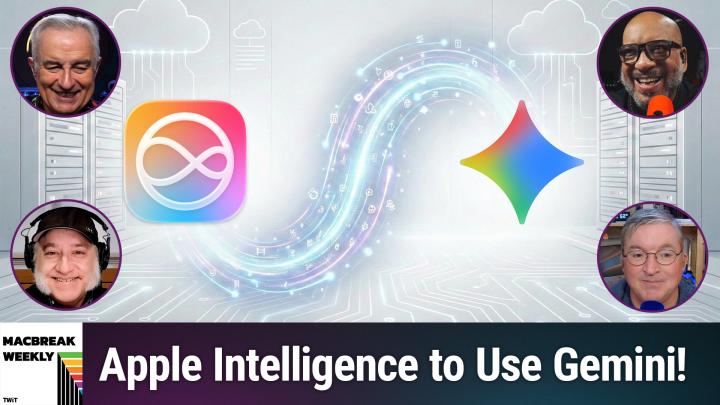
It's time for MacBreak Weekly. Andy Ihnatko is here. Jason Snell's here, filling in the empty chair left by Alex Lindsey, the wonderful Doc Rock. We will talk about the big news. The problem is there's a lot of big news. Google is now the official AI partner for Apple's Siri. That's exciting. Chase is taking over the Apple credit card.
Leo Laporte [00:00:25]:
We'll talk about Verizon. They've changed their rules on unlocking iPhones. And a new feature from Claude called Cowork that makes it a lot easier to use AI in your everyday tasks on Macs. All that and more coming up next on MacBreak Weekly. This is MacBreak Weekly. Episode 1007, recorded Tuesday, January 13, 2026.
Leo Laporte [00:01:01]:
They plump when they cook. It's time for MacBreak Weekly, the show we cover the latest Apple news. Hello. This was a big week for Apple news. Good news. The doctor is in. Doc Rock joining us from Honolulu. Hello, doctor.
Doc Rock [00:01:17]:
Aloha.
Leo Laporte [00:01:18]:
Aloha. Sporting the orange Doc Pop this afternoon.
Doc Rock [00:01:22]:
Actually, it's red. My color thing is tripping today.
Leo Laporte [00:01:25]:
That's reddish. It could be red.
Doc Rock [00:01:28]:
I'll fix it.
Leo Laporte [00:01:29]:
It might be me. Might be me. It might not be. It might not be orange.
Doc Rock [00:01:33]:
It's. What do you call it? Gentlemen of a Certain vintage. Yeah, that's what it.
Leo Laporte [00:01:37]:
That's me. That's me. Also joining us from the library in beautiful New England, California. Andy. No, I don't know where I did it to. California. New England. New England.
Leo Laporte [00:01:47]:
Andy Inocco. Hello, Andrew.
Andy Ihnatko [00:01:49]:
You know, there are parts of the country that aren't California. Mr. Californian Guy. No, it's all California and some of New York. But fine. We had a whole sitcom based in Boston once, and it was real popular, too. Cheers.
Jason Snell [00:02:04]:
Good night. Beantown.
Leo Laporte [00:02:06]:
You can go to visit. Oh, Beantown. Yeah, that's it. And Boston Legal. There've been a number of things. In fact, maybe movie makers love it a little too much. That's Jason Snell.
Jason Snell [00:02:17]:
Hello.
Leo Laporte [00:02:17]:
Who is in California.
Jason Snell [00:02:18]:
California. California here. Reporting in. Yes.
Leo Laporte [00:02:21]:
Purple, blue. Doc Pop, I. Yep.
Jason Snell [00:02:23]:
You know, colors. They're good. Have them.
Leo Laporte [00:02:26]:
I love it. I say I love it. Well, the big story of the week, there's many, actually. We're going to talk about the. We'll have our Vision Pro segment in a bit, so don't worry. We'll talk about the Lakers game. But I think the big story is one that we kind of been hinting at with rumors galore. But Apple Made it a final official announcement.
Leo Laporte [00:02:48]:
Yes. Gemini will be standing up in the place of Siri.
Jason Snell [00:02:54]:
Well, not quite.
Leo Laporte [00:02:56]:
It's going to be white labeled the.
Jason Snell [00:02:58]:
Gemini will be powering the foundation models on Apple's devices and in private cloud compute. It sounds like there are a lot. It was a very limited thing. What that means is that Siri will be powered by Google models by Gemini. That doesn't mean Gemini is replacing Siri. Right, Like Siri is not going to be replacing Siri.
Leo Laporte [00:03:23]:
Will I be talking to Gemini?
Jason Snell [00:03:24]:
You'll be talking to a Google Gemini model furnished to Apple that these will be two backs.
Leo Laporte [00:03:32]:
Is that what you're saying?
Jason Snell [00:03:33]:
You will not be talking to Gemini. You will be not be talking to Google's servers. You'll be talking to Apple's servers.
Leo Laporte [00:03:39]:
That's important, isn't it?
Jason Snell [00:03:41]:
And it will not change the branding. It's still going to be Siri. So it's, I mean this is, look, this is a very complicated thing that they haven't released any substantial information about. Just two cryptic paragraphs given to Jim Cramer at CNBC and then later posted to Google's blog. So we have to kind of backfill. But it sounds like you know, Apple's replacing the models that its AI group developed with Google models. That's the bottom line. And that that goes to not just Siri but all Apple intelligence features.
Leo Laporte [00:04:10]:
Yeah, this is really no different statement after careful evaluation. In other words they were talking anthropic, they were talking OpenAI. Who knows, they might have been talking to Meta and Microsoft. We don't know. Google determined that. Apple determined that Google's AI technology provides the most capable foundation for Apple foundation models and is excited about the innovative new experiences it will unlock for Apple users. Apple intelligence will run on Apple devices and private cloud compute while maintaining Apple's industry leading privacy standards.
Andy Ihnatko [00:04:42]:
Yeah, I was, when, when the news broke I was looking for well what has Apple posted to its newsroom? And they posted nothing. They were allowing Google's joint statement, the joint statement that posted on Google's blog and Google servers to stay stand as the official statement. Even the quote, official statement and quote that they gave to CNBC was essentially a two paragraph, a two sentence quote from like that original statement. Obviously Apple, for a good number of reasons including user confusion, they don't want people to think that Gemini is coming to Apple and replacing their plan for Apple intelligence. Like Jason said, this is more like a case of they are subcontracting out a job to a firm with way more experience and way more success at this. Just like any number of contractors that have contributed invisibly to any number of very, very front facing Apple projects. So Google is basically building Apple whatever Apple thought that they were or promised they were going to be building as Apple Intelligence two years ago. That plan is still moving forward.
Andy Ihnatko [00:05:45]:
However, they've hired a subcontractor to actually build things to their specifications, which includes all the privacy stuff running on Apple servers. Google has I think also clarified that no, Google will not have access to any of the data that comes through Apple Intelligence for its own training purposes. It really is just, they are building a white label unit, they're building it, they're building an engine plant, a power plant to power Apple Intelligence. One of the things that was kind of up in the air when these rumors started floating around was exactly how much is Google going to be providing? And according to the joint statement, they were not very, very vague about, about specifics. It really does seem as though again, their foundation model is going to be built by Google based on Gemini technology, which when you get down to just seems like the smartest thing Apple could possibly do. It's not as though that Apple doesn't have the ability to build a really good foundation model. It doesn't, it doesn't mean that Apple was in a real rush that they have to deliver this or else people are going to start buying Android phones instead of iPhones. However, it was becoming very, very clear that by the time Apple created an in house foundation AI model that was capable of whatever they wanted to do, they would have essentially been shipping the iPhone 4 when Google and everyone else was shipping the iPhone 13, 14, 15.
Andy Ihnatko [00:07:09]:
So there was really no, it was really the smart thing to do. Whether or not the interesting question that's still on the table is how much more work does Apple want to do on developing its own foundation model? Like is there if they're a couple of years away from finishing something that's very, very useful at the end of this, what is described as this multi year commitment between Google and Apple, are they just going to say, well, what's the point? We've got something great, we've got something very, very mature. Assuming this has been a very good fruitful working partnership, what can we add to the game now by creating our own foundation model that we can't get by simply having a more intimate relationship with Google's Gemini team to build us Apple Intelligence the exact way we want it. So it's interesting to see in two or three years time if Google is Going to remain the provider of foundation model AI intelligence to Apple intelligence forever or whether this is just a stopgap measure. I'm betting that this is very much a long play.
Doc Rock [00:08:10]:
I think it's brilliant in the fact that, I mean I see so many people get this twisted but like they were spending a lot of time, a lot of effort, a lot of money, a lot of resources and realizing having the common sense to know when to cut bait is actually one thing a lot of businesses don't do. And if you really think about it so RBPT sorry, I'm gonna go F1 for a second or Red Bull powertrains have been Honda, Honda, Honda, Honda, Honda and Now they're not first anymore. So they thought about some stuff. 2026 rules are changing. Cadillac is jumping into the fray. So they're going to like revive Cosworth and bring back the Ford powertrain team. So RB26s are going to be Fords. You know what, Red Bull don't make engines, they make power drink.
Doc Rock [00:08:57]:
So if you want to be, you know, Max Verstappen back at the top again, they then you go get a different powertrain company. Every other business does it. But Apple's like, oh, we're gonna go and just let Google do this for us. And people just went bananas. And it's kind of crazy because we've been using, you know, basically Google technology as the search for Safari since 2007.
Leo Laporte [00:09:22]:
It shouldn't really surprise us because we did have the story almost a month ago that Apple had moved John Giandrea out and brought in a new head of AI who happened to be the guy who was the product manager for Gemini. So that's kind of a hint Apple's thinking along those lines. Mark Gurman's tweet, Jian Drea got $25 million a year before is that Jan Dre is talking about first before stock games for eight years. Do the math. And they just got rid of him and hired the guy who helped build Gemini. Google good, good work if you can get it. You know, I wouldn't feel too bad if I'm Gendraya, you got a nice little payday. And you know what I don't do you think it's them saying, john, you failed us? But fortunately Google's been working.
Leo Laporte [00:10:13]:
Here's the thing, it's a little risky and understand Apple's delay in this because right now it is a heated head to head race between Google Anthropic and OpenAI.
Andy Ihnatko [00:10:28]:
Yeah, and China, they've got an open source model that is doing extremely well outside of the Western world.
Leo Laporte [00:10:34]:
I think the consensus, the general consensus is I will back this with my own experience that Chinese models are impressive for what they have done with the limited resources they have. They've also shown the way they did a year ago with reinforcement learning, but they are still. I would not have chosen any and Apple's never going to choose any Chinese model for Siri, but maybe in China they will.
Andy Ihnatko [00:10:58]:
Oh, sorry.
Leo Laporte [00:10:59]:
I think the smart thing to do was to pick one of the big three. The problem is who's the winner. You know, Gemini two months ago was easily the best when they came out 3 0. I would submit that as of November 24th anthropic with their Opus 4.5 model has now taking the lead.
Doc Rock [00:11:17]:
Here's the thing is the best model but Anthropic's CEO is not the easiest person to play with even though he's probably the most brilliant.
Leo Laporte [00:11:27]:
They were talking to him.
Doc Rock [00:11:29]:
They were talking fully understand but considering how he got to that versus open AI and that it was like do you really want to play there? And then open AI is good but they're also a little bit confused in who they want to be. And they're also heavily Microsoft and I don't think the whole Apple Microsoft thing plays out like the way people think it used to play.
Leo Laporte [00:11:49]:
And Google's already given Apple at least 20 million a year, so give him back a billion.
Doc Rock [00:11:54]:
No big deal. It's the devil, you know. I mean for like, for lack of a funnier term, like it literally is the devil, you know. And the one thing that Google just.
Leo Laporte [00:12:03]:
I'm worried they're picking the wrong horse is what I'm saying.
Doc Rock [00:12:05]:
No, yeah, I think the horses will be even for so long that it's not really a matter of the wrong horse. It's going to be like, you know that thing where you squirt the water in a clown's mouth and it kind of goes up and down and up and down and up and down. It's going to stay that way for quite a long time. I don't see any of these guys pulling out.
Jason Snell [00:12:22]:
Jason. It's going to be modular, right? That's the thing about this is Apple, Apple is building features on top of these models and although this is a multi year partnership with Google, the features that it builds are going to be on the iPhone. So on that level you could swap in a new model and it wouldn't be that big a deal. I think also yes, it's a horse race. At the level that Apple is using this stuff, which is not at the level that people who are pushing the frontier of an LLM, I think that those details, those little distinctions are probably not going to matter so much. What Apple's trying to do here is build iPhone features, not build a coding assistant or it's probably not going to show as much. They can drop it if they need to. It's not going to show as much.
Jason Snell [00:13:10]:
It's up to them to build actual features in their operating system that people are going to want to use. But that's the advantage. Those are Apple features on top of someone's LLM that is like a, you know, a part of a car that's being provided to them, but then they're building everything that goes around it. So I don't think it's that big a deal. I think maybe when this all started, everybody was thinking, oh well, if you're Apple, you need to build your own LLM. And maybe that was true, maybe it wasn't. They thought, but they failed. And I'm not sure it matters in the long run because there are so many other suppliers and access to all.
Jason Snell [00:13:42]:
You know, everybody who uses an iPhone is a pretty big deal. So I think that this is okay for Apple as long as they can deliver. That's the question is, can they deliver okay? They can't. They won't have the model as an excuse anymore, but they still have to deliver features that people want and integrations into the iPhone and the Mac that people will actually use and find valuable. That's the, that's the question.
Andy Ihnatko [00:14:04]:
What I was going to add was that like to. To. To piggyback on to Doc Rock's comparison. It's like I think that Gemini, that Google is the best choice for what Apple needs because there are, There are a lot of AI companies that are building cars.
Leo Laporte [00:14:18]:
I.
Andy Ihnatko [00:14:19]:
That Google is specializing in building engines. So if you're trying to. When you come to a company saying, hey, we want to build a machine that can be used to till land on farmland, like Google understands, well, we build an engine that can turn a shaft. We can build a custom engine that's really, really good for that, that can help you build this thing, they are the company that back when AI was nothing but an. Not even. Not even a really interesting demo, back when it was just people knew about it of, oh well, there is this cute little research project that can play the game go that very few people outside of Japan have really heard of. That's when Sundar Pichai was on stage sticking his neck out, saying that we are pivoting. We are basically defining the next chapter of this company as artificial intelligence.
Andy Ihnatko [00:15:09]:
So they understand basic fundamental things about this technology that goes to. We want to do a language model. Great. We can build a language model. You want to build a science research model and a medical model. We've built those too. You want to build a robotics model? We've built a robotics model. They're the company that has really at least demonstrated the ability to go beyond asking questions of a chatbot and getting answers back.
Andy Ihnatko [00:15:32]:
And so if you want to basically say, we need you to build us something to our specifications for our use case, I can't think of how you could do better than Google in terms of actual resources and actual proven capability.
Leo Laporte [00:15:49]:
Well, it remains to be seen. They're going to roll it out slowly. It won't happen all of a sudden, at least according to Gurman and others. I think Ming Chi Kuo, the first inklings of it will be in. Will it be in 26, two? Maybe, but it won't be till June. I've seen some say wwdc, when you get the full features of Apple intelligence switched on through Gemini. Gemini, I mean, they're doing fine. It's the best image model right now, which is, you know, it's a close race between IT and Chat GPT, but it's a.
Leo Laporte [00:16:27]:
It's, I would say Nano Banana, their newest model, is pretty impressive and Apple obviously thinks that's important. I don't know. How is Gemini compared to the others for writing? It feels like Apple cares more about things like image generation, Genmoji, writing, summaries, that kind of thing than it does about things like coding, which is what Anthropic is really good at.
Jason Snell [00:16:54]:
Well, they, I mean, they do have LLM integration and Xcode for coding and they are going down that path. That's a separate path.
Andy Ihnatko [00:17:01]:
Right.
Leo Laporte [00:17:01]:
They're also doing health. They've announced health and they have partnerships.
Jason Snell [00:17:04]:
Right. They have partnerships with other LLM companies to do other things. The question is sort of like what they're doing here is the stuff that they were relying on their own models for. They're going to replace those models with Google's models because they're better.
Leo Laporte [00:17:18]:
There's a lot of testing too, about how well it integrates with Siri, because that's at least my sense of it from the past two years is that was the hard thing. Was this the back and forth voice chat?
Jason Snell [00:17:29]:
Yeah.
Leo Laporte [00:17:30]:
You look at Alexa plus, for instance, it's it's hit or miss.
Jason Snell [00:17:33]:
Yeah, I think, I think that's part of the challenge is that they really, they have a. I mean, when they say that it didn't pass their quality bar, they do mean it. I think they tested it and like, this, we can't ship this. It's just not good. Even though it's going to make us look bad that we can't ship it, we can't ship it because it's not good enough. So I just, I would caution anybody, you know, if we go down the path of who's ahead in the horse race for image generation or who's the head in the horse race for coding or whatever, like, it's going to be back and forth. And honestly, I don't think it matters when you're at the level where Apple is implementing features in UI on top of these models, in OS releases for regular users to do stuff. I don't think that if one model is slightly better than the other, nobody's going to care.
Jason Snell [00:18:18]:
And keep in mind, if you want to download the other, an app that uses the other model and run it on your iPhone, no one's going to stop you.
Leo Laporte [00:18:27]:
Yeah, you can still use real Gemini if you want.
Jason Snell [00:18:29]:
You have access to all, all of those other models as apps if you.
Leo Laporte [00:18:33]:
Want parity with Siri. Right. I mean, I mean, I guess if you're using a HomePod commands.
Jason Snell [00:18:42]:
Yeah.
Leo Laporte [00:18:42]:
I mean, what, what is it that Siri's got?
Jason Snell [00:18:44]:
An ecosystem. Apple has an ecosystem and it's integrated in a lot of different ways, specific ways to the hardware and the handoff to different devices for different tasks and all sorts of stuff like that. That has to be part of the kind of training and integration of a different model in. Because you have to do kind of heavy lifting in. Like if you say something in an open room, in an Apple ecosystem, there's a thing that happens where all your devices are talking to each other saying, who gets this one? Who's this for? And so they built that. But the good thing is they built it. It's just whatever they're saying there, it needs to know what device has what model that is the one that should get this. And the right thing to do at this point will be once that Google model is there, it'll be that one that should win.
Leo Laporte [00:19:28]:
I have to say, as end users, we should be happy because there is competition and competition is really neck and.
Jason Snell [00:19:36]:
Neck right now, and it's competition and LLMs. But I want to make this point, which is with this deal, the Default LLM integrated. The default core model integrated on basically every phone in the world is Gemini.
Leo Laporte [00:19:53]:
That's a good point because It's Android and iOS.
Andy Ihnatko [00:19:56]:
Elon Musk was whining about that the other day in response to that, oh, Apple should not have control this. Well, the thing is that I'm sure they took a look at Grok Elon. I'm sure, I'm sure they had a good laugh about it and then they moved on.
Leo Laporte [00:20:07]:
It's funny. Didn't I leave Xai out of the conversation? I did. I haven't mentioned. Well, I don't really use, I have it because Elon gave me a non consensual blue check but I have no desire to use it.
Andy Ihnatko [00:20:20]:
Yeah, so the competition is especially important because there are so many questions still about, about what role AI is going to have it should provide in an operating system level, on a device level. I mean I brought up, I brought up China, not because I thought that in any way, in any world Apple would consider using, using their, their, their, their foundation model, but the idea that I was, I was reading a bunch of different analysts who were saying that the thing is they're making a lot of, they're making a lot of inroads and countries outside of like what we consider the western sphere and they are also their models are not as good, but they're one part of the bet is that it's good and we don't know what good enough is yet. And if they are providing a model that's good enough and is has open weights and can be run on a lot less power than the best models, who knows in two or three years whether or not everyone else is going to be trying to say yeah well let's do a roll out our own good enough models. What I'm saying is that there is so much that's in flux right now that really it's hard to determine winners and losers. One thing that remains true, however that remains a problem is that you need the power and resources of a nation state in order to build a foundation model. Now that Google is, Congratulations Google, you recently became a $4 trillion company. And all of the companies that are all the organizations that are doing really good foundation models have those resources to pay for all of the development and all the support and all the compute that they need for this. So essentially either you are a country in and of itself or you're a corporation that's so huge that you have the powers of a nation state.
Andy Ihnatko [00:21:58]:
So that means that if the five Companies that are doing competitive foundation models are doing bad things collectively and selfish things collectively that are bad for people, bad for society, bad for the planet. There's no room for an upstart to come in and say, guess what? We're going to come up with a much better solution because you are not going to be able, unless you have a, unless you have a backer of that scale, you are not going to be able to build it.
Leo Laporte [00:22:22]:
It really does give Google a leg up on the other guys. I mean, this is, this is a, a big win for Google, which is probably why Apple gave them the press release.
Andy Ihnatko [00:22:32]:
We think of Apple not just, not just as a client, not, not just as a partner, but as a client. Now every other company that needs, needs AI services. Well, guess what? Apple looked at all the different, all the different organizations that could provide with the services and the technology they need. They pick Google. Why shouldn't we at least take a look at Google number one on the list and then ask ourselves, why not Google? This is a big, big win for Google.
Leo Laporte [00:22:54]:
Yeah, yeah, it's kind of, it was.
Doc Rock [00:22:57]:
Kind of the tone for everyone else, like you said, you know, now Google gets to use that thing where you see, you know, go to the site at the bottom it says, oh, picked by Adobe and proctoring.
Leo Laporte [00:23:08]:
You won't see it on any, on any Apple stuff. Right. They want to put it in their newsroom. And you definitely, and this is reassuring to people, won't be sending data back to, as far as we know, back to Gemini. Right. This is still just as private. It's going to run on Apple servers on Apple's.
Jason Snell [00:23:25]:
One of the reasons this deal may have happened the way it did is also because keep in mind, Apple's not just doing a bake off of the best LLMs. Apple is doing some negotiation involving compatibility. Right. They want an on device model, presumably. Right. And they also. So that's got to be a lot more lightweight. And then they want something that will run in their private cloud compute infrastructure, which again is not the wild, you know, any data center run by any LLM.
Jason Snell [00:23:56]:
It's a very specific set of rules. And obviously Google said we could do that. And I think Google's an interesting partner in part because Google is one of the only major players that seems to really, really have a reason to care about on device models because of Android. And that's important. Like if you can, you know, everybody, all the frontier stuff is happening in giant data centers. Right. But like in the long run, the more stuff you can process if you can have a powerful chip in your phone, which we do, and they're getting more powerful all the time, much better to run that thing locally with no latency. And then if you can't do that, having a model that runs on Apple's system, where Apple doesn't even know what you're doing because it's designed to be private, and then get that data back to you, that's also pretty powerful.
Jason Snell [00:24:43]:
And not every LLM company is going to be capable of or interested in emphasizing those features right now. And Google's a good fit. So I think in that way, Google caring about smartphones makes them a good match for Apple because Apple also obviously cares about smartphones.
Doc Rock [00:25:01]:
If we were given points for, for the takes, Jason, you just got 75 points. Because that's the real answer. The fact that it is a mobile company and they actually do run their own servers and stuff, whereas, you know, Anthropic and OpenAI, they have to use other people's service, including some of Google's.
Leo Laporte [00:25:18]:
Yeah.
Jason Snell [00:25:18]:
And Google has said that they were interested. After Apple announced private cloud compute, Google did an announcement that was like, basically, they didn't say it, but it was basically, yeah, that's a good idea. We should do that too, for some. And it is. And Apple was the company. I don't think they get enough credit for this. But like, Apple building private cloud is really a good move. Like, that was a really smart move by them.
Jason Snell [00:25:40]:
And other companies weren't motivated to go down that path. And Apple's like, we're going to do this. We're going to build our own servers running a version of our own operating system that's going to be built to be private, and we're going to make that available for security researchers. And, and I think that was a great strategic move and it gives them the ability to play in this space. And the fact that, that I think Google thought it was a good idea too, and that Google is technically capable and willing to build a version of their Gemini engine that will run on private cloud compute. Like, I'm not sure, you know, if Apple talked to OpenAI, it may not have been Apple saying, forget it, or open I saying, forget it. I don't want to work with you. It could have been that they looked at Apple's list of requests and were like, well, we aren't going to do this.
Jason Snell [00:26:23]:
Right. But Google, same thing all the phone.
Leo Laporte [00:26:25]:
Companies did when Apple said, we got this thing called the iPhone. Anybody interested in that? And everybody kidding me.
Andy Ihnatko [00:26:32]:
It's possible that it wasn't even a case of we don't want to do this. It could be that on a technical level, we have not. We have not built a flexible enough model that can be agnostic, privacy agnostic.
Jason Snell [00:26:43]:
I think that's got to be true, Andy, because if I'm open AI, the last thing I want is for every iPhone to have Gemini on it. Right. That's the last thing I want. But I just don't think it's where. Well, I don't think it's where they're skating. I think that OpenAI is skating in a very different direction from where Apple wants to go in terms of having private, small, private clouds and on device models. And it's just like, fair enough. I think there are lots of different strategies here.
Jason Snell [00:27:08]:
We may end up having pit every AI against every other AI. It may be that ChatGPT is actually the master of this and like Claude is over here doing coding and that Google and Apple are working together on. On device and small private cloud and that there's room for all of those approaches because they're different right now. They're definitely all leaning into, like, what they're focused on. And strategically, I think open, I would rather be the thing that drives the iPhone, but I think larger strategically, it is just not an area of focus for them right now.
Andy Ihnatko [00:27:40]:
Yeah, I do, I do think that they're. Sorry, just quickly. I do think that they were at least OpenAI and everyone else is at least relieved to know that Apple is insisting on privacy controls because this would have been a. This deal would have been a disaster for every other AI company if Google was allowed to use the data that it, that it manipulates on iPhone to train and improve Gemini. The influx of all of that information from all of those iPhones, all of those iPads, all of those everything would have been such a huge tactical advantage. It would have just. It would have definitely accelerated the improvements that Google could have done on Gemini. And so that.
Andy Ihnatko [00:28:21]:
That would have been the thing that would have been not game over. But we are suddenly running. We are suddenly two bases behind on Google because that is a huge, huge advantage. And the fact that that was not going to be a deal breaker for, for, for Google also says that at least Google is institutionally aware of the need for privacy. There was a, There was an announcement last week about how, oh, good news, they're embedding Gemini even deeper into Gmail and now it can give you all kinds of information regarding all 20 years of your emails. And even there they had to basically point out, oh, by the way, let's be explicit here. We are not training Gemini based on your emails. We are doing all of this within our.
Andy Ihnatko [00:29:04]:
That private cloud compute analog that we announced a few months ago. So they're at least big. They've got a big enough business. They are not desperate to pinch every. To steal every penny they possibly can from its users and its clients, which probably was also an advantage. I'm sorry, Doc.
Jason Snell [00:29:18]:
Yeah.
Doc Rock [00:29:18]:
And I was going to say real quick is, you know, there is a limited talent pool of the people that can do this.
Leo Laporte [00:29:25]:
Yeah.
Doc Rock [00:29:25]:
And so, you know, there's been a lot of conversations about Apple's inability to do this or Apple can't catch up and they got all the money in the world. It doesn't matter how much money you have in the world.
Leo Laporte [00:29:34]:
If this.
Doc Rock [00:29:34]:
Let's just say there's only 2,000 people out there with the skills to make this happen and you have a large portion of them already divided up amongst the top three. Unless you're going to go and pilfer people from some of these other companies. Companies to try to get them in, which they kind of sort of did a little bit. The smart play is to just realize that based off. And of course, they have business decision people out there, they have analysts that goes looking at the talent that's coming out. We don't see anybody that's doing anything that's kind of like the next Johnny. I've of this, if you will. So realizing that there's no talent right now and we don't have a lot of time and everybody's pressing us, stockholders want this.
Doc Rock [00:30:12]:
The media is slamming us. All right, here's our next move. There was a business analyst decision and it was a brilliant one. Now if we had a massive pool of talented people come out there, yeah, it might be worth taking your toys, going in the corners and trying.
Jason Snell [00:30:25]:
But yeah, there's.
Doc Rock [00:30:26]:
And so people act like there's this infinite, you know, number of people. I mean, I consider all four of us to be relatively smart. None of us was going to go work at Apple and do the AI team.
Andy Ihnatko [00:30:36]:
No.
Doc Rock [00:30:36]:
Like, I could talk about Allen Iverson, but not about this. So, you know, so, like, I think, I think people need to like, like get off the, I guess, how do I say, it's not really a doom and gloom thing, but it's always assuming the worst. No, they're doing the best they can with what they have. And to me, it's a brilliant decision. And we know that they're going to strive for the privacy thing. And andy's point is 100 valid. This is literally probably the best thing and I am happy that it's coming. And, and I really hope that the one thing that we talked about a year and a half ago that we still don't have is I want to be able to say to Siri, hey, Siri, you know, exactly when was the last time I got to hang out with Leo? And it was according to your calendar, it was, you know, such, such and such that promise has not yet been delivered.
Doc Rock [00:31:23]:
And it was a feature that actually makes it semi useful. You know what I mean? I was just in Kyoto like last week and I was trying to remember this small mom and pop shop, you know, udon shop that we went to that was fabulous and I couldn't remember where it was. And I'm looking at my photos album trying to find it. And because of the way photos does Japanese streets, I couldn't exactly nail it. Now I eventually found it, but it would have been so much easier if I can just say, Siri, hey, the last time I was within two miles of here, where is that udon shop that I went to? And Siri would be like, oh, it's on Katasuma Dori Nijo. Just go there in 100 meters to the right and it's underneath those steps.
Andy Ihnatko [00:32:05]:
Yeah.
Doc Rock [00:32:06]:
You know what I mean?
Andy Ihnatko [00:32:07]:
It's so seductive, isn't it? Like, even as I get, I like Google, but even so I'm like, do I want Google AI like attached to my inbox? But it's so seductive because again, you've got. I don't use my Gmail account as my primary thing, but it is like where receipts and stuff go and a lot of other information goes academically. If both of my mailboxes, my primary mailboxes were connected with AI, the ability to say, I know that. God, the last time I had a plumbing problem, I went with this water heater guy who fixed it really well. But that was like six or seven years ago. Who was that guy and what did he charge? And just simply not like, here's a search result, here's the email. Say, oh, well, it's so and so here's his contact information. Actually I also found his business address.
Andy Ihnatko [00:32:51]:
So he's still in business. If you, if you want to call them, touch this button and it'll go. Or even complex things like how much on average did I spend on every time I flew to San Francisco for the past five years? What was the average amount I spent on airfare and simply trying to figure out like, am I paying too much, too little, all these things and medical stuff, scheduling stuff. It's like, I want to be safe. I don't want to trust a $4 trillion company with like personal information. But if it can answer questions that are really, really, really vital. And turn like the last example is like, there's a I need to invoice somebody for a job I did a few months ago. But it was like, instead of like, oh, just give us an invoice.
Andy Ihnatko [00:33:30]:
We'll PayPal you the money. It's like, okay, first we need you to onboard you onto our payment system. You need to sign this. Also, we need a new user agreement for this, that and the other and haven't gotten around to it because like I actually have almost lost track of all of the emails, but all the things I need to do. And if I could just, just say Gemini, say give me a to do list of everything I need to do to get paid for this job. And it will just simply give me a table. And Here are the PDFs that you need to sign. Here are the emails that refer to this.
Andy Ihnatko [00:33:56]:
It's like that would solve a lot of my problems right now and maybe I don't mind being exploited by a $4 trillion company if it sometimes helps me out like this.
Doc Rock [00:34:05]:
You know the funny thing you just said, Andy, which cracks me up how I actually found this spot was because of the breadcrumbs that you leave in Google Maps because I never turned it off. So it was actually leaking my data. Privacy actually helped me find my spot again though, and it was good. By the way, I can send you recommendation if you're in Kyoto.
Leo Laporte [00:34:27]:
It will be interesting to see what happens. I think Apple did the only thing it could do. I guess that's the bottom line. Would agree it may not be enough. Here's the question. The world is very rapidly now bifurcating between people who believe AI is transformational and is about to change all of technology. I'm in that camp and people will say AI, that's the worst thing. It's slop.
Leo Laporte [00:34:57]:
I guess there's a few people, probably most of the three of you, who are kind of in the middle. But there is this division happening. There will be people who say I love Apple because they don't have AI.
Doc Rock [00:35:11]:
And Apple will make phone 8.
Jason Snell [00:35:13]:
Apple will let you turn it off. I think that's the thing is Apple, Apple. You can turn Apple intelligence off now. I think in terms of is it Too late. I think only in the sense that Apple should have realized that this was not a game it needed to play a few years ago. And instead it was like no, no, no, we can build it all ourselves. And it is a hump for Apple to get over whenever it decides this is not a thing it needed to do itself and it couldn't do itself. And they should have recognized that sooner.
Jason Snell [00:35:38]:
But they really believed. They hired John Gian Andrea, he was going to get it done. But there I think if you talk to John Gianna Andrea, he would probably say Apple was, it was never going to work with Apple because of the way Apple builds products and the way Apple viewed AI and what it was for. And you know, in terms of the transformationality of AI, I mean Apple hitching its, its wagon to a company that's really devoted to this stuff I think gives it a leg up. If AI utterly transforms everything to the point where you have to question every assumption about everything, then everybody's going to be in the same boat. I think, I think Apple will have to deal with that. Like if, if the iPhone becomes irrelevant because of AI, then that's bad for Apple obviously, but that's going to be bad for a whole lot of people. But what they're not going to do is be stuck on the side of the road with their tires off the car.
Jason Snell [00:36:36]:
Right. Like they are going to be rolling down the road and using a well thought of AI model to run their stuff.
Leo Laporte [00:36:45]:
Yeah.
Andy Ihnatko [00:36:45]:
And that's something. Actually you got me thinking about something that I actually hadn't considered before that what if all these doom and gloomers are at least partially correct and that AI devices are going to partially replace phones because Apple is not in a good position to lose like 20% of its phone sales. The thing is, especially with this deal with Google, if the next thing really is a pendant or a pen or a pair of an AI that goes through a pair of glasses, they're now in a very good position to have very, very flexible hardware products that they can ship that have AI embedded in them or rely on artificial intelligence in a way that maybe they didn't have that kind of fle, even if they had landed on a successful foundation model in a couple of years time. So they're good.
Leo Laporte [00:37:33]:
Elon, I'm in this. Not happy. Apparently sending a message to Pam Bondi saying, you know, you really should look into this. It seems like an unreasonable concentration of.
Andy Ihnatko [00:37:44]:
Power for Google as a disinterested third party. I'm just concerned.
Leo Laporte [00:37:49]:
I don't Have a dog in this hunt. I don't want you to think that I care.
Andy Ihnatko [00:37:52]:
Oh, and by the way, thank you for integrating Grok into your defense AI system. That was. That was great. Oh, yeah.
Leo Laporte [00:37:57]:
That's the scariest news of the week.
Andy Ihnatko [00:37:59]:
Yes.
Doc Rock [00:37:59]:
Oh, my God. It's so. It's. It's kind of crazy. You know, it's. It's really weird. I was watching a bunch of coverage from CES last week, and of course, all of the tech tubers, they just all went in like, oh, everything is AI this and AI this, and they have this. And I'm like, bro, the.
Doc Rock [00:38:17]:
The roomba's been swinging AI since 07. Like, iPhones had it in there since. I think it was iPhone 8, if I remember correctly. It's just now that the terminology is AI.
Leo Laporte [00:38:28]:
And.
Doc Rock [00:38:29]:
But honestly, you know, machine learning, neural engine stuff has been happening for quite a long time. And the things that we do every day that sort of have this built in, you know, people are right now making a lot of noise about certain stores are now using sort of price adjusting in real time because they have so much data that they can comb through. And I'm like, I know on your end of it, as a consumer, it feels painful, but if you had a business that allowed you to actually track enough data to control your pricing the same way, and you didn't do that as a business person, you'd be a bad business person. So, like, it's easy to take the victim mindset of it, or you can figure out how to make it work for you too. And I believe that there is definitely a gray area and a gray line. But even so much talk about, you know, what is personal privacy. I think a lot of people don't realize unless you use Ghostery or some other app, every site you go to gives up, like 80 different data points about you. Unless, I mean, Safari is probably the best, which is why, you know, Leola and I, like, shut up, Google.
Doc Rock [00:39:38]:
Every time. Chrome. Like, do you want to download Chrome? But I mean, people, you. You say.
Leo Laporte [00:39:45]:
That'S the same idea.
Doc Rock [00:39:46]:
You know, same idea, right? But you're. You're giving them so much information now anyway, and you don't even realize it because so many of the people that are not our people or our audience, oh, I'm not a tech person. I don't want to know that stuff. I'm like, but you're the same one that's crying that says you don't want to give up your private information, and yet you're doing it all the time. And this week, one of us is going to get an email from a friend that owns a PC that says that they want something from us, but it's not really them because their security is so terrible that, you know, you're getting these weird emails supposedly from Jason. I'm like, jason don't even spell like that dog. And like, Jason doesn't call me by my government name ever. So I know you're not Jason.
Doc Rock [00:40:27]:
I get emails. I get emails from Ken and Glenn saying to go and buy 2,000 gift cards. And I'm like, so we, we have a Slack channel called Faker.
Leo Laporte [00:40:35]:
I mean, your name isn't Doc Rock. Wait a minute.
Doc Rock [00:40:41]:
But yeah, we always send in our fake or not screenshots. You know, like, if you don't sign this employee agreement right away, you're gonna lose all your money. And then, by the way, it costs you 40 bucks to do so. It's like, yeah, all right.
Leo Laporte [00:40:53]:
I'm so embarrassed. I fell for a phishing scam yesterday. What?
Doc Rock [00:40:58]:
Explain.
Leo Laporte [00:41:00]:
I was foggy. I just woken up and I got a text from T Mobile saying, hey, your points are going to expire. Why don't you get some of these fine items? I click the link. I'm such an idiot.
Andy Ihnatko [00:41:12]:
Well, that's the problem, because everyone in this conversation is savvy enough to be aware of this sort of thing. But all that has to happen is that a notification appears while you're putting the gas pump back into the handle and you're checking to make sure that you weren't overcharged.
Leo Laporte [00:41:28]:
Well, and I am a T Mobile customer and they re. And this is the thing. And I really think companies have to think about this. I get regular text messages, promotional text messages for them. So I. It was, it was kind of. Oh, yeah, of course. But it wasn't.
Leo Laporte [00:41:43]:
And I, and I. And. And I should have. The giveaway was when I entered a credit card number and said, no, that one's not working. Get out another one. And I entered another credit card number and said, no, that's not working either. You got another one. And I entered.
Leo Laporte [00:41:55]:
I put in three different credit card numbers before I went, oh, crap. So I immediately canceled all three credit cards. The nice thing about the Apple. So there's a couple of Apple sidelines to this. One of them is, and I should have noticed this when I got the text messages saying, you want to use this credit card? Here's the six digit number, which I then gave the bad guys after a long delay, right? And then I Got a text back saying, it's been added to your Apple Wallet. I said, well, no, that's not what I was doing. So the bad guys are. This was a smart move.
Leo Laporte [00:42:30]:
They actually took the credit card numbers I gave them and added them to their own Apple wall or some other Apple wallet for an anonymity. Right. Because now they can go somewhere and use it anonymously. That was part of it. The thing that was good was I did one of the. One of the. The first one I gave it was my Apple Visa. But the nice thing about Apple, you go to the wallet and say, I need to get rid of that number.
Leo Laporte [00:42:53]:
I need a new number. And it's like that. The other two, I am waiting for a card to be sent to me and there are some, you know, disconnections I have to go through, reconnect. So there's some pain associated with them. But the Apple thing was very, very easy. I'm such an idiot. And the only reason I say this is I just want you to know it can happen to you. It's so easy.
Doc Rock [00:43:14]:
Yeah.
Andy Ihnatko [00:43:15]:
A friend of mine messaged me with a malformed, like, video link. And I knew it was malformed because, like, you know, it wasn't. It wasn't popped out into like a YouTube player, right? And, like, because he's such a trusted friend, like, he's someone I chat with, like, almost every day. It's like, of course I tapped on it. This could have been a malicious. He could. His account could have been compromised. This could be a malicious link.
Andy Ihnatko [00:43:36]:
And I just tapped it like, it. It turned out he just pasted it incorrectly. But it's like, again, the sort of thing that humbles you into thinking that, no, I am not invincible from this. No, I'm too smart. It's like, again, catch you when you. Especially catching you when you're down or when you're distracted by something else. And this is another area in which artificial intelligence is going to be helping out the iPhone. Just simply being much, much smarter about being able to catch stuff before it actually interpret saying, I'm not going to hide.
Andy Ihnatko [00:44:04]:
I'm not going to prevent you from clicking. Clicking this. But realize that this has every single earmark of it, something that your friend has never sent you before. And it seems it has the. It has the appearance of being a scam. So for no apparent reason, I'm basically backgrounding this in red and actually having a revolving warning sign jiff next to this. But hey, click on it if you want to.
Leo Laporte [00:44:24]:
You'd think I'd know better. The other side of this is they within 20 minutes used it, but I had fortunately blocked it. So a 500 charge at Lowe's got rejected and man, stupid me. Let's take a break there. This is just one of many there. There's like five big stories today. All of a sudden, here we are, it's only the second week of January and the. And Apple's been busy, busy, busy, busy.
Leo Laporte [00:44:57]:
Yes, we're going to talk about. We will have our Vision Pro segment soon. We'll talk about, since we're talking about AI, the fact that Anthropic has announced a new feature in its Claude AI designed specifically for Mac users. I have tried it because foolishly, I am paying for the top of the line Claude account, which you need. You need a Claude Max account to use it. So I'll demo that. There's so much more. There's Golden Globe victories there.
Leo Laporte [00:45:28]:
I mean, I could just go on and on. In fact, Claude told me that the, the Apple creator studio should be the number one story. So I blew that.
Andy Ihnatko [00:45:37]:
Super hot.
Leo Laporte [00:45:38]:
It's super hot.
Andy Ihnatko [00:45:39]:
We'll talk, but it's less relevant. I'm glad we started with.
Leo Laporte [00:45:43]:
Yeah.
Andy Ihnatko [00:45:43]:
Something that material is of the next five or eight years of Apple's future.
Leo Laporte [00:45:47]:
I just want to reassure people who are tuning in saying exactly. Well, wait a minute.
Andy Ihnatko [00:45:52]:
We did check the news this morning before we started.
Jason Snell [00:45:54]:
There's a lot more.
Leo Laporte [00:45:56]:
I had Claude do it for me. There's a lot more. You're watching MacBreak Weekly. Andy Inocco is in the house. So is Jason Snell from sixcolors.com and of course, the fabulous Doc Rock, YouTube celebrity Doc Rock. And of course, Ecamm Ambassador. Is that fair to say? Ambassador?
Doc Rock [00:46:19]:
Actually, now I'm the director of strategic partnerships. I make sure you work for them. Yeah, I make sure that things, you know, sort of work well with, you know, when people buy hardware and stuff, we want it to kind of line up.
Leo Laporte [00:46:31]:
They do it. And I have some hardware that I've already ordered that was announced today that I will be using with eCamm. But we'll talk about that now.
Doc Rock [00:46:38]:
I want to know.
Leo Laporte [00:46:40]:
Hey, everybody, Leo Laporte here with a little bit of an ask. Every year at this time, we'd like to survey our audience to find a little bit more about you. As you may know, we respect your privacy. We don't do anything. In fact, we can't do anything to learn about who you are. And that's fine with me. I like that. But it helps us with advertising.
Leo Laporte [00:47:01]:
It helps us with programming to know a little bit about those of you who are willing to tell us. Your privacy is absolutely respected. We do get your email address, but that's just in case there's an issue. We don't share that with anybody. What we do share is the aggregate information that we get from these surveys. Things like 80% of our audience buy something they heard in an ad on our shows, or 75% of our audience are IT decision makers. Things like that are very helpful with us when we talk to advertisers. They're also very helpful to us to understand what operating systems you use, what content you're interested in.
Leo Laporte [00:47:35]:
So.
Doc Rock [00:47:35]:
So, enough.
Leo Laporte [00:47:37]:
Let me just ask you if you will go to TWiT TV Survey 26 and answer a few questions. It should only take you a few minutes of your time. We do this every year. It's very helpful to us. Your privacy is assured, I promise you. And of course, if you're uncomfortable with any question or you don't want to do it at all, that's fine too. But if you want to help us out a little bit. Twit TV survey 26, thank you so much.
Leo Laporte [00:48:01]:
And now back to the show. All right, well, let's talk about the creator's studio. This is Apple's response clearly to Adobe.
Jason Snell [00:48:11]:
And Affinity.
Leo Laporte [00:48:12]:
And Affinity, which is also. But affinity doesn't have the full range of packages. The Apple creator Studio, which will be $13 a month, $129 a year. But and this I was quick to check this out. It is. Can be a family does count for a family plan. Unless you get the education version, which means for $129, everybody in my family, you know, six people in my family can use it and that makes it a pretty good deal. You get Final Cut Pro, which is normally $300 one time only.
Leo Laporte [00:48:46]:
They're still going to offer, by the way, the one time only for all of these. But who would pay 3 on Mac? Who would pay $300 for Final Cut Pro when for $120 million a year? I don't know. Logic Pro, also still expensive. Pixelmator Pro finally gets a home. Apple acquired that in 2024, but now it's part of this creator Studio Motion Compressor. These are Final Cut features. Main stage, but it also is going to take the iWork suite. It's still going to offer that for free, but it's now more freemium.
Leo Laporte [00:49:17]:
Keynote pages and numbers will have additional features if you buy the subscription. Jason, is this a good Deal.
Jason Snell [00:49:24]:
I think Apple building a Pro bundle with Final Cut Logic and pixelmator and putting it on iPad and Mac for a. I mean if you think about it, a relatively low price. I pay. That's about what I pay for just Photoshop. If you're paying for more of the Adobe suite, it's a lot less than that. And it's not giving you everything that Adobe suite is or that affinity offers, but you're getting video, audio and photo all in one place. I think Apple playing I mean this is why they bought pixelmator, right? Like they wanted a.
Leo Laporte [00:50:00]:
This is the one missing piece.
Jason Snell [00:50:01]:
They didn't have a photo editor for this. Right. So like I think it's good that they offer this. I think that this kind of high end suite is a great use of the subscription model. And if you're getting, if you use even one of these apps, but certainly if you use two of these apps, I think it's actually a pretty good deal.
Leo Laporte [00:50:19]:
I've already paid for Final Cut and Logic. Oh but they changed that to a subscription on the iPad, didn't they?
Jason Snell [00:50:25]:
On the iPad. It has always been a subscription since they came with this. It's a subscription thing.
Leo Laporte [00:50:31]:
It's been so you might. And you get Mac and iPad versions for that.
Jason Snell [00:50:36]:
When you subscribe you get the Mac and iPad versions for monthly or annual. Yeah, I think strategically it's a good move and their apps are actually pretty good. There are probably some holes here that they might want to fill down the road, but maybe not. Maybe this is, you know, it's not a bad combination to roll them all together.
Leo Laporte [00:50:53]:
I have to think Alex Lindsay knew about this when he left us.
Jason Snell [00:50:56]:
It's possible, it's quite possible.
Leo Laporte [00:50:58]:
This was one of the things somebody Scottish. I wish you were here to tell us what he thinks, but he won't, he can't.
Andy Ihnatko [00:51:06]:
Well, ironically now he works at Apple, he could definitely afford to buy him outright. So I don't know.
Leo Laporte [00:51:10]:
Hey, that's true.
Andy Ihnatko [00:51:10]:
How he's trying to cheap on it.
Leo Laporte [00:51:11]:
That's a good, good point.
Jason Snell [00:51:12]:
The part that I don't entirely understand is how where Keynote pages and numbers factor in because they're, they're not creative apps. They were the iWork suite. They're, they're very different apps. You get them for free. But what this announcement says is that there are new features and content that will come if you're a subscriber. Now the content part, I get like part of this part of being an Adobe subscriber. Whatever is you get like A content bundle. You get access to clipart or you get access to templates or whatever.
Jason Snell [00:51:41]:
Like I don't have a problem with that. That if you're paying for the creative. Creative creator studio, it's not the creative Suite, that's a different company's product. The creator studio still cs. It is kind of logical that it's like, oh yeah, we also make some beautiful. We have some beautiful templates that are just for you and beautiful thing imagery that you can use in your presentations and stuff like that. Like, okay, it's a little weird, but okay. But them saying that they're going to be some productivity, it seems like features.
Leo Laporte [00:52:13]:
That's numbers. That's interesting. I could see like, oh, it's a nice little sweetener. We're going to give you some templates for Pages and Keynote.
Doc Rock [00:52:20]:
But I got the numbers one for you, full stop. And we could use it today as we sit here in this particular guy. Okay, so numbers being connected to Final Cut Pro also being connected to pixelmator.
Leo Laporte [00:52:35]:
Now might be the big thing, huh?
Doc Rock [00:52:37]:
Now states that when I'm going to do, you know, MacBreak Weekly 1008, I can just say it's going to be Doc and Andy, Leo and Jason. And it can generate all the lower thirds on the fly. I don't have to sit there and edit each one of the lower thirds as a person, I mean, I'm a creator, so I use this stuff.
Leo Laporte [00:52:54]:
What does it use for that? Numbers?
Doc Rock [00:52:57]:
Yeah, you can use numbers because that's the cv. Cvs. That is a drugstore, my friend.
Leo Laporte [00:53:03]:
Does it have the COVID shot and the flu shot? I'm just curious.
Doc Rock [00:53:07]:
Yes, it can use the CSV or.
Andy Ihnatko [00:53:09]:
The TSV now with AI generated content. Those receipts will be even longer. You're welcome.
Doc Rock [00:53:14]:
Oh my God.
Leo Laporte [00:53:15]:
Right?
Doc Rock [00:53:15]:
But yeah, so being able to do things like that also, Leo, if I'm using logic to do the cut down of the show and I say, okay, now that you know how to do transcripting, you also should be able to go and find me those highlights and help me generate those reels. So it's going to get me those timestamps, which is now connected the final cut so I can get the audio to video and then the transcript and I can build that in Final Cut and I can export reels really quickly with various assets. And because of the content library that I hope that they build like Adobe, my B roll stuff is easier.
Leo Laporte [00:53:48]:
You know, it's a really good ecosystem place.
Doc Rock [00:53:50]:
Yeah, it's a great ecosystem. Even being able to Take my script that I wrote inside of Pages, but then I'm going to record that inside of ecamm and then I'm going to go and edit that inside of Final Cut Pro. I can say, compare my scri to what I said and cut it pre cut it for me. And there's already apps that do that, but they require four different apps. And if you can tighten those things up and Premiere has this on lock, which is the only reason why anybody still loves Premiere versus the way that, say, DaVinci and Final Cut does it is because Premiere does have some auto cut, which you know, now Apple is going to be able to do with Final Cut because again, I can compare the script with the recorded thing and then have it go in and, and you know, chop. And the only reason why I know this fam is I literally, last year I created 600 videos. I made a long form video every day for 419 days. I didn't hit 420 because I was lost in Kyoto looking for the udon shop, but legit.
Doc Rock [00:54:49]:
So, I mean, because I do this every day, I can totally see where all of this ties in and it's going to be okay.
Jason Snell [00:54:56]:
So I, I get the ways it can tie in. But if you're a numbers user who doesn't use Final Cut or Logic, this is where I draw the line.
Leo Laporte [00:55:08]:
Who's this aimed at? Is it aimed at just?
Doc Rock [00:55:11]:
Numbers is still going to be free.
Jason Snell [00:55:13]:
Numbers is going to be free, but Numbers is going to have formula generation and table fill features that are ML, features that are going to be paywalled behind this design studio, this creative studio, which seems like a complete mismatch to me. Right? Like they're turning, they're turning. I actually don't, I don't love the idea that in order to chase services revenue, Apple is taking these apps that you get and making them freemium. But I don't like that. I think that features are different from templates and media assets. And so to withhold new features from Keynote or Pages or Numbers, unless you pay for this, not super expensive. But like, if it's not apps you use and you're a numbers user, it just kind of stinks. And I don't, and I don't see how those, you can use them together.
Jason Snell [00:56:06]:
But there are also plenty of people who are never going to use Final Cut or Logic who are going to use Numbers and Keynote and Pages. So I don't. Again, media unlocked by the subscription, I get it. But like features unlocked by the subscription, I hate It. I hate it. I think it's a. I think it's really gross and that it's this subscription makes it worse that it's not a hey, we've been giving you iwork forever for free and now we're going to build services revenue on you. So we're going to charge you for an iWork subscription.
Jason Snell [00:56:37]:
At least that would be kind of orthogonal to what the apps are, but instead it's just like, oh yeah, some numbers features require you to buy Final Cut now. Know, I just, I don't like it.
Andy Ihnatko [00:56:47]:
I'm, I'm, I. It kind of really highlights how disappointed I've been. And really the Iwork Suite and the iLife Suite just have been fallow for so long. Like when was the last.
Leo Laporte [00:56:58]:
Well, maybe now it'll have the money and they'll be making it work right.
Andy Ihnatko [00:57:03]:
And, and I hope that it's not. You will. We will, we will materially add useful features and not just simply add features, but we will consider reconsider the workflow of creating a movie with iMovie. We will reconsider the workflow of creating music with GarageBand. As time goes by, as the creative world changes, it's not just, oh well, we added an upgrade for Apple Intelligence or we added an upgrade so that now it actually works with this new icloud feature that we put in. Like last year, I really thought that iWork and iLife were one of the highlights of Apple because it was a chance for Apple to show off what makes a Mac a Mac, what makes an iPad an iPad. It's not just as much as I love Adobe Lightroom, it is manifestly. We have created an interface that we can port to wherever it needs to go.
Andy Ihnatko [00:57:49]:
Not we are going to take advantage of the opportunities provided to us by the Mac and by the Mac's APIs. And that was a chance for Apple to do that stuff with iWork and iLife and I think they sort of let that slide by. I will say that I don't know what the market is for people who are actually using the Pro 2 tools as pros that if spending a couple hundred dollars or a few hundred dollars for Final Cut is just, well, we don't even think about that because we're going to make that back like in the first three weeks. I do love the fact that a new generation of creators that absolutely could not afford $300 for Final Cut Pro, but I can afford 12 and a half bucks and I can even convince myself that I can afford 12 and a half bucks now that. Now that Spotify is raising its prices and I've decided I don't need Spotify anymore. Ditto for Netflix. Ditto for Hulu. Like I suddenly have an extra 12 bucks in the kitty having not just this one app, but an entire suite of apps.
Andy Ihnatko [00:58:43]:
So not only can this person afford to have Final Cut Pro instead of Imovie, they can afford to have Logic Pro. They can afford to have motion motion graphics. They can have everything and the ability to grow as creators and to basically take this creative idea they've got in their head and turns out into something they can actually share and maybe even like make a living off of. As much as we don't like things going into a subscription model like you are going to own, you never own this app. You're always infinitely going to have to be paying for this until time goes. Until the mountains tumble into the sea. I do like the fact that it turns a crippling 304, 500, 600 purchases to into. Can you afford 20 bucks or less a month during the one or two months that you want to try these things out or during the two or three months that you have this one project going on? Many people can say yes where they cannot say yes before.
Andy Ihnatko [00:59:34]:
So that's why I like it.
Doc Rock [00:59:35]:
You just said the key thing right there. I know people who run businesses that only need final cut like three times a year. So that means that at 13 bucks, right, they can get in there and they can crank it out those three times and they can be done with it and it never happens to turn it back on. The other thing, which Leo said, which not a lot of folks pay attention to now. I am one of those people who thought that I should use B and W as a child. So I don't have no kids. But people who have kids who are in the education system, the kid can turn it on for 299 and you could literally use it for three bucks three times. And from the time I worked at Apple to not working at Apple, you know what Apple is really bad at? Checking your education status.
Doc Rock [01:00:18]:
So more than likely, if you really wanted to be that person, you probably can get it for three bucks. Because Apple's terrible at checking.
Leo Laporte [01:00:24]:
We're not advocating that in any way.
Jason Snell [01:00:26]:
Shape or form, but I know I've had that we for upgrade whenever we do a live. A live recording. We've done a couple of them this year. I just turn on. I've been turning on Final Cut for iPad in order to use Final Cut camera and capture all the cameras and stuff. And it's great because. Because I just turn it on, I use it and then I cancel it and I pay for one month. There are so many people who have those issues.
Jason Snell [01:00:49]:
And this is one of the. Again, it is the positive thing about subscriptions. It's not great. It's yet another subscription. But there are also these apps used to be. So all of these apps, all the creative apps, not just from Apple, Adobe apps too, they used to be so expensive that if you were somebody who needed to do a project, you couldn't because there's no way you're going to spend $900 or $1,000 or $500 or $300 in order to do a project. And now you can, you can, you can pick up a project, you pay for a month, you do your project and then you turn it back off. And yeah, that's, that's a good thing.
Jason Snell [01:01:26]:
I just, I'm stopped a little bit on the idea that Apple threw. I work in here and, and I.
Leo Laporte [01:01:32]:
Don'T know that they're going to. That it'll be significant features that, that are added.
Jason Snell [01:01:36]:
We don't know what they are.
Leo Laporte [01:01:37]:
We don't know what they are.
Jason Snell [01:01:38]:
We don't know what they are. But when they're describing like autofill and tables and numbers like that doesn't. That sounds like you're. It sounds like you're doing a freemium model where you have to buy a totally different bundle in order to get some new features. And in the long run, do most of the new features get added in that way where you're paying for this thing? I just, it feels like a bad fit. And I wonder if there's another shoe to drop at some point. Because it's not a bad fit if those features are also available just in iWork for $20 a year or something. But to have to Pay, you know, $100, some dollars a year for Final Cut and Logic in order to get auto fill in numbers just doesn't make a lot of sense to me.
Jason Snell [01:02:14]:
So we'll see.
Leo Laporte [01:02:16]:
It doesn't look like there will be a standalone paid version of iWork. You either use free version or you.
Doc Rock [01:02:22]:
Use the package that's hang up. Well, you know, it's funny because a lot of people forget that, you know, Final Cut Studio was 9.99.
Jason Snell [01:02:31]:
Oh yeah, yeah.
Doc Rock [01:02:32]:
You know what I'm saying?
Jason Snell [01:02:33]:
The box, a giant heavy box full of manuals and all that.
Doc Rock [01:02:38]:
That box is in the back room somewhere. But it was a massive Box. It was huge. And I didn't pay, you know, a thousand bucks. I worked at Apple at the time, but even then we had to pay like 200. Like it wasn't even one of those things where you just got it free as an employee. Like it was so huge that the books alone was kind of ridiculous. And, and the thing is, in the creator space, so many this, this drives me nuts.
Doc Rock [01:03:01]:
In the creator space, so many creators want everything for free, but yet they want to get the first question at any creator conference. I do. How do I get brand deals? How do I get paid? How do I monetize? Right now a whole bunch of the tech tubers I saw this morning are complaining about, oh, Apple, they did what they no one going to do. They made a subscription app and blah, blah, blah. I hate subscription apps. You know what every one of those guys has at the bottom of their screen on YouTube? The join button.
Jason Snell [01:03:25]:
Yeah.
Doc Rock [01:03:27]:
And I'm like, dude, you, you, you know how foolish you sound. You legit have a pay me 10 bucks a month to get my behind the scenes content. But Apple cannot charge for this. So like if you're likely that they.
Leo Laporte [01:03:39]:
By the way, already own 100 final.
Doc Rock [01:03:42]:
Cut and Logic or something of that.
Leo Laporte [01:03:46]:
A lot of people are chat room saying, oh no, I own Final Cut. I already own Logic, I already own pixelmator.
Doc Rock [01:03:50]:
It's never going away, right? If you have those things, will it.
Leo Laporte [01:03:54]:
Not be updated, you think?
Doc Rock [01:03:56]:
No, it's going to be updated. That's the other part. Okay, so I bought the Final Cut that I'm currently using. I bought when I was at University of Hawaii and I legit paid 299 for it. I have not given it another cent other than what Jason said, turning on the iPad apps for when we're at, you know, CES or COMDEX or Max Stock, where I need to be on the road and do things on the road mode. Other than that, I just do it on my computer because it's just easier and the muscle memory is there. But I, you know, I would legit turn it on. It's like 4.99.
Doc Rock [01:04:25]:
I'll flip it on so I could do some edits in the plane. And it's like, that's worth the five bucks because, sorry, Elon, we got Starlink on Hawaiian and Alaskan airlines. So it's fast. It's fast. It's, it's faster than my dang house half the time. So yeah, it's just one of those really, really weird situations. And, and again, like People don't realize how much this stuff cost. Even, like, well, I can't believe they charge us for the streaming service.
Doc Rock [01:04:49]:
They should give it for free. How much did it cost to make F1 or Ted Lasso or the morning show? Like, these shows aren't free, bro. It's not like tv. We had commercials and we're still complaining about ads. Like, you can't, you know, create this stuff is not free. Even what Leo is doing. And Leo charges probably the least amount of anybody out here doing what he's doing. And people, some people like, oh, I don't want to pay a subscription to get a podcast.
Doc Rock [01:05:16]:
I'm like, do you know how much it costs for us to sit here? Yeah, like, right now I'm being paid by Ken and Glenn to sit here. Don't tell them I'm supposed to be at work right now. Like, fam. Like, you don't work for free. Why should anybody else?
Andy Ihnatko [01:05:29]:
Like, in fact, cost me a $25?
Jason Snell [01:05:32]:
Apple's Pro apps have traditionally been. Even when it was the pay model that you pay and then they would update it for years and years and years, and you did not have to. I think the last time I paid was final cut 10. Yeah, I've used final cut for like 15 years and paid for a one time maybe. Like, I think it is untenable for anybody other than Apple to do that. I think having a subscription model where while you use it, you pay and then if you're not using it, you stop, is completely reasonable and in fact motivates updates. One of the best things about me paying $100 a year for Photoshop for the last decade is that there's a new version of Photoshop every now and then. And I just don't sweat it.
Jason Snell [01:06:18]:
I'm like, okay, I don't want it right now. Or then later I'll say, all right, yeah, sure, Photoshop 2026. Let's do it. It doesn't matter because I. It's just there if I want it. But I. I just pay for Photoshop to have it. It's like a utility.
Jason Snell [01:06:31]:
I want it. It exists, and it is in many ways a healthier model if it's an app that you rely on and that provides value for money. And so, you know, that's. That's the thing is that not every app is like that. Not every app can provide that kind of value. So you've got to. You gotta gauge how you make it. I mean, I bought an affinity app.
Jason Snell [01:06:51]:
I bought Affinity Designer specifically because I Only needed it occasionally and there was no way I was going to get Adobe Illustrator right and pay for it because it was not value. The value for me was not there. So everybody has to make their own decisions. I just. I'll just say one more time.
Doc Rock [01:07:09]:
I.
Jason Snell [01:07:09]:
Don'T love the idea that I work, which is sort of like this makes your Mac work is a freemium product now. And I really don't like that. There's no way for people who are not media creators to get those features. We don't know exactly what those features are when they're going to roll out. They talked about them being in beta. I'm unclear. Is the beta access what you get and then eventually they go into the free. There's a lot of questions without detailed answers about the I work.
Leo Laporte [01:07:34]:
We'll find out a little more when January 28th. That's when this goes on sale. I will probably sign up even. Even though I own three of the of the tools and I will never use Motion compressor or main stage.
Doc Rock [01:07:47]:
Your compressor is really, really good, by the way. Yeah, I know.
Leo Laporte [01:07:50]:
Alex always.
Jason Snell [01:07:52]:
Yeah.
Leo Laporte [01:07:52]:
But I don't have. I don't compress nothing now we have a team of editors they're using right now Premiere. But maybe, I don't know, maybe that will make sense. They're kind of in my family. Right.
Doc Rock [01:08:03]:
What I'm hoping for for Jason and I'm gonna go get my tiki dolls out later is I really would like there to be a I work pro that is like three or four bucks a month that will bring in. Yeah, it's okay. Gemini mixed in and a of lot these things to work for the people who don't do the creative stuff because that would really help out say my other half. You know, her business is real estate and she's not using any of those pro tools, but she could definitely use the features that make pages and numbers, you know.
Leo Laporte [01:08:29]:
Well, let's see what Apple does. Remember, Apple doesn't have to. They're not a software company. They don't have to make money on software. They make money on hardware. And all of this really is about you buying another Mac and another iPad.
Jason Snell [01:08:41]:
Exactly.
Doc Rock [01:08:42]:
Yeah.
Leo Laporte [01:08:43]:
So, you know, and I think they have decent profit margins. I think they're doing okay until.
Doc Rock [01:08:48]:
Until phones kind of slowed down. I think I went a long time without paying for Apple TV plus because I kept buying new Apple devices and I kept getting the six months. And so, you know, you were kind of good for a while. Eventually when Apple one came out, I just got Apple One, you know, and.
Leo Laporte [01:09:05]:
To this point, by the way, new subscribers get a one month free trial, but if you buy a Mac or qualifying iPad, you get three months for free. So they're definitely going. Yeah, see you can, you might want to, you might want to get this. The education price is 2.99amonth or $30 a year. Six family members. See, I have, I have several creators in my family besides me. My daughter uses Logic. My son, well, he's using da Vinci, but he could easily switch to Final Cut.
Leo Laporte [01:09:36]:
Maybe would like to. Then it makes, then it really makes sense if you've got a few people using it. And Lisa, you know, I don't think I'll ever get Lisa switched from, from Excel to Numbers, but who knows? Maybe, maybe so there's, you know, I think this is. Especially if you're comparing. Well, if you're comparing it to Adobe, it's a great deal. If you're comparing it to DaVinci Resolve, not such a hot deal. If you're comparing it to Linux, a terrible deal. You know, we live in a, in a world with choice and you have choices.
Doc Rock [01:10:15]:
And you know, the best part about being here is like, I don't really think I would have thought of Jason's point because I am a creator and most of my friends are creators. Well, except for the other half. And when you say that like these, these cool features in Numbers and Pages are going to be held hostage by Creator Studio, like that never even crossed my mind. So I love the fact that we have this sort of mix of brains and Leo, tell Lisa I need her mom's Sunday sauce recipe. Cindy.
Leo Laporte [01:10:45]:
I think that could be arranged. It's actually my recipe.
Doc Rock [01:10:49]:
Oh, let's do this.
Leo Laporte [01:10:50]:
Which she has modified. And it came from Marcella Hazan, who was the queen of Italy.
Doc Rock [01:10:54]:
I need to order some more umami powder. Hank, he got me. I put that joint on popcorn.
Leo Laporte [01:11:00]:
Oh, I know it's good. And I have your rice. So it's all. What goes around comes around. Actually, I bought another bag.
Doc Rock [01:11:05]:
It's a fair switch. Yeah, we should make a subscription to that.
Leo Laporte [01:11:09]:
But I love that. Right? And Lisa loves that rice. I, I tried another. I. We talked about this last time you were on. Tried another brand, but man, the zojirushi with the. Whatever it is. What's the name of it? Rice Koshikari is very tasty.
Leo Laporte [01:11:26]:
Very tasty. All right, well, that was story number two. You're watching MacBreak Weekly. Jason Snell, andy and Ako Dr. Octa. Love to have all three of you on. But let's continue with the third story of the day. And I think this might be a good time to play the Vision Pro scene.
Jason Snell [01:11:51]:
What do you see?
Andy Ihnatko [01:11:52]:
What do you know?
Leo Laporte [01:11:53]:
It's time to talk to Vision Pro. Really legitimate Vision Pro news on this, the nation's premier Vision Pro podcast.
Jason Snell [01:12:04]:
That's right. Perhaps the world's.
Leo Laporte [01:12:07]:
You know, Doc, do you have a Vision Pro?
Doc Rock [01:12:09]:
Yes, I do.
Leo Laporte [01:12:10]:
Okay, wait a minute now. Now we're back to two. This is good, Doc. You may have just put yourself in the front of the line for Alex Lindsay's replacement.
Doc Rock [01:12:22]:
The dumbest thing I did though, because I thought I would use more of the computer side of it is I upgraded all of the memory stuff. So I went like 5G's on it, which was really ignorant because I just use it for a monitor, but yikes.
Jason Snell [01:12:35]:
I just use it. I bought the cheapest1. Yeah.
Leo Laporte [01:12:39]:
NBA basketball.
Jason Snell [01:12:40]:
NBA basketball on vision Pro. It happened Friday night and then there's a replay that people can watch on the NBA app now. I watched it. I watched the first quarter. Even though I was not in the LA area, somehow I got in there. I don't know really how it worked, but I did. You did a little.
Leo Laporte [01:12:56]:
Oh, so you watched it live?
Jason Snell [01:12:58]:
I watched it live. And I think the most remarkable thing is we've been talking about this, and Alex and I especially been talking about this of like, how do you do it live? And like obviously they struggled to get the hardware together. And these are, they're blackmagic cameras, but they're, they're live versions. And I don't know what's involved in that, but they had to do kind of like they had to build a production studio where they've got multiple immersive cameras at a stadium. And then they had announcers and they switched between camera angles and they did a full on thing. So I see why it took took them so long. The most amazing thing about it is that it didn't seem unreasonable. I wondered, is it going to be low quality? Is it going to be really up to the standards of some of the other immersive stuff we've seen? And it was.
Jason Snell [01:13:46]:
Now I have a fast Internet connection at home. But like it was not weird in some way because it was live. It was an immersive video. They did a really good job. Those cameras, those blackmagic cameras are really good.
Leo Laporte [01:14:02]:
Well, the only video I've seen is the one from underneath the basket.
Jason Snell [01:14:05]:
Okay, so they had, they had, they had a few different cameras, including one that was at the scorers table. So right at the center of the board.
Leo Laporte [01:14:11]:
That's kind of cool.
Jason Snell [01:14:12]:
And then. And then underneath and behind both baskets. And so they. What they did is they experimented. It really was an experiment. They did some possessions from the scorers table. So you're. You.
Jason Snell [01:14:24]:
You are courtside looking left and right and watching the game unfold the. Before you. And then they did. For some positions, they did a switch where you are when they're at one end of the court, you're down at that end, watching them straight on behind the back basket. And then when they run to the other end, it flips around, and now you're at the other end and you have to reorient. And so, you know, some people like Ben Thompson at Strathere basically said, why did you do that? Just let me sit with the one angle at courtside. It's amazing. I have to be honest.
Jason Snell [01:14:56]:
I didn't like the courtside look as much as I liked the behind the basket looks, because you're seeing the front of the players as they're. And they're very close to you. Whereas if you're in the middle of the court, you're seeing their backs down there, and then you. They run down here, and you're seeing their backs down there, and. And you're a little further away from them. The difference is. And what Ben's complained about is every time you make a switch, your brain is like, whoa, where am I now? Right? And it's not a TV screen. It's a bigger thing that.
Jason Snell [01:15:26]:
That said here. And so I get like. I think first off, that we need options. I think. I think the right thing to do is to say, would you like to just sit courtside and have there be two channels? Just stream that camera. Exactly. You can have just a couple of different options. But I will say this, too.
Jason Snell [01:15:44]:
I generally agree with Ben Thompson that. But too many cuts in an immersive video is bad. It just is bad. It takes you out of the immersion. That said, once I figured out that they were just toggling back and forth between this side and that side, and that when a guy was going away from me on my right side, headed down to the other end, and then it flipped, I knew he was going to be on my left side coming up this way.
Leo Laporte [01:16:09]:
That's like crossing the line.
Jason Snell [01:16:11]:
Super crossing the line. But what I would say is, you know, when we started doing cuts in.
Leo Laporte [01:16:15]:
Movies, we'll get used to it.
Jason Snell [01:16:16]:
People had to learn the. The grammar of film when they started doing Instant replays in sports. They had to tell people they didn't just score another touchdown. That was a replay of what had come before. Army has not scored again, I believe is the famous line.
Leo Laporte [01:16:30]:
They said, yeah, and it's funny because we did get used to it. And they barely mentioned. We now know, oh, that's a replay.
Jason Snell [01:16:35]:
That's a replay. So I would argue that, that you. I. In just a few minutes, totally. My brain figured out how to handle the cut between the two different shots at the two ends of the court.
Leo Laporte [01:16:46]:
Grammar is such a good way to put this, and I really like that.
Jason Snell [01:16:49]:
It's like film grammar. It's different. So I personally would rather have that view of the game where Ben would personally prefer the courtside view.
Leo Laporte [01:16:57]:
Ben said apple. His headline was, you still don't understand the Vision Pro.
Jason Snell [01:17:02]:
I think he overstates it. I mean, he and I were in full agreement that their quick cut sports highlights packages were a disaster because you lose all immersion when you do that. But I would say that I actually kind of like the behind the basket with the. Again, they're minimal cuts. And they did some replays that were hilarious because they put up a big replay graphic, but they're replaying something at the same camera angle because it's a fixed camera. And so it's like there's a jump cut and then there's a jump back to live action. In that part. They got some stuff to work on.
Jason Snell [01:17:31]:
But bottom line, and Ben would agree with me on this, did they succeed at making it feel like you were at the basketball game and doing it while they were streaming it live? And the answer is yes. Like, this could work. There needs to be much more work put into it. And. And I think they do need to make some decisions about personally. I mean, because Amazon does this with their NFL broadcasts, you can have different options, Right? Like, I would love Ben to be able to choose. I would love to be able to choose a different option. I also think it's arguable about whether you even need announcers.
Jason Snell [01:18:07]:
They had announcers that were custom for Vision Pro. So they'd literally say, oh, there's Doc Rivers off to the left of your Vision Pro. Whoa, he's talking to me. Yeah, but I'm not sure you need it. If the sound is good and you've got the PA announcer. I don't think you need a score bug because you've got the scoreboard to look at, I think.
Leo Laporte [01:18:26]:
Oh, that's interesting, right? Yeah, good point.
Jason Snell [01:18:28]:
You could. You could make it more.
Leo Laporte [01:18:30]:
What Would you have at the game if you went to the game? That's what you would have.
Jason Snell [01:18:33]:
And my only other technical criticism is I don't think they've nailed the sound yet. I think the sound was more flat. And one of the things that Alex and I learned when we were down in Cupertino is is audio is part of the immersive experience. Spatial audio really is part of that experience. And I think they didn't nail that part. But I couldn't. I mean, I really couldn't be more impressed because I. I did not believe it would be as good as a regular immersive video, basically.
Jason Snell [01:19:01]:
And it was. It was like I was there on the floor at wherever it is the Lakers play. I don't even know the name of it anymore. It's not the Fabulous Forum anymore.
Doc Rock [01:19:08]:
They moved crypto. Crypto.com.
Jason Snell [01:19:10]:
Crypto.Com right now, Jeff. Geez. Okay, we'll just call it the place that the Lakers play then.
Doc Rock [01:19:15]:
Yeah, I still call it a Staples Center.
Leo Laporte [01:19:18]:
I think of it as a Staples center myself.
Doc Rock [01:19:20]:
Yeah, that was called Crypto Arena.
Jason Snell [01:19:23]:
But anyway, so the answer is, it was pretty good. If you could keep this up, I think you could sell some vision pros to fans.
Leo Laporte [01:19:29]:
I think you're right.
Jason Snell [01:19:30]:
I also think it's optimal. I think a basketball court is so small and the players are so large and the depth is. I think it is maybe the perfect live sport experience.
Leo Laporte [01:19:40]:
I can't think of any other sport that would do as well. He makes the point. Ben does that. The reason he likes the scoring table 1 is if you ever sat courtside, which I have once on an NBA game, it is a completely different experience because you get a sense of the size and the power of these guys.
Jason Snell [01:19:58]:
And the depth, where the ball, like they're behind each other and the ball is coming and going and having it be three dimensional, it's like. So you're looking across the chessboard instead of just at the flat version that's on tv. Yeah, it's really important.
Leo Laporte [01:20:13]:
He said that was good. That's why he liked that score table thing. But on the other hand, he also points out that the, the, the, the. The board seats aren't bad either. He says these are also not bad seats. I've had the good fortune of sitting under the basket as well. Yeah, this is where you get a sense of not just the power, but the physicality. So what? Yeah, maybe don't switch.
Leo Laporte [01:20:31]:
Maybe give me the choice and I'll switch when I feel like it. How about that?
Jason Snell [01:20:34]:
Yeah, I think, I think that is probably the way forward. And I would probably choose to have the switch between the back of the basket views because I thought that was the most fun. But it, if, if you're give people choice. I, I think, but I think the truth is also that we don't really know what the grammar is going to be and, and what the, the core of Ben's argument is, right. Which is there are obviously people at Apple who think lots of cuts and immersive video is fine. And it's not, it's not that like whatever you're thinking, take, take the length of time you're thinking of holding that shot and triple it. Right. Like that's really what's going on here.
Jason Snell [01:21:09]:
And he's not wrong in saying they sort of directed it like it was a 2D television broadcast. You need to take your foot off the gas. But the good news is because this is all streaming, what you really could do is just offer.
Leo Laporte [01:21:22]:
Well, that's the point he makes. When you try to do it like an NBA broadcast, that's expensive. You have to have a studio, you know, you have to have a host, you have to have a production crew. It's very expensive. Alex gave me a tour of the Amazon trucks and there's like six of them for Thursday Night Football. Unbelievably complex. But, but Ben saying, you know, you.
Jason Snell [01:21:45]:
Just put a camera, the Lakers are going to play music and have an announcer who tells you the scored. And like they already have built an entertainment experience for everybody who's at the game. So if you're at the game, you get that entertainment experience.
Doc Rock [01:21:59]:
You don't need feel that.
Jason Snell [01:22:00]:
I think there's truth in that.
Doc Rock [01:22:02]:
I would rather feel that I'm at the stadium than watching what I could already watch on TV with just a different set of cuts.
Jason Snell [01:22:07]:
Yeah.
Doc Rock [01:22:08]:
And you run into that when you're watching say like WSN versus watching ESPN for basically the same game. Right. So in a way I think the idea, like you said, is great. Also think here's the cool thing. When we get. Okay, I understand during the game you're cutting in life. But when you get to show me the game after the fact, just put all three angles up and let me use my hand to switch the gestures as I'm watching it. You know what I'm saying? So just put all three, run them simultaneously and just let me.
Jason Snell [01:22:37]:
It put.
Doc Rock [01:22:37]:
Pulled the trigger. Now I understand that might be like.
Leo Laporte [01:22:39]:
The multi view on, on YouTube TV where I choose the game. I want to watch. Yeah.
Doc Rock [01:22:44]:
100. So I think that these things are going to be good. I am excited about this. When they don't show the fakers and they show the Celtics, then I'll watch.
Leo Laporte [01:22:53]:
By the way, you must be happy the fakers lost in the 100.
Doc Rock [01:22:57]:
Like, I. Yo, yo.
Leo Laporte [01:22:59]:
Embarrassing to lose.
Doc Rock [01:23:00]:
Ever since Larry Bird, I've been anti. I, like, I've been a hardcore Celtics fan since day one.
Leo Laporte [01:23:06]:
What do you think about F1 in this format?
Doc Rock [01:23:09]:
I was just gonna say. I was just gonna ask that question. Do you remember Super Speedway? I was gonna say 1977. It's not that old. 1997, I believe super Speedway was the movie where you basically sat in a car with Michael Andretti on IMAX and he drove you around the track at, like, insane, insane things. I still have this Blu Ray somewhere. It was really incredible. And that was the first time you're getting to see what we now know as the.
Doc Rock [01:23:38]:
The steering wheel computer. And you can see him looking around and checking things out. You could even see on the tires as they expand and shrink. This will be freaking amazing for F1. And the hardest part about that is at the speed they're traveling, the data transmission of letting me jump in the car with Lewis and then letting me jump in the car with Lando and then let me jump in the car with Yuki, who I just root for because he's such a nutcase.
Leo Laporte [01:24:05]:
I. I like him because he's Japanese. Let's face it, no 100.
Doc Rock [01:24:08]:
But he's also a nutcase. Like his. His only English is swear words.
Leo Laporte [01:24:12]:
I know, man. His radio is great. I love listening to you.
Doc Rock [01:24:16]:
His radio is the best. I can listen to him for the whole race. What that.
Leo Laporte [01:24:20]:
You guys, this is the point. And this is what Apple's inherited, which is a production that has all the radios for all 20 drivers, all the driver views for all 20 drivers.
Jason Snell [01:24:31]:
That's why.
Leo Laporte [01:24:32]:
And the race view plus, I mean, this is a lot of data.
Jason Snell [01:24:36]:
I think immersive is not the right answer for F1 because you're not going to have immersive in a car because of the bandwidth of it. And what you want. And you can have immersive by the side of the road, but it's just going to be. And then they're gone. But what you want there is a. Is a big dashboard. You want a live track in front of you in 3D that you're watching like it's a. Like it's toy cars.
Jason Snell [01:25:00]:
You want multiple. You want to get that full on Adrian Veid and watchmen thing where you've got, like, just monitors. That was for Andy. Monitors everywhere.
Leo Laporte [01:25:09]:
That's how I watch.
Jason Snell [01:25:10]:
And with the sound. And the sound is coming from those monitors in various places.
Leo Laporte [01:25:16]:
And you should do that in immersive. Right. You could have the track on a coffee table in front of you, but not immersive video.
Jason Snell [01:25:23]:
It would be a different kind of experience. But I agree. Yeah, that's the right approach for F1.
Doc Rock [01:25:28]:
I want to have multiple streams of.
Jason Snell [01:25:30]:
Video and 3D tracks and stuff.
Doc Rock [01:25:32]:
Right, Right.
Jason Snell [01:25:33]:
Leo.
Doc Rock [01:25:33]:
I want to see Ricardo Adami screen while I'm watching Lewis hit.
Leo Laporte [01:25:38]:
Wouldn't that be cool?
Doc Rock [01:25:39]:
You know what I'm saying? And then when Ricardo.
Leo Laporte [01:25:41]:
He's talking about when you're, you know, the. The. The team has. They all sit in a room. It's so cute. And they have all these screens and they have their radios in front of them. Them. And all you see is the back of their heads most of the time.
Leo Laporte [01:25:51]:
But it looks like they got a pretty cool view of what's going on during the race.
Doc Rock [01:25:54]:
Right. They're running the stock market live at crazy points. And then I want to see the part where he says, okay, no, we're going to stretch these tires. And Lewis is like, no, no, come in. I want to look at it and almost want to be able to chat with Ricardo and be like, nah, dog, get this. Get them in these. It's about to rain.
Leo Laporte [01:26:10]:
That's a vision. That's the other side of the vision Pro. That can give you a lot of data because it has a huge field of view. So you could do that instead of being immersive. So that's a good point.
Jason Snell [01:26:20]:
Yeah.
Andy Ihnatko [01:26:20]:
And it could be that, like, immersive video is nice, but AI on a sport like F1, I think would be the real boon because there is, like everyone's saying there is so much data being collected, not just video data, but actually just numbers spilling off of all of these cars that over time for. Basically for an AI to learn. Here's what I'm interested in. I'm interested in these drivers. Something very surprising happens in the backpack. I'm interested in that as well. I'm particularly interested in these four drivers. I'm interested.
Andy Ihnatko [01:26:47]:
Interested in tire changes. I'm interested in pit times, interested in this. And it will be very, very coarse to begin with. But over. Even over the course of one race, by the end, yes, I can still have full control over what I'm looking at. But there's also these live infographics and these live feeds being put together on the side of the, on the side of my main display that is tracking the things that really keep me absolutely 100% engaged in the sport. There's, there's. I mean there, there are sports that I never really got into, including the NBA.
Andy Ihnatko [01:27:17]:
Chiefly because with my level of perception of what's going on, it's like people are moving from right to left and they sink a basket now. People are moving from left to right and they sink. Oh, nope, they didn't sink the basket. Now they're moving to the left again. There's so much going on that you don't. I only see when I see somebody later put together a video of what was actually going on. Yeah, maybe we found the killer dynamic sort of thing.
Leo Laporte [01:27:39]:
This might be the killer app for the Vision Pro. This might, this might be the thing, the Vision Pro.
Andy Ihnatko [01:27:43]:
Remember, remember that there was, there was. Were developers making like an F1 app that were using data.
Leo Laporte [01:27:48]:
Yeah. Which I've used. And it's. And well, they're okay. Yes.
Andy Ihnatko [01:27:55]:
Either because F1 said, yeah, we're not, we're not going to sue you, but you're not allowed to use our data that way. Or because they were simply like Operation Paperclipped into the, into the machine saying, this is really great. We would like you to not make it free and we would like you to work for us from now on. We know. Don't know what happened, but we'd love to see that again.
Doc Rock [01:28:13]:
Well, that'll be just so crazy though to be able to see all these things and I think of so many different sports where I would love this, I would love this in football round, you know, football oblong. When we get to the point where you can put like, I can see Saquon. I want to see how this fool find these holes. This dude, he's a. He's so little and shifty and he does this little thing and next thing you know is like he's tackled. He tackles. Nope, he's not tackled. There he goes.
Doc Rock [01:28:40]:
He's gone. Like, how did he get out of that? Like, I would like to be able to see, you know, the, the front helmet cam of Saquon Barkley when he finds these little cracks to slip through. It didn't work for San Francisco, but like, you know, know he's an amazing runner. You know, I would like to see even like the quarterback read sometime. Like, what did you see? Why did you throw that interception, you ding dong. That dude was not open. You know, I think These. These are all things that would just be absolutely.
Doc Rock [01:29:07]:
Even for golf. We got the ball track catapult systems. You know, I think they did ball track first and then it actually was hockey. Hockey had it first. You remember the puck with the blue line. I want to call that like 90, 84 or something. And so Hawkeye. Hawkeye turned in.
Doc Rock [01:29:23]:
And then catapult is the other one that brings you to yellow lines in football and. And you know, things like that. And then we got sky cam. So we've been working at this for a minute. If there's a way to tie all of this in and then you add the AWS data overlays on top of it.
Leo Laporte [01:29:39]:
Those are always stupid.
Doc Rock [01:29:41]:
You think so?
Leo Laporte [01:29:42]:
Sorry. There was a 32 chance of him catching them.
Jason Snell [01:29:46]:
What is it?
Doc Rock [01:29:46]:
Oh no, not those stupid. I like the speed and the velocity. Oh yeah, that's a love attack. But like the, the guess there is.
Leo Laporte [01:29:52]:
A good camera and the F1 AWS camera with how close they came to the wall. Yeah, really enjoy.
Doc Rock [01:29:59]:
But. But trying to put a percentage on somebody like ODB catching the ball, you can't guess that that dude is a phenom. He will catch a ball with like the ends of his fingertips. And you've seen it in that one Giants catch that we see over and over again. That was mathematical improbability. So those parts are dumb. But some of the speed math and like you said, how close did they get to the wall type of stuff.
Leo Laporte [01:30:19]:
So that is cool, I admit. That's the one.
Doc Rock [01:30:21]:
It makes your heart pump more, you know, and that's. That's part of the fun of watching it so.
Leo Laporte [01:30:25]:
Well, I think we're all in agreement that the sports is live Sports especially is going to be a great opportunity Apple with a vision pro.
Jason Snell [01:30:33]:
And they seem to be capable of doing it now. So the question is now what? I mean, they're seven Lakers games for them to try and then will they. Will they try it with. With baseball or MLS or something? Again, I don't think it'll be as successful.
Doc Rock [01:30:48]:
Guys, what about NASA launches? How would you like to sit in the chair when, you know, one of our space knots goes up?
Leo Laporte [01:30:56]:
I need a. A butt kicker subwoofer in the chest.
Jason Snell [01:31:02]:
But I mean, I would love to try baseball game. I just don't think it's going to be as good because you're not going to get a lot of depth out of it and not the way it's. But still it would be. It could be real interesting to try it. Why not try it. Right. We're obviously the infancy of all of this, so give it a try.
Leo Laporte [01:31:16]:
I think it's a. It's almost a. It's a. It's almost a gimmicky thing that you could just throw in there. I mean, we got tickets once. For some reason, the Giant Stadium has on deck seats that are below the level of the field. Like the field's eye level and you're looking up and the on deck scroll game. Yeah, the on deck batter is right there.
Leo Laporte [01:31:37]:
It's kind of interesting to hear how people yell at them.
Andy Ihnatko [01:31:40]:
I think baseball would be weird because one of the great. Baseball is one of those sports where it's the director in the truck who tells this amazing story from all of these different angles. Baseball is different from any other sport because there are these incredibly intense, dramatic, quiet moments in which it's just a pitcher facing off against a batter and things are. And the infield is coming in and one of them looks a little bit nervous. All of these shots that are selected at the exact right time all the way to realizing that, okay, George Brett is looking really, really angry in that dugout. I bet he's gonna start, he's gonna chase after the umpire and try to do him an injury. Let's have the camera right here and get you ready for that shot. I have such love and such appreciation for the people who directly baseball, as opposed to any other sport where it's not the sort.
Andy Ihnatko [01:32:29]:
It would be a lesser experience if I were choosing the shots. Even if I was telling him, here's what I'm interested in.
Jason Snell [01:32:33]:
I maybe the disagree, but I go to a baseball game and I enjoy seeing. Sitting in a chair at a baseball game and watching the game and where I sit, I'm usually looking kind of down on the field from the front of the upper deck. And I get. It's a video game view, but I can see where the outfielders are going to. And you get to look around and know what's happening. And so, like, it's just different. It's just.
Andy Ihnatko [01:32:56]:
There's two ways, and that's where a.
Leo Laporte [01:32:57]:
Director says, let's take a look at.
Andy Ihnatko [01:32:59]:
The bullpen because someone's warming up now that wasn't warming up.
Leo Laporte [01:33:01]:
There's two presentation styles for this.
Jason Snell [01:33:03]:
I like watching baseball on tv and I like going to ball games, and they're different. And when I go to the ball game, I get to be the director. And I'm not saying that watching it on TV isn't good, but I'm saying You could also go. And that's also good. It's just a ball game food.
Doc Rock [01:33:16]:
Like unless they can doordash you the ball game food experience.
Jason Snell [01:33:19]:
Hot dogs are available. Doc Rock, here's what hot dogs are available.
Leo Laporte [01:33:24]:
I don't know what they have in Hawaii, but whatever you do, don't eat ballpark franks, okay? Just trust me. Not ballpark. At the ballpark. Ballpark Capital B trademark yeah. You don't want to know why they plump when they.
Doc Rock [01:33:40]:
But whenever I come to the mainland, I always try to catch a pro game. And one of the last pro games I saw was at Modus Center. And this is really funny because trailblazers basketball there was trailblazers and Cavaliers and that's when I first experienced. I think they call it a monster burger, but it's a cheeseburger with peanut butter and jelly on it.
Leo Laporte [01:33:57]:
Oh God.
Doc Rock [01:33:59]:
Sounds CR man, it's delicious. I just did it. Cuz I was there and I'm like Portland is keeping it weird, dude. But it is so good. I think it's called killer burger or monster burger. But you have to try it at least once. It is mind blowing.
Andy Ihnatko [01:34:13]:
Starring.
Doc Rock [01:34:14]:
Now that said, there's Portland too. So there might have been the problem.
Leo Laporte [01:34:20]:
You are watching MacBreak Weekly. Well, let's see how many of the top 10 stories that I was provided.
Jason Snell [01:34:26]:
By my pro segment first.
Leo Laporte [01:34:28]:
Yeah, yeah. Oh, close the vision.
Jason Snell [01:34:30]:
Yeah.
Leo Laporte [01:34:30]:
Gotta remember to do that.
Jason Snell [01:34:32]:
Yeah, leave that out there.
Leo Laporte [01:34:33]:
The vision pro segment.
Jason Snell [01:34:34]:
Now you see, now you know.
Doc Rock [01:34:36]:
We're done talking.
Jason Snell [01:34:42]:
All right. Gotta be. Gotta close it. Always close your parentheses.
Andy Ihnatko [01:34:47]:
I have to say that I have a friend who is a. Who is a professional Broadway performer and he actually texted me to say that is some on the point hand work you've been doing ever since that again, if you knew. If you knew his resume on Broadway.
Leo Laporte [01:35:01]:
Are you doing jazz hands? Is that what you're doing?
Andy Ihnatko [01:35:03]:
You just said that was like. Okay, right? I'll take that, Chris. Thank you very much.
Leo Laporte [01:35:08]:
Oh, let's see what else? Oh well, it was announced by Apple that JP Morgan is leaving the building and Chase is going to take over the Apple card. It's going to take a little while. 24 months, two years. Goldman has been dying to get out of this. Did I say JP Morgan? I did. I meant JP Morgan. It's JP Morgan Chase who's taking over. Yeah.
Leo Laporte [01:35:35]:
Goldman has just hated this whole experience. They've lost money.
Jason Snell [01:35:39]:
They thought they were getting into consumer banking and then they thought better of it. Basically.
Leo Laporte [01:35:43]:
We don't want to be in consumer, we like ripping off the millionaires. That's the way to go.
Andy Ihnatko [01:35:48]:
The Wall Street Journal had a really good breakdown of not only like the negotiations but also the history of these two companies and why it just was not working. It was like Apple saying that no, no, you're going to take a lot of of. We want to sign up almost everybody that we possibly can. It's like, okay, that's a lot of like subprime lending that we don't really want to get involved in. And hey, and we're also going to, we're going to like make sure that we ship all the bills on the same day. Say okay, but there's a reason why in the past like 40, 50 years of this industry we don't ship them all on the same day because we can't handle all this customer service stuff on the same day. They both got into of trouble with, with the consumer, with consumer organizations and in the government because of failure to report certain things. The Wall Street Journal again does a really good job tying this all together.
Andy Ihnatko [01:36:36]:
That it's not as though they were like fighting each other all the way. It just seemed like they were quite incompatible. And they, they've been trying to get this deal closed for months and months and months.
Leo Laporte [01:36:47]:
Two years it says. The Journal says they were negotiating to.
Andy Ihnatko [01:36:51]:
The degree that Chase was actually like getting shareholder comments during their quarterly saying hey, how come you haven't closed this thing yet? And one of the problems was that like okay, but we're going to have to, if whoever picks us up is going to have to take a discount on all this debt. Like what should that be? All these little details that are like it was never going to work out between these two companies but it was such an entanglement that it really was drawn out so super long.
Leo Laporte [01:37:15]:
I apologize to super Denny. I scared him when I separated J.P. morgan and Chase. That is one bank, Goldman Sachs is the, is the other bank. You know Apple has a whole FAQ on this. Like what. How is this going to affect you and stuff. But you've got plenty of time.
Leo Laporte [01:37:37]:
And Apple card users can continue to use their card as they normally do during the transition. No, you don't need to get a new card. It's all going to be the same frame. In other words, you, it's really the back end. It's not the front end.
Doc Rock [01:37:51]:
Yeah, I gotta give a disclosure. My brother in law is a high executive at Chase.
Leo Laporte [01:37:59]:
Oh hey, I got some questions for you.
Doc Rock [01:38:04]:
Yes, Karen's brother, like he, he's Been working there for a long time. And I think this is actually, you know, maybe helpful, too, because I. I think the Apple card does have a lot of cool things about it. It does that, you know, if you use it wisely, like any card, I guess. But I love going into the store, even if I have the money, like, to go in and get a Mac studio, say, and then just, like, lace it out. And instead of giving them five grand, I give them 200 bucks a month for 12 months, zero interest. And I have the money, but I just want to let it. I want to keep it just in case something cool comes up, like, you know, I.
Doc Rock [01:38:42]:
I need a sudden trip. Okay. I still have that money.
Leo Laporte [01:38:45]:
They're gonna keep that. They call it acmi, Apple Card. Monthly installments. That's gonna stay the same. You will still be a MasterCard. They. They are. They kind of fudge the details on whether you'll get a new physical card.
Leo Laporte [01:38:58]:
I like my titanium Clanky Titanium card.
Doc Rock [01:39:02]:
But I never love that sound. I never use it either. And it's funny because all of my cards are metal now because I have the MX Platinum, two of them, and the Apple card. So I like it.
Andy Ihnatko [01:39:14]:
You got an Apple card and you got Steve W. In the X business card. You got all the cutlery you need for any meal.
Leo Laporte [01:39:19]:
Plus, if anybody shoots at you, the likelihood of the bullet hitting some form of metal before it hits you is. Is high. Exactly. So that's good.
Andy Ihnatko [01:39:28]:
For most people, it's like. Yeah, exactly. If you get shot in the butt, but, okay, your butt is valuable. That's why you people should be covering your butt at all times. That's what they say.
Leo Laporte [01:39:39]:
Didn't I see a picture of a MacBook that had a bullet?
Andy Ihnatko [01:39:44]:
Yeah, that couple of years, a fighter, a Ukrainian, like mentioned, basically posted these pictures of. Yeah. Their MacBook. Their MacBook Air stopped. A piece of shrapnel with the Very, very. Yeah, that's the sort of thing that gets spread a lot. It's.
Jason Snell [01:39:59]:
You never.
Andy Ihnatko [01:40:00]:
It's old, you know. Oh, no, it's not old. It's not old old. It's maybe two or three weeks old.
Leo Laporte [01:40:04]:
Yeah.
Andy Ihnatko [01:40:04]:
I don't know when the. When the original incident was, but it got traction a few weeks ago. But, yeah, that's where you don't regret spending money for MacBook build quality.
Leo Laporte [01:40:12]:
Yeah, he did. By the way, the MacBook still works, but the K key is missing, which, I don't know. I. I think that would be problematic. That's where the bullet hit the cakey.
Doc Rock [01:40:22]:
That's super funny. When you say keiki, I was thinking about the kid was missing. What kid?
Leo Laporte [01:40:27]:
No, no, no, the K. The letter K. Yeah.
Doc Rock [01:40:30]:
You know, in Hawaii, keiki means child.
Leo Laporte [01:40:32]:
Keiki. I know. Yeah.
Doc Rock [01:40:35]:
I don't know why.
Leo Laporte [01:40:36]:
And I also know what UKU means.
Doc Rock [01:40:38]:
Oh, my God, Leo.
Leo Laporte [01:40:41]:
You know who told me about keiki and UKU is Becky Worley, who grew up, went to Punahou, and I think her. I want to say her grandfather was the head of. Head of the Punahou school, but she said in school they would have the UKU check every. Every once in a while.
Doc Rock [01:40:59]:
100%. You go through and check your hair. Yeah.
Leo Laporte [01:41:03]:
There's a. Here's a video. You can still read the tweets in. In X, even though there's a bullet gone straight through it. You know, that's kind of wild.
Jason Snell [01:41:13]:
Yeah.
Leo Laporte [01:41:14]:
Isn't that wild? All right, let's see. We're done with J.P. morgan, Goldman Sachs. I don't think there's any more to say about that. Yeah, there is a very lengthy Wall Street Journal article about. I was surprised that it took so long to negotiate, but I guess when it comes to money, nobody is in a hurry. Apple has some more transitions. Lost the Safari lead designer to Atlassian, which owns now the browser company.
Leo Laporte [01:41:46]:
The folks who did, did arc, which was great. And they're now doing a AI browser called dia, which as far as I know, no one uses. It is based on WebKit, however, so it makes sense that. That Marco Treverio, lead designer for Safari, would. Would go to the browser company.
Andy Ihnatko [01:42:06]:
Yeah, that. That's another app that I really. That seems a little bit moribund. Like they've been doing a lot of good work to make it. Make it secure. I love dark purchases. Identical. Yeah, exactly.
Andy Ihnatko [01:42:14]:
Just. Well, like. Like there are things like split browsing, which is like. That has totally changed how I do a lot of work. The ability to not simply have to have two windows side by side that are pane, but basically say, I want this split in two on the left, I want this app. I want this lengthy news article on the left. On the right, I want the Google Doc where I'm writing something happening. It's like, why don't you do that in Safari? And every reason why.
Andy Ihnatko [01:42:41]:
I know all the reasons. Reasons against using Chrome versus Safari are really good reasons. But the thing is like, the usability of Chrome and pretty much any other browser other than Safari is what keeps Safari as the. The thing that I launch only when I can't figure out why something's not working with Chrome. And so, okay, well, let's open up Facebook and Safari and see if I can log into this. This page that way. So it's. It needs, it needs some love that hasn't.
Doc Rock [01:43:06]:
And the sad part is it's available on the iPad and I do it on the Mac. But then it requires splitting the browsers and either using the green button and doing it that way or I have moom. So I just press a button.
Leo Laporte [01:43:19]:
But it's one of the reasons I moved. I mentioned I use Firefox. I'm actually using a Firefox fork called the Zen browser, which is an intentional duplicate of Arc. And I love it.
Doc Rock [01:43:29]:
Zen is nice.
Leo Laporte [01:43:30]:
It has many of the great ARC features. So that's what I use. Rogue amoeba responding to the. The icon gate. The unwanted menu icons in iOS 26 showed that they have figured out how to remove. You know, I didn't realize this, but it's not just an Apple software. It will by default be in any software. So they figure out a way to strip out all of those extra icons in their rogue amoeba software.
Leo Laporte [01:43:59]:
They're very good. I really think these guys are. Are great. So Apple's mess, they call it, and they found a way to fix Apple's mess.
Andy Ihnatko [01:44:08]:
Yeah, nobody, nobody's running up to say, hey, I'm going to defend that. I think that it's a solid design choice and a good step forward for user interface design. It's like, no, we just, no, thank you. We're actually willing to put in extra work to remove these things rather than simply accept things as they are. That's how badly people are reacting to this.
Leo Laporte [01:44:27]:
This. It was Brent Simmons who, who led the way on this with his free app, which is great Net Newswire. He. He says, I was wondering how difficult it would be to get rid of all the menu item icons. It turns out it's quite easy. Just a few lines of code and they're all gone. And he posted it because it's open source. He posted the GitHub gist so everybody could see how to do that.
Leo Laporte [01:44:49]:
So thank you as usual. Brent, isn't he the guy who did pull to refresh, which is now.
Jason Snell [01:44:56]:
No, that was Lauren Brichter who did.
Leo Laporte [01:44:58]:
That's right. Lauren did that. Yeah, that's right. Well, we should debunk the story. You might have seen, Everybody was saying iOS26 showing unusually slow adoption after release. Turned out that the data was unusually stupid. The stat counter data didn't count. What Was it.
Leo Laporte [01:45:27]:
It didn't count. Safari.
Andy Ihnatko [01:45:29]:
Yeah, they were headers.
Jason Snell [01:45:30]:
Yeah.
Andy Ihnatko [01:45:31]:
Yeah. The thing is like, because Apple doesn't actually report on, basically outsiders have to use tricks to sort of infer knowledge. The standard used to be. Okay, well how about of all the people who are using Safari, Safari will report like what operating system you're using, how many people are using the new version, how many people are using the older version. But they did. And so there was. Oh, well, gosh, yeah, no, look how low the uptake is validating a lot of commentators. You see, people are rejecting iOS 26.
Andy Ihnatko [01:46:00]:
They hate it. All the mistakes are huge and they're terrible. And then a couple of people were pointing out that, yeah, in iOS 26, how Safari reports OS changed. They stopped actually reporting the actual current OS that it's running on, basically tricking this hack into thinking that people are still on the old version. So this story was on fire like a couple days after we did our last week's show. And then it's just as quickly, about four days later, people start, okay, turns out that our inference was not correct.
Leo Laporte [01:46:34]:
Yeah, this and credit to the nick here's Pixel NV blog where he noticed that his updated version of iPhone 26 was reporting 18.7. Yeah. And that's apparently a Safari thing. And so there you go. Yeah. The user agent string is notoriously unreliable. If you look at it often says you're Mozilla and all sorts of.
Andy Ihnatko [01:46:57]:
Yeah, I think most of the data was. But the Chrome was. Chrome does not use that same system. Was actually reported accurately. However, Safari was not. Even though it's a WebKit browser. It wasn't. And reporting it correctly on the other platforms, again, it just shows how it's.
Andy Ihnatko [01:47:12]:
I mean, I hope that I'm not as guilty as this as others might be, but once you have an idea in your head, a story in your head that not only is iOS 26 the most horrible thing that Apple has done to its users ever, but they're looking at it. It's like, ah, see, I'm absolutely correct.
Leo Laporte [01:47:27]:
As opposed to confirmation box.
Andy Ihnatko [01:47:29]:
Interesting data. Where did that data come from and can we trust it?
Leo Laporte [01:47:32]:
Right, Well, I don't think we reported it, so I think we don't have to issue a retraction. Good news Global. I don't know if this stat is right. Counterpoint research says Global smartphone shipments grew 2% year over year in 2025. But it was enough to put Apple on top. And we did report that earlier that they for the first time in some Years beat Samsung as the number one smartphone.
Jason Snell [01:47:59]:
And we know that market share from Apple statements at the end of their last quarterly disclosure that they expect this next quarter to be their best all time quarter, which implies strongly that they believe that iPhone sales this fall were really, really strong. So we'll know more about that at the end of the month. I think it's the 29th that they're doing.
Leo Laporte [01:48:21]:
Well, we're going to see what happens in India because the Indian government has demanded of Apple something that they will ever, never, ever do, which is give the government the source code for their operating system.
Jason Snell [01:48:36]:
Great. Good luck.
Andy Ihnatko [01:48:37]:
Are they trying to like, what if we, our open bid is really, really, really huge and then we'll settle for the thing we actually want. Because it's like if there's one way to guarantee that someone's going to say no, it's like, okay, how about give us give the most valuable thing and the thing that would invalidate the security and the privacy of the entire platform forever. Sure, sure.
Leo Laporte [01:48:58]:
Now I'm gonna give, I'm gonna give, you know, some credit to Prime Minister Modi. Probably doesn't deserve it, but because he says this is to boost security, which, you know, maybe that is their intent, it's not the way to do it, but maybe that is their intent. By the way, India's backed down on other things they've asked for very recently. So once they see the response, they may change their mind. It's a package of 83 security standards which would, among other things, require Apple and others Google to alert the government to major software updates. But the source code I think is a non starter. Now Google can do it because Android is open source, although Google has considerable proprietary code on top of it. This is not necessarily there.
Leo Laporte [01:49:51]:
India's government on Saturday said we're having an ongoing consultation with the tech companies on our proposals.
Andy Ihnatko [01:49:57]:
That happens a lot in India. You hear this announcement and you wonder exactly how far in discussions internally they were with this before somebody decided, some bureau decided, okay, we're making an announcement or we're going to talk to somebody about this thing that we absolutely, totally want to do. Well, before they even decided what they want to do.
Leo Laporte [01:50:16]:
To do. Yeah, but the fact that it's, and again, to be fair to Modi and his government, they're not saying we want to access the source code so we can change it. They're not proposing, in at least as far as I can tell, injecting new code into the iPhone. They merely want to see it so they can look for security flaws, which honestly is why open source works. So I don't think they're fully wrong, but Apple's not, not gonna.
Andy Ihnatko [01:50:42]:
Yeah, but I mean, a few months ago there was also a similar type of story where they said that, no, we want access to all the data that's on every phone that transacts like on all of our networks. It's like. And that's when they back down on like two or three days later again. Makes you wonder what, how they internally, they vet these ideas before they let them get out of the house.
Leo Laporte [01:51:00]:
Yeah. Or they just float these as trial balloons and maybe when Apple goes. What, are you kidding? Now if you were thinking perhaps that our federal government, in particular the fcc, is very consumer friendly and cares a lot about you, this story will not please you. The fcc, which you know, only a few years ago told Verizon and other phone companies now you, you can't lock your phone for the entire contract period. You can only do it. Verizon said, well, no. What about the phones falling off the truck? We want to lock the phone to our carrier just for a little while so we can make sure they're not stolen. And the FCC said, okay, you can do that.
Leo Laporte [01:51:42]:
60 days. They have now lifted that restriction. Verizon will be allowed to keep your smartphone, your iPhone, locked within the network for the entirety of your payment plan. This is a completely anti consumer move. This is a totally pro cellular company move. There is no justification for it at all. But it's something of course Verizon has wanted for a long, long time. And this has been one of the greatest things.
Leo Laporte [01:52:12]:
You go to the apps, go to the Apple Store and you buy a phone. You buy it unlocked, you buy it. So it'll work with any carrier, right?
Jason Snell [01:52:20]:
Yeah.
Doc Rock [01:52:20]:
The funny thing is, and this is kind of dumb, the dumbest thing about locking phones is kind of a, a, a overhanded move. It's like, you ever seen those people that have like a poodle, but they got the dog chain that's made for a pit bull.
Leo Laporte [01:52:35]:
The spikes, you mean? Yeah, yeah.
Doc Rock [01:52:37]:
Like this is one of those ideas. People are afraid to lose their number. Now porting works amazingly. It has worked amazingly for a long time. I've only ever run into one issue where I can't get a number out of Ring Central, which is now owned by Verizon. And then my co company that I was moving to, also owned by Verizon, they still couldn't figure out how to port the numbers. So I still get stuck with Ring Search. Central, which is really dumb because, you know, I'm trying to switch the Spectrum.
Doc Rock [01:53:01]:
However.
Leo Laporte [01:53:02]:
Oh, see, that's why you don't. They don't want you to switch to Spectrum.
Doc Rock [01:53:06]:
Well, but it's still Verizon. So Verizon is the person expecting the number and they own the whole thing. So that's the reason why it's absolutely ignorant is we're nerds and we know how to port. Most people still don't even realize you can port your numbers. People are not going to just pick up and go to another company because they're afraid that they're going lose all their contacts. It's not even stored in your phone anymore. Like your contacts are stored in the cloud.
Leo Laporte [01:53:30]:
Sophisticated criminal networks have exploited the handset unlocking policies to carry out criminal acts, including transnational handset trafficking.
Jason Snell [01:53:40]:
The FCC is a talking horse.
Leo Laporte [01:53:43]:
Wilbur. By waiving a regulation that incentivized bad actors to target one particular carrier's headsets for theft, we now have a uniform industry standard that can help stem the flow of handsets into the black market.
Doc Rock [01:53:58]:
Wilmer.
Andy Ihnatko [01:53:58]:
Now, Jason, I don't, I don't, I don't want to correct you, but technically speaking, Brendan Carr is not actually speaking in that voice. They smear peanut butter on his lips. So he just. That's right, lips around his lips. Moving on. Somebody else actually is doing.
Leo Laporte [01:54:13]:
Actually, I was doing Francis the Talking Mule. But that's okay.
Jason Snell [01:54:15]:
It's all. Okay. Okay. It's all in the genre. It's not him anyway. It's his spokes. Horse.
Leo Laporte [01:54:21]:
That's right. Unbelievable. Unbelievable. So just to be aware of this, I guess really probably should never buy a phone from Verizon. Just. Yeah, I presume Apple will still offer unlocked iPhones that you can.
Andy Ihnatko [01:54:35]:
Technically speaking, it's not as though they're never going to unlock it. They used to. They used to be ordered. Just basically after 60 days, you must. Verizon has to unlock it. Now with this new guideline, they're basically no longer required to do that. They're required to do that only upon specific request and only after the terms of that contract have been fulfilled. So if your contract basically says that, no, you're not allowed to simply pay off the phone and take it to another carrier, they can basically keep you in on for the entire terms of the contract.
Andy Ihnatko [01:55:00]:
If they want to honor that, if they want to write that way, fair enough.
Leo Laporte [01:55:05]:
I still won't buy a phone.
Doc Rock [01:55:07]:
You know, that contract was always jacked up and, and we mostly don't live there. Anymore. But like, remember they used to put you in because they're quote unquote subsidizing the phone. But if you calculated it, the phone was paid for in 14 months.
Leo Laporte [01:55:17]:
Right.
Doc Rock [01:55:17]:
But you were in a contract for 24. So for the last time, they didn't lower the price of your phone bill even though the phone's now paid for. So they weren't really subsidizing anything. Like it was just a complete farce. And thanks to John T. Mobile for snitching.
Andy Ihnatko [01:55:33]:
But, but like, but like you said.
Doc Rock [01:55:35]:
Before.
Andy Ihnatko [01:55:37]:
It makes premium smartphones accessible to more people. By again, you may not necessarily have 1000 bucks to spend today on a new phone, but if you spread the pain out among two years, especially if you were just not planning on changing carriers anyway, it's like, okay, yeah, you.
Doc Rock [01:55:52]:
Notice, you noticed this year a lot of the lock in was moved to three years. I don't do that. I just buy my phone. But I did notice when I was looking at the store a lot of the new lock ins have moved to three years instead of two now.
Leo Laporte [01:56:03]:
Yeah, yeah, but you don't have to get their most expensive plan, I hear. Yeah, don't bring your giant TV into the TV store because they're not going to take it. You see, I watch a lot of ads. That's the downside of NFL playoffs. You see a lot of ads on.
Doc Rock [01:56:23]:
Repeat, by the way.
Leo Laporte [01:56:24]:
On repeat. I know, I've got to memorize. I do like the dog park one, though. Dog park, Dog park. I do enjoy that. All right, you're watching MacBreak Weekly. I'm glad you're here, especially thanks to our Club Twit members who subsidize everything we do. You may notice we didn't have any ads today.
Leo Laporte [01:56:44]:
That's not unusual in the first quarter of the year. We've also changed how we sell ads and it's a little slow right now, but we're going to get keep doing the show because the Club Twit. Club Twit members subsidize the cost of the show, 25% of it and all of our programming. You get some benefits. There's reasons to do it besides just, you know, we want to keep Twit going. We like the show. We want to, you know, help support it. You also get ad free versions of this show and all the shows.
Leo Laporte [01:57:13]:
You wouldn't even hear me begging for money, which is probably a benefit. You also get access to our, our Club Twit. I call it the Disc Disco. But it's Actually a discord and it is a lot of fun. It's a great place to hang lots of smart people and a whole bunch of join ye Club Twit peasants. There you go, Joe. Oh, that's pretty fly for CIS guy. Another one of our AI users making, making these great little ads for us.
Leo Laporte [01:57:43]:
Joe does quite a few too. And here, here is, here is another member in. In the mashed potato, in the disco. So that's fun. I very much like the Club Twit Disco. You also get some very special programming that we do in the club. Club programming. Micah's Crafting corners coming up tomorrow 6pm at chill time to join Mikah Sargent and a bunch of other crafters.
Leo Laporte [01:58:07]:
He does Lego usually, but there are people knitting, there are people painting, there are people cooking, there are sometimes there are people coding. Friday is photo time with Chris Marquardt. Looking forward to that. Every month Chris comes by, we have a photo assignment. He gives us the latest photography news. One of our favorite photographers, I just arranged for Johnny Jett to join us too to talk travel. We haven't had Johnny on since the radio show ended a couple of years ago. So I'm looking forward to catching up with John.
Leo Laporte [01:58:34]:
Stacey's book Club is the 30th. Jason, have you read the Heist of Hollow London?
Jason Snell [01:58:39]:
I have not.
Leo Laporte [01:58:40]:
It's quite interesting. Eddie Robson's sci fi novel. I like it. I'm really enjoying it, but I think opinions vary. We'll talk about it January 30th, 1:00pm that book club is also a regular feature. There's plenty of other things. Our AI user group is really hot and happening. That's the first Friday of every month, so it won't be till next month.
Leo Laporte [01:59:01]:
We already did it for this month but that is really interesting because we have a number of club members who are very active in AI and they've been showing off. Larry showed off using Google's anti gravity. Darren has been doing a lot of stuff with MCP agents and N8N we and I'm gonna maybe do. Maybe we'll do a little vibe coding on the next episode. I've been using Anthropic's Claude, to great effect. I wrote on Sunday morning before I just felt like I said, well let's see what I can do here. I wrote an application, just personal application to scratch my own itch. So I'll show that a little bit.
Leo Laporte [01:59:40]:
It's kind of amazing. Anyway, if you're into tech, you really ought to be into the club Club TWiT at twit.tv/clubtwit. I'll be looking for you in the disco and you're dancing. Let's talk Golden Globes. The. The studio. Best Comedy. Seth Rogen, Best actor.
Leo Laporte [02:00:02]:
I might disagree with that, but okay, he won. But I do agree with Rhea Seehorn's best actress win. Although, as they call it, Best Female Actor win for Pluribus. She really is kind of amazing. So some success for Apple in. This is, of course, the beginning of the. The awards season actually wasn't the first. We had critics circle.
Leo Laporte [02:00:26]:
We have had a couple already, but yeah. All leading up to the Oscars. I don't know if Apple will have an Oscar nomination.
Andy Ihnatko [02:00:35]:
F1 can get some nominations for it. They've had a couple of studio releases, so. But I'm not sure if any. I'm not sure if Brad Pitt's going to win. Got to get a best supporting Actor nomination.
Leo Laporte [02:00:45]:
I finally saw it once. Apple made it for free. I think I mentioned this last week. Underwhelmed. But yeah, I mean, it's a.
Andy Ihnatko [02:00:50]:
It was. It was a good movie. A fine movie. Wasn't the sort of thing that you.
Leo Laporte [02:00:53]:
Wasn'T a great need to own. Yeah.
Andy Ihnatko [02:00:55]:
Or watch more than.
Doc Rock [02:00:57]:
I'm glad I didn't buy it. I'm glad I didn't watch it in a theater. I will say it sounds really good on the avp.
Leo Laporte [02:01:06]:
Yeah, I bet it does. Although I didn't. One of the reasons I didn't like. Well, the. The. It's such a thin script. And it's clear that the script is just to separate the action sequences, but the action sequences. And I'm an F1 fan.
Leo Laporte [02:01:21]:
I know you are, Doc. Looked like a video game to me. And then having Crofty's voice with an echo on it made it even feel. And saying stupid things that he would never say made it feel more like a video game, like canned announcing. And that really turned me off as a fan of F1.
Doc Rock [02:01:36]:
The thing that was good about it, which I think is all I really expected because I've seen Drive and I've.
Leo Laporte [02:01:42]:
Seen Drive to Survive. Makes it happen.
Doc Rock [02:01:44]:
No, not that. Drive to Survive, the original movie. Drive.
Leo Laporte [02:01:46]:
Oh, Drive. Yeah, yeah, yeah.
Doc Rock [02:01:48]:
You know, they had a couple of these racing flicks. What made this movie really good is that Lewis had his hand in it, so he made sure that they didn't jump the shark too far.
Leo Laporte [02:02:00]:
Yeah, I know. He was a producer of it. Yeah.
Andy Ihnatko [02:02:02]:
So he.
Doc Rock [02:02:03]:
He wasn't just a technical. He was a real, like, legit producer of it.
Leo Laporte [02:02:07]:
Yeah. And we're talking about.
Doc Rock [02:02:09]:
So, yeah, sorry. He just lose to me. And then, you know, I called him up on Wednesday, and I'm like, hey, would you. I can't do it, man. I'm on Twitt with Leo. He goes, oh, tell Leo I say, what's up?
Leo Laporte [02:02:19]:
Oh, hi, Lou. I call him Lou. You know, it was great that he made sure that Roscoe, his bulldog, had a cameo in it. And Roscoe is credited. Of course, he passed away after the film. But I was really. It made me very happy to see.
Doc Rock [02:02:33]:
Roscoe and his street cred alone. Made all of his friends have to stand there and be in it. So they had guys that looked like somebody. They had all of the real cats and even Toto coming on in the end.
Leo Laporte [02:02:46]:
Wasn't it hysterical?
Doc Rock [02:02:47]:
They had kind of a fight, you know, during the part of the filming, and Toto's still like, okay, dude, we want enough together. I will come and be in your movie for, like, 13 seconds.
Leo Laporte [02:02:57]:
But it really did feel like the obligatory yeah moment.
Doc Rock [02:03:01]:
Yeah. It was like, listen, Toto, if you.
Leo Laporte [02:03:02]:
Don'T even gun my movie, even Gunter was there. Yeah.
Doc Rock [02:03:05]:
Oh, Gunther was the best, but he didn't get any F bombs in. I will. I will let out these pictures from that one time in Vegas if you don't come to my movie. So it was really good. They kept it together. I agree. It was very thin. It was made for F1 fans.
Doc Rock [02:03:22]:
And, you know, sadly, it was F1 drivers.
Leo Laporte [02:03:25]:
You know, I mean, that. That's what's sad about it, is I felt like that ended up being made for people who didn't know anything about F1 and F1 fan. As an F1 fan, I was kind of disappointed.
Doc Rock [02:03:35]:
I thought it was basically a commercial for the upcoming season. Let's just put it that way. And. And if you put it in that point, it's kind of like when I used to watch. Oh, my God, what's his name? Airplane movies. Oh, my God. My brain just went, Leslie Nielsen. Leslie Nielsen.
Doc Rock [02:03:51]:
There we go. I was trying to get that out. You know, we weren't looking for acting. Roger Ebert. I heard one time Roger Ebert say it was dumb. And I was like, roger, that's what these films are for. I respect you in so many ways, but these films are just for being dumb. Like, don't.
Doc Rock [02:04:06]:
Don't grade it like that. You know, Roger daughter, Chili, Willy, Manili, Vanilli.
Andy Ihnatko [02:04:10]:
Yeah, it's.
Jason Snell [02:04:11]:
It's.
Andy Ihnatko [02:04:12]:
I mean, the Golden Globes mean nothing but promotion. It's. It's going.
Leo Laporte [02:04:15]:
It's even worse now that CBS owns it. It is even worse.
Doc Rock [02:04:19]:
Worse.
Andy Ihnatko [02:04:19]:
Yeah. I mean, the, the organization, a bunch of media organ. A media organization that owns a bunch of media organizations bought the Golden Globes right after it floated a few years ago. Right. So it's. And it was. And the Golden Globes was never meaningful except for PR because it was always who's a member of the. Who's a member of the voting body.
Andy Ihnatko [02:04:36]:
We don't know.
Leo Laporte [02:04:37]:
Foreign press Association. Yeah.
Andy Ihnatko [02:04:39]:
And like, Whoever that is, 83 people who, like, buy them a bunch of watches, take them a couple dinners, you're in. But also Apple's. Apple's very, very proud of this stuff because it's all over. Like the newsroom, where the two most interesting ones for me are the Producers Guild and the Actors Guild. Those awards are coming up and they. And both. All of these stuff got lots and lots of nominations. These are like people who actually work in those industries.
Andy Ihnatko [02:05:03]:
And. And again, it's not as though it's a litmus test for what's good and what's the best work, but at least it's not. Again, 87 people that probably work for the media companies. There was a fair Reddit, but someone was talking about how like deadline, the deadline.com or one of the other Hollywood Reporter or something. Someone else owned by the company that owns the Golden Globes. And they are basically also selling. Buying advertising from F1. Buying advertising from all these organizations that are.
Andy Ihnatko [02:05:29]:
Who want to be nominated, want to get awards. So it's like, okay, so the foreign. Hollywood, Foreign Press organization no longer runs the Golden Globe. So it was at best a lateral move into different types of.
Leo Laporte [02:05:43]:
I thought CBS owned it.
Andy Ihnatko [02:05:44]:
So it's not.
Leo Laporte [02:05:45]:
It's Penske.
Jason Snell [02:05:45]:
Yeah. Who owns Variety, Hollywood Reporter and Deadline. They also own the. Yeah. It's all very similar.
Andy Ihnatko [02:05:51]:
As Doc Rock said, a word that I love and I wish we could revitalize. Shifty.
Doc Rock [02:05:57]:
Yes.
Leo Laporte [02:05:57]:
Well, I'm just glad that, you know, in a way, I'm really happy that one of our own, a person who came up in podcast, really became popular and famous in podcasting. Amy Poehler won the best podcast award.
Andy Ihnatko [02:06:10]:
Good to see one of our own.
Leo Laporte [02:06:11]:
One of our own making, right?
Andy Ihnatko [02:06:12]:
Yeah. You know, it's not about. It's not about the stardom. It's not about the celebrity. It really is just the quality of the work. And that's what I hope that this new best podcast category is going to really bring to. No, of course we're being very, very sarcastic and very, very Spiteful. It's like, geez, is it going to be.
Andy Ihnatko [02:06:29]:
Who's going to win this year? Is it going to. To be Conan, a former SNL cast.
Leo Laporte [02:06:32]:
Member or, or Will Arnett or. Yeah, who's it going to be? Yeah, who's.
Andy Ihnatko [02:06:38]:
We, we need to, we need to up their numbers a little bit. We need to get, bring some attention to how well they, how well their publicists like have organized things. They're great.
Leo Laporte [02:06:46]:
The Producers Guild Awards got, they got nominations for F1, Pluribus, Severance, the Studio, the Gorge. The Gorge. Really? Mr. Scorsese, which was pretty good. Snoopy producer.
Doc Rock [02:06:56]:
Did you guys watch Tom Royale?
Leo Laporte [02:06:58]:
Huh?
Doc Rock [02:06:58]:
Have you, have you watched that at all? Palm Royale?
Leo Laporte [02:07:01]:
I, I tried. I watched a couple episodes. I like Kristen Wiig a lot, but.
Doc Rock [02:07:07]:
I love Kristen Wig. That's the reason why I watched it. But also Allison, Jenny is one of my favorites.
Andy Ihnatko [02:07:12]:
I love her.
Doc Rock [02:07:12]:
I, I think she can't get out of bed and I mean, she's still kicking and she, even though her role was mostly to be what she is right now, kind of like, like old and just hanging in there, I still appreciated it because she's a legend. And it's actually, it took a minute to catch up. But after it caught up and I, I did what I just said, I took it for what it is, is what it's meant to be. It's actually a pretty good show and I, I really.
Leo Laporte [02:07:39]:
It's, it's a, it's light, but it was enjoyable. Yeah, it was, it was fun.
Doc Rock [02:07:42]:
Yeah, it was good. Airplane riding movies, which basically what I did, I watched it in Airplane.
Leo Laporte [02:07:49]:
I don't know if you'll recognize this, but one of my favorite games of all time is Dark Castle and it's coming back, baby. This is the trailer now. Is it going to look like this?
Andy Ihnatko [02:08:07]:
No, they're upgraded. So the guy who. Mark Pierce, I think was his name, the guy who did all the graphics.
Leo Laporte [02:08:13]:
And the animation feature Silicon beach software and that 1987.
Andy Ihnatko [02:08:17]:
Right. It seems like every eight years.
Leo Laporte [02:08:19]:
Oh, look at it.
Andy Ihnatko [02:08:20]:
Yeah. So updated the graphics so it's high resolution. It's the same sort of like bitmap sort of platformer. So the same sort of charm is originally had. But it can take advantage of the fact that yeah, we have actually more than one bit of depth on displays anymore.
Leo Laporte [02:08:34]:
Oh, it looks pretty. But what's nice is they're not going 4k. It still looks kind of like they're.
Andy Ihnatko [02:08:39]:
Not, they're not like. Oh. Now for Vision Pro, we've Basically done this all. The entire thing in Blender. It's like, no, there's a reason why we kind of like it. There's a reason why this isn't just like a nostalgia play. It's like. It's actually a really solid platformer that's a lot of fun to play with, a lot of.
Leo Laporte [02:08:52]:
Oh, I turned the sound off. Let me. Let me. Let me go back. Because I wonder.
Doc Rock [02:08:55]:
Jason, are you. Are you a King's Quest fan?
Jason Snell [02:08:59]:
I played it on the Apple II back a million years ago.
Doc Rock [02:09:01]:
Imagine King's Quest, Apple Vision Pro. Like, you're walking around and you're actually doing stuff.
Andy Ihnatko [02:09:06]:
This leisure suit, Larry.
Leo Laporte [02:09:09]:
When I hear that organ, that Takata and Fugue, I immediately think of this game.
Andy Ihnatko [02:09:14]:
The sound of the bats, the sound of the rats is like, oh, my God.
Doc Rock [02:09:18]:
The rats were the worst part of this game.
Leo Laporte [02:09:21]:
Yep. So this is the new one.
Andy Ihnatko [02:09:23]:
It's coming to Steam. There's an announcement trailer. I don't think. I don't know if they have a date yet, but, yeah, that's gonna be. That's gonna be a good play, as long. As long as it's a reasonable amount of me. I would pay for this just to. Again, I don't like nostalgia at all.
Andy Ihnatko [02:09:38]:
But there's a reason why, like, I listened to albums that were made, like, 30 years ago. It's not because I want to be back in whatever year 30 years ago was. It's because it was a good album and it's worth relistening to. And games are like that, too.
Leo Laporte [02:09:50]:
This morning for my workout, I asked Siri for the top 10 songs from 1973, and I really quite enjoyed it. Dark Castle Beyond Return and Future. Coming to Steam sometime soon. Coming soon. That's all. They say soon. They don't say what the price will be, but if it's more than 20 bucks, I'll be stunned.
Doc Rock [02:10:16]:
You know what's scary, Andy? When you said, like, whatever, 30 years ago, it's only 1996. That's not old enough. We actually gotta go back, like, 40 years, 86, to get to some good albums.
Leo Laporte [02:10:28]:
I don't know.
Andy Ihnatko [02:10:29]:
I think the Red Hot Chili Pepper is first one yet. Someplace probably going on.
Doc Rock [02:10:33]:
Dude. Rhcp. Love rhcp. One of my favorites. Okay, I'll give you that. But it's really.
Andy Ihnatko [02:10:38]:
It was like the 1990s was also, like, the apex of, like, moody female singer songwriters. There was, like, a lot. Tori Amos, actually. I'm sorry I said, I use that to describe it because that's not that doesn't apply to Tori Amos. I was thinking think most. Most more of like Lisa Loeb but like. Yeah.
Doc Rock [02:10:53]:
What was Lisa Loeb's show called? They did Live Blues. They did the female live blues. Liz Fair. Lilith Fair.
Leo Laporte [02:10:59]:
Lilith Fair, yes.
Doc Rock [02:11:01]:
That brought out some of the best of the best.
Leo Laporte [02:11:03]:
I watched that documentary. That was a great. Have you seen the documentary? It's good.
Doc Rock [02:11:07]:
Yes, I watched that too. Yeah. So good.
Leo Laporte [02:11:09]:
Texas man uses Siri to find a 2 carat brown diamond not lost in the sofa cushions but actually at the Arkansas State Park. He asked Siri for mining tips. Who first of all don't ask Siri for anything but mining tips. Really? And it worked.
Andy Ihnatko [02:11:31]:
Are we sure he didn't say here's what Google has to say about mining tips?
Leo Laporte [02:11:36]:
Yeah, really. According to ChatGPT. You should dig here. That's a nice big, big diamond. I mean it's, you know, I don't know what it's worth.
Andy Ihnatko [02:11:46]:
It looks like earwax. But that's a very, very.
Leo Laporte [02:11:49]:
I don't think there's a huge market for brown diamonds. I should ask my wife except I don't want to in case she says oh yeah, I need one.
Doc Rock [02:11:56]:
Oh no, they're actually popular right now. They call it chocolate diamonds or whatever.
Leo Laporte [02:12:00]:
Chocolate. Oh well that's better than brown. Yeah.
Doc Rock [02:12:03]:
You know the beer's got to give it a fancy name.
Leo Laporte [02:12:05]:
It's a chocolate.
Doc Rock [02:12:06]:
Basically a dirty diamond.
Leo Laporte [02:12:08]:
Yes, it is dirty. Yeah, I don't know anything about the occlusions but anyway, Congratulations. James Ward, 41 year old high school teacher.
Andy Ihnatko [02:12:19]:
It's nice to balance a lot of the negative press we. Negative stuff we give. Seriously. Hey look, I help this nice man and his family find a diamond. That's not a bad thing.
Leo Laporte [02:12:26]:
He found a diamond everybody. Anything else? I boy, now I have we actually covered all. Let me, let me look and see what Claude suggested For the top 10 stories for this week. Apple partners with this is using the new Claude cowork feature which probably you guys haven't tried because you have to pay 200 bucks a month for Claude Max to use it. Which weirdly because I'm a nut, I did last week because I was so enamored. Claude's my little friend. This is a document it prepared for me. I said give me every Tuesday morning, give me the top 10 Apple stories that broke in the last seven days.
Leo Laporte [02:13:14]:
It said Apple partners with Google Gemini number one Apple Card transitioning. It got the names right from Goldman Sachs, JPMorgan Chase number three. Now this is one and Jason pointed this out. The iPhone iOS 26 adoption crisis which has been since debunked and they didn't have the debunking CES now this was a story we didn't mention, but I think it's worth mentioning. We mentioned it on Sunday. We did a whole CES recap and I think with Jennifer Pattison Tuohy from the Verge mentioned this briefly. Samsung briefly and then realized what they had done showed a crease free foldable display. It wasn't attached to anything.
Leo Laporte [02:13:54]:
It was just the display then remove sense almost immediately removed with a hole on the table.
Jason Snell [02:14:00]:
Perhaps a partner requested that it be.
Leo Laporte [02:14:03]:
Removed but those who saw it said yeah, it was noticeably less creasy. In fact, I think I've seen pictures from one of I saw the phone.
Doc Rock [02:14:14]:
Technically speaking I did it.
Andy Ihnatko [02:14:17]:
I did put that story into last week's show Doc.
Leo Laporte [02:14:19]:
We just didn't talk about oh, it was last week. Oh well but wait a minute. CES was. Was it. Oh yeah, it was last week.
Doc Rock [02:14:26]:
Yeah, it was last week.
Leo Laporte [02:14:27]:
Okay.
Andy Ihnatko [02:14:27]:
But it may. But they were right. There was like a big display of the component and next to like the previous edition of that component and suddenly. Oh, we weren't supposed to put that out lest you screw. It was. And it wasn't like just oh well here's a box of stuff. It was like no, it was an actually fully prepared.
Leo Laporte [02:14:43]:
Oh, it had a little card like a museum and everything with active displays and yeah, yeah. Vision Pro sales crisis deepens. We did not put this Vision Pro hallucinatory.
Andy Ihnatko [02:14:54]:
Well, I mean that's a story that we talked about like four months ago and basically. So no new news on that.
Leo Laporte [02:14:58]:
No new news there. MacBook. New MacBook's coming. $599 entry level, an M5 Pro Max. We know about all of these.
Jason Snell [02:15:05]:
We've been talking about that.
Andy Ihnatko [02:15:06]:
Yeah.
Leo Laporte [02:15:07]:
Yep, yep. IPhone17e that may be coming in the next month. I've seen some say the low cost iPhone 17. I think there'd be some demand for that. That's an A19 based we think but.
Andy Ihnatko [02:15:21]:
No new details since like two or three months ago.
Leo Laporte [02:15:24]:
Right. It's been the rumor. The only thing I did notice is somebody said it's going to be within next month, but maybe it was Mark Gurman. I think it was Gurman. Okay. And you know I didn't mention this, but it probably Jason, you're going to need to get the ink cartridges updated in your printer because Apple's fiscal Q1 results will be released January 20th on the 29th anniversary and Lisa's birthday, because foolishly I thought, if we get married on her birthday, I only have to give her one gift every January 29th. And that was not the case. As a matter of fact, the annual.
Andy Ihnatko [02:16:01]:
Shareholder meeting is February 24th. So they released their 2020, their latest proxy statement with a few details in there. Tim Cook got a tiny little bit of a haircut on his pay. Only 74.3 million.
Leo Laporte [02:16:15]:
Yeah, we should mention that. We mentioned John Ginnandrea. 25 million. That sounds like a lot. Tim Cook gets 75 million. Yeah, but that's including stocks. Stock. Right.
Leo Laporte [02:16:27]:
Stock grants or. No, it's a lot of money.
Jason Snell [02:16:30]:
Yeah. And I think the most important thing that came out of that is that there were a lot of people who are like, oh, you think Tim Cook's gonna be the chairman, and that Arthur Levinson, who's the current chairman, is gonna be termed out because of his age. And, well, that means they have to announce things about Tim Cook in early January because they'll have to put that on the agenda for the shareholder meeting. At the time, I think the most logical thing to say was, what rule requires him to do that? Who makes that rule? Oh, it's. Apple makes its own rules. I think the left lesson is Apple will announce things when it wants to and not because the bylaws tell it when it must do it. So they announced, the board announced that it was waiving the age cap for its members so that the current members could continue on the board a little while longer. And it's hard not to look at that and think they don't want to bring in a new board member and chairman and whatever, because it's going to be Tim.
Jason Snell [02:17:24]:
But it's not yet. So let's wait a little bit. So they're like kicking the can down the road. But it's very funny because people are like, apple can't do that because of the rules. It's like Apple makes the rules, folks.
Doc Rock [02:17:37]:
Salary is 3 million and then the stock option is 57.5. He gets another 12 million and some compensations and 1.76 million for budgets, aka 74.3.
Andy Ihnatko [02:17:48]:
Plus he can fall back on his Nike money if Apple goes south. Apple closes doors.
Leo Laporte [02:17:53]:
Nike BOARD member. Yeah. I don't know. Andy put this in. I guess he was one of the people who voted for the Lego iMac G3. It has received enough votes. I wonder, though, if Apple might have something.
Doc Rock [02:18:06]:
Oh, God.
Andy Ihnatko [02:18:07]:
I know, I know.
Leo Laporte [02:18:07]:
There's no chance.
Andy Ihnatko [02:18:08]:
Lego, Lego has this thing where basically anybody can propose a LEGO set if they. If they actually have built it out of LEGO parts and can actually proposal, then it goes up for vote if they gets 10,000 votes and Lego will at least actually actively consider it. Like the. The Wall E LEGO set was originally started off as a proposal actually from a Pixar animator who was also a LEGO fan. And that became a Lego actual official LEGO set. Because of that, I don't. It looks so good.
Leo Laporte [02:18:35]:
It got 10,000 votes, which means LEGO had review the idea.
Doc Rock [02:18:43]:
I hope Apple lets this one fly. I think what we need to do is start a groundswell and get Everybody to email feedbackapple.com and be like, let LEGO make this and don't be greedy. Just give them the dang license.
Andy Ihnatko [02:18:59]:
What we need is for Apple to suffer some sort of scandal that is so horrific and so enduring that they want to distract us from it by giving us something that we be twice as excited about than the malfeasance that Apple.
Doc Rock [02:19:13]:
So we needed this last year when Siri sucked or you know, when Apple Intelligence. Right. We needed this last year.
Leo Laporte [02:19:21]:
The creation took 700 Lego bricks by Terama and Terama said thank you for voting for my.
Doc Rock [02:19:31]:
Oh, this is so pretty. Come on.
Leo Laporte [02:19:33]:
Isn't it cool?
Doc Rock [02:19:34]:
Yeah, I want it.
Andy Ihnatko [02:19:36]:
No. No way. I'm not buying it. No, it's like also wouldn't be. That'd be great to like be in every Apple store. Like this little display of this LEGO imac and oh, by the way, yes, of course you can buy one of these things.
Leo Laporte [02:19:47]:
So all it takes is look even there's even like you can see inside and see the. The CRT tube.
Andy Ihnatko [02:19:54]:
It's not all. The thing is, it's not almost a Bondi blue imac. It is a Bondi blue imac. It's amazing.
Leo Laporte [02:20:01]:
Pretty good. You can see the handle is there. Even the Puck mouse. Wow, that is pretty impressive. This is all with stock bricks, I.
Andy Ihnatko [02:20:13]:
Think so I think obviously it would have to ship with a couple of stickers because there's an Apple logo, there's a startup screen. Would you vote for an imac where it's absolutely 100% stuck on the startup screen? Or would you want it to actually be the finder to show that you. Yes, it's actually working.
Leo Laporte [02:20:29]:
You know, I have this little Mac back here that boots up into. Into System seven. You could. I mean, that's just a Raspberry PI, I think in there. Or not even a whole raspberry PI.
Andy Ihnatko [02:20:40]:
PI 0 PI 0.
Leo Laporte [02:20:41]:
So I think you could probably. Now we're talking.
Andy Ihnatko [02:20:46]:
The good news is that if it can be made with stock bricks, basically you can put the plans out and basically someone's going to be able to fulfill an order for all the bricks you need for this. I would.
Leo Laporte [02:20:54]:
Everybody agreed, by the way, on the Sunday Twitch show that lego's new smart brick is awesome. And you could use a smart brick to at least do the startup sound. At least do that. 700 Lego pieces. It looks. Now how can we. You can't tell from this how big it is. Yeah, it look.
Andy Ihnatko [02:21:17]:
It looks like it's kind of substantial because again, when you look. Look through the transparent sections of it, there's a lot of details in there. So if you know what the minimum size of a LEGO brick is, it would not be pocket sized. It would be something you would. I don't think. It doesn't look like it's life size, but looks like it's maybe the size of a cantaloupe, I'm guessing.
Leo Laporte [02:21:35]:
Excellent analogy. Excellent. All right, that's it. There you go. That's all the stories and a few that AI didn't see.
Andy Ihnatko [02:21:46]:
But AI did.
Leo Laporte [02:21:47]:
But. But AI, Andy and Anko did.
Andy Ihnatko [02:21:50]:
Thank you very much.
Leo Laporte [02:21:50]:
Thank you.
Doc Rock [02:21:51]:
That's funny. I like it.
Leo Laporte [02:21:53]:
Let's take a little pause that refreshes and then we are going to get your picks of the week. Gentlemen, if you will prepare, start your engines in the. They actually don't say that in F1, do they? That's. That's a NASCAR thing. Indy 500, NASCAR.
Doc Rock [02:22:10]:
F1 has electronic start, so it wouldn't be as fun.
Leo Laporte [02:22:13]:
Yeah, they don't just wave the green flag and everything goes.
Andy Ihnatko [02:22:16]:
Gentlemen, wait for the robot to do the thing that we had to put in because some of you were cheating.
Leo Laporte [02:22:22]:
Are you excited, Doc, about the new era? Next year starting in March, these are going to be 50% hybrid gas engines because they want to go towards sustainability. And no more ground effect, no more drs. This is going to be. This is going to be a completely. We shake up the whole field and I think it's going to come down to who the best driver is on this new plug.
Doc Rock [02:22:45]:
Yeah, I kind of really do like this. And I've seen a couple of the F1E races. I just like the sound of it. Is it.
Leo Laporte [02:22:53]:
No, I want that.
Doc Rock [02:22:54]:
It's trippy. But the Thor, the thumb. The thumble. The rumble of the engine sounds better, but I just think that the side of F1E is really trippy. It is.
Leo Laporte [02:23:03]:
It's weird. And frankly, it's not as much fun. I went to an F1 race in Vegas two years ago and that's right. It's unbelievable how loud those cars are. They are really.
Doc Rock [02:23:13]:
And like Andy said, you feel it in your chest, right?
Leo Laporte [02:23:17]:
Yeah.
Doc Rock [02:23:17]:
That just. That's what brings the thunder.
Leo Laporte [02:23:20]:
Doc, you're our guest this week. What's your pick of the week?
Doc Rock [02:23:25]:
All right, so I got this. I was super stoked when I seen it came out. And. And this is the Corsair Xenon Edge. Right. This is a 14.5-inch LCD touchscreen. And the reason what I wanted for as a person who does a lot of live streams and stuff like that is I would be able to put the comments on or like in a day like today where we're guest hosting, instead of having the discord on my phone, I could put the discord on this guy. And it's just a little Wii monitor that would just live underneath.
Doc Rock [02:23:54]:
Most of the time. I'm going to use it as sort of like a stock ticker or a news ticker. But I mostly got this one because it came in purple and it's kind of hard to see on this television here. But it. When I saw the purple, I was like family. Here's my cash. Let me know, Let me know. So it's basically a monitor.
Doc Rock [02:24:12]:
And normally these touchscreen monitors are available under different brands, but I just know that Corsair said they'd make it work with the Mac. So they would. A lot of the touchscreens stuff don't work well on the Mac unless you buy like an espresso display or some of the other higher end ones. So it's really just a place to put, you know, it's a 14 inch skinny monitor. It's not a lot you can put down there, but if you do happen to watch any sort of chats or you know, like data that moves, you know, you're watching the National Debt clock or something weird like that. I think a 14 inch touchscreen is kind of perfect for that. So for me mainly it's going to be for chat. And you know, maybe one of the.
Leo Laporte [02:24:50]:
Things that bugs me, I bought one of those USB second screens.
Andy Ihnatko [02:24:54]:
Yeah.
Leo Laporte [02:24:55]:
And I use. Can use it with my iPad, but it's not touch.
Doc Rock [02:24:58]:
Yeah.
Leo Laporte [02:24:58]:
And so it's disappointing. So this might be a nice. How much is it?
Doc Rock [02:25:03]:
250.
Jason Snell [02:25:05]:
That's not.
Leo Laporte [02:25:05]:
It's a little. It's more expensive, obviously.
Doc Rock [02:25:07]:
Well, so you can buy. There's a company called Weiss Edge or something like that, which is basically the same thing thing, minus the cool plastic frame. And you can get it for like 150. But I just. I trusted Corsair and I did. Like, this one is actually paying a little extra for the design. And the design meaning the plastic housing and the. The slight little angle and things that come on.
Doc Rock [02:25:27]:
The other one is just a flat little extra monitor.
Leo Laporte [02:25:30]:
The wise Coco. Is that what it is?
Doc Rock [02:25:32]:
Yeah, that's what it is. Because the other monitor just looks like this, you know, it's just a little flat folio.
Leo Laporte [02:25:37]:
Yeah, I have a desk. L is just like that. Yeah.
Doc Rock [02:25:40]:
So you can get. Uperfect has a touchscreen. There's a bunch of them on Amazon where you can find the touchscreen versions. But if you read closely, just look for Mac OS with a, you know, control F or command F. And you'll see a lot of them will say, oh, the touchscreen doesn't work on it.
Leo Laporte [02:25:55]:
Yeah, I think that that's probably the case. They don't have drivers for it, which.
Doc Rock [02:26:00]:
Is like a vertical, like two, you know, two pieces. And it's like. Like one monitor. It folds up into a little book. That one. The touchscreen does work, but because the touchscreen works, you couldn't make it one image. It always has to be two separate monitors. Which was like the whole reason why I got it was to, you know.
Leo Laporte [02:26:17]:
Oh, you want to extend, not mirror.
Andy Ihnatko [02:26:19]:
Okay.
Doc Rock [02:26:19]:
Yeah. No, I wanted to spend a picture across both. Both displays. So when I plug that in onto my MacBook, it becomes three separate monitors. The MacBook plus those two.
Leo Laporte [02:26:28]:
So why is Coco's the same. The same. Same price for the 14 inch. So maybe. Yeah, this is the same product with a nicer plastic frame.
Doc Rock [02:26:37]:
Well, it was cheaper. That one was.
Leo Laporte [02:26:39]:
They have a 12 inch for.
Doc Rock [02:26:40]:
Cheaper for the 12 by 720.
Jason Snell [02:26:43]:
Right.
Leo Laporte [02:26:45]:
I can't do the math that fast.
Doc Rock [02:26:49]:
I. I'll put the link.
Leo Laporte [02:26:50]:
I'll put 38, 40 by 1100.
Doc Rock [02:26:53]:
I'll put the smaller one in the disco, which is basically this minus just the case.
Leo Laporte [02:26:56]:
Yeah. Okay. I like. It's pretty if you're. Oh, yeah, there's the 12.6-inch mini touch screen.
Doc Rock [02:27:03]:
That's the one.
Leo Laporte [02:27:04]:
That's it. 145 bucks.
Doc Rock [02:27:07]:
That's exactly the one. 145. And that's exactly without touch.
Leo Laporte [02:27:10]:
But then that's only 10. Saves you 10 bucks. So go for the touch. Yeah, I wish it would work with my iPad.
Doc Rock [02:27:17]:
Yeah, see, this would probably work with an iPad, actually, because you just plug in it should catch it up. I just wonder if it does have the drivers.
Leo Laporte [02:27:25]:
Let me know if it does. Yeah, that's the problem. The iPad doesn't. My pick is kind of related to this. I don't usually do picks, but this morning I woke up and spent 250 bucks. So I thought, well, if I talk about it, it'll be tax deductible. I use the Insta360, the original Instalink, which I really like. They've come out with a set second one since then and now they have the new Insta360 Link 2 Pro and 2C Pro.
Leo Laporte [02:27:56]:
And I thought, you know what? I really like this camera. This is the one that follows you around, swivels, pivots, very good. And one of the things they've done with this is they've increased the sensor size considerably. So the quality should be a lot better. I'm a big fan of these and I think it would work very nicely with ecamm.
Doc Rock [02:28:14]:
I would bet it will work and in the PTZ part will also work. And so I'm. Yeah, I use cameras that have that sensor. One is in the osbot and one is in the yolo cam and that one over 1.3 sensor.
Jason Snell [02:28:29]:
It's a.
Doc Rock [02:28:30]:
Sorry sensor. It's beautiful. And it's funny because people say, oh, that looks just like your Sony camera because it's a Sony sensor, but it's actually beautiful for a webcam.
Leo Laporte [02:28:39]:
I. Yeah, that's what I've been using. And I thought, well, I'll get the new one. Especially since. So if you get the Link 2 Pro, it's 250 bucks. They have one that's not that. So that one actually does 4K and hardware Link 2C Pro does it in software. It is a little less expensive, 200 bucks.
Leo Laporte [02:28:57]:
But weirdly they have a bundle for the same price as the Single Link 2 Pro. 250 bucks. You can get both. Oh, they just raised it.
Andy Ihnatko [02:29:06]:
Oh.
Leo Laporte [02:29:07]:
So I got a deal. They might have made a mistake and I got advantage, took advantage of it. So 50 bucks more. You can get the two now. But for some reason.
Doc Rock [02:29:16]:
So when the email. I got the email. I should have bought it.
Leo Laporte [02:29:18]:
Yeah, some reason they had both cameras for the same price as one. I thought, well, oh, I guess I can use another one. I don't know why they'd use two. Except that you could then have a two camera shoot.
Doc Rock [02:29:29]:
Yeah, multi angle. Yeah, yeah.
Leo Laporte [02:29:31]:
Be kind of cool. Anyway, I thought I'd mention that. And yes, it does work very nicely. Do You. Is that what you use, Jason?
Jason Snell [02:29:36]:
Yeah, I have the original.
Leo Laporte [02:29:38]:
Yeah, that's what I have.
Jason Snell [02:29:40]:
Maybe Alex recommended. It was one of his picks. And I bought. I bought two.
Doc Rock [02:29:45]:
This link, Jason, the one without the extra green dot. Just a basic.
Jason Snell [02:29:49]:
Yeah, the little. The little one.
Leo Laporte [02:29:51]:
That's the one I have. Alex said don't get the new one. It's not. He said he liked the original.
Jason Snell [02:29:56]:
Yeah.
Leo Laporte [02:29:58]:
We could ask him something, but he's ensconced company for the next 20 years and so. Oh, well, we'll never be able to ask him anything.
Andy Ihnatko [02:30:05]:
We can ask him at the retirement party. Yeah.
Leo Laporte [02:30:08]:
Did you get a gold watch?
Andy Ihnatko [02:30:09]:
No.
Leo Laporte [02:30:11]:
Jason Snell pick of the week.
Jason Snell [02:30:13]:
Yeah, I'm gonna. It's like a pick that's also a little story. So this in my hand is the XT Ink X4.
Leo Laporte [02:30:19]:
Oh, I've been very interested.
Jason Snell [02:30:20]:
Which is a little, teeny tiny, super tiny E reader.
Leo Laporte [02:30:24]:
Like.
Jason Snell [02:30:24]:
Like, compared to. Compared to an iPhone. Right. It's like, it's way smaller.
Leo Laporte [02:30:29]:
It goes on the back of the.
Jason Snell [02:30:29]:
Iphone and you can just stick it. Well, okay, so it doesn't really. Because any modern iPhone doesn't. It doesn't fit.
Leo Laporte [02:30:35]:
Oh, that's too bad.
Jason Snell [02:30:36]:
It's not that. Don't do that. But you could put it in any pocket because it's super tiny. You just stuff it in a pocket. It's a teeny tiny E ink E reader. My story is it's 70 bucks, right? 2. Which is a great deal. Problem is, okay, the hardware, it's not great.
Jason Snell [02:30:50]:
It's got too many buttons. I like buttons, but this is ridiculous. It's got two rockers on the front, plus a rocker on the side, plus another button on the side. And it's like, I don't even know which one goes forward. It's too many buttons. Also, I will just. I'm gonna just come out and say the software for this thing is garbage. It's terrible.
Jason Snell [02:31:07]:
As with so many of these things, you get a Chinese hardware manufacturer who's picking up parts, and they're really brilliant at picking up a bunch of parts and making an interesting piece of hardware. But then you run it and you're like, oh, but the software is terrible. And actually, it reminds me a little bit of a situation with some retro video game emulation hardware where they make amazing hardware. And then you get the software and the instruction is immediately overwrite the software that comes with it with this firmware that you can download off of the web somewhere that some open source people have put together the Same is true of this. There's a piece of software called XTE or Cross Point that runs on this. One of the things I love is like, you know, Chrome will let you do a serial connection in browser. So I went to Xtinc Dve. Is that Al or AI? I don't even know.
Leo Laporte [02:31:59]:
It's also on GitHub.
Jason Snell [02:32:03]:
You can flash it from your browser window. I love that. You plug this in and it says, I see this device is coming via usb. Would you like to flash to the left? Latest Crosspoint software. Yes, please. Crosspoint software. Much better. If I were the makers of this product, I would just contact them and say, can I just bundle your software on here? Community, because it does EPUB and it supports ePub and it's got better font handling and it's got better type handling.
Leo Laporte [02:32:27]:
And actually looks really good on the screen here.
Jason Snell [02:32:29]:
Yeah, yeah, they did a good job. And also if you're somebody who's like, oh, GitHub, it's like, no, literally you go to a webpage and you press update and it updates it and then it's done. Like that's it.
Leo Laporte [02:32:42]:
It.
Jason Snell [02:32:43]:
There's nothing to it. And then I.
Leo Laporte [02:32:45]:
It is, by the way, al, which is weird.
Jason Snell [02:32:48]:
Wherever that is. Albania.
Leo Laporte [02:32:50]:
All right, that's a little confusing.
Jason Snell [02:32:53]:
Okay, so xteinc dve, Al and then it'll just do it straight from your, your browser. And then what's on here? I just put in another plug. Standard Ebooks are on here because the, the. A whole load of new books came out into the public domain. Yes. And standard ebooks.org is the place to.
Leo Laporte [02:33:12]:
Download all the Nancy Drew novels.
Jason Snell [02:33:14]:
And this is, this is the Agatha Christie. It's the first vicarage Ms. Marple.
Leo Laporte [02:33:21]:
Look, what a nice job Standard Ebooks does. They do such a nice job.
Doc Rock [02:33:25]:
So good.
Jason Snell [02:33:26]:
So it's.
Leo Laporte [02:33:27]:
I'm buying this right now.
Jason Snell [02:33:28]:
And like I said, I got it. And the software was garbage. And I was like, this is terrible. And then a friend said, have you done the firmware? Have you done the crosspoint? And I was like, no. Very skeptical. I clicked the link in the browser and updated. And I was like, oh, now it's usable. Now it's actually okay.
Jason Snell [02:33:45]:
Not great, but things I would change. There are too many buttons. It should be simpler. I hope there's another rev of the hardware down the road. But like as a cheap pocketable e reader, it, it works fine. Now it's not going to work with your copy protected Kobo and Kindle books. Right.
Leo Laporte [02:34:02]:
I have a lot of Ebook epubs and you can.
Jason Snell [02:34:04]:
But if you use caliber and you've got epubs, I mean if you've got. And you can strip the DRM off of them or just get all. I mean for this, just load it up with standard ebooks if you want and it's classics.
Leo Laporte [02:34:15]:
Did you get the case do you think you need?
Jason Snell [02:34:17]:
I did not get any case at all.
Leo Laporte [02:34:20]:
It doesn't have a backlog so be aware.
Jason Snell [02:34:22]:
No backlight. You have to read it in the sun or with a light.
Leo Laporte [02:34:25]:
It's like the old days.
Jason Snell [02:34:26]:
Yes. Which again is a reason why I think that this hardware is not very good. But for 70 bucks with the firmware it's okay.
Leo Laporte [02:34:35]:
Firmware is free.
Doc Rock [02:34:36]:
Here's what I like about this Jason. They're going to prove the point to a bunch of people who could actually come in and make the good hardware, make it better software.
Jason Snell [02:34:44]:
I think that's right.
Doc Rock [02:34:45]:
I don't want it to necessarily be Amazon but if I could get that size and a Kindle with a light paper white, I'm in.
Jason Snell [02:34:52]:
Right. I think there's something, I mean there's a lot of experimentation going on because like Boox has done their palma which is like a phone sized E reader because it's basically is an E Ink phone. Essentially is what it is. And that's interesting. But it's also more expensive. This is super cheap because this is an ESP32. Right. Like it's not running Android.
Jason Snell [02:35:11]:
It's super bare bones and as a result it's, it's, it's not very powerful but doesn't need to be. It's just a, a little E. How.
Leo Laporte [02:35:19]:
Long'S the battery life?
Jason Snell [02:35:20]:
I, I months. It's a long time.
Leo Laporte [02:35:23]:
Long.
Jason Snell [02:35:24]:
Yeah, it's a long time. Cuz keep in mind when you, when it's running it's not backlit and there's no. It's E Ink. So it just.
Leo Laporte [02:35:30]:
What's your use case? Cuz I don't think you ride the subway.
Jason Snell [02:35:33]:
Yeah, well my use case is not. I mean I have so many E readers here. My use case would probably be that this is a, this, this is the kind of thing that you would literally put in your pocket or throw in your purse or something and just have it with you at all times so that you could pull it out and read it. Because it's got dozens of books on it and it's super teeny tiny and weighs nothing. That would be the use case.
Leo Laporte [02:35:53]:
Take it with you at actually putting IDs on it. Plain boarding passes.
Jason Snell [02:35:57]:
Yeah, I wouldn't do any of those things. I would flash the firmware and put some good, nice ebooks on it.
Doc Rock [02:36:02]:
It's funny you say that about the plane boarding passes, Leo, because that same size screen with the E screen Ramoa has in one of the suitcases and it has tracking stuff in there. So when you get your bags booked in, the airlines that support it will actually put your bag stuff in there. But to, to Jason's point, when I was in Japan last week, they were, they had these whole setup because, you know, books are huge in Japan. Like everybody loves to go reading. And the Palma and. And another company that was very much like them had these humongous displays at Yashi Camera and they were all running around like 250 to 300 bucks for iPhone size E reader that had just incredible looking screens. And I can just see what in places where people do, you know, read a lot. Unfortunately, our country idea of reading stuff is watching Tik Tok.
Leo Laporte [02:36:52]:
But yeah, that's what people are doing. So now you could put a book on there and learn something.
Andy Ihnatko [02:36:57]:
Yeah.
Doc Rock [02:36:57]:
So that way when you have that brain rot section, you just flip your phone over.
Leo Laporte [02:37:01]:
Yeah.
Doc Rock [02:37:01]:
And you know, I just want the IDE in there. So if I'm, you know, practicing coding something or even just a quick glance at a schedule or organizer or planner, that's not in the phone because the phone causes you to be like, what is this? Instagram notification. Oh, Leo sending me stupid reels again. Now you're gone. Fine.
Leo Laporte [02:37:24]:
Andy and Ako pick of the week.
Andy Ihnatko [02:37:27]:
Mine kind of plays off of what we were talking about earlier. Dark Castle, the Original version from 19. From the Reagan era. Yes, the Reagan era is available on the Internet Archive. You can play it within a web browser through like browser emulation. So if you don't want to wait for the Steam version with all the fancy colors and all the extra levels and all the extra effects, it can go to archive.org, find it and actually just play it. In many ways it's kind of more fun as a one bit thing. I think that one bit graphics are its own aesthetic.
Leo Laporte [02:37:59]:
Yeah, it's black and white. Yeah.
Andy Ihnatko [02:38:02]:
And it's like there's a clarity and a distinctiveness that's kind of all of its own. So it might even be. I want the creators of this game to make money off of the Steam version, but I'm glad that there's somebody preserving the original one bit version because that is definitely a vibe and a vibe worth supporting.
Leo Laporte [02:38:19]:
Internet Archive Dark Castle available.
Andy Ihnatko [02:38:24]:
I got. And I got a skate. There's somebody using the conference room in about 10 or 15 minutes.
Leo Laporte [02:38:28]:
Good. We're done.
Andy Ihnatko [02:38:29]:
I like to be very, very clean. Bye. Have a good night.
Leo Laporte [02:38:31]:
Go Blue Sky Social. Thank you. Bye.
Doc Rock [02:38:34]:
Doc was packing up. I thought he was setting up some kind of like, you know, Skylink Intel.
Leo Laporte [02:38:42]:
Mr. Doc. Rock. So good to see you.
Doc Rock [02:38:45]:
Thanks, man.
Leo Laporte [02:38:45]:
He is a director of partnerships, of which we are one at ecamm. You also find him on the YouTube. YouTube.com docrock Aloha, my friend.
Andy Ihnatko [02:38:57]:
Mahalo.
Doc Rock [02:38:57]:
Mahalo. Appreciate you guys.
Leo Laporte [02:38:59]:
All right. And Mr. Jason Snell, he's@six colors.com you can read his review of the NBA game and the Vision Pro and all the great. And of course, in a couple of weeks, the massive, massively colorful charts from Apple.
Jason Snell [02:39:13]:
It's true.
Leo Laporte [02:39:14]:
Your podcasts are available at sixcolors. Com. Jason, anything in particular you'd like to mention?
Jason Snell [02:39:21]:
Just, you know, upgrade is still going on with me and Mike Hurley talking about the stuff every week like we do here. And people can check that out.
Leo Laporte [02:39:30]:
The incomparable Mothership. Always great stuff there.
Jason Snell [02:39:33]:
Yeah. We're coming up to episode 800 this week. I think so.
Leo Laporte [02:39:37]:
Yeah. You just did 799 a couple of days ago. Earth 2120 featuring Xenomorph.
Jason Snell [02:39:45]:
Yeah, that's our alien Earth episode.
Leo Laporte [02:39:46]:
Nice.
Jason Snell [02:39:47]:
With John Saraciusa talking about alien TV shows and stuff.
Leo Laporte [02:39:51]:
Lots of good stuff@sixcolors.com Jason or incomparable.com. thank you, Jason Snell. Thanks to all of you for joining us. We appreciate, appreciate your support, especially you Club Twit members. We do Mac Break weekly every Tuesday, 11am Pacific. That is 1300 UTC. I'm sorry, 1300 East Coast Time. It's 1900 UTC.
Leo Laporte [02:40:18]:
You could I mentioned the times we do it because you can actually watch us as we record the show. We stream live in the Club Twit, Discord, but also on YouTube, Twitch, x.com, Facebook, LinkedIn and Kick. We've got viewers in all of those platforms. Thanks to all of you for being here. We appreciate it. It's good to see you after the fact. You can get a copy of the video of the show on YouTube. There's a dedicated YouTube channel for MacBreak Weekly.
Leo Laporte [02:40:44]:
Great way to share clips. And of course, please subscribe in your favorite podcast client. That way you'll get it automatically the minute we're done. Well, maybe take a little time for us to edit. It's getting easier though. I have to say so, much less swearing with Alex Lindsay gone. So. No, I'm just teasing.
Leo Laporte [02:41:04]:
Right, John?
Jason Snell [02:41:04]:
Ashley.
Leo Laporte [02:41:05]:
Right. So go on, find your favorite podcast clients. Subscribe. Leave us a nice review. Tell the world about MacBreak Weekly. We would appreciate that. I am going to be off now to go do security now, if you're watching live, thank you for being here. And the rest of you, you better get back to work.
Leo Laporte [02:41:24]:
Cuz you know what? Break time is over. Bye. Bye.