MacBreak Weekly 1001 Transcript
Please be advised this transcript is AI-generated and may not be word for word. Time codes refer to the approximate times in the ad-supported version of the show.
Leo Laporte [00:00:00]:
It's time for MacBreak Weekly. Andy, Alex, and Jason are here. Lots to talk about, including a change at the top in Apple's AI leadership. We'll also talk about a surprise manufacturer for Apple's next generation chips. The new Apple holiday commercial. It's made of puppets. And we celebrate the 34th anniversary of a critical Apple technology. It's still around.
Leo Laporte [00:00:22]:
All that and more coming up next on MacBreak Weekly. This is MacBreak Weekly. Episode 1001, recorded Tuesday, December 2nd, 2025. Beschmirckled. Hey, everybody. That's a terrifying.
Leo Laporte [00:00:53]:
Hey, everybody. It's time for a show. Let's gather around, kids. Time for MacBreak Weekly. I am your genial host, Leo Laporte. And joining me from left to right, Mr. Jason Snell of Six Colors.
Jason Snell [00:01:07]:
Hello. I'm over here on the left of your virtual podcast thingy. Hi.
Leo Laporte [00:01:11]:
It's good to hear. In the middle, Andrew.
Andy Ihnatko [00:01:15]:
Center channel, center channel.
Leo Laporte [00:01:17]:
Center channel, center channel. And now right channel, right channel. Alex Lindsay of officehours.global. Hello, Alex.
Jason Snell [00:01:26]:
Left surround, right surround. Remember that?
Andy Ihnatko [00:01:30]:
What is.
Leo Laporte [00:01:30]:
Is that from, like the sound blaster.
Jason Snell [00:01:32]:
Setup when I do my test for my theater project as my voice. And so you have this. Left, right, center. Left surround, right surround. It's a channel checker to make sure that listening to five.
Jason Snell [00:01:44]:
One. Yeah. Make sure we're in thx.
Leo Laporte [00:01:46]:
No.
Jason Snell [00:01:48]:
Yep.
Jason Snell [00:01:50]:
Oh, wait, I got something. Hold on, hold on.
Jason Snell [00:01:54]:
Oh, no.
Jason Snell [00:01:55]:
This is.
Jason Snell [00:01:56]:
This. We didn't have time to get on the rails.
Andy Ihnatko [00:01:59]:
You pulled the tiger's tail, didn't you?
Jason Snell [00:02:01]:
With the man? No, didn't even get on train. Didn't even leave the station. And it derailed. How is that even possible?
Leo Laporte [00:02:09]:
Alex is put as.
Jason Snell [00:02:10]:
Why, George?
Leo Laporte [00:02:12]:
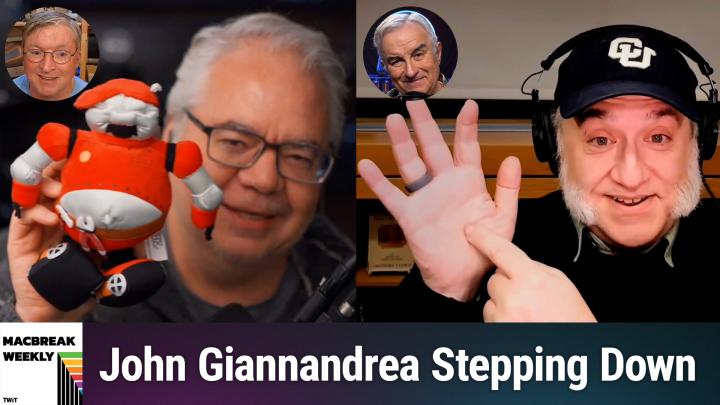
Oh, that's little dude.
Jason Snell [00:02:15]:
That's the doll of the.
Jason Snell [00:02:16]:
The guy who fixes the thx. THX thing.
Leo Laporte [00:02:19]:
Yeah.
Jason Snell [00:02:19]:
A friend of mine, Michael Coleman, had one garage. As you do. He's like, do you want this? As you do? Yes, please.
Leo Laporte [00:02:25]:
That's a. There should be a history of those little things. Now that we no longer go to movie theaters anymore, we'll never see them again. THX had a few.
Jason Snell [00:02:36]:
It's all just some good kidman going up.
Leo Laporte [00:02:38]:
That was the one with the Who?
Jason Snell [00:02:39]:
That was the one.
Leo Laporte [00:02:40]:
Or was that.
Jason Snell [00:02:41]:
That was the one with the big. It's the logo. And then the logo falls down.
Leo Laporte [00:02:44]:
Yeah. And he comes and fixes it.
Jason Snell [00:02:46]:
I like the one where they actually adapted from a Simpsons episode where the, like, all the teeth of the audience shatter as they watch the TX sound go Mashed potatoes.
Leo Laporte [00:02:57]:
Rum slag is put on weight. Alex.
Jason Snell [00:03:00]:
I asked them, I asked them what the. I asked them what the top thx like, what's the top complaint? You know, because it's called thx. They're like, the movie's too loud. What's the second, what's the second one? Movie's too quiet. Like.
Leo Laporte [00:03:12]:
Yeah. You can't win. Yeah, you cannot win, can you? Well, ladies and gentlemen, speaking of not winning, John Giandreya has finally left the building.
Jason Snell [00:03:25]:
This is retired.
Leo Laporte [00:03:27]:
Yeah. Was he fired? Was he retired?
Jason Snell [00:03:31]:
I mean, people can always come out of retirement retired. Just means I'm gonna take some time off and think about things for a while.
Leo Laporte [00:03:36]:
Yeah.
Jason Snell [00:03:36]:
Or there's a clause in his contract that allows him to put in for retirement at a certain point.
Leo Laporte [00:03:42]:
It is December 1st, which seems like a no.
Jason Snell [00:03:46]:
He's apparently retiring next spring, which again leads to a suggestion that maybe there's some contractual kind of like obligation here. It feels like this is, you know, you increasingly get things taken away from you until you're. It's very clear that you're not going anywhere. But probably there's an understanding that, you know, he doesn't have. They're not going to fire him. They know what his deal is. He's going to just kind of fade away. And, and that saves face for Apple and it saves face a little bit for him and he can go on to something else or just take the money and run.
Andy Ihnatko [00:04:18]:
Yes.
Leo Laporte [00:04:19]:
Give us the. Before we go too much farther down this, give us the CV of Mr. John Andrea.
Jason Snell [00:04:27]:
Well, he was the head of an AI project, AI division at Google and he was a big hire, a big get for Apple.
Andy Ihnatko [00:04:36]:
He was the head of AI at Google. And then when Google acquired DeepMind they, they suddenly had two heads of AI and they decided to pick the turn DeepMind into Google. DeepMind and suddenly J. Andrea becomes. Became superfluous to Google's needs and therefore a really, really quick decision.
Leo Laporte [00:04:55]:
He ran search for a while. There was a point in time where he ran search for Google.
Andy Ihnatko [00:05:00]:
Yeah.
Leo Laporte [00:05:01]:
And then he went to Apple and he was, it was. His move to Apple was highly heralded. Like, we've got him, we got the big fish. This is going to change everything.
Jason Snell [00:05:11]:
A guy with a lot of credibility coming from Google, which is a company with a lot of credibility, especially when it came to AI stuff in that era especially. And you know, it didn't go well and we don't know the reasons. I think that There are feelings on both sides that Apple's corporate culture maybe didn't match with, with what they were trying to do. If I had to look, if I had to deconstruct this, as somebody who is not involved, I would say my guess is Apple's corporate culture is not a good fit for people who think in a more, you know, we're hacking on AI development way and let's see what happens next. And now here's a new product released three weeks later. Apple is very product release focused on a, you know, hardware side and, and a software side on a release cycle. And I wonder if the. We're messing around here learning things about AI and I don't mean lazily, I mean like intensely.
Jason Snell [00:06:01]:
But the way the AI world is going, I wonder if it didn't fit, it didn't mesh. And certainly the moment of truth was when Apple promised a lot of things for AI and then failed to deliver them. And I got the sense from that that there was really a culture clash where Apple was like, we need a product and we need to ship it. And they're like, well, you know, it'll be, you know, you didn't like this one and we're working on it and like that's just, it's just a bad fit. And I think that that more than anything else is the truth here, is that it's not about who did who wrong or even the right way to do it. It's more like there's the way AI development culture runs and there's the way Apple product development culture runs and they don't seem to mesh very well.
Andy Ihnatko [00:06:47]:
Yeah, especially there can be. I consistently love the differences between Apple and Google. Again, yin and yang. They're not right and wrong. They are opposites that kind of often define each other. And one of them is that Google still has its cultural legacy as we are a university that does all kinds of projects and all kinds of, all kinds of research that we don't know how we're going to productize this yet. But it's interesting and we're hiring the right people to basically start with nothing and an interesting idea and then see if it, see if it can make money before it costs us too much money. And that is absolutely not Apple's culture.
Andy Ihnatko [00:07:22]:
Yeah, again, that's not, that's not right or wrong. But Apple is not the company that says, you know what, this is kind of an interesting idea. Let's play with it for a while and see how it develops. So it can be hard. I can imagine it being very, very hard for someone who was the head of AI at Google without the, if he did not have the ability to say no, here is the roadmap that we're going to follow and here's how we're going to follow it. Not necessarily having the ability to simply say, here's the stuff that we're going to ship, here's the stuff that we're going to develop, and here's the roadmap that I'm setting for everybody.
Jason Snell [00:07:50]:
Yeah, it's not even about innovation so much as it is about how you get from point A to point B. And, and like you said, Andy, there's a lot of, I'd say a little bit more academic, but also just a little more in the spirit of some of these AI startups where it's like, let's see where this takes us. Let's try a bunch of stuff. And Apple's innovation is spurred by a goal toward a product that has deliverables and that has a purpose. And again, I think you can look at both of those and see the advantages of both. And it's clear that Apple has, has missed the boat on development of its own AI models. Internally, I think we all agree about that. We can debate like whether it matters and how much it matters and all of those things, but I think that the truth is that, that the way they approach product release and software features even is not necessarily the same approach as a lot of people in the AI space culturally.
Jason Snell [00:08:49]:
And that, you know, that is one of the reasons, I think that there's a disconnect there that leads to something like that Apple intelligence announcement where there was clearly a disconnect internally.
Jason Snell [00:08:59]:
I think the challenge is that, you know, I think when you, for a lot of companies the move fast, break things kind of approach to thing to, to a process is the only way to break through on some these areas. And I think even Apple in the early days of RIP Mix burn was a little bit like, you know, pushing the outer envelope. But I think that their, you know, resistance to that now, for obvious reasons, makes it hard. You can see as, as Jason said, there's an advantage to saying we're going to build a long pipeline and just slowly build the infrastructure and move into that, into that area and it's just kind of a glacial push. Whereas with, you know, when you do the move fast and break things, you end up with a lot of spaghetti code, you end up with a lot of security issues, you end up with a lot of breaking a bunch of rules. That, you know, become problematic, but you also get to break a bunch of ground. And, you know, and I think that that's, I think Google, I think in the extremes of Apple and Facebook, I think Google's kind of in the middle of that.
Andy Ihnatko [00:09:56]:
Yeah. And in addition to everything else, remember that Google has always been foundationally a services company, which means that they're pushing electrons from the one of the biggest compute resource maps internationally that exists, whereas Apple is a hardware company. So it's harder to simply greenlight, hey, here's a software project that all we have to do is allocate resources for it and we'll run it and deploy this as a service. Whereas the question at Apple is always going to be how will this help us to sell more iPhones? How will this help us to sell more Apple watches? And again, not right or wrong, it's just simply the way that Apple operates versus Google.
Jason Snell [00:10:28]:
Google also, culturally, I would say, is not. I mean, again, trying to be really fair here because I use lots of Google services too. Google is kind of not a product company. It's more like it's a concept company and products emerge and escape and some of them work and some of them don't and are killed. But it's kind of a byproduct of Googlers just doing their thing. And you know, any interaction I've had with them has very much been like super nerdy. Let's try it, whatever. And then at some point, if there's money to be made, the suits rush in and everything gets contracted and the money gets carved out and all of that.
Jason Snell [00:11:04]:
But. And I think that's a cool culture to have in a lot of ways too, because you can do a lot of innovative things, but it does lead. Like, I'll give you an example. I needed to build some AI integration into a workflow of mine, a cloud workflow of mine. I was automating it using. It's just a whole bunch of different pieces in the cloud. There's a Google sheet involved I need to post to Discord. I'm going through a web service to do it.
Jason Snell [00:11:28]:
And I had this moment where I'm like, you know, an LLM would be great here. I would really like to process a big chunk of text and summarize it and categorize it before I pass it on to my Discord. Okay. To set that up in Google AI, you have to go to Google Cloud and turn things on. You have to go to Google AI and turn things on. You have to build a project that generates A page with like a sidebar full of code files and all this stuff in order to, and this is all based on the documentation in order to back out and get an API key and all of that. And to use OpenAI, you go to the OpenAI API page and make an API key and that's it. And I thought that's a great example of a cultural difference that OpenAI is like, people want to build on our stuff, we'll charge them this.
Jason Snell [00:12:18]:
Here are the rates, here are the models, here's your API key. Google's like great. We have a whole system where we have a code builder and our cloud system is tied into our development system and it's all interacted with your, with your Google Drive. And like if you're in there and you think like Google it actually is pretty awesome. But for me I was like, forget that, I'm just going to get the Open. I'm going to use OpenAI because OpenAI has productized that API in a way where Google's like, whatever, you know, just mess around and, and that, that the, and Apple is very similarly, very product focused in a way that, that mindset, it's just different. Not right or wrong even, it's just different and they lead to different outcomes. But it's very hard to get the cats and the dogs to live together.
Andy Ihnatko [00:13:02]:
Right. I think that reflects Google's ambitions versus OpenAI's ambitions where OpenAI is hands down the most popular chatbot on the planet. It basically won the. Let's Google this, the verb war for chatbots. Oh, I'm using ChatGPT for this, even if not necessarily using ChatGPT for this. So they're very much a user oriented sort of service, whereas Google, their ambitions are, we want, if anybody anywhere in the world wants to develop anything involving AI on any platform and as an international service, as something for your small business or something that runs on it on a device. We want to be your go to shop to actually make that happen. And so they're not really optimized towards individual users.
Andy Ihnatko [00:13:48]:
So it's, it's nice that there's so many people fighting this out. I'm really, I'm really keen to see where John Grab winds up next because there's no way that he did not fail out of Apple. He, I think it's pretty much understood that it was just an incompatibility problem or they, they ran, they ran, they ran a certain set of plays that did not pan out and now they need to, they need a new defensive coast Coach, I'm making stuff up because I don't know football. But there's, there's, there's no way that he's not landing on his feet and maybe doing something more, more inventive, more innovative and not quite so demanding of results.
Jason Snell [00:14:25]:
In six weeks, nerds are going to hate me. But I'm going to use. I will use that football metaphor, which is the 49ers hired a defensive coordinator when their DC got. Got hired away. And, and the guy was like, I use a different style of defense. And they're like, no, no, no, it'll be fine. You'll come in and you'll coach our different style of defense. And at the end of the year, they're both like, bye, see ya.
Leo Laporte [00:14:43]:
Yeah.
Jason Snell [00:14:44]:
And it wasn't even like, you're not a bad coach, but, like, you're not doing what we, what we do here, and we're not going to let you do what you want because we have our goals here. And I mean, it happens all the time. It's okay. I don't. I bet you John Giann Andrea goes somewhere interesting after this, but he will have cashed in a lot of money from Apple in the meantime, and he's.
Jason Snell [00:15:04]:
Got a long time to think about it. Like, it's not like he has to like, oh, I got to go find another job. I mean, he can take a guy.
Leo Laporte [00:15:09]:
There's also a larger trend in AI that's going on, which is that the senior people in AI are kind of up and out, are moving up and out, I think. And I, I feel like it's. That the AI movement is being driven by very young.
Jason Snell [00:15:23]:
I think. I think part of the problem is, is that they're. That it's moving so fast that if you were in it for 10 years, you may not really understand what's happening next. Like, you. It's like, oh, you know, like, that's because it's. And what's incredible is just how. Not how, how far it's evolving, but how, how quickly it's changing, you know, and, and we all know that we're not even close to what the final landing place is going to be. You know, like, all the stuff that we're doing right now is probably, probably all of it will get thrown away in the next three to five years.
Leo Laporte [00:15:51]:
So the interesting thing is Apple's gone back to the well and brought in an executive from Google to replace Jen. Andrea Amar Subramania was at Microsoft for a while. That doesn't bode well. Talk about a Cultural clash. He was the corporate vice president of AI at Microsoft before that for like five months.
Jason Snell [00:16:12]:
I think he hit the wall at.
Leo Laporte [00:16:13]:
Microsoft briefly and then before that, 16 years at Google where he was head of engineering for, oh, Gemini, the thing Apple is rumored to be adopting for series intelligence. So maybe that expertise is, is the real reason they're bringing this guy in. Apple said he's renowned, so it's in the press release, so it must be true. Renowned AI researcher Amar Subramania has joined Apple as vice president of AI. Reporting to Craig Federighi, he'll be leading Apple foundation models, machine language research and AI safety and evaluation. The balance of Jen Andrea's organization will shift to Saba Khan, who is the new cfo. Coo. Coo, yeah.
Leo Laporte [00:17:03]:
And Eddie Q. I don't know. That's kind of weird.
Jason Snell [00:17:05]:
Yeah, sir. I mean, because some of it is sort of servicey stuff. If I do my Apple criminology here.
Leo Laporte [00:17:12]:
Yes, please.
Jason Snell [00:17:13]:
What I would say is I think Apple has learned some of the lessons that we're talking about here and that Craig Federighi knows, sort of like from a product standpoint, he knows what he needs to ship. Also, Apple seems to have pivoted, and we've talked about it on the show, to, at least in the near term, working with partners because they know their stuff isn't good enough. So they're going to work with partners and they're going to, you know, potentially white label Gemini and put it on their private cloud infrastructure and they're going to. So they're working with partners. I think in the long run, Apple doesn't want to have to be reliant on someone else's model. I know that the Google Maps metaphor has come up a little bit here. The idea that in the long run you might want to have your own model, but the current model development hasn't gone well and isn't good enough. And Apple especially wants a good model that runs on device.
Jason Snell [00:18:03]:
Right. Because that kind of fits in with everything else that they're doing in terms of their chip design and in terms of how they deal with private information and all of that. So, you know, you set up an organization and say your target is to make our Apple foundation models great. We're not going to use them right now for a lot of stuff other than maybe on device because they're not up to speed. But in, in two years or whatever, we want to be up to speed where we could cut over or have this be the default and have everything else be a fallback. I think that, I think that is ideally what's going on here is that, you know, they're not going to, I think maybe they're going to reset the clock and say, look, we're buying time by having a partner. So you don't, you, you just go out and work and in a couple of years we'd really like you to have something that is worthy of being in an Apple product.
Leo Laporte [00:18:51]:
Yeah.
Andy Ihnatko [00:18:51]:
And Apple. And when you think about it, Apple and Google are probably maybe the two best companies to work for if you're an AI. From the point of view of Google has all the money coming in from so many sources. There's no. They definitely have a, definitely have a strategy for AI. But it's not as though we need to figure out how to make AI profitable within the next five to seven years or else we'll be in big, big trouble. Apple is similar is Google. You don't have that same kind of direct pressure.
Andy Ihnatko [00:19:20]:
Apple again has kind of the opposite virtue, which is that we have an AI strategy but we are not an AI company. We are just trying to enhance our iPhones, enhance our iPads, make our, make our devices more useful and more friendly. We don't have to ship something breakthrough this year, next year or the year after that. We just want to get there eventually. Just do good work and make sure that five years from now we don't, we never have to restart our AI program ever again. And so that must be a very. In OpenAI like Tim Altman famously, the Wall Street Journal had access to an all company memo that essentially said that dudes, we, we need to get some money coming in. Here's we're going to have to start doing ads.
Andy Ihnatko [00:20:02]:
We're going to have to start. This is. We're bleeding, bleeding, bleeding, bleeding. And I don't know how I wasn't as. It wasn't as dire as that, but it was very, very clear that the.
Jason Snell [00:20:11]:
Time to make money.
Andy Ihnatko [00:20:12]:
Exactly. The awe and wonder phase of OpenAI's AI that was transitioning into the. We need to actually figure out how.
Leo Laporte [00:20:20]:
To turn this into a yesterday's memo. I just want to mention that the latest memo is code red. We're putting advertising back on the back burner because man, we got to get a model out here.
Jason Snell [00:20:33]:
Well, cultures, right like that was, that.
Leo Laporte [00:20:35]:
Was like flipped in two days or something.
Andy Ihnatko [00:20:37]:
So Nano Banana 2 and Gemini 3 created a lot of buzz that scared.
Leo Laporte [00:20:42]:
A lot of people.
Andy Ihnatko [00:20:42]:
But the very latest OpenAI developments did not really create that kind of excitement.
Jason Snell [00:20:46]:
If I were Craig Federighi. And if I were this new hire, I would also extol the virtues of an interesting area of AI, which is on device models. To say, you know, Apple's number one goal may be to have the greatest on device model. And Apple's hardware is really good, their chips are really good. We're going to give you access to all these accelerators on all these Apple Silicon processors. Here are the new Apple Silicon processors that are on the roadmap. You know, this is where we're headed. Build a great on device model because that's one of those places where Apple can really differentiate itself if stuff can be, you know, model, you know, models can run right on the phone while you're not even talking to your network and your data never leaves your device.
Jason Snell [00:21:26]:
That is not necessarily the area that everybody else is focused as closely on. Google a little more now and, you know, you could probably make a pitch to recruit people using either of the things that Andy and I just said. They're right. Not everybody's going to do it. But I think Apple can find some good AI people with that pitch and I think their new hire knows some.
Leo Laporte [00:21:50]:
It's tough though, because you're skating to the, where the puck is going and the puck is, is a very erratic trajectory these days. I don't know how you explain the.
Andy Ihnatko [00:21:59]:
Puck is a rugby ball and it's bouncing erratically and you're an entire system for a puck that goes linearly.
Jason Snell [00:22:04]:
I still think Apple's big advantage right now and why they tend to try to do the best they can to protect privacy, at least for their own internally, is that there's all this stuff that you think when you think of AI, oh, it could watch everything I did and it would tell me, it would make adjustments for me and it would tell me these things. But there's very few companies that you would be willing to like, let in that far, you know, to, to make those. And I think that Apple is the one that has built that, that level of connection with most of their users where people might allow Apple to, you know, see everything that they're doing in a way knowing that it's all on device, it's all figuring that stuff out in a way that, that, that I don't know if they would let Google do or, or definitely not a smaller company, you know, because I, you know, because Google, you always look at it through the lens of they're here to get your information, that's their business. So I think that that's a different relationship that people have. I think that Apple's long term but obviously the short term. Again I think it's the midterm, the long term. I think Apple having private AI on device AI and doing that better than anyone else is a huge advantage in the three to five years from now. Immediately there's tons of stuff that we're already using.
Jason Snell [00:23:20]:
The midterm thing, I don't know if is figured out yet.
Leo Laporte [00:23:23]:
Yeah, I've said for a while, oh Apple has this great advantage because everybody trusts them and privacy is their focus and so forth. I'm increasingly thinking that that's going to go really fast by the wayside Once somebody comes up with an AI that is so good that people go I don't care, I don't care, I have to have this.
Andy Ihnatko [00:23:43]:
I think that just like an iPhone has a signature design, any service that they provide is going to have a signature set of understandings around it which is privacy and security. That Apple does not know what you're doing on this device and does not care what you're doing on what you're doing on this device. I do think that this is going to, this advantage is going to weaken over time because Google came up with a response last month to Apple Secure servers by saying oh yeah, we've got something very very similar to that. There's a lot of hardware on device, there's a lot of hardware on our servers. If someone, if for applications that want that kind of privacy and security we can actually do that. But Jason I think really has it on point there every single time. If Apple has not been shipping lots and lots and lots of AI Apple intelligence features publicly on devices and on their operating systems. Their AI division department has been publishing a lot of papers.
Andy Ihnatko [00:24:35]:
That's a good subscribe in our RSS feed because they've been publishing a lot of papers and most of them come down to hey, yes, I know that the common wisdom is that you need a large complicated server based remote model in order to do this. We think that maybe you can do this on a smaller, simpler model that can be done on device. Just this week, I think it was just yesterday they released two image generators. One for stills and one for video. That is if you look at the specs, they're kind of laughable. I mean we're talking about video 720p, 16 frames per second, maximum of 8 seconds for stills. I think it was like 256 pixels square, which is not a lot. But they are making big deal.
Andy Ihnatko [00:25:21]:
They're not making a Big deal of oh, this is going to replace midjourney. They're saying here is how efficiently all of these models can work, like on a simple phone. And so every single time they announce something that they are proud of and they want to publish papers on, it's always about we can do this on device. We don't necessarily need to send data into the cloud in order to deliver AI based solutions services. So that's going to be where Apple's AI focus is always going to be.
Leo Laporte [00:25:46]:
We live in an interesting times. We interviewed somebody I think last week on Intelligent Machines, our AI show who was the guy who started Stable Diffusion Stability AI and his current project is to create these really small models for specific uses. He's got a medical model that he thinks will be better than your doctor, but it's a relatively tiny model. People who are not trying to do general AI are doing some very interesting stuff. Unfortunately what Apple wants is Siri. It wants a general AI.
Jason Snell [00:26:21]:
It doesn't just want that though. When we talk about that thing they announced that they never shipped the personal context concept where basically there's data, that personal data in basically an index file on your storage, on your local iPhone and training a model that can understand and intuit from that personal data store what kind of queries it needs to make how it works with iOS. The custom models are a way forward for some of that. And custom models on the device maybe even interacting with models that are not as custom, that are off the device. There are places where Apple could do that. You're right. They also need to fix Siri, but they don't necessarily have to be the same thing or even the same model.
Andy Ihnatko [00:27:05]:
Apple Intelligence isn't, isn't just a chatbot that you can have conversations with and have very, very complex and wrong relationships with. It is also, hey, your notifications now make sense and they're very, very simple and they, they're very, very compact and it's being able to say, hey, automate this process for me. I'm going to describe it to you just by describing it to you. And if you have any problem, if you have any questions about what I mean, you're going to ask questions back the to to me and we'll clarify it. But the thing is, after an eight minute conversation, suddenly this task that takes me 90 minutes every other day is going to be done automatically in the background with you just simply sending me an imessage that says hey, here's the work I did for you. Do you want me to send this out that's what Apple intelligence on iPhones and iPads and Macs are going to be.
Leo Laporte [00:27:47]:
Well, we live in interesting times. Apple in the press release did the best they could to smooth it over by saying at the end, these leadership moves will help Apple continue to push the boundaries of what's possible. Okay, keep, keep, keep on, keeping on. With Giandre's contributions as a foundation, kind of like the basement, Fredericki's expanded oversight and Subramania's deep expertise guiding the next generation of AI technologies from 16 years ago, Apple is poised to accelerate its work in delivering intelligent, trusted and profoundly personal experiences. This moment marks an exciting new chapter as Apple strengthens its commitment to shaping the future for AI users.
Jason Snell [00:28:34]:
Anywhere from a pure PR standpoint. I think it's really interesting that they framed this post. First they did a post on the newsroom about it. Take that, Mark Gurman. And they.
Leo Laporte [00:28:46]:
That's called getting ahead of the story.
Jason Snell [00:28:47]:
Yeah. Headline is Gian Andrea to retire.
Leo Laporte [00:28:52]:
Yeah.
Jason Snell [00:28:53]:
And then by the way, way we hired this guy away from Microsoft who used to be at Google. Interesting choice. And again, I wonder if it goes to a, an understanding among the executives that they're going to give him the softest of landings and say he's retiring like other executives at Apple and, you know, he's going to still be here until the spring. But we bring in this new person and this is how it's going to work. And like, they could have not mentioned him at all, disappeared him from their website and said, we hired a new guy. But, and maybe in the last line of that they go, oh, also John Gian Andreas retiring. So by, you know, we wish him well. That's not how it's phrased.
Jason Snell [00:29:31]:
And again, I just, I have to think that that's for a reason, which is that there is a, some sort of a. I mean, it's basically a negotiated exit for him in kind terms because they could have, they could have axed him. Right. Although again, who knows if he had a contract with very specific, you know, issues and options or whatever, but they're giving him a soft landing. I just think it's kind of funny that they, they focus on the old guy, not the new guy, like. But that's what they did.
Andy Ihnatko [00:29:59]:
Yeah.
Leo Laporte [00:30:00]:
Anyway, Apple, Apple does not feel like it has a coherent, like, guiding light strategy in all of this. So.
Jason Snell [00:30:14]:
No. And if they do, we don't know about it. But certainly the last year has not been encouraging. So they, they've said the reports are, they've have a, they have Had a reset and we'll see. But I, I think we would all agree that how Apple, a company with a very specific culture and way of dealing with things reacts to the, the rise of AI, which has completely different. It's like an encountering an alien.
Leo Laporte [00:30:40]:
Yeah.
Jason Snell [00:30:41]:
How those two things connect is fascinating. Right. And it, and, and it may be good, it may be bad. It's certainly weird. So great to talk about and I.
Andy Ihnatko [00:30:52]:
Mean we're, we are experienced, we've, we've been looking at this sort of stuff for a couple of decades. We are not, we don't have, we're not starry eyed about Apple and yet none of us in this conversation, I don't think most people who are worth listening to in this world are thinking, oh my God, Apple's doomed. Apple, oh my God, another failure with AI. When is Apple gonna fix this? When is it gonna. They got it. They're running on a Runway, man. It's like no, they're not running on a Runway again. They have room to maneuver.
Andy Ihnatko [00:31:21]:
Nobody thinks this is anything more than, anything more than tried this, didn't really work out. Tried that. We got closer, didn't really work out. We're doing a lot of good research. We are just never going to be so bold as to say here are a bunch of 100% synthetic demos of what our AI features will look like once we actually get them working. We are just going to simply continue to put AI features in here and there when they are worth shipping. And at some point, thanks, thanks to the billion dollars a year we're paying Google, we do think that we will finally get a voice assistant that is much, that is the best it's ever been, which means it's better than mediocre.
Leo Laporte [00:32:03]:
I think with the failure of the car project or the abandonment of the car project, the Vision Pro not looking so brilliant. And now this AI debacle, Apple, has it lost its mojo?
Andy Ihnatko [00:32:18]:
No, no, no. But I mean the other story that maybe we'll get to is that like the Counterpoint Research, which is a very good analyst firm is saying that Apple is, they think that Apple's going to surpass Samsung not in the pH, not just in revenue, but in actual shipments of units in 2026. And they think that that's, they're going to be the leaders through 2029. And this long, long report, just point for point for point says here is why we think that Apple is absolutely on their A game with, with iPhones. They talk about markets in China, they talk about these. The 17 and 17 Pro. And how successful that's been, which, which is not necessary from one point of view is not reassuring because it says that the thing that has always made roughly half of Apple's money will continue to make half of half of Apple's money because they're selling it very, very well. But nonetheless, they haven't necessarily lost its mojo.
Andy Ihnatko [00:33:12]:
It's just that they're just trying to learn a new set of steps that they are having trouble mastering.
Jason Snell [00:33:16]:
They seem to be doing pretty well at the stuff that they are good at. I would say challenges. What about other stuff?
Jason Snell [00:33:23]:
And Google is doing pretty well with the AI stuff. For a long time Google was good at AdWords and display ads and that, you know, if you've ever worked on any Google things, you realize there were those guys and then there was everybody else, you know, and you know, as far as, as far as that was the money tree. The parties. The parties, the parties for the ad sales are really good. So anyway, so the, when you get the whales in there, you know, they're at the Ritz, you know, so, so the, so I think that there's a, I think that in a lot of times a company is very, very good at something and then they're trying to leverage into the new things that they aren't as good at and they're thinking about, but they do have, I mean Apple has an incredible amount of Runway because of the iPhone. I don't think that they, you know, for five years they're probably going to keep on printing money.
Leo Laporte [00:34:11]:
Like, you know, no, wait, Apple, Microsoft, Amazon, Google, Meta all have revenue streams outside of AI so they don't have to perform in the same way that OpenAI and Anthropic do.
Jason Snell [00:34:24]:
And the question is whether OpenAI and Anthropic end up getting absorbed by somebody because they just can't pay the bills.
Leo Laporte [00:34:28]:
Ironically, OpenAI though has the customer base. So they do.
Jason Snell [00:34:34]:
They have no way to monetize it right now, right?
Jason Snell [00:34:36]:
Well, they have and they're getting, they're charging you, but they could immediately start charging a lot more and then suddenly have this huge drop off. Like that's the balances.
Leo Laporte [00:34:45]:
Yeah, there is no loyalty at this point.
Jason Snell [00:34:47]:
Everyone.
Leo Laporte [00:34:47]:
Yeah, it is not like Google with search where people are really embedded into Google. Anybody could win at this point. And by the way, I should also say, I'll be the first to admit, I was saying Google lost its mojo six months ago. Mojo comes, Mojo goes.
Jason Snell [00:35:04]:
Most of the odds were talking about how Microsoft was going to go like this is their last hurrah. And that didn't turn out to be.
Andy Ihnatko [00:35:11]:
And also let's point out that there's room for lots and lots of winners here. It's not a winner's podium. It is a mesa that lots and lots of people can figure out how to be successful and AI, some of them will do it with very, very little, very, very small, intimate, sort of intimate products. Some of it will be like Gemini, like Google does by saying that we want to essentially be the corn syrup of services. Where we will find if you want to make your product a little bit sweeter with AI, we will sell you in bulk and train loads the substance you need to make your service or product or hardware more AI fold. So there are lots of words, there are lots of ways to win here.
Leo Laporte [00:35:50]:
All right, let's take a little break and the winning will continue. Another company that I thought was down and out may not be down and they certainly aren't out. Well, that's a tease. We'll discuss in just a moment. You're watching MacBreak Weekly. Andy Ihnatko, Alex Lindsey and Jason Snell. So glad you're here too. We appreciate it.
Leo Laporte [00:36:12]:
Our show today brought to you by our good friends at Outsystems, the number one AI powered, low code development platform. Outsystems has found a solution to the eternal question in business when it comes to software. Build it yourself or buy it off the shelf. And there's certainly pros and cons in each. But now there's a third way that gives you all the benefits of building it yourself without the downsides and all the benefits of off the shelf price wise. Anyway. Organizations all over the world now are creating custom apps and AI agents and they're doing it with Outsystems. It's the Outsystems platform that makes all the difference because Outsystems is all about outcomes.
Leo Laporte [00:37:02]:
Get it? Helping teams quickly deploy apps and AI agents and deliver results. And man, they have the success stories to prove it. Check out the website, you'll see. I mean, they helped a top US bank deploy an app for customers to open new accounts on any device. The results were very clear. 75% faster onboarding times. So you know it's not just internal apps. It could also be customer facing apps.
Leo Laporte [00:37:31]:
It also helps. Well, if we are one of the world's largest brewers, you would know the name. Outsystems helped them deploy a solution to automate tasks and clear bottlenecks. Save them 1 million development hours like that. They helped a global insurer this is an internal system. They help a global insurer accelerate development of a portal and app for their employees, which delivered a 360 degree view of customers and a way for insurance agents to grow policy sales. And it really worked. See, the Outsystems platform is truly a game changer for development teams with AI powered low code.
Leo Laporte [00:38:10]:
This is, that's the key here. You get low code, but you also get AI. So it's better than vibe coding, it's better than low. It's something special teams can build custom future proof applications and AI agents just as fast as they'd buy something off the shelf. But it's not generic. It's tailored to your exact needs and specification. And thanks to Outsystems, you get all these features built in, fully automated architecture security built in. That's job one, right? Integrations, data flow, permissions.
Leo Laporte [00:38:45]:
Your homebrewed software never had all this stuff. It never had it so good. This is really the solution. Without systems, it's so easy to create your own purpose built apps and agents. There's no need to consider off the shelf sameware software solutions again. OutSystems number one AI powered low code development platform. Learn more at outsystems.com/twit. outsystems.com/twit. Tthese guys have been doing it for a long time. They really know their stuff.
Leo Laporte [00:39:20]:
We thank them so much for supporting MacBreak Weekly. It's interesting. Even MacBreak Weekly. Now we're getting the AI companies involved. This is such an exciting time. I mean you all have been covering tech for 20 years or more.
Jason Snell [00:39:39]:
Definitely one of the fastest moving things.
Leo Laporte [00:39:40]:
I've never seen anything like it and it's so hard to cover. And you know, the other thing I'm sitting here, I go through every day, I go do beat check a couple hours looking for stories. I was telling Lisa the other day, these are all AI stories. I can't put them all on intelligent machines.
Jason Snell [00:39:56]:
Yeah.
Andy Ihnatko [00:39:58]:
Try writing a weekly Google podcast and saying, oh God, are we going to have four stories about AI again? But sometimes it's all the one. It's such a fast moving target. I have a Gemini gem that does my copy editing for things I write. And the first time I ran it I think under Gemini 3.0 and my God, it was so as much as I liked it like a month ago, it is so much better now. It was catching things that it might have let go in the past. Even though I didn't explicitly say it followed the brief of the gem which is you are just simply an hourly drudge worker. You are not here to rewrite. You're not here to be an editor.
Andy Ihnatko [00:40:40]:
You're just here to flag typos and grammatical errors. And it was giving so much better subtle comments. It's gotten so much better, it's hard to keep up on. Even when you decided, hey, here's a product I like and use. Oh, well actually they pushed out an update and either it will destroy absolutely your entire workflow because its attitude is 100% different, or it will be, oh my goodness, it is so much better now.
Leo Laporte [00:41:05]:
So guess who's, according to Ming Chi Kuo, making the processors for that new inexpensive Apple computer.
Jason Snell [00:41:15]:
No, this is way out. This is a couple.
Leo Laporte [00:41:17]:
Oh, this is not next year.
Jason Snell [00:41:19]:
No, TSMC is making the A series processor because last year's the phones.
Leo Laporte [00:41:23]:
It's a phone chip. Okay. All right.
Andy Ihnatko [00:41:25]:
Yeah, they're talking about the M. Intel.
Jason Snell [00:41:27]:
Yeah, an old name returns.
Leo Laporte [00:41:31]:
I have not heard that name in years.
Andy Ihnatko [00:41:34]:
Out of the grave, clutches in the blood and, and lift himself out.
Jason Snell [00:41:38]:
I'm not dead yet.
Jason Snell [00:41:42]:
So actually alive.
Leo Laporte [00:41:44]:
We were talking about this on Twitter on Sunday with Daniel Rubino who covers Windows. He says people have been writing off intel but you know, their latest chips are actually pretty darn good and for a laptop they're kind of the king, at least in the PC size.
Jason Snell [00:41:59]:
Keep, keep in mind this is going to be an Apple design chip. His, his rumor is that they're going.
Leo Laporte [00:42:03]:
To be the fab.
Jason Snell [00:42:04]:
They're going to be a fab for this which is a thing and intel resisted for a long time but now it' clear they, they're very proud of their designs and they make their own chips that they designed. But this would be an Apple M7 or something like that that would be done by, you know, fabbed for them by intel. And then presumably the M7 Pro and Max and Ultra, all of those more advanced chips would be on TSMC's processes instead. So Ming Chi Kuo's note basically says this is not a super high volume product. It being MacBook Air and the low end MacBook and some iPad pros and then you know, a couple years later in the iPad air. Right. We know the kind of way it trails off but it's something that not only is something that Apple can afford to be on someone else's not necessarily as cutting edge as TSMC's process which is, you know, intel can do there do that. It also is an American company.
Jason Snell [00:42:59]:
Presumably it'll be fabbed in the US So it's got A lot of political reasons why it's a good idea. It's a cover your bets reason because it means you've got a second supplier in case something bad were to happen to tsmc. They've got intel fabbing at least some chips for them. That's a good thing for them. And then you know, this in general, what I, what I've heard and what, what is reported by Ming Chi Kuo is Intel's roadmap is pretty good. Intel is kind of turning it around and is not competitive with TSMC quite yet, but might be down the road. And this gives Apple a little bit of an investment that not only makes the Trump administration happy but maybe furthers Intel's drive toward being a better rival to tsmc. And that would benefit Apple if it's got, you know, rivals for its business.
Andy Ihnatko [00:43:51]:
Yeah, it's an interesting peek into like how much is Apple, how much is Apple into this concept of USA manufacture to appease the current administration versus how much is this? Because Apple see in this, in the current business and regulatory environment they see an opportunity to pursue some ideas they've had for a while about USA manufacturing that just did not make financial sense before. Where if there is a cost to using exclusive Chinese manufacturer that is now making it necessary for Apple to make these kinds of outside bets on like intel has a, it's a brand new process that intel has. It is a 2 nanometer process. There is nothing in this rumor, excuse me, in this reporting from Ming Chi Kuo that suggests that they are looking to challenge TSMC as Apple's manufacturer. It's more like can you build this? And what if we were to give you some very low stakes products in which to build the M series processors for where if you fail to deliver on schedule it won't totally ruin our quarter or our year. It's another interesting insight into Apple's motivation.
Leo Laporte [00:45:16]:
Ming Chi Kuo's talking about Intel's 18A node which I think is 18Angstroms, which he says is comparable to the N3 family at TSMC. Of course TSMC has moved on to node 2 nanometer. But that's, that means you, you've got to, if it's all true, you've got a chip that's comparable to the current Apple silicon.
Jason Snell [00:45:38]:
I think, I think you also with the saber rattling that happens in China, you have to figure out where it's strategic, you know, like we have to like because it takes years for this to mature, you know, so you have to plant the tree right now and how much, how much of that fruit you use. You'll figure it out later. But you got to plant the tree now because you don't want to be out without any fruit at all. And you know, and I think that it feels almost inevitable that China at some point will make some, some, some, some sort of play for Taiwan and having everything there. TM's. That's why TSMC has to build something outside of the United States which they are in Arizona. They are. So there's, so there's a bunch of like everybody's kind of spreading out slowly, you know to make sure, manage that impact.
Jason Snell [00:46:22]:
But, but, and you have all the other challenges. I mean we, I think we have something coming up of you know, you then you move into India and then India has all kinds of crazy ideas, you know, like, so then you have a whole new set of problems. Yeah.
Leo Laporte [00:46:32]:
Apple's relationship with India is, seems to be going, going a little south, go a little sideways. India has told Apple you must put a our state run security app on your phone. And Apple has said no, according to Reuters. So maybe, maybe the relationship is not.
Jason Snell [00:46:54]:
Like hey, I don't think India announced that they wanted to do this. I think that they, they quietly asked Apple like hey, this is what we want you to do.
Andy Ihnatko [00:47:02]:
And suddenly they made this announcement that everybody, Google and Apple will have to. Anyone who ships iPhones have to come has to have to comply with this within 90 days. It involves all brand new phones that ship in India have to have this app pre installed and that it cannot be removed by the user. Any existing phones must have this app pushed to the phone with also the same requirements that this cannot be removed by the user. Outwardly it is an app that says, oh well we just want to have an app so that when people lose their phones and if they're stolen they can report them as stolen. And like yeah, but it's getting access to your entire call history. It's getting access to photos, it's getting access to. It's incredible.
Jason Snell [00:47:44]:
Never. I don't know if that's the most draconian thing I've seen, but Indian government.
Leo Laporte [00:47:49]:
This is from Reuters has confidentially ordered companies including Apple, Samsung and Xiaomi to preload their phones with an app called Sanchar Sati or communication partner within 90 days. The app is intended to track stolen phones. Of course you could probably track, you could track.
Jason Snell [00:48:06]:
Apple has ways of doing this.
Leo Laporte [00:48:08]:
Yeah, block them and prevent them from being misused. India's telecom ministry said it's a security measure to Combat serious endangerment of cybersecurity. But of course, Prime Minister Modi's opponents and privacy advocates say it's a way for the government to gain access to these 730 million smartphones in the country. The government wants manufacturers to ensure the app is not disabled and for devices already in the supply chain. So this is not just new iPhones. Manufacturers would be expected to push the app to phones via software update. Apple has, has told does the Indian government does not plan to comply with the directive. It doesn't follow such mandates anywhere in the world.
Leo Laporte [00:48:55]:
It says.
Jason Snell [00:48:59]:
So they, I mean in Russia, before they abandoned Russia, they, they agreed to like it was, we will, you know, we will put up a screen that lets you download these four apps. The Russian government wants to downloading process from the App Store, but it was very much like sort of, we'll let them be in the App Store and you know, we'll put up a screen that says you should download it. But that was as far as they were willing to go. And in order to keep Apple for the moment in their region, they, they, the Russian government said, okay, that will do that. And Apple, of course, is not in Russia anymore, but in India it's the same thing. It's sort of like it's a negotiating point. I heard from somebody in India who said you also have to give your ID to get a SIM card and that's logged.
Leo Laporte [00:49:48]:
So they have, there's no burner phones in India.
Jason Snell [00:49:50]:
Yeah, they have all the, all the ways to track you. And yes, it does feel a little like a, like a pretense here, doesn't it? Because I would bet you that Apple does all of the things that they claim this system will do and does them already and does them better. But so, yeah, I don't, I don't know.
Leo Laporte [00:50:10]:
We know what Apple, we know what Apple's leverage is in this. Of course they're building factories in India. They're proposing making a lot of phones, maybe almost all of the new phones in India. So that's a big revenue for India. But we also know what India's leverage is. They, Apple's in the court with the Indian government right now over their antitrust laws. And the fine could be up to $38 billion. So there's leverage on both sides here.
Leo Laporte [00:50:36]:
And I don't know if India is more important to Apple than Apple is to India. I don't know who's got the upper hand.
Andy Ihnatko [00:50:43]:
Yeah, I've been trying to. I wrote some notes on this, like during the period after which this news broke, but before the Reuters story which cites three different, cites three anonymous sources that Apple is not, does not intend to comply with this. I was trying to figure out like how is this what, how will Apple respond to this? And I couldn't really figure out what they would do because on some level, as Jason, Jason said, they have done similar, vaguely similar things in the past and where would there it's, where would, where were, would their point of disagreement be like why are they taking, would they be taking a stand on this app being pre installed when it's sketchy and shady but is not known to be a, it's not an active surveillance tool right now. That's not on the surface right now. It is simply an app that can be, definitely be deployed and exploited that way. How is that different than complying with a demand to not allow VPN apps on the App Store? I mean it's easy to flip a switch on the App Store. That's the difference between that and basically force loading a new app on all devices. But it's.
Andy Ihnatko [00:52:01]:
I don't, I don't, I'm not, I'm sorry, I'm sorry, I'm babbling here because.
Leo Laporte [00:52:06]:
This is so Let me interrupt.
Andy Ihnatko [00:52:08]:
I'm just, I'm still trying to figure out what, what Apple's perception of this app is and why they would draw a line where they might not draw a line on other attempts of a government to intrude upon the security and the privacy of an iPhone user in their company.
Leo Laporte [00:52:21]:
So Reuters quotes one of its three sources at Apple saying it's not only like taking a sledgehammer, this is like a double barrel gun.
Andy Ihnatko [00:52:30]:
I don't know, I don't even know.
Leo Laporte [00:52:32]:
What that means to be honest with you. But it's in the story, so I'm going to read it.
Jason Snell [00:52:37]:
Most of the, most of the countries don't have the luxury of having that. The nsa, you know, like the NSA is a much more developed system that.
Leo Laporte [00:52:43]:
Oh yeah, we don't need to do.
Jason Snell [00:52:45]:
This because 80 or 90.
Jason Snell [00:52:46]:
No, but not. It doesn't. Not like the NSA probably looks at this going, well, that'd make it a lot easier, wouldn't it like you to do this.
Leo Laporte [00:52:52]:
Yeah, but if you have people in the wire closets of all of the main cell phone carriers, you don't really need to do this.
Jason Snell [00:52:59]:
The NSA probably gets 80% of what this would provide. But this potentially, again, potentially access to photos, access to all your texts, access.
Leo Laporte [00:53:08]:
To any app that's on there that you can't disable and you can't unload.
Jason Snell [00:53:12]:
Yeah. It's incredible intrusion.
Leo Laporte [00:53:17]:
If you have ever wondered why every gosh darn thing you buy has an app now you know, you know you can't use your vacuum cleaner without an app.
Jason Snell [00:53:27]:
Right.
Leo Laporte [00:53:27]:
And there's a good reason they want to be on your phone. There's a lot of stuff they can do on your phone. They can see on your phone. Well, anyway, this will be another. Another. This is maybe, you know, if I were Tim Cook, that retro retirement's starting to look really good.
Jason Snell [00:53:44]:
This is a. I don't want to deal with this. This is almost like saying if you could go back in time to China, would you do anything different? Because you've got a democracy, but one that is increasingly authoritarian. But also, you gotta say it. India's potential growth over the next 30 years is enormous.
Leo Laporte [00:54:08]:
It may become 750 million phones.
Jason Snell [00:54:11]:
Yeah.
Jason Snell [00:54:11]:
It may become the world's largest economy by mid century or not long after. It's a huge growth opportunity for Apple. But they have to navigate this. And do they go. I mean Apple has done a lot of things for the Chinese government and done linkages to Chinese government approved things that are not on American phones or phones elsewhere in the world and they just kind of flip it around and then so we'll have to see. But this is, I would almost say this feels amateurish by the Indian government. Like this is the kind of thing that Russia pulls. And is there not a, I would think a more substantive relationship they could build with Apple that will get them, you know, some of what they want? Because I think that Apple has shown that they will do what you want, but that this is like too much.
Jason Snell [00:55:01]:
Plus some of those, that double barreled shotgun or whatever, like some of it also strikes me as being like maybe not technically viable. Like they've got somebody who just whipped up an app and they're like, put my nephew's app on your phone now, please. And that may not be the best way to approach this even from that standpoint.
Andy Ihnatko [00:55:19]:
I wonder if the government actually had conversations with Google and Apple to say, here's what we plan to do, here's when we expect you to implement it. Or if they just simply. He just dropped the bomb and said, by the way, you're finding out about this along with the world's press and all of our users, it's hard to imagine that they would make a request that's this sweeping without at least preparing the ground a little bit and that they're not In a position where they can simply create a demand by fiat and expect a company like Apple or Google to simply comply with it and maybe not even be able to comply with it within 90 days.
Jason Snell [00:55:53]:
I mean, 90 days seems like a. A pretty big push to be pushing things out with updates and so on and so forth. But you know, they have. I mean their website does. The Sancher sothi website, you know, definitely sells the idea that we're here to protect you from scams and from your. Exactly. Theft and loss. So it's not like they are trying to.
Jason Snell [00:56:14]:
The web portal is definitely selling the idea that it's for their citizens safety.
Andy Ihnatko [00:56:19]:
Yeah, exactly. That's the super sketchy thing where it's like, okay, but why are you making it impossible for me to remove this app that supposedly is just here for me to be able to report stolen?
Jason Snell [00:56:32]:
Because you don't know what's good for you. This is the problem is that you'd.
Andy Ihnatko [00:56:36]:
Only screw it up. Actually, Apple should be all over that. That's like, compadre, my brother, my sister. You see how this goes? I don't know if you guys are watching. You guys are idiots.
Jason Snell [00:56:43]:
I don't know if you guys are watching the American Revolution, you know, with.
Leo Laporte [00:56:46]:
I love it.
Jason Snell [00:56:47]:
It's such a page turner, you know, like, it's just like, I mean, what's gonna happen next?
Leo Laporte [00:56:51]:
No, if you get their independence, will the British win?
Jason Snell [00:56:54]:
I know. We already know what's gonna happen. It's like the Titanic. But what build up to it.
Leo Laporte [00:57:00]:
It's really good.
Jason Snell [00:57:01]:
Well, and all the contextual stuff, that is, the English realized that the colonialists and the Indians should be separated. So they said you can't go past the appellation. And then everyone's upset and so you can't tell us what to do. And so it's a fascinating thing to see that this happens over and over again.
Leo Laporte [00:57:22]:
Where Paris did point out one thing though. She said it really should have been a podcast because there's no pictures. It's just kind of. You could listen to it and you wouldn't miss a whole lot.
Jason Snell [00:57:31]:
I feel like this is where AI is going to come in at some point. You know, all of those photos, I watch him. I was tempted to digitize it and then just spend an afternoon in VO or in Cling.
Leo Laporte [00:57:44]:
You know that Ken Burns would never do that.
Andy Ihnatko [00:57:46]:
He would never do that.
Jason Snell [00:57:47]:
But imagine how great it would be if he did. Like, you know, like it would be just this visualization.
Leo Laporte [00:57:52]:
How tempted he is to do reenactments. And stuff like the Discovery Channel and History Channel do. When you're watching it, it's like, this is all fake footage. But he's fortunately mostly avoiding that temptation. There are a few shots of a shadowy rider going through the night on a horse, apparently hellbound for somewhere. But, you know, other than that, it's pretty good. I'm really enjoying it.
Andy Ihnatko [00:58:19]:
He gave an interview to GQ about the series in which he talked about, like, how the how app. How Steve Jobs talked him into allowing Imovie to have, quote, the Ken Burns effect, unquote. Sued him.
Leo Laporte [00:58:30]:
At first he was pissed.
Andy Ihnatko [00:58:31]:
He was like, I don't. I'm not going to have. I'm not going to endorse this product. And basically it was like, okay, well, how about you give me a million dollars worth of hardware?
Leo Laporte [00:58:38]:
Yeah. Yeah.
Jason Snell [00:58:41]:
Okay.
Leo Laporte [00:58:45]:
All right, let's take a. I think we could take a break. I'm so tempted once we started talking about TV to start talking about Pluribus, but I'm going to avoid that. Save that for later. You're watching MacBreak Weekly with Andy Anatko in the library and working hard, apparently.
Jason Snell [00:59:04]:
Yes.
Leo Laporte [00:59:05]:
On things.
Andy Ihnatko [00:59:07]:
I've.
Leo Laporte [00:59:08]:
It's.
Andy Ihnatko [00:59:09]:
It's the last. It's. Yeah.
Leo Laporte [00:59:13]:
I'm just teasing you.
Jason Snell [00:59:14]:
Proverbial. Does. Stuck. He looks calm on the surface, but he is furiously paddling.
Andy Ihnatko [00:59:19]:
Ask what I did the day after Thanksgiving. Don't, because I'll go off on an unhinged rant.
Leo Laporte [00:59:25]:
Okay, maybe after. Maybe later in the show. Also, Jason Snell, who had, I'm sure, a lovely turkey day.
Jason Snell [00:59:32]:
Yeah, it was delightful. Big family gathering.
Leo Laporte [00:59:36]:
It was nice. I cooked for four, but I still made a whole big turkey and everything. But it was fun.
Jason Snell [00:59:41]:
Yeah. You had leftover pressure. That's.
Leo Laporte [00:59:43]:
Yeah, we still have a lot of.
Jason Snell [00:59:44]:
Leftover 12 or 13, but I only had to make a side because we were visiting somebody else. Oh, nice to take a Thanksgiving off from having to be the turkey.
Leo Laporte [00:59:51]:
Alex, did you have people in my.
Jason Snell [00:59:53]:
My, My wife's parents came and my, my mother in law is from Louisiana, so the food is.
Leo Laporte [01:00:00]:
Oh, did you have some. A Cajun. Yeah, that Cajun Thanksgiving.
Jason Snell [01:00:04]:
A lot of. A lot of good. A lot of good food there. But I do the turkey now, so I do the sous vide. I just. We don't even get the whole turkey anymore.
Leo Laporte [01:00:10]:
Dispatchcock it. Oh, you just get a breast.
Jason Snell [01:00:12]:
Get the turkey breasts and cut them, you know, put sous vide and they're just. It's so much better.
Leo Laporte [01:00:18]:
I was ticked.
Jason Snell [01:00:20]:
It's just so much more tender. Like, I think I used to hate turkey. I was like, oh my God, turkey.
Leo Laporte [01:00:24]:
It'S hard to do, right?
Jason Snell [01:00:25]:
And grainy and everything else. And now it's like great every time. I didn't have any flake salt, so I used gray salt, which made it better by accident. And the trick is the one piece of rosemary in with your turkey or chicken. There's something about it that just gets.
Andy Ihnatko [01:00:46]:
I wrapped, wrap it with a few sprigs of rosemary, dry brine it, and it's like, we're not going to go into it. We need to go dig into a break. But it's like, you cannot mention this without saying that there's so many kinds of food that I did not realize that I actually enjoyed that. The problem was that it was never cooked properly when I was a child. Like, wow, pork can actually be succulent and juicy. Like, wow, turkey can actually be be flavorful and juicy all the way through.
Jason Snell [01:01:16]:
Wow. Birds at 145 degrees is an entirely different world. Like, it's just, it's just an entirely different. Like, once you get used to that, it's hard to even order at a restaurant. Like, it's like, I want to go there.
Leo Laporte [01:01:28]:
We'll have more in just a moment. You're watching MacBreak Weekly. This portion of MacBreak Weekly brought to you by a name I know. You know 1Password. It's easy to assume. Bear with me here on this. The Being small means you're flying under the radar, right? The truth is, small businesses like mine are being targeted more and more by bad actors. Cyber criminals know lean teams often lack the resources to prevent or respond to a breach.
Leo Laporte [01:02:04]:
In short, the bad news is teams of any size can be a target. The good news is even the smallest teams can foil cybercrime. And it doesn't take Batman. No, it takes 1Password. 1Password provides simple security to help small teams manage the number one risk that bad actors exploit, which is weak passwords. 1Password provides centralized management to make sure your company's logins are secure. It's a simple turnkey solution. You can roll it out in hours whether you have a dedicated IT staff or not.
Leo Laporte [01:02:39]:
And however complex your security needs may get, 1Password will stay with you every step of the way. A password manager should be the first security purchase you make for your team. Small businesses need to plan for the worst case scenario. And the guard against cyber attacks from the beginning is so important because it's a lot easier to stop them than it is to fix them. Once they get in for small teams. Responsibility for security often lies on the shoulders of a single employee. It does with ours who's already doing other things. It does.
Leo Laporte [01:03:13]:
That's right. The most effective security solutions will need to be intuitive and user friendly so that everyone in your company can use it and will use it. 1Password's Enterprise Password Manager helps your company eliminate security headaches and improve security by identifying weak and compromised passwords and replacing them with strong, unique credentials. Don't let 1Password's name fool you. They're not just a password manager. 1Password EPM lets you securely store and share developer secrets and other sensitive data and help streamline the transition to passwordless authentication with a transition to passkeys, which I think it's time, right? With 1Passwords EPM's simple automated workflows, your team can enforce security compliance and prevent breaches, potentially preventing millions of dollars in losses. It's the single most impactful investment you can make in your company's security. Take the first step to better security by securing your team's credentials.
Leo Laporte [01:04:10]:
Find out more at 1password.com/macbreak and start securing every login that's 1password.com/macbreak. It's always been a back and forth battle between Apple and Samsung as to who the biggest smartphone maker is. Samsung's been kind of on top for more than a decade now. According to Bloomberg. The iPhone 17 has been such a hit not just in the US but in China, giving them double digit year over year sales growth. They are expected to become and remain the number one phone maker in the world, finally beating Samsung for the first time in a decade according to Counterpoint Research.
Jason Snell [01:05:00]:
And I know, I know we keep coming back to it, but I think a big piece of that puzzle comes down to this lock that they have on the sub 18 year old because they keep on showing up in the workforce, they keep on getting older and coming into it. And that lock I think is starting to fade a little bit. I think it's starting to diffuse. But when you start seeing 85% of kids under 18 in the United States using one platform, that bulge is going to keep moving forward and moving and the chances of someone getting something new after two or three years of either phone becomes pretty low. So I think that that bulge is definitely going to keep paying off, at least for the next four or five years.
Andy Ihnatko [01:05:42]:
It's definitely going to help them maintain consistency. The fact matter is though that internationally worldwide iPhone is still like not in any way like a majority platform. They can't make Enough types of phones, they can't make enough price range of phones so they can get the young people throughout the entire world.
Leo Laporte [01:06:02]:
That's when you include all the Android phones though, the entire base. Yeah, yeah, exactly.
Andy Ihnatko [01:06:07]:
But remember that every time someone opens up an Android phone, it starts sending data to Google that benefits Google Very, very.
Jason Snell [01:06:14]:
I still think that Apple not having a total lock is good for Apple.
Jason Snell [01:06:19]:
Sure.
Jason Snell [01:06:20]:
Like, so it definitely weakens the case.
Leo Laporte [01:06:22]:
They can make an argument against all that government regulation.
Jason Snell [01:06:25]:
So I think the situation if Google had never created Android, Apple would be in a much uglier situation right now.
Leo Laporte [01:06:33]:
Apple's. According to Counterpoint, Apple's market share is a projected to be 19.4%. So yeah, it's not even close to a majority in the world, but it is the number one manufacturer. Yeah. Growing slower than Apple.
Andy Ihnatko [01:06:49]:
If you want an iPhone, you have to go to Apple for it.
Leo Laporte [01:06:51]:
Right.
Andy Ihnatko [01:06:51]:
Whereas if you want an Android phone, take your pick.
Leo Laporte [01:06:53]:
Right, Right.
Andy Ihnatko [01:06:54]:
But yeah, it's a really interesting and good report. It says a lot of things about how successful Apple, to Alex's point, how successful Apple has been to marketing iPhones to young people in China for like, what's the holiday, the singles day holiday and other basically targeted like marketing campaigns that have acknowledged that after a year and a half, two years in which every single analyst call had at least a couple of questions from analysts during the Q and A about, yeah, we're still looking at those numbers in China and we're wondering like when you're going to fix that because the growth is pretty much flat and not really happening and they definitely seem to have turned that around. It's an interesting report. It doesn't simply. The story is not simply that Apple happened to have had a good quarter with the iPhone 17, they are very, very much bullish on iPhone in general for the foreseeable future. Which is great news.
Leo Laporte [01:07:50]:
Yeah. So good news. Congratulations to Apple.
Jason Snell [01:07:56]:
Yeah, I'm not gonna go out of business. Okay.
Jason Snell [01:07:59]:
Woo.
Leo Laporte [01:08:00]:
Maybe they haven't lost their mojo as that stupid Leo says.
Jason Snell [01:08:03]:
Their mojo, like, I mean, let's be honest, more than 50% of their mojo is the iPhone. Yes. And they keep selling iPhones and that's that. I know Alex always talks about this when we talk about AI that like you can do lots of great AI stuff on an iPhone, doesn't have to be from Apple and they've gotten away with it and I think they're going to continue getting away with it for a while. And so they've got an opportunity to get the rest of the new stuff that they're working on to be better because they have so much momentum as a company that sells phones to people all over the world.
Leo Laporte [01:08:37]:
Are Apple Ads and Apple Maps big enough to be subjected to the EU's Digital Markets Act? The EU thinks maybe possibly so. App Store, the App Store, iOS and Safari were all designated core platform services under the DMA two years ago. Now the European Commission has notified Apple that Apple Ads and Apple Apps meet the two thresholds to be considered gatekeepers. This is important because that means they are much more heavily regulated under the DMA than they would be. You are a gatekeeper if you have more than 45 million monthly active users and revenue or market capitalization, I'm sorry, of 79 billion. That's how big Apple is. That even Maps has that kind of.
Andy Ihnatko [01:09:28]:
45 million monthly active end users and 10,000 yearly business users in each of the last three financial years. This is according to the Digital Markets Act. DigitalMarketsACT, EC Europa, EU. They posted on November 27 about this, basically saying that the process is that they told Apple that, yeah, we think that maybe these two services fall under the Digital Markets Act. Apple, as part of the process, can say, no, it isn't. And so now that's what they're saying. Now they have 45 days to figure out whether or not Apple has a point.
Leo Laporte [01:09:59]:
Apple says the Apple Ads isn't a large player in the online advertising services. We've got minimum market share compared to Google, Meta, Microsoft, TikTok or X. And it doesn't use data from other Apple services or third party services. Maps has very limited usage in the eu. What are you talking about, you, Honor?
Andy Ihnatko [01:10:18]:
Yeah, it seems like this was just a pro forma sort of thing. Not that I'm a master of EU law, but it seems as though once a platform meets these three goalposts, it triggers us basically asking, hey, does this fall under the thing? And who knows?
Leo Laporte [01:10:35]:
Yeah. All right. Somebody's saying the new Apple commercial made him cry. You know, I think cry is a big word.
Jason Snell [01:10:46]:
I found it to be entertaining.
Andy Ihnatko [01:10:47]:
Yeah.
Leo Laporte [01:10:48]:
Like, I found it's not AI like every other gosh darn Christmas commercials.
Andy Ihnatko [01:10:53]:
It's not even cg. It's not even stop motion. It's real puppet, like puppets.
Jason Snell [01:10:58]:
I found it to be. To be unhinged.
Leo Laporte [01:11:00]:
Like, I think it is a little unhinged. You were like, look at that raccoon. That's unhinged.
Jason Snell [01:11:05]:
You know, someone who works in production, you're always like, what was the pitch for this, like who thought, you know, it's a funny, It's a funny ad, the whole thing. I don't know about the short one. I've never seen the short one. The two and a half minute one is right.
Leo Laporte [01:11:17]:
You know, it is a little change for Apple because in the past their Christmas ads, the holiday ads have always been tear jerkers. Right? Or you know, like the kid.
Jason Snell [01:11:26]:
Now the other thing you remember Corner.
Leo Laporte [01:11:27]:
Making a movie and you think he's a nerd and then he makes everybody happy with the movie he made, that kind of thing.
Jason Snell [01:11:32]:
I mean this one also is all shot with, you know, it's another showcase of shot with the iPhone. So they ah. Does it say that in the behind the scenes? You see they did the whole production. So I think Apple keeps selling the shot with the iPhone thing and there really is, I think that that's one of the things that's been separating it and I think it's a problem for Samsung is that Apple is making it clear to creators that I think that's what the message is for creators is like, hey, you can do a lot of good stuff on your iPhone. And Samsung has some very specific deficiencies that makes it hard to be a creator with the Samsung phone, which is that they don't save good files. They have a great camera, but the video files are trash. And I say that as someone who had to shoot a bunch of stuff on a Samsung phone. And so that's the challenge is that.
Jason Snell [01:12:25]:
And so I think Apple keeps doubling down on this process of if you really, I mean most people are never going to do that with their phone, but it's the kind of like the aspirational like, well, someday I may do that. The reality is that if you want to shoot that kind of footage on your phone, watch the behind the scenes or if anyone's ever done it, you're putting a hard drive connected to your phone and then you're putting in a rig and then you're putting all this stuff on it. And it seems like it's a little overkill, but it does. You know, there's a lot of aspirational process and the reality is regardless of how good the camera is, the phone is a better production device than any other phone out there right now.
Andy Ihnatko [01:13:00]:
I do wonder though, like every time I see this, like it will never cease to be impressive that this quality of video can come out of an iPhone, not just to a layperson looking at, oh, okay, it looks like really good video, but an actual someone who's very Very well versed in production like you, who can see. No, it's not just that, but it's also the technical requirements of what the file has to do and what it has to be. But there's always that little specter lurking in the background saying, yeah, but look at all. Look at everything. We. This is a. We had to basically encase it in more hardware than RoboCop to make this into like, why. I'm not saying that they're being shifty about this, but I'm saying if they're trying to make this really good argument that there are a lot of creators that are not necessarily ready to step up to a 1500 dollars dedicated camera just yet.
Andy Ihnatko [01:13:47]:
But here's what you can do with just the iPhone that you were going to buy anyway, plus, let's say a couple hundred dollars in sound and lighting. Here's how good the stuff is going to be and how great it dumps into Final Cut Pro. That's the sort of messaging that, that I think that this misses out on.
Jason Snell [01:14:03]:
I just think that sometimes it's saying that this can be used and look at what you. This is what you can get done. Now I will say also, as someone who just carries around an iPhone 17 or whatever and shoots my wife with a 13, doesn't even bother to take her phone out. Like, she's just like, okay, you shoot this because it's just. Because it's, you know, it has progressed from the. It's really where Apple really took the ground as 15, 16, 17. Each one of those is, from a production perspective is just jump. Making huge, you know, production improvements towards a full on.
Jason Snell [01:14:35]:
Like, this is a production unit, you know, that we're doing. And I think part of that's also driven from the fact that they're doing these commercials and their keynotes and everything else. So you have the production teams going back and forth going, hey, why don't I have this? You know, why don't have. And so I think that the dog fooding has helped a lot as well. But I do think that, you know, most of the tools that they're using are not. I mean, the lenses are very expensive, but most of the other stuff, the B script, the, the, you know, a lot of that stuff is not particularly expensive, you know, that they're using to build up on. Build up a lot of these, these things. And so, but I, yeah, I'm amazed on a regular basis on what I'm shooting with the 17, you know, especially the stabilization stuff that they do at like 8x or whatever.
Jason Snell [01:15:21]:
It's not. I don't understand how that works.
Andy Ihnatko [01:15:24]:
And I also find it kind of weird that I know they know who they're selling to. So obviously the video needs to be very, very important. But every time I do side by side, like, even like the latest iPhone versus the latest, like Pixel phone and the latest, like Samsung Galaxy phone, the pictures are still, like, it will depend on the situation. And the iPhone will never be a clear winner as they once used to be. Like, no, no, I can always tell which one was shop with the iPhone.
Jason Snell [01:15:52]:
I don't think the iPhone has been a clear winner for a decade. Like, from a, from a still perspective, I think that it's never been like you could decide, you know, everyone. Some people will say this or some people say that. I think really where the iPhone distinguishes itself is in video, you know, and it. And a lot of it has to do with when they started recording prores. You know, it made it. It kind of created a different level. And now that you have, you know, I mean, again, and the stuff that some folks are.
Jason Snell [01:16:17]:
If you look at like what Radiant is doing with Radiant Images has like 30 iPhones connected with Genlock and doing Gaussian splats of people doing stuff, I mean, it's. They're really kind of pushing that. That outer edge. So that's the kind of stuff that I think is really interesting. But yeah, I agree with you that I don't think that the phone, I don't think the phone stills have been better than. I mean, I have friends with Samsung phones. I've had a bunch of Samsung phones. I think it's, you know, pretty close most of the time and oftentimes leaning towards the Samsung as far as clarity goes, resolution.
Jason Snell [01:16:54]:
But I think it's. For most Apple users, it's good enough. For me, it's good enough.
Andy Ihnatko [01:16:58]:
I will say, yeah, at a certain point it comes down to just.
Jason Snell [01:17:03]:
Do.
Andy Ihnatko [01:17:04]:
You like the color grading on this? Do you like the choices that, that on a technical level, the lenses, the lens is as good as it's going to get. The sensors are going to be as good as it's going to get. The pipeline is pretty much as good as it's going to get. Do you like the choices that the iPhone made versus the choices that the Samsung made versus the choices that the Pixel made?
Leo Laporte [01:17:23]:
So.
Jason Snell [01:17:23]:
And fundamentally, as someone who's recording stuff like, like actually recording video, it's not close. Like, it's not close?
Andy Ihnatko [01:17:30]:
Oh, no.
Jason Snell [01:17:31]:
So absolutely. So like, so if you're. And when I keep on coming back to creators unless you're doing Instagram or whatever. Even if you're doing Instagram, if you want to capture footage that you can actually edit well and do any kind of color correction or anything else, you really don't have a choice. If you're going to do it with a mobile device, you know, it's the, the iPhone's the only way to go.
Leo Laporte [01:17:47]:
Well, another winner in this ad is the Flight of the Conchords because it's. Yeah, the song they're singing is a 10 year old song from a. I thought Jermaine. Yeah, I love Jermaine. And who of course later did what we do in the show Shadows.
Andy Ihnatko [01:18:03]:
But yeah, they're about to get a tasty 18.34 check from the streaming service for the popularity of this, of this film.
Leo Laporte [01:18:11]:
Bigger than that, I have a feeling.
Andy Ihnatko [01:18:13]:
I'm sure Apple paid a lot.
Leo Laporte [01:18:15]:
Yeah, that's what, that's what I'm thinking.
Jason Snell [01:18:17]:
They peeled, they peeled a couple bills off the outside edge.
Jason Snell [01:18:21]:
It's. It's a. Yeah, you can go on YouTube and watch the original and you can see that the text, the lines of the song are a little bit different. But. But it is Flood of the Conchords, which you can. I think it's still on hbo, Max. I mean, it's an old HBO show. It is a very funny show about musicians but like it's zany and kind of a way that the energy in this ad, to me it feels a little muppety.
Jason Snell [01:18:48]:
Right. Like these are kind of like wild puppet creatures. And then the song is also from Flight of the Conchords. They're also kind of weird and wacky and, and you put it all together like it's really smartly done. And, and yeah, I love that they pointed out that, you know, they. This is all hand built puppets. And the behind the scenes video is pretty cool. Yes, it is an ad for the iPhone.
Jason Snell [01:19:13]:
Of course it is. It always is. But it's a fun, it's a fun ad. I appreciate that they gave work to puppeteers and the puppeteers are characters themselves, as you will see in the behind the scenes video. It's really good.
Jason Snell [01:19:26]:
I will say that the apple is defin. Pushing really hard, pushing down on the. Made by humans. You know, some of their stuff is saying at the end, made by humans. Made by humans.
Jason Snell [01:19:36]:
This is the legacy of that crush ad, I think.
Jason Snell [01:19:39]:
Yeah. But I think that that's. It's also a play towards the creators, you know, whoever the filmmakers are, you know, that, hey, this is the. If you. If you want someone who really cares about filmmaking and not trying to replace you with AI. So even though they're taking the advantage of the fact that they're a little behind on the AI thing to going, well, we're not doing AI for humans. Yeah.
Leo Laporte [01:20:03]:
Speaking of music, the music replay is out on your Apple music. The number one Apple music song this year was apartment Is that short for apartment I'm so out of it. Oh, Rose and Bruno Mars.
Andy Ihnatko [01:20:20]:
Bruno Mars is all over this.
Leo Laporte [01:20:23]:
Most popular song, I guess, by. By Play By Place. Not that Apple's paying any attention to what you're playing. Or are they? That's how they pay them. Yeah. Okay.
Jason Snell [01:20:38]:
Yeah.
Jason Snell [01:20:40]:
All your algorithms and all of that. And then they build these things and they'll never be Spotify unwrapped, but that's okay.
Leo Laporte [01:20:47]:
That's also outright. It's that most wonderful time of the.
Jason Snell [01:20:50]:
Year where it's 11 months and we round up the year.
Leo Laporte [01:20:56]:
Die with a Smile by Lady Gaga and Bruno Mars. Not Like Us by Kendrick Lamar and Birds of a Feather by Billy Eilish. APT is also the most shazammed song of the year. Like, what's this? What is this song? What is this? It sounds familiar.
Jason Snell [01:21:15]:
Yeah.
Andy Ihnatko [01:21:15]:
It's interesting that, like, even, like, again, Billie Eilish is on this. Is on the list. Lady Gaga is on the list. Like, all these people that are just basically consistently at the top of music list for the past, what, five, ten years? Like, how difficult is it to really break up on this platform?
Leo Laporte [01:21:34]:
Yeah, yeah. For some reason, my. I don't know what it is. My Apple music is spinning. So I can't show you my most popular songs.
Jason Snell [01:21:44]:
Mine's very eclectic.
Leo Laporte [01:21:47]:
Mine is not good because I play it during massage sessions. So there's a lot of massage music.
Jason Snell [01:21:54]:
I have a couple of playlists that I play whenever I'm writing. It's my, like, get focused. And so the. The. And it's one artist or two artists, I guess. And. And so that artist is always like my most played artist of the year. And I.
Jason Snell [01:22:09]:
It's funny, they also know the one that I really like is you are one of the top hundred listeners to this artist. Yeah, I play those songs so much. Literally.
Andy Ihnatko [01:22:18]:
Where's the gratitude?
Jason Snell [01:22:19]:
When I'm writing, you know, shout out to Bob Mold. When I'm writing, I have a Bob Mold playlist that I do. Bob Molden Sugar and who's Goo? And because I know it by heart, there are a couple others that I use Sometimes because I know it by heart. I'm not listening to the lyrics. I'm just getting in a mode and all of that. But so that's in their eclipsing kind of of all the other stuff that I'm listening to. But I don't mind it. It correctly figured out my song of the year, which is Rockman by mkg.
Jason Snell [01:22:48]:
Very nice song. Sounds like a Lost Police song. That is my song of the year.
Leo Laporte [01:22:53]:
Is that on your writing playlist? I think it must be.
Jason Snell [01:22:55]:
It's not. Well, it's not, because I like it too much and it is on my best of the year playlist and I do play that when I'm writing too. So.
Leo Laporte [01:23:02]:
Yes.
Jason Snell [01:23:02]:
I was just always surprised that I was like, are these really the Cause for me it was like, Isha is number one, which I didn't expect when I went to see her, to see her with my daughter. Flip Turn the Smiths, which is obvious. Then Jorge Benjour, which is just one song that I like to listen to a lot. It makes me happy. And Pearl Jam, the oh, Hellos, which I just saw.
Leo Laporte [01:23:24]:
Oh, yeah, you gave them a nice big plug.
Jason Snell [01:23:26]:
Yeah, they were great. Rush is number seven, which would be another obvious one.
Leo Laporte [01:23:30]:
As it should be.
Jason Snell [01:23:31]:
Yeah, they were my number one November band because I listened to a Rush playlist when I was traveling.
Jason Snell [01:23:37]:
And then Fleetwood Mac is number eight, Noah Kahn being number nine, which is. And then. And then rounding it out at number 10, Toad the Wet Sprocket.
Leo Laporte [01:23:44]:
Because there you go. Has to be in there. Gotta be in there. Yeah. I'm not trying to hide my music preferences. I just. I literally. It's just spinning.
Leo Laporte [01:23:53]:
So I can't. I don't know. I just don't know.
Andy Ihnatko [01:23:56]:
But I'm Jason. Like, you just reminded me that, like every time that a service does this. But I have both Spotify and Apple music. I kind of wish that they would understand that. Oh, well, he actually just, like plays. I wish that it could separate out that. Okay, this four hour opera recording is one of his favorite operas. And he tends to put it on because when he needs to do four hours of house cleaning, he enjoys the music.
Andy Ihnatko [01:24:18]:
But, like, so don't say, oh, you're by far. You've listened to lots of Donizetti and Diana. Damarel is like. No, that's. Because I'm sure that by hours. Yeah, you got it spot on. But like, don't you understand that, like, if I listen to a two and a half minute song, if I listen to like a two and a half minute song by a certain artist over and over again and like a companion one for that album that maybe should be weighted almost as big as the four hours that I spent listening to this opera.
Leo Laporte [01:24:48]:
Out of Habit understands nothing, Andrew. Nothing. Let's take a little break. More to come. You're watching MacBreak Weekly Andy, Alex and Jason. Our show today brought to you by ZocDoc. Working Out. Big fan. I'm a big fan.
Leo Laporte [01:25:06]:
It's a great way to take care of your body, but getting truly healthy takes more than hitting the gym. It takes consistent annual checkups with your doctor, getting things checked out that feel off or not normal. It takes a quality nutrition regimen taking care of your mental health, although that's very important. And ZocDoc makes it easy to start your health plan by helping you find and book doctors in your area who are right for you. It's quick and easy and I love it. ZocDoc is a free app or website where you can search and compare high quality in network doctors and click to instantly book an appointment. With ZocDoc you can book in network appointments with more than a hundred thousand doctors. Not just MDs but in every specialty, mental health, health, dental health, primary care, urgent care and more.
Leo Laporte [01:25:55]:
You can filter for doctors who take your insurance, doctors who are located nearby, doctors who are a good fit for any medical needs you may have. And this is my favorite part are highly rated by verified patients. The reviews are what make Sock Doc so great for me because I can read these verified patient reviews and really get a sense of what that provider is like, whether they're going to be, you know, the type of person I want to go to. You can also filter on specific preferences. Maybe you want a male doctor or a female doctor. Maybe you want a doctor that speaks a specific language. Maybe you want a doctor that's availability fits with your work schedule or has an opening in the next day or on and on. They really let you drill down to find exactly what you need and once you find that right doctor, you can see their actual appointment opening.
Leo Laporte [01:26:46]:
Choose a time slot that works for you and click to instantly book a vision. Appointments through ZocDoc happen fast, typically within 72 hours of a booking. Even faster in many cases. More often than not you can get same day appointments. I use it and you should too. Stop putting off those doctor's appointments and go to zocdoc.com/macbreak to find and instantly book a top rated doctor today. That's Z O C D O C.com/macbreak. zocdoc.com/macbreak. We thank him so much for supporting MacBreak Weekly. I don't know if this is cost or concern.
Leo Laporte [01:27:30]:
This is from 9to5Mac. A well known security researcher, Csaba Fitzl, who's a principal Mac security researcher at Iru, says that Apple has slashed its bounties for finding vulnerabilities. Many have been halved. Apple's famous for a long time resisting bug bounties, but I think everybody down to our own security guru Steve Gibson agrees that's the best way to get fixes because if you don't pay for it, others will. Especially when it comes to iPhones. Ksaba says that some of them have been reduced from $30,000 to just $5,000. Yeah, that's a big deal. Now this is for the Mac only, not for the iPhone.
Leo Laporte [01:28:25]:
But I think that this is something to be aware of and perhaps cause for concern.
Andy Ihnatko [01:28:30]:
Concern, you think maybe they just think that the Mac is just such a low attack surface that they can afford to cheap out on it. Or have they been paying out less and less money simply because fewer and fewer bugs have been discovered?
Leo Laporte [01:28:42]:
Oh yeah, Tahoe's perfect.
Jason Snell [01:28:45]:
Yeah, I mean it's, times are tight, Andy. I mean, you know, they have to really.
Andy Ihnatko [01:28:48]:
Yeah, I mean it's, it's, the thing.
Leo Laporte [01:28:50]:
Is like, it's, the debate on bug bounties is there are some people, moralists I think, who say, oh, you don't want to pay, pay people to find bugs. You do, because there are other people who will pay people to find bugs. And, and companies that have perhaps not the best ethics companies that will sell those bugs to nation states or, or, or bad guys. And, and because they're valuable for a lot of money. So Apple needs to compete with those companies. Apple needs to offer big bug bounties. That's what most other companies do and.
Andy Ihnatko [01:29:24]:
I don't know why it is a line of work. When bug bitings were first proposed, they were more like oh, thank you so much for finding this bug and for being a good citizen of the platform. And as a thank you gift, we're going to give you this amount of money which is not commensurate to how much you saved our bacon, but reflects our gratitude to you for doing work for free that we seem to have overlooked in this one specific case. And in the meantime it has become, look, it takes effort, it takes takes hours and hours of work and a special kind of expertise that took decades to form in order to find these bugs in the first place. And they should be paid for the effort that they put in. Especially given like how. Absolutely, absolutely. Bershnurkled Apple is if these, these, these, these bugs are allowed to remain in the wild.
Andy Ihnatko [01:30:13]:
So it's concerning.
Jason Snell [01:30:16]:
I'm sorry for derailing it, but I, I'm kind of.
Leo Laporte [01:30:18]:
Of.
Andy Ihnatko [01:30:20]:
I was about to say. I was. I was about to say instinctively, I was about to say a very rude word that said. No, I shouldn't say that said. What if I say this word and says, oh, that's almost as rude as that word.
Leo Laporte [01:30:30]:
Can I.
Jason Snell [01:30:30]:
Is that a real word?
Andy Ihnatko [01:30:31]:
And then I had to simply move forward. I used my creativity as a communications professional to invent a world word that does not exist back on the fly.
Leo Laporte [01:30:38]:
He invented that word.
Andy Ihnatko [01:30:40]:
No. Off position word.
Jason Snell [01:30:41]:
It's a good word to be.
Leo Laporte [01:30:44]:
How do you spell that, Andy? Just in case we wanted to use it as a title.
Andy Ihnatko [01:30:47]:
B E, S C H M I R C, K L, E D. He schmergled.
Leo Laporte [01:30:52]:
Are you making that up too?
Andy Ihnatko [01:30:54]:
Yeah, no, that. No, that is obvious. I would know.
Jason Snell [01:30:56]:
I didn't get the ck. I would. I didn't. I.
Andy Ihnatko [01:31:01]:
You forget that I wrote. I actually wrote a random House dictionary of technical and Internet slang.
Jason Snell [01:31:06]:
I did not forget that. That's a great. I still have that book somewhere.
Leo Laporte [01:31:09]:
Was that available? Still on the market?
Andy Ihnatko [01:31:12]:
No, it's. It's. It's long out of print. But I did every. Basically, I snuck in a whole bunch of words that I like to use that I pretty much made up so that if, if, if, if Jason or anybody else at Mac User or Mac World was saying, that's not a world, it's in a Random House dictionary. Definitive.
Leo Laporte [01:31:29]:
You stuck words into a random House dictionary?
Andy Ihnatko [01:31:34]:
I discovered. I discovered words.
Leo Laporte [01:31:38]:
Is this the, the book Cyberspeak?
Jason Snell [01:31:40]:
Yes.
Leo Laporte [01:31:41]:
An online dictionary.
Andy Ihnatko [01:31:43]:
Yes.
Leo Laporte [01:31:43]:
I can buy it used for ten dollars and ten cents.
Jason Snell [01:31:46]:
I do have that somewhere. Yeah.
Leo Laporte [01:31:47]:
I might get this. I had no idea. Andy. 1996.
Jason Snell [01:31:51]:
Yeah.
Andy Ihnatko [01:31:52]:
Yes.
Leo Laporte [01:31:52]:
You were just a young man then. The mutton shops only went halfway down.
Andy Ihnatko [01:31:56]:
Yeah. And it was hard because MIT Press had a hack that had the hacker's dictionary, which has, like, left me in a bind because it's like I can't just, like I can't just simply. It's, it's a good resource for these sort of words, but I can't just simply cut and paste things from the hacker's dictionary. So I'm basically spending all my time online looking for words I did not know yet. And so I just want to make.
Jason Snell [01:32:17]:
Sure we get this right. B E s C H M I r C K E L L e.
Leo Laporte [01:32:24]:
D L e D and is that in the Cyberspeak dictionary?
Andy Ihnatko [01:32:30]:
No. If there's an updated edition though, it'll.
Jason Snell [01:32:32]:
Definitely E l L e D E L e D E L E D.
Andy Ihnatko [01:32:37]:
E s C H M I r.
Leo Laporte [01:32:39]:
C k L e D Be schmerkeld. Is that beshmerkled or be schmuck?
Andy Ihnatko [01:32:44]:
Oh, there's be schmercled. Schmerkled, I'm gonna write, has a Dutch origin.
Leo Laporte [01:32:50]:
I believe it's originally from the Dutch. And I think it sounds perfectly good. I'm gonna get the hardcover of Cyberspeak Online dictionary.
Andy Ihnatko [01:33:01]:
You know what?
Leo Laporte [01:33:02]:
I think we should have little readings from this from now on. There is an interesting uniformity in the price. It seems to be $10.10 almost everywhere.
Andy Ihnatko [01:33:13]:
Algorithms, man. Didn't there used to be like a flaw in all these automated price listing tools that secondhand booksellers were using where they would just simply by virtue of the fact that they would increase the price by one penny or something to differentiate and eventually a book that nobody wanted that should cost $6 was somebody listed from $38,000 because algorithms kept like essentially outbidding each other for like what the. What the price should be.
Leo Laporte [01:33:43]:
Wait a minute, wait a minute. Now this just in. There is a review of this.
Andy Ihnatko [01:33:50]:
Slightly out of date. Does not mention. Does not mention AI at all.
Leo Laporte [01:33:58]:
From Sean Burke. Gives it one star in 1999 and says, Blah. So I. I don't know, maybe I should I not buy it?
Andy Ihnatko [01:34:09]:
No, See, this is, this is why I don't. I'm averse to one star reviews only because I had a problem like this where one of my iPhone books, which was not a book about the I. About everything. Here's how to use your iPhone. Here's how to set it up. It was a specific about here are ways to get types of media in a pre app store world onto your iPhone and to actually access and use it. Could not have been more clear. Could not have.
Andy Ihnatko [01:34:32]:
It was actually part of the title of the book. Some gave it a one star review because it didn't teach. You didn't teach him how to set up the iPhone. I basically had to like, this is when you could actually talk to people like, are you telling me that if you paid your money, you got this like 300 page book, Scotty? That if instead every single book simply said, hi, Scotty, you're a stupid idiot, I have your money.
Jason Snell [01:34:54]:
Ha ha ha ha ha.
Andy Ihnatko [01:34:56]:
You would still have given it a one star review because you could not have possibly given it a lower review. So all the time and work I went into producing what I thought was a valuable contribution to like being able to make use of your Wonderful Hot Trendy iPhone One or iPhone Two. That was no better than a book that simply said haha, Scotty, you're an idiot on every single page. Is that that the argument you're making by giving it a one star review? Or I put it to you, if you are even willing, unwilling to acknowledge that you simply did not read the description and bought something that was not the book that you wanted. Perhaps a three star review would have been more appropriate because wow, this was clearly a lot of work went into this. It is better than 300 pages in which every page says haha, Scotty, you're an idiot. Now I have your money.
Leo Laporte [01:35:41]:
Hahaha.
Andy Ihnatko [01:35:42]:
This is why like I am just if you leave a one star review for anything, and it is not as bad as a bad piece of commerce as that, I think that you should rethink how you use the star rating system. That's all.
Leo Laporte [01:35:57]:
Well, I just want you to know, Andy, I just bought it on Amazon for $10.11. I spent an extra penny and I am going to leave an excellent review as soon as.
Andy Ihnatko [01:36:08]:
Thank you very much. You are, you're an officer and a.
Leo Laporte [01:36:10]:
Gentleman because there's only one. And I think, you know, if I put in a five star, that'll b it out a little bit.
Andy Ihnatko [01:36:18]:
It actually got a review in the New York Times.
Leo Laporte [01:36:21]:
Wow.
Andy Ihnatko [01:36:21]:
It said Andy in Mac. User Andy is often informative and usually funny in this book. He's always informative and sometimes funny versus always funny and sometimes informative.
Leo Laporte [01:36:38]:
Informative, perfect.
Andy Ihnatko [01:36:40]:
A friend of mine basically sent me like 10 copies of that saying, oh, it's the international copy record. Like I thought that. Okay, it's a nice review, but thank you. Nostalgia.
Leo Laporte [01:36:50]:
Bad news for Marquez Brownlee. Bad reviews on his wallpaper app, which was admittedly at $12 a month, perhaps a little pricey for the market.
Andy Ihnatko [01:37:02]:
Put it out. I was like, oh, that looks great.
Leo Laporte [01:37:03]:
And then $12, $12 a month. What are you crazy for wallpaper? Well, if you buy a year, it's only 50 bucks. Anyway, he's shutting it down now after a couple of years.
Jason Snell [01:37:16]:
If you take a lot of photos, I have to say, if you take a lot of photos with your phone and you have a big iPhone library and you let set it and you set it to just grab your family and give you random photos because it reframes them around the clock and it does all the things and it is such. I look forward to looking at my phone every single time I pick it up to see what it grabbed, you know, to put there. I can't. I think that the wallpaper business is not a good one.
Leo Laporte [01:37:43]:
It's hard to get people paid 12 bucks a month for something they get for free. Pretty much, yeah.
Andy Ihnatko [01:37:48]:
And honestly, my message to everybody is like, I'm totally with Alex here. The best gift you can give to yourself is I'm going to create an album that just has nice paintings and nice photos and things that will make me happy. Because there are so many different ways you can have that feed into like an E Paper wall display or a smart display or just automatic wallpaper. I have like five or six thousand works of art, like in a Google Photos image library. And every time I pass by my tv, it's like, oh, that's pretty. Like, I wonder, like, because I added to the library like four years ago and I totally forgot about it. It's like, oh, that's someone. Some curator is really in tune with my tastes.
Andy Ihnatko [01:38:27]:
I'm going to. I'm going to five star. That person like, oh, it was me got it.
Leo Laporte [01:38:36]:
He actually, there were 900,000 downloads over the couple of years. It was out $95,000 in consumer spending across iOS and Android. But the downloads had slowed down a.
Jason Snell [01:38:48]:
Little bit and he. He also lost his developer, it looks like, and. And then had this question of like, do I really. What's the benefit? Do I really want to put myself through this? And you know, in hindsight, when he noticed people liked the wallpapers and his reviews, he probably should just bought the rights and put them up for free.
Leo Laporte [01:39:06]:
Yeah, that's probably what he should. But, you know, live and learn.
Jason Snell [01:39:11]:
Yeah, he's a smart guy. He'll figure it out.
Leo Laporte [01:39:13]:
Yep.
Andy Ihnatko [01:39:14]:
Some things work out, some things don't. He tried as. As Steven. As Stephen Sondheim once said in the lyric, don't be afraid that it won't be great. Just be afraid that it won't be.
Leo Laporte [01:39:25]:
Wow, that's beautiful company. What take. Let's see. Do we need. Let me. How many. John. Ashley.
Leo Laporte [01:39:37]:
Hi. Hi. Hello. I need to take two more. One more break? Well, one more break.
Andy Ihnatko [01:39:44]:
Yeah.
Leo Laporte [01:39:44]:
Okay, so let's. Let's do a couple more things and then I will take that last break before our picks of the week. I'm just trying to time it all out. Let's talk tv. Shall we? There has been. Let's see. This is. This is from Andy, who's paying closer attention than I am.
Leo Laporte [01:40:06]:
There is a TV show called the Savant that was gonna come out a couple of months ago, right?
Andy Ihnatko [01:40:18]:
Yep.
Leo Laporte [01:40:19]:
And Apple said the time's not right.
Jason Snell [01:40:21]:
Right.
Leo Laporte [01:40:22]:
And then now it's just gone.
Andy Ihnatko [01:40:26]:
Yeah.
Leo Laporte [01:40:26]:
This is Jessica Chastain's series. It was.
Jason Snell [01:40:28]:
She was.
Leo Laporte [01:40:29]:
Something she'd worked hard on. It was supposed to come out in September. It was delayed after the shooting of Charlie Kirk. Although it's isn't. It's not. It's not exactly. It's. It's about.
Leo Laporte [01:40:42]:
She. She plays a top secret investigator who traces white supremacists online to prevent violent attacks. So Apple's ostensible reason as well. We're just going to delay this for a little bit. It would be tasteless to release it. And now it's gone.
Andy Ihnatko [01:40:54]:
Yeah. And it's super weird considering that Apple delayed the release of the Peanuts summer camp movie by a month for exactly the same reasons. Because there was that horrible, horrible tragedy in Texas where floodwaters took out a summer camp. But that was exactly the right call. But they released it a month later. And so. So it's. We.
Andy Ihnatko [01:41:17]:
I don't want to speculate, but maybe it wasn't a good show, was there? Well, but they made it. It's like there were bad shows they put on Apple tv.
Leo Laporte [01:41:26]:
What about Batgirl? Where's Batgirl?
Jason Snell [01:41:29]:
Okay, hold on. You keep saying it's gone. Apple said they're delaying it and it will premiere later, and it's not on their release schedule. I don't think there's any news here. There's another show that got the Hunt got postponed, which is a French show, because it was accused of plagiarism. But I don't think Apple has. Has Apple announced something about Savant? I thought they just were holding it and would release it at a later time.
Andy Ihnatko [01:41:54]:
I mean, I added that as a postscript to the. To the story about the Hunt. But it still, to me, is weird that they didn't say, oh, by the way, we look forward to releasing this in a certain timeframe. The fact that the subject matter and the amount of bombing and scraping that Apple is doing institutionally towards this presidential administration makes it relevant to at least wonder, was the content of this a little bit too touchy? I'm not saying that's why they did that.
Jason Snell [01:42:22]:
I'm saying there's no news about this. This is the same story we talked about back Way back when, which is they delayed it and they said it would be released at another time. And now the news is just that they.
Jason Snell [01:42:32]:
It's still released it yet. And I think that they also. I don't know if this president or not. I think that they want to make sure that the. They're clearing the Charlie Kirk cloud before they do something.
Andy Ihnatko [01:42:43]:
How long.
Jason Snell [01:42:43]:
I don't think all the data is in on that one. So I think that that's part of the problem is it's kind of like, well, let's just wait for a little while and see what happens.
Andy Ihnatko [01:42:50]:
I added it as a postscript because it's easy for a delay like that to simply. Maybe if we just don't make an announcement as to when we will release this, people will forget all about it and then we don't have to release it at all.
Leo Laporte [01:43:04]:
Sure.
Andy Ihnatko [01:43:04]:
So again, in the context of another people of news about, hey, there's another series that's being pulled because of plagiarism. In the context of that, I think that it's worthwhile to remind people that there is. Jessica Chastain was. You could see how professional she was being in her comments to the press, because it wasn't just, oh, well, gosh, it's coming out now. It's like, no, she's got her whole press tour set out. She's got her promotional tour set up. She knows it's gonna be dropping at this point. She's gonna have a lot to talk about.
Andy Ihnatko [01:43:30]:
And she was saying that. I forget what the exact quote was, but it was something along the lines of my opinions on the reasons for the delay of this are not aligned with Apple's at this time. We look forward to audiences being able to see it when Apple chooses to release it. Let's not forget that this thing has been. Is in the can and ready to be released, and Apple should be releasing it at some time.
Jason Snell [01:43:51]:
I think that's fine. I'm not saying that that's not fine. I just want to clarify because I think that there were. That this was not clear, that nothing happened here. It's a thing that happened in September.
Andy Ihnatko [01:44:01]:
I'm just trying to remind people that's fine.
Jason Snell [01:44:03]:
Andy.
Andy Ihnatko [01:44:03]:
Okay. In my mind's eye, Andy, I am.
Jason Snell [01:44:06]:
Not lecturing you honestly plagiarism about this. And it's because Leo made it sound like there was news and there isn't news here. I want to be clear. Leo said there was news, and then he mentioned Batgirl, which is a project that was folded for entirely different reasons. And now somebody might walk away from this episode thinking that Apple has officially scrapped the savant and I. There's no news. We don't know. It might.
Jason Snell [01:44:29]:
It's worth asking the question, as Andy did, and remembering it since the Hunt has now been been put into limbo because somebody accuses it of being an idea that they had before, which is like, oh, boy, what goes on there? And is there a French.
Leo Laporte [01:44:42]:
Not just Andy. The Guardian, also in the same article, said the Hunt is not the first Apple TV show to have been pulled from launch at short notice this year.
Jason Snell [01:44:50]:
Of course, of course. I just want to make it clear. There's no news about the Savant.
Leo Laporte [01:44:54]:
There's no news.
Jason Snell [01:44:54]:
The savant remains completely in limbo three months later, which is absolutely true. Just to say there wasn't a report about it being killed or anything like that. It's in limbo like this other show. Apple now has two things in complete limbo for different reasons.
Jason Snell [01:45:10]:
And I'd like to point out that Frankenstein is a really good movie. Oh, was it? Have you seen Frankenstein yet?
Leo Laporte [01:45:15]:
No, I love it.
Jason Snell [01:45:17]:
The only bummer is, is this gets back into the whole Apple, Disney, Netflix, whatever. Netflix compression is so bad. Like, if someone from Netflix is watching, watching so bad, like, so you have a dark film, it just gets beat up. It is the best Frankenstein ever made. It is probably one of the top five movies I've seen this year. So well done, you know, and, and so poorly compressed. And so I, I feel like if you're. If you're a filmmaker, please just look at the Netflix movies before you agree to doing a movie with them.
Jason Snell [01:45:50]:
Because it. They're giving.
Leo Laporte [01:45:51]:
They get.
Jason Snell [01:45:53]:
They gave the Director unlimited control. $120 million. Here you go. We're not going to tell you anything. We just get to control the release schedule. And what they did is they only put it out for three weeks to films to get potential Oscars and they immediately took it off quickly. They didn't promote it very far because they want you to watch it on Netflix. And unfortunately, watching on Netflix means that you have to watch through the compression.
Andy Ihnatko [01:46:19]:
So.
Jason Snell [01:46:19]:
But. But it was just. I felt like, I mean, in. While watching the movie and being so amazed at how. How good a Frankenstein film I work.
Leo Laporte [01:46:27]:
Is it because there's a lot of dark stuff that you.
Jason Snell [01:46:29]:
Yeah, it's a lot of dark stuff. And they. But Netflix is just cheap, you know, like, they just don't want to pay what they need to pay.
Leo Laporte [01:46:35]:
Can you download it or buy a DVD or Blu Ray?
Jason Snell [01:46:38]:
Or anything not. And so that's the bummer is that if I was. If I was, you know, if I was a director and watched what their compression did to my movie, I'd be bummed that I spent all that time and money on something that's the best it's ever going to be. I mean, all of them have some sort of.
Leo Laporte [01:46:54]:
I think Guillermo del Toro would have the clout to do something about that.
Jason Snell [01:47:01]:
I don't think he has control over that. I mean, I don't think. And, you know, it's just a. Anyway, I know I keep bringing it up, but it's just like, I don't watch Netflix very much because the compression drives me crazy. And maybe I'm probably more sensitive to it than most people, but I just, you know, for most people, it'll just look a little soft. But for me, I know why it looks soft.
Leo Laporte [01:47:22]:
Oh, here. Good news. Guillermo del Toro confirms Frankenstein will have a physical media release.
Jason Snell [01:47:29]:
Oh, good, good.
Leo Laporte [01:47:30]:
With deleted scenes even.
Jason Snell [01:47:32]:
So good.
Leo Laporte [01:47:33]:
So UHD is coming. Maybe that was why he said, well, well, you know, Netflix will certainly give me a lot of, you know, views. And then they gave him something that.
Jason Snell [01:47:47]:
Most filmmakers don't get is to tell a story where you. Where they're not giving you a bunch of, you know, there's not a lot of production notes, you know, from the, you know, from the production company. In fact, that was the one.
Leo Laporte [01:47:58]:
Creative freedom is nice.
Jason Snell [01:47:59]:
He had complete creative freedom to do what he wanted to do. And it's a really well done Frankenstein. So if you like, if you like Frankenstein.
Leo Laporte [01:48:08]:
Should I not watch it? Should I wait for the dvd?
Jason Snell [01:48:11]:
Yeah, you can watch it, but I watch it. If the Blu Ray was coming out soon, I'd probably wait and buy it.
Leo Laporte [01:48:16]:
Yeah, well, we don't know, actually. Yeah, yeah.
Jason Snell [01:48:20]:
I've been.
Leo Laporte [01:48:20]:
Lisa and I have been kind of holding off, waiting till the holiday season was.
Jason Snell [01:48:24]:
I have to admit, I kind of forgot that it existed until I saw a film. I read some article about how Netflix said, oh, I watched the thing on YouTube. YouTube about how Netflix had just shortened his theatrical release to three weeks. Didn't do any promotion of it, just put it out there and they made like $280,000 or something out of $120 million film. But it became clear that the reason they did that is because they have no. The value of that movie was to get people to go to Netflix, not to watch it in a theater. But this is one. It's one of the few movies that I, if I had known what I was going to see.
Jason Snell [01:49:01]:
And if it came out in a theatrical release now I'd probably go see it just to see it in the film. My wife said that she was like, I wish we could go to see this. And she watched it with me and she's like, I wish we could, we could go to the theater and watch it.
Leo Laporte [01:49:14]:
Here's the good news. The encoding on the first snow of Fraggle Rock is perfection itself because it's Apple TV coming out on Friday. The Fraggles are back with artist guest artist Lily Pons. So there is that. That's a Muppet like kind of thing.
Andy Ihnatko [01:49:39]:
It's a Henson production. I keep forgetting this. Not part of the Muppet family and therefore not part of what was sold off to Disney. So they're free to do exactly whatever they want with it. And I'm glad to see it under, under the, the, under the purview of a different creative studio than Disney, because I don't think that Disney has been a really good, good stewards of the Muppets so far.
Leo Laporte [01:50:00]:
Although moose espionage in our club Twit Discord says they didn't keep the original Fraggle Rock theme song.
Andy Ihnatko [01:50:07]:
Huh.
Leo Laporte [01:50:08]:
Not good.
Andy Ihnatko [01:50:09]:
It's a good catchy song.
Leo Laporte [01:50:11]:
Yeah. Why would you. Maybe they, it was a licensing issue.
Andy Ihnatko [01:50:13]:
Maybe I thought, well, if, if they have the rights to the characters, why wouldn't they have the rights to the titles song?
Leo Laporte [01:50:19]:
Maybe that was expensive. I don't know. I don't know. You don't know? Maybe the Henson estate said you can have them show but not the song. I don't know. All right. Pluribus still good?
Jason Snell [01:50:35]:
Yep, yep.
Leo Laporte [01:50:37]:
Getting better. If I, if you read this, I haven't listened to the podcast, although apparently there's a lot of good stuff in there. And Apple did that, you know, because that's the best way to keep the buzz going. But if you read the Reddit subreddit on Pluribus, there's a lot of theories about what's under that tarp. We don't know.
Jason Snell [01:50:57]:
And that was an early drop before Thanksgiving. So we have to wait now.
Leo Laporte [01:51:00]:
We have to win a week to.
Jason Snell [01:51:02]:
Find out what it's. No, it's, it's. Look, this is made by a confident creator who knows how to tell a story and has plans to tell it.
Leo Laporte [01:51:10]:
For a while and must have had the schedule too, right? I mean, he kind of knew what was going to happen.
Andy Ihnatko [01:51:14]:
Well.
Jason Snell [01:51:18]:
Apple built in a two year pickup that when they won the rights to the show. There's a Two year pickup. So at the very least, Vince Gilligan knows that he's going to be able to have a season ending cliffhanger and then a second season.
Leo Laporte [01:51:31]:
This is going to go. Apple and Red have announced a limited time $3 million Apple Pay partnership. It's great that Apple's still doing this. You know, the federal government decided not to commemorate World's AIDS Day, which I thought was kind of shameful, but. But Apple has confirmed that they will donate $5 for every qualified purchase made through Apple Pay through December 7th to Project Red which helps raise awareness and money to fight aids. It ain't over. And Apple, who has been a great supporter of Project Red for years, is continuing. Yeah.
Andy Ihnatko [01:52:14]:
Are there any reasons why they don't continue to do lots of Project Red devices?
Leo Laporte [01:52:18]:
Because if nothing else, phones are great, man, I love that.
Andy Ihnatko [01:52:21]:
And boy, to have one guaranteed non boring device in every single Apple lineup. Colorway was wonderful. And I don't know whether, I don't know why they are aren't doing that as often as they used to. Not that they're not doing a lot of good things, it's just that Project Red is one of those things you kind of like, you know, you kind of like to see it.
Leo Laporte [01:52:45]:
If you've wondered how Microsoft got Halo, apparently Halo, which was created first on the Mac, actually was created by Bungie Marathon. Did Marathon first?
Andy Ihnatko [01:52:58]:
Yeah.
Jason Snell [01:52:58]:
Demoed at Macworld Expo.
Andy Ihnatko [01:53:00]:
Yep.
Leo Laporte [01:53:00]:
Really wonderful. Marathon was great. Really enjoyed it. Yeah.
Andy Ihnatko [01:53:04]:
And let's point out that this was a time when oh my God, there's an actual good game that's being developed for Macintosh and it's not like a Tetris clone. It's actually a first person shooter. That's with a storyline and characters.
Leo Laporte [01:53:18]:
It was gonna be the third person shooter for Apple. Max Master Chief's and Halo's co creator Marcus Leto talked about what happened. Steve Jobs showed it at the 1999 Macworld conference. This is an interview with Kent State magazine. We got up on stage with Steve Jobs at Macworld. We talked about it there. Microsoft eventually called Bungie, which was at that point in a spiky financial situation, says GamesRadar Plus. And then Microsoft said, Steve Jobs can't have that.
Leo Laporte [01:54:01]:
We're going to buy you and move you all to the Pacific Northwest and then we're going to have you build this game for the Xbox.
Jason Snell [01:54:08]:
Yep. Yeah. I mean it's what everybody knew, but just another version of that same story. Steve Jobs can't have. This is hilarious. My favorite aspect of this and it Was such a great demo and everybody was just blown away. That was 1999 World New York, the song, it looked so good. And the coda, though, is that it's the only Halo game to be released for Mac because they had a deal to release it for the Mac.
Jason Snell [01:54:38]:
It just happened, what, like two years after it shipped on Xbox. But it was actually great when it shipped on the Mac. It was fun to play. I played it a lot on the Mac, especially with friends using network multiplayer. But it was really just there as a. Yeah. To check a box. Because, you know, the demo was so impressive.
Jason Snell [01:55:00]:
I would phrase it this way, that Macro Expo demo was so impressive that Microsoft decided to buy the entire company so they could use it as their launch title for Xbox. For the first Xbox. Like, they put all their money down on Halo and it worked, so.
Leo Laporte [01:55:13]:
Oh, it did. It was probably to this day the most successful iconic franchise on the Xbox.
Andy Ihnatko [01:55:18]:
Yeah, you never get that kind of creative and financial investment as when a company, even one as big as Microsoft, decides that we have an entire platform that will sink or swim based on our launch titles. And this is not just going to be space invaders in 3D. This is an entire world that we can build. This is an entire story that we can build out in chapter after chapter after chapter. And seeing the potential of this type of a game, it's nice to see that kind of thing.
Jason Snell [01:55:47]:
Like.
Andy Ihnatko [01:55:50]:
It'S nice to see that kind of creative investment. Saying, you know what? We feel as though this could be something much, much bigger than, hey, an A list, a AAA title for Mac. For a platform that doesn't get many AAA titles, we feel as though this could be an entire creative universe. This could be a Harry Potter, if that even existed at that time.
Leo Laporte [01:56:11]:
On a sad note, Manhattan Macintosh users, well, of course, no techserve. Amen. The New York Times called it a Manhattan emergency room for frozen hard drives, keyboard screens, and their confounded owners. The founder of techserv, David Lerner, passed away this week at the age of 72. So sad note, I don't know, did you guys know him? I did not know him.
Andy Ihnatko [01:56:35]:
I didn't know him. But I was a regular visitor to TechServe. Like, he went, had nothing that needed repairing. So I'm gonna stop in TechServ just for the vibe. Like the idea of an era before the Apple store's genus bars, where if you needed to get it fixed, God knows where you could go to get these things repaired. But you were in this enclave of mutants and pirates who could fix Damn near everything could do data recovery. But back when these machines were not necessarily so securely put together that they could not be repaired on a component level, the number of people you would just see just nervously sitting in those chairs in the waiting room, hopefully trying to hear, wanting to hear back, that, okay, yes, it was bad that your PowerBook 140 fell off the top of your car when you drove away with it. However, we can actually put it back together again.
Andy Ihnatko [01:57:31]:
It's gonna cost you some money, but you will have all your data back. It was such a vibe.
Leo Laporte [01:57:37]:
Actually passed away November 12th of lung cancer. But we, the news just getting out in the New York Times had an obituary for him.
Andy Ihnatko [01:57:46]:
The fact that he was culturally significant enough, at least to New York City that they felt, no, we're going to give him a full obituary. That shows you how important TechServe was featured in Sex and the City too. That was like where it raised its profile a little bit higher.
Jason Snell [01:58:01]:
Yeah, if you were a New Yorker and that means a lot of famous people in the 90s and you had a Mac TechServ and early 2000s. But TechServe was the place to go. People would like, Andy would go there just to go there, or they would be the ones who would be the go to. And I'm sure there are a thousand stories of people who were famous in the 90s in New York who were saved, had their bacon saved by TechServ. And it was again, people who only know the Apple Store era understand that like before there was an Apple Store, and if you live in an area, you might get a little taste of this now. But before there was an Apple Store, this was it. There were little independent repair shops and they would sell you computers maybe too, but they also repaired them. And the good ones were really, really good and the bad ones were bad.
Jason Snell [01:58:54]:
But the good ones are really independent Mac sales and repair.
Leo Laporte [01:58:59]:
I feel that way about Tom Santos and MacAdam Mac Adam on Mission street in San Francisco, which is one of the great bars, Apple stores.
Andy Ihnatko [01:59:11]:
I broke my. I think it was a power.
Leo Laporte [01:59:14]:
I remember this happening actually, like the.
Andy Ihnatko [01:59:17]:
Morning in the press room before, like the keynote. I tried to pull. It was booting up and I tried to slide it towards me on the cloth that was on the table. I accidentally, my thumb went underneath it, lifted it up one quarter of an inch and fell down. And that was enough because the head was like reading and writing at that point at Bootstrackers that it was dead, dead, dead, dead, dead. But I went over there and they Set me up with install disk. They set me up with a new hard drive. At least I did not get the presentation back that I was supposed to give in exactly 42 hours after that.
Andy Ihnatko [01:59:53]:
But at least I had a working machine again.
Leo Laporte [01:59:56]:
I had the same issue at a PowerBook. The power supply, the power. The place where you plugged it in broke off. Apple said, well, you're going to have to replace the whole logic board. It'll be fifteen hundred dollars. I brought it to Tom. He said, no, we just saw it back in place. It'll be $3.53.
Leo Laporte [02:00:09]:
And it was like, wow, I love this. Techserv closed in New York in 2016. They auctioned off. This is from PC magazine about that time John Kalish or a good friend writing the story. They auctioned off a lot of the memorabilia. I wish I'd gotten that Tech Serve sign. I don't know where I would put it, but I wish I had. Look at this.
Leo Laporte [02:00:29]:
Pickup repair is now serving 82. Insiders now serving 42. Service now serving 38. All on classic Max. That's awesome.
Jason Snell [02:00:38]:
Yeah. Anytime I needed something in New York, that was, you know, where you went. And it's actually every time I had a meeting that was related to Apple or video, usually we found a. We would go and work out with TechServ. They had these little offices up kind of upstairs. And that was always a safe place to go meet, hang out with some folks. And they would usually organize all the stuff that was necessary.
Leo Laporte [02:01:01]:
One of the items, I wish I had known about this, that went up for auction back in 2016 when TechServ closed was this melted Macintosh. It was melted in a fire. The description on the auction tag read, no hard drive distortion of plastic body charring. It went for $1,200 because, look at it, it's a work of art.
Jason Snell [02:01:26]:
I think the closest I can come to what this store was or this shop was maybe like if you went to B and H Photo Video in New York City.
Leo Laporte [02:01:37]:
Sure, yes.
Jason Snell [02:01:39]:
That's still kind of a mecca for people. People who want media tech stuff. And they have a website and I've ordered a bunch of stuff from them. But they've got a physical store with 70,000 square feet. I mean, it's impressive, but again, there's not a lot of that anymore. Everything's like, just get it from Amazon. Get it direct from the manufacturer or whatever, like that. And that was the.
Jason Snell [02:01:58]:
Even in the early days of the Apple Store, right? Like, almost nobody had an Apple Store. And it was just A vitally important link and was something lost. Yes, the best of those stores were amazing. But I will say the ability to have an, a tendril of Apple in your neighborhood, in your town, if you're fortunate enough to have one, is a much more consistent experience. And there are a lot of things like I think the world is better as an Apple user to have Apple stores around. But could it match peak tech service? Nah.
Andy Ihnatko [02:02:33]:
Yeah, I think part of the spirit lives on in lots and lots of little like speakeasy, like shops where if you know a person who knows a person after Apple has said yeah, unfortunately we can only replace the entire top level assembly including the keyboard, including 18 other components. But I know a guy who knows a guy who can actually like you know that one grain of rice sized capacitor that's gone bad. They can actually remove it, replace it with a fresh one and actually get you out the door for less than $300 and they don't have to sell you 40% of a brand new MacBook in order to do it.
Leo Laporte [02:03:09]:
We have a lot of New Yorkers in our various chats who are sharing their memories of texters. Some good, some positive, some negative. Actually when one thing ends, another thing is born. 34 years ago, QuickTime was born. And a little tribute to QuickTime today in Macworld by a guy named Jason, Jason Snell.
Jason Snell [02:03:31]:
It's true. I mean it's, we were look, we always are looking at the, you know, what's the latest anniversary to write a story about Macworld? Likes those pieces from me. But like QuickTime was really still around.
Leo Laporte [02:03:46]:
That's what's amazing.
Jason Snell [02:03:47]:
Well this, this is the, this was the peg of the piece is, is that it's first off most of what happened in the 90s at Apple was kind of a disaster. In the mid 90s especially it was kind of a company that was falling apart. But QuickTime was, you know, entered the world in a place where the idea that you would play video and audio simultaneously on a file, press play and you would see it on your computer was just not a thing that happened. And so it came in and you know you got like QuickTime 2 supported half of the resolution of standard def video at 30 frames a second which was a, it was mind blowing. And it wasn't even SD video at that point with which was in, in the 90s. So it was a framework, it was a container. It had this great advantage of the idea is they created that mov file, the movie file. It was a container format so you could Put different stuff in it.
Jason Snell [02:04:42]:
Everything. Video and audio was so disparate. And they're like, we're going to build a container that you can put stuff in. And there were different codecs, and it was still messy, but like, it was Apple trying to kind of drive the video, and especially video on computers forward. And it was a good time for that because this became the CD ROM era. And although video files, movie files, were huge, there was plenty of room on a CD rom. And so you got these connected before there was an Internet where you could have this stuff. You could put a disc in, you know, Cinemadia or the World Book Encyclopedia or whatever, and you would have.
Jason Snell [02:05:18]:
Have so much information at your fingertips, more that could fit on your hard drive by far. And multimedia was a part of that. And that also led to, more broadly, multimedia CD ROMs. So QuickTime was a huge enabler of that. When the Internet came, they tried to adapt. There were other companies that adapted faster, like real Media, that did real video. But Apple still had its media prowess. They, the QuickTime streaming server.
Jason Snell [02:05:46]:
They kept the QuickTime app on the Mac, the old QuickTime app on the Mac for a long time. What's there now is not really quicktime. I think Alex was sort of suggesting that it's just an app that does video stuff. But it. But the leg. Basically, when. When Catalina came out and killed the old QuickTime app, it was sort of the death of QuickTime. But.
Jason Snell [02:06:10]:
But the file format. Not only when Alex and I were down at Apple doing this immersive video thing, did they say, here's Apple's immersive video format. It's a quicktime movie. Because it's still like that format is so flexible that Apple still uses it, and more broadly, everybody still uses it. Because if you're using at any point playing an MP4 file, that's a QuickTime file. The QuickTime file format was the basis of MPEG for containers. So in a way it has faded away, but it's done that thing where it's like spread out so translucently that it's dissolved away, but it's with us everywhere now. Plus Apple still uses it.
Jason Snell [02:06:52]:
And Apple's connection with video professionals is still strong in part because of all the work that Apple put into QuickTime. That's my QuickTime plug. Alex, I yield the floor to you.
Jason Snell [02:07:02]:
Just such a paradise lost. It was one of the most amazing containers ever made. And there was a point where after QuickTime 7, that Steve Jobs decided to gut it and just laid off a bunch of the Team stripped it all down to make it more easier for mobile and all these other things. There was a black market for a long time for those QuickTime 7 keys to sell you.
Jason Snell [02:07:26]:
Everyone's like QuickTime 7 Pro.
Jason Snell [02:07:28]:
You got a key, you got to.
Andy Ihnatko [02:07:29]:
Get a pro key.
Jason Snell [02:07:30]:
Because the pro, the, the thing about QuickTime had, it had. You had all these. Number one is you had. The format was flexible. So it wasn't just video, it wasn't just. It could be, it could be QuickTime VR, it could be QuickTime movie, it could be multiple layers, it could have Flash. Like you can't open any of the training that I did in the early aughts because we built it all in Flash so that we could fit it all into a CD rom. So everything was all built on these Flash layers inside of a QuickTime move movie.
Jason Snell [02:07:56]:
And you could build interactivity to jump from one part of the movie to another, to jump to another layer to do. There was all of this, all these incredible tools that tribeworks made, I think a bunch of tools that would allow you to, you know, take full advantage of the QuickTime format and having something that was completely self contained that would allow you to a completely self contained thing that I could send to somebody and if they have a Mac, they can open it and it's got all these features and buttons.
Jason Snell [02:08:24]:
Literally double click.
Jason Snell [02:08:26]:
Yeah, you double click and you open it up and it could have interactivity, it could have multiple things, it could have multiple layers, it could do all these, you know, you could have, you know, caption layers and all kinds of other things. It just. There was so much as a, as a Swiss army knife for dealing with media that was in QuickTime 7 especially as it grew up to that level and it was just really hard to watch it get, you know, taken down. Now I will say the current QuickTime is very powerful. Like I mean being able to just open up and do a screen. Screen. There's a lot of us. The reason I did it in Flash was for a long time we couldn't.
Jason Snell [02:09:00]:
One of the reasons we didn't Flash, we couldn't capture our screen. And so while you have to buy snagit or do other things for in other places, the incredibly flexible, you know, video capture and image capture that QuickTime has, or video capture that QuickTime has, or movie capture or audio capture, you just want to grab something. The current QuickTime has a lot of incredible tools. It's just hard to look anybody that's old enough to remember what QuickTime7 was, you just can't believe that we just threw it away.
Jason Snell [02:09:30]:
Yeah, it was basically this versatile media editor. And the QuickTime player now really is. It'll let you trim and export, but like the old one, you could put in multiple audio tracks and add it all up and still save it out as an mov and it would still do it. I didn't even mention my story mentions it. QuickTime VR, which was in the early days, I remember getting the QuickTime VR Kit Developer Kit, which created these wild tools. That's essentially what we do now when you are in panorama mode on your phone and you just do this. But back then it was like you take a film camera and you'd shoot 360 and then you'd scan all those photos.
Jason Snell [02:10:07]:
360, you had had a Kaidan, remember the Kaidan rig, which was this thing that would hold the. It would hold the camera so that you wouldn't have any parallax.
Andy Ihnatko [02:10:16]:
Right?
Jason Snell [02:10:16]:
Yeah, you could, you could do that. I was working cheap, but I just used a metal tripod that's hanging in my office right now. But yeah, literally I shot 360 on film, got the film developed, scanned the pictures in, and then you run it through this super janky $500 piece of software to do what Photoshop will now do in about 2, 10 seconds or your phone does just as you move around. But the end result was I have and it was literally I shot at the last week my parents owned the place I grew up in. And I shot outside and inside 360 panoramas. And I still have those files. But the QuickTime VR I made, you could double click it and not only could you move around the panoramas, but then you would like look out the door and the cursor would change and you could click. And now you were outside, because I could build in all the interactivity to jump between the different files or the different images that were all in one giant mov.
Jason Snell [02:11:14]:
And the big winner there was for nerds of a certain generation, Star Trek the Next Generation Interactive Technical Manual. Which what it was was really that they shot all the sets of Star Trek TNG in 360 using the Kaidan and, and covering up the parts that were not built with 3D models of the ceiling and things so you didn't break the illusion and then wired them all together. And that was a CD rom. And it, it blew people away. It was really awesome CD rom. You could be on the Enterprise.
Leo Laporte [02:11:47]:
So what, what survived? Somebody in the. In the discord is saying that the Apple Immersive format, the video container is. I said that still QuickTime.
Jason Snell [02:11:58]:
I said that the Apple immersive format is that container format. The guy stood up on stage and he said, oh, it's got this enormous resolution and this thing and this thing. And if this looks familiar, it's a QuickTime.
Leo Laporte [02:12:09]:
It's QuickTime. Wow.
Jason Snell [02:12:10]:
Because it's a container. And that was actually, in some ways, I think one of the brilliant things about QuickTime was this concept of the mov as a container.
Jason Snell [02:12:19]:
It's still a container, just a much simpler container.
Leo Laporte [02:12:21]:
I mean, so let's explain that. So there's a. A movie video file format.
Jason Snell [02:12:28]:
There's a. Yeah, there's a thing that says I'm a move. But what. How that video is compressed. It could be. It could be H264, H265 Apple ProRes. It could be immersive, it could be, you know, there's all these different.
Jason Snell [02:12:39]:
And the audio could be lossless, it could be lossy. And they all just get thrown in the file. And then you can choose what to play or it chooses what to play.
Leo Laporte [02:12:46]:
So it's more like a suitcase that holds a bunch of assets.
Jason Snell [02:12:50]:
Right. And back in the day when it was invented, you know, you would end up with. With a video file in a very particular format and an audio track in a very particular format. And so they made it this flexible.
Leo Laporte [02:13:00]:
Format to the point and so forth.
Jason Snell [02:13:02]:
To the point that it got picked up by MP4 and that actually, even today, as a concept, the MOV file is great because you could throw anything in it. You can throw an immersive file in it and it'll just take it. And it led to complexity because you double click an MOV sometimes and be like, what will happen? Because if it was. If you didn't have the Sorenson video codec, it would be like, I can't play this. You're gonna have to go download the codec.
Jason Snell [02:13:29]:
Well, what really became a problem was mobile, you know, so the iPhone couldn't handle it. That was the. Like you could open. That was the desktop. Then you got to a point where you had QuickTime and you could open it on a. The reason it got stripped down, I think, is because you could open it on a Mac, but you couldn't open it on a. On a iPhone. And that became a problem.
Jason Snell [02:13:47]:
Yep. Anyway, happy anniversary.
Leo Laporte [02:13:51]:
Happy birthday. Quick time. I have to say that a couple of us are watching strong.
Jason Snell [02:13:57]:
Remember opening, opening up and seeing this little file and already imagining at that moment a couple of Us were like, film is dead.
Andy Ihnatko [02:14:05]:
Like, like, you know, like as soon.
Jason Snell [02:14:06]:
As we saw that, we were like.
Leo Laporte [02:14:06]:
I remember how excited you were about all of this. Yeah.
Jason Snell [02:14:09]:
Suddenly see the trajectory. Like, you were just like, this is.
Andy Ihnatko [02:14:12]:
Going to get bigger.
Leo Laporte [02:14:12]:
You talked about the idea that you might have a video of people around a campfire and you could click on the coffee pot and say, where can I buy that?
Jason Snell [02:14:20]:
We built those in QuickTime. We built simulators. We had this thing called the REI team inside of Pixel Core where we bought a bunch of stuff from rei. And then we did this whole thing and everything that you were watching, you're watching this little how to. How to build a fire. But everything around it was all interactive, for sale.
Andy Ihnatko [02:14:37]:
Click it all.
Jason Snell [02:14:37]:
All. And that was in like 2002, 2003. I mean, it was all, you know, built into there at that moment. And those are invisible layers that were, you know, tracked over top of it. Everything.
Leo Laporte [02:14:49]:
Yeah. Let's take a break. And your picks of the week are next. You're watching MacBreak Weekly. Special thanks to our club members. So nice to have you. All the folks in the Discord having a lot of fun in the Discord with a variety of things. The advent of code coding post puzzles are going on.
Leo Laporte [02:15:07]:
We've got a pretty good contingent of people solving those. And thanks to John Arnold, who is a mayor of an English town, but also created a leaderboard for us. Our AI user group is coming up on Thursday, 2pm we're actually going to get a demo. Larry in our club is going to do a demo of the new coding ide from, from Google, which should be very interesting. The. Oh, the Anti gravity. That's what it's called. We also have our holiday drink episode coming up Monday for Windows Weekly.
Leo Laporte [02:15:45]:
We decided not to do a best of with Windows Weekly. We're just going to sit around and drink Paul Thurrott, Richard Campbell and I and tell stories. That'll be noon Pacific on Monday. That's exciting. Chris Marquardt's photo time is coming up on the 12th. We have Micah's crafting corner sometime, I think Stacy's Book club this coming month. Just some of the things we do with the club. You also get, besides access to the Discord ad, free versions of all the shows.
Leo Laporte [02:16:13]:
You get a lot of special programming that we do in the club only. We'd love to have you. It makes a big difference to our bottom line. It's, it's.25% of our operating expenses are now paid by club members and that means you know that's a big deal. Without it we would have to cut staff, we'd have to cut shows. So please, if you would like Twit TV Club Twit, we would love to have you. There's a coupon there right now. Make it a great gift for 10% off for the annual plan.
Leo Laporte [02:16:44]:
There's also two week free trial, a lot of other benefits. twit.tv/clubtwit. Thank you in advance. We appreciate it. This episode of MacBreak Weekly brought to you by Framer. If you're oh, I love what they've done now. If you're still jumping between tools just to update your website, take a look at Framer. Framer unifies design, CMS and publishing and it does it on a single canvas.
Leo Laporte [02:17:11]:
So there's no handoff, there's no hassle, no importing and exporting. Everything you need to design and publish is there in one place. This is so cool. Framer already built the fastest way to publish beautiful production ready websites and it's now redefining how we design for the web with the recent launch of Design Pages, which is Framer's free canvas based design tool. Framer is more than a site builder. It's a true all in one design platform. From social assets to campaign visuals, to vectors and icons, all the way to a live site. Framer is where ideas go live, start to finish.
Leo Laporte [02:17:50]:
And here's the best part. It's free. Framer. Yeah, it's a free full feature design tool. Think unlimited projects free. Unlimited pages free. Unlimited collaborators free. And all the essentials you get.
Leo Laporte [02:18:05]:
Vector graphics, 3D transforms, gradients, wireframes. Everything you need to design. Totally free. Now you might say, well, I don't get it. Well, they have a pro version, that paid pro version. But really the free version is amazingly capable and it gives you all the benefits of Framer. Your entire workflow in one place. No more figma imports, no messy HTML.
Leo Laporte [02:18:27]:
It's faster, it's cleaner, it's more efficient, and it's more than just websites. You can design social assets, campaign visuals, icons, all the site resources without ever leaving the tool tool. No context switching makes a big difference. Framer stands above the others because it's not just a site builder. Framer is a true design tool that happens to also publish professional production ready sites. If you're ready to design, iterate and publish all in one tool, start creating for free framer.com/design and use the code MacBreak for a free month of Framer Pro. That's framer.com/design and use promo code MacBreak. framer.com/design promo code MacBreak. Rules and restrictions may apply Time for our picks of the week. Let's start with Alex.
Leo Laporte [02:19:18]:
Lindsay this week. Alex.
Jason Snell [02:19:19]:
So I have to say that I, when Logic came out on the iPad, I kind of poo pooed it.
Leo Laporte [02:19:24]:
It's just like so cool.
Jason Snell [02:19:25]:
I was like this, this, you know, like Final Cut and Logic. I was just kind of like, you know, you still want to go back to, to the desktop and do the work. And my, my daughter and she's in a band and the lead singer and her decided to do some music over the, over the weekend and she was like, I just need to record some stuff. So I was like, well, I don't want to put a whole computer together and everything else. So I got a, you know, a USB pre from, you know, sound devices thing I had laying around and plugged it into the. To an iPad and opened up Logic. And I just hadn't really spent that much time in it and it was just such a pleasure. I think I like the Logic for the iPad version of Logic better than the desktop version of Logic.
Leo Laporte [02:20:02]:
Is it the touch?
Jason Snell [02:20:03]:
It's just the touch and it all works. I mean, I, I think that they did it really well and you're like, oh, I just want to add a track and I just want to define this track and it's. I feel like it's actually simpler to get going on the Logic version of I. It's. It's what you really wanted GarageBand to be, right? Is too heavy and it's got too many weird things in it and it just does. This just does a really great job.
Leo Laporte [02:20:24]:
That's ironic. You're saying it's less heavy than, than GarageBand. Yeah.
Jason Snell [02:20:27]:
GarageBand has always felt like. Like it's too many things going on there and for some reason this one just felt more streamlined, you know, and just. I found. I find. I actually find GarageBand to be a little bit difficult to use. But it's mostly. I used it heavily in the early days, but I've, you know, moved to Logic a long time ago. And going back to GarageBand, it's kind of like I don't really use Imovie.
Jason Snell [02:20:50]:
Like I use Final Cut and Final Cut's kind of like the easy way to throw things together for me. And not so much Imovie. I get confused and there's a lot of swear words I involved. But I have the same experience now with Logic where Logic on the iPad is just. It's really smooth and with USB C or just plugging in devices and instruments and whatever you need and it just pops up and works. And they recorded a song. They recorded a song in an afternoon that if I was a music director, I would release, I would put into rotation.
Leo Laporte [02:21:25]:
Wow.
Jason Snell [02:21:26]:
You know, like, like I was just like, holy smokes. Like, they just, you know, they just, they. And they did all. It wasn't just them recording like two tracks. It was like layering harmonies and putting things together and they did it all, you know. On now admit, admittedly, my daughter is a iPad native. I mean, she's had one. She's been playing with, you know, tablets, an iPad since she was like 2 or 3 years old.
Jason Snell [02:21:46]:
So she's not. She really comfortably jumps into it. But, but I will say, I mean, I couldn't believe that they built all these layers and did all this stuff and they had never. Again, they had never used it before. Like I set it up and kind of got the interface connected and then just walked away and they came back with a song. So anyway, I just felt like it was worth talking about because it was. I've not been.
Leo Laporte [02:22:10]:
How much is it now?
Jason Snell [02:22:10]:
It's like five bucks a month.
Leo Laporte [02:22:12]:
I think that's reasonable.
Jason Snell [02:22:13]:
Yeah, yeah, it's good.
Leo Laporte [02:22:14]:
It's good. Very cool. I agree. Logic Pro for the iPad. Andy Inoco pick of the week.
Andy Ihnatko [02:22:22]:
Mine is kind of a weird one. If you don't do 3D printing, I think you'll enjoy watching this video. If you do do 3D printing, I think you're going to be thinking, I need to buy this creator a coffee and download the files to create this. A YouTuber called Paul Lagier L A G I E R created a. A perfect 3D printed version of the Apple clock widget. And I'm not saying that he kind of got it or he's echoing it. I'm saying that it looks like you're wearing Apple Vision Pro and you've got like a version of this virtually on your desktop. It looks so good that I was just like I had a genetic response of looking for and clicking for some sort of a buy it now thing for a completed version of this clock.
Andy Ihnatko [02:23:10]:
Because it just looks so perfect and so beautiful and it works.
Leo Laporte [02:23:14]:
He put, he put clock mechanism in. Exactly.
Andy Ihnatko [02:23:16]:
It's a working clock and I can't. And you will get this as soon as you see this. It's not like halfway towards there. Again, it looks like the absolute genuine article. And if somebody were to, if he were to sell these, I Think that he'd have trouble making them fast enough because I just want one of these on my desktop. It really is a good demonstration of how, how good Apple design is that they created this just simply as an icon, as a live icon for a live widget. But when you actually make the damn thing, it really does look wonderful and you want to own it.
Leo Laporte [02:23:49]:
Wow, nice. Now he's not selling it, but you.
Andy Ihnatko [02:23:52]:
Can watch the video and he's, he's not selling it. You can again, I think that he has a Kofi coffee account and if you put some money in his coffee account, you can actually download the, all the, all the make files for it so that if you again have a, if you have. And he'll. And he lists like, here's the, here's the filaments I use. Here's the colors of filaments I used. Here's where they source on Amazon. The clock mechanism. And like I said, if, if I were, like, if I were had a 3D printer as a hobby, this would be high on my list of the next things, next things to make.
Leo Laporte [02:24:20]:
Paula Geer I made Apple's Widget Clock with 3D printing. It's on YouTube. L A G I E R. How did you find that? That's. It's not a huge channel or anything.
Andy Ihnatko [02:24:32]:
God bless the algorithm. It just simply sort of pop up. And, and one of the reasons for recommending is that I want more people to at least see this video. He has only like four, less than 5,000 subscribers. This has only about 5,000 views over two months. And it's too cool for like, no, for this not to be like the sensation of the community because it's so nice.
Leo Laporte [02:24:52]:
He has a.
Andy Ihnatko [02:24:53]:
Why doesn't, why doesn't Apple make this? It's like that was his initial question.
Leo Laporte [02:24:57]:
Yeah, very cool. Thank you, Andy. And let's wrap it up with Jason Snell and his Christmas lights.
Jason Snell [02:25:04]:
Very similar to, I think what I did last year. I'm going to say I bought these last year and I like them. The Govee Christmas lights. There are other brands. Its app is. Okay. It doesn't connect with HomeKit or anything, but it will let you do sort of animations and it'll scan your tree and then you can actually set things kind of pulsing up the sides or it knows the shape and therefore it can map that to the LEDs.
Leo Laporte [02:25:28]:
Oh, that's cool.
Jason Snell [02:25:29]:
These are out there. If you are a nerd watching this show, which you are, that's 100% of the audience. I'm sorry to break it to you. You are one of us. You got to get smart Christmas lights for your tree because they are just entertaining. And even if it's just I want to in the morning, I want the vibe to be kind of mellow and I want it to be kind of like warm. And then in the evening, I want it to be bright and colorful and, you know, blues or whatever you want to do. You can program with an app and they look great.
Jason Snell [02:25:58]:
So, like, multicolor LEDs are a great innovation for Christmas trees and other things too. And this, the one that I got from Govee on Amazon, is great. There are others that are more expensive and less expensive, but this was, especially if you can get it on sale, pretty good buy. I am happy with it and I'm looking forward to putting it on my tree again any moment now. You know, next week or so.
Leo Laporte [02:26:22]:
Very nice, Govee. G O V e e Christmas lights 22 thank you. Jason Snell6colors.com and Macworld.com and that's where his article about the 34th anniversary of QuickTime resides.
Jason Snell [02:26:40]:
Yeah, I'm sure they'll link to it next year for the 35th, too. It's the calendar and it's great that way.
Leo Laporte [02:26:45]:
45Th and the 5th.
Jason Snell [02:26:46]:
Just gonna keep on.
Leo Laporte [02:26:47]:
Did you have to do a lot of research or was a lot of that in your memory?
Jason Snell [02:26:50]:
I did a little research. A lot of that is memory because QuickTime was. That was right when I was starting in the 90s. That was when that stuff was going on and it was a big. That was one of the ways Apple was trying to hold on to markets was it was trying to hold on to the video market as part of it, trying to hold on to the creative market in general. That seemed like a fun piece to write and there's just a lot of good. It was fun to find a connection that a lot of the stuff we rely on today and that they're even still building at Apple is still using a form of QuickTime that some of it has persisted even though it's past its heyday.
Leo Laporte [02:27:24]:
Jason has many podcasts, including one with John Syracuse. Robot or not, you should ask him about the Halo story. Apparently he's still. Still salty.
Jason Snell [02:27:33]:
See, he's still steamed about it.
Leo Laporte [02:27:37]:
An upgrade with Mike hurley and the Six Colors official podcast and more and more and more. Six colors.com thank you, Jason. Andy Ihnatko. Nothing to say, nothing to see here. Move along, move along.
Andy Ihnatko [02:27:51]:
Thank you very much. I'm still active on Instagram and Bluesky and lots of other cranky. And I'm working very, very hard behind the scenes.
Leo Laporte [02:27:58]:
I H N A T K O. He's pedaling as fast as he can.
Andy Ihnatko [02:28:03]:
Thank you.
Leo Laporte [02:28:03]:
Thank you, Andrew. And Also of course, Mr. MacBreak Weekly himself, the guy who started the show in the very beginning. Alex Lindsay. You can watch them every morning at officehours.global. Anything exciting to report or is it just Q and A still or.
Jason Snell [02:28:21]:
We're getting up in the morning and we go, what should we do today?
Leo Laporte [02:28:23]:
I think that's really the best thing. There's so much for that information.
Jason Snell [02:28:28]:
We were talking about it over the weekend. It's actually a pretty hard show. It's simple in its organization, but getting 25 live questions with no warning, with no research, with no anything and answering them every morning is, you know, a great dojo for thinking like it's just, you know, because it's, it's coming in fast and we've got. And you know, it takes about 15 or 20 people for that show to run every day. It's amazing. So it's an incredible. Like we've got volunteers all over the world that make sure that the tech work. I mean there are hours of prep for every.
Jason Snell [02:28:59]:
Every, you know, that are getting checked out. I get the test stream at like 3 o' clock in the morning, which is like four hours before, like then. And that's getting lit up in the Philippines. And then there's. And then there is, you know, other things are happening. You know, there's. And, and the guy who oftentimes the person who greets me when I walk into the thing is in London or in some other country. And it's an incredible thing.
Jason Snell [02:29:23]:
So if you actually go check it out, it's kind of a global production every morning.
Leo Laporte [02:29:29]:
And tonight at 6pm Eastern, AI for creative production, a special event at Office Hours Talk Local.
Jason Snell [02:29:37]:
We're doing these specials on Tuesdays. So we have. So we do. We had extra hours yesterday. So that's just us just kind of tooling around. So. And talking and then. And then specials where we kind of deal with something specific.
Jason Snell [02:29:53]:
And then on Thursdays we have the rundown which is kind of a longer discussion. So some of the longer discussions are in the evenings and then the kind of the fast form is in the morning.
Leo Laporte [02:30:02]:
You got a whole channel there. officehours.global. Thank you, Alex. Thank you everybody for joining us. We do MacBreak Weekly Tuesdays, 11am Pacific, 2pm Eastern, 1900 UTC. You can watch us do the show live. Actually if you want to if you're in the club, it's in the discord. But you can also watch on YouTube, Twitch, X.com, Facebook, LinkedIn, and Kik after the Fact.
Leo Laporte [02:30:26]:
Audio and video of the show available on our website twit.tv/mbw. You there's a YouTube channel dedicated to MacBreak Weekly. Great way to share little clips of the video with friends and family. And of course, best way to get it. Subscribe in your favorite podcast client and you'll get it automatically the minute it's available. Leave us a nice review, we'd appreciate it. Thanks for being here. Thanks to our club members for making it possible.
Leo Laporte [02:30:53]:
Episode 1001 is done next week. 1000 2002. But as I have been want to say over these last thousand episodes, it's time to get back to work now because break time is over. See you next week.