Why Your TV Looks "Sepia" in Cinema Mode (And Why That's Actually Perfect)
AI-generated, human-reviewed.
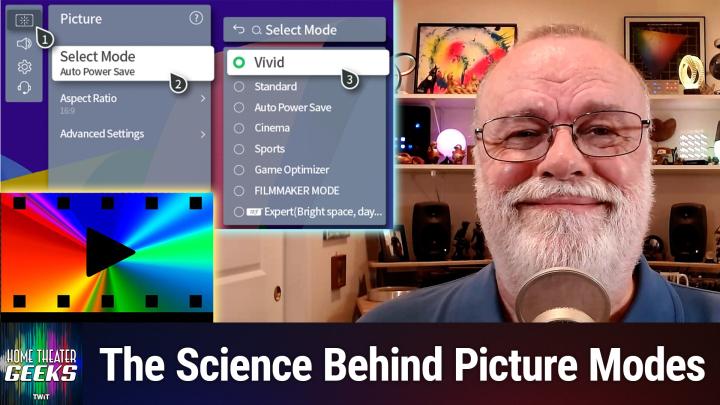
Ever wondered why your TV's picture suddenly looks warm, almost sepia-toned, when you switch from vivid mode to cinema or movie mode? You're not imagining it, and according to home theater expert Scott Wilkinson, that's exactly how it should look.
In a recent episode of Home Theater Geeks, Wilkinson tackled this common viewer question from Michael in Long Beach, California, who noticed the distinct difference between his TV's vibrant modes and the warmer film modes. The answer reveals fascinating insights about how content creators work and why most TVs are set up to mislead us right out of the box.
The Science Behind the "Sepia" Look

The key to understanding this phenomenon lies in something called the "white point" – essentially, what your TV considers to be pure white. Wilkinson explains this using the CIE color chart, a horseshoe-shaped diagram that maps all visible colors.
Within this chart runs a curved line called the "black body locus," which shows the colors an ideal heated object would emit at different temperatures. As you heat this theoretical object, it glows from orange to yellow to white to blue – just like a piece of metal in a forge.
The crucial difference between picture modes comes down to where they place this white point:
- Vivid/Game modes: Set the white point toward the blue end, around 9,000K or higher
- Cinema/Movie modes: Use the industry standard D65 white point at 6,500K
Why Content Creators Choose Warmth
When filmmakers and TV producers create content, they use professional monitors calibrated to the D65 standard. This means that sepia-toned look you notice in cinema mode? That's actually the authentic version, and exactly what the creators intended you to see.
"I always recommend that that's the white point you want your TV to reproduce, so that what you see on the TV... looks very close, or as close as possible, to what the content creators were looking at when they made the content," Wilkinson explains.
The Retail Store Conspiracy
So why do TVs default to the cooler, bluer vivid modes? It's all about grabbing your attention in the store. Our visual system perceives higher color temperature (bluer) images as brighter, even when the actual measured brightness is identical.
Picture this: you're standing in front of a wall of TVs at your local electronics store. Every manufacturer wants their display to catch your eye, so they all crank up the blue to make their TVs appear more brilliant and punchy. It's an arms race of artificial enhancement.
Many TVs even ask during initial setup whether they're being used for "store demo" or "home" use – and if you accidentally select store demo, you're locked into that eye-searing vivid mode.
The Health Benefits of Going Warm
Beyond accuracy, there are practical benefits to choosing cinema mode. The reduced blue light is easier on your eyes and won't interfere with your sleep patterns as much when watching late at night. In an era where we're increasingly concerned about screen time and blue light exposure, cinema mode offers a more comfortable viewing experience.
Making the Switch
Wilkinson acknowledges that the transition might feel jarring at first. After years of vivid mode, cinema mode can initially appear dim and reddish. But he encourages viewers to stick with it: "after a little while not very long at all you will get used to it. You won't see it as sepia or red, you'll see it as accurate."
For those serious about accuracy, Wilkinson even recommends using D65-calibrated light bulbs in your viewing room to avoid color bias from your ambient lighting.
While some viewers genuinely prefer the punchy, oversaturated look of vivid mode – and Wilkinson won't argue with personal preference – the cinema/movie/filmmaker modes offer the most authentic representation of content as creators intended.
So the next time someone complains that your TV looks "too warm" or "sepia-toned" in cinema mode, you can explain that you're actually seeing the movie or show exactly as the filmmakers wanted you to see it. Sometimes authenticity requires adjusting our expectations rather than our settings.