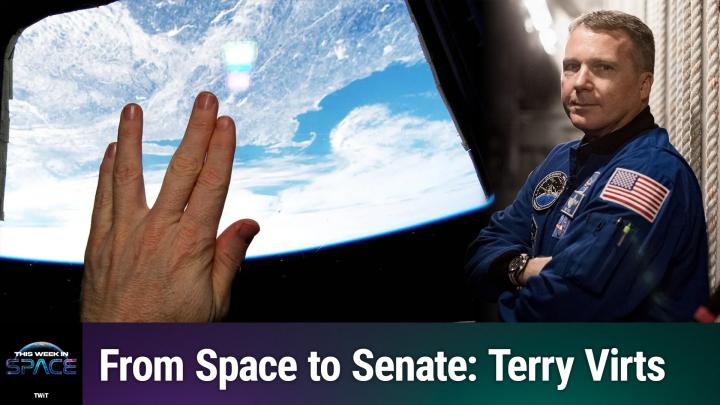
Why Space Policy Needs Rockets and Realists: Astronaut Terry Virts on the Future of NASA and U.S. Leadership
AI-generated, human-reviewed.
On This Week in Space, retired NASA astronaut and U.S. Senate candidate Terry Virts shared frank, actionable insights on the urgent need for smarter U.S. space policy as America faces budget cuts and rising competition from China. Drawing on his experiences commanding the International Space Station and serving as an Air Force colonel, Virts explains that without decisive leadership and practical changes, the U.S. risks ceding its decades-long lead in space exploration, innovation, and geopolitical influence.
How Terry Virts Sees NASA’s Priorities and Challenges
According to Terry Virts on This Week in Space, NASA and U.S. space policy are at a crossroads. Key scientific programs and Earth-observing missions face cancellation in upcoming budgets, just as global competition heats up. He notes that successful programs like space science missions (Mars rovers and planetary probes) are threatened, while plans for commercial space stations are at risk due to funding delays and unclear priorities.
Virts emphasizes that the U.S. can ill afford to “spin its wheels”—using outdated project management or neglecting American innovation—when Chinese space efforts are rapidly advancing. He argued strongly that, if China lands people on the Moon before Artemis achieves its goal, it could irreversibly shift global perceptions of technological leadership away from the U.S.
How China’s Space Program Is Changing the Global Space Race
On the show, hosts highlighted recent reports showing China is investing heavily in advanced space infrastructure, including a modular space station, robotic Mars and Moon missions, and development of fully reusable “Starship-like” rockets. According to Virts, these developments underscore how China is capable of sustaining and scaling its ambitions—which include a crewed lunar landing—unless the U.S. matches their pace.
If America delays new investments or fails to maintain clear priorities, Virts warns, other countries may look to China as the future of space achievement and innovation, shifting alliances and undermining America’s role as a science and technology leader.
What’s Wrong With Artemis, SLS, and the Current U.S. Moon Plan?
Virts gave an insider’s critique of NASA’s Artemis program and its primary hardware, the Space Launch System (SLS) and Orion crew vehicle. He explains that:
- SLS has taken over a decade and billions of dollars to launch a single uncrewed mission, while the Orion capsule’s human flight readiness remains in question due to a faulty heat shield.
- The lunar lander design, currently contracted to SpaceX’s Starship (HLS), could require over a dozen launches per mission—adding complexity and risk.
- Past lessons from Apollo and space shuttle accidents stress the importance of separating crew and cargo launches for safety; current plans do not follow this best practice.
Virts urges NASA to conduct a top-to-bottom review of Artemis, focus on achievable lunar landers, and streamline the path to the Moon—adding that the U.S. cannot allow its lunar return to be beaten by China, as the geopolitical and strategic cost would be enormous.
What Space Policy Reform Looks Like: Virts’ Actionable Framework
Drawing from his political campaign and astronaut experience, Virts outlined specific ways U.S. space leadership can be restored:
- Reinforce core strengths in space and Earth science;
- Accelerate contracting and development for commercial space stations (LEO platforms);
- Consolidate programs to achieve goals faster with less bureaucracy and clearer accountability;
- Prioritize safety and mission success with strategies proven in earlier programs, such as separating crew and cargo;
- Emphasize global leadership, partnerships, and the economic benefits to U.S. workers and industries.
He stresses that these changes require engaged, science-literate policymakers who understand both technical details and the geopolitical stakes.
Key Takeaways
- America’s leadership in space is under serious threat from rapid Chinese advancements.
- Budget cuts to NASA science, Earth observation, and station development could have lasting negative effects.
- Artemis’ current framework is overly complex, slow, and risky—streamlining and a renewed top-down review are urgently needed.
- Virts argues that the next generation of policymakers must have direct experience and real vision to position the U.S. ahead in the new space race.
- Symbolic achievements like a crewed Moon landing drive global perceptions and are linked to national security, trade, and technological influence.
The Bottom Line
On This Week in Space, Terry Virts made it clear: The U.S. must rethink and refocus its space strategy now—or risk losing the next great leap in space to its rivals. Whether you care about technology, science, security, or national pride, now is the time to demand bold leadership and practical changes in American space policy.
Don’t miss future insights from top space experts—subscribe to This Week in Space at:
https://twit.tv/shows/this-week-in-space/episodes/178