Why Apple’s Vision Pro and Immersive Video Content Are Still in Their Experimental Phase
AI-generated, human-reviewed.
Apple’s Vision Pro remains a “minimum viable product,” with immersive content and creative workflows still in beta—here’s what this means for developers, consumers, and the broader tech industry. According to MacBreak Weekly’s expert panel, Apple is prioritizing long-term innovation and creative potential, even if the Vision Pro’s current ecosystem isn’t ready for mass adoption.
How Apple Is Positioning Vision Pro as an Experimental Platform
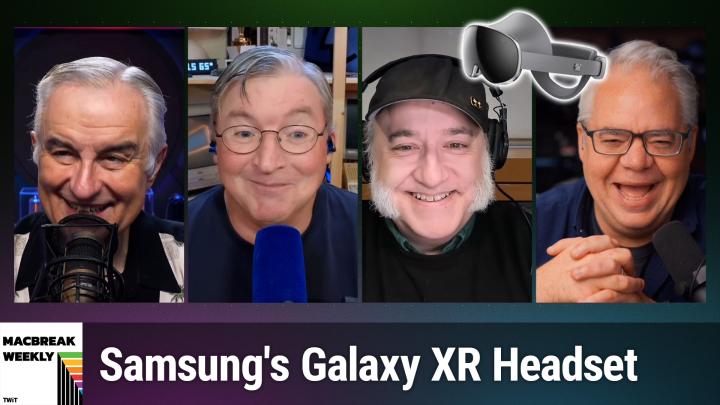
On this week’s MacBreak Weekly, hosts Andy Ihnatko, Jason Snell, and Alex Lindsay discussed their experiences attending Apple’s developer event for immersive video. The conversation revealed that Apple is not focused on immediate consumer sales for Vision Pro, but instead is building tools and fostering a creative community to shape the future of immersive media production.
Apple’s recent developer conference showcased new camera systems, evolving workflows, and cutting-edge concepts like foveated rendering (a technique that sharpens visuals where your eyes focus most). Yet, the hosts noted that almost “everything is still in beta,” from the cameras (including Blackmagic’s much-hyped immersive camera) to the software. Filmmakers and developers are combining new hardware and experimental tools, rarely finding mature, off-the-shelf solutions.
What Is Foveated Rendering and Why Does It Matter?
A key technical theme from the event was foveated rendering, which boosts visual sharpness at the center of vision and softens details in peripheral areas—mirroring how human eyes naturally process scenes. This approach allows the Vision Pro’s hardware to manage performance limitations, delivering immersive video experiences at higher resolutions without overwhelming the device’s processing power.
The next-generation M5 chip was highlighted as a sign of progress, enabling more pixels and a broader “sharp zone” for immersive playback. But as Alex Lindsay pointed out, Apple’s immersive cameras are already capturing more detail than the latest headset can display.
Why Content Creation for Vision Pro Is Still an Open Field
Apple’s developer ecosystem for the Vision Pro is described by MacBreak Weekly as “a workflow wild west,” where creative professionals are inventing techniques as they go. Most of the tools and cameras needed for high-quality immersive video are still hard to acquire, and best practices are only now emerging through hands-on experimentation.
This means there’s an opportunity for early adopters and creative innovators to shape standards and influence future hardware and software designs. As Jason Snell explained, these ground-floor experiences remind us that Apple often seeks to “build the room” before knowing exactly how it will be used—favoring flexibility and long-term creative potential over immediate market optimization.
How Apple’s Strategy Compares to Samsung and Google
While Apple is squarely focused on immersive media and creative capability, Samsung and Google are pitching their new XR (extended reality) headsets as platforms for AI-driven experiences, not just entertainment. Samsung, working with Google and Qualcomm, is highlighting AI integration and utility as key selling points, believing that mainstream success will come from broader context-aware functions.
Meta, meanwhile, continues to prioritize gaming and lighter weight wearables, offering entry-level devices that appeal to different user segments. The hosts note that Apple’s approach stands in contrast—Vision Pro is a highly capable, expensive tool, not designed for instant mass-market adoption.
Key Takeaways
- Apple’s Vision Pro is in its experimental, “beta” phase: Most content creation workflows and hardware are still new and evolving.
- Foveated rendering is essential for immersive experiences: It boosts sharpness where needed, maximizing limited hardware abilities.
- Creative professionals are inventing best practices: Few standards exist, and those involved can help shape the future.
- Apple favors long-term innovation over short-term mass adoption: Current devices are expensive and aimed at early-stage creators and testers.
- Competing headsets prioritize AI and gaming: Samsung, Google, and Meta are focusing on features that address mainstream consumer needs.
- Developers and filmmakers should expect rapid changes in workflows, hardware, and software capabilities over the next few years.
- Apple’s history shows willingness to experiment publicly, learning from real-world use rather than internal assumptions.
The Bottom Line
While the Vision Pro may not be an immediate hit with the mainstream, Apple’s strategy is to build a robust creative ecosystem that will define immersive experiences for years to come. For developers, filmmakers, and creative technologists, now is the time to experiment and help shape the standards of tomorrow’s spatial computing platforms—expect ongoing beta tools, new hardware iterations, and shifting priorities as immersive media matures.
To stay up-to-date with deep dives into emerging Apple tech and industry analysis, subscribe to MacBreak Weekly:
https://twit.tv/shows/macbreak-weekly/episodes/996