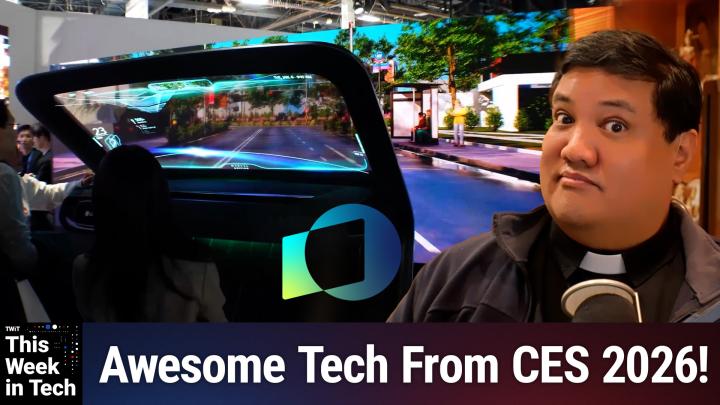
What Were the Most Impactful Innovations & Trends at CES 2026?
AI-generated, human-reviewed.
The CES 2026 wrap-up on This Week in Tech spotlights a major shift: AI and robotics are rapidly advancing, but meaningful home adoption still faces hurdles. Experts explained that while robot vacuums and smart devices are becoming smarter, general-purpose humanoid robots remain expensive and not quite practical. Local AI infrastructure and privacy-preserving smart home gear are gaining traction, signaling the next phase for connected living.
Are Humanoid Robots Ready for Household Chores?
Consumer interest in robots for daily chores is surging, but the technology showcased at CES 2026 proves development is ongoing. According to Jennifer Pattison Tuohy on This Week in Tech, robots like SwitchBot’s humanoid and Dreame’s AI-powered vacuums showed significant improvements in dexterity and autonomy. However, most robots remain reliant on remote control or direct programming. Humanoids still struggle with simple tasks like opening a laundry detergent bottle, which was an insurmountable challenge for every model demonstrated.
Safety and reliability were recurring concerns. As Leo Laporte and Jennifer Pattison Tuohy explained, heavy robots falling over at the show highlighted risks if these devices malfunction at home. Manufacturers are tempering aggressive auto-balancing features to prevent accidents around people, but the core issue remains—software is lagging behind the impressive hardware.
How Is AI Changing Home Automation and Security?
Smart home technology is rapidly evolving, coming closer to the vision of an orchestrated, intelligent home. CES 2026 featured improved robot vacuums that sort laundry, climb stairs, and interact with other devices via local connectivity, as described by Jennifer Pattison Tuohy. Importantly, companies are starting to offer more local processing to reduce privacy concerns—for example, Dreame and Roborock announced compatibility with the Matter protocol, enabling smarter integration with platforms like Apple Home, Google Home, and Amazon Alexa.
New standards like Aliro are emerging, promising cross-platform hands-free smart unlocking and better interoperability for smart locks and wireless controls. Jennifer Pattison Tuohy detailed how smart locks now use ultra-wideband (UWB) technology for secure, approach-based unlocking, making daily life both more convenient and safer.
Why Is Local AI Infrastructure a Big Deal?
A major theme throughout CES was bringing commercial-grade AI power directly into homes and small businesses. Father Robert Ballecer revealed testing of a “supercomputer in your pocket”—a compact, high-end box designed for enterprise-level on-premises AI tasks, such as translation or video creation, without sending sensitive data to the cloud. This move toward edge computing improves speed, privacy, and cost-efficiency in AI-powered workflows.
Furthermore, chip manufacturers like NVIDIA announced their new Vera Rubin platform, drastically improving AI processing per watt and rack-scale efficiency. As Jason Hiner discussed, these advances create opportunities for smaller, domain-specific language models (SLMs) and affordable, more sustainable AI deployments. Expect older chips to remain useful for simpler, targeted tasks while new chips power larger models and data centers.
What Are the Biggest Privacy and Sustainability Concerns?
The CES panel stressed privacy issues—any smart device mapping your home or streaming video may carry risks. While local processing can mitigate these, companies still rely on cloud services for advanced features. Data security is crucial as smart home devices and AI platforms multiply in households. Sustainability came into focus around data center construction and energy use, with industry leaders planning for more efficient hardware, local power sources, and renewable integration.
What You Need to Know
- Robots are getting better at home chores, but full autonomy and safety are still developing.
- Local AI hardware is emerging, aiming to reduce dependence on cloud services and improve privacy.
- Smart home standards are advancing for easier, more secure device integration (think Matter and Aliro).
- Sustainability and resource management are key concerns as AI infrastructure expands.
- Humanoid robots remain niche and expensive; specialized devices and upgrades to existing appliances will see wider adoption first.
- Privacy safeguards and local processing options are selling points for next-gen smart devices.
CES 2026 showcased the future of consumer technology—a blend of smarter, privacy-focused home automation, incremental robot progress, and powerful local AI. As the panel explained on This Week in Tech, the focus is shifting from flashy concepts to reliable, sustainable tools that actually enhance daily life. Expect practical upgrades in smart locks, vacuums, and AI-powered controls before humanoid helpers hit mainstream.
Want to keep up with the latest in tech innovation? Subscribe to This Week in Tech:
https://twit.tv/shows/this-week-in-tech/episodes/1066