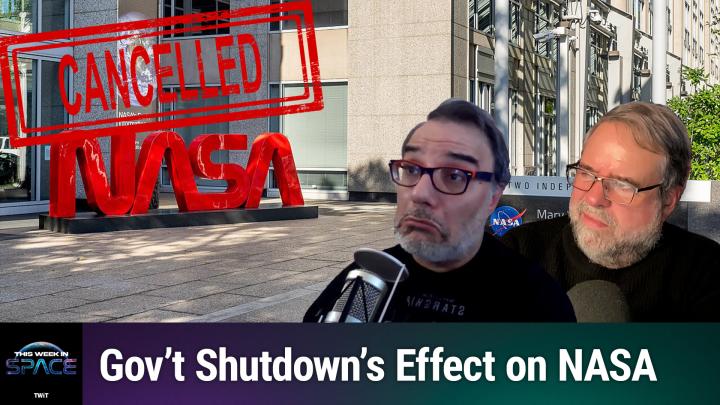
What the Government Shutdown Means for NASA
AI-generated, human-reviewed.
When a U.S. government shutdown hits, most of NASA grinds to a halt—but not everything stops. On This Week in Space, hosts Rod Pyle & Tariq Malik explain which missions continue, what gets frozen, and why some projects are considered "essential services" while others sit idle.
If you’re tracking Artemis, ISS operations, or planning to watch a Mars mission rollout, here’s what you need to know about what survives—and what’s at risk—when NASA closes its doors.
What Happens When NASA Shuts Down?
A government shutdown triggers immediate furloughs for about 85% of NASA’s workforce, sending roughly 15,000 employees home. This leaves only a skeleton crew—about 3,100 people—permitted to keep working. Even those left behind are often working without pay until Congress restores funding.
According to Rod and Tariq, nearly all activity unrelated to the most critical missions halts. Staff aren’t even allowed to check work emails or maintain websites and public communications. For the public, this means no live updates, limited press releases, and many mission updates are delayed or absent.
What Counts as "Essential" at NASA During a Shutdown?
The show details that several “essential” activities keep running, primarily those tied to human safety and national security. Specifically:
- Artemis missions, especially Artemis II and Artemis III, are protected as strategic priorities. The U.S. government deems the effort to return humans to the Moon a matter of national security, especially with China’s growing lunar ambitions, so Artemis flows continue.
- International Space Station (ISS) operations continue. With astronauts in orbit, mission control remains staffed to ensure crew safety and ongoing science.
- Critical support for cargo launches to the ISS and other vital resupply work persist to prevent disruption of human activity in space.
- Military launches and key satellite operations are considered essential, keeping national defense and security projects on track.
- High-priority robotic missions, if at a critical stage where absence would risk the spacecraft, may receive “essential” status.
By contrast, most robotic science missions that do not require hands-on operation—or that are already flagged for cancellation in proposed budgets—may be paused or even terminated if funding gaps persist.
Mars Missions, Artemis, and the Risk of Losing Science
This Week in Space cautions that shutdowns can cause irreparable harm to some missions. For spacecraft, especially those on or around Mars, missing critical check-ins or failing to make course corrections can mean losing billion-dollar assets forever.
The hosts highlight that past shutdowns triggered panic among scientists running fragile missions. If certain robotic explorers lose contact, re-establishing operations could be impossible. Cancellation of ongoing science contracts may spell the end for valuable data-gathering projects on Mars, Jupiter, and beyond.
What’s the Broader Impact on U.S. Space Leadership?
On the episode, Tariq and Rod stress that such shutdowns undermine America’s credibility in space. Other nations—particularly China—rarely pause their space programs for political standoffs, and this relentless momentum can give them significant advantages. U.S. setbacks open the door for rivals to claim key “firsts” on the Moon or Mars.
Long term disruptions fray relationships between NASA and commercial partners, challenge morale, and may even affect future funding as lawmakers and international collaborators lose faith in NASA's reliability.
Key Takeaways
- Most of NASA (85%) shuts down during a government funding gap; only essential staff work.
- Artemis and ISS missions keep running as strategic priorities; the safety of astronauts and U.S. lunar leadership are top concerns.
- Mars and other robotic missions are at risk, especially those not protected as “essential”—shutting down can permanently damage or end some missions.
- No new public updates or live webcasts: NASA press offices and media releases go dark.
- Commercial space launches may still proceed, but usually with less NASA support and public monitoring.
- Political infighting in Washington directly impacts U.S. competitiveness in the global space race.
- Shutdowns erode trust and momentum with commercial and international partners.
- America’s adversaries compete without similar disruptions, putting U.S. space leadership at risk.
The Bottom Line
NASA’s critical missions—crew safety, Artemis, and military launches—march on even in a shutdown, but much vital science is frozen or jeopardized. As explained on This Week in Space, these disruptions are more than bureaucratic headaches: they echo through U.S. leadership, commercial space, and global science for years.
Stay up to date with in-depth analysis from the experts by subscribing to This Week in Space: https://twit.tv/shows/this-week-in-space/episodes/180