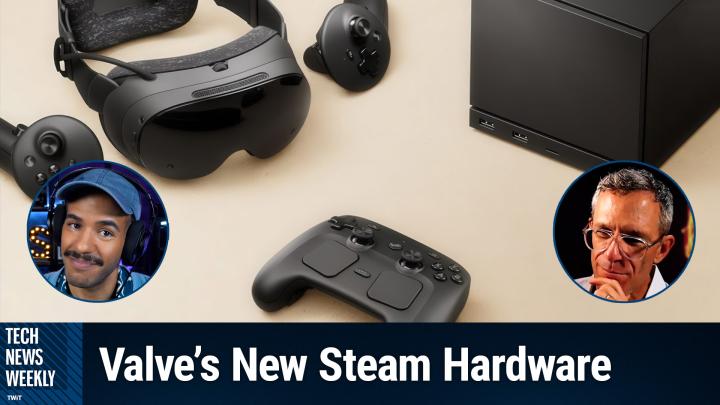
Steam Frame, Steam Machine, and More: Valve's New Hardware
AI-generated, human-reviewed.
Valve unveiled its next-generation gaming hardware this week, sparking excitement and curiosity in the tech and gaming communities. On Tech News Weekly, CNET’s Scott Stein took us inside his hands-on testing of Valve’s three major new products: the Steam Frame VR headset, the Steam Machine console, and a redesigned Steam Controller. Here’s what you need to know if you’re considering a purchase or want to understand how Valve is reimagining gaming hardware for 2026.
What is Steam Frame? Valve’s Vision for Next-Gen VR Headsets
Valve’s Steam Frame is a standalone VR headset designed not just for immersive virtual reality but also for playing conventional 2D Steam games. According to Scott Stein on Tech News Weekly, this represents an evolution in how VR headsets are positioned: rather than only supporting VR-specific titles, Steam Frame will allow users to browse and launch standard games from their existing Steam libraries.
A unique feature of the Steam Frame is its use of an ARM processor—a first for Steam hardware—challenging the assumption that powerful PC gaming is exclusive to desktop-class CPUs. Stein notes that Valve is "kicking the tires" on broad compatibility, balancing performance and flexibility for a potentially wider audience.
While Stein praised the comfort and fun factor, he pointed out minor fit issues for glasses wearers and said final pricing—which will heavily inform the product’s value proposition—remains unannounced. Valve emphasizes gaming utility over high-end “mixed reality” capabilities seen in rivals like Apple’s Vision Pro, suggesting Steam Frame will focus on practical, entertainment-first features.
Steam Machine: A Console-Style Solution for PC Gaming
The Steam Machine marks Valve’s return to living room-friendly hardware. Sized like a compact console, it’s designed to sit alongside your TV and run Steam games without the need for a bulky PC setup.
During his hands-on, Stein observed that the Steam Machine delivered solid performance on simpler 2D titles and some 3D games like Cyberpunk 2077—though other games suffered lag and stutter, especially early in its optimization cycle. The system is built for flexibility, aiming to bring Steam’s massive library to TVs and family settings. Stein contextualizes this approach as Valve “exploring new ways for hardware to work,” pointing to its history with devices like the Steam Deck, which changed expectations for handheld PC gaming.
Valve claims graphics performance "six times the Steam Deck,” but Stein cautions that direct comparisons to full PCs or leading game consoles (like Xbox Series X or PlayStation 5) are not straightforward. Final game compatibility and visuals will depend on ongoing optimization, and the device won’t hit the market until early 2026.
The New Steam Controller: More Versatility for Gamers
Valve also introduced a redesigned Steam Controller built to support both the Steam Frame VR experience and traditional gaming setups. Stein reported that the new controller closely mirrors the versatile layout found on the Steam Deck, offering thumbsticks, rear triggers, and touch-sensitive gyro aiming. While hardcore gamers may appreciate the nuances, Stein asserts that even casual players will benefit from its comfortable design and adaptable button mapping.
One highlight is Valve’s proprietary 6 GHz wireless protocol, paired with “foveated streaming.” This technology leverages eye tracking to focus bandwidth and graphics power only on the areas the user is actively looking at, providing smoother performance and visual fidelity without straining network resources.
Pricing, Release Dates, and the Future of Valve Hardware
None of the new products have confirmed pricing yet, with launches expected in early 2026. Stein believes competitive pricing will be crucial: steep costs could force enthusiasts to pick just one device, rather than investing in the whole ecosystem. The upcoming hardware is best seen as part of Valve’s broader experiment to make Steam games accessible on a variety of platforms and environments—not just on a traditional PC.
Key Takeaways
- Valve debuted three new gaming products: Steam Frame VR headset, Steam Machine console, and a versatile new Steam Controller.
- Steam Frame sets itself apart by supporting both 2D and VR games with a mobile ARM processor.
- The Steam Machine aims to bring PC gaming into the living room, but performance is still being optimized.
- Valve’s latest controller offers flexibility, wireless performance, and advanced features like gyro aiming and foveated streaming.
- Pricing and full technical specs remain unknown; launch is slated for early 2026.
- Scott Stein’s hands-on testing indicates Valve is building an ecosystem, not just standalone devices.
The Bottom Line
Valve’s new hardware suite could reshape how gamers access Steam’s enormous library—whether in VR, on the couch, or on the go. While real-world performance and pricing will ultimately determine mainstream success, the innovations highlighted on Tech News Weekly show Valve is committed to giving gamers more options and pushing the boundaries of what “PC gaming” means.
To hear more expert analysis and first impressions, check out the full episode.
Subscribe to Tech News Weekly for news, reviews, and interviews: https://twit.tv/shows/tech-news-weekly/episodes/413