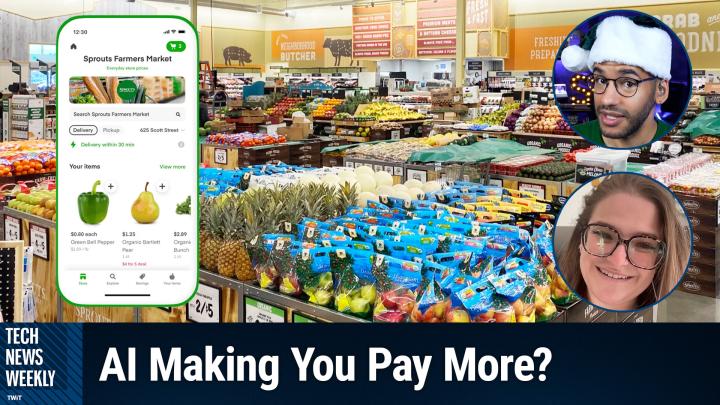
Is Instacart Charging Shoppers Different Prices?
AI-generated, human-reviewed.
Instacart is using advanced AI-powered experimentation to determine grocery prices, meaning shoppers often pay different amounts for the exact same items. On Tech News Weekly, Derek Kravitz from Consumer Reports broke down the methods, the real-world impact, and what this means for anyone buying groceries online. If you’ve ever wondered why your virtual cart total seems off, this episode has the answers.
How Instacart Uses AI to Set Prices
Tech News Weekly featured an eye-opening interview with Derek Kravitz of Consumer Reports, spotlighting a new investigative report into Instacart’s pricing practices. Instacart, a major grocery delivery app, acquired an AI startup called Eversight in 2022. This technology lets retailers test a range of prices on everyday items, segmenting shoppers into different price “buckets.” As a result, shoppers placing identical orders can be charged different totals—even when shopping at the same store and at the same time.
According to Kravitz, the Consumer Reports team worked with over 430 volunteers across the U.S., guiding them to fill Instacart carts with the same products from the same store and location. The findings were clear: over 70% of grocery items showed price variations of up to 23% between shoppers.
What Is Price Experimentation and Dynamic Pricing?
Price experimentation is the practice of testing different prices for the same product among groups of customers to see how they react. Dynamic pricing means that prices can change frequently, based on data points such as demand, purchase history, and consumer behavior.
Instacart’s AI system is designed for retailers and major brands to maximize profits or test what price leads to the highest sales volume. That data may later be used to set in-store prices, as well. Importantly, your shopping history, impulse buying patterns, and purchasing behavior are more likely to influence what you’re charged than demographic details like income or location.
Examples of Price Differences Found
The investigation showed that staple products such as eggs, peanut butter, and even store-brand items could be priced differently for different users. For instance, one group was charged $114 for their basket while another paid $124 for the same items, an 8% difference that could add up to over $1,200 extra per family over a year.
Some products—like Heinz ketchup or store pasta—had little to no variation, while others, like Skippy peanut butter, showed nearly 24% price swings. Retail partners varied too, with some (like Sam’s Club) offering uniform pricing and others, including Target and Costco, exhibiting significant variability.
Why Does This Matter for Shoppers?
Invisible pricing experiments mean it’s hard to know if you’re getting a fair deal. While dynamic pricing can help retailers respond to market demand and potentially lower prices for some, it’s mostly used to increase profit by charging what customers are willing to pay.
Shoppers generally do not have control or visibility into which experimental “bucket” they fall into. There’s currently no way for users to opt out, and most retailers won’t share specifics about how pricing is determined or tested.
Key Takeaways
- Instacart shoppers may pay different prices for the same items—even at the same time and location.
- AI-driven price experimentation segments users by behavior, not demographics.
- Price differences can add up to significant annual costs.
- Instacart’s model benefits retailers but leaves consumers with little transparency.
- Federal and state regulators are only beginning to address these practices.
- Your previous shopping history influences future pricing more than you might expect.
- Other grocery apps may follow similar practices, so compare prices carefully.
- Instacart sells data about your purchase habits for broader price testing.
The Bottom Line
On Tech News Weekly, Derek Kravitz revealed that grocery shopping with Instacart is no longer a straightforward transaction—the app uses AI to run hidden price experiments, meaning your total can differ from another shopper ordering the exact same items. These practices prioritize retailer profits and rely on opaque algorithms, raising concerns for price transparency and fairness. For now, all shoppers can do is be aware, compare prices across platforms, and advocate for clearer regulations on digital pricing.
To hear more insights and interviews like this one, subscribe to Tech News Weekly:
https://twit.tv/shows/tech-news-weekly/episodes/416