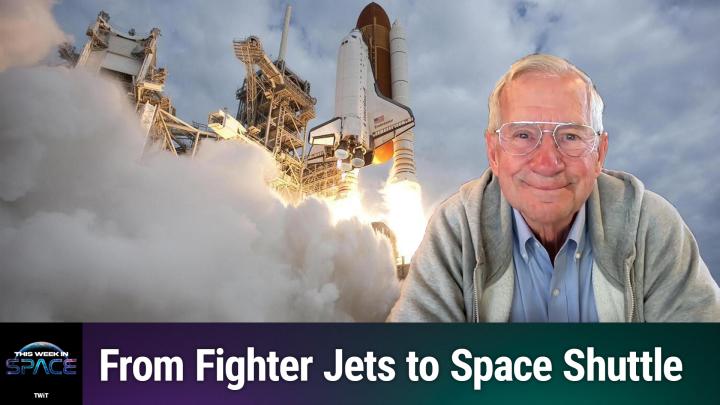
How Space Shuttle STS-41C Set the Standard for Satellite Servicing and Space Science
AI-generated, human-reviewed.
In this week’s episode of This Week in Space, astronaut Terry Hart shared firsthand how his Space Shuttle mission STS-41C redefined expectations for human ability to service satellites and conduct science in orbit. His unique perspective offers answers to how early shuttle missions paved the way for today’s more ambitious undertakings—including the International Space Station and upcoming Artemis lunar missions.
What Was Special About STS-41C?
STS-41C, flown in 1984, was the 11th shuttle flight and featured the first successful in-orbit repair of a satellite (Solar Max) as well as the deployment of the innovative Long Duration Exposure Facility (LDEF). According to Terry Hart, the mission served as a true operational testbed, showing that astronauts could not only deploy but also troubleshoot and repair malfunctioning satellites while in space.
The Solar Max satellite required urgent repairs after losing attitude control due to an attitude control failure. The crew's training and adaptability were pushed to the limit during complex maneuvers to capture the spinning satellite using both the shuttle’s robotic arm and untethered astronaut EVA with the Manned Maneuvering Unit. These operations would set new benchmarks for satellite servicing capabilities.
Lessons in Risk, Crew Training, and Teamwork
Hart emphasized on This Week in Space that success in space relies equally on technology, teamwork, and leadership. The crew’s problem-solving during the Solar Max rescue—working closely with NASA ground teams and Goddard specialists—demonstrated the huge value of rigorous astronaut training and real-time collaboration.
This mission’s challenges also shaped NASA’s culture around risk awareness. The realization that no mission is routine—even with repeated success—helps explain NASA’s continued emphasis on safety, especially following later shuttle tragedies.
How Satellite Servicing Changed Future Space Missions
STS-41C didn’t merely repair Solar Max. It established a clear business and research case for reusable, serviceable satellites. Hart pointed out that the skills and tools developed during this mission laid the groundwork for famous missions like the Hubble Space Telescope servicing and modern talk about in-orbit satellite refueling and upgrades.
These pioneering repairs also showed future engineers that astronauts could adapt to the unexpected—even with limited resources—and that human flexibility was invaluable compared to robotic solutions.
Inspiring the Next Generation of Space Engineers
Terry Hart, now a professor at Lehigh University, explained how the legacy of these early missions inspires current aerospace education. Courses increasingly focus on hands-on experience, teamwork, and multidisciplinary approaches. Young engineers learn that adaptability and attention to detail—as much as technical skill—are what prepare them for tomorrow’s missions to the Moon, Mars, or beyond.
Key Takeaways
- STS-41C was the first shuttle mission to repair a satellite in orbit, setting the stage for future satellite servicing.
- The mission proved astronauts could handle unexpected failures, improvising solutions in real time.
- Teamwork between engineers, Mission Control, and astronauts was essential for mission success.
- Satellite servicing is now a key part of space operations, including extending the life of billion-dollar assets.
- Emphasis on risk management and leadership under pressure emerged from lessons learned on missions like STS-41C.
- Space-based science, such as materials testing on the LDEF, was revolutionized by this era of shuttle flights.
- Today’s aerospace education builds on these historic achievements, prioritizing adaptability and cross-functional teams.
The Bottom Line
According to astronaut Terry Hart on This Week in Space, STS-41C demonstrated that the ability to repair, maintain, and even upgrade satellites in space is not only possible, but is critical for the sustainability of both government and commercial space operations. The teamwork and problem-solving displayed during this mission continue to inspire modern practices in astronautics, risk management, and engineering education.
Ready to learn more about the evolution of space missions, satellite servicing, and astronaut insights? Listen to the full episode:
https://twit.tv/shows/this-week-in-space/episodes/182