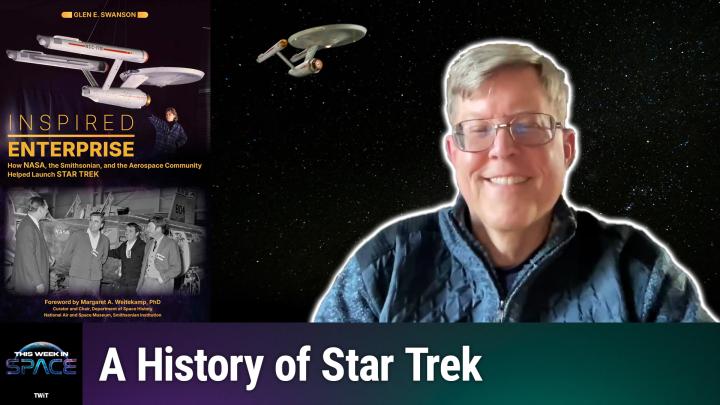
How Real-Life NASA and Aerospace History Inspired Star Trek’s Creation
AI-generated, human-reviewed.
The inspiration behind Star Trek isn’t just futuristic thinking or clever storytelling—it’s rooted deeply in real NASA history and close partnerships with the aerospace community. On This Week in Space, author and former NASA historian Glenn Swanson reveals how the science, engineering, and visionary people of America’s space program played a critical role in shaping the Star Trek universe.
NASA’s Surprising Involvement with Star Trek's Development
According to Glenn Swanson, Star Trek creator Gene Roddenberry went to great lengths to ground his science fiction vision in real, credible science. NASA and the greater aerospace industry were not just passive inspirations—they were active collaborators during the show’s development. In the mid-1960s, Roddenberry and key cast members were invited to NASA’s Dryden Flight Research Center (now Armstrong Flight Research Center), where they explored cutting-edge spacecraft like the X-15 and Northrop lifting bodies. These behind-the-scenes tours weren’t just PR—they directly influenced set design, ship construction, and the show’s authentic approach to space travel.
Swanson explains that NASA engineers, astronauts, and technical representatives even worked with the Star Trek team, reviewing scripts and providing expertise to ensure plausible science fiction. At a time when 70% of America’s aerospace industry was clustered in California, Roddenberry had one-of-a-kind access to talent and technology—something that made Star Trek stand out from the era’s other, less scientifically-grounded sci-fi shows.
The Secret Stories Behind Star Trek's Iconic Ships and Models
In the episode, Swanson discusses the pivotal role that model company AMT (Aluminum Model Toys) played in Star Trek’s visual legacy. AMT took a significant gamble by creating the first model kit of the USS Enterprise before the show had even proven itself. Their investment went beyond merchandising: in exchange for rights to manufacture model kits, AMT actually camera-ready miniatures, such as the shuttlecraft Galileo, which were used on the show.
This partnership was so successful that the USS Enterprise model kit sold over a million copies in its first year, helping cement Star Trek’s popularity and fueling decades of fandom. AMT’s creation of a Klingon ship filming miniature—when the series could not afford to build one—led to the first on-screen appearance of the iconic Klingon battlecruiser.
How Real Science Shaped Star Trek Plots and Technology
Star Trek’s commitment to scientific rigor set it apart from shows like Lost in Space. Swanson walks listeners through Roddenberry’s use of technical consultants, including experts from the RAND Corporation, which produced influential reports on subjects like habitable planets. The show’s writers routinely incorporated scholarly research, industry white papers, and even real diagrams and scientific papers from NASA’s archives to ensure the depiction of starships and stations felt authentic.
He also uncovers the close relationship Star Trek shared with other science institutions like the Smithsonian, which now houses the original 11-foot filming model of the Enterprise. The political and logistical maneuvering to have the Enterprise displayed in the National Air and Space Museum is itself a story worthy of a Star Trek subplot.
Star Trek Inspiring Real-Life Astronauts—and Vice Versa
The feedback loop between science fact and fiction wasn’t one-way. Swanson notes many astronauts, such as Mae Jemison, Jose Hernandez, Mike Finke, and Terry Virts, were inspired by Star Trek to pursue careers in space. Some even made cameo appearances on later Star Trek series. This interaction demonstrates Star Trek’s broader impact on American culture—showing what’s possible, and then helping people achieve it in reality.
Key Takeaways
- Star Trek was directly inspired and shaped by NASA and the 1960s aerospace industry, not just science fiction imagination.
- Gene Roddenberry worked closely with NASA, industry experts, and technical consultants to ensure scientific accuracy and credibility.
- Real set pieces, such as the Galileo 7 shuttle, and model miniatures were provided by AMT in exchange for model kit rights, fueling Star Trek’s popularity.
- Science fiction and real space science influenced each other: NASA inspired Star Trek, which then inspired future astronauts.
- Iconic elements like the K7 space station have roots in real aerospace designs and models.
- The original USS Enterprise model is now preserved at the Smithsonian thanks to behind-the-scenes partnerships.
- Star Trek’s attention to plausible science helped it outlast and out-influence other shows of its era.
- The show remains a touchstone for generations of scientists, engineers, and fans.
The Bottom Line
Star Trek’s enduring legacy comes not just from its compelling stories and characters, but also from its authentic relationship with NASA and the world of real aerospace engineering. By building bridges between science fiction and fact, the franchise inspired generations of explorers—not only on TV, but in the cockpit and beyond Earth itself. According to Glenn Swanson on This Week in Space, the show’s roots in reality are its greatest strength.
For more surprising science-meets-scifi insights, be sure to subscribe and catch the full episode:
https://twit.tv/shows/this-week-in-space/episodes/187