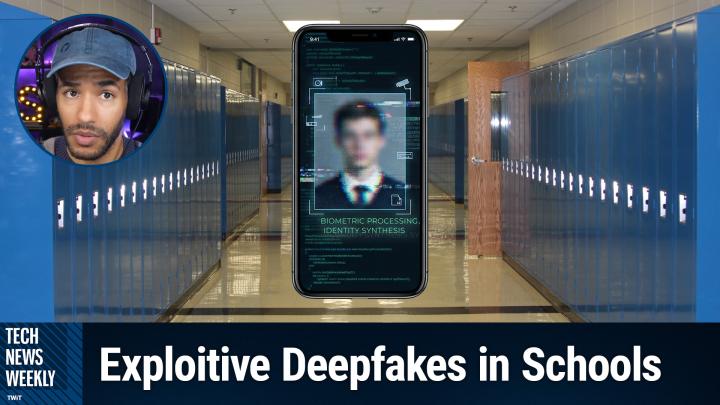
How Deepfake Apps Are Fueling a New Wave of Harm in Schools
AI-generated, human-reviewed.
Easy-to-use AI apps capable of generating explicit fake images are rapidly outpacing schools, police, and parents—leaving students vulnerable to lasting trauma and with little recourse. On this episode of Tech News Weekly, 404 Media’s Sam Cole shares findings from an in-depth investigation into a Pennsylvania high school where “nudify” apps were used to create AI-generated sexual abuse material targeting girls. The fallout highlights how current safeguards, legal frameworks, and digital literacy aren’t keeping up with the technology’s misuse.
Inside a High School Deepfake Scandal: What Happened?
At Radnor High School in Pennsylvania, a freshman used widely available “nudify” apps to make sexually explicit AI deepfakes of five female students by uploading their social media photos. According to Sam Cole on Tech News Weekly, the incident erupted over Snapchat, rapidly spreading both rumors and panic through the student body.
The most troubling part: no parents interviewed by Cole ever saw the actual images. By the time adults got involved, the digital evidence had mostly vanished due to the ephemeral nature of Snapchat and deliberate deletion by students. Still, the damage was unmistakable—targeted students faced harassment and isolation at school, and their families were left with frustration and unanswered questions.
How Do “Nudify” Apps Work—and Why Are They So Dangerous?
“Nudify” apps use generative AI to create fake nude images or explicit videos from any photograph, often requiring only a headshot. Cole explained that these apps are so user-friendly, teenagers can find them just by searching keywords in major app stores or stumbling on ads on TikTok and Instagram. Disturbingly, some of these apps carried age ratings as low as 13+, and were easily downloadable on both Apple’s App Store and Google Play.
These apps leverage breakthroughs in generative AI: earlier tools crudely photoshopped clothing off bodies, but today’s versions swap faces into highly realistic, explicit scenes or videos. That means any innocuous photo, like a yearbook portrait or selfie, can be weaponized in minutes.
Schools, Police, and Parents: Unprepared for Modern AI Harassment
The Radnor case exposed glaring gaps at every level:
- Schools often hesitate or refuse to discipline perpetrators if abuse happens “off-campus,” even when the fallout occurs inside classrooms.
- Law enforcement struggled to track digital evidence, hampered by disappearing messages and a lack of expertise around these new, rapidly evolving apps.
- Parents were blindsided by both the technology’s existence and the speed at which it spreads.
Cole noted that school officials' responses were inconsistent, shifting from promises of investigation to claims that “no crime was committed,” leaving affected students and their families frustrated and unsupported. Policies eventually changed to include language about cyberbullying and AI-generated content, but these updates arrived late for those most affected.
Why Legal Protections and Education Are Lagging Behind
Despite the existence of federal and state laws against creating child sexual abuse material—even if AI-generated—enforcement and awareness are lacking. In this case, the student who created the deepfakes was charged only with summary harassment, a minor penalty. The lack of serious consequences sends a dangerous message to potential offenders.
A deeper issue, highlighted by both parents and experts on Tech News Weekly, is the absence of comprehensive sex education, digital literacy, and consent training in schools. Most students (and adults) have little understanding of either the seriousness or the criminality of making and sharing AI-generated abuse. Without systemic changes, more kids risk becoming either victims or perpetrators.
What Needs to Change to Protect Kids from AI-Generated Abuse?
Sam Cole emphasized a multi-pronged approach:
- App stores must take more proactive action—removing or age-restricting apps that can create explicit deepfakes.
- Lawmakers should update laws and guidelines so digital and AI-generated harassment is treated as seriously as physical offenses.
- Parents and educators need to talk to children—especially boys—about digital respect, consent, and the real-world consequences of AI misuse.
- Schools should include digital safety and consent in curricula, not just focus on traditional bullying or “online safety.”
Key Takeaways
- Generative AI “nudify” apps are widely available and easy for minors to use, putting students at real risk of deepfake harassment.
- Many schools and police forces aren’t equipped to handle these cases, leading to inconsistent support for victims and few consequences for offenders.
- Explicit AI deepfakes are often created and distributed before adults are even aware, with most evidence disappearing soon after.
- Legal systems and digital policies lag behind the speed of technological change, allowing new forms of abuse to proliferate.
- Open family conversations, proactive legislation, and school digital literacy programs are critical for prevention.
The Bottom Line
Radnor High’s deepfake scandal isn’t an isolated incident—it’s a warning about the risks presented by today’s powerful, accessible AI tools. Without swift action from tech companies, lawmakers, schools, and parents, more children will face similar harms. The solutions require better safeguards, up-to-date education, and candid dialogue about the new realities of digital abuse.
To stay informed about critical tech trends and real-world impacts, subscribe to Tech News Weekly:
https://twit.tv/shows/tech-news-weekly/episodes/440