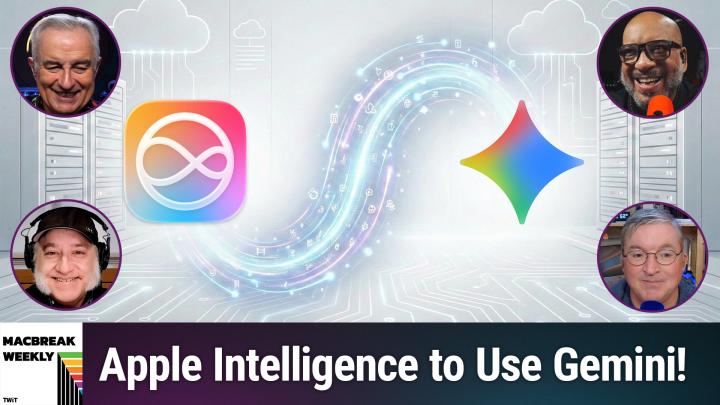
How Apple's Google Gemini Deal Will Shape Siri and AI on the iPhone
Apple’s recent decision to partner with Google Gemini as the core AI behind Siri and Apple Intelligence is set to transform how iPhone and Mac users experience artificial intelligence. On MacBreak Weekly, the hosts explained why Apple made this strategic choice, how it impacts your device privacy, and why it signals a new era of big-tech AI collaboration.
Why Did Apple Pick Google Gemini to Power Siri?
Apple spent years developing its own AI models for powering features like Siri and the new Apple Intelligence system, but ultimately, it decided to go with Google Gemini’s technology as the underlying “foundation model.” According to the panel on MacBreak Weekly, Apple evaluated leading contenders—Google’s Gemini, Anthropic’s Claude, and OpenAI’s models—before making the choice.
The decision wasn’t just about picking the “smartest” AI. As Jason Snell and other hosts outlined, Apple’s requirements were unique:
- The solution must run both on-device (on iPhones, iPads, Macs) and in Apple’s secured private cloud compute, maintaining the company’s industry-leading privacy standards.
- Apple wanted a flexible, mature engine that could be customized to its specifications and evolve over time, rather than simply licensing a generic chatbot.
Google’s long-term AI investments, infrastructure, and willingness to white-label Gemini to Apple’s requirements clinched the deal. Anthropic and OpenAI were strong but, as the hosts noted, they were less equipped or less interested in the private secure cloud/on-device setup Apple demanded.
Will Your Data Still Be Private with Google Gemini in Siri?
Privacy is a core question for Apple fans. On this episode, the panel emphasized that Apple’s approach remains consistent: even with Google Gemini powering its features, your data won’t go to Google for advertising purposes or further AI training.
Apple runs Gemini within Apple-controlled data centers (private cloud compute). Gemini’s models are adapted for Apple’s needs and do not transmit your requests or content back to Google. As the hosts explained, this separation reassures Apple users that their voice commands, images, and requests will not become part of Google’s data.
What Does the Partnership Mean for the AI Market?
The selection of Google Gemini isn’t just a technical detail—it signals a major shift in the AI industry, with the two largest mobile operating systems (iOS and Android) now running on the same core AI technology.
According to Leo Laporte, this means that for the first time, Gemini will be the “default LLM integrated on basically every phone in the world.” This raises questions about competition, future innovation, and the pressure on other models/providers to keep up.
The hosts also highlighted that Apple isn’t locking itself in forever. Their implementation allows future swaps: if a different provider takes the AI lead, Apple can migrate as needed.
When Will These Changes Hit Your Apple Devices?
The Apple-Google partnership will roll out over several years, with initial signs expected as early as late 2026, possibly debuting at WWDC. Users won’t see “Gemini” branding; Siri will remain Siri, but under-the-hood, Apple’s AI-powered features—including image generation, summaries, and writing assistance—will improve thanks to Google’s foundation.
Apple is expected to roll out new “Apple Intelligence” features, powered by Gemini, both on-device and via private cloud. Many capabilities will be enhanced, especially those involving language processing and generative AI. Key integrations—like tighter Siri conversations and deeper ecosystem connections—will arrive gradually with system updates.
Key Takeaways
- Apple is making Google Gemini the foundation AI model for Siri and Apple Intelligence, after evaluating several AI contenders.
- User privacy will be maintained, with Apple controlling the private cloud infrastructure and ensuring Google does not access or train on user data.
- Apple’s choice was driven by Google’s ability to provide both on-device and secure cloud AI capabilities, suited to Apple’s privacy requirements.
- Siri’s branding will stay the same, but the answers and generative AI features will be powered by Google Gemini behind the scenes.
- The move puts Gemini at the heart of both iOS and Android, consolidating core AI experiences for most smartphones worldwide.
- Apple leaves the door open to switch models in the future if a better AI option emerges.
- Improvements to Siri, writing tools, image generation, and summary features are likely to start arriving gradually from mid-2026.
The Bottom Line
Apple’s bold move to partner with Google for core AI power underlines both the breakneck pace of AI innovation and the complexity of building best-in-class foundation models. For Apple users, expect smarter Siri experiences and expanded Apple Intelligence features—with a continued focus on privacy and seamless integration. The landscape of mobile AI is changing fast, and with Apple and Google teamed up, the competition has never been tighter.
Stay in the loop about future Apple developments and analysis: Subscribe to MacBreak Weekly at https://twit.tv/shows/macbreak-weekly/episodes/1007