How AI Tools Like Claude Are Shaping the Future of Software
AI-generated, human-reviewed.
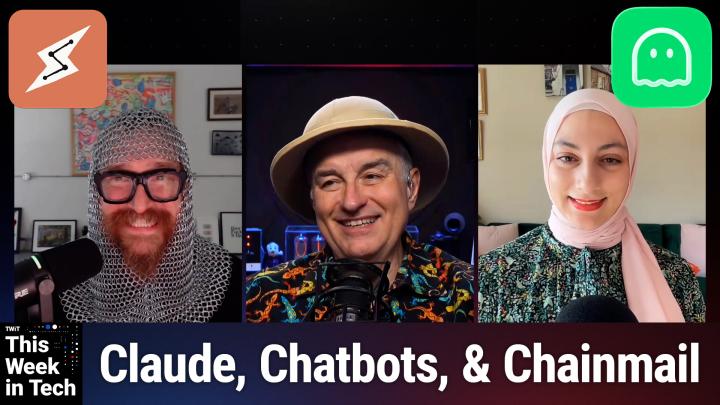
Artificial intelligence coding agents, including Claude by Anthropic, are revolutionizing how software gets created, shifting power from traditional developers to everyday users. On the latest episode of This Week in Tech, Leo Laporte, Harper Reed, and Abrar Al-Heeti dig deep into how "vibe coding"—collaborating conversationally with AI—lets you build custom software with unprecedented speed and personalization.
What Is AI-Powered Vibe Coding?
AI coding agents such as Claude allow users to interact with their software ideas in real time, instantly generating code and tailoring applications to personal workflows. Instead of spending weeks learning programming languages, anyone can now describe what they want and have AI build it. On TWiT, Leo Laporte shared how he created a bespoke newsreader, written in Rust, tailored to his exact needs—bookmarking, filtering, and summarizing stories—by working directly with Claude. This process took only minutes rather than months, underscoring the efficiency and accessibility of AI-driven coding.
Why Hyper-Personalized Software Is Exploding
According to Harper Reed on This Week in Tech, we're entering an era where individuals can rapidly build ‘artisanal’ software to fit their dreams and workflows. People are reviving old tools from memory, remixing features, and using AI to construct apps that would previously have been impossible for non-programmers.
This democratization means you’re not stuck with generic, one-size-fits-all solutions… you can tweak, experiment, or even instruct the AI to reference you by a nickname every time it interacts. Creativity and customization are becoming more central to the software experience than ever before.
Risks and Real-World Security Issues
With innovation comes new challenges. The TWiT panel highlighted a key concern: giving AI agents direct access to system resources and personal data can lead to both functional mistakes and security vulnerabilities. Examples included an AI-powered bot accidentally turning off an entire office, including critical hardware, when managing smart devices.
Prompt injection attacks were discussed as a real threat, where malicious commands hidden in ordinary files or web documents could trick AI agents into sending sensitive data or performing unintended actions. The episode stressed that mainstream users may not recognize these risks, as most security frameworks lag behind AI development.
The Broader Impact of AI Coding
Panelists warned that a wave of AI-generated software is coming, varying widely in quality and purpose. For many, this means more personalized tools; for others, it may flood digital marketplaces with disposable or even harmful code.
While hyper-customization empowers users, it complicates traditional business models, especially for companies who rely on controlling or licensing software. The boundary between creator, coder, and consumer is blurring, making it more important than ever to understand both the potential and the pitfalls.
What to Expect
- AI coding agents like Claude enable anyone to build custom apps in minutes, not months.
- "Vibe coding" is redefining the relationship between user and software—users dream, AIs build.
- Hyper-personalized software is likely to replace generic apps for many everyday tasks.
- Security risks (especially prompt injection) are a growing concern, with few easy solutions.
- The explosion of AI-generated code will disrupt both developer work and end-user experience.
- Companies and users must keep up with both opportunity and risk as AI coding becomes mainstream.
- The shift raises questions about intellectual property, closed-source software, and business strategy.
- Creativity and taste are still key since AI is just a tool, not a substitute for original ideas.
AI-powered coding through agents like Claude is reshaping how people build and interact with software. The process is faster and more accessible than ever, empowering users to build exactly what they want, but it’s also introducing new security challenges and shaking up established tech norms. As This Week in Tech illustrates, staying agile, creative, and security-aware is essential as this transformation unfolds.
Subscribe to This Week in Tech for more expert discussions and updates: https://twit.tv/shows/this-week-in-tech/episodes/1067