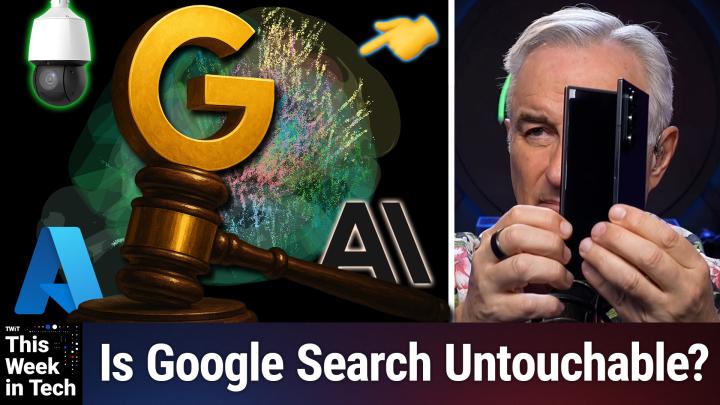
The Google Monopoly Paradox: Guilty Verdict, Minimal Consequences
AI-generated, human-reviewed.
Google emerged virtually unscathed from what could have been a devastating antitrust ruling, with Judge Amit Mehta's final decision allowing the tech giant to maintain its core business structure while making only minor concessions. On This Week in Tech (Episode 1048), Leo Laporte, Alex Wilhelm, and Harry McCracken analyzed the highly anticipated Google antitrust decision and its consequences for tech competition and the future of search.
The Verdict That Wasn't
Despite being ruled a monopoly in August 2024, Google avoided all major penalties the Department of Justice sought. The company doesn't have to sell Chrome, won't divest Android, and can continue paying Apple, Mozilla, and Samsung billions for default search placement. The TWiT panel noted that Google's stock jumped 9% following the announcement - hardly the reaction expected after losing an antitrust case.
Judge Mehta's only significant requirement centers on ending exclusive deals with handset manufacturers. Previously, companies wanting Google Play Store access had to bundle Chrome and set Google as the default search. That exclusivity ends, but the practical impact remains minimal.
The AI Defense That Changed Everything
The judge explicitly stated that "the emergence of AI has changed the course of this case." Harry McCracken observed this mirrors the Microsoft antitrust pattern - by the time penalties arrive, the market has already shifted. The panel discussed how ChatGPT, Perplexity, and other AI tools are already challenging Google's dominance in ways regulatory action never could.
Alex Wilhelm pushed back strongly, arguing that letting technology solve monopoly problems ignores years of illegal behavior. "They had monopoly for a long time and they illegally held it," he emphasized, criticizing the idea that eventual market disruption excuses past violations.
Data Sharing: A Token Gesture?
The court ordered Google to share search index data with "qualified competitors" - but only as a one-time snapshot, not ongoing access. The data includes document identifiers, URL maps, and spam scores. Leo Laporte detailed how this differs significantly from what the DOJ requested, which would have required periodic data releases.
The panel questioned whether this helps competitors meaningfully. DuckDuckGo and others celebrated, but one-time access to indexing data seems unlikely to level the playing field against Google's massive real-time advantage.
The $20 Billion Question
Apple emerged as perhaps the biggest winner, keeping its estimated $20 billion annual payment from Google for default search placement. Eddie Cue's testimony that Apple couldn't build anything competitive with Google search proved pivotal. The panel noted Tim Cook's presence at Trump's tech dinner shortly after, suggesting relief at maintaining this crucial revenue stream.
International Pressure Mounts
While celebrating in the U.S., Google faces a $3.5 billion EU fine for advertising technology violations. The panel discussed Trump's threats to retaliate against EU penalties through trade investigations, adding another layer of complexity to Google's global antitrust challenges.
Judge Leonie Brinkema's separate ruling on Google's advertising monopoly could still force structural changes, particularly given Google's position as both buyer and seller in online advertising markets.
Key Points:
- Google keeps Chrome, Android, and its billion-dollar search deals intact
- Stock market celebrated with 9% gain, signaling investor relief
- Only concrete change: ending exclusive bundling requirements for Android manufacturers
- One-time data sharing with competitors unlikely to shift market dynamics
- Judge cited AI disruption as reason for leniency
- Separate advertising monopoly case could still force major changes
- EU maintaining pressure with multi-billion dollar fines
The Bottom Line
The TWiT panel's analysis revealed a fundamental tension in antitrust enforcement: by the time courts rule, technology has often moved on. While Google technically lost its monopoly case, it effectively won by delaying long enough for AI to emerge as the next battleground. The decision reinforces a pattern where massive tech companies can maintain illegal monopolies for years, pay relatively minor penalties, and continue operating largely unchanged. As Alex Wilhelm noted, this creates a playbook for future monopolists: delay proceedings until the next technology shift provides cover for past violations.
Subscribe to hear more tech analysis: https://twit.tv/shows/this-week-in-tech/episodes/1048