Is Claude Code (Opus 4.6) The Next Big Shift in AI?
AI-generated, human-reviewed.
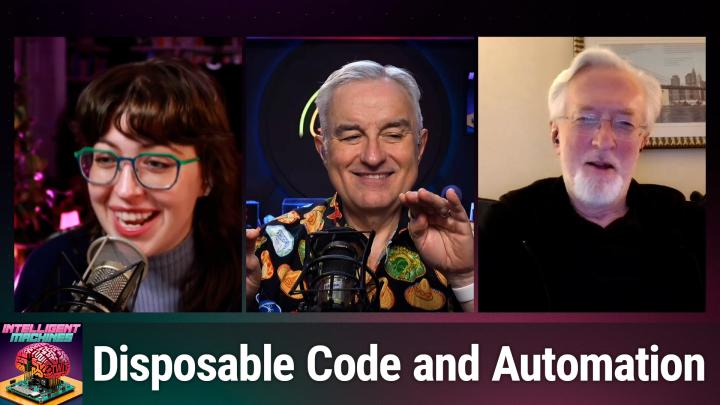
The generative AI field is moving at breakneck speed—and according to hosts on Intelligent Machines, recent advancements like Anthropic's Claude Code Opus 4.6 are already shaking up the nature of work for coders, knowledge workers, and businesses. If you think this is just hype, you may be missing out on critical opportunities to stay competitive.
Why Claude Code Opus 4.6 Matters to More Than Just Coders
On this week’s Intelligent Machines, Leo Laporte argued that the launch of Claude Code 4.6 marks a massive leap in generative AI’s real-world utility, especially for tasks like coding, data analysis, and handling complex documents. Unlike earlier language models that often hallucinated or struggled with large amounts of context, Opus 4.6 features a 1-million-token context window, enabling it to process vast data and complete long, sophisticated tasks without human intervention.
The hosts highlighted how this technical leap allows AI like Claude Code to successfully build software (such as compilers), analyze huge collections of contracts, and even discover security flaws in mission-critical open-source tools. Leo Laporte emphasized that this is no longer experimental—it's transforming productivity right now.
Is This the Same Old "Tech Revolution" Hype?
While Leo Laporte described the shift as a coming tsunami, co-host Paris Martineau presented a grounded counterview, suggesting that while advances like Claude Code are impressive—especially in specialized fields such as programming or document analysis—claims of imminent, world-changing disruption should be treated with skepticism. She argued that past tech breakthroughs (like the transistor or steam engine) brought fundamental change, but the most significant effects played out over decades, not months.
Paris Martineau used an AI-generated rebuttal to stress that many of the apocalyptic predictions recycled in today's AI discourse have been seen in previous hype cycles. The human-AI handoff, especially for high-stakes decisions, remains tricky—errors in medical tools and in customer support workflows often stem from overconfidence in model reliability.
How Should Professionals and Organizations Respond?
The panel agreed that dismissing AI’s capabilities outright is a mistake. Both hosts emphasized the value of "pushing AI into your actual work" instead of treating it as a novelty. Leo Laporte recommended that, for coders and young people alike, learning how to prompt, direct, and critique large language models is now as essential as learning to code was in the 1990s.
He suggested concrete steps:
- Pay for access to advanced AI tools (like Claude or ChatGPT Plus) to access the most capable models.
- Use AI on complex, domain-specific work—not just simple search queries.
- Actively seek ways to automate repetitive tasks, using domain expertise to evaluate results, and skill up before these abilities become widespread.
Paris Martineau highlighted that in domains where there are safety or ethical risks (like law, medicine, and finance), professionals must remain critical and involve humans in the loop. Benchmarks alone can’t predict real-world performance.
Key Takeaways
- Claude Code Opus 4.6’s improved context window and reliability signal a new phase for practical AI deployment.
- Early adopters will gain a unique advantage, as organizations are slow to embrace serious AI use in day-to-day work.
- Push AI into real workflows—within your area of expertise—to find its boundaries and best uses.
- Don’t ignore ethical, quality, and safety risks—AI models still make mistakes, especially when given autonomy.
- Skills in prompting and managing AI will be in high demand as models go from helping coders to transforming other knowledge-work fields.
- Stay skeptical about overhyped, "end-of-the-world" narratives, but don’t sit out this disruptive wave.
- Educators and parents should focus on developing both technical and critical thinking skills to thrive alongside AI.
What Happens Next in the Working World?
As explained on Intelligent Machines, advances in AI models like Claude Code Opus 4.6 are not only about "writing code faster"—they signal a shift in how work is performed across legal, financial, analytical, and technical fields. While not all predictions about imminent disruption will come true, those who wait to engage with these tools could find themselves left behind.
The Bottom Line
On this episode, the hosts of Intelligent Machines balanced bullish excitement with measured skepticism, but agreed on one thing: Now is the time to experiment actively, learn how to direct AI tools, and analyze their outputs critically. The winners going forward will be those who integrate AI into their workflows thoughtfully and build the skills to guide, not just use, intelligent machines.
Don’t fall behind—start testing and learning with cutting-edge AI models, and revisit your assumptions regularly as the technology rapidly evolves.
Subscribe for future insights and in-depth AI coverage at
https://twit.tv/shows/intelligent-machines/episodes/857