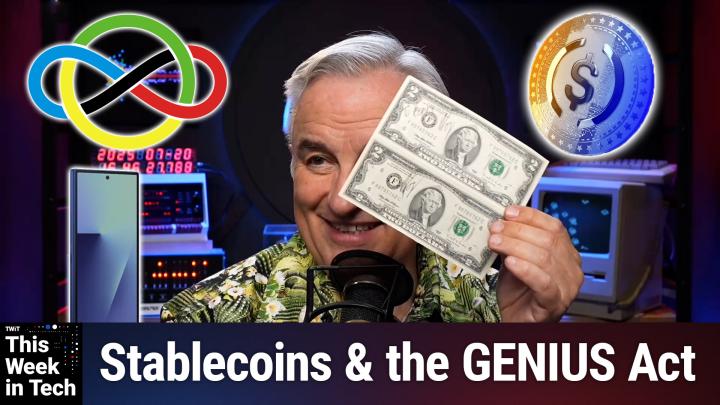
Breaking Down the GENIUS Act and Skepticism About Stablecoin Regulations
Made by AI, reviewed by humans.
The tech world was buzzing this week as Congress passed landmark cryptocurrency legislation, and the hosts of This Week in Tech didn't hold back their opinions. In a candid discussion that ranged from cautious optimism to outright skepticism, Leo Laporte and his expert panel of tech journalists dissected the implications of the newly signed GENIUS Act and stablecoin regulations.
Crypto Week Delivers on Promises
"This was crypto week," announced Leo Laporte, explaining how Congress followed through on President Trump's promise to prioritize cryptocurrency legislation. The result? Two major pieces of legislation: the GENIUS Act and a comprehensive stablecoin bill that Trump hailed as potentially "the greatest revolution in financial technology since the birth of the Internet itself."
The fanfare was impressive - CEOs from Coinbase, Robinhood, the Winklevoss twins, and Rumble's leadership were all present for the signing ceremony. But the TWiT panel wasn't quite ready to pop the champagne.
What Are Stablecoins, Really?
For listeners unfamiliar with the concept, Laporte broke down stablecoins in accessible terms. Unlike volatile cryptocurrencies like Bitcoin or Ethereum, stablecoins are backed by US dollars, offering predictable returns (around 4% APR in many cases) without the wild price swings that have characterized crypto markets.
"The idea is that because it's backed by the dollar, it's not volatile," Laporte explained, noting that this makes stablecoins potentially more attractive than traditional savings accounts for some investors. The backing mechanism is crucial - when you buy a dollar's worth of stablecoin, the issuer theoretically holds that dollar in cash or treasury bills, creating a one-to-one match.
The Skeptics Speak Out
Not everyone on the panel was convinced. Devindra Hardawar from Engadget didn't mince words: "It feels like a scam, because it is." His perspective reflects a broader skepticism about cryptocurrency that many in tech journalism have maintained.
"It's make-believe money," Hardawar continued, expressing particular concern about the speculative nature of crypto investments and the types of people they tend to attract. "If we just got rid of crypto coins, if they disappeared tomorrow, do we lose anything in the world other than the rampant amounts of illegal activity?"
Security Concerns and Regulatory Gaps
The Register's Iain Thomson raised perhaps the most serious concern about the new legislation. He pointed out a troubling provision: if a bank sets up its own stablecoin and goes bust, stablecoin investors would get their money back before regular bank depositors.
"This could potentially be credit default swaps blowing up all over again," Thomson warned, referencing the financial instruments that contributed to the 2008 financial crisis.
The panel also noted that there's no FDIC insurance for stablecoins, and the legislation defeated attempts to prevent government officials from holding these digital assets, raising potential corruption concerns.
The Dark Side of Digital Currency
Perhaps most damning was the discussion of stablecoins' popularity among criminals. According to the Financial Action Task Force cited in the discussion, stablecoins are the cryptocurrency of choice for "terrorists, drug traffickers, and North Korean hackers."
Thomson explained how cryptocurrency has eliminated many of the traditional barriers that made money laundering difficult. "You remember 10 years ago when ransomware was taking off, you had to have money mules... Cryptocurrencies take all that out of the loop."
The conversation highlighted the two dominant stablecoin companies: Circle (USDC) and Tether (USDT). Tether, based in El Salvador, is the largest with $150 billion in circulation, but it comes with baggage - including a settlement with US authorities over lying about its reserves and backing tokens with non-compliant assets like Bitcoin.
Adding to the skepticism was the involvement of familiar faces from the crypto world, including the Trump family's own cryptocurrency project, World Liberty Financial, which launched its own stablecoin.
Historical Context and Cautionary Tales
The panel didn't let listeners forget the spectacular failures in the stablecoin space. "Let's just never forget the Terra Luna case," cautioned Hardawar, referencing one of the most notorious stablecoin collapses that wiped out billions in investor funds.
These historical examples underscore a key point that emerged from the discussion: the name "stablecoin" itself might be misleading marketing. As Hardawar put it, "We should also be extra suspicious of anything that has the veneer of safety in the title. It's like the 'not catch fire' car."
Despite the criticism, the panel acknowledged some potential legitimate uses for stablecoins, particularly in international money transfers where traditional banking can be slow and expensive. The lower transaction fees compared to credit cards could make them attractive for certain types of commerce.
However, these potential benefits were consistently weighed against the risks and the current user base that seems heavily skewed toward speculation and illegal activity.
The Bottom Line: Innovation or Speculation?
The TWiT discussion perfectly captured the tension at the heart of the stablecoin debate. On one side, proponents argue that dollar-backed digital currency could democratize finance and improve transaction efficiency. On the other hand, skeptics point to a track record of failures, regulatory capture, and criminal abuse.
As Leo Laporte admitted, "Maybe I'm being suckered," but he remained somewhat open to the possibility that stablecoins could deliver on some of the original promises of cryptocurrency that earlier iterations failed to achieve.
The new regulations represent a significant shift in how the US government approaches cryptocurrency. Whether this leads to greater legitimacy and safer adoption, or simply provides a veneer of respectability for what critics see as sophisticated financial speculation, remains to be seen.