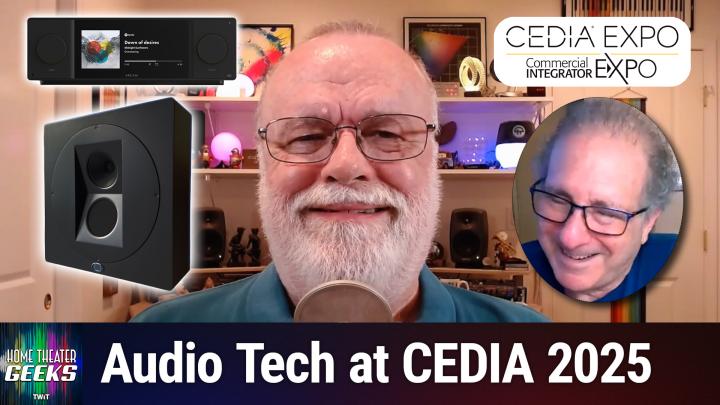
The Biggest Home Theater Audio Trends from CEDIA Expo 2025
AI-generated, human-reviewed.
CEDIA Expo 2025 unveiled a wave of new audio gear and system solutions for home theaters and smart homes. If you’re considering an audio upgrade or building a custom setup, here’s what’s new, and what actually matters, from this year’s show.
The Latest Audio Innovations Revealed
On Home Theater Geeks, host Scott Wilkinson and industry expert Michael Heiss gave a front-row report on the CEDIA Expo 2025—the premier event for high-end home theater and smart integration. This year, the spotlight was on next-generation audio hardware, smarter control, and a strong shift toward both two-channel and multi-channel solutions for enthusiasts at every level.
Streaming Amps and Two-Channel Revival
One surprise this year: the rise of high-end two-channel audio gear like integrated amps, preamps, and network streamers. Brands such as Anthem, Arcam, and Onkyo rolled out updated models with sleek, high-resolution color displays (no more cluttered buttons), capable of streaming music and displaying album art right from the front panel.
- Anthem debuted a new preamp/power amp pair, including virtual VU meters.
- Arcam’s SA45 integrated amp and ST25 streamer bring audiophile-grade streaming and attractive industrial design.
- Onkyo’s Icon-series preamp and power amp go button-less, reflecting changing user expectations.
These are aimed at music rooms, offices, and spaces where sound quality and streamlined aesthetics matter.
Multi-Channel Processors: Fewer Wires, More Immersion
The move toward complex, immersive audio is bigger than ever—but installation is getting easier. Show highlights included:
- Trinnov Altitude CI and StormAudio Elite 32 are multi-channel processors supporting up to 32 channels. They employ audio over IP (AOIP) technology, sending all audio channels via a single Ethernet cable. This not only tidies up rack installs but also allows for secure connectivity with commercial-grade movie servers like the Dolby IMS 3000.
- The trend away from analog inputs: High-end processors now prioritize HDMI and network-based sources, with fewer options for older gear.
These systems are purpose-built for dedicated home theaters, especially in setups striving for cinema-level performance.
Speaker Trends: Custom, Hidden, or On-Wall
Manufacturers demonstrated innovative new speaker options for every scenario:
- In-Ceiling and On-Wall Speakers: Several brands, like Grimani Systems (MP84), Procella, and Wisdom Audio rolled out new in-ceiling, on-wall, and invisible speakers to accommodate modern setups, especially when paired with large direct-view LED screens that can’t hide speakers behind them.
- Vibration-Cancelling Subwoofers: Paradigm introduced an in-wall subwoofer that sends bass into the room but cancels vibrations to avoid rattling drywall.
- “Invisible” and Embodied Sound Solutions: Sweetwater’s Edge Sound and JBL’s “conceal” line offer speakers that mount behind drywall or finishes—an option for minimalists or design-centric homes.
The Demo Room Experience: Does Spending $1.3 Million Matter?
The show featured jaw-dropping demo rooms, including a $1.3 million system from Seymour Screen Excellence, Christie, and Accendo Halo with extreme surround setups (18 overhead speakers and huge subwoofers). Interestingly, Scott and Michael agreed that while impressive, the real improvement comes from systems that are correctly tuned and curated—not just expensive.
The standout system for many was the more “affordable” Theory Audio Design demo: $83,000 for a reference-level system, proving great sound doesn’t always require a seven-figure budget.
Key Takeaways
- AOIP and streaming are now standard at every level, reducing setup complexity and future-proofing your system.
- Display aesthetics are a focus: Fewer buttons, bold displays, and streamlined remotes are what buyers want.
- Choosing speakers that fit your space (on-ceiling, on-wall, or invisible) improves flexibility for both design and acoustics.
- Calibration and setup are king: Even a modestly-priced system can outperform more expensive gear if installed and configured by a pro.
- Major legacy brands did not unveil new AVRs this year, largely due to ongoing supply chain and economic factors. Last year’s models are still top-tier.
What This Means for You
If you’re considering a home theater audio upgrade:
- Look for products with network-based connectivity and future-ready streaming.
- Don’t get hung up on sheer price; prioritize systems that match your room, use case, and are professionally installed.
- If aesthetics matter, explore new options in on-wall or invisible speakers and button-lite control panels.
- No need to worry about “missing out” on the latest AV receiver—current models remain relevant with few expected changes soon.
CEDIA Expo 2025 showed an industry focused on smarter, more streamlined, and highly customizable audio solutions. Whether you’re a hardcore movie buff or a music lover seeking clean design, now’s a great time to rethink your audio system for today’s streaming and integration-driven era.
For more insights and the full discussion, catch Home Theater Geeks episode 500:
https://twit.tv/shows/home-theater-geeks/episodes/500