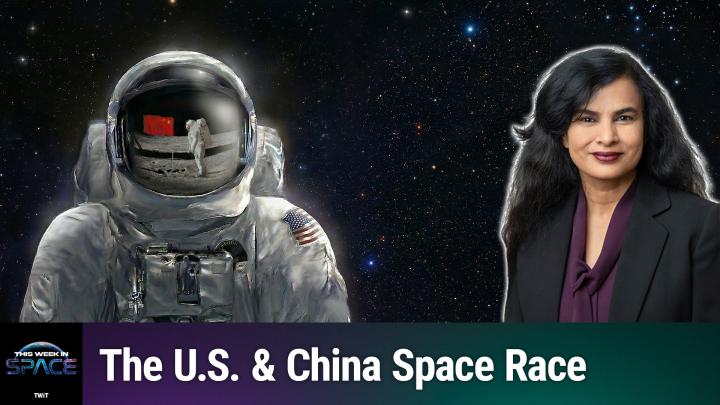
Are the US and China in a Moon Race?
AI-generated, human-reviewed.
The competition for the Moon between the United States and China is less a traditional race and more a strategic scramble for long-term presence and resources, according to Dr. Namrata Goswami on This Week in Space. Rather than a repeat of the Cold War space race, today’s contest emphasizes sustainable lunar infrastructure, economic potential, and the creation of international partnerships that could shape humanity’s next era of space exploration.
How US-China Lunar Ambitions Differ
Dr. Goswami explains that both nations officially aim for lunar exploration, but their motivations and methods diverge. China’s space program has focused on long-term infrastructure, resource utilization, and the gradual buildup of technology for self-sufficiency in space. The US, by contrast, has fluctuated between ambitious goals and changing political priorities, leading to inconsistent timelines but a clear push to reassert leadership—especially as China’s capabilities have grown.
China’s actions are guided by clear strategy documents and calendar benchmarks dating back to 2002, including defined goals for the establishment of infrastructure on the Moon and ultimately leveraging its resources for further deep space missions. The US, while still a leader in technology and international partnerships (notably the Artemis Accords), now faces the reality that it is no longer the only power capable of setting the pace in lunar development.
Why This Isn’t the Cold War Space Race
Unlike the 1960s, today’s space contest is not defined solely by "who gets there first." According to Dr. Goswami on This Week in Space, China’s program has emphasized ultimately building a sustainable lunar presence with permanent bases, and understanding how the Moon can support broader space ambitions. The United States is responding with initiatives to fast-track a return to the Moon, but success increasingly relies on sustained collaboration among partner nations and private industry.
A vital distinction is that both powers are planning for permanent infrastructure, not just single missions. This approach is based on the Moon's economic and strategic value, including the extraction of resources (like water ice and Helium-3) and demonstration of technological superiority.
The Role of International Alliances and the Artemis Accords
A major difference in today’s landscape is the importance of international agreements. The US-led Artemis Accords have attracted over 60 partner nations in an effort to establish shared norms for lunar activities. China, meanwhile, is steadily building alliances through its International Lunar Research Station initiative, offering technology and infrastructure collaboration to countries that might feel left out of US partnerships.
Dr. Goswami pointed out that many countries—including India and Japan—are keeping their options open as they evaluate potential partners for lunar access. Decision-making is heavily influenced by geopolitical realities, access to technology, and each nation's history with similar international accords.
How Culture Shapes National Space Ambitions
China’s lunar program is deeply connected to national myth, pride, and educational outreach, with missions named after mythological figures and extensive efforts to engage the public in the space narrative. US missions count on novelty and attempt to draw inspiration from Western history and popular culture. This difference shapes domestic support and the international image each nation projects as spacefaring leaders.
Legal and Strategic Issues: The Question of Lunar “Land Claims”
As permanent infrastructure becomes reality, critical questions arise about lunar property rights and exclusion zones. The Outer Space Treaty of 1967 forbids national appropriation of the Moon, but neither China nor the US has detailed a legal framework to govern permanent bases or “safety zones” around sensitive infrastructure (such as nuclear reactors or resource extraction sites).
Dr. Goswami emphasized that whoever builds infrastructure first may gain real strategic advantage through de facto control—even if not laid out in law. The US and China both face challenges in ensuring access, freedom of operation, and avoidance of direct conflict as lunar operations increase.
What You Need to Know
- The US and China are both committed to establishing a permanent presence on the Moon.
- China’s methodical, long-term planning has brought it close to the US in capability.
- Resource utilization and sustainable infrastructure are primary goals for both nations.
- International law currently lacks clear guidelines about lunar land use and property claims.
- The Artemis Accords and China’s ILRS initiative are shaping global coalitions.
- Cultural approaches influence how each country presents and supports its space ambitions.
- Other nations, notably India and Japan, play a growing role in shaping lunar exploration's future.
- Commercial interests and national security concerns (including the role of the US Space Force) are increasingly significant.
The Bottom Line
On This Week in Space, Dr. Namrata Goswami underscored that the US-China dynamic on the Moon is less about “winning” a race and more about laying the foundation for economic, scientific, and geopolitical leadership for decades to come. Given the moon’s resources and strategic positions, the next decade will see not just missions of exploration but permanent infrastructure, international legal debates, and new alliances shaping who leads beyond Earth.
To hear all the details and more expert analysis, don’t miss the full episode of This Week in Space:
https://twit.tv/shows/this-week-in-space/episodes/203