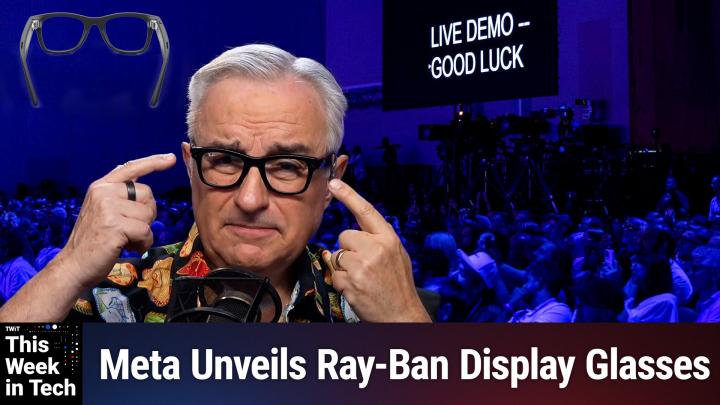
Are Meta’s New Display Glasses a Breakthrough or a Privacy Nightmare?
AI-generated, human-reviewed.
Meta's latest smart glasses made headlines for their advanced features and bold live demo, but according to the panel on This Week in Tech, social concerns and privacy issues could make this launch more trouble than triumph. The experts agreed: while Meta’s $799 wearable shows real technological advancement, it’s sparking major pushback and raises big questions about what kind of tech future consumers actually want.
What Are Meta’s Ray-Ban Display Glasses? Live Demo & First Impressions
Meta’s 2025 lineup includes updated Ray-Bans and Oakleys, capped by the innovative Meta Ray-Ban Display. These AR (augmented reality) glasses feature a bright, high-resolution screen, built-in cameras, and voice controls to integrate notifications, translation tools, and even social media feeds directly into your field of vision.
On This Week in Tech, Leo Laporte, Devindra Hardawar (Engadget), Nicholas De Leon (Consumer Reports), and Father Robert Ballecer described Mark Zuckerberg’s audacious live demo: Zuckerberg walked onstage wearing the glasses, showing a real-time feed from his perspective. The panel praised Meta for attempting a risky real-world demonstration, but noted that it quickly ran into technical glitches—the glasses couldn’t handle live calls, and a planned cooking segment failed.
Some technical specs noted on the show included:
- Very bright display (up to 5,000 nits, brighter than an iPhone screen)
- Six hours of mixed-use battery life
- Improved camera viewfinder compared to earlier Ray-Ban models
- Wristband "neural link" controller for subtle text/writing controls
Privacy and Social Acceptance: The Elephant in the Room
The panelists focused heavily on privacy risks, which are especially acute given Meta’s track record and these glasses' always-on cameras and microphones. According to Devindra Hardawar, the issue isn’t just about personal privacy—it’s also about recording people in public without their consent. Father Robert Ballecer, who operates in sensitive environments like the Vatican, reminded listeners that many places already ban recording devices, and predicted a surge in “no smart glasses” policies.
Stories highlighted during the discussion—such as people wearing smart glasses in private settings (like a salon) or at venues with strict no-photo rules—demonstrate how quickly wearables can cross social lines. Nicholas De Leon reminded listeners that being seen wearing these glasses in certain contexts could even lead to physical confrontations, especially as people become more aware of how easily they could be surveilled.
Is This Tech a (Nose) Bridge Too Far?
Beyond privacy, the panel reflected broader cultural questions: Do we really want to live in a world where notifications and social feeds are strapped to our faces? Hardawar and Ballecer, both self-described AR enthusiasts, admitted they may be losing excitement now that the tech is real, realizing the downside of always-on connectivity. The constant interruptions threaten mindfulness and real-world interaction, rather than improving them.
Another major point: Meta's lack of a trusted ecosystem. Unlike Apple (which integrates devices deeply within its reputable app and hardware ecosystem), Meta’s glasses connect most easily to its own apps, such as Facebook Messenger and WhatsApp, raising further caution given Meta's data practices.
Despite the social risks, the panel acknowledged the technical sophistication of Meta’s glasses. Multiple reviewers, including those from The Verge and Engadget, called them "the best AR glasses yet." Still, as Ballecer emphasized, “impressive tech” doesn’t mean it’s the right move socially. Until companies can assure data privacy, widespread trust is unlikely.
Battery life, lack of app support (no third-party app store yet), and unclear benefits—beyond being a flashy demo—also limit their immediate impact.
Key Insights
- Meta’s new AR smart glasses are technically impressive but faced major demo failures on launch day.
- Privacy concerns and potential for antisocial behavior are causing immediate backlash—many places will likely ban them.
- Meta's history of data privacy lapses further erodes trust, especially compared to the ecosystem approach of companies like Apple.
- While live translation and hands-free features are cool, most consumers may not want more notifications in their line of sight.
- Real-world use could lead to both social friction and legal complications, especially in private or sensitive environments.
- The lack of a third-party app ecosystem and concerns over constant recording make these glasses a risky proposition for now.
The Overall Framing
According to the experts on This Week in Tech, Meta’s new smart glasses are a leap forward for wearable technology but a step backward for privacy and social trust. Until manufacturers (including Meta) can address data concerns and create a more thoughtful user experience, these glasses may remain a niche device—more a warning about tech’s future than a must-have innovation.
Subscribe for more expert analysis and the latest tech news:
https://twit.tv/shows/this-week-in-tech/episodes/1050