Is the Apple Vision Pro Finally Worth it?
AI-generated, human-reviewed.
Apple’s Vision Pro headset just received key updates, including better performance and official PlayStation controller support, plus Apple’s blockbuster NBA and Formula 1 streaming deals promise killer new content—but is this enough to make the Vision Pro a compelling buy?
According to Leo Laporte, Andy Ihnatko, and Jason Snell on MacBreak Weekly, the Vision Pro’s new features and partnerships could be a major turning point, yet real value still depends on practical applications and meaningful content. Here’s what’s changed—and what it means for Apple fans, early adopters, and tech-watchers deciding whether to invest in Apple’s spatial computing future.
Apple Vision Pro: What’s New in the Latest Update?
Apple has rolled out the Vision Pro with the M5 chip, a significant performance upgrade over the previous M2 version. Hosts Jason Snell, Leo Laporte, and Andy Ihnatko explain that this new chip offers better graphics rendering, higher frame rates (up to 120Hz), and improved visual clarity, especially for the Mac virtual display feature within Vision Pro.
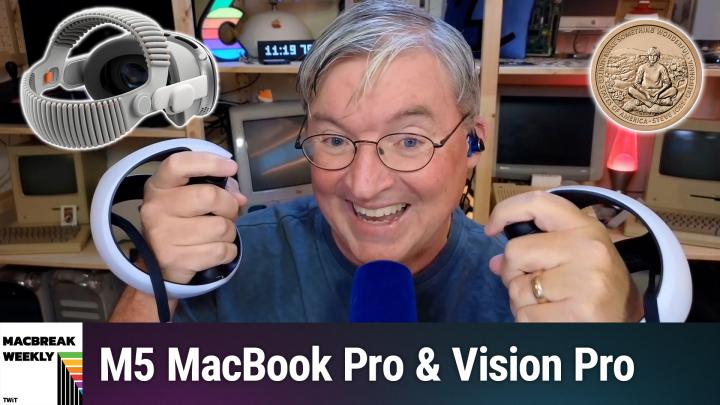
Another new feature is the official support for PlayStation VR 2 controllers. With the latest VisionOS update, users can pair Sony’s VR controllers for a more traditional gaming experience—an important addition, as the lack of dedicated controllers previously limited game ports and immersive interactions.
Apple also released a dual-knit comfort band, which addresses common complaints about the device’s weight and fit. While these upgrades are welcome, the panel cautions that existing Vision Pro owners don’t need to upgrade yet, as most improvements are incremental.
Why Gaming and Content Matter More Than Hardware
Despite the headset’s technical prowess, MacBreak Weekly’s hosts emphasize that Apple’s real challenge remains content, not hardware. The Vision Pro is still expensive, heavy, and has limited exclusive apps and games. Snell points out that, even with controller support, very few apps currently utilize it—but hopes more developers will follow, especially as hardware becomes more capable.
Gaming was never Apple’s launch focus for the Vision Pro—in contrast to Meta’s Quest lineup, which built its success on gaming and entertainment. The Vision Pro was positioned as a productivity and immersive video device, a strategy the hosts call “a mistake”—since content is what drives usage and engagement for most users.
Apple’s Sports Streaming Partnerships Could Be Vision Pro’s Killer App
The panel highlights Apple’s major deals with the NBA and Formula 1 as the most exciting prospects for Vision Pro. Apple will soon broadcast live NBA games, including immersive courtside experiences for fans, and has spent $750 million to secure exclusive US streaming rights for Formula 1—potentially allowing viewers to watch races with data overlays, cockpit angles, and unique perspectives only possible in VR.
This could be a game-changer for sports fans, creating must-have experiences and justifying the headset’s cost for niche audiences. The hosts argue that “all it takes is one killer app”—such as immersive sports coverage—to turn Vision Pro from a tech demo into a desirable product.
What You Need to Know
- The Vision Pro now features the faster M5 chip and improved rendering efficiency
- Official support for Sony PSVR2 controllers opens up more gaming opportunities
- Comfort upgrades (dual-knit band) improve wearability
- Apple is investing heavily in live sports content—NBA games and Formula 1 streaming—which could provide killer apps
- Current lack of content, especially games, remains Vision Pro’s biggest weakness
- Most improvements are incremental; existing owners don’t need to upgrade yet
- Apple’s focus is to keep Vision Pro evolving until technology and content catch up
The Bottom Line
Vision Pro’s future depends less on chip speed and hardware upgrades, and more on exclusive content like immersive live sports and richer app experiences. For most buyers, hardware is no longer the limiting factor—Apple must deliver compelling content and intuitive interactions to justify its premium pricing. The next year will show whether Apple’s bets on NBA and Formula 1 streaming pay off, creating true killer apps for spatial computing.
Listen to the full episode for expert analysis, honest opinions, and much more:
https://twit.tv/shows/macbreak-weekly/episodes/995